2025-08-12 10:44
Aug 12 (Reuters) - Russia's sanctions-hit diamond producer Alrosa reported a 25% fall in first-half revenue on Tuesday, warning that geopolitics and macroeconomic uncertainties were weighing on demand as high interest rates, inflation and taxes exert pressure on profits. Group of Seven countries banned direct imports of Russian diamonds in January 2024. This was followed by a European Union and G7 ban on imports of Russia-origin diamonds via third countries. Alrosa itself has been under U.S. sanctions since 2022. Sign up here. Alrosa's full-year profits fell sharply in 2024, but the first half of 2025 showed signs of recovery, with net profit up 10.8% year-on-year to 40.6 billion roubles ($506.7 million). Revenue fell 25% to 134.3 billion roubles and core earnings (EBITDA) dropped 42% to 37.1 billion roubles, Alrosa said. Net debt jumped almost 10 times to 61 billion roubles, Alrosa's results filing showed, but the company's cash, cash equivalents and bank deposits rose 8.4% to 115.4 billion roubles. "The relatively high level of the key rate and inflation continued to have an additional negative impact on the (group) in the first half of 2025," Alrosa said, pointing to rising costs for materials and fuel. Russia's central bank has maintained elevated borrowing costs for several months, but has started an easing cycle, most recently trimming rates to 18% from 20% in late July. Alrosa's first-half profits were boosted by the sale of its stake in Angolan state-controlled diamond miner Catoca, for which Alrosa said it received 15.9 billion roubles. A subsidiary of Oman's sovereign wealth fund replaced Alrosa, the world's largest producer of rough diamonds by volume, as a shareholder in Catoca under a deal formalised in May. Angola had been under pressure to cease its long-standing partnership with Alrosa since the West imposed sanctions over Moscow's February 2022 full-scale invasion of Ukraine. Prior to the deal, Alrosa held a 41% stake in Catoca, with the remaining shares owned by Endiama EP, Angola's national diamond company. ($1 = 80.1200 roubles) https://www.reuters.com/markets/europe/russian-diamond-maker-alrosa-flags-high-rates-inflation-pressure-revenue-falls-2025-08-12/

2025-08-12 10:43
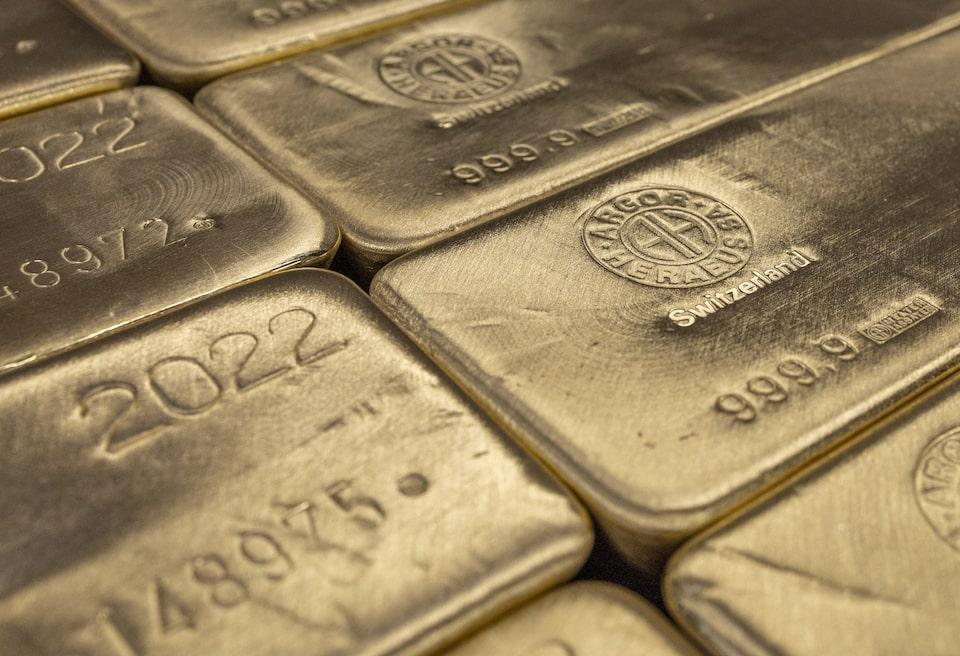
Aug 12 (Reuters) - U.S. President Donald Trump's statement on not putting tariffs on gold has sent an encouraging signal for trade stability but only a formal decision will provide certainty, the head of the Swiss precious metals association ASFCMP said on Tuesday. Trump on Monday said he would not impose tariffs on gold, a move welcomed by global bullion markets and which ended days of speculation that the yellow metal could be caught up in the ongoing global trade spat. Sign up here. "President Trump's statement is an encouraging signal for trade stability," said Christoph Wild, president of the ASFCMP, in a statement. "However, only a formal and binding decision will provide the certainty the gold sector and its partners require." https://www.reuters.com/world/europe/switzerland-wants-binding-trump-commitment-gold-tariffs-lobby-group-says-2025-08-12/
2025-08-12 10:42
LONDON, Aug 12 (Reuters) - World markets got a minor fillip from the expected 90-day rollover of the U.S.-China trade tariff truce, clearing one of Tuesday's two big hurdles. Now for the July inflation report. Much rides on the consumer price report - not least markets' assumption of a Federal Reserve interest rate cut next month, but also the impact so far of rising tariffs as well as the reliability data compiled by the embattled Bureau of Labor Statistics. Annual inflation is expected to have ticked up a tenth to 2.8% and 'core' inflation built to 3.0% - the latter involving a 0.3% monthly gain, the biggest since January, and likely lifted by tariff-sensitive goods such as vehicle parts and toys. Sign up here. * Chinese stocks nudged about half a percent higher after confirmation the recently-negotiated deals between Washington and Beijing officials in Stockholm would indeed see an extension of the existing deal until November. Although largely expected, the new order prevented a snapback to triple-digit tariffs between both sides and it settles for now with a 30% levy on Chinese exports to America and 10% Chinese tariffs on U.S. imports there. Wall Street futures were flat after ebbing slightly on Monday. * Broader macro markets remained largely frozen ahead of the CPI report - with Treasury yields and the dollar flatlining and bond volatility gauges sinking to their lowest in three years. Aside from the CPI release, investors will keep half an eye on the latest NFIB small business survey for July and Federal budget data for last month too - with growing attention on the revenues being generated by unilateral tariff rises. * Elsewhere, the Australian dollar eased marginally after the Reserve Bank of Australia delivered another widely expected quarter-point interest rate cut and Japan's Nikkei surged more than 2% on its return from holiday amid a wave of tech enthusiasm. Gold prices nursed Monday's setback after President Donald Trump said bullion would not be subject to tariff rises after all - clearing up confusion on the issue last week. Sterling was firmer after UK wage and retail numbers further dampened Bank of England easing speculation - as did better-than-forecast jobs numbers. Today's column looks at how after a turbulent year so far, with multiple potential disturbances to U.S. bond markets, Treasuries appear to be slumbering instead and implied volatility has ebbed to its lowest in three years. Today's Market Minute * The United States and China on Monday extended a tariff truce for another 90 days, staving off triple-digit duties on each other's goods as U.S. retailers get ready to ramp up inventories ahead of the critical end-of-year holiday season. * Trump upended decades of U.S. national security policy, creating an entirely new category of corporate risk, when he made a deal with Nvidia to give the U.S. government a cut of its sales in exchange for resuming exports of banned AI chips to China. * Australia's central bank cut interest rates on Tuesday for a third time this year and signaled further policy easing might be needed to meet its inflation and employment goals as the economy lost some momentum. * Western governments are increasingly worried about becoming too reliant on China for rare earths as well as some refined metals. Their challenge is to work out how to secure supply without taxpayers being unduly burdened, explains ROI columnist Clyde Russell. * It’s becoming increasingly difficult to get any visibility on the U.S. labor market amid all the conflicting economic data. But ROI columnist Jamie McGeever argues that one figure may be worth paying attention to more than the rest. Chart of the day The Consumer Price Index report from the Labor Department's Bureau of Labor Statistics is due Tuesday amid mounting concern over the quality of inflation and employment data. Budget and staffing cuts have led to the suspension of data collection for portions of the CPI basket in some areas across the country - and Trump's firing of BLS boss Erika McEntarfer this month followed big downward revisions to May and June payroll counts. Data collection suspensions come after years of what many describe as underfunding of the BLS under both Republican and Democratic administrations. Citing a need to "align survey workload with resource levels," the BLS suspended CPI data collection completely in one city in Nebraska, Utah and New York. It has also suspended collection on 15% of the sample in the other 72 areas, on average. The share of different cell imputation in the CPI data - essentially modeled assumptions of where prices might be - jumped to 35% in June from 30% in May. Trump on Monday said he was nominating Heritage Foundation economist E.J. Antoni as the new BLS chief. Today's events to watch * U.S. July consumer price index (8:30 AM EDT) NFIB July small business survey (6:00 AM EDT) July Federal budget (2:00 PM EDT) * Kansas City Federal Reserve President Jeffrey Schmid and Richmond Fed President Thomas Barkin both speak * U.S. corporate earnings: Cardinal Health Want to receive the Morning Bid in your inbox every weekday morning? Sign up for the newsletter here. You can find ROI on the Reuters website , opens new tab, and you can follow us on LinkedIn , opens new tab and X. , opens new tab Opinions expressed are those of the author. They do not reflect the views of Reuters News, which, under the Trust Principles , opens new tab, is committed to integrity, independence, and freedom from bias. https://www.reuters.com/business/finance/global-markets-view-usa-2025-08-12/
2025-08-12 10:29
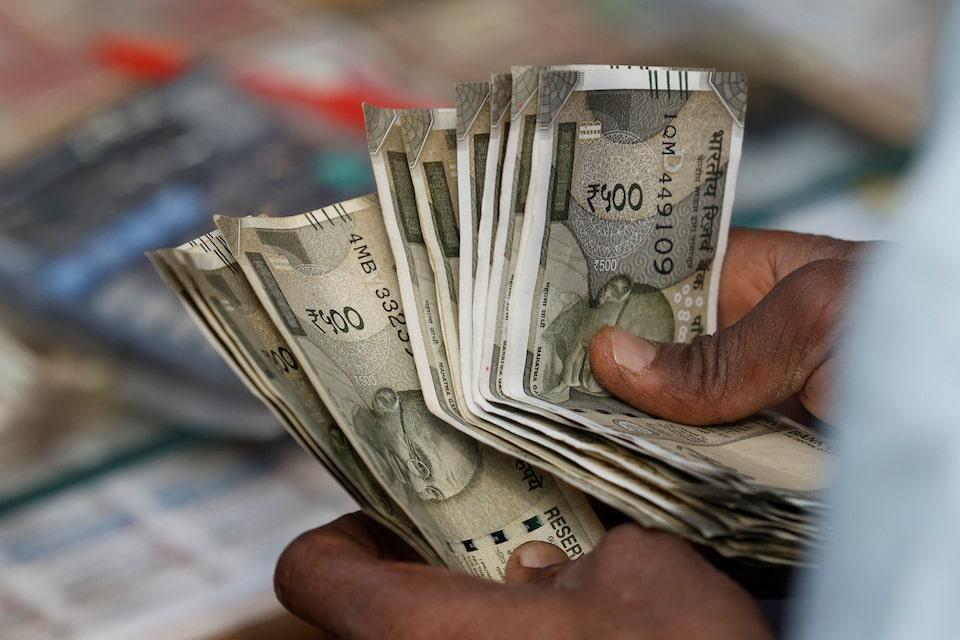
MUMBAI, Aug 12 (Reuters) - The Indian rupee was largely unchanged on Tuesday with traders in "wait and watch" mode awaiting the release of key inflation data in the U.S. and India later in the day, which could provide clues on the interest rate trajectories in the two economies. The local currency unit closed marginally 0.06% higher at 87.7125 against Monday's close of 87.6600. Sign up here. India's consumer price index (CPI) data for July is expected to show inflation at its slowest pace in at least eight years. The U.S. July data, due after the release of India's report, is expected to show that core inflation rose at the pace of 0.3%. The recent weaker-than-expected U.S. jobs report has bolstered bets that the Federal Reserve will cut rates next month, with investors pricing in a 90% chance of a rate cut in September. However, U.S. President Donald Trump's tariffs have added uncertainty to the inflation outlook, complicating the Fed's policy path, which makes the inflation data on Tuesday crucial for clues about the interest rate trajectory in the world's largest economy. "Traders are avoiding any unwarranted bets ahead of the inflation data releases," said Dilip Parmar, forex analyst at HDFC Securities. Trump’s scheduled meeting with Russian President Vladimir Putin on Friday has also prompted the market to be cautious, with traders avoiding any reckless bets owing to the global geopolitical uncertainties, Parmar added. Most Asian currencies, too, stayed flat against a steady dollar. The U.S. dollar index was marginally higher at 98.54 at 1035 GMT. https://www.reuters.com/world/india/indian-rupee-ends-flat-market-awaits-key-inflation-data-us-india-2025-08-12/
2025-08-12 10:15
LONDON, Aug 12 (Reuters) - The pound strengthened against the euro for the fourth session in a row on Tuesday after British labour market data which analysts said would not affect the Bank of England's cautious stance on interest rate cuts due to high inflation. The euro was last down 0.24% on the pound at 86.24 pence, its lowest since late July. Sign up here. The pair have been more volatile this year than last, when the euro and pound traded largely in lockstep, as the Bank of England and European Central Bank have been cutting interest rates at different speeds. The British currency also strengthened against the dollar, gaining 0.28% to $1.3469, though that may change after U.S. inflation data at 1230 GMT which will shape expectations of Federal Reserve policy. The domestic news of the day for the pound was data showing Britain's jobs market weakened in July but less sharply than in previous months. Wage growth, meanwhile, stayed strong in the three months to June, other data showed, underscoring why the Bank of England is so cautious about cutting interest rates. "In any other (developed market) economy, a print as seen today would likely cause alarm bells around the state of the labour market. In the UK, however, this print is, per the initial market reaction, seen as relatively robust," analysts at Morgan Stanley wrote. "The difference, of course, is the central bank's reaction function. The BoE ... seems firmly focused on inflation and spot pay data." The BoE cut rates by 25 basis points last week as expected, but only by the narrowest margin - four of the nine rate setters voted to keep rates on hold due to concerns about elevated inflation, partly due to wage growth. Markets now only see around a 50% chance of a further rate cut this year. https://www.reuters.com/world/uk/pound-strengthens-after-british-jobs-data-2025-08-12/

2025-08-12 10:10
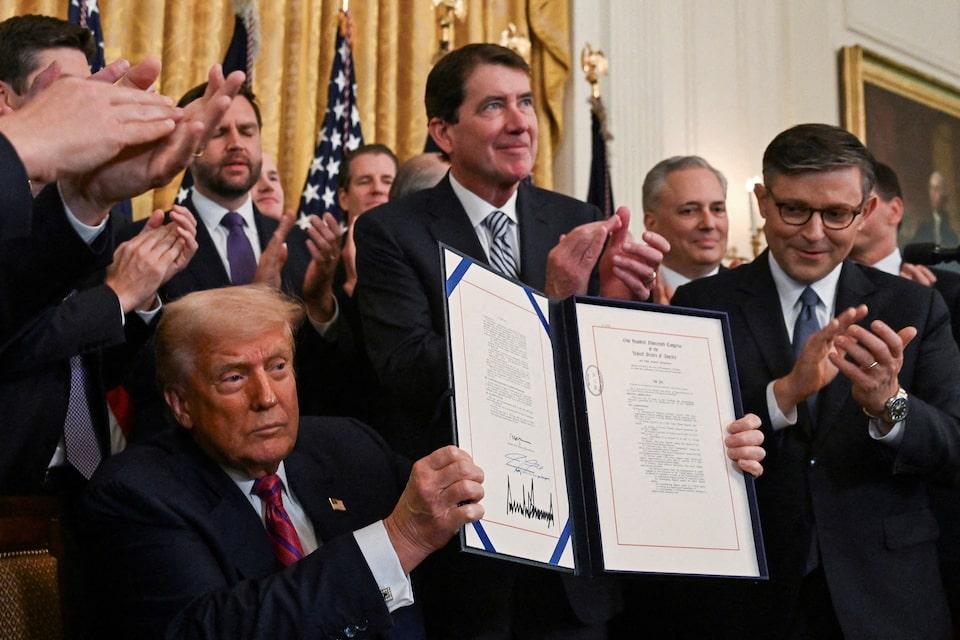
GENIUS Act sets federal rules for stablecoins Stablecoin use cases vary from retail to cross-border payments Private blockchains may appeal to banks for stablecoin issuance Aug 12 (Reuters) - Financial companies from Bank of America (BAC.N) , opens new tab to Fiserv (FI.N) , opens new tab are preparing to launch their own dollar-backed crypto tokens now that a new U.S. law has established the first-ever rules for stablecoins, but experts warn the path forward could be anything but simple. U.S. President Donald Trump on July 18 signed the GENIUS Act into law, setting federal rules and guidelines for cryptocurrency tokens pegged to the U.S. dollar known as stablecoins. This U.S. law, the first designed to facilitate crypto usage, could pave the way for the digital assets to become an everyday way to make payments and move money, experts said. Sign up here. The use of stablecoins, designed to maintain a constant value, usually a 1:1 U.S. dollar peg, has exploded in recent years, notably among crypto traders moving funds to and from other tokens, such as bitcoin and ether. Now, a slate of companies are entertaining their own stablecoin strategies to capitalize on the promise of instant payments and settlement that stablecoins offer. Payments on traditional banking rails can take several days to arrive, or take even longer across international borders. Among the companies considering stablecoins are Walmart and Amazon, the Wall Street Journal reported in June. Walmart and Amazon did not immediately respond to requests for comment. However, the new law will not immediately open the floodgates, experts said. The newfound opportunity to dabble in stablecoins can lead to numerous tricky considerations for firms, both strategic and technical. Companies have to embark on a lengthy process to deploy their own stablecoins, or decide whether it makes more sense to integrate existing stablecoins, like issuer Circle's (CRCL.N) , opens new tab USDC, into their business. Companies first have to decide the purpose of their stablecoins. For example, a retail platform could make a stablecoin available to customers to buy goods, which could appeal to crypto-savvy users. Some companies could use them internally for cross-border payments, given that stablecoins can enable near-instant payments, often with lower fees. How a company plans to use a stablecoin could affect whether it creates a stablecoin or works with a partner. "The intended use is going to matter a lot," said Stephen Aschettino, a partner at Steptoe. "Is this something really designed to drive customers to engage with the issuer, or is the issuer's primary motivation to have a stablecoin that is more ubiquitous?" For nonbanks, stablecoins will bring new compliance costs and oversight requirements, given that the GENIUS Act requires issuers to comply with anti-money laundering and "know your customer" (KYC) requirements. "Those that already have robust KYC risk management and regulatory change management programs or working towards implementing these program elements may have a competitive advantage," said Jill DeWitt, senior director of compliance and third-party risk management solutions at Moody's. One group likely to enjoy that advantage is banks, which are no strangers to screening for sanctions-related risks and verifying the identities of their customers. Bank of America and Citigroup (C.N) , opens new tab are actively considering issuing their own stablecoins, the CEOs of both banks said in earnings calls last month. Others like Morgan Stanley (MS.N) , opens new tab are closely monitoring stablecoin developments. JPMorgan Chase (JPM.N) , opens new tab CEO Jamie Dimon said the bank will be involved in stablecoins, without giving details. Banks need to weigh several factors before going live with stablecoins, including how holding the tokens might affect liquidity requirements, said Julia Demidova, head of digital currencies product and strategy at FIS. Banks holding assets like stablecoins on their balance sheets might be required to hold more capital under current U.S. bank rules. "The GENIUS Act is great, but if the bank is treating their stablecoin on the balance sheet under prudential banking regulation, you still need to look at the risk weight of the asset," she said. Another crucial question is how to issue stablecoins. Like other cryptocurrencies, stablecoins are created on a blockchain, a digital ledger that records transactions. Hundreds of blockchain networks exist today, two of the most popular being ethereum and solana. Both are considered public or "permissionless" blockchains because all transactions on those networks are available for anyone to see. Still, it is unclear which attribute companies issuing stablecoins would prioritize. Banks, in particular, could opt for their own private, or "permissioned," blockchains instead, Demidova said. "The banks would desire and demand that very clear governance and structure," she said. "In that permissionless environment, you don't have the governance and controls in place." Others like Nassim Eddequiouaq, CEO of Bastion, a provider of infrastructure for companies to issue their own stablecoins, see merits to permissionless blockchains. "We've seen a tremendous amount of interest for existing blockchains that have seen user adoption, that have been battle tested at scale, including during activity spikes," he said. Although the GENIUS Act has been signed into law, its effective date is potentially several years off, with federal banking regulators expected to issue rules in the meantime to fill in certain gaps. The Office of the Comptroller of the Currency, for instance, is expected to issue rules to outline several risk management and compliance requirements. Under the new U.S. framework, the Treasury Department will have to issue a rule on foreign stablecoin regulatory regimes and their compatibility with the new U.S. framework. "These things are going to have to phase in," said Aschettino. (This story has been refiled to fix a typo in paragraph 22) https://www.reuters.com/legal/government/companies-plan-stablecoins-under-new-law-experts-say-hurdles-remain-2025-08-12/