2025-08-12 05:34
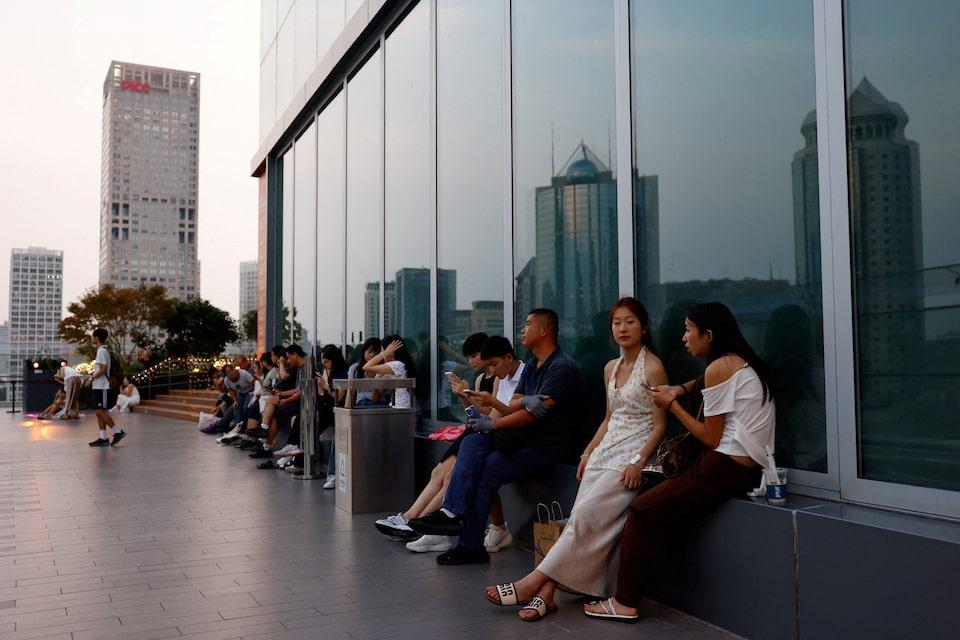
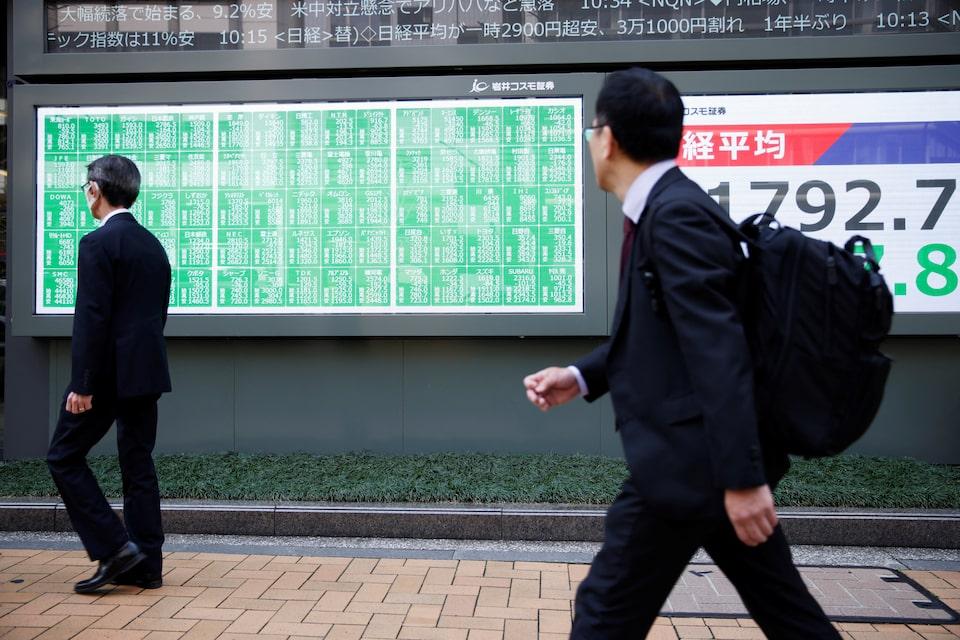
Japan's Nikkei, Australia's ASX scale record peaks Currencies calm ahead of US CPI RBA cut rates as expected, still cautious on future easing Investors await Trump-Putin summit on Friday SINGAPORE, Aug 12 (Reuters) - Asian stocks rose on Tuesday with Japanese equities hitting a record high as the extension of the tariff truce between the U.S. and China boosted sentiment and focus turned to a key U.S. inflation report to gauge the future policy-rate path. Australian shares (.AXJO) , opens new tab slightly extended gains while the currency was choppy after the Reserve Bank of Australia expectedly cut its main cash rate by a quarter point to a two-year low of 3.60%. Sign up here. The extension of a tariff truce between the world's two largest economies by another 90 days also buoyed sentiment in the region as it staved off triple-digit duties on Chinese exports to the United States. European futures pointed to a higher open, while Nasdaq futures were 0.15% higher. In Asia, Japan's Nikkei (.N225) , opens new tab climbed to an all-time high driven by sharp gains for tech companies and renewed optimism over trade with the United States. China's blue-chip stocks (.CSI300) , opens new tab were up 0.5% while Hong Kong's Hang Seng index (.HIS) , opens new tab was nearly flat. MSCI's broadest index of Asia-Pacific shares outside Japan (.MIAPJ0000PUS) , opens new tab rose slightly. The U.S. and China have engaged in a tit-for-tat tariff duel throughout the year, culminating in trade talks in Geneva, London and Stockholm since May that focused on bringing retaliatory tariffs down from triple-digit levels. "The tariff truce extension was largely priced in, which explains the muted reaction," said Marc Velan, head of investments at Lucerne Asset Management. The latest truce extension clears the way for investors to focus on an action-packed week dominated by U.S. inflation data and the first summit between U.S. and Russian leaders since June 2021. U.S. consumer price inflation data is due later on Tuesday and economists polled by Reuters forecast that month-on-month core CPI edged up 0.3% in July, faster than the 0.2% in the previous month. "I think the Fed will go ahead and cut in September, partly due to political pressure and partly due to the softening labour data," said Mike Houlahan, director at Electus Financial in Auckland. "But it'll be a conundrum for them (the Fed) if inflation starts to tick higher," Houlahan said. U.S. President Donald Trump has repeatedly criticised Federal Reserve Chair Jerome Powell this year for not cutting interest rates, and despite speculation he could dismiss Powell, Trump said he would most likely stay on as Chair. An upside surprise on inflation could add caution to market expectations of rate cuts by the Fed this year. Investors are currently pricing in at least two rate cuts in 2025 while JPMorgan expects four successive rate cuts starting in September. In commodities, gold prices were last at $3,353, having dropped nearly 1.6% on Monday after Trump said there would be no tariffs on imported gold bars. Oil prices were modestly higher ahead of the August 15 meeting between Trump and Russian President Vladimir Putin, aimed at negotiating an end to the war in Ukraine. The talks follow increased U.S. pressure on Russia, raising the prospect of penalties on Moscow if a peace deal is not reached. "The market is not pricing in significant outcomes from the meeting, but any shift in geopolitical tone could have marginal impact, particularly for commodities and certain emerging market assets," said Lucerne's Velan. Currencies were mostly calm in early trading, with the U.S. dollar steady against the euro and the yen. Elsewhere, bitcoin was modestly lower at $118,680 while etherum rose by 1% to $4290. https://www.reuters.com/world/china/global-markets-wrapup-2-2025-08-12/
2025-08-12 05:11
RBA cuts rates by 25 bp to 3.6% Aussie little changed, bonds steady SYDNEY, Aug 12 (Reuters) - Australia's central bank on Tuesday cut its main cash rate by a quarter point to a two-year low of 3.60%, citing a slowdown in inflation and a looser labour market, though it was cautious on the prospect of further easing. Wrapping up a two-day policy meeting, the Reserve Bank of Australia board said data and updated forecasts suggested core inflation would moderate to around the middle of its 2% to 3% target band assuming a gradual easing in policy. Sign up here. Markets had been fully priced for a cut, having been wrong-footed in July when the central bank held steady, given inflation had slowed as desired in the second quarter while unemployment had moved higher. "With underlying inflation continuing to decline back towards the midpoint of the 2–3 per cent range and labour market conditions easing slightly, as expected, the Board judged that a further easing of monetary policy was appropriate," the board said in a statement. "The Board nevertheless remains cautious about the outlook, particularly given the heightened level of uncertainty about both aggregate demand and potential supply." The RBA added the cut was a unanimous decision by policymakers, after a rare split one in July. The Australian dollar was largely calm at $0.6508, while three-year bonds reversed earlier losses to be flat at 96.60. Swaps imply just a 34% probability that the RBA would follow up with a September cut, although a move in November has been fully priced in. The RBA stunned markets just last month by holding rates steady at 3.85% in a rare split decision as the majority of policymakers wanted to wait for more data to confirm inflation was easing towards the midpoint of the 2-3% target band. Headline inflation eased to 2.1% in the June quarter, while the trimmed mean measure of core inflation hit a fresh three-year low of 2.7%. The labour market, on the other hand, is easing from full employment levels, with the jobless rate jumping to 4.3% from 4.1% in one month. There are signs that previous cuts in February and May are finally filtering through the economy, with consumer spending starting to pick up on the back of lower inflation and past tax cuts. "Unemployment has jumped, strengthening the case for cuts. At the same time, robust household spending shows some families can still find room for discretionary purchases," said Harry Murphy Cruise, head of economic research and global trade at Oxford Economics Australia. "In the end, prices and jobs trump everything else. With good news on inflation and bad news on unemployment, more easing is warranted." Oxford Economics expects one more rate cut this year, possibly in November. The RBA on Tuesday also slashed the outlook for economic growth as productivity stayed persistently weak. It, however, still forecast a slowdown in core inflation and maintained a steady labour market. The central bank has emphasised caution in easing, having only cut rates after the release of the quarterly inflation data. That is why investors are wagering on a cut in November and likely another in February next year. The global outlook appears to be improving slightly. On Monday, U.S. President Donald Trump extended a tariff truce with China by another 90 days, staving off triple-digit duties on Chinese goods. https://www.reuters.com/world/asia-pacific/australias-central-bank-cuts-rates-two-year-low-360-2025-08-12/
2025-08-12 05:07
Risks skewed to modest dollar gains after CPI: TD Securities Traders watch for signs of tariff pressures in CPI data Aussie largely shrugs off widely expected RBA rate cut TOKYO, Aug 12 (Reuters) - The dollar firmed against the yen on Tuesday and held its ground against the euro and sterling, as markets braced for a U.S. consumer inflation report later in the day that could shape expectations for Federal Reserve interest rate cuts. A moderate reading on price pressures could cement bets for a Fed rate reduction next month, but if signs emerge that U.S. President Donald Trump's tariffs are stoking inflation that might keep the central bank on hold for now. Sign up here. The dollar added 0.2% to 148.40 yen as of 0444 GMT. The euro edged slightly higher to $1.1622, while sterling eased slightly to $1.3426. The dollar index - which measures the currency against those three counterparts and three more rivals - was steady at 98.476, after advancing 0.5% over the past two sessions. Prior to that, the dollar had retreated as Trump's dovish-leaning pick to replace a Fed governor, and similarly inclined potential candidates for chairman, led traders to increase bets on Fed policy easing. In addition, Fed officials have sounded increasingly uneasy about signs of weakness in the U.S. labour market, signalling their as soon as September. Traders currently put the odds of a quarter-point cut on September 17 at about 89%. "Risk-reward heading into U.S. CPI this week is for a modest USD bounce as any upside surprise will challenge market pricing of almost a full cut by September," TD Securities strategists wrote in a research note. "A downside surprise, on the other hand, is unlikely to move Fed pricing and the USD as much," they said. "The reasoning is that for the Fed to consider an outsized cut of 50 basis points, the catalyst will be further deterioration in the labour market and not a downside CPI miss." Economists polled by Reuters expect core CPI to have risen 0.3% in July, pushing the annual rate higher to 3%. Currency markets largely ignored Trump's decision to in sharply higher tariffs on Chinese imports for another 90 days, a move that many market participants said had been expected. With the United States and China seeking to close a deal averting triple-digit import tariffs, a U.S. official told Reuters that chip makers Nvidia and AMD had agreed to allocate 15% of China sales revenues to the U.S. government, aiming to secure for semiconductors. The yuan was flat at 7.1917 per dollar in offshore trading . The Aussie fetched $0.6513 , little changed from Monday, after the Reserve Bank of Australia's widely expected decision to cut rates by a quarter point. The central bank cited a slowdown in inflation and a looser labour market, though it was cautious on the prospect of further easing. Cryptocurrency bitcoin edged up to around $119,049, after climbing as high as $122,308.25 on Monday, taking it close to the all-time peak of $123,153.22 from mid-July. https://www.reuters.com/world/middle-east/dollar-advances-against-yen-ahead-us-inflation-data-2025-08-12/
2025-08-12 03:00
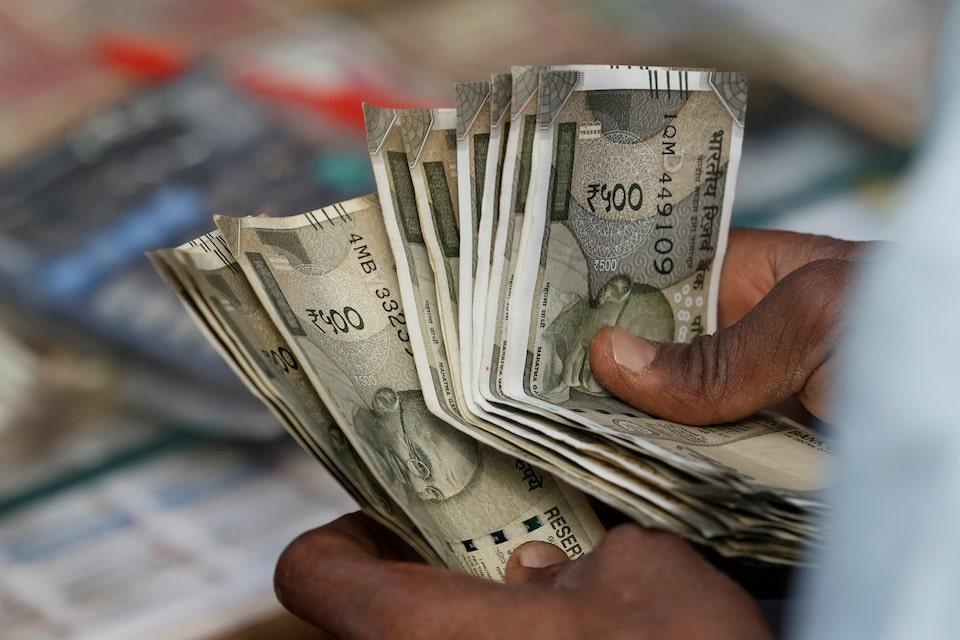
MUMBAI, Aug 12 (Reuters) - The Indian rupee is likely to open marginally weaker on Tuesday and maintain its downward bias ahead of U.S. inflation data, which will offer clues on the impact of tariffs on prices and signal how far the Federal Reserve may cut rates this year. The 1-month non-deliverable forward indicated the rupee will open in the 87.68-87.70 range versus the U.S. dollar, compared with the close of 87.66 on Monday. Sign up here. Having come close to breaching its all-time low of 87.95 last Tuesday, the rupee has since traded mostly in a narrow range, with any attempts at a meaningful recovery capped by persistent dollar demand from corporates and custodial clients. On Tuesday, the currency briefly inched past 87.50 before slipping back. Right now, "it’s hard to shake off" the bearish bias on the rupee, and the path of least resistance is "definitely" on the downside, a currency trader at a bank said. The problem for the rupee heading into the U.S. inflation data is that "it’s a lopsided setup", he said. Soft inflation numbers won’t move the needle much, while an upward surprise "will hit hard", said a trader at a foreign bank. The data is expected to show core U.S. inflation to have risen 0.3% in July, pushing the annual rate higher to 3%. The dollar index was largely unchanged at near 98.50, and Asian currencies were mixed on Tuesday. The July report will be scrutinised for the impact of tariffs on goods prices and whether higher tariffs are having a broader impact on prices, ANZ Bank said in a note, while pointing out that the June data had evidence that tariffs boosted prices in some categories. In the sessions before the data, investors have become more confident that the Fed will cut rates next month and at least once more this year, helped by a weak U.S. jobs report. KEY INDICATORS: ** One-month non-deliverable rupee forward at 87.82; onshore one-month forward premium at 12 paisa ** Dollar index down at 98.47 ** Brent crude futures up 0.1% at $66.7 per barrel ** Ten-year U.S. note yield at 4.28% ** As per NSDL data, foreign investors bought a net $322.6 million worth of Indian shares on Aug. 8 ** NSDL data shows foreign investors bought a net $9.3 million worth of Indian bonds on Aug. 8 https://www.reuters.com/world/india/rupee-likely-uphold-weak-bias-before-us-inflation-test-2025-08-12/
2025-08-12 00:52
Aug 12 (Reuters) - Oil prices rose on Tuesday as the United States and China extended a pause on higher tariffs, easing concerns an escalation of their trade war would disrupt their economies and crimp fuel demand in the world's two largest oil consumers. Brent crude futures gained 26 cents, or 0.39%, to $66.89 a barrel by 0015 GMT, while U.S. West Texas Intermediate crude futures rose 22 cents, or 0.34%, to $64.18. Sign up here. U.S. President Donald Trump extended a tariff truce with China by another 90 days, a White House official said on Monday, staving off triple-digit duties on Chinese goods as U.S. retailers prepared for the critical end-of-year holiday season. This raised hopes that an agreement could be attained between the world's two largest economies, and could help sidestep a virtual trade embargo between them. Tariffs risk slowing down economic growth, which could sap global fuel demand and drag oil prices lower. Investors are also looking ahead to a meeting between Trump and Russian President Vladimir Putin on August 15 in Alaska to negotiate an end to the war in Ukraine. The meeting is set amid heightened U.S. pressure on Russia, with the threat of harsher penalties on Russian oil buyers such as China and India if no peace deal is reached that could upset oil trade flows. "Any peace deal between Russia and Ukraine would end the risk of disruption to Russian oil that has been hovering over the market," ANZ senior commodity strategist Daniel Hynes wrote in a note. Trump set a deadline of last Friday for Russia to agree to peace in Ukraine or have its oil buyers face secondary sanctions, while pressing India to reduce purchases of Russian oil. Washington has also been pressing Beijing to stop buying Russian oil, with Trump threatening to impose secondary tariffs on China. The risk of those sanctions being enacted has receded ahead of the August 15 Trump-Putin meeting. Also on the radar is U.S. inflation data later in the day, that could hint at the Federal Reserve's interest rate path. Any sign that the central bank may cut rates soon would support crude prices. https://www.reuters.com/business/energy/oil-gains-us-china-tariff-pause-extension-boosts-trade-hopes-2025-08-12/

2025-08-12 00:36
Extension prevents US, China tariffs from snapping higher Trump says China has been 'dealing quite nicely' Trade analysts see extension easing path to Trump-Xi meeting WASHINGTON/BEIJING, Aug 12 (Reuters) - The United States and China have extended a tariff truce for another 90 days, staving off triple-digit duties on each other's goods as U.S. retailers get ready to ramp up inventories ahead of the critical end-of-year holiday season. U.S. President Donald Trump announced on his Truth Social platform on Monday that he had signed an executive order suspending the imposition of higher tariffs until 12:01 a.m. EST (0501 GMT) on November 10, with all other elements of the truce to remain in place. Sign up here. China's Commerce Ministry issued a parallel pause on extra tariffs early on Tuesday, also postponing for 90 days the addition of U.S. firms it had targeted in April to trade and investment restriction lists. "The United States continues to have discussions with the PRC to address the lack of trade reciprocity in our economic relationship and our resulting national and economic security concerns," Trump's executive order stated, using the acronym for the People's Republic of China. The tariff truce between Beijing and Washington had been due to expire on Tuesday at 12:01 a.m. EDT (0401 GMT). The extension until early November buys crucial time for the seasonal autumn surge of imports for the Christmas season, including electronics, apparel and toys at lower tariff rates. The new order prevents U.S. tariffs on Chinese goods from shooting up to 145%, while Chinese tariffs on U.S. goods were set to hit 125% - rates that would have resulted in a virtual trade embargo between the two countries. It locks in place - at least for now - a 30% tariff on Chinese imports, with Chinese duties on U.S. imports at 10%. There was relief on the streets of China's capital, where officials are grappling with the challenge Trump’s trade policy poses to the economy’s long-standing, export-oriented growth model. "I don't think either China or the United States wants to see their relationship continue to deteriorate," said Wang Mingyue, a 39-year-old professional working in robotics. "That's why both are taking the current approach, but the game and confrontation may not be over yet - so there's still risk." Markets showed optimism for a breakthrough between the two superpowers, with Asian stocks rising and currencies mostly steady, after treading water for weeks. Trump told CNBC last week that the U.S. and China were getting very close to a trade agreement and he would meet Xi before the end of the year if a deal was struck. TRADE 'DETENTE' CONTINUED The two sides announced a truce in their trade dispute in May after talks in Geneva, Switzerland, agreeing to a 90-day period to allow further talks. They met again in Stockholm, Sweden, in late July, and U.S. negotiators returned to Washington with a recommendation that Trump extend the deadline. Treasury Secretary Scott Bessent has said repeatedly that the triple-digit import duties both sides slapped on each other's goods in the spring were untenable and had essentially imposed a trade embargo between the world's two largest economies. "It wouldn’t be a Trump-style negotiation if it didn’t go right down to the wire," said Kelly Ann Shaw, a senior White House trade official during Trump's first term and now with law firm Akin Gump Strauss Hauer & Feld. She said Trump had likely pressed China for further concessions before agreeing to the extension. Trump pushed for additional concessions on Sunday, urging China to quadruple its soybean purchases, although analysts questioned the feasibility of any such deal. Trump did not repeat the demand on Monday. "What is he going to offer in exchange?" said Xu Tianchen, senior economist at the Economist Intelligence Unit in Beijing. "China says: 'you should allow us to buy more high-tech goods,' but the U.S. is reluctant." Xu said Trump's refusal to ease his 20% tariff on Chinese goods over fentanyl flows suggested both sides believed they could continue to withstand the trade shock. "If (Trump) escalates, he will struggle to gain an upper hand over China, which has many cards to play," Xu said. China's exports to the U.S. fell an annual 21.7% last month, according to the country's latest trade data, while shipments to Southeast Asia rose 16.6% over the same period as manufacturers sought to pivot to new markets and capitalise on a separate reprieve that allowed trans-shipment to the U.S. Separate U.S. data released last week showed the trade deficit with China shrank to its lowest in more than 21 years in June. Still, analysts expect the world’s two largest economies to reach an agreement before long, as their deep interdependence makes pursuing alternative markets unattractive over the long term. Ryan Majerus, a former U.S. trade official now with the King & Spalding law firm, said the news would give both sides more time to work through long-standing trade concerns. “This will undoubtedly lower anxiety on both sides as talks continue, and as the U.S. and China work toward a framework deal in the fall," he said. Washington has also been pressing Beijing to stop buying Russian oil to pressure Moscow over its war in Ukraine, with Trump threatening to impose secondary tariffs on China. https://www.reuters.com/world/china/us-china-extend-tariff-truce-by-90-days-staving-off-surge-duties-2025-08-12/