2025-08-11 18:27
ISTANBUL, Aug 11 (Reuters) - Firefighters in Turkey are battling wildfires in the centre of the northwestern province of Canakkale, fanned by strong winds, and hundreds of residents have evacuated in precaution, local authorities and media said on Monday. Airplanes, helicopters, vehicles and around 700 personnel are fighting the blazes, city Governor Omer Toraman said in a post on X. Sign up here. Authorities launched some precautionary evacuations, including a university campus, and military and residential areas, and urged residents to avoid unnecessary travel to keep roads clear for emergency vehicles. The city's airport and the Dardanelles Strait, as well as a part of the highway, were shut due to the wildfires for several hours on Monday before re-opening after sunset. Reuters images showed blazes consuming swathes of forest, with thick smoke billowing into the sky. Helicopters were seen scooping water from the Dardanelles Strait and dousing the wildfires, while water-spraying police vehicles worked to extinguish flames that had spread to some residential buildings in the area. Temperatures in the region reached 33 degrees Celsius with a wind speed of up to 66 kilometres per hour, according to Turkey's meteorological service. Some 50 people were affected by smoke and were treated at nearby medical facilities, with no life-threatening conditions, the governor said. https://www.reuters.com/sustainability/climate-energy/hundreds-evacuated-northwestern-turkey-authorities-fight-wildfires-2025-08-11/

2025-08-11 17:50
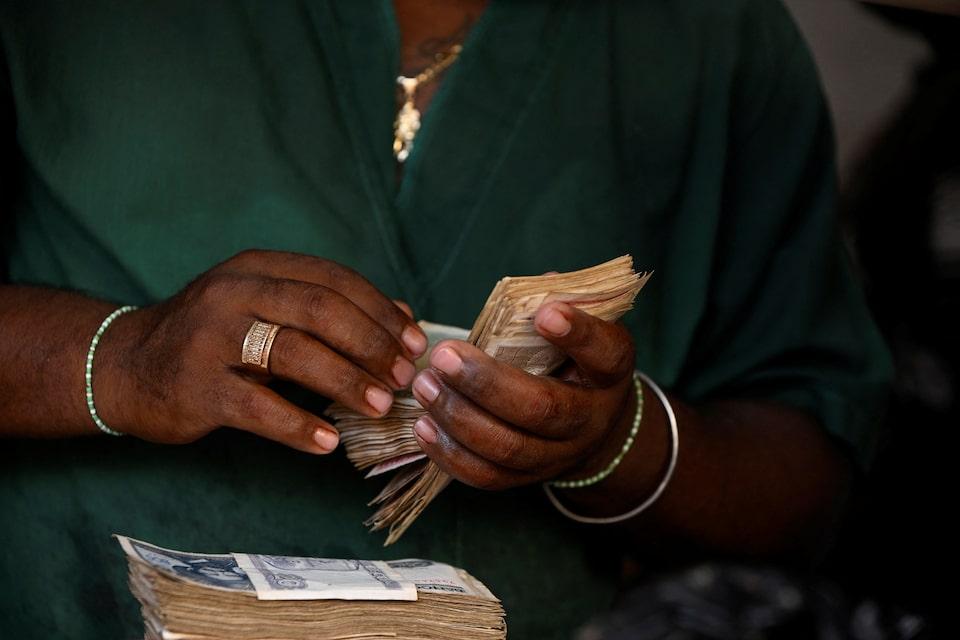
Cuban peso hits record low of 400 per dollar on informal market Partial dollarization fuels inflation, inequality and social tensions in Cuba Government blames sanctions, critics cite slow economic reforms HAVANA, Aug 11 - The Cuban peso traded on the informal market at an all-time low of 400 to the dollar on Monday, as the partial dollarization of the state-dominated economy gained momentum, stoking social tensions amid scarcity of basic goods, runaway inflation, and deteriorating infrastructure and public services. The import-dependent country’s government mainly blames U.S. sanctions targeting foreign exchange earnings for the crisis that has led to an 11% contraction of the economy since 2019. Critics blame a sluggish reform of the economy. Sign up here. Prime Minister Manuel Marrero said in December that a partial dollarization of the economy was needed to capture greenbacks circulating in the country as part of efforts to fix the economy. Partial dollarization refers to the dollar replacing the local peso for certain goods and services. The peso has depreciated nearly 25% this year, according to Miami-based tracker El Toque, used by most residents in the Communist-run country to gauge the peso's true value. The dollar was trading at 305 pesos on January 1 and 40 pesos when the tracker debuted in 2021. The currency's weakening this year has coincided with government moves to open well-stocked retail outlets that accept only convertible currency in cash, foreign credit cards, or a state-issued dollar card, and increased use of those forms of payment in tourism, wholesale trade, and to pay customs duties. HAVES AND HAVE NOTS Government officials have acknowledged dollarization and inflation have increased inequality in a country where about 40% of the population has no access to foreign currency through remittances or other sources. That dollar-less population generally does not earn enough in state jobs or on pensions to meet basic needs. “To overcome this (economic) situation, we have been forced to accept the partial dollarization of the economy,” President Miguel Diaz-Canel told the National Assembly last month. “This in some ways benefits those who have certain capital resources or receive remittances, which translates into an undesirable widening of … social inequality." The government maintains a fixed exchange rate of 24 pesos to the dollar, plus a "discretionary" rate of 120 pesos, with the latter increasingly used to exchange money with tourists and set prices for subsidized goods and services such as public transportation and gasoline. At the same time, a growing private sector is banned from using official sources of foreign exchange and follows the informal rate to price its mainly imported goods. “Here, almost everything is in dollars. Cuban money is worthless for buying food and barely anything else … and I don't have a single dollar,” said retiree Freddy Portillo, who has a 1,500-peso pension, as she walked through a main shopping area in the old town of Havana. https://www.reuters.com/world/americas/cuban-currency-hits-record-low-dollarization-gains-ground-2025-08-11/
2025-08-11 17:33
SAO PAULO, Aug 11 (Reuters) - Brazil Finance Minister Fernando Haddad said on Monday that his virtual meeting with U.S. Treasury Secretary Scott Bessent had been canceled after initially being scheduled for Wednesday. That was a setback for the Brazilian government, which had hoped to use the meeting to negotiate tariffs after U.S. President Donald Trump's administration imposed 50% duties on several Brazilian goods. Sign up here. Speaking to GloboNews TV, Haddad said no new date had been set for the call, despite Brazil's request to reschedule it following the cancellation notice. The minister lamented that Brazil was not even able to sit at the table to negotiate tariffs with the United States and criticized what he called "pseudo-Brazilians" in Washington lobbying against their own country. The tariff hike was linked by the Trump administration to the trial of his right-wing ally, former President Jair Bolsonaro, who is facing charges over an alleged coup attempt following his 2022 electoral defeat. Congressman Eduardo Bolsonaro, Bolsonaro's son, has been in the U.S. since March, campaigning for sanctions against those responsible for the judicial proceedings. Haddad said Brazil will need to explore other markets more aggressively, highlighting Southeast Asia as a promising region and calling for urgent progress on a trade deal between South American bloc Mercosur and the European Union. The minister also said the government will soon issue an executive order to address the impact of higher U.S. tariffs. The package will include structural reforms to Brazil's export guarantee mechanisms through the Export Guarantee Fund (FGE). According to Haddad, the order will also support certain government purchases and credit measures, forming a multi-pronged response as there is no single solution for the roughly 10,000 companies affected. https://www.reuters.com/world/americas/brazil-us-meeting-canceled-amid-tariff-dispute-says-finance-minister-2025-08-11/

2025-08-11 15:28
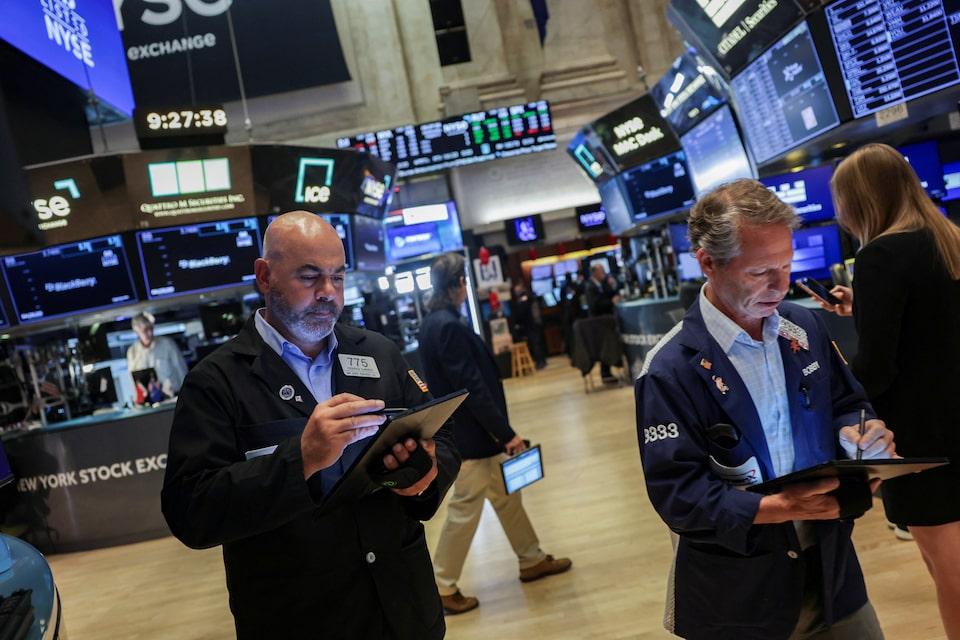
S&P 500 and Down edge lower, Nasdaq gains Dollar, bonds await US CPI report to refine rate cut chances Oil falls ahead of Trump/Putin meeting on Ukraine Gold down around 1%, traders grapple with tariff uncertainty NEW YORK/LONDON, Aug 11 (Reuters) - Global equity markets edged lower in a choppy session while long-dated U.S. Treasuries fell on Monday, as investors braced for a week packed with closely-watched developments on trade and geopolitics in addition to key U.S. economic data. A U.S. tariff deadline on China, due to expire on Tuesday, is expected to be extended again, while U.S. President Donald Trump and Russian President Vladimir Putin are due to meet in Alaska on Friday to discuss ending the Ukraine war. Sign up here. On Wall Street, the benchmark S&P 500 index and the Dow were trading slightly lower, while the Nasdaq was down. Energy and materials stocks were driving losses while healthcare and consumer discretionary shares were making gains. The Dow Jones Industrial Average (.DJI) , opens new tab fell 0.33%, the S&P 500 (.SPX) , opens new tab fell 0.02% to 6,390.92 and the Nasdaq Composite (.IXIC) , opens new tab rose 0.11%. In Europe, the STOXX 600 (.STOXX) , opens new tab index fell 0.07%. MSCI's gauge of stocks across the globe (.MIWD00000PUS) , opens new tab was down 0.11% to 940.16, trading near its all-time record high reached in July. "At the surface level the market is flat and calm and it looks like we are in wait-and-see mode to what the economic data will we are going to get tomorrow; all eyes on the CPI," Wasif Latif, chief investment officer at Sarmaya Partners in New Jersey, said. "When you look underneath the covers and at the breakdown within the market, you're getting a little bit more of a selloff." The main economic release this week will be U.S. consumer prices on Tuesday, with analysts expecting the impact of tariffs to help nudge the core up 0.3% to an annual pace of 3% and away from the Federal Reserve target of 2%. An upside surprise would challenge market wagers for a September rate cut, though analysts assume it would have to be a very high number given that a downward turn in payrolls is now dominating the outlook. Markets imply around a 90% probability of a September easing, and at least one more cut by year-end. The yield on benchmark U.S. 10-year notes fell 1 basis point to 4.273%, while the 30-year bond yield fell 1.7 basis points to 4.8373%. Trump having repeatedly criticised the Fed for not cutting rates at recent meetings, and markets are eyeing who will succeed current chair Jerome Powell, whose term ends in May. This, said Paul Mackel, Global Head of FX Research at HSBC, meant that the dollar's reaction to the CPI data would not be straightforward. If the figure indicated higher U.S. tariff price pressures, "that could support the stagflation narrative, and to the dollar's detriment", he said, adding that this would also go against the view of some policymakers that tariffs were not causing prices to increase. "If, however, softer U.S. CPI readings materialise, including the core goods figures, this would likely challenge the dollar too by supporting the case for further Fed easing, and perhaps see greater criticism from the U.S. administration towards Fed Chair Powell." The dollar strengthened 0.2% to 148.01 against the Japanese yen and was up 0.59% to 0.813 against the Swiss franc . The euro was down 0.32% against the dollar at $1.1602. The dollar index rose 0.37% to 98.59. The Australian dollar eased 0.26% to $0.6507 ahead of a meeting of the Reserve Bank of Australia, which is widely expected to back a rate cut. It stunned markets in July by skipping an easing of policy to await more inflation data. Gold prices fell 1.53% to $3,346/58 an ounce after wild swings last week on reports that the U.S. would slap 39% tariffs on some gold bars, which are major exports of Switzerland. The White House has said it planned to issue an executive order clarifying the country's stance. Oil prices edged lower as investors looked ahead to the talks between Trump and Putin in Alaska on Friday, with U.S. policy towards Russian oil exports in focus. Brent fell 0.26% to $66.42 a barrel, while U.S. crude dropped 0.17% to $63.77. https://www.reuters.com/world/china/global-markets-global-markets-2025-08-11/
2025-08-11 14:42
Paxos joins Circle, Ripple in applying for trust bank licenses Company issues PayPal's stablecoin PYUSD Paxos previously applied for trust bank charter in 2020 Aug 11 (Reuters) - Paxos Trust Company, the cryptocurrency firm behind PayPal's stablecoin, said it is applying to create a national trust bank in the U.S., joining a raft of digital asset companies looking to gain a larger foothold in the traditional financial system. If the charter is granted by the U.S. Office of the Comptroller of the Currency, it would allow Paxos to manage and hold assets on behalf of customers and settle payments faster. Unlike traditional banks, the license would not allow Paxos to take cash deposits or make loans. Sign up here. If approved, Paxos would convert its limited purpose trust charter with the New York Department of Financial Services to a federal charter under the OCC. The charter wouldn't change Paxos' business model, but would offer the "highest level of regulatory oversight... that carries more weight in the U.S. and globally," according to a source familiar with the matter. Paxos previously applied for a national trust bank charter in 2020, and the firm received preliminary conditional approval from the OCC in 2021. But its application stalled and eventually expired in 2023. Crypto platform Anchorage Digital is currently the only digital asset company with a national trust bank charter. Stablecoin firm Circle (CRCL.N) , opens new tab along with crypto firm Ripple also applied for national trust bank charters last month. Paxos offers businesses blockchain and stablecoin infrastructure and capabilities, and issues several of its own stablecoins. Paxos issues PayPal's (PYPL.O) , opens new tab stablecoin PYUSD, which has a market capitalization of more than $1 billion. Stablecoins, a type of cryptocurrency designed to maintain a constant value, usually a 1:1 dollar peg, are commonly used by crypto traders to move funds between tokens. Their use has grown rapidly in recent years, and proponents say they could be used to send payments instantly. Last month, U.S. President Donald Trump signed a law to create a regulatory regime for stablecoins, a milestone that experts said could pave the way for the digital assets to become an everyday way to make payments and move money. The law's passage was the culmination of a long lobbying effort by the crypto industry, which donated more than $245 million in last year's elections to aid pro-crypto candidates including Trump, according to Federal Election Commission data. Paxos had previously partnered with Binance, the world's largest cryptocurrency exchange, to market and distribute the Binance USD stablecoin. New York ordered Paxos in early 2023 to stop issuing Binance's stablecoin, and Paxos subsequently ended the partnership. Last week, Paxos reached a $48.5 million settlement to resolve New York charges that the company failed to police illegal activity related to Binance, after Binance's former chief executive pleaded guilty to breaking U.S. anti-money laundering laws as part of a $4.3 billion settlement in 2023. https://www.reuters.com/sustainability/boards-policy-regulation/paxos-joins-spate-crypto-companies-applying-us-trust-bank-licenses-2025-08-11/
2025-08-11 12:46
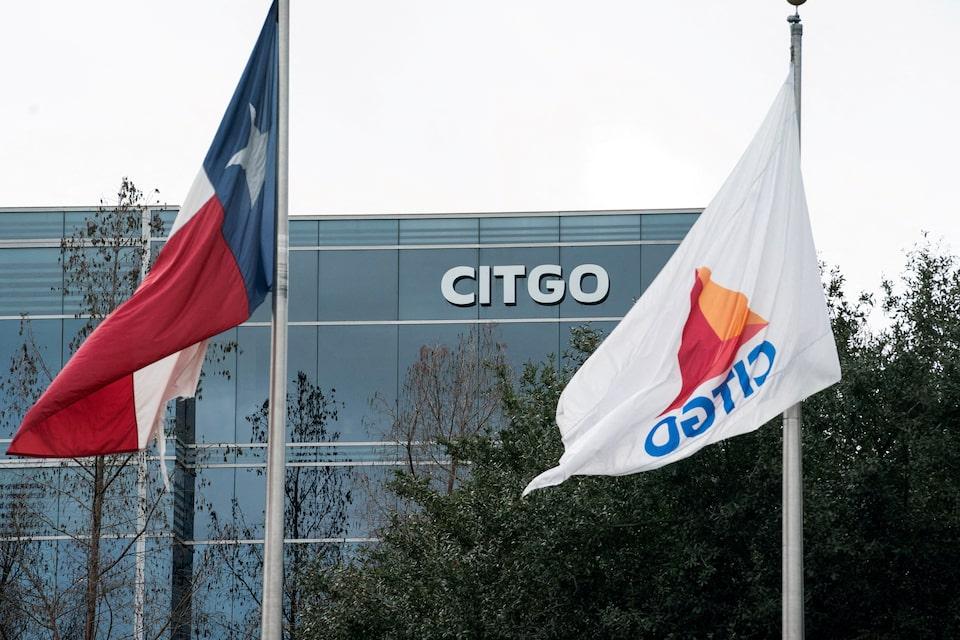
HOUSTON, Aug 11 (Reuters) - Toronto-listed miner Gold Reserve (GRZ.V) , opens new tab has asked a U.S. federal court to proceed to the final sale hearing that will decide the winner of an auction of shares in the parent of Venezuela-owned refiner Citgo Petroleum, according to a filing. Gold Reserve's request was filed on Monday, following a notification last week about a competing offer by an unidentified bidder. A $7.4 billion bid by a group led by a subsidiary of the miner was recommended last month as the winner of the bidding round, but the judge in Delaware must still decide whether to approve it. Sign up here. https://www.reuters.com/legal/litigation/gold-reserve-asks-us-court-proceed-sale-hearing-citgo-auction-2025-08-11/