2025-08-11 12:38
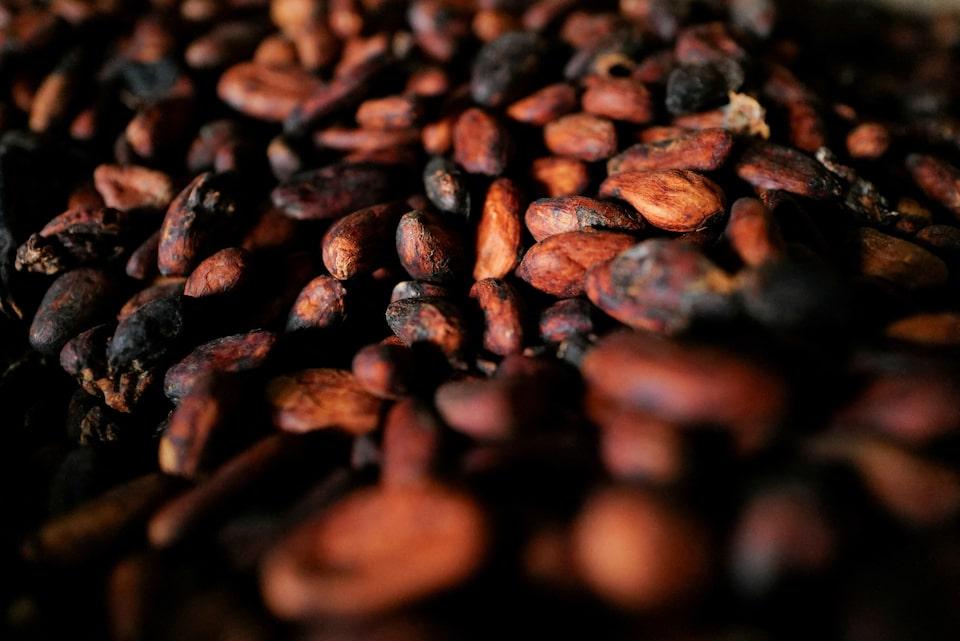
Talks come as trading costs soar, driving out independent firms Cocoa prices more than doubled last year and remain elevated Hartree last year bought soft commodities trader ED&F Man LONDON/PARIS, Aug 11 (Reuters) - Global energy and commodities trader Hartree Partners is in talks to acquire French agro-industrial firm Touton, which trades nearly 10% of the world's cocoa, two sources with direct knowledge of the matter told Reuters. The global cocoa trade is experiencing a major shakeup as problems in West Africa - the world's top growing region - push prices to historic highs, putting pressure on independent firms like Touton, which traces its history back more than 150 years. Sign up here. One of the sources said Touton executives discussed an acquisition deal in person with Hartree founding partner Stephen Hendel and the firm's head of investments Scott Levy about a month ago. A second source confirmed that talks over a possible Hartree purchase of Touton had taken place, but did not give further detail. Both sources declined to be named due to the sensitivity of the matter. Hartree told Reuters it does not comment on what it called "market rumours". Touton did not respond to a request for comment. Hartree entered the soft commodities space last year with the purchase of UK-based ED&F Man Commodities, a centuries-old player in sugar and coffee. An acquisition of Touton, which trades in coffee in addition to cocoa, would cement Hartree's expansion into soft commodities. WEST AFRICAN SHOCK FAVOURS DEEPER POCKETS Adverse weather and disease resulted in poor harvests in leading cocoa growers Ivory Coast and Ghana last year, causing global cocoa prices to more than double. At a record high above $12,000 a metric ton, the chocolate ingredient was, for a time, more expensive than most industrial metals. Prices remain at historically elevated levels, with trading in cocoa futures on the ICE exchange still largely illiquid and volatile following last year's exodus of hedge funds from the sector. The exchange is now requiring those trading its cocoa futures - used as a benchmark for pricing physical beans around the world - to put up large amounts of cash as collateral against potential trading losses. However, after some cocoa traders racked up losses of more than $1 billion on their futures contracts last year, banks are increasingly reluctant to lend to them. "Banks now understand that cocoa and coffee are volatile," said the cocoa trading head at a global agri-commodities trade house. Touton posted a net profit of 130 million euros ($151.53 million) in the year to March 2024, according to its most recent annual results, up from 17 million euros the year before. The global cocoa trading head said Touton had an unusually good year, but added that banks consider it a once-off and still prefer, when it comes to cocoa, to lend to companies with deeper pockets. Hartree is owned by investment firm Oaktree Capital Management and its founding partners - Hendel and Stephen Semlitz, both former co-heads of energy trading at Goldman Sachs, and Guy Merison, who also worked at the bank. Oaktree had $209 billion in assets under management as of June 30, according to its website. Four cocoa traders, including the second source with direct knowledge of the talks, said Touton CEO Patrick de Boussac is nearing retirement age and looking to cash out. "Hartree want to buy. Touton want to sell. If the price is right, the deal will happen," said a second cocoa trading head at an agri-commodities trade major. ($1 = 0.8579 euros) https://www.reuters.com/world/europe/hartree-talks-buy-major-cocoa-trader-touton-sources-say-2025-08-11/
2025-08-11 12:31
TORONTO, Aug 11 (Reuters) - Barrick Mining CEO (ABX.TO) , opens new tab Mark Bristow said on Monday that the World Gold Council is waiting for clarity from the United States regarding potential tariffs on gold bars, but he added that the impact on mining companies would be minimal as they are “price takers.” In an interview with Reuters, Bristow also said Barrick is not acting as a facilitator between Saudi Arabia and Pakistan for the Reko Diq copper-gold project. Saudi Arabia’s sovereign wealth fund PIF was in talks with the Pakistani government to invest in the project. Sign up here. Concerning Barrick's ongoing dispute with Mali, Bristow said the company has not considered selling its Loulo-Gounkoto gold mine complex to a third party at this stage. The Canadian miner beat analysts' expectations for second-quarter profit on Monday, as a surge in gold prices helped to offset a drop in production, including from Mali. The West African nation's military government temporarily took over Loulo-Gounkoto in June, escalating a dispute over the company’s alleged refusal to sign a new mining contract and non-payment of taxes. Barrick in its results released on Monday said that due to this loss of control of the mine in Mali, the company had recorded a pretax loss of $1.03 billion. https://www.reuters.com/world/americas/gold-council-awaiting-us-clarity-gold-bar-tariffs-barrick-ceo-says-2025-08-11/

2025-08-11 12:28
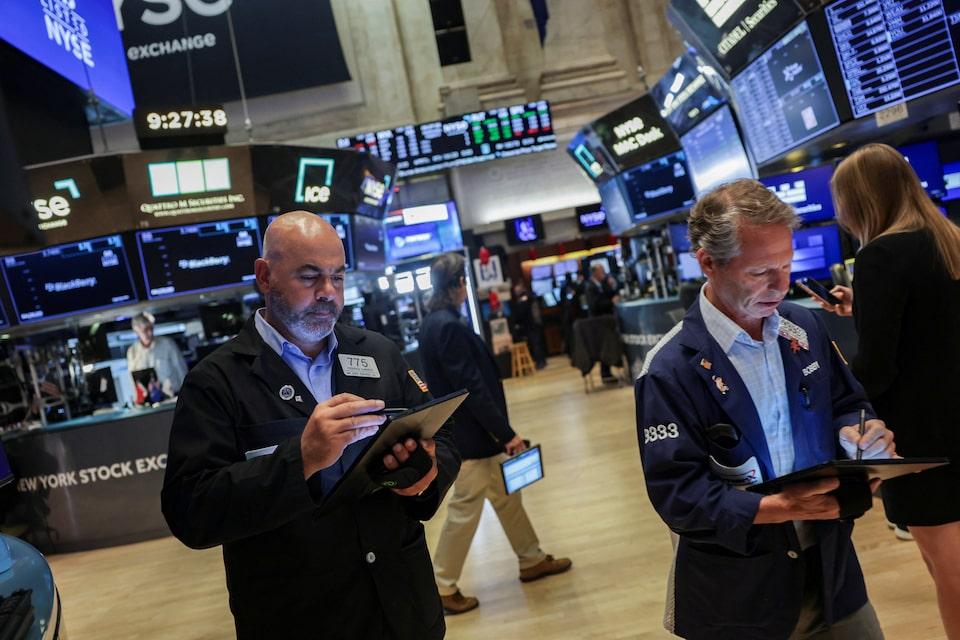
US futures slightly higher, world index near record top Dollar, bonds await US CPI report to refine rate cut chances Oil steadies ahead of Trump/Putin meeting on Ukraine Gold down around 1%, traders grapple with tariff uncertainty SYDNEY/LONDON, Aug 11 (Reuters) - Stocks marked time on Monday, holding just shy of peaks scaled in late July, as investors awaited a crucial report on U.S. inflation that will likely also set the course of the dollar and bonds. Trade and geopolitics also loom large for investors this week. A U.S. tariff deadline on China, due to expire on Tuesday, is expected to be extended again, while U.S. President Donald Trump and Russian leader Vladimir Putin are due to meet in Alaska on Friday to discuss ending the Ukraine war. Sign up here. S&P 500 futures were last up 0.16%, with Europe's STOXX 600 share index flat on the day (.STOXX) , opens new tab after Asia-Pacific stocks (.MIAPJ0000PUS) , opens new tab had gained 0.3%. That leaves MSCI's world share index (.MIWD00000PUS) , opens new tab around 0.2% below its all-time high hit in late July as a strong earnings season in the United States, and a mildly positive one in Europe, support overall sentiment, helping investors to shrug off the impact of soft U.S. July jobs data. The main economic release this week will be U.S. consumer prices on Tuesday, with analysts expecting the impact of tariffs to help nudge the core up 0.3% to an annual pace of 3% and away from the Federal Reserve target of 2%. An upside surprise would challenge market wagers for a September rate cut, though analysts assume it would have to be a very high number given that a downward turn in payrolls is now dominating the outlook. It also comes at a complicated time for the Fed, with Trump having repeatedly criticised policymakers for not cutting rates at recent meetings, and with the focus on who will succeed current chair Jerome Powell, whose term ends in May. This, said Paul Mackel, Global Head of FX Research at HSBC, meant that the dollar's reaction to the CPI data would not be straightforward. If the figure indicated higher U.S. tariff price pressures, "that could support the stagflation narrative, and to the dollar's detriment", he said, adding this would also go against the view of some policymakers that tariffs were not causing prices to increase. "If, however, softer U.S. CPI readings materialise, including the core goods figures, this would likely challenge the dollar too by supporting the case for further Fed easing, and perhaps see greater criticism from the U.S. administration towards Fed Chair Powell." Markets imply around a 90% probability of a September easing, and at least one more cut by year-end. That has helped support Treasuries, and the U.S. benchmark 10-year yield was last at 4.27%, down around 1 basis point and hovering near last week's low of 4.187%. The prospect of lower borrowing costs has supported equities, along with a run of strong earnings, particularly from tech names. Analysts were unsure what to make of reports, including by Reuters, that Nvidia (NVDA.O) , opens new tab and AMD (AMD.O) , opens new tab have agreed to give the U.S. government 15% of their revenues from chip sales in China, under an arrangement to obtain export licences for the semiconductors. Shares of both companies were marginally lower in pre-market trading. CHINA EXPORTS DEFLATION Chinese blue chips (.CSI300) , opens new tab added 0.4% after data showed consumer price inflation ticked up in July, but producer prices kept falling as the country's massive manufacturing sector exported deflation to the rest of the world. Figures on Chinese industrial output and retail sales for July are due on Friday, and forecasts are for a slight slowdown after a jump in the previous month. Currencies were quiet, with early trading thinned by a holiday in Japan. The euro was marginally softer at $1.1627 while the dollar inched up to 147.87 yen. The Australian dollar eased to $0.6510 ahead of a meeting of the Reserve Bank of Australia, which is widely expected to back a rate cut. It stunned markets in July by skipping an easing of policy to await more inflation data. In commodity markets, gold fell 1.3% to $3,354 an ounce after wild swings last week on reports that the U.S. would slap 39% tariffs on some gold bars, which are major exports of Switzerland. The White House has said it planned to issue an executive order clarifying the country's stance. Oil prices stabilised as investors looked ahead to the talks between Trump and Putin in Alaska on Friday, with U.S. policy towards Russian oil exports in focus. Brent rose 0.6% to $66.99 a barrel, while U.S. crude gained 0.5% to $64.20. https://www.reuters.com/world/china/global-markets-wrapup-5-2025-08-11/
2025-08-11 12:16
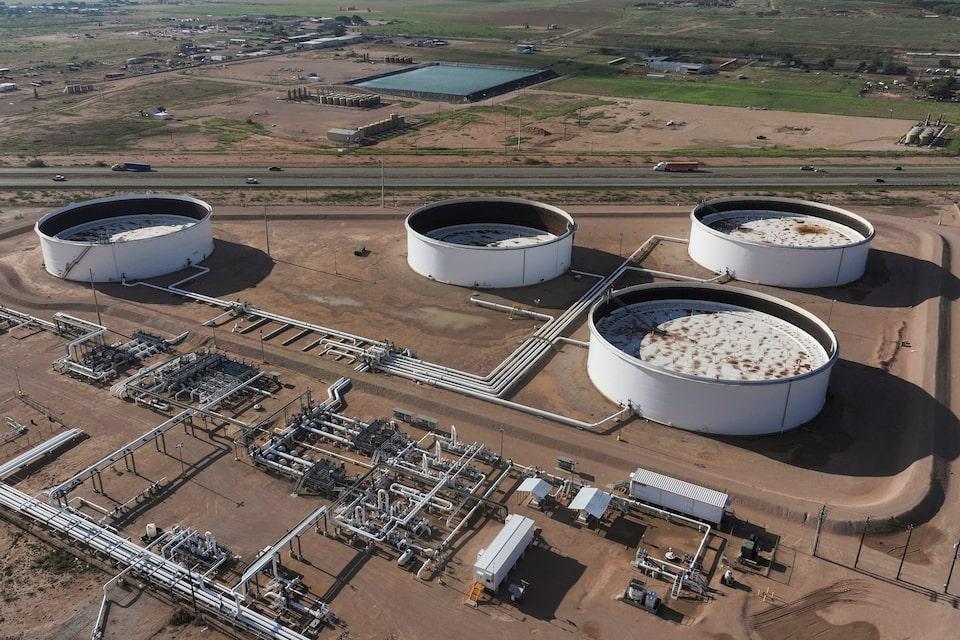
Trump and Putin to meet on Friday in Alaska UBS lowers Brent crude forecast on higher supply China producer prices fall more than expected in July LONDON, Aug 11 (Reuters) - Oil prices edged higher on Monday, after falling more than 4% last week, as investors looked ahead to talks between the U.S. and Russia later this week on the war in Ukraine. Brent crude futures were up 36 cents, or 0.54%, to $66.95 a barrel at 1202 GMT, while U.S. West Texas Intermediate crude futures were up 34 cents, or 0.53%, to $64.22. Sign up here. U.S. President Donald Trump said on Friday that he would meet Russian President Vladimir Putin on August 15 in Alaska to negotiate an end to the war in Ukraine. The talks follow increased U.S. pressure on Russia, raising the prospect that penalties on Moscow could be tightened if a peace deal is not reached. Trump set a deadline of last Friday for Russia, which invaded Ukraine in February 2022, to agree to peace or have its oil buyers face secondary sanctions. At the same time, Washington is pressing India to reduce purchases of Russian oil. Oil prices fell in recent days as market participants reduced supply disruption estimates, likely because the U.S. only imposed an extra tariff on India rather than all buyers of Russian oil, said UBS analyst Giovanni Staunovo. UBS has lowered its year-end Brent crude forecast to $62 a barrel from $68, citing higher supply from South America and resilient output from sanctioned countries. The bank added that Indian demand had fallen short of its expectations of late, and that it expected OPEC+ to pause its production hikes unless larger unexpected supply disruptions emerge. An Exxon Mobil-led consortium began crude production four months earlier than expected at a fourth floating production, storage and offloading vessel in Guyana, Exxon said on Friday. Trump's higher tariffs on imports from dozens of countries, which took effect on Thursday, are expected to weigh on economic activity as they force changes to supply chains and fuel higher inflation. Separately, data from the National Bureau of Statistics on Saturday showed China’s producer prices fell more than expected in July. https://www.reuters.com/business/energy/oil-edges-up-ahead-us-russia-talks-2025-08-11/
2025-08-11 12:13
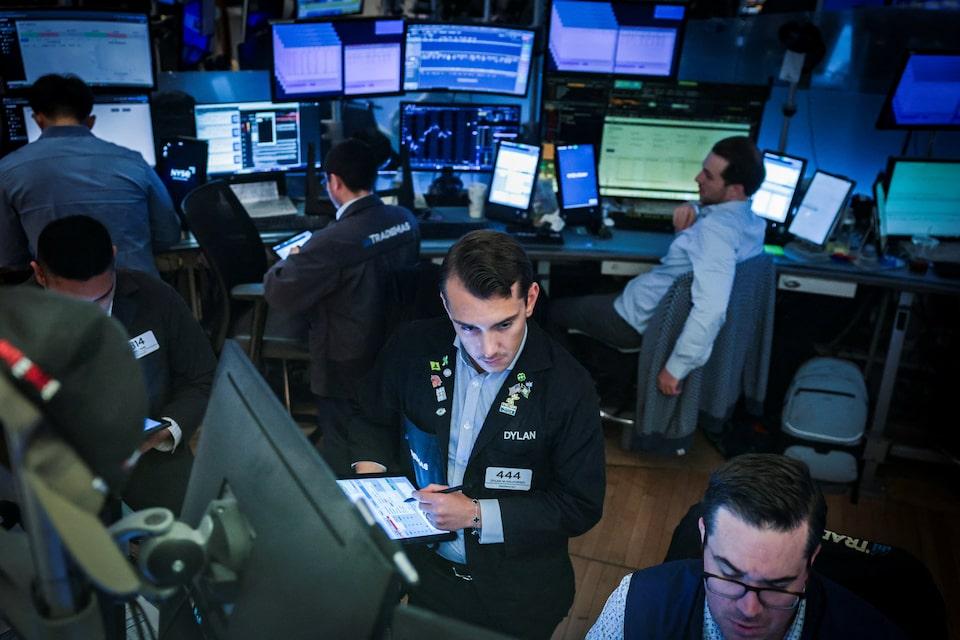
BENGALURU, Aug 11 (Reuters) - Longer-term U.S. Treasury yields will rise modestly in coming months on tariff inflation worries and a deluge of new debt issuance even as short-term yields fall on renewed Federal Reserve rate cut bets, a Reuters survey of bond strategists showed. Both two-year and 10-year yields have fallen about 25 basis points since mid-July despite nearly half a trillion dollars of new Treasury securities expected to hit the market this quarter alone. Sign up here. The bulk of that yield decline followed big downward revisions to previous months' hiring data that led President Donald Trump to fire the Bureau of Labor statistics commissioner. A September Fed rate reduction is now all but certain after a long pause, with nearly two more priced into interest rate futures by year-end following concerns about the strength of the job market as well as mounting worries over future political interference in Fed policy. "The market, as we've seen, has a tendency to take on board a downside surprise on growth and the labor market and run with additional expected cuts. We've been reluctant to take that on board. In fact, we've been pushing back on this," said Jean Boivin, head of the BlackRock Investment Institute. "This is a world where the Fed will have an easing bias, will want and have the intent to cut, but will be constrained in its ability to deliver that because the inflation piece of the puzzle will not be cooperating as much," Boivin added. Although many market participants view the surge in U.S. tariffs to their highest since the Great Depression as a temporary boost to inflation, many others are concerned this will prove more persistent at a time when it is already well above the Fed's 2% target. Consumer price index (CPI) data due on Tuesday are expected to show a further rise in July. The U.S. 10-year Treasury yield, currently 4.27%, will edge up to 4.30% in three months and trade around there at end-January and in a year, medians from nearly 50 bond strategists in an August 6-11 Reuters poll showed. Policy-rate sensitive 2-year Treasury yields were expected to drop about 15 bps to 3.60% in six months and then to 3.50% in a year, the poll showed. STEEPER CURVE That will further steepen the yield curve, widening the gap between those two yields from around 50 bps on Monday to 80 bps in a year. "General uncertainty around trade policy and fiscal concerns and its impact on Treasury issuance might keep longer-term yields, like the 10-year yield, a little bit more elevated," said Collin Martin, fixed income strategist, Schwab Center for Financial Research. "Add all that together, we'll probably see a steeper yield curve." Large Treasury debt sales in coming quarters are expected to prevent long-term yields from falling much, even if inflation rises less than expected. That in part, is a reflection of the higher "term premium" - compensation for holding long-term debt. "Fiscal concerns could be more of an issue based on expectations for more and more Treasury issuance coming through the pipeline," said Martin. "And the more debt we issue, the more buyers we need to find. You might need to see yields stay a little bit elevated to attract that marginal buyer." Those concerns have been compounded by growing doubts over the central bank’s independence, stoked by Trump’s barrage of attacks on Fed Chair Jerome Powell and the credibility of official U.S. statistics. "We have been of the view long-term rates in the U.S. will be drifting up...There are forces at play that will require greater compensation to take duration risk in U.S. Treasuries over time, and that's going to continue to become apparent to investors," added BlackRock's Boivin. Vishal Khanduja, head of broad markets fixed income at Morgan Stanley Investment Management, agreed. "Mathematically, we don't have a deficit reduction plan in place, and that's why the market and us as investors are forcing the issue by expecting more yield...A steepening yield curve is the high-conviction structural bet in our portfolio at the moment," he said. https://www.reuters.com/business/poll-tariff-inflation-worry-debt-deluge-prop-up-longer-term-us-treasury-yields-2025-08-11/
2025-08-11 12:00
LAUNCESTON, Australia, Aug 11 (Reuters) - The crude oil market's rather sanguine reaction to the U.S. threats to India over its continued purchases of Russian oil is effectively a bet that very little will actually happen. President Donald Trump cited India's imports of Russian crude when imposing an additional 25% tariff on imports from India on August 6, which is due to take effect on August 28. Sign up here. If the new tariff rate does come into place, it will take the rate for some Indian goods to as much as 50%, a level high enough to effectively end U.S. imports from India, which totalled nearly $87 billion in 2024. As with everything related to Trump, it pays to be cautious given his track record of backflips and pivots. It's also not exactly clear what Trump is ultimately seeking, although it does seem that in the short term he wants to increase his leverage with Russian President Vladimir Putin ahead of their planned meeting in Alaska this week, and he's using India to achieve this. Whether Trump follows through on his additional tariffs on India remains uncertain, although the chances of a peace deal in Ukraine seem remote, which means the best path for India to avoid the tariffs would be to acquiesce and stop buying Russian oil. But this is an outcome that simply isn't being reflected in current crude oil prices. Global benchmark Brent futures have weakened since Trump's announcement of higher tariffs on India, dropping as low as $65.81 a barrel in early Asian trade on Monday, the lowest level in two months. This is a price that entirely discounts any threat to global supplies, and assumes that India will either continue buying Russian crude at current volumes, or be able to easily source suitable replacements without tightening the global market. Are these reasonable assumptions? The track record of the crude oil market is somewhat remarkable in that it quickly adapts to new geopolitical realities and any price spikes tend to be shortlived. The Russian invasion of Ukraine in February 2022 sent crude prices hurtling toward $150 a barrel as European and other Western countries pulled back from buying Russian crude. But within four months the price was back below where it was before Moscow's attack on its neighbour as the market simply re-routed the now discounted Russian oil to China and India. In other words, the flow of oil around the globe was shifted, but the volumes available for importers remained much the same. DIFFERENT THIS TIME? But what Trump is proposing now is somewhat different. It appears he wants to cut Russian barrels out of the market in order to put financial pressure on Moscow to cut a deal over Ukraine. There are effectively only two major buyers for Russian crude, India and China. China, the world's biggest crude importer, has more leverage with Trump given U.S. and Western reliance on its refined critical and other minerals, and therefore is less able to be coerced into ending its imports of Russian oil. India is in a less strong position, especially private refiners like Reliance Industries (RELI.NS) , opens new tab, which will want to keep business relationships and access to Western economies. India imported about 1.8 million barrels per day of Russian crude in the first half of the year, or about 37% of its total, according to data compiled by commodity analysts Kpler. About 90% of its Russian imports came from Russia's European ports and was mainly Urals grade. This is a medium sour crude and it would raise challenges for Indian refiners if they sought to replace all their Urals imports with similar grades from other suppliers. There are some Middle Eastern grades of similar quality, such as Saudi Arabia's Arab Light and Iraq's Basrah Light, but it would likely boost prices if India were to seek more of these crudes. If Chinese refiners were able to take the bulk of Russian crude given up by India, it may allow for a re-shuffling of flows, but that would not appear to be what Trump wants. Trump and his advisers may believe there is enough spare crude production capacity in the United States and elsewhere to handle the loss of up to 2 million bpd of Russian supplies. But testing that theory may well lead to higher prices, especially for certain types of medium crudes which would be in short supply. It's simplistic to say that higher U.S. output can supply India's refiners, as this would mean those refiners would have to be willing to accept a different mix of refined products, including producing less diesel, as U.S. light crudes tend to make more products such as gasoline. For now the crude oil market is assuming that the Trump/India/Russia situation will end as another TACO, the acronym for Trump Always Chickens Out. But the reality is likely to be slightly more messy, as some Indian refiners pull back from importing from Russia, some Chinese refiners may buy more and once again the oil market goes on a geopolitical merry-go-round. Enjoying this column? Check out Reuters Open Interest (ROI), your essential new source for global financial commentary. ROI delivers thought-provoking, data-driven analysis of everything from swap rates to soybeans. Markets are moving faster than ever. ROI can help you keep up. Follow ROI on LinkedIn , opens new tab and X , opens new tab. The views expressed here are those of the author, a columnist for Reuters. https://www.reuters.com/markets/commodities/crude-oil-market-bets-trumps-india-threats-are-hollow-russell-2025-08-11/