2025-08-07 23:46
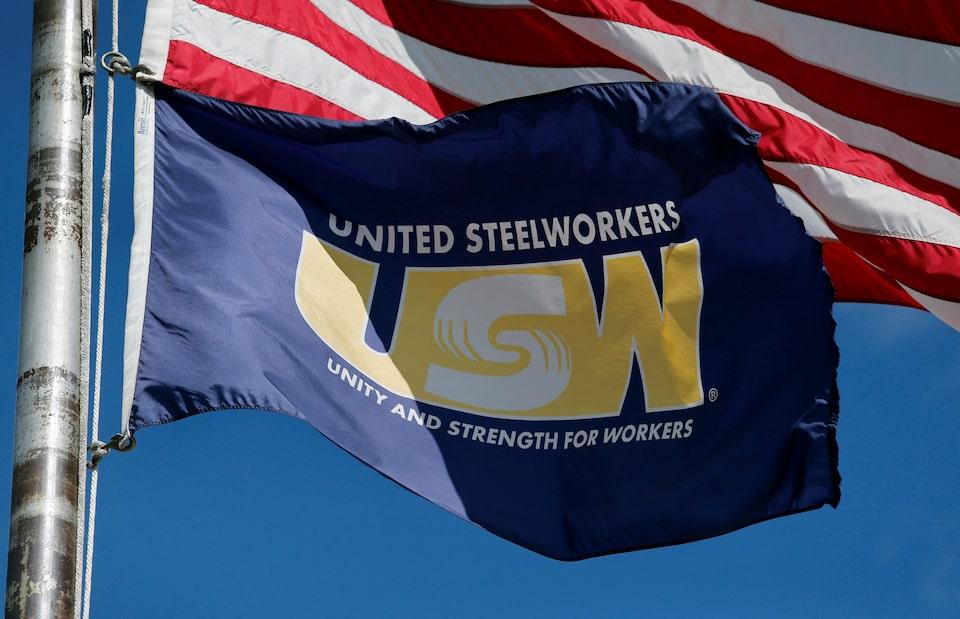
HOUSTON, Aug 7 (Reuters) - More than 300 United Steelworkers union (USW) refinery and chemical plants workers meeting in Pittsburgh approved on Thursday proposals for labor negotiations set to begin early in 2026 with energy companies, said Mike Smith, chair of national oil bargaining for the union. The current four-year contract covering 30,000 workers expires shortly after 12 a.m. on Feb. 1, 2026. The USW members work at refineries that account for over half of national crude oil processing capacity. Sign up here. USW negotiators led by Smith and including International President David McCall and International Vice President Roxanne Brown will begin meeting in January with negotiators from Marathon Petroleum (MPC.N) , opens new tab, which will be representing the industry. "As the lead company in national pattern negotiations, MPC looks forward to productive negotiations with the USW and is committed to working toward a mutually satisfactory agreement,” said Marathon spokesperson Jamal Kheiry. A key issue will be wage increases for refinery and chemical plant workers, who average more than $50 an hour for inside operators. “I would say the proposals on wages are significant for the times in which we are living,” Smith said. He declined to be more specific about the union’s wage proposals. Another top issue is the cost of health care, Smith said. “We’re trying to secure good decent health care without bearing the brunt of rising costs,” he said. And as with many industries, the union has a proposal on artificial intelligence. “The AI proposal is really to protect us as we try to understand the impacts on our sector,” Smith said. A supermajority of local unions must approve the proposals agreed to in Pittsburgh within 45 days so they can be brought to the bargaining table. Smith said he could not now predict how difficult or easy the negotiations might be with Marathon. "It is early,” he said. “No bargaining session is easy or simple. Our members are ready to do what it takes to secure a good contract for our membership.” At negotiations in 2022, the USW secured a 2.5% wage increase in the first year, 3% in both the second and third years and 3.5% in the fourth year. https://www.reuters.com/business/world-at-work/united-steelworkers-union-sets-proposals-next-refinery-worker-contract-2025-08-07/
2025-08-07 23:29
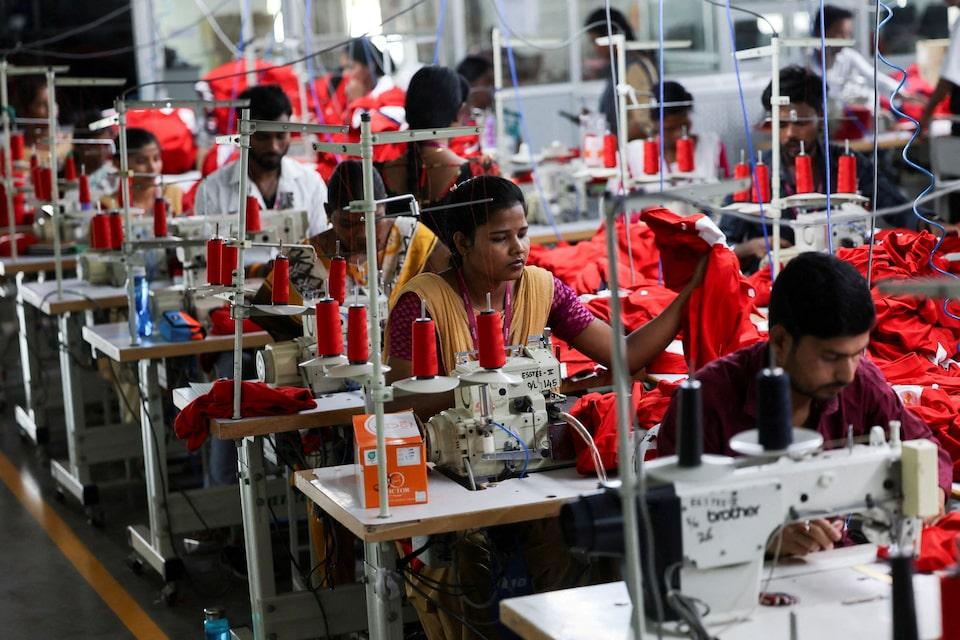
India's garment industry faces crisis due to Trump tariffs Exporters scrambling to look for manufacturing options abroad Some manufacturers told by US buyers to put orders on hold MUMBAI/CHENNAI, Aug 8 (Reuters) - Ever since Donald Trump's tariff salvo on India this week, garment maker Pearl Global - whose U.S. client list includes Gap and Kohl's - has been receiving midnight panic calls with an ultimatum: share the tariff hit or move production out of India. To calm U.S. customers' nerves, Pearl Global (PGIL.NS) , opens new tab has offered to shift production to its 17 factories in Bangladesh, Indonesia, Vietnam and Guatemala to bypass the steep U.S. levies on Indian imports. Sign up here. "All the customers are already calling me. They want us to ... shift from India to the other countries," Managing Director Pallab Banerjee told Reuters in an interview. Trump's initial tariff proposals in April - which were lower for India than for the rival Asian garment hubs of Bangladesh, Vietnam and China - had been seen as an opportunity for India to rapidly expand in the $16 billion apparel exports market. But the tables have turned as relations between New Delhi and Washington have soured, with India now facing a 50% tariff, versus 20% for Bangladesh and Vietnam, and 30% for China. Pearl gets roughly half of its business from the United States. Some clients offered to continue taking products from India if it could share the tariff burden, but that is not viable, Banerjee said, without naming the customers. 'IN THE DOLDRUMS' The 50% U.S. tariff - comprising 25% that kicked in on Thursday and another 25% due to come into force on August 28 as a penalty for buying Russian oil - has stunned U.S. garment buyers and their Indian suppliers, who say they are considering taking their manufacturing operations beyond Indian shores, even to less-established garment hubs like Ethiopia and Nepal. Some exporters also say they have been asked by U.S. clients to put orders on hold. New Delhi has called Trump tariffs "extremely unfortunate". India's garment sector was already grappling with a labour crunch and limited production capacity. But the prospect of exporters shifting production outside India would also be a blow to Prime Minister Narendra Modi's "Make in India" policy drive. While Pearl can use its foreign factories to meet U.S. orders, exporters that rely on domestic factories are set to be hit much harder. RichaCo Exports has shipped $111 million of garments to the U.S. this year, with clients such as J. Crew Group, customs data shows. All were made in its more than two dozen factories across India. Around 95% of its annual Indian revenues come from the United States, said general manager Dinesh Raheja. "We're exploring setting up a manufacturing base in (Nepal's capital) Kathmandu," he said. "The industry is in the doldrums." ORDERS ON HOLD Earlier this week, India's biggest jeweller and watchmaker Titan (TITN.NS) , opens new tab told Reuters it was looking at shifting some manufacturing to the Middle East to maintain low-tariff access to U.S. markets. Amit Agarwal, finance chief of top Indian garment maker Raymond, said he was pinning hopes on the company's one factory in Ethiopia - which faces just a 10% U.S. tariff and could possibly add more production lines within three months to cater to U.S. clients. The tariff threat comes as India was emerging as a big alternative for U.S. garment buyers like Walmart (WMT.N) , opens new tab, as Bangladesh faces a political crisis, and companies look to diversify supply chains beyond China. Indian garment hub Tiruppur in the south, considered the country's knitwear capital and which accounts for nearly one-third of apparel exports, was bullish about the future earlier this year when Reuters visited and talked to exporters. Panic has now descended on the hub. Some factories in Tiruppur have been asked by customers to hold orders, while some plan to ship as many goods as possible before the full 50% tariff kicks in, said Naveen Micheal John, executive director at Cotton Blossom India. "An importer, which had placed orders for underwear, has come back saying that if you haven't purchased yarns ... keep it on hold for now," he said. Some garments in Tiruppur cost U.S. clients as little as $1, while a women's or men's T-shirt can vary from about $3.5-$5, which could soon face 50% tariffs, said N. Thirukkumaran, general secretary of the Tiruppur Exporters Association. https://www.reuters.com/world/china/trump-tariffs-hit-indias-garment-makers-us-buyers-say-move-production-2025-08-07/
2025-08-07 23:23
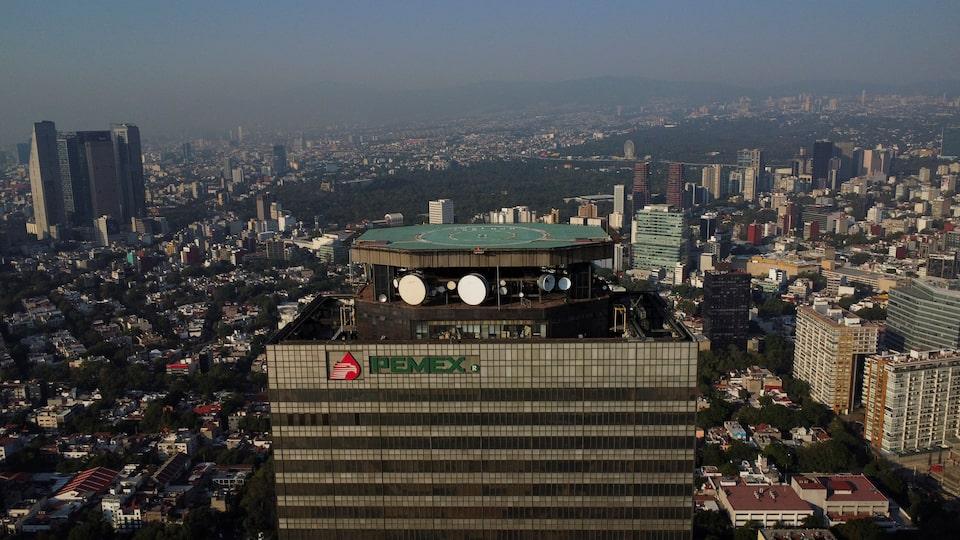
Mexico's 10-year plan aims to revitalize Pemex with help of fracking Sheinbaum approves fracking despite previous opposition Mexico's oil output has declined from about 3.4 million bpd in early 2000s to 1.6 million bpd MEXICO CITY, Aug 7 (Reuters) - Mexico is planning to increase the use of hydraulic fracturing to tap unconventional hydrocarbon deposits and boost oil and gas production after years of declining output, marking a shift in its stance on what some say is a highly polluting practice. The evaluation and development of unconventional resources hidden deep underground within complex geological formations is part of a 10-year plan unveiled on Tuesday to revitalize Petroleos Mexicanos, or Pemex, Mexico's deeply indebted state energy company. Sign up here. Mexico had attempted to exploit unconventional oil and gas plays that required hydraulic fracturing, or fracking, following sweeping energy reform in 2014, but the bidding processes to secure contracts were unsuccessful. Former President Andres Manuel Lopez Obrador, in office from 2018 to 2024, ruled out developing oil and gas reserves via fracking, a practice he publicly condemned and which environmentalists object to because it uses large volumes of water and contaminates groundwater. President Claudia Sheinbaum, Lopez Obrador's successor, has signed off on the production method, however, even though she had said during her 2024 election campaign she would not allow it. "We're going to address all the geological potential we have," said Pemex CEO Victor Rodriguez on Tuesday, when the company's revitalization plan was presented during Sheinbaum's daily morning press conference. The plan said there is very significant potential for production in fields with "complex geology", referring to shale basins in which oil and gas are extracted using fracking technology. This includes about 64 billion barrels of crude oil-equivalent production, mainly in the basins of Tampico-Misantla, Sabinas-Burro Picachos, and Burgos. "These types of deposits have the potential to change Mexico's declining production outlook ... if implementation plans are established that favor private investment in the exploration and exploitation of these resources," the plan said. Pemex has been fracking for years in some onshore fields near the Gulf of Mexico coast, but does not disclose how much production is generated that way. The majority of the company's oil and gas comes from old offshore fields in shallow waters. Pemex is seeking to stem a decline in its crude oil production, which is around 1.6 million barrels per day, down from about 3.4 million bpd in the early 2000s, and increase natural gas output. TARGETS Despite being a major oil and gas producer, Mexico remains highly dependent on imports from the United States, both for natural gas and refined products like gasoline and diesel. The plan unveiled on Tuesday outlined a modest production increase of unconventional resources between 2026 and 2028, and a significant ramp-up in volumes starting in 2029. The cumulative addition to production by 2030 would be 197 million barrels of crude oil and 303 billion cubic feet of gas, according to the plan, although Pemex did not share details on how those increases would be achieved. Pemex's plan highlighted technological advances made over the last decade in well design, drilling and completion that it said would minimize environmental impacts and preserve freshwater resources. "Hydraulic fracturing today has nothing to do with that of 20 years ago," Fluvio Ruiz, a former independent advisor for Pemex, said in an interview, adding that both techniques and technologies have advanced since. "One of the advantages of being late or waiting (to exploit unconventional resources) is that there are already technically very well-designed regulations; there's no need to reinvent the wheel," Ruiz said. https://www.reuters.com/business/energy/mexico-pivots-towards-fracking-lift-pemex-oil-gas-production-2025-08-07/
2025-08-07 23:08
HOUSTON, Aug 7 (Reuters) - At least three vessels that oil major Chevron (CVX.N) , opens new tab had used to transport Venezuelan crude to the U.S. were navigating toward the South American country's waters on Thursday, with exports expected to resume later this month following a new U.S. license, according to shipping data and sources. The U.S. Treasury Department late last month authorized Chevron to operate in the sanctioned OPEC nation again, export its oil and do swaps with state company PDVSA through a restricted license banning any payments to Venezuela's government. Sign up here. Chevron Chief Executive Mike Wirth last week said a small volume of exports from the country would resume later in August. The oil producer is now in negotiations with PDVSA to receive the first cargoes and reactivate a supply agreement with U.S.-based Valero Energy (VLO.N) , opens new tab. Chevron-chartered tankers MediterraneanVoyager and Canopus Voyager were approaching the Caribbean island of Aruba, north of Venezuela's western coast on Thursday, vessel monitoring data by LSEG showed. A third ship, Sea Jaguar, was navigating from Europe with Aruba also its initial destination. Chevron and PDVSA did not immediately reply to requests for comment. Venezuela's oil exports fell to 727,000 barrels per day last month as PDVSA's joint venture partners, including Chevron and a handful of European companies, awaited U.S. authorizations to resume operations. https://www.reuters.com/business/energy/chevron-chartered-tankers-begin-returning-venezuela-after-us-license-shipping-2025-08-07/
2025-08-07 23:00
Aug 7 (Reuters) - Argentina's state-controlled energy company YPF (YPFDm.BA) , opens new tab on Thursday reported a nearly 90% plunge in second-quarter net profit to $58 million, dragged down by lower fuel prices. Revenues dropped 6% from a year earlier to $4.64 billion, as softer prices for refined products and lower seasonal demand for naphtha weighed on sales. Sign up here. YPF's performance is a critical indicator for Argentina's economy, which is relying on the Vaca Muerta formation in its push to become a net energy exporter. Adjusted earnings before interest, tax, depreciation and amortization (EBITDA) – a key measure of profitability – came in at $1.12 billion for the April-June period, down 7% from a year earlier. Analysts polled by LSEG had on average expected an adjusted EBITDA of $1.17 billion from revenues of $4.49 billion. Benchmark Brent crude , opens new tab prices averaged $67 per barrel in the second quarter, down from $75 in the previous three months and $85 a year earlier. The weaker Brent prices, alongside reduced conventional output after YPF sold off mature fields, dragged down upstream sales by some 10%. Downstream sales, which declined 6%, were also hit by lower fuel prices, though strong diesel and agricultural demand helped to partially offset the drop. The results come as Argentina faces a major legal battle after a U.S. judge ordered the government to hand over its 51% stake in YPF to partially satisfy a $16.1 billion judgment tied to a 2012 expropriation of a stake from Spain's Repsol (REP.MC) , opens new tab. https://www.reuters.com/business/energy/argentinas-ypf-q2-profit-slumps-nearly-90-lower-fuel-prices-2025-08-07/
2025-08-07 22:59
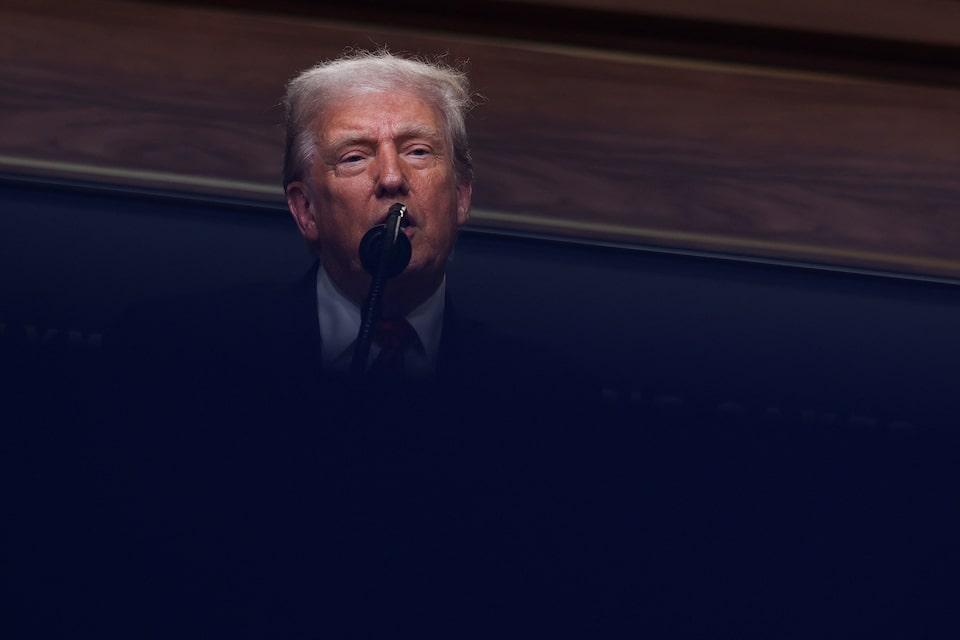
Proponents say investors will have access to new assets with higher returns Critics warn of increased risk and litigation concerns BlackRock plans new fund with private equity and credit assets WASHINGTON, Aug 7 (Reuters) - U.S. President Donald Trump signed an executive order on Thursday that aimed to allow more private equity, real estate, cryptocurrency, and other alternative assets in 401(k) retirement accounts – opening the way for alternative asset managers to tap a greater share of trillions of dollars in Americans' retirement savings. The White House said regulatory overreach and litigation risks have prevented retirees from benefiting from potentially higher returns, while critics warned the investments were inherently riskier, lacked the same disclosures and carried higher fees than traditional retirement investments. Sign up here. "My Administration will relieve the regulatory burdens and litigation risk that impede American workers’ retirement accounts from achieving the competitive returns and asset diversification necessary to secure a dignified, comfortable retirement," the order said. It directed the Labor Secretary and Securities and Exchange Commission to make it easier for investors to access alternative assets in their defined contribution retirement plans. It did not expressly ask the agencies to add more legal protections for investments, but directed them to clarify or potentially revise rules that could help shield the industry from litigation risk. Asset managers welcomed the news, saying it was a major step toward modernizing retirement savings. "Expanding access to investments long out of reach will help ensure millions of Americans build stronger, more diversified portfolios designed to increase savings and address the practical considerations of DC plan fiduciaries," Jaime Magyera, head of retirement for leading asset manager BlackRock (BK.N) , opens new tab said in a statement, referring to defined-contribution plans like 401(k)s. The move could be a boon for big alternative asset managers such as Blackstone (BX.N) , opens new tab, KKR (KKR.N) , opens new tab, and Apollo Global Management (APO.N) , opens new tab by opening the $12-trillion market for all defined-contribution plans, of which 401(k)s are the most popular, to their investments. Some of those firms have already struck partnerships with asset managers who run those plans. A Blackstone spokesman said the firm welcomed the decision. BlackRock, which lobbied the Trump administration to expand asset options, plans to launch its own retirement fund that includes private equity and private credit assets next year. Proponents have argued that younger savers can benefit from potentially higher returns on riskier investments in funds that get more conservative as they approach retirement. "On the asset manager side, it's a $12-trillion retirement market that they have previously not had access to. For them, there's certainly a lot of opportunity," said Morningstar analyst Jason Kephart. "From the individual investor standpoint, though, that's where it's less clear after all the additional fees, the additional complexity, and less transparency," Kephart added. The new investment options carry lower disclosure requirements and are generally less easy to sell quickly for cash than the publicly traded stocks and bonds that most retirement funds rely on. Investing in them also tends to carry higher fees. In defined contribution plans, employees make contributions to their own retirement account, frequently with a matching contribution from their employer. The invested funds belong to the employee, but unlike a defined benefit pension plan, there is no guaranteed regular payout upon retirement. RISKS AND REWARDS Many private equity firms are hungry for the new source of cash that retail investors could offer after three years in which high interest rates shook their time-honored model of buying companies and selling them at a profit. Whatever results may come from Trump's order, it likely will not happen overnight, private equity executives say. Plaintiffs' lawyers are already preparing for lawsuits that could be filed by investors who do not understand the complexity of the new forms of investments. BlackRock CEO Larry Fink acknowledged in a recent call with analysts that the change posed challenges for asset managers. "The reality is, though, there is a lot of litigation risk. There's a lot of issues related to the defined contribution business," Fink said. "And this is why the analytics and data are going to be so imperative way beyond just the inclusion." CFO Martin Small said the industry may seek litigation reform before it can expand into the market. The Department of Labor issued guidance during Trump's previous presidency on how such plans could invest in private equity funds within certain limits, but few took advantage, fearing litigation. Easing access to cryptocurrencies to be included in 401(k)s would be Trump's latest embrace of digital assets, and could be a potential boon for the sector, including asset managers that operate crypto exchange-traded funds, such as BlackRock and Fidelity. "Bitcoin has moved beyond its early days as a merely speculative asset and is slowly entering into many investors’ long-term investment strategy," said Gerry O'Shea, head of global market insights at Hashdex Asset Management. "This EO will help accelerate this trend." Democratic Senator Elizabeth Warren wrote in June to the CEO of annuity provider Empower Retirement, which oversees $1.8 trillion in assets for more than 19 million investors, asking how retirement savings placed in private investments could be safeguarded "given the sector's weak investor protections, its lack of transparency, expensive management fees, and unsubstantiated claims of high returns." https://www.reuters.com/business/finance/trump-signs-order-broadening-access-alternative-assets-401ks-2025-08-07/