2025-08-07 21:04
ORLANDO, Florida, Aug 7 (Reuters) - Tariffs and worries over the Federal Reserve's independence battled against tech resilience in U.S. stock market trading on Thursday, while the Bank of England's narrow call to cut rates highlighted the dilemma facing many central banks right now. More on that below. In my column today I explore whether U.S. President Donald Trump's punitive tariffs on India and Brazil could inadvertently push the BRICS nations closer together and breathe new life into the bloc. Sign up here. If you have more time to read, here are a few articles I recommend to help you make sense of what happened in markets today. Today's Key Market Moves Tariffs, Fed fears take their toll A day packed with policy decisions, economic data, corporate news, and twists in the global trade war and saga of Trump's influence over the Federal Reserve ended with U.S. shares in the red on Thursday. Optimism around the U.S. tech and artificial intelligence revolution abounds, and companies that are manufacturing in the U.S. or have committed to do so will escape Trump's new 100% tariffs on imported chips. But the unpredictable and impulsive nature of Trump's tariff policy, the ultra-high duties imposed on some key trading partners, and the expected negative impact on growth and inflation may finally be starting to weigh on investors' minds. Trump's interference in independent economic institutions is certainly worrying investors. These concerns intensified on Thursday after Bloomberg News reported that Fed Governor Christopher Waller is Trump's favored pick to replace chair Jerome Powell. Waller voted last month to cut interest rates, and would be seen as sympathetic to Trump's desire to slash borrowing costs. Maybe too sympathetic. Trump also said on Thursday that Council of Economic Advisers Chairman Stephen Miran will fill a vacant spot on the Fed board until January. Earlier in the day, the Bank of England cut interest rates to 4%. But the 5-4 vote was so tight, the BoE's rate-setting committee held two votes for the first time since the BoE was granted independence in 1997 in order to reach a decision. Growth is slowing, inflationary pressures are rising. It's central bankers' worst dilemma, one that many around the world are facing right now. In Asia on Thursday, data showed that Chinese exports and imports in July were much stronger than expected as firms front-loaded activity ahead of Trump's tariff deadline later this month. Chinese stocks leaped nearly 2%, and the yuan rose too. Elsewhere in emerging markets on Thursday, Mexico's central bank cut interest rates and Indian Prime Minister Narendra Modi and Brazil's President Luiz Inacio Lula da Silva spoke by phone, covering a broad range of topics including Trump's punitive tariffs on both countries. More on that below. Could Trump tariffs become BRIC-building blocks? U.S. President Donald Trump has the so-called 'BRIC' group of nations directly in his trade war crosshairs, slapping super-high tariffs on imports from Brazil and India, and accusing them of pursuing "anti-American" policies. Washington's relations with Brasilia and New Delhi have sunk to new lows. But this belligerence could backfire. The White House said on Wednesday that it will impose an additional 25% tariff on goods from India, citing New Delhi's continued imports of Russian oil. That brings the levy on most goods to 50%, among the highest rate faced by any U.S. trading partner. Brazil also faces 50% tariffs on many of its U.S.-bound exports, not because of trade imbalances, but because of Trump's anger at what he calls a "witch hunt" against his ally, Brazil's former President Jair Bolsonaro, who has been charged with plotting a coup following his election loss in 2022. This breakdown in relations could be Trump's intention: push these countries to the brink so that they'll agree to trade deals that are heavily lopsided in Washington's favor. That strategy seemed to work with Japan and the European Union. But hitting these 'BRICS' economies with eye-watering tariffs could push them closer together, strengthening the resolve of a group that appeared to be losing whatever momentum, purpose and unity it had. THE 50% CLUB The original BRIC nations - Brazil, Russia, India and China - held their first summit in 2009, eight years after former Goldman Sachs economist Jim O'Neill coined the acronym for this group of emerging economies he said would challenge the G7 group of rich countries in the future. South Africa became the 'S' in BRICS two years later, and the club now comprises 11 countries including Indonesia, Iran and Saudi Arabia, as well as a further nine 'partner' countries including Malaysia, Nigeria, and Thailand. It was always a disparate group - geographically, economically, culturally, and politically - meaning its cohesiveness has always been questionable. Its relations have sometimes been rocky, particularly among its largest members. That's why it was so notable when Indian Prime Minister Narendra Modi on Wednesday announced that he will visit China for the first time in over seven years. This could be a sign that rising tensions with Washington are helping to thaw frosty ties between New Delhi and Beijing. Also on Wednesday, Brazil's President Luiz Inacio Lula da Silva told Reuters that he plans to call the leaders of India and China to discuss a joint BRICS response to Trump's tariffs. "I'm going to try to discuss with them about how each one is doing in this situation ... so we can make a decision," Lula said. "It's important to remember that the BRICS have ten countries at the G20," he added, referring to the group that gathers 20 of the world's biggest economies. UNITED FRONT While nothing unites like a common enemy, the differences between the BRICS countries could limit how solid that front can actually be. Stephen Jen, CEO and co-CIO of Eurizon SLJ Asset Management in London, posits that trade links between the five core BRICS nations - never mind the historical, political and cultural ties - are weak. Only 14% of their trade is with each other. Russia and Brazil may have higher levels of intra-BRICS trade, but only 9% of China's exports are BRICS-bound, significantly less than the 19% that goes to emerging Asia and 15% destined for the U.S. And in economic, political and military terms, China matters far more than the others on the global stage. "BRICS is more of an alliance on paper, not in reality," Jen says. But there are signs that intra-BRICS trade is strengthening. China-Russia trade was a record $244.8 billion last year, and China and India are the biggest two buyers of Russian oil. China is Brazil's largest trading partner, accounting for 28% of Brazil's exports and 24% of its imports. Roughly 70% of China's soybean imports are from Brazil. TENUOUS ALLIANCE Trump's tariffs could push BRICS countries closer together in the near term, in areas such as trade, investment, and currency usage. They may feel it's in their economic interests and, for some, in their political interests, to present a united front. How long that front can hold is anyone's guess. These countries, particularly India, may resist moving further under China's influence, and Russia's pariah status could limit further integration beyond commodity imports. In the meantime, however, Trump's tariff salvos are BRICS-bound. How these emerging economies respond could be an indication of whether we may truly be seeing a reshuffling of global alliances. What could move markets tomorrow? Want to receive Trading Day in your inbox every weekday morning? Sign up for my newsletter here. Opinions expressed are those of the author. They do not reflect the views of Reuters News, which, under the Trust Principles , opens new tab, is committed to integrity, independence, and freedom from bias. https://www.reuters.com/business/global-markets-trading-day-graphic-2025-08-07/

2025-08-07 21:00
Eli Lilly falls after late-stage data for oral weight-loss drug Weekly jobless claims rise to highest level in a month Indexes: Dow down 0.5%; S&P 500 down 0.1%; Nasdaq up 0.3% NEW YORK, Aug 7 (Reuters) - The Dow and S&P 500 eased on Thursday, as shares of Eli Lilly dropped after data from its oral weight loss drug disappointed, while the Nasdaq eked out a record closing high. Just before the session's end, U.S. President Donald Trump said he will nominate Council of Economic Advisors Chairman Stephen Miran to serve out the remaining term of Federal Reserve Governor Adriana Kugler. Sign up here. Miran is due to serve in the role until January 31, 2026, while Trump continues a search for a permanent replacement. Earlier, investors digested a Bloomberg report that Fed Governor Christopher Waller was Trump's top candidate for the U.S. central bank's chair post. Trump has been critical of current Chair Jerome Powell for holding off on cutting borrowing costs. Eli Lilly (LLY.N) , opens new tab, which also raised its full-year profit and sales forecast, fell after the orforglipron drug data. The stock ended down 14.1%. Shares of Fortinet (FTNT.O) , opens new tab also fell, with the stock finishing 22% lower, after the cybersecurity firm gave a revenue forecast below Wall Street estimates. "The market rally is beginning to look a little bit tired here. We ran up on earnings, and of course the market was basically ignoring a lot of the tariff news," said Peter Cardillo, chief market economist at Spartan Capital Securities in New York. Trump's higher tariffs on imports from dozens of countries kicked in on Thursday, raising the average U.S. import duty to its highest in a century. The Dow Jones Industrial Average (.DJI) , opens new tab fell 224.48 points, or 0.51%, to 43,968.64, the S&P 500 (.SPX) , opens new tab lost 5.06 points, or 0.08%, to 6,340.00 and the Nasdaq Composite (.IXIC) , opens new tab gained 73.27 points, or 0.35%, to 21,242.70. The S&P 500 has hit 15 record closing highs this year, while the Nasdaq has posted 17 all-time closing highs so far in 2025. Among other decliners, chipmaker Intel (INTC.O) , opens new tab was down 3.1% after Trump called for the immediate resignation of new Intel CEO Lip-Bu Tan, calling him "highly conflicted" due to his ties to Chinese firms. Helping the Nasdaq, Apple (AAPL.O) , opens new tab shares rose 3.2% after the latest tariff salvo from Trump largely exempted industry heavyweights from his threat to impose 100% levy on chips and semiconductors. The U.S. president announced a tariff of about 100% on imports of semiconductors, but said it would not apply to companies that are manufacturing in the U.S. or have committed to do so. Rate cut expectations remained largely the same after the day's data on the labor market. Weekly initial jobless claims rose 7,000 to a seasonally adjusted 226,000, the highest level since the week ended July 5 and slightly above the 221,000 estimate of economists polled by Reuters, according to the data. Market expectations for a September rate cut of at least 25 basis points from the Fed stood at 93.2%, down slightly from the 94.6% in the prior session and well above the 37.7% from a week ago, according to CME's FedWatch Tool. Declining issues outnumbered advancers by a 1.01-to-1 ratio on the NYSE. There were 232 new highs and 80 new lows on the NYSE. On the Nasdaq, 1,944 stocks rose and 2,622 fell as declining issues outnumbered advancers by a 1.35-to-1 ratio. Volume on U.S. exchanges was 17.40 billion shares, compared with the 18.23 billion average for the full session over the last 20 trading days. https://www.reuters.com/business/sp-500-eases-with-eli-lilly-nasdaq-manages-record-closing-high-2025-08-07/

2025-08-07 20:47
WASHINGTON, Aug 7 (Reuters) - The United States has imposed tariffs on imports of one-kilo gold bars, the Financial Times reported on Thursday, citing a letter from Customs Border Protection. The letter - dated July 31 - said one-kilo and 100 ounce gold bars should be classified under a customs code subject to levels, according to the newspaper, which added that the move could impact Switzerland, the world's largest refining hub. Sign up here. https://www.reuters.com/world/europe/us-imposes-tariffs-one-kilo-gold-bars-ft-reports-2025-08-07/

2025-08-07 20:45
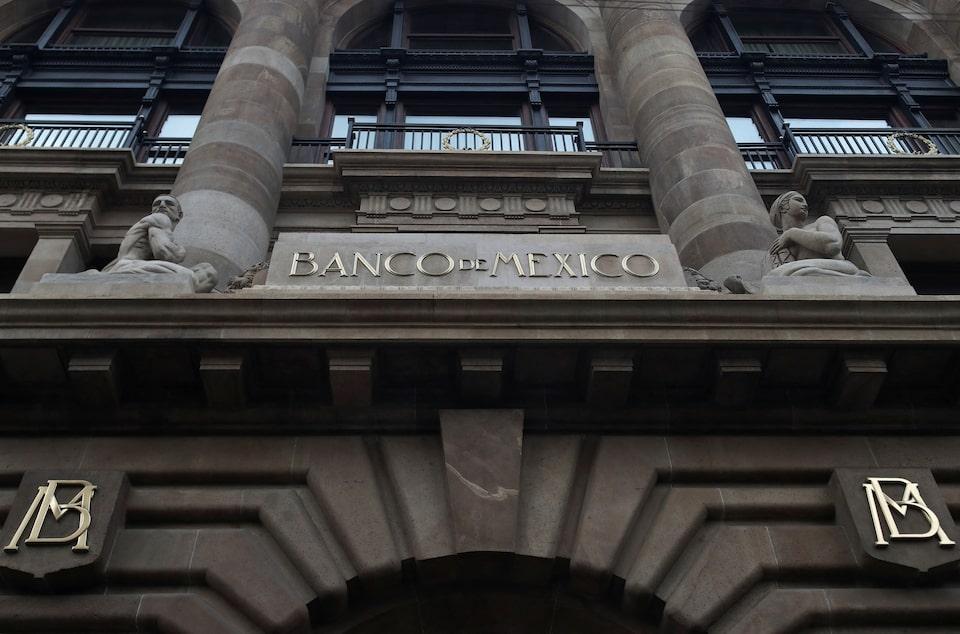
Banxico cuts rate to 7.75%, lowest since mid-2022 Deputy Governor Heath dissents, votes to hold rate at 8.0% Inflation mixed; core index above target at 4.23% MEXICO CITY, Aug 7 (Reuters) - The Bank of Mexico cut its benchmark interest rate by 25 basis points on Thursday in a divided vote, slowing its pace of monetary easing and bringing the rate to its lowest level in three years. The decision by the bank's five-member governing board brings the rate to 7.75%, its lowest since mid-2022. Sign up here. Deputy Governor Jonathan Heath was the sole dissenter, voting to hold the interest rate at 8.0%. The move was largely expected by the market after the bank's governing board signaled at its last meeting in June that it would move to smaller reductions after four consecutive cuts of a half of a percentage point. Banxico, as the Bank of Mexico is known, has been balancing dual challenges. It is seeking to bring down inflation while also stimulating the economy amid weak economic growth and uncertainty tied to trade tensions and geopolitical developments. In a statement, the central bank said the board's decision "took into account the behavior of the exchange rate, the weakness of economic activity, and the possible impact of changes in trade policies worldwide." While Thursday's statement noted the board would consider rate changes going forward, it left out more specific language that it had included in past announcements signaling future cuts. Heath, who has now voted to hold the rate for two consecutive meetings, called for prudence around lowering the rate at Banxico's June meeting, calling it "unrealistic" to expect inflation to fall on its own just because of stagnant economic forecasts. Mexico's economy grew just 0.7% in the second quarter, an improvement from 0.1% in the first quarter. Still, analysts polled by the central bank last month forecast 2025 growth of just 0.3%. INFLATION MIXED BAG Official data earlier on Thursday showed that Mexico's annual headline inflation slowed in July to 3.51%, its lowest level since late 2020. However, the closely watched core index, which strips out certain volatile products, remained above the bank's official target at 4.23%. Banxico targets inflation at 3%, plus or minus a percentage point. In its statement on Thursday, the central bank lowered its forecast for the average annual headline inflation in the third quarter to 3.8% from 4.1% previously. At the same time, the bank raised its forecast for core inflation in the third quarter from 3.8% to 4.1%. Gabriela Siller, head of analysis at Banco Base, said raising the core inflation forecast while leaving the headline forecast unchanged was "inconsistent with theory." "It also implies acknowledging that the recent slowdown in inflation has been driven by volatile prices, which poses an upside risk to headline inflation," Siller wrote on X. https://www.reuters.com/world/americas/bank-mexico-slowing-pace-cuts-brings-key-rate-lowest-three-years-2025-08-07/
2025-08-07 20:41
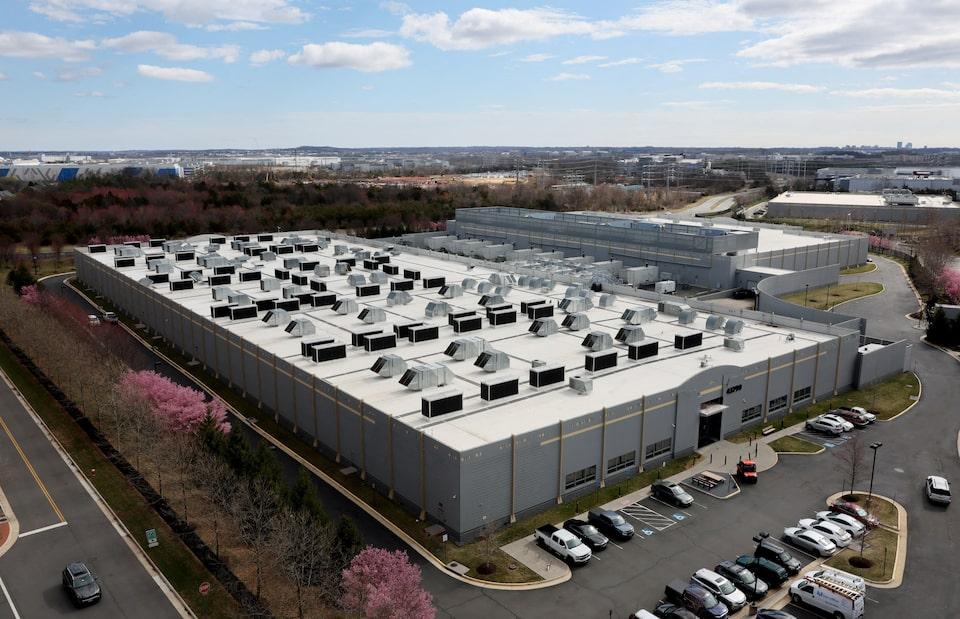
Residential bills may rise 30-60% by 2030, ICF analysis shows PJM's capacity auction prices soared 1,000% from two years ago Record-high auction prices impacting power bills PJM to address reliability and cost with stakeholders NEW YORK, Aug 7 (Reuters) - Homes and businesses in the largest U.S. electric grid - operated by PJM Interconnection - could face rate increases of up to 60% over the next five years as the energy needs of Big Tech's data centers intensify, according to analysts and consumer advocates. PJM covers the largest amount of data center demand in the world, and the region is becoming a test case for how AI's energy needs will hit homes and businesses, particularly as new electricity supplies are slow to be added. Sign up here. The latest energy auction held in July by the PJM Interconnection to cover electricity needs on peak demand days soared to $329 a megawatt day, a roughly 1,000% jump from two years ago. Those prices funnel down to power bills in PJM's territory, which stretches from the Mid-Atlantic region westward, covering all or part of 13 states and the District of Columbia. Analysts at ICF, a global consulting and technology services firm, said customer power bills in PJM could increase residential retail rates between 30% and 60% by 2030, largely due to rising costs caused by the capacity auctions, which determine the price paid to power plant owners to run overtime during extremely high power use. "This outcome underscores PJM's critical need for capacity, driven largely by surging demand from data centers, which is expected to outpace new generation additions," ICF said. In the short term, PJM expects the recent auction to have a year-over-year impact of 1.5% to 5% on utility bills starting June 2026. That would account for the capacity portion of bills alone, whereas utility spending on power lines and other build-outs and services to meet growing loads will also hit customer bills. With the rest of demand sources in PJM largely flat, data centers are pretty much driving all of those rising costs, said John Quigley, a senior fellow at the Kleinman Center for Energy Policy at the University of Pennsylvania. "They are ground zero in terms of why we're seeing rising electricity costs," Quigley said. Data centers make up more than 90% of the new power demand PJM estimates it will see by the end of the decade, the grid operator has said in filings. “While economic growth is welcome in the PJM footprint, we recognize the impact that data centers are having on the system," PJM said in a statement. "We’re going to seek to address some of these challenges around reliability and cost with data center owners, consumers and all of our stakeholders, including our states, in the near future." UTILITY SPENDING On the supply side, rising power bills on PJM turf are caused by multiple factors, and capacity auctions are one component. The prices from those auctions in recent years take effect about a year out, so price impacts from the latest one in July will take effect next summer. Power bills are also affected by spending by utilities to build power lines and upgrade systems to deliver electricity to homes and businesses. As data centers drive power demand higher and spur the need to build new generation capacity, consumer advocates said they fear residential customers are subsidizing the AI ambitions of wealthy corporations. Some of the biggest utilities in PJM, including AEP (AEP.O) , opens new tab and Dominion(D.N) , opens new tab , this year announced significant increases to capital expenditure plans to meet new data center demand. That spending is paid for mostly by the public. As a way to soften the financial blow to customers, some utilities, including ones in New Jersey and Maryland, began to offer rebates. Those measures, however, are mostly temporary, and long-term fixes remain unclear if the pace of new power demand outstrips supply. “We have residential customers providing massive subsidies to some of the wealthiest corporations in the world to support their data centers,” said David Lapp, the head of Maryland’s Office of People's Counsel, a state agency that advocates for residential utility consumers. “It's just a massive transfer of wealth from small customers to data centers.” https://www.reuters.com/business/energy/power-costs-soar-pjm-region-data-center-demand-spikes-2025-08-07/
2025-08-07 20:39
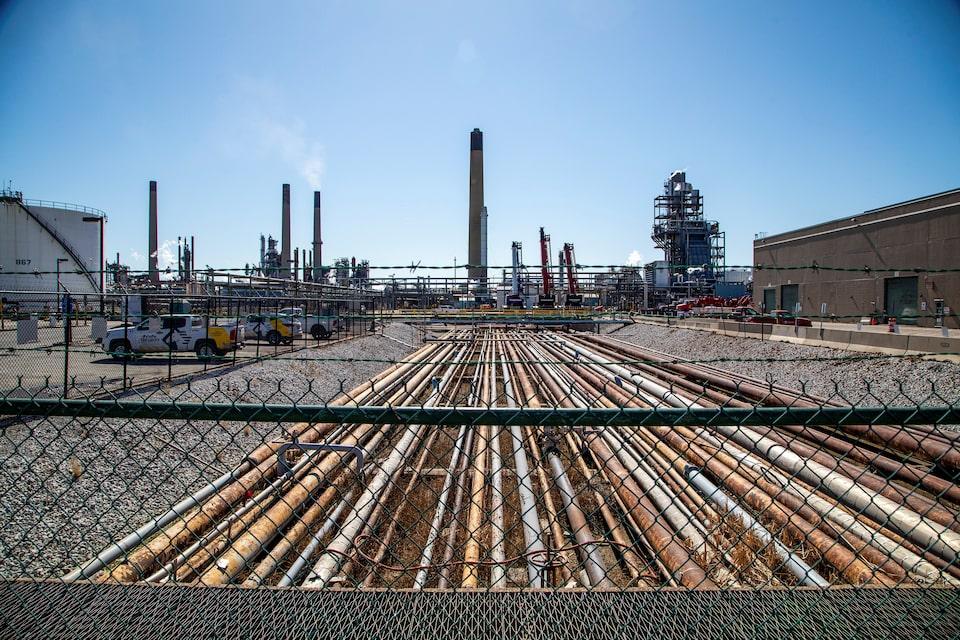
Aug 7 (Reuters) - The Ontario government on Thursday issued a request for proposals for a feasibility study to explore the best way to establish a new economic and energy corridor in the state. The proposed corridor includes new Alberta-to-Ontario pipelines, which would transport Western Canadian oil and gas to refineries in southern Ontario and to tidewater ports such as a new deep-sea port on the coast of James Bay. Sign up here. The study will also assess the feasibility of port developments on James Bay, Hudson Bay and the Great Lakes, along with a potential refinery along the pipeline route. The energy corridor follows a recent memorandum of understanding between Ontario, Alberta and Saskatchewan to collaborate on protecting Canadian workers, expanding energy and trade infrastructure, and advancing nuclear development to meet rising demand. “In the face of unprecedented tariffs from the United States and increasing geopolitical instability, Canadians must work together across governments to build the energy and trade infrastructure we need to unlock new markets domestically and protect jobs,” said Kinga Surma, Ontario’s minister of infrastructure. https://www.reuters.com/business/energy/ontario-seeks-proposals-feasibility-study-cross-canada-energy-corridor-2025-08-07/