2025-08-07 19:47
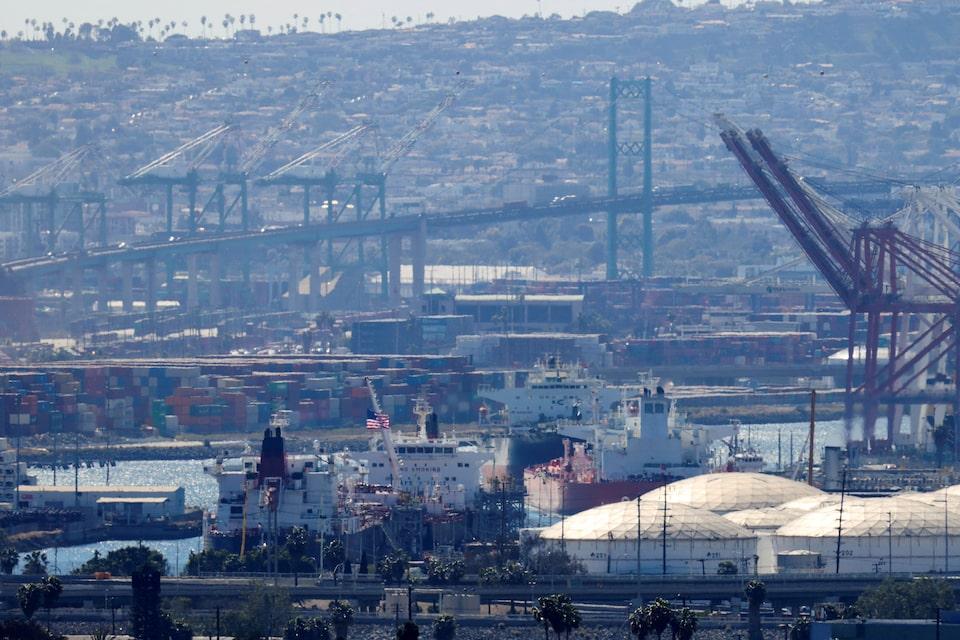
Exports ease to 3.1 mln bpd, lowest since Oct 2021 - Kpler Exports to Asia fall to lowest since January 2019 - Kpler Low oil stocks keep barrels within the United States WTI arbitrage to Asia seen open in the fourth quarter Rising OPEC+ supply could weigh on U.S. crude demand HOUSTON, Aug 7 (Reuters) - U.S. crude oil exports eased in July to the lowest levels in nearly four years on low domestic supplies and as Asian and European buyers found cheaper alternatives, undermining U.S. President Donald Trump's push for more foreign countries to purchase U.S. energy supplies. The decline in exports from the top global producer underscores the extent to which oil flows are dictated by price and the economics of shipping, even as the Trump administration recently has pushed countries to commit to more U.S. oil purchases as part of trade negotiations. Sign up here. U.S. crude exports tumbled to about 3.1 million barrels per day (bpd) in July, the lowest since October 2021, when the COVID-19 pandemic ravaged demand, according to data from ship tracking firm Kpler. Exports averaged 3.2 million bpd over the last five weeks, compared with 3.6 million bpd in June, according to the U.S. Energy Information Administration. The decline came as the spread between European and U.S. benchmark crude futures narrowed, making it less economically attractive to ship barrels across the Atlantic. "Markets are driven by economics, and companies are driven by profits, and so companies are going to continue to purchase what is the cheapest or the best feedstock for them," said Matt Smith, lead oil analyst at Kpler. "There's a very, very incremental impact (from trade agreements on U.S. crude exports), but it's not going to move the needle," Smith added. WTI's discount to Brent in May and June, when oil delivered in July is traded, averaged about $3 a barrel, well above the $4 discount that typically encourages foreign countries to buy U.S. oil. "There's just not the incentive there to be pushing those barrels out. They're more needed at home than they are abroad," said Smith. Exports of U.S. crude to Asia fell to 862,000 bpd in July, the lowest since January 2019, and well below the three-month average of 1.1 million bpd, Kpler data showed. China, the world's top oil consumer, took no barrels for the fifth straight month as trade tensions continued between the two countries, while shipments to South Korea, the second largest buyer of U.S. crude in 2024, nearly halved in July, and those to India fell 46%. Meanwhile, exports to Europe fell 14% to 1.6 million bpd from June. Inventories of oil at the key storage hub in Cushing, Oklahoma, hovered just above operational levels, amid lower Canadian oil flows due to a wildfire and last year's Trans Mountain pipeline expansion. That kept more domestic barrels in the U.S., traders and analysts said. Prices for WTI Midland at Cushing were about 40 cents higher than prices for it along the Gulf coast, said Jeremy Irwin, global crude lead at Energy Aspects. Higher U.S. refining activity also encouraged some barrels to stay locally, Irwin said. Exports of Canadian crude from the U.S. Gulf Coast also eased 31% to 78,000 bpd in July, as U.S. refiners snapped up the barrels to replace lower Venezuelan and Mexican imports. SHORT-LIVED REBOUND SEEN Exports to Asia of U.S. crude are expected to step up in the fourth quarter as Middle East oil prices strengthened, making it more economic to ship oil to Asia from the U.S., trade sources said last week. Energy Aspects forecast about a 400,000-bpd increase to August from July in U.S. Gulf Coast exports. While Washington's push for countries to commit to energy purchases as part of trade deals may help inch exports higher in the short term, traders and analysts remained skeptical of any longer-term boost to exports from the agreements. South Korea said it would purchase $100 billion worth of liquefied natural gas or other energy products, while the European Union pledged to buy $250 billion of U.S. energy supplies per year. Pakistan is set to import its first-ever cargo of U.S. crude in October, while India's biggest refiner Indian Oil Corp (IOC.NS) , opens new tab bought 4.5 million barrels of U.S. crude this week as Trump threatens tariff hikes on the country for its purchases of Russian oil. Purchases from trade deals would likely only push up U.S. exports for two or three months, said Jeremy Irwin, global crude lead at Energy Aspects. Further, rising OPEC+ supplies especially into the end of the year are set to increase options for European and Asian refiners, and could weigh on export demand for light sweet U.S. crude. The group agreed on Sunday to raise oil production by 547,000 bpd for September, marking a full and early reversal of its largest tranche of output cuts. https://www.reuters.com/business/energy/us-crude-exports-hit-four-year-low-july-low-domestic-supplies-2025-08-07/
2025-08-07 19:42
NEW YORK, Aug 7 (Reuters) - Paxos Trust reached a $48.5 million settlement to resolve New York charges the virtual currency company failed to police illegal activity related to cryptocurrency exchange Binance, the state's financial services regulator said on Thursday. Adrienne Harris, New York's financial services superintendent, said Paxos will pay a $26.5 million civil fine and spend $22 million to upgrade its compliance program. Sign up here. Paxos previously partnered with Binance, the world's largest cryptocurrency exchange, to market and distribute the Binance USD stablecoin. New York's Department of Financial Services said Paxos lacked effective controls to monitor wrongdoing at Binance, failed to escalate red flags to senior management, and had systemic failures in its anti-money laundering program. The regulator said it ordered Paxos to review Binance's exposure to illegal activity, which found that from July 2017 to November 2022 about $1.6 billion of transactions on Binance's platform involved illicit actors, including Ponzi schemers and people sanctioned in darknet marketplaces. Binance also processed transactions involving entities sanctioned by the U.S. Office of Foreign Assets Control, the review found. New York ordered Paxos in February 2023 to stop issuing Binance's stablecoin. Paxos subsequently ended its partnership with Binance. In a statement, Paxos said it was pleased to settle. It also said it has "fully remediated" the compliance issues, customer accounts were not affected, and consumers were not harmed. Binance was not a defendant in the New York case. It entered a guilty plea in November 2023 and accepted a $4.32 billion criminal penalty for violating federal anti-money laundering and sanctions laws. The U.S. Securities and Exchange Commission dismissed its own civil case against Binance in May, reflecting a change in approach toward cryptocurrencies during U.S. President Donald Trump's second White House term. https://www.reuters.com/sustainability/boards-policy-regulation/paxos-trust-485-million-new-york-settlement-over-binance-related-lapses-2025-08-07/

2025-08-07 19:37
Aug 7 (Reuters) - Vanguard Group settled a lawsuit accusing the mutual fund giant of saddling investors in its popular target-date funds with inflated tax bills, after a federal judge rejected an earlier settlement. In a filing on Thursday in Philadelphia federal court, Vanguard and the investors said they agreed in principle following private mediation to resolve all claims. Sign up here. They plan by September 22 to seek preliminary approval of the settlement from U.S. District Judge John Murphy, who rejected a $40 million accord on May 19. Terms were not disclosed. Vanguard said it was pleased to settle. Lawyers for the investors did not respond to requests for comment. Target-date funds contain mixes of stocks, bonds and cash that are designed to become less risky as investors age, and also be tax-efficient. The lawsuit stemmed from Vanguard's December 2020 decision to reduce the minimum investment in lower-cost fund classes meant for institutional clients to $5 million from $100 million. Many investors shifted to those fund classes from higher-cost retail fund classes. This forced the retail funds to sell assets to meet redemptions, and pass taxable capital gains to investors like the plaintiffs who remained. Murphy said the $40 million settlement did nothing for investors because Vanguard could have offset that amount from its related $106.4 million settlement in January with the U.S. Securities and Exchange Commission. The judge also said investors would have been worse off, once more than $13 million was taken out for legal fees. Vanguard is based in Valley Forge, Pennsylvania. It had $10.4 trillion of assets under management as of January 31. The case is In re Vanguard Chester Funds Litigation, U.S. District Court, Eastern District of Pennsylvania, No. 22-00955. https://www.reuters.com/sustainability/boards-policy-regulation/vanguard-settles-litigation-over-inflated-mutual-fund-tax-bills-2025-08-07/

2025-08-07 19:30
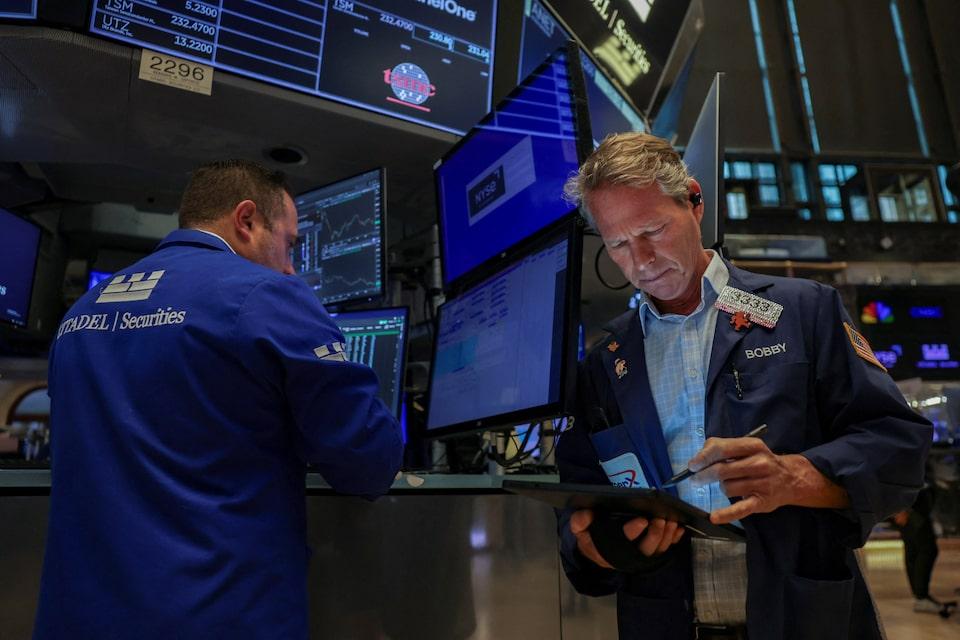
Traders suggested technical error, interest rate hedge as possible causes Massive 10-year futures sale rumored to be a 'fat finger' mistake Tradeweb executive says that was not the case Incident may have contributed to poorly received 10-year US Treasury auction NEW YORK, Aug 7 (Reuters) - A spike in U.S. Treasury yields across the curve in the late morning on Wednesday caused speculation about what was behind the move, and by Thursday greater consensus emerged among market sources that it was triggered by a large trade. Some traders on Wednesday suggested it could have been a technical error, while others said it may have been due to an interest rate hedge for a corporate bond issue. One U.S. rates trader said the sudden surge in yields may have been due to a "fat finger" mistake, or a typing or input error in the futures market. U.S. Treasury yields on two-year notes to 30-year bonds jumped, caused by what could have been massive selling in the futures market, analysts said. Sign up here. However, Bhas Nalabothula, head of U.S. Institutional Rates at electronic trading platform Tradeweb, said the yield spike was the result of a large transaction. "We saw that there was a large pricing in the marketplace – it was not a fat finger incident – and we did see elevated volumes during that time period in our wholesale business," he said on Thursday. The U.S. 10-year yield jumped to 4.282% , from 4.225%, or a six-basis-point rise in five minutes, a sharp increase for such a time span. A U.S. rate strategist speculated on Wednesday that the spike could be attributed to a "rate lock" going through ahead of a corporate bond issue. Wall Street dealers typically look to lock in borrowing costs for deals that they underwrite. As part of that process, a dealer sells Treasuries or Treasury futures, typically in large size, as a hedge to lock in the borrowing cost on the bond issue before the deal is completed. Tom di Galoma, managing director of rates and trading at Mischler Financial in Park City, Utah, said on Wednesday there was market speculation that someone sold 80,000 contracts in 10-year bond futures, after intending to sell 8,000, after which the trade was speculated to be canceled. "Selling of 80,000 in 10-year futures is massive. It's like 20 times the size of a normal transaction," di Galoma said, noting that the average size of 10-year future sales is about 5,000 contracts with a maximum of around 20,000 contracts. He estimated that the sale of 80,000 contracts was equivalent to between $8 billion and $10 billion, a large sum for one transaction in the $27 trillion U.S. Treasury market. The episode happened as dealers and hedge funds began hedging for Wednesday's $42 billion 10-year Treasury note auction. The auction was poorly received and Wednesday's late morning incident in the futures market could have contributed to the weak outcome. "We did have volatility early in the day when we had that big spike due to a large selling in the futures market," said Jan Nevruzi, U.S. rates strategist at TD Securities in New York. He said that might have caused buyers to pull back at the auction. https://www.reuters.com/markets/us/large-trade-seen-behind-us-treasury-yield-spike-that-fueled-speculation-2025-08-07/
2025-08-07 19:19
Cheniere's adjusted core profit missed analysts' forecasts Cheniere signs 21-year LNG deal with Japan's JERA Tax burden falls below 10% due to Big Beautiful Bill To return to constructing large LNG plants onsite Aug 7 (Reuters) - Cheniere Energy's (LNG.N) , opens new tab second-quarter profit nearly doubled year-on-year, driven by positive changes in the valuation of certain assets, steady demand and robust margins, the U.S. liquefied natural gas (LNG) company reported on Thursday. Despite higher year-over-year profit, its adjusted core profit of $1.42 billion missed analysts' forecasts for profits of $1.56 billion, according to data compiled by financial firm LSEG. Shares were down less than 1% on Thursday afternoon. Sign up here. Cheniere also announced it signed a 21-year LNG supply deal with Japan's biggest power generator JERA for 1 million metric tons per annum (MTPA) of LNG starting in 2029 through to 2050. This is its first long-term deal with a Japanese company, Chief Commercial Officer, Anatol Feygin, said on an earnings call. The U.S. is the world's largest exporter of LNG and commercial activity in the sector has gained momentum after President Donald Trump lifted a moratorium on new LNG export permits in January. In July, the European Union pledged $750 billion worth in strategic LNG purchases from the U.S. over three years as part of a sweeping trade pact, opening up opportunities for major producers like Cheniere. While the EU has committed to buying more U.S. LNG, it is up to commercial parties to reach agreements, said Feygin, adding that in the case of Cheniere, those deals must meet its returns. TAX WINDFALL Cheniere's revenue stood at $4.52 billion in the second quarter, about 43% higher than the same period last year, while the number of LNG cargoes exported totaled 154 during the quarter, down by one cargo due to maintenance activities, the company said. Cheniere's largest plant, Sabine Pass, had two of its LNG plants - also called trains - down for three weeks in the second quarter, impacting production, CEO Jack Fusco said during the call. Cheniere could see a lift to its revenue after its effective tax rate fell below 10% through to 2030 following the passage of Trump's so-called Big Beautiful Bill, Chief Financial Officer Zach Davis said. This year alone the company expects a reduction in its tax burden of $200 million, he added. The company raised the lower-end of its current-year adjusted core profit forecast by $100 million to between $6.6 billion and $7.0 billion. The company reported net income of $1.63 billion, or $7.30 per share, for the quarter, up nearly 85% from a year ago. Cheniere has also added 1 MTPA of LNG capacity by increasing efficiencies at its plants, and plans a 24 MTPA expansion project at Corpus Christi, Fusco said. Cheniere plans to move away from smaller plants built in a factory and assembled on site, like those used in its expansion projects at Corpus Christi, and return to utilizing ConocoPhillips' (COP.N) , opens new tab technology in large, stick-built plants, those constructed onsite from the ground up, Fusco said. It is more cost effective to maintain larger LNG plants, and current demand levels support those projects, he said. The company is aiming to bring its total production capacity to over 100 MTPA, but will only do so if it has the commercial support, said Fusco. https://www.reuters.com/business/energy/chenieres-q2-profits-double-inks-first-long-term-lng-deal-supply-japan-2025-08-07/

2025-08-07 19:19
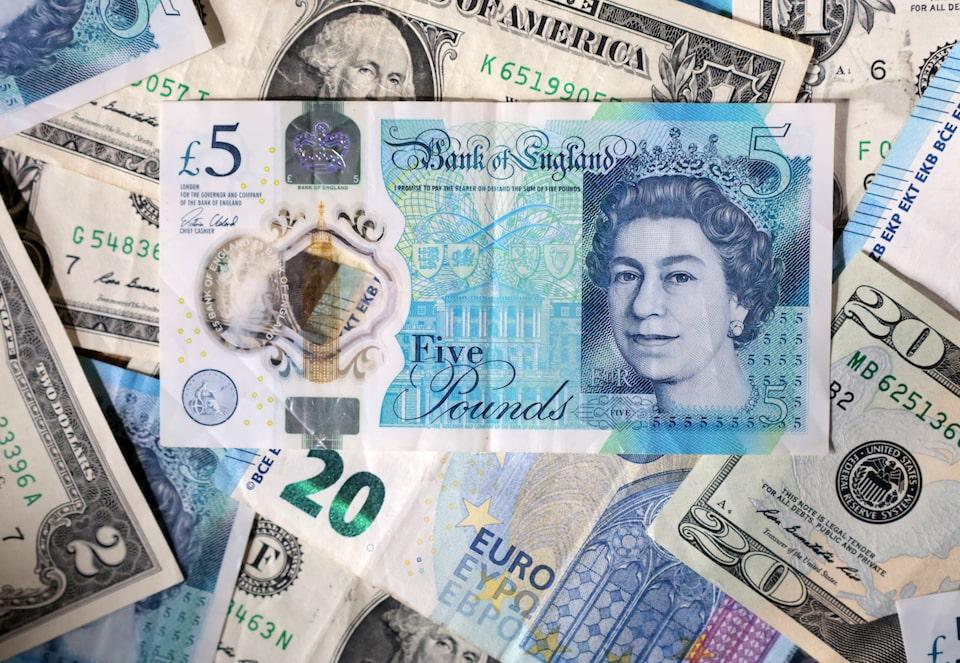
Dollar gains on report Waller favored to head Fed Sterling up as four BoE policymakers vote to keep rates unchanged Dollar faces weakness on more dovish Fed outlook Aug 7 (Reuters) - The U.S. dollar rose on Thursday after Bloomberg News reported Federal Reserve Governor Christopher Waller is emerging as a top candidate to serve as the central bank's chair among President Donald Trump's team. Waller has met with members of Trump's team, who are impressed with him, though he has not met with the president, Bloomberg reported. Sign up here. Trump has criticised current Fed Chair Jerome Powell, whose term will end in May, as being too slow to cut interest rates and some investors are concerned that his replacement will not act independently of the Trump administration. However, Waller is deeply respected in financial markets and central banking circles and his appointment would be positive for the U.S. dollar, said Karl Schamotta, chief market strategist at Corpay in Toronto. "He is understood to be someone with an easing bias, but he has the credibility that could keep long-term yields anchored and keep flows into the dollar well supported," Schamotta said. Trump said on Tuesday he had narrowed his search for a new Fed chair to four people including economic adviser Kevin Hassett, former Fed governor and Trump supporter Kevin Warsh, and two other people. Trump did not name those people, but one is thought to be Waller. Trump also said on Wednesday he would likely in the next two to three days nominate a candidate, out of a shortlist of three, to fill a coming vacancy on the Fed's Board of Governors after Adriana Kugler last week unexpectedly announced she was leaving. They would serve Kugler’s remaining months, leaving the choice of a permanent replacement for a later date. The dollar index , which measures the greenback against a basket of currencies including the yen and the euro, was last up 0.18% on the day at 98.36. Against the Japanese yen , the dollar strengthened 0.1% to 147.49. Sterling rose after more policymakers than expected at the Bank of England voted to keep rates on hold, even as the British central bank cut rates by 25 basis points as was widely expected. Four of the BoE’s nine policymakers - worried about high inflation - sought to keep borrowing costs on hold, suggesting the BoE's run of rate cuts might be nearing an end. The decision "was a little bit more hawkish than the market expected," said Sarah Ying, head of FX strategy, FICC Strategy at CIBC Capital Markets in Toronto. The British pound was last up 0.41% at $1.341. The euro fell 0.27% to $1.1627. The euro was boosted earlier on Thursday, reaching a more than one-week high of $1.1698, as investors welcomed talks in search of a breakthrough to end the war in Ukraine. Russian President Vladimir Putin and U.S. President Donald Trump will meet in the coming days, after Trump's envoy, Steve Witkoff, held talks with Putin. The single currency is likely to continue to be supported against the U.S. dollar by a relatively more hawkish central bank. “The biggest shift in the foreign exchange markets is really the idea that there's a little bit more tariff certainty - tariff uncertainty has declined,” said Ying. "The central bank story is going to start to matter a lot more ... moving forward there's going to be enough of a rate differential that that's going to matter most to markets.” Markets are pricing in a cumulative 14 basis point decline in ECB rates by the end of 2026, with hikes expected in late 2026 and 2027, compared to expectations of 130 basis points in Fed rate cuts in the same time frame. Traders boosted bets that the Fed would cut rates in September after July’s jobs report on Friday showed fewer jobs gains than expected and sharp downward revisions to previous months. Data on Thursday showed that the number of Americans filing new applications for unemployment benefits ticked higher last week, suggesting the labor market was largely stable even though job creation is weakening and it is taking laid-off workers longer to find new jobs. Americans' longer-term inflation outlook, meanwhile, deteriorated in July even as households boosted their views on the current and future state of their respective financial situations, according to data released by the New York Fed. Risks to the job market have increased, but it remains too soon to commit to interest rate cuts before the next Fed meeting, with key data still to come and inflation still expected to rise in coming months, Atlanta Fed President Raphael Bostic said on Thursday. Against the Swiss franc , the dollar strengthened 0.16% to 0.808, after President Karin Keller-Sutter returned from Washington empty-handed after a trip aimed at averting a 39% tariff on the country’s exports to the U.S. Switzerland will continue talks with the United States, Keller-Sutter said on Thursday. In cryptocurrencies, bitcoin gained 1.06% to $116,348. https://www.reuters.com/world/middle-east/dollar-gains-report-waller-favored-fed-head-2025-08-07/