2025-08-07 11:05
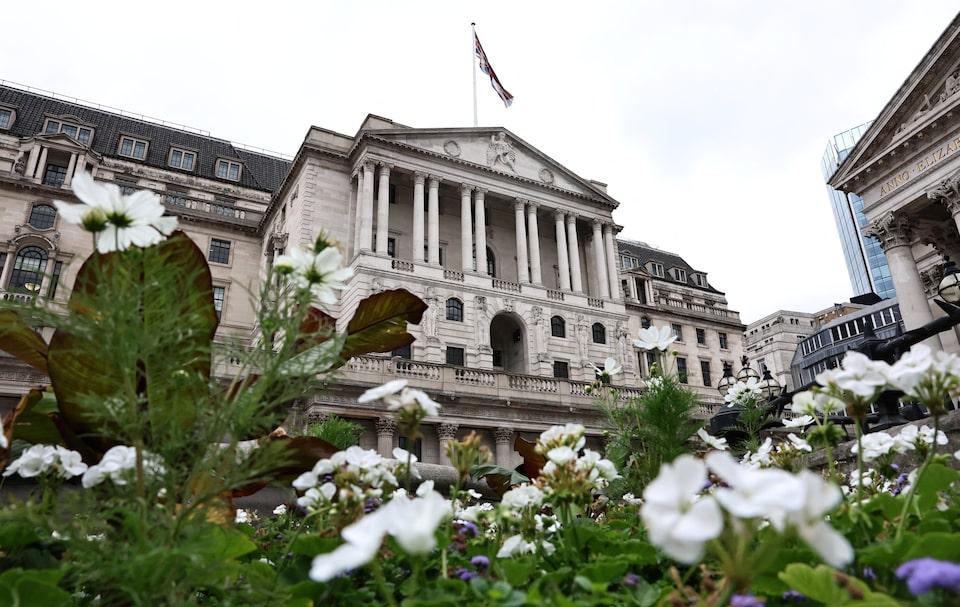
LONDON, Aug 7 (Reuters) - The Bank of England said on Thursday it estimates that its bond selling programme may have added as much as a quarter of a percentage point to the cost of 10-year British government borrowing, slightly more than it thought a year ago. Britain's central bank has reduced the 875 billion pounds of gilts which it bought between 2009 and 2021 by more than 300 billion pounds since 2022, through a mix of bond sales and allowing existing bonds to mature. Sign up here. Each August the BoE assesses the impact of the programme over the past year before its Monetary Policy Committee in September sets the pace at which bond holdings should fall over the following 12 months. Since October 2024 the BoE has reduced its holdings by 100 billion pounds - largely due to the 87 billion pounds of gilts which matured. Market partipants polled by the BoE earlier this year expected the stockpile to drop by 75 billion pounds over the coming 12 months. In a report published after its August MPC meeting, the BoE revised up its estimate of the cumulative impact of its quantiative tightening programme on 10-year gilt yields to 0.15-0.25 percentage points from 0.1-0.2 percentage points a year ago, which it said reflected the extra QT conducted over the past year. Ten-year gilt yields have risen by about 3.25 percentage points since the start of QT in February 2022 and by 0.55 percentage points over the past year. Thirty-year gilt yields have risen more sharply, however, up by nearly a full percentage point over the last 12 months, and some economists think the BoE could skew its sales in the coming year away from these gilts, or even stop them entirely. The BoE's assessment did not address this possiblity directly but noted that its sales of long-dated gilts could have a bigger impact on liqudity due to reduced demand in the market from pension funds. "These same shifts in the gilt market could pose a risk that QT has a greater impact on market functioning than previously. In an environment with lower demand for long-term assets, QT could have a larger impact on market liquidity," it said. Keywords: BRITAIN BOE/QT https://www.reuters.com/world/uk/bank-england-nudges-up-estimate-qt-impact-gilts-2025-08-07/
2025-08-07 10:59
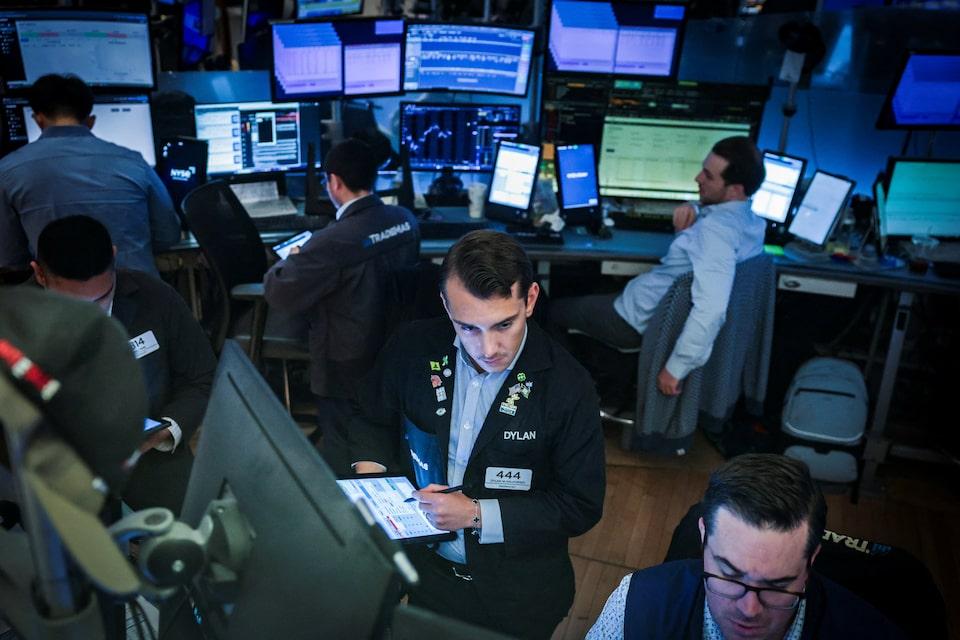
LONDON, Aug 7 (Reuters) - What matters in U.S. and global markets today By Mike Dolan , opens new tab, Editor-At-Large, Finance and Markets Sign up here. Wall Street and global stocks rose on Thursday, as Apple's domestic investment push, dovish noises on interest rates and a generally upbeat earnings season trumped chip stock hits and the arrival of the U.S. tariff day. The day's diary is topped by a likely Bank of England interest rate cut and U.S. weekly jobless numbers that take on unusual importance in light of last week's July payrolls confusion. * Stocks in Asia and Europe pushed higher even as U.S. tariffs were introduced, with Shanghai's index hitting its highest since 2021 following above-forecast Chinese import and export numbers for July. Although eight major trading partners accounting for about 40% of U.S. trade flows have reached framework deals to reduce tariffs to 15% or less, imports from Brazil, , Switzerland and Canada face rates of 35% to 50%. Though, Taiwan and South Korea are breathing sighs of relief following exemptions from 100% chip import levies. * Expectations for Federal Reserve easing as soon as next month were buoyed again as two regional Fed chiefs - Minneapolis Fed boss Neel Kashkari and San Francisco's Mary Daly - indicated more rate cuts were coming this year. President Donald Trump said on Wednesday he would likely appoint a temporary replacement to Adriana Kugler's vacant Fed board seat. Meanwhile, candidates to replace Chair Jerome Powell next year are likely down to three, including former Fed Governor Kevin Warsh and White House adviser Kevin Hassett. * Fed easing speculation knocked the dollar back to 10-day lows, with Treasury yields remaining close to the week's three-month lows despite another underwhelming 10-year auction overnight and a long bond sale later today. Sterling was slightly firmer against the dollar but down on the euro, as the BoE looks set to lower British rates by a quarter point to 4% later today. Make sure to check out today's column, where I argue that investors looking for the impact of Trump’s tariffs are looking at the wrong earnings season. Today's Market Minute * President Donald Trump's higher tariff rates of 10% to 50% on dozens of trading partners kicked in on Thursday, testing his strategy for shrinking U.S. trade deficits without massive disruptions to global supply chains, higher inflation and stiff retaliation from trading partners. * Indian Prime Minister Narendra Modi said on Thursday he will not compromise the interests of the country's farmers even if he has to pay a heavy price, in his first comments after Trump's salvo of a 50% tariff on Indian goods. * Russian President Vladimir Putin and U.S. President Donald Trump will meet in the coming days, Kremlin aide Yuri Ushakov said on Thursday, in what would be the first summit between leaders of the two countries since 2021. * Markets' relatively speedy acceptance of higher tariffs and threats to institutional independence raises the question: What happened to the last 40 years of economic orthodoxy? ROI columnist Jamie McGeever asks whether the Washington Consensus has been broken. * The U.S.-EU trade deal has been heavily criticised as a capitulation by the bloc. But Panmure Liberum investment strategist Joachim Klement argues that the European Union is likely not only to suffer less than the U.S. but may even see its economy benefit from the new global tariff regime. Latest Donald Trump News | Top Headlines on Donald Trump | Reuters Discover the latest headlines on Donald Trump, including coverage of his second presidency, trade and tariff policies, legal developments and more. Chart of the day Trump said on Wednesday that the United States would impose a tariff of about 100% on imports of semiconductors but offered up a big exemption - it will not apply to companies that are manufacturing in the U.S. or have committed to do so. South Korea's top trade envoy said major chipmakers Samsung Electronics and SK Hynix would not be subject to the 100% levies. Taiwanese chip contract manufacturer TSMC was expected to be relatively unscathed as it has U.S. factories, so key customers such as Nvidia are unlikely to face increased tariff costs for U.S-made chips. Malaysia's trade minister Tengku Zafrul Aziz warned parliament his country would risk losing a major market in the United States. Today's events to watch * Bank of England policy decision and monetary policy report (7:00 AM EDT), with press conference from BoE Governor Andrew Bailey * U.S. weekly jobless claims (8:30 AM EDT), Q2 labor costs and productivity, June consumer credit (3:00 AM EDT); Mexico July inflation (8:00 AM EDT) * Mexico central bank policy decision (3:00 PM EDT) * Atlanta Federal Reserve President Raphael Bostic speaks * U.S. corporate earnings: Eli Lilly, Gilead, Zimmer Biomet, Warner Bros Discovery, Expedia, ConocoPhillips, Sempra, Constellation Energy, Alliant Energy, Evergy, Consolidated Edison, Motorola Solutions, Microchip Technology, GenDigital, Ralph Lauren, Monster Beverages, Block, GoDaddy, Live Nation, Wynn Resorts, Trade Desk, EOG, * U.S. Treasury auctions $25 billion of 30-year bonds Want to receive the Morning Bid in your inbox every weekday morning? Sign up for the newsletter here. You can find ROI on the Reuters website , opens new tab, and you can follow us on LinkedIn , opens new tab and X. , opens new tab Opinions expressed are those of the author. They do not reflect the views of Reuters News, which, under the Trust Principles , opens new tab, is committed to integrity, independence, and freedom from bias. https://www.reuters.com/business/finance/global-markets-view-usa-2025-08-07/
2025-08-07 10:51
Aug 7 (Reuters) - Reliance Industries (RELI.NS) , opens new tab, India's biggest buyer of Russian oil, said in its annual report on Thursday that geopolitical and tariff-related uncertainties could hurt trade flows and the demand-supply balance. The operator of the world's largest refining complex said crude prices remained volatile amid evolving sanctions, shifting tariff policies, and output decisions by the Organization of the Petroleum Exporting Countries and non-OPEC members. Sign up here. The report, which did not elaborate on the tariffs, covered the fiscal year to March 2025, before U.S. President Donald Trump ratcheted up pressure on India, imposing on Wednesday an additional 25% tariff on goods imported from the country over its energy ties with Russia. The new levy, aimed at penalising India for its Russian oil imports, is on top of existing tariffs Washington has levied to fix its trade deficit with New Delhi. Russia continued to be the largest oil supplier to India during the first six months of 2025, accounting for about 35% of New Delhi's overall supplies, followed by Iraq, Saudi Arabia, and the United Arab Emirates, trade data shows. While state refiners have paused imports of Russian oil, private companies Reliance, Nayara Energy, and HPCL Mittal Energy continue to buy it. Late last year, Russia's state oil firm Rosneft (ROSN.MM) , opens new tab agreed to supply nearly 500,000 barrels per day of crude to Reliance in the biggest ever energy deal between the two countries. "If we cave under pressure, we risk losing access to cheaper Russian crude, which could squeeze refining margins. That's a risk for Reliance and oil marketing companies," Pramod Gubbi, co-founder at portfolio manager Marcellus Investment Managers, said referring to additional U.S. tariffs. Reliance shares fell 1% on Thursday before trimming losses to close 0.2% down. Shares of oil marketing companies including Indian Oil Corp (IOC.NS) , opens new tab closed between 0.4% and 2% lower. The European Union has also banned imports of refined petroleum products made from Russian crude processed in third countries, with exceptions for a few Western nations. It has imposed direct sanctions on Russian-backed private refiner Nayara Energy. Reliance, a major exporter of refined products, shipped an average of 2.83 million barrels of diesel and 1.5 million barrels of jet fuel per month to Europe in the first seven months of this year, according to LSEG shiptracking data. https://www.reuters.com/world/india/indias-reliance-warns-tariff-uncertainties-could-hit-trade-flows-2025-08-07/

2025-08-07 10:28
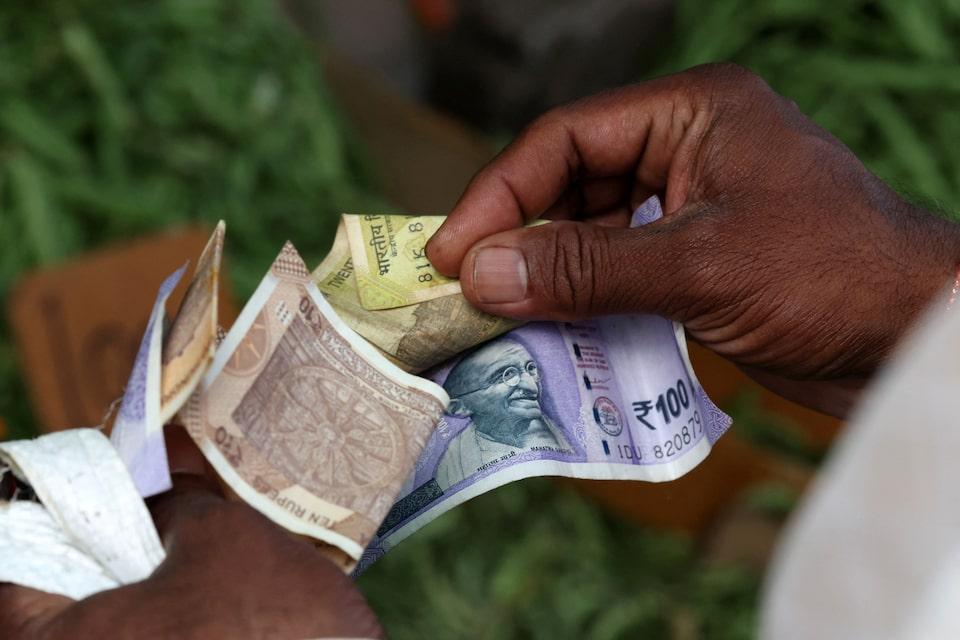
MUMBAI, August 07 (Reuters) - The Indian rupee shrugged off U.S. President Donald Trump's additional tariffs on Indian goods on Thursday, as traders and analysts bet on central bank support to steady the currency. The rupee closed largely flat at 87.7025 against the U.S. dollar, up 0.03% from 87.7325 on Wednesday. Sign up here. U.S. President Donald Trump followed through on his threat and imposed an additional 25% tariff on Indian goods over continued purchases of Russian oil. "…Considering the recent moves, it appears that the central bank is committed to preventing the rupee from depreciating further," said Abhishek Goenka, founder and chief executive of IFA Global. Meanwhile, the Indian central bank resumed its intervention in the non-deliverable forwards (NDF) market last week, marking a return to a tool it had mostly avoided so far under governor Sanjay Malhotra. The RBI stepped in on Tuesday to prevent the rupee from breaching its record low of 87.95, traders said. Forex reserves dropped over $9 billion last week, likely due to spot and NDF market intervention. The rupee slid 1.2% in the week to Aug. 1, its steepest fall in nearly three years. Other Asian currencies also shrugged off Trump’s tariff threats. The South Korean won advanced 0.3%, while the Indonesian rupiah climbed 0.4%. Dollar index was flat at 98.184 as of 1017 GMT, despite weak U.S. jobs data raising expectations for a rate cut in September in the world's largest economy. India's equity benchmarks, the BSE Sensex (.BSESN) , opens new tab and Nifty 50 (.NSEI) , opens new tab both closed 0.1% higher despite Trump's announcements. https://www.reuters.com/world/india/rupee-holds-firm-against-trump-tariffs-rbi-intervention-expectations-2025-08-07/
2025-08-07 09:22
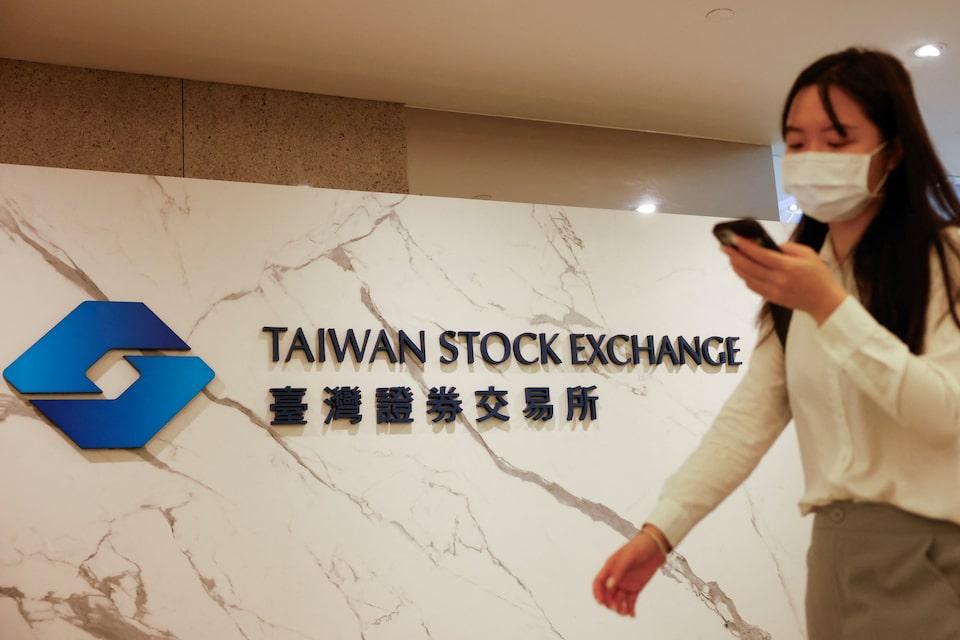
Taiwan and South Korea attract $25.7 billion in foreign investments over three months Thailand sees first foreign inflows since September, despite political and economic challenges India, Indonesia, Philippines face outflows; Vietnam attracts $326 million in July Aug 6 (Reuters) - Foreign investors flocked to Asian stocks for the third straight month in July, with inflows into Taiwan hitting a near two-decade high and Thailand snapping its nine-month losing streak, buoyed by growth and AI prospects as trade worries fluctuate. Foreign inflows into most Asian equity markets have stabilised over the past three months as countries clinched better trade arrangements with the United States, calming tariff-related volatility and uncertainty in financial markets. Sign up here. Overseas investors showed strong interest in Taiwan and South Korea for the third straight month in July, pouring $7.78 billion in Taiwan, the highest since the 2008 global financial crisis, and $4.52 billion in South Korea, the most since February last year, LSEG data showed. The MSCI gauge of equities in Asia excluding Japan (.MIAPJ0000PUS) , opens new tab rose 2% last month, its fifth consecutive month in green, while benchmarks in Taipei (.TWII) , opens new tab and Seoul (.KS11) , opens new tab advanced roughly 6% each. Taiwan and South Korea were the top destinations in the region for foreign capital, securing a cumulative $25.7 billion over the past three months as the two dominant Asian tech exporters benefit from a global surge in AI-related investments. South Korea's shareholder-friendly reforms, political stability, and robust corporate fundamentals lured investors in 2025 after a dreary performance last year, though recent concerns over reforms to tax policy are posing new challenges. Foreign investors also net bought $499 million worth of Thai equities in July, the first month of inflows since September last year, as they scooped up stocks at relatively cheap valuations after a prolonged period of heavy selling. Even so, Thailand's uncertain political climate, challenging macroeconomic conditions, and an unnecessarily strong currency that undermines export competitiveness continue to impede any buildup of positions on these equities. Thailand's benchmark SET index (.SETI) , opens new tab surged 14% in July — its best month since November 2020 — but still not enough to erase steep losses suffered earlier in the year. The index remains 10% in the red, ranking among the region's worst performers. "We are cautious and underweight on Thailand as it remains in a fairly precarious position: high household debt, limited government spending, an uncertain political environment, and external negative events such as the conflict with Cambodia," said Kenneth Tang, senior portfolio manager at Nikko Asset Management. "If Thailand can settle these issues, it will clear up the path for its recovery." Indian stocks experienced sharp outflows of over $2 billion in July, the highest since February this year and snapping a three-month streak of net purchases. Indonesia and the Philippines also logged net outflows of $570 million and $29 million, respectively, last month, while Vietnam attracted $326 million as investors bet on the country's strong growth prospects after it secured a comfortable tariff rate with the United States. https://www.reuters.com/world/asia-pacific/foreigners-pour-billions-into-taiwan-south-korea-stocks-ai-growth-optimism-2025-08-07/
2025-08-07 07:52
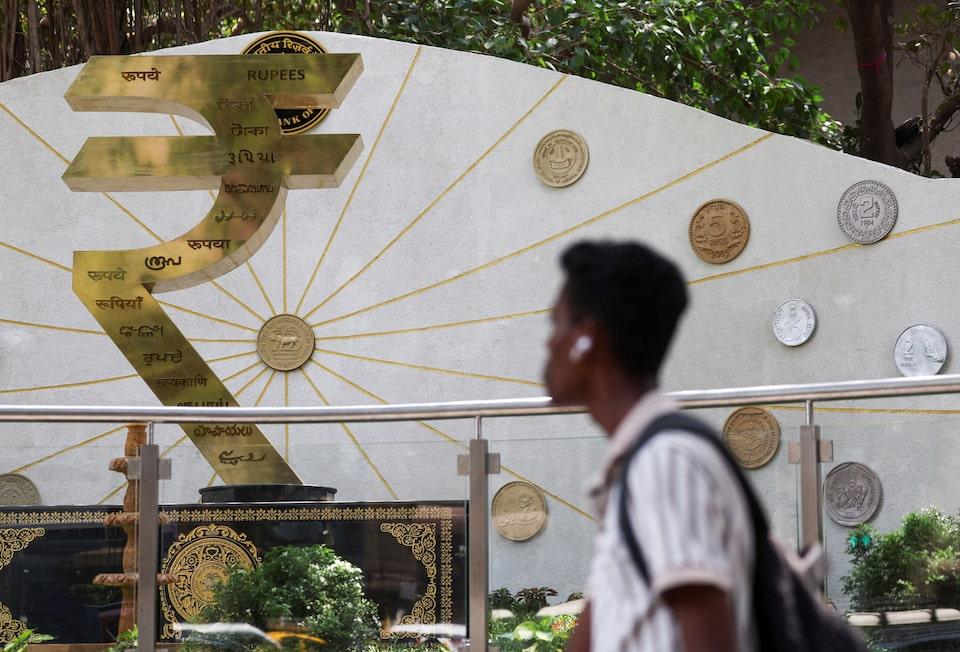
MUMBAI, August 7 (Reuters) - The Reserve Bank of India has resumed intervention in the non-deliverable forwards market over the past fortnight to manage rupee volatility triggered by mounting trade tensions with the United States, four bankers told Reuters. This marks a return to a tool the central bank had largely refrained from using over the past seven months since Sanjay Malhotra took over as RBI governor and dialled back on currency intervention. Sign up here. The rupee has appeared increasingly vulnerable in recent weeks amid uncertainty over whether India will reach a trade deal with the U.S. The currency posted its largest weekly decline in nearly three years last Friday, weighed down by U.S. President Donald Trump’s decision to impose steeper-than-expected 25% tariffs on Indian goods. The RBI stepped into the non-deliverable forward market last week, responding to the pressure on the currency, the bankers said. The strain on the rupee has persisted this week following Trump's warning of punitive action over India's continued imports of Russian oil, which culminated in an additional 25% tariff on Indian goods. The central bank may have stepped in this week too in the non-deliverable forward market, two out of the four bankers said. The rupee dropped to a six month low of 87.8850 versus the U.S. dollar on Tuesday, coming within a whisker of its all-time low of 87.95 hit in February. It would have likely breached that level if not for the Reserve Bank of India's intervention, traders said. As of 12:56 pm IST on Thursday, the currency was trading at 87.7275. An email to the RBI seeking comment did not draw an immediate response. The bankers spoke on condition of anonymity because they are not permitted to speak to the media. "The Trump tariff surprise and a possible all-time high (on dollar/rupee) brought the RBI back in NDF," head of FX and rates trading at a foreign bank said, "They’re not going in heavy like previously, more of a light touch just to keep things in check." The RBI had largely stepped away from the non-deliverable forward market in recent months, significantly unwinding its positions, according to bankers. Under Malhotra the RBI has allowed higher volatility in the rupee, marking a shift from the tightly managed approach of his predecessor Shaktikanta Das. During Das's tenure, non-deliverable forwards had become RBI's preferred mode of intervention. Unlike onshore spot market operations, intervention through the non-deliverable forward market does not directly impact India’s foreign exchange reserves or affect rupee liquidity in the domestic banking system. The RBI’s intervention in the non-deliverable forwards market last week was complemented by sustained action in the onshore spot market, which contributed to a more than $9 billion decline in India’s foreign exchange reserves. "The RBI is likely to be more aggressive in capping INR depreciation pressures given how far the currency has already cheapened over recent months in spot, NEER (nominal effective exchange rate) and REER (real effective exchange rate) terms," Singapore-based Mitul Kotecha, head of FX & EM Macro Strategy Asia at Barclays Bank, said in a note. https://www.reuters.com/world/india/trump-tariff-salvo-sees-india-central-bank-return-out-of-favour-rupee-derivative-2025-08-07/