2025-08-07 07:20
MELBOURNE, Aug 7 (Reuters) - Rio Tinto (RIO.AX) , opens new tab joined peer BHP (BHP.AX) , opens new tab on Thursday to play down Australia's prospects of building out a "green iron" sector that would help decarbonise the steel industry because the country lacks the economic incentives to do so. Australia is the world's largest supplier of seaborne iron ore and has been striving to build a role as a reliable source of green metals. In February the government allocated A$1 billion ($652.4 million) to support the manufacture of green iron and its supply chains. Sign up here. Since Australia's iron ore is mostly too low-grade to be directly processed into steel with renewable energy, it needs an additional processing step. When this is undertaken with hydrogen made from renewable energy instead of coal, the product is called hydrogen direct reduced iron (DRI) or "green iron", a low-carbon base for making green steel. "Today I don't believe there is an economic incentive for anybody to move to a hydrogen DRI," Rio Tinto's chief technical officer Mark Davies said. The technology was unproven, and there were complications moving from existing processes using natural gas to hydrogen, he told a business lunch in Melbourne. "And doing it in Australia is expensive. It's an expensive place to build stuff," he said. Major miner BHP (BHP.AX) , opens new tab said last month it was too costly for Australia to build a "green iron" industry, even after the country and China agreed to jointly work to decarbonise the steel supply chain, responsible for nearly a 10th of global emissions. A global carbon price of "a couple of hundred dollars" would be needed to create that incentive, Davies later told a press briefing. ($1 = 1.5328 Australian dollars) https://www.reuters.com/sustainability/climate-energy/rio-tinto-says-no-economic-incentive-green-steel-australia-2025-08-07/
2025-08-07 07:17
SAINT-LAURENT-DE-LA-CABRERISSE, France, Aug 7 (Reuters) - Firefighters battled for a third day on Thursday to contain France's biggest wildfire in nearly eight decades, which has burnt over 16,000 hectares, killed one person and destroyed dozens of houses. Reuters TV images showed plumes of smoke rising over the forest area in the region of Aude in southern France. Sign up here. Drone footage showed large swatches of charred vegetation. One person has died, three are missing and two people including a firefighter are in critical condition, local authorities said. "As of now, the fire has not been brought under control," Christophe Magny, one of the officials leading the firefighting operation, told BFM TV. He added that he hoped the blaze could be contained later in the day. The blaze, around 100 km from the border with Spain, not far from the Mediterranean Sea, began on Tuesday and has spread rapidly. It has already swept through an area one-and-a-half times bigger than Paris. Officials have said it is France's biggest wildfire since 1949. The fire is now advancing more slowly, Environment Minister Agnes Pannier-Runacher told France Info radio. Scientists say the Mediterranean region's hotter, drier summers put it at high risk of wildfires. France's weather office has warned of a new heatwave starting in other parts of southern France on Friday and due to last several days. https://www.reuters.com/sustainability/climate-energy/france-battles-biggest-wildfire-since-1949-2025-08-07/

2025-08-07 07:06
Targets 15-20 gigawatts of generation capacity by 2030 CEO notes delays in regulation, market developments Raises focus on profitable projects FRANKFURT/DUESSELDORF, Aug 7 (Reuters) - Uniper (UN0k.DE) , opens new tab will invest 5 billion euros ($5.8 billion) through 2030 mainly on renewable and gas-fired power plants, the German utility said on Thursday, in a strategy update that reflects more sober expectations for green energy markets. The state-owned company said last year it would slow down an initial plan of investing 8 billion euros in its transformation by 2030, citing falling returns on renewable projects as well as a delay in the development of hydrogen markets. Sign up here. The challenges have led several European utilities, including larger German peer RWE RWEG.DE, to come under pressure from investors to review their capital allocations, forcing them to trim spending plans. "The regulatory and geopolitical environment is challenging," Uniper CEO Michael Lewis said, citing delays to German government plans to build new gas-fired power plants as well as the slow hydrogen ramp-up. "Consequently, we have decided to sharpen the strategic focus of our portfolio through 2030 even more on activities and projects that generate reliable earnings streams." Most of the 5 billion euros will be spent on expanding Uniper's renewable and gas-fired power plant portfolio, the group said, adding it plans to have 15-20 gigawatts of generation capacity by 2030. At least half of that capacity is expected to be green, Uniper said, adding this would cover sources such as solar, wind and hydro, but also nuclear and new gas-fired power plants that can eventually run carbon neutral down the line. The company also said it plans to expand its liquefied natural gas portfolio to 250-300 terawatt hours a year over the medium-term. ($1 = 0.8570 euros) https://www.reuters.com/business/energy/germanys-uniper-invest-58-billion-through-2030-strategy-revamp-2025-08-07/
2025-08-07 07:04
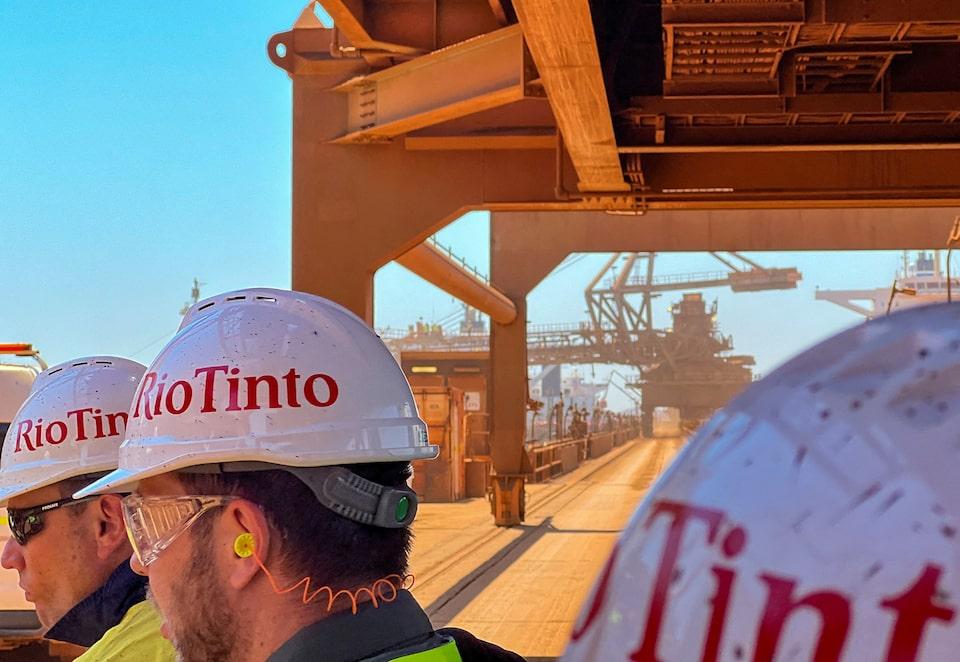
Rio Tinto dividend the smallest in seven years Dividends are unlikely to recover until commodity prices rally Miners' development projects at capital intensive stages, analyst says MELBOURNE, Aug 7 (Reuters) - So far this earnings season, large miners are paying out their lowest dividends in years, as mineral prices slip and they need to retain cash for their massive development projects, while trying to keep a lid on costs. Rio Tinto (RIO.AX) , opens new tab, Anglo American (AAL.L) , opens new tab and Glencore (GLEN.L) , opens new tab have all reported lower half year earnings, with BHP (BHP.AX) , opens new tab expected to continue the trend when it reports on August 19. Sign up here. After years of strong China-driven profits backed by COVID-19- and Russia-linked supply snags, they are now operating against a backdrop of lower profits, high capital spending plans, or a full-scale restructuring in the case of Anglo American. That is capping what the miners are willing to return to shareholders, analysts and fund managers said. Prices of key commodities iron ore and coal have dropped around 13% since the start of the year. Miners are instead doubling down on projects for copper, which is up 8% this year on expected energy transition demand, but it still remains too small a part of their portfolios to offset losses elsewhere. Many of the large diversified miners are in the most capital intensive stage of development they have been in for a long time, and that is unlikely to change in the near term, said Brenton Saunders, a portfolio manager at Pendal Group in Sydney. “In the absence of a move higher in commodity prices, payouts are likely going to stay relatively depressed,” Saunders added. Growth projects by the majors include BHP's Jansen potash mine in Canada where it will spend up to $7.4 billion for the first stage of development, from a previous estimate of $5.7 billion, it said last month. Rio Tinto expects to spend more than $13 billion on iron ore mines to replace depleted ones in Western Australia in the next three years alone. Anglo is busy selling off its coal and diamond divisions while Glencore has been hit by low prices for its key commodity coal. Glencore on Wednesday reported a 14% drop in first-half earnings due to weaker coal prices and lower copper production, and an increase in net debt. The company kept its dividend unchanged and did not announce further share buybacks. It said would it maintain its base dividend of $0.05 per share, equal to the previous half-year period, which was its lowest since 2021. Rio Tinto last week reported its smallest first-half underlying profit since 2020 and lowest interim dividend in seven years, given the drop in iron ore prices and rising costs at its Australian business. Anglo American reported a $1.9 billion loss in the first half of 2025, reduced its dividend to the lowest in at least five years, and said restructuring efforts continued. Analysts expect BHP will set its full-year payout at $1.02, which would be the lowest in eight years. https://www.reuters.com/business/mining-giants-squeeze-dividends-with-an-eye-toward-funding-growth-2025-08-07/
2025-08-07 06:54
Aug 7 (Reuters) - Indian refiner Reliance Industries (RELI.NS) , opens new tab said on Thursday continuing geopolitical and tariff-related uncertainties may affect trade flows and demand-supply balance. In its annual report, the Mukesh Ambani-led firm said crude prices remain volatile amid evolving sanctions, changing tariff regimes and output decisions by OPEC and non-OPEC members. Sign up here. "If we cave under pressure, we risk losing access to cheaper Russian crude, which could squeeze refining margins. That's a risk for Reliance and oil marketing companies," said Pramod Gubbi, co-founder at Marcellus Investment Managers. Oil marketing companies were last trading lower between 0.6% to 2%, in a weak market with the benchmark Nifty 50 (.NSEI) , opens new tab down 0.6%. Shares of the company were already down 1% a day after U.S. President Donald Trump doubled down on India tariffs, imposing another 25% duty to pressure New Delhi over its energy ties with Russia. https://www.reuters.com/world/india/indias-reliance-warns-tariff-jitters-may-hit-demand-supply-balance-2025-08-07/
2025-08-07 06:47
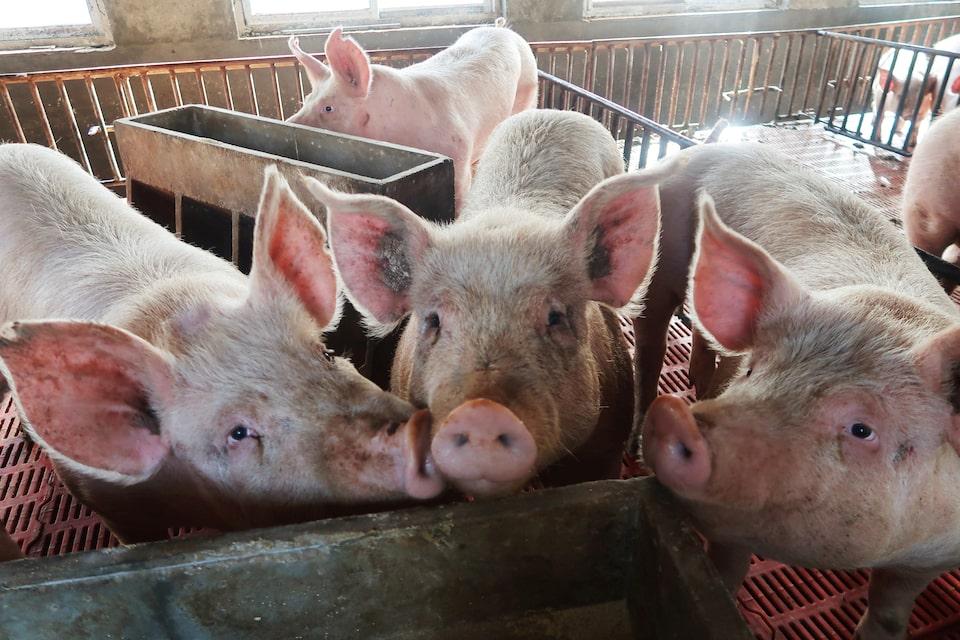
BEIJING, Aug 7 (Reuters) - China's pig industry representatives will gather next week in Beijing to discuss ways to reduce breeding sow numbers by a million, according to an official notice seen by Reuters, as part of a push to tackle overcapacity and stabilise prices. Home to half the world's pigs, China's massive hog sector struggles with a supply glut amid weak consumer demand. Sign up here. Data shows China's sow herd hit 40.43 million head at the end of June, above the normal holding level of 39 million. Cash hog prices, meanwhile, have tumbled below 14 yuan ($1.95) per kilogram this week. A year earlier, it was around 20 yuan, according to consultancy MySteel. The upcoming meeting will also focus on curbing "secondary fattening" - a speculative practice aimed at slimming hogs to stabilise prices - and tightening controls on slaughter weights, according to the notice from the China Animal Agriculture Association, the official animal husbandry association. The story was first reported by Bloomberg News. Reuters reported in June that a crackdown on secondary fattening was already underway to stabilise the market. In July, the agriculture ministry said the country would reduce breeding sow stocks, control slaughter weights, and limit new production capacity. These efforts are also expected to reduce soymeal consumption, as China contends with ongoing trade tensions with the U.S. and concerns over potential soybean supply disruptions in the fourth quarter. ($1 = 7.1780 Chinese yuan renminbi) https://www.reuters.com/markets/commodities/china-wants-fewer-pigs-2025-08-07/