2025-08-07 04:24
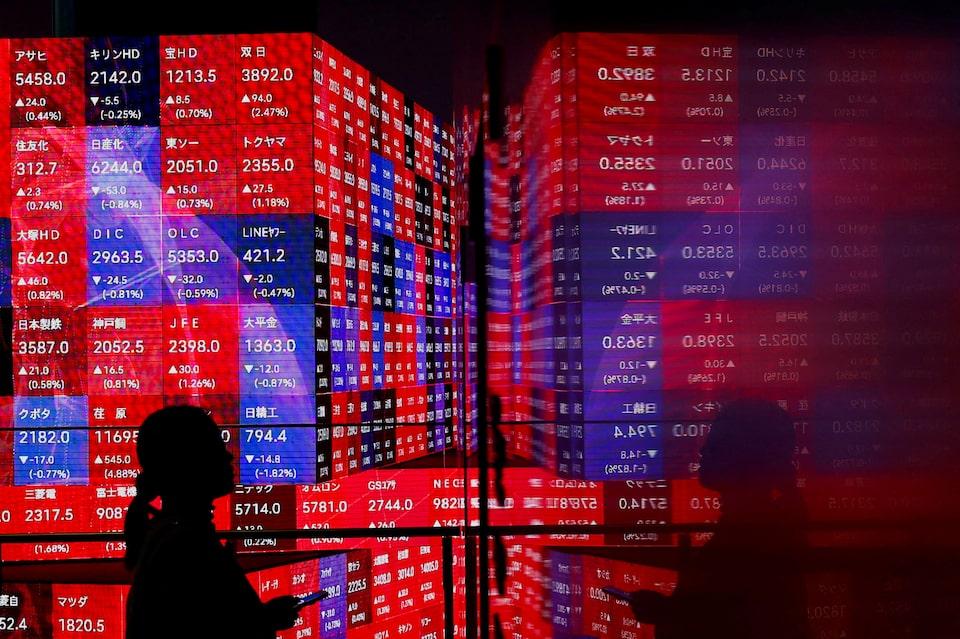
Aug 7 (Reuters) - Japanese investors significantly sold foreign stocks in the week to August 2 as major markets retreated on caution over U.S. economic outlook and a new set of trade tariffs. According to data from Japan's Ministry of Finance released on Thursday, domestic investors withdrew a net 752.1 billion yen ($5.10 billion) out of foreign stocks last week, reversing two successive weeks of net purchases. Sign up here. The MSCI World Index (.MIWD00000PUS) , opens new tab lost a sharp 2.54% last week, the most in three months, pressured by a disappointing U.S. jobs report for July, and President Donald Trump's new round of punishing tariffs on dozens of countries. Despite the recent withdrawals, overseas stock markets have still received a massive 3.37 trillion yen worth of Japanese investments so far this year compared with a net 915.8 billion yen sales a year ago. They also sold foreign long-term bonds of 526.3 billion yen for the second successive week on the run. Meanwhile, Japanese stock markets saw approximately 193 billion yen in weekly net investments from overseas, the smallest amount in six weeks. In local bond markets, foreign outflows from long-term bonds cooled to a three-week low of 87.5 billion yen. Short-term bills saw 1.2 trillion yen of net foreign inflows after a net 1.95 trillion yen weekly outflow in the previous week. ($1 = 147.5800 yen) https://www.reuters.com/business/finance/japanese-investors-ditch-foreign-stocks-us-economic-concerns-tariff-tensions-2025-08-07/
2025-08-07 02:44
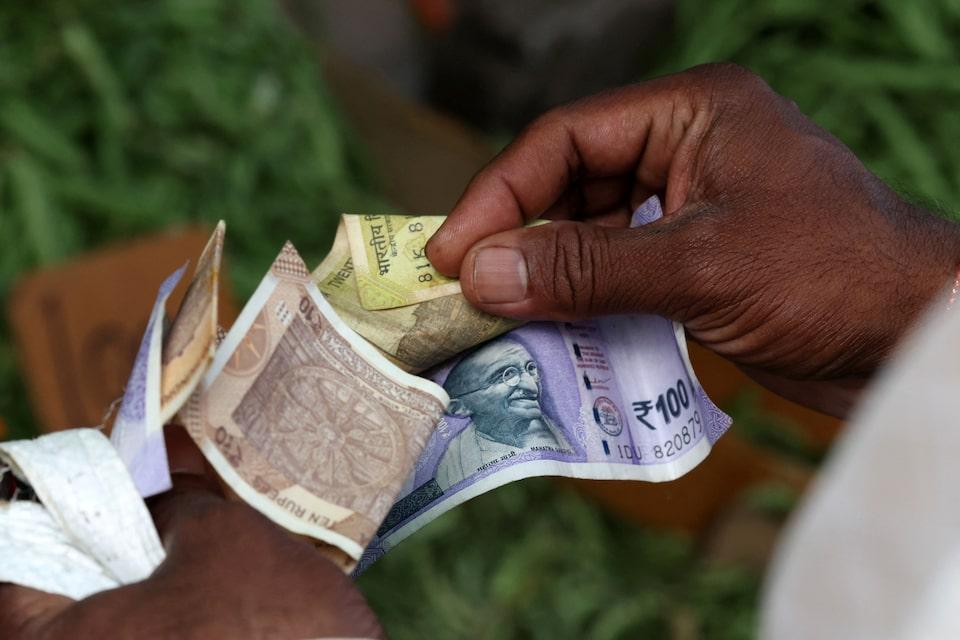
MUMBAI, August 7 (Reuters) - The Indian rupee is expected to open largely unchanged on Thursday, showing limited reaction to U.S. President Donald Trump's additional tariffs on Indian goods, which traders said was largely expected and factored in. The 1-month non-deliverable forward indicated the rupee will open in the 87.70-87.75 range versus the U.S. dollar, largely unchanged from Wednesday's close of 87.7325. Sign up here. Indian equities too appeared largely unfazed by the additional tariffs, with GIFT Nifty futures pointing to a muted open. On Wednesday, Trump hit Indian goods with an extra 25% tariff, blaming oil ties with Russia. The new duties, kicking in on August 28, could lift tariffs on some exports to 50% - one of the steepest rates for a U.S. trade partner. "We knew more tariffs were coming after all those hints by Trump," a currency trader at a private sector banks said. It appears that the rupee and Indian equities had largely priced them in, he added. The rupee's measured response to the new tariffs likely reflects the Reserve Bank of India's (RBI) resolve to prevent a breach of the all-time low of 87.95, the trader said. The central bank was likely selling dollars via state-run banks on Tuesday when the currency was at risk of slipping past that level. India-U.S. trade relations have entered a turbulent phase, marked by escalating tariffs and the U.S.'s unease over New Delhi's continued energy engagement with Russia. The developments have raised concerns about higher volatility in Indian assets, with investors bracing for the fallout from worsening relations. The additional tariffs were not "entirely unexpected", especially since Trump had recently threatened substantial tariffs on India, Barclays Bank said, adding that if implemented in full, would "certainly dent India's growth outlook". However, the bank added that the announcement likely represents a pressure tactic and expects the final U.S. duty on Indian goods to settle lower. Citi Research noted that with the extra tariffs kicking in after 21 days, there's window for negotiations. KEY INDICATORS: ** One-month non-deliverable rupee forward at 87.84; onshore one-month forward premium at 10.5 paise ** Dollar index at 98.21; Asian currencies mostly higher ** Brent crude futures up 0.9% at $67.5 per barrel ** Ten-year U.S. note yield at 4.24% ** As per NSDL data, foreign investors bought a net $177.8 mln worth of Indian shares on August 5 ** NSDL data shows foreign investors bought a net $26.7 mln worth of Indian bonds on August 5 https://www.reuters.com/world/india/rupee-likely-hold-ground-after-trump-ramps-up-tariff-heat-indian-goods-2025-08-07/
2025-08-07 00:13
SANTIAGO, Aug 6 (Reuters) - Copper miner Codelco (COBRE.UL) has asked Chile's mining regulator for permission to reopen a part of its flagship El Teniente mine after a collapse last week that killed six people, two sources with knowledge of the matter said. Codelco suspended mining operations at El Teniente, the world's biggest underground copper mine that produced more than 300,000 metric tons last year, on Thursday evening. Sign up here. Chilean mining regulator Sernageomin later imposed a formal suspension, and instructed Codelco to present four reports related to the cause and impact of the accident so it could evaluate lifting the measure. In a statement on Wednesday evening, Codelco said it had responded to three information requests from mining regulator Sernageomin and Chile's labor inspection office. The company also said it was doing cleaning and maintenance at El Teniente's processing plants and smelter, as well as operations in the smelter's anode furnaces every two hours to keep the equipment in working condition. After the accident, Codelco initially continued its processing and smelting operations despite halting underground mining activity. https://www.reuters.com/world/americas/codelco-asks-restart-part-el-teniente-mine-after-accident-2025-08-06/

2025-08-06 23:53
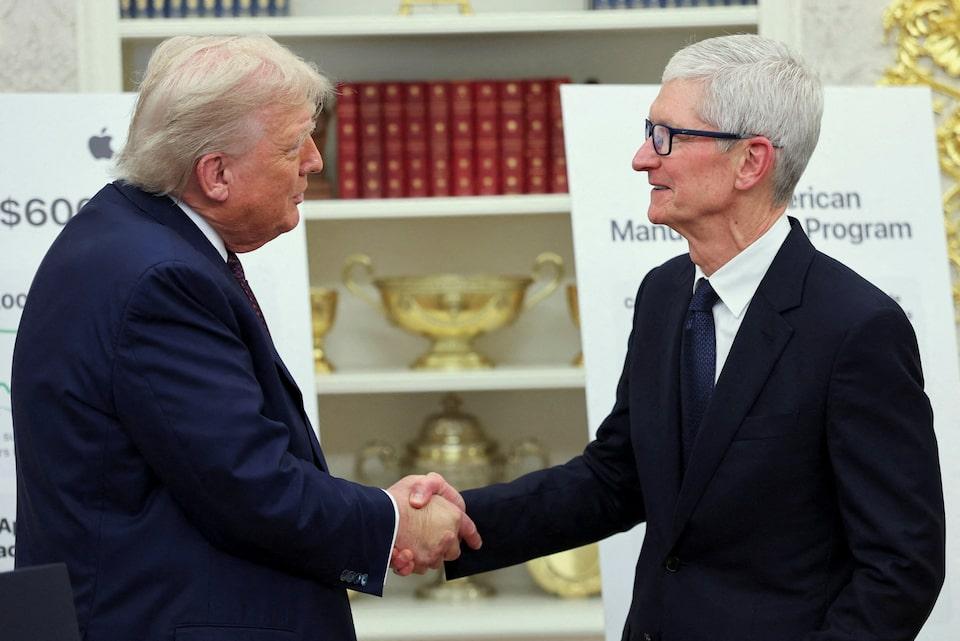
Apple brings total US investment commitment to $600 billion Investment could help Apple sidestep potential iPhone tariffs Announcement helps Apple get on Trump's good side, analysts said WASHINGTON, Aug 6 (Reuters) - President Donald Trump announced on Wednesday that Apple (AAPL.O) , opens new tab will invest an additional $100 billion in the United States, a move that could help it sidestep potential tariffs on iPhones. The new pledge raises Apple's total domestic investment commitment in the U.S. to $600 billion over the next four years. Earlier this year, the company announced it would invest $500 billion and hire 20,000 workers across the country in that period. Sign up here. The announcement centers on expanding Apple's supply chain and advanced manufacturing footprint in the U.S., but still falls short of Trump's demand that Apple begin making iPhones domestically. "Companies like Apple, they're coming home. They're all coming home," Trump told reporters in the Oval Office, moments after Apple CEO Tim Cook gave him a U.S.-made souvenir with a 24-karat gold base. "This is a significant step toward the ultimate goal of ensuring that iPhones sold in America also are made in America," Trump added. Asked if Apple could eventually build entire iPhones in the U.S., Cook noted that many components such as semiconductors, glass and Face ID modules are already made domestically, but said that final assembly will remain overseas "for a while." While the investment pledge is significant, analysts say the numbers align with Apple's typical spending patterns and echo commitments made during both the Biden administration and Trump's previous term. In May, Trump had threatened Apple with a 25% tariff on products manufactured overseas, a sharp reversal from earlier policy when his administration had exempted smartphones, computers and other electronics from rounds of tariffs on Chinese imports. Trump's effort to reshape global trade through tariffs cost Apple $800 million in the June quarter. "Today is a good step in the right direction for Apple, and it helps get on Trump's good side after what appears to be a tension-filled few months in the eyes of the Street between the White House and Apple," said Daniel Ives, an analyst with Wedbush Securities. "A SAVVY SOLUTION" Apple has a mixed track record when it comes to following through on investment promises. In 2019, for instance, Cook toured a Texas factory with Trump that was promoted as a new manufacturing site. But the facility had been producing Apple computers since 2013 and Apple has since moved that production to Thailand. Apple continues to manufacture most of its products, including iPhones and iPads, in Asia, primarily in China, although it has shifted some production to Vietnam, Thailand and India in recent years. Despite political pressure, analysts widely agree that building iPhones in the U.S. remains unrealistic due to labor costs and the complexity of the global supply chain. "The announcement is a savvy solution to the president's demand that Apple manufacture all iPhones in the U.S.," said Nancy Tengler, CEO and CIO of Laffer Tengler Investments, which holds Apple shares. Partners on Apple's latest U.S. investment effort include specialty glass maker Corning (GLW.N) , opens new tab, semiconductor manufacturing equipment supplier Applied Materials (AMAT.O) , opens new tab, and chipmakers Texas Instruments (TXN.O) , opens new tab, GlobalFoundries (GFS.O) , opens new tab, Broadcom (AVGO.O) , opens new tab and Samsung 005930.KS. Apple said Samsung will supply chips from its production plant in Texas for its products including iPhones, while GlobalWafers said it would be supplying 300mm silicon wafers from its Texas plant. Apple shares closed up 5% on Wednesday. Shares of Corning rose nearly 4% in extended trading, while Applied Materials gained almost 2%. https://www.reuters.com/business/retail-consumer/trump-announces-100-billion-new-investment-pledge-apple-2025-08-06/
2025-08-06 23:16
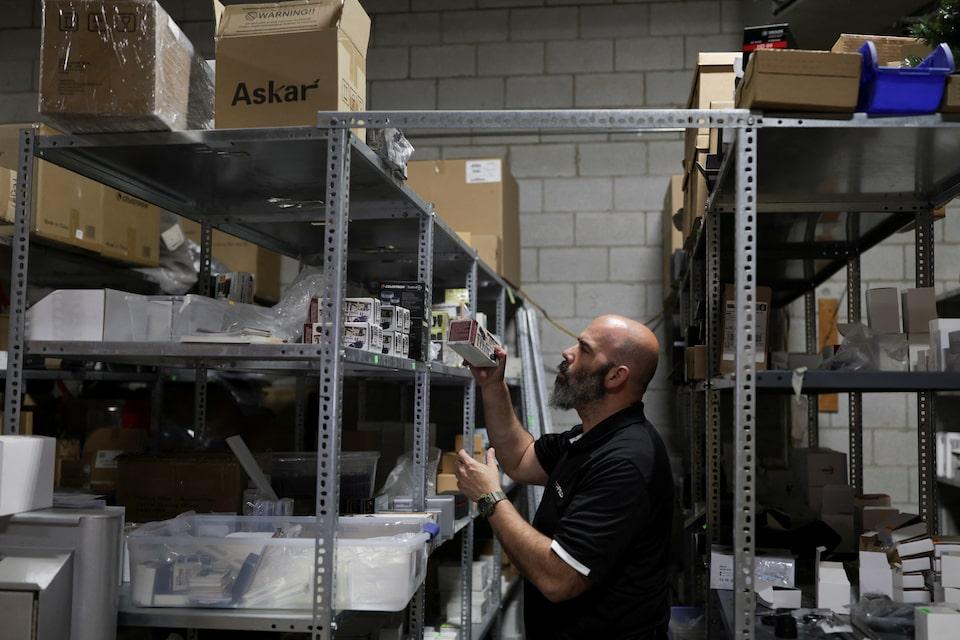
56% of Canadian exports by value avoided tariffs in June due to trade deal compliance Oil exports to the U.S. earned exemptions, not facing tariffs Smaller firms face tariffs, uncertainty, without USMCA compliance OTTAWA, Aug 6 (Reuters) - Steve Mallia's Toronto-based telescope accessory business was thriving until March when the Trump administration imposed a 25% tariff on U.S.-bound orders that do not comply with local content rules under the U.S.-Mexico-Canada Agreement. The tariff, imposed soon after U.S. President Donald Trump took office in January, effectively stopped Mallia's StarField Optics from competing in its main market, as many of the components used in its products came from China. Sign up here. "When we started to sell into the U.S., business was very strong. We were making money," Mallia said. "As soon as the tariff started to really take place, that disappeared." Mallia, who founded his company in 2018, quickly decided his company's best hope of surviving was to make his products compliant with USMCA, the 2018 trade deal that replaced the North American Free Trade Agreement. Tough decisions small businesses like Mallia must now make highlight the uneven consequences of Trump's efforts to upend the global trading order. While the existing trade deal means Canada and Mexico have so far been less impacted by Trump's tariffs than many other economies, there are hundreds of small and medium companies in Canada that face a direct hit for not being USMCA compliant. Small and medium businesses represent almost 98% of all firms in Canada and account for over 50% of the economy, according to government data. Mallia said production changes to accomplish compliance came at a heavy cost: six months of lost sales, along with additional expenses to set up the factory, alter his supply chain and ramp up production. Even so, a cost-benefit analysis convinced Mallia that it was money well spent. The changes will allow him to regain access from October to a market that has accounted for about 60% of StarField's sales, he estimates. Mallia started the transition well before Thursday, when Trump hiked tariffs to 35% from 25% on goods imported from Canada that do not comply with the free trade deal. Canada's steel, aluminum and auto sectors are particularly hard hit as they face separate tariffs between 25% and 50%. Adding to the uncertainty, USMCA is up for renegotiation next year. To be compliant, companies such as StarField must prove that they generate a bulk of their products within the U.S., Mexico or Canada, or they have substantially altered an imported product in one of the three countries. In Canada, a failure to comply with the trade deal means no or costly access to the world's biggest economy. "Some companies are just not able to do that (comply), and some companies will not be able to do that in the short term," said Clifford Sosnow, partner and chair of the international trade and investment group at Fasken, a Canadian law firm. OIL EXPORTS DUTY FREE About 92% of Canadian exports by value entered the U.S. tariff-free in June because they were exempt, data from the U.S. Census Bureau showed. However, that figure is skewed by oil and gas shipments, Canada's top export by far, since almost 99% of oil shipments entered the U.S. duty free in June. Without oil and gas, total tariff-free imports into the U.S. from Canada fell by six percentage points in June on a yearly basis - to 89% from 95%. Oil producers and other larger exporters have the resources to ensure USMCA compliance, unlike smaller firms such as Mallia's. The amount of Canadian exports that are officially USMCA compliant jumped by 20 percentage points in April to 56%, but has remained nearly unchanged since then, an analysis of U.S. Census Bureau data released on Tuesday showed. The oil sector, which accounts for close to a third of Canada's exports to the United States, quickly adapted, with USMCA compliance rising to 84% in June from 25% in the same period a year ago. Adding all other free trade provisions such as goods shipped directly to free trade zones or free trade bilateral agreements, more than 99% of Canadian oil exports enter the U.S. duty-free, U.S. Census Bureau data showed. But outside of the oil and gas sector, compliance has only moved three percentage points to 45% in June from 42% the same month last year, suggesting that companies are struggling to meet USMCA rules to evade tariffs. The Bank of Canada assumes that over the next two years 95% of Canadian goods exports are likely to be USMCA compliant, though lawyers and export consultants say the increase in compliance from the current level will not be quick. Sectors struggling to comply with the trade deal and earn exemptions include exporters of live animals, meat, vegetables, cereals, chemicals and furniture, U.S. census data shows. For many smaller companies, achieving compliance requires changing supply chains established decades ago, hiring legal counsel and documenting their production cycle for months or even years, said Sosnow from Fasken. Barry Appleton, a professor at New York Law School and an international trade expert, said he expects more Canadian companies will become compliant, but very slowly and at a heavy cost that they will eventually pass on to customers. "The low-hanging fruit has been picked," he said. Mallia is looking to ramp up sales to Europe and Australia, but knows he cannot ignore the U.S. market. He is resigned to paying the high cost to resume shipping duty-free. "At the end of the day, they're the biggest economy in the world, and they're right there," he said. "You are foolish not to look at that." https://www.reuters.com/world/americas/trump-tariffs-cost-small-canadian-firms-big-business-oil-enjoy-exemptions-2025-08-06/
2025-08-06 23:13
FEMA staff diverted to ICE amid hurricane season DHS warns FEMA staff of potential termination if transfer declined Concerns over FEMA understaffing during hurricane season WASHINGTON, Aug 6 (Reuters) - The Trump administration is transferring Federal Emergency Management Agency staffers to help speed the hiring of thousands of immigration enforcement agents, according to staff notices seen by Reuters and a government spokesperson, diverting resources away from the agency during the U.S. hurricane season. The Department of Homeland Security, the parent of both FEMA and the Immigration and Customs Enforcement (ICE) agency, sent notices to affected employees directing them to accept the transfer to ICE or potentially face termination. Sign up here. The Washington Post reported , opens new tab that DHS transferred more than 100 people to ICE from its human resources department and security team, citing current and former officials familiar with the reassignments. Reuters was not able to determine the number of affected staff. The timing of the transfers could leave FEMA understaffed at a critical moment, former FEMA officials warned, potentially hampering disaster response during the height of hurricane season. "DHS is adopting an all-hands-on-deck strategy to recruit 10,000 new ICE agents," department spokesperson Tricia McLaughlin said in a statement. "To support this effort, select FEMA employees will temporarily be detailed to ICE for 90 days to assist with hiring and vetting. Their deployment will NOT disrupt FEMA’s critical operations." The transfers come as President Donald Trump seeks to expand immigration enforcement, a cornerstone of his administration’s agenda, while FEMA is facing staffing shortages after thousands of staffers, including a raft of senior officials, resigned, accepted incentives to leave or were fired. MASS HIRING Trump aims to deport record numbers of immigrants in the U.S. illegally. A spending package passed by the Republican-led Congress in July provides a massive funding increase for ICE, including money to hire 10,000 new ICE officers over five years. ICE has been trying to bring back retired personnel and lure officers from other law enforcement agencies. At the same time, the Trump administration has floated the idea of shrinking or shutting down FEMA entirely. FEMA employees who received transfer orders were told they needed to accept or decline the reassignment within seven days, according to notices seen by Reuters. If they declined or failed to report for duty they could be fired, the notices said. FEMA employees have been deployed to other parts of DHS before, including to help with immigration efforts, but it has been on a voluntary basis, according to Deanne Criswell, who headed FEMA during President Joe Biden's administration. Citing the wording of the notices, Criswell said she was worried the reassignments were not voluntary and that many affected staff would decline, exacerbating staffing shortage ahead of the Atlantic hurricane season's peak next month. FEMA's human resources and security staff are critical to contracting with and vetting local companies and people to respond to a disaster. "They're already short staffed because they've lost so many. Are they going to be able to get them back? That would be my concern," Criswell said. https://www.reuters.com/world/us/trump-administration-shifts-fema-staff-ice-during-hurricane-season-2025-08-06/