2025-08-06 21:03
Aug 6 (Reuters) - APA Corp (APA.O) , opens new tab beat Wall Street estimates for quarterly profit on Wednesday, as stronger natural gas production in Egypt and higher prices helped blunt the impact of weaker oil prices and lower total output. Shares of the company climbed 2% in extended trade. Sign up here. Natural gas prices rebounded from last year's lows, driven by hotter weather, stronger demand for power generation and lower U.S. storage injections. APA's average realized gas prices rose nearly 29% in the second quarter to $2.28 per thousand cubic feet, from last year. Natural gas volumes rose 7% to 894 million cubic feet per day, driven by a strong performance in Egypt. "In Egypt, we exceeded our quarterly gas production guidance and have once again increased our expectations for the gas program in the second half of the year," APA CEO John Christmann said. APA added that it secured presidential approval for about 2 million additional acres in Egypt, unlocking significant oil and gas potential it plans to start drilling by year-end. The results from Egypt help cushion the impact of lower crude prices across assets. Brent crude averaged about 20% lower in the second quarter compared to a year earlier, weighed down by U.S. import tariffs, concerns over global economic growth, rising OPEC+ supply and persistent geopolitical tensions. Prices briefly rose above $80 a barrel in June after Israel struck Iranian nuclear sites, but later retreated to around $67 by quarter-end. APA said its average realized crude price stood at $65.58 per barrel in the quarter, down from $82.28 per barrel last year. The company said its quarterly total production fell 2% to 465,078 barrels of oil equivalent per day, from last year. The Houston, Texas-based company posted adjusted profit of 87 cents per share for the three months ended June 30, compared with the average analysts' estimate of 48 cents per share, according to data compiled by LSEG. https://www.reuters.com/business/energy/apa-beats-second-quarter-profit-estimates-stronger-natgas-output-prices-2025-08-06/

2025-08-06 21:03
ORLANDO, Florida, Aug 6 (Reuters) - Wall Street rallied on Wednesday as investors continued to take their cue from earnings and AI-related optimism over tariffs, while a weak 10-year Treasury note auction served as a reminder of the precarious U.S. fiscal situation. More on that below. In my column today I look at how investors' apparent readiness to accept tariffs challenges the orthodoxies that have underpinned economic liberalism and world markets for the past 40 years. Sign up here. If you have more time to read, here are a few articles I recommend to help you make sense of what happened in markets today. Today's Key Market Moves Wall St momentum calms tariff shakes Positive investor sentiment and risk appetite were on full display on Wednesday, as optimism around corporate earnings and the U.S. tech boom again overshadowed more worrisome global developments on tariffs and growth. Traders cheered news that ChatGPT maker OpenAI is mulling a stock sale that could value the company at $500 billion and Apple's pledge to spend $100 billion on U.S. manufacturing. U.S. earnings continue to surprise to the upside too, and the S&P 500 consumer discretionary index rose 2.4%, its best day since May. Wall Street stood in contrast to a more subdued global session. Benchmark Asian, emerging and European indices were all flat on Wednesday, with the Trump administration's tariffs weighing on sentiment across the board. The major exception was China, where blue chip stocks closed at their highest in more than three and a half years on hopes that the United States and China will strike a trade deal in the coming days. Trade-related optimism elsewhere, however, is in much shorter supply. U.S. President Donald Trump on Wednesday slapped further import duties on India, bringing the total tariff rate to 50%, while Brazil's President Luiz Inacio Lula da Silva told Reuters that relations with the U.S. are at a 200-year low. Some Fed officials, meanwhile, are signaling growing unease about the U.S. labor market and economy. Minneapolis Fed President Neel Kashkari and San Francisco Fed President Mary Daly on Wednesday said interest rates should probably be lowered in the coming months. In bonds, a weak $42 billion sale of 10-year U.S. government bonds drew the weakest demand in a year, and followed a somewhat disappointing auction of $58 billion three-year notes the day before. Thursday's $25 billion sale of 30-year bonds will come under even greater scrutiny. Also on Thursday, the Bank of England is widely expected to cut its key interest rate to 4% from 4.25%. But the challenges facing the Bank are significant - the fiscal outlook appears to be deteriorating sharply, and inflation is close to double the central bank's 2% target. Before that China announces July trade data, with economists expecting export growth to slow and the surplus to narrow. Earlier this week, official U.S. figures showed that the U.S. trade gap with China in June shrank to its lowest in more than 21 years. Markets' tariff resilience challenges long-standing economic orthodoxy Investors have been living in a real-time economic experiment ever since U.S. President Donald Trump , opens new tab returned to the White House in January. Whether it's tariffs, "America First" isolationism, overt politicization of independent economic institutions, or upended global economic norms, markets are having to deal with challenges few investors have faced before. So how are they reacting to the leader of the free world ripping up the economic playbook that has shaped the global financial system for 40 years? Wall Street and world stocks are at record highs, U.S. high yield corporate bond spreads are the tightest since before the 2007-08 global financial crisis, and Treasuries are remarkably calm, with the 10-year yield below its average of the last two years. It's not all serene, of course. The U.S. "term premium" - a measure of the extra compensation investors demand for holding long-dated Treasuries over short-term debt - is the highest in over a decade. Inflation expectations and long-dated yields have shot up too. And one needs to acknowledge that the full impact of Trump's tariffs has yet to be fully felt. But, at this point there has been no U.S. recession, even if growth is slowing. And the market plunge on the back of Trump's April 2 "Liberation Day" tariff debacle lasted a few weeks. The powerful stock market recovery since then suggests investors were less bothered by the actual tariffs than the shock of the initial announcement, the chaotic way it was delivered, and the amateurish way the levies were calculated. This outcome is not what economic textbooks would have predicted. ONE FOR YOU, 19 FOR ME Tariffs are a tax. And the overall U.S. average effective tariff rate looks likely to be around 18%, according to the Budget Lab at Yale. That's down from an estimated 28% in May but still nearly eight times higher than the level in December. Who will ultimately pay this tax is up for debate, but if sustained at that level, the president of the United States will have effectively imposed a tax hike worth around 1.8% of GDP, one of the largest in U.S. history. But wait. Aren't higher taxes bad for business, markets and growth? Don't higher taxes sap consumers' spending power, stunt investment and hiring, and crush the private sector's entrepreneurial spirit? Markets' relatively speedy acceptance raises the question: What happened to the last 40 years of economic orthodoxy, symbolized by the so-called "Washington Consensus"? This was the set of principles drawn up in the late 1980s that broadly mirrored the views of the Washington-based International Monetary Fund, World Bank and U.S. Treasury, ostensibly to help direct policy in Latin America but which ultimately served as the economic framework for Western liberal democracies and global markets. They included support for privatization, deregulation, the free flow of capital, fiscal discipline, and lower taxes. They also entailed lower barriers to trade, a cornerstone of globalization. For years these tenets were regarded by policymakers, business leaders and investors as sacrosanct. Some, like rigid adherence to tight fiscal policy, were put to the test - and shown to be flimsy, at best - during the GFC and pandemic. So now that the tariff line has been crossed, what about other economic commandments? Could governments look to raise tax revenue from other sources, such as wealth taxes on the super rich, a "Tobin tax" on foreign exchange transactions, or other "soft" capital controls? These are obviously anathema to the doctrine of free market capitalism. But then so were tariffs. To be fair, we are just entering this new era. And as my colleague Mike Dolan observed earlier this week, even if tariffs don't send the economy or markets into a tailspin, they may still lead to a "slow burn," with many years of lost economic potential, elevated volatility and lower investment returns. But investors aren't looking that far ahead. What they see right now is a pretty resilient U.S. economy, solid earnings growth, and red-hot optimism around U.S. tech and AI. And some of the old orthodoxies may be in the rear-view mirror. What could move markets tomorrow? Want to receive Trading Day in your inbox every weekday morning? Sign up for my newsletter here. Opinions expressed are those of the author. They do not reflect the views of Reuters News, which, under the Trust Principles , opens new tab, is committed to integrity, independence, and freedom from bias. https://www.reuters.com/business/global-markets-trading-day-graphic-2025-08-06/
2025-08-06 20:46
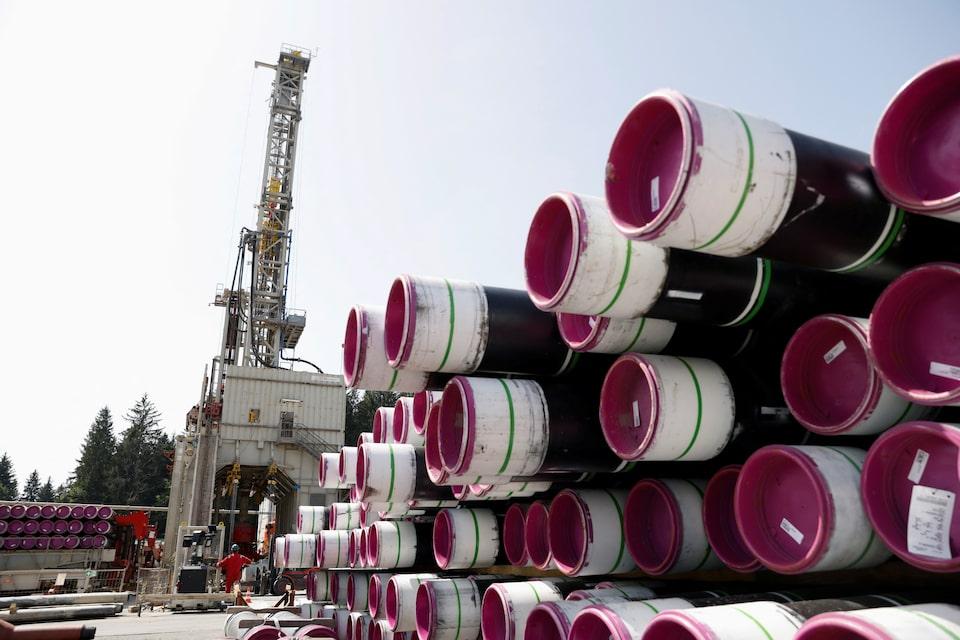
BERLIN, Aug 6 (Reuters) - Germany's cabinet approved a draft law on Wednesday aimed at fast-tracking the rollout of geothermal energy projects, as part of its goal to eliminate fossil fuel-based heating by 2045. Interest in geothermal energy has surged since Russia's 2022 invasion of Ukraine triggered a spike in energy prices, prompting both municipal utilities and energy companies to seek new, low-carbon heating solutions. Sign up here. Germany's push to slash emissions from the building sector, where heating is a major contributor, has further fuelled investment in this area. According to a 2023 study by the Fraunhofer Institute, Germany holds some of Europe's largest geothermal reserves, with the potential to supply over a quarter of its annual heating needs. However, development has long been slowed by local opposition and complex regulatory hurdles. The proposed legislation seeks to cut red tape by streamlining approval processes for geothermal plants, heat pumps, thermal storage, and district heating pipelines. It would classify these projects as being of "overriding public interest" — the same status granted to wind and solar energy — and introduce faster permitting through changes to mining, water, and environmental laws. The bill also sets strict deadlines for government authorities to approve projects and relaxes restrictions on geothermal exploration. The draft law will now go to the Bundestag lower house and Bundesrat upper house for final approval. https://www.reuters.com/sustainability/climate-energy/germany-moves-fast-track-geothermal-energy-projects-2025-08-06/
2025-08-06 20:43
Total prioritises LNG projects with low liquefaction costs Tariffs raised Rio Grande construction costs Total pushing ahead with its own projects in Mozambique, PNG LONDON/PARIS, Aug 6 (Reuters) - TotalEnergies (TTEF.PA) , opens new tab has decided not to invest in U.S. developer NextDecade's (NEXT.O) , opens new tab fifth liquefied natural gas Rio Grande export facility in Texas or to buy LNG from its output, two sources familiar with the matter told Reuters. The French energy major is prioritising lower-cost projects elsewhere as it reassesses its global LNG strategy, the sources said. Sign up here. The decision marks a shift for TotalEnergies, one of the world’s top three LNG exporters and the largest buyer of U.S. LNG. The company is focusing on restarting construction of its $20 billion Mozambique LNG project and expanding its portfolio through deals in Canada, Qatar, and elsewhere. TotalEnergies declined to comment. NextDecade said it was targeting mid-September for a final investment decision on Train 5 and was working to contract an additional 2.5 million tons per annum under LNG supply deals to support the project. NextDecade is contending with rising construction costs due to U.S. steel tariffs, stiff competition from U.S. rival Venture Global, and a projected global LNG supply glut that could depress prices from 2027. TotalEnergies has a 17.5% stake in NextDecade and a 16.7% interest in Phase 1 of the Rio Grande project, which includes the first three trains. In April, it signed a 20-year deal to purchase 1.5 mtpa from Train 4. In an interview with Reuters in February, TotalEnergies CEO Patrick Pouyanné expressed interest in supporting a fifth train at Rio Grande. But on a July earnings call, he emphasised future investments in Mozambique, Qatar, Papua New Guinea, and Canada, citing low costs. He noted that Train 5's marketing was NextDecade’s responsibility. He also said that U.S. steel tariffs had raised Rio Grande LNG's project costs, though by less than 10%. https://www.reuters.com/business/energy/totalenergies-wont-invest-nextdecades-train-5-lng-project-sources-say-2025-08-06/
2025-08-06 20:36
50% US tariff on Brazilian goods taking effect on Wednesday Lula tells Reuters no reciprocal tariffs pending from Brazil Calls with BRICS leaders may lead to joint action on US tariffs Bolsonaro should face new trial for courting tariffs, Lula says Lula opens door to Trump meeting at U.N. General Assembly BRASILIA, Aug 6 (Reuters) - As U.S. tariffs on Brazilian goods jumped to 50% on Wednesday, Brazil's President Luiz Inacio Lula da Silva told Reuters in an interview that he saw no room for direct talks now with U.S. President Donald Trump that would likely be a "humiliation." Brazil is not about to announce reciprocal tariffs, he said. Nor will his government give up on cabinet-level talks. But Lula himself is in no rush to ring the White House. Sign up here. "The day my intuition says Trump is ready to talk, I won't hesitate to call him," Lula said in an interview from his presidential residence in Brasilia. "But today my intuition says he doesn't want to talk. And I won't humiliate myself." Despite Brazil's exports facing one of the highest tariffs imposed by Trump, the new U.S. trade barriers look unlikely to derail Latin America's largest economy, giving Lula more room to stand his ground against Trump than most Western leaders. Lula described U.S.-Brazil relations at a 200-year nadir after Trump tied the new tariff to his demands for an end to the prosecution of right-wing former President Jair Bolsonaro, who is standing trial for plotting to overturn the 2022 election. The president said Brazil's Supreme Court, which is hearing the case against Bolsonaro, "does not care what Trump says and it should not," adding that Bolsonaro should face another trial for provoking Trump's intervention, calling the right-wing former president a "traitor to the homeland." "We had already pardoned the U.S. intervention in the 1964 coup," said Lula, who got his political start as a union leader protesting against the military government that followed a U.S.-backed ouster of a democratically elected president. "But this now is not a small intervention. It's the president of the United States thinking he can dictate rules for a sovereign country like Brazil. It's unacceptable." The Brazilian president said he had no personal issues with Trump, adding that they could meet at the United Nations next month or U.N. climate talks in November. But he noted Trump's track record of dressing down White House guests such as South African President Cyril Ramaphosa and Ukrainian President Volodymyr Zelenskiy. "What Trump did with Zelenskiy was humiliation. That's not normal. What Trump did with Ramaphosa was humiliation," Lula said. "One president can't be humiliating another. I respect everyone and I demand respect." Lula said his ministers were struggling to open talks with U.S. peers, so his government was focused on domestic policies to cushion the economic blow of U.S. tariffs, while maintaining "fiscal responsibility." The president declined to elaborate on pending measures to support Brazilian companies, which are expected to include credit lines and other export assistance. He also said he was planning to call leaders from the BRICS group of developing nations, starting with India and China, to discuss the possibility of a joint response to U.S. tariffs. "There is no coordination among the BRICS yet, but there will be," Lula said, comparing multilateral action to the strength of collective bargaining in his union days. "What is the negotiating power of one little country with the United States? None." Separately, he said Brazil was looking at lodging a collective complaint with other countries at the World Trade Organization. "I was born negotiating," said Lula, who was raised in poverty and rose through union ranks to serve two terms as president from 2003 to 2010, then re-entered politics in the 2022 election to defeat the incumbent Bolsonaro. But he said he was in no rush to strike a deal or retaliate against U.S. tariffs: "We need to be very cautious," he said. Asked about countermeasures targeting U.S. companies, such as greater taxation of big technology companies, Lula said his government was studying ways to tax U.S. firms on equal standing with Brazilian companies. Lula also described plans to create a new national policy for Brazil's strategic mineral resources, treating them as a matter of "national sovereignty" to break with a history of mining exports that added little value in Brazil. https://www.reuters.com/world/americas/i-wont-humiliate-myself-brazils-president-sees-no-point-tariff-talks-with-trump-2025-08-06/

2025-08-06 20:27
Aug 6 (Reuters) - APA Corp (APA.O) , opens new tab beat Wall Street profit estimates on Wednesday, as higher natural gas output helped the U.S. producer cushion the hit from a decline in crude prices. Brent crude averaged about 20% lower in the second quarter compared to a year earlier, weighed down by U.S. import tariffs, concerns over global economic growth, rising OPEC+ supply and persistent geopolitical tensions. Sign up here. Prices briefly rose above $80 a barrel in June after Israel struck Iranian nuclear sites, but later retreated to around $67 by quarter-end. The company's total oil output declined in the quarter to 235,244 barrels of oil per day (bopd) from last year's 253,649 bopd, offset by a 7% rise in natural gas output. The Houston, Texas-based company posted adjusted profit of 87 cents per share for the three months ended June 30, compared with the average analysts' estimate of 48 cents per share, according to data compiled by LSEG. https://www.reuters.com/business/energy/oil-producer-apas-quarterly-profit-beats-estimates-natgas-higher-output-2025-08-06/