2025-08-05 21:55
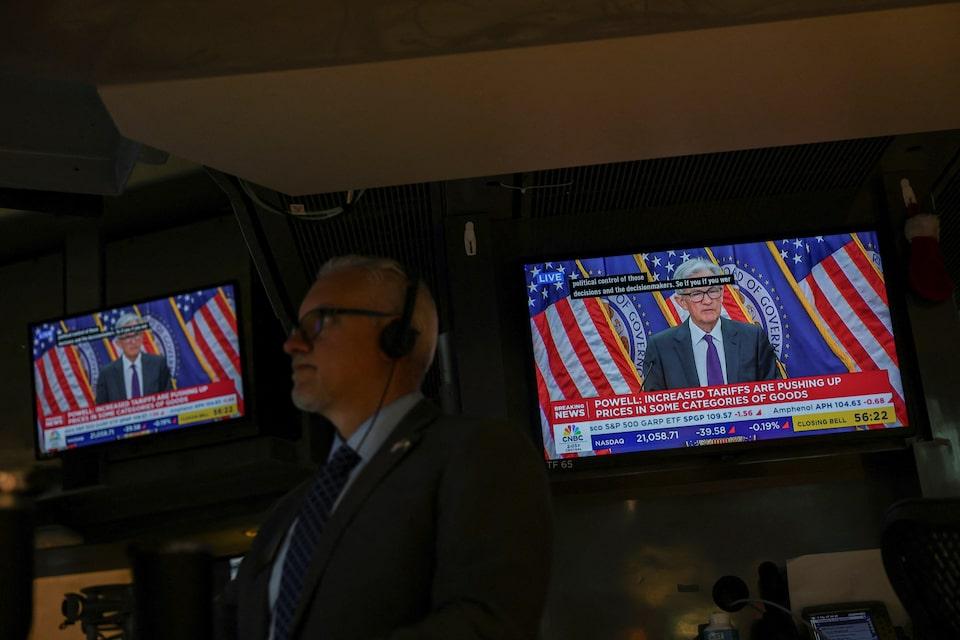
Brent and US crude fall to lowest in five weeks OPEC+ output hike, demand worries add to oversupply outlook Trump again threatens India with high tariffs over Russian oil purchases Coming Up: US oil inventory from EIA NEW YORK, Aug 5 (Reuters) - Oil prices slipped on Tuesday as rising OPEC+ supply and worries of weaker global demand countered concern about U.S. President Donald Trump's threats to India over its Russian oil purchases. Brent crude futures settled $1.12, or 1.63%, lower to $67.64 a barrel, while U.S. West Texas Intermediate crude slipped $1.13, or 1.7%, to $65.16. Both benchmarks settled to their lowest in five weeks. Sign up here. The Organization of the Petroleum Exporting Countries and its allies, together known as OPEC+, agreed on Sunday to raise oil production by 547,000 barrels per day for September, a move that will end its most recent output cut earlier than planned. "The significant increase in OPEC supplies is weighing on the market," said Andrew Lipow, president of Lipow Oil Associates. Also weighing on prices, U.S. services sector activity unexpectedly flatlined in July with little change in orders and a further weakening in employment even as input costs climbed by the most in nearly three years, underscoring the ongoing drag of uncertainty over the Trump administration's tariff policy on businesses. "The market now is going to see if India and China agree to substantially reduce the purchases of Russian crude oil, thereby looking for alternative supplies elsewhere," Lipow said. Trump on Tuesday again threatened higher tariffs on Indian goods over the country's Russian oil purchases over the next 24 hours. Trump also said declining energy prices could pressure Russian President Vladimir Putin to halt the war in Ukraine. New Delhi called Trump's threat "unjustified" and vowed to protect its economic interests, deepening a trade rift between the two countries. Oil's move since Trump's threat indicates that traders are skeptical of a supply disruption happening, John Evans of oil broker PVM said in a report. He questioned whether Trump would risk higher oil prices. "I'd call it a stable market for oil," said Giovanni Staunovo, an analyst at UBS. "Assume this likely continues until we figure out what the U.S. president announces in respect to Russia later this week and how those buyers would react." India is the biggest buyer of seaborne crude from Russia, importing about 1.75 million bpd from January to June this year, up 1% from a year ago, according to data provided to Reuters by trade sources. U.S. crude inventories fell by 4.2 million barrels last week, sources citing American Petroleum Institute figures said on Tuesday. The U.S. Energy Information Administration is due to release weekly U.S. inventory data on Wednesday, respectively., https://www.reuters.com/business/energy/oil-prices-fall-opec-output-hikes-counter-russia-disruption-concerns-2025-08-05/
2025-08-05 21:20
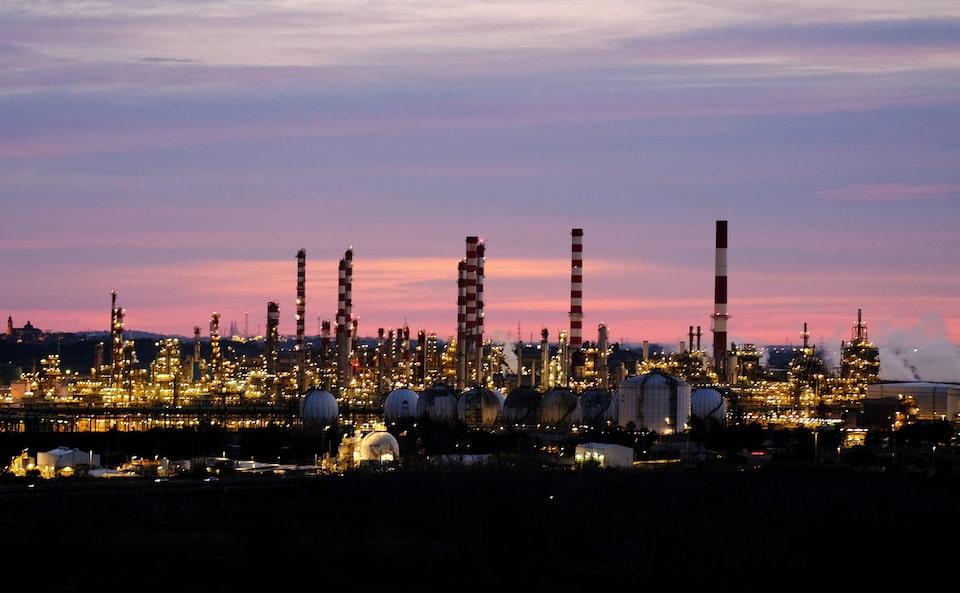
Aug 5 (Reuters) - Rivian Automotive (RIVN.O) , opens new tab reported a higher-than-expected quarterly loss on Tuesday as disruption in supply of rare earth metals used to make parts of its electric vehicles raised costs and income from credits sold to traditional automakers dwindled. Shares of the automaker fell nearly 5% in trading after the bell. Sign up here. China's curbs on the export of heavy rare earth metals —essential components for motors — sharply increased material costs and disrupted supply chains, driving up the cost of EV production in the U.S. Rivian's cost of revenue for each vehicle produced rose about 8% to $118,375 per unit sold from a year earlier, according to Reuters calculations. "That's really reflecting a much lower production volume, which was largely driven because of challenges we had within our supply base as a result of a lot of the changes in policy," CEO RJ Scaringe told Reuters. "Therefore, our costs look higher, but it's not as if our bill of materials grew or as if we became operationally less efficient." Rivian will shut down production for three weeks in September, after a one-week pause in the second quarter, to integrate key components and prepare for the launch of the R2 SUV next year. The company reported an adjusted loss per share of 80 cents for the second quarter, compared with analysts' average estimate of 65 cents, according to data compiled by LSEG. Rivian also flagged a bigger adjusted core loss this year, expecting it to be between $2 billion and $2.25 billion, compared with $1.7 billion to $1.9 billion previously forecast. The company largely blamed a tapering in the value of U.S. regulatory credits for the higher loss estimate. The elimination of penalties for automakers not meeting fuel economy standards by President Donald Trump's administration has drastically reduced demand for regulatory credits, which companies like Rivian previously sold to traditional automakers to help them avoid emissions fines. Meanwhile, Lucid (LCID.O) , opens new tab cut its annual production forecast and missed Wall Street estimates for quarterly revenue as trade tensions took a toll on demand. The luxury EV maker's shares slid more than 7% in extended trading after the company also said it had issues with the supply of magnets, but had resolved it by using substitutes. The $7,500 federal EV tax credit expires at the end of September, eliminating a key competitive advantage that has driven demand, but analysts anticipate a surge in third-quarter sales as customers rush to make purchases before losing access to the incentive. Rivian said on Tuesday it expected record deliveries in the third quarter across its consumer and commercial segments. The Amazon-backed company's revenue for the second quarter stood at $1.3 billion, surpassing analysts' average estimate of $1.28 billion, according to data compiled by LSEG. Rivian delivered 10,661 vehicles in the second quarter, marking a 22% decline from the same period a year earlier, as the company limited production to prepare for its 2026 model year launch. https://www.reuters.com/business/autos-transportation/rivians-loss-bigger-than-expected-rare-earth-curbs-raise-costs-credits-fade-2025-08-05/

2025-08-05 21:15
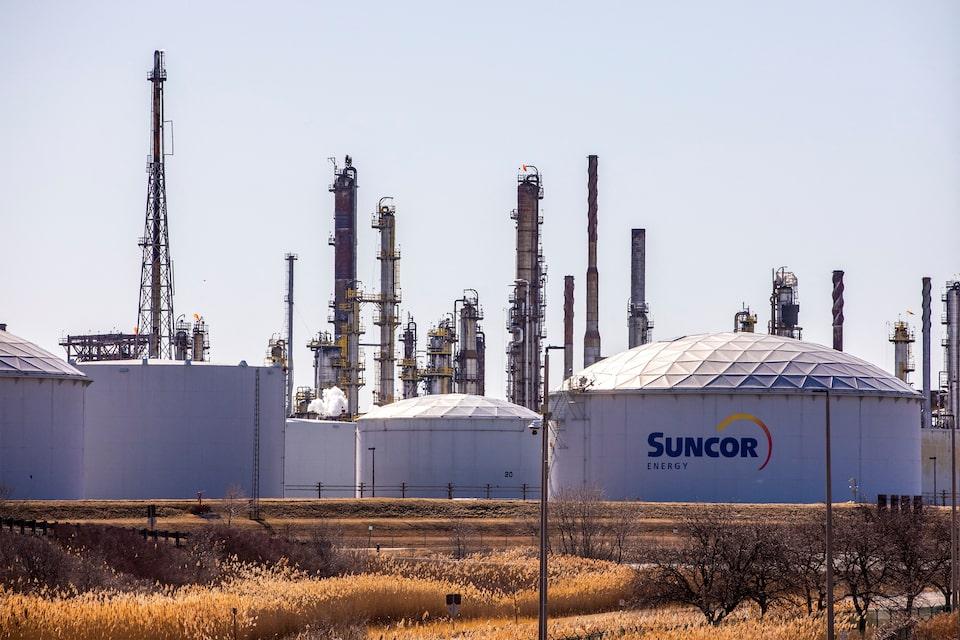
Aug 5 (Reuters) - Canadian oil producer Suncor Energy (SU.TO) , opens new tab exceeded analysts' second-quarter profit expectations on Tuesday, as higher output helped offset the impact of weak commodity prices. Even as volatility in oil prices drives the broader energy industry into a downturn, Canada's oil sands sector remains resilient. Sign up here. Canadian producers are benefiting from the expansion of the Trans Mountain pipeline, which provides them access to international markets, reducing reliance on the U.S. pipeline network, and now accounts for 9% of Canada's total crude exports. Canada exports nearly 4 million barrels of oil per day (bpd) to the United States. Suncor's upstream quarterly production rose to 808,100 bpd from 770,600 bpd a year ago. Its refinery throughput climbed 2.6% to 442,000 bpd during the quarter, while refinery utilization improved to 95% from 92% a year earlier. The results are in contrast to Suncor's peer Imperial Oil(IMO.TO) , opens new tab, which last week said declines in refinery throughput and weak oil prices weighed on its second-quarter profit. The Canadian oil industry typically undergoes peak maintenance during the second quarter, which can keep production offline for weeks or even months. Suncor CEO Rich Kruger said the company's strong quarterly performance was driven by "the outstanding execution of major upstream and downstream turnaround activities, completed safely and ahead of schedule". The Canadian producer also lowered its current-year forecast for capital expenditure, which is now expected to be in the range of C$5.7 billion to C$5.9 billion, compared with its prior forecast of C$6.1 billion to C$6.3 billion. The Calgary, Alberta-based company reported an adjusted profit of 71 Canadian cents per share ($0.5154) for the quarter ended June 30, beating analysts' average estimate of 69 Canadian cents per share, according to data compiled by LSEG. ($1 = 1.3776 Canadian dollars) https://www.reuters.com/business/energy/suncor-energy-tops-quarterly-profit-estimates-higher-production-2025-08-05/
2025-08-05 21:02
ORLANDO, Florida, Aug 5 (Reuters) - Wall Street bucked the positive global equity trend and closed mostly lower on Tuesday, as U.S. service sector data rekindled stagflation fears and shined a light on the difficult position the Federal Reserve may find itself in next month. More on that below. In my column today I look at the tumult of the last few days that has seen the worlds of U.S. politics, policy, and company earnings collide, exposing the big divergences that run through the country's equity and bond markets. Sign up here. If you have more time to read, here are a few articles I recommend to help you make sense of what happened in markets today. Today's Key Market Moves Stagflation-ISM The stagflation red flags raised by U.S. service sector activity figures on Tuesday are a reminder that the world's largest economy and most important central bank face significant challenges in the months ahead. Investors took their cue more from the bubbling price pressures in the ISM services report than the signs of softening activity. Treasury yields crept up and rate cut expectations were trimmed as a result. Still, it's a curious one. Wall Street's slump on Friday went hand in glove with plunging yields and a dramatic surge in rate cut bets. Today, a hawkish tilt in the bond and rates futures markets was accompanied by a broad-based equity selloff. There are other factors at play, not least the barrage of Q2 earnings, tariff headlines, and a renewed spike in policy uncertainty. But these moves are a reminder that there can be good and bad reasons driving yields up or down, and that the correlation with stocks can flip from one day to the next. The ISM report showed service sector activity in June flatlined while the prices paid index rose to its highest in nearly three years. Tariffs, inflation pressures, growth fears are all in the mix. Contrast this with China's services activity data released on Tuesday, which showed the fastest pace of expansion in July in 14 months. U.S. corporate earnings have generally been strong. Of the 330 companies in the S&P 500 that had reported through last Friday, 80.6% reported consensus-beating profits, compared with the long-term average of 67.1%, according to LSEG data. But Caterpillar warned on Tuesday that tariffs pose significant challenges and could cost the firm up to $1.5 billion this year. Meanwhile, U.S. President Donald Trump told CNBC on Tuesday that he will not nominate Treasury Secretary Scott Bessent for a position on the Fed's Board of Governors, thus ruling him out as a candidate for Fed chair. Trump said he will announce Governor Adriana Kugler's replacement "very shortly." Trump also said the U.S. is "very close" to a trade deal with China and that he would meet his Chinese counterpart Xi Jinping before the end of the year if an agreement is struck. Looking ahead to Wednesday, there are two highlights in the Asian calendar for investors to home in on - the latest Chinese trade figures, and an interest rate decision from the Reserve Bank of India. The RBI is expected to keep its benchmark repo rate on hold at 5.50%. But in light of the steep tariffs recently imposed on Indian exports by the U.S., traders are putting a near one-in-six chance of a rate cut. Likely RBI intervention on Tuesday kept the rupee from hitting new lows through 88.00 per dollar. China's trade figures, meanwhile, will be closely watched after official U.S. data on Tuesday showed America's trade deficit with its Asian rival shrank in June to its lowest in more than 21 years. In light of the contrasting PMI figures on Tuesday, this will be worth keeping an eye on. Navigating US markets' split personalities During an extraordinary few days when the worlds of U.S. politics, policy, economics and company earnings collided, the divergences that run through the country's equity and bond markets have come into sharp relief. For the bond market, the split separates short-dated Treasuries that price off the Fed's policy rate and longer maturities that are more sensitive to U.S. debt and deficit concerns. For the benchmark S&P 500, that line is between the 'Magnificent Seven', along with a few other tech and artificial intelligence-focused megacaps, and everyone else. These types of divides have always existed to some extent, but they have become more apparent this year given the historic concentration on Wall Street and rapid deterioration in the U.S. fiscal outlook. The dramatic moves in U.S. assets over the last few days serve as a microcosm of these deeper divergences. LONG AND SHORT OF IT The split in the bond market burst open on Friday. Triggered by surprisingly weak jobs figures and Trump's shock decision to fire a senior official in the agency responsible for collecting the data, the two-year Treasury yield plunged 25 basis points and the 2s/30s yield curve steepened by 20 basis points. These were the biggest moves in one year and two and a half years, respectively. The slump in yields, especially at the short end of the curve, indicates that investors' supposed concerns about fiscal indiscipline quickly evaporate as soon as growth-sapping cracks in the labor market appear. So much for the bond vigilantes. Tellingly, there was no pullback on Monday. Indeed, Treasury prices climbed even higher, pushing the two-year yield as low as 3.66%, its nadir since May. Long-dated yields have declined too, but not as aggressively, resulting in Friday's dramatic steepening of the 2s/30s curve to levels that, with the exception of April's brief tariff tantrum, haven't been seen for more than three years. Investors may wince at the size of the federal debt and the Treasury's funding needs but still want to load up on two-year bonds when they think rate cuts are coming. This parallel thinking isn't new, but the stark difference in the narratives driving the front and back ends of the curve is notable. STAY NIMBLE The U.S. equity market concentration story is familiar to everyone by now, but the last few days underscore how jaw-dropping - and seemingly entrenched - it is. Blockbuster earnings reports from 'Mag 7' constituents Meta (META.O) , opens new tab, Microsoft (MSFT.O) , opens new tab and Apple (AAPL.O) , opens new tab juiced another wave of outperformance in Big Tech stocks, reviving debate about concentration risk, bubbles and the long-term benefits of AI. By some measures, a few Big Tech firms now account for as much as 40% of the total U.S. stock market cap. Tech is more expensive relative to the broader S&P 500 index than ever, even compared to the dotcom bubble, according to Bank of America. Wall Street's average valuations and earnings growth are therefore increasingly being driven by Big Tech. Strip out the top 10 firms, and the rump S&P 490 has barely registered any earnings growth in the last three years, according to SocGen's Andrew Lapthorne. Again, there are multiple narratives at work here. It may be true that overseas investors want to reduce their U.S. equity exposure, but don't want to miss out on the Big Tech boom. So even if foreign investors start shedding some U.S. assets – and that's debatable – they aren't apt to be jettisoning the likes of Nvidia (NVDA.O) , opens new tab and Microsoft. This is a delicate juncture for investors. Wall Street is at record highs, but concentration risk has also rarely been higher. The outlook for long-dated bonds is worrying given current fiscal and inflation dynamics, yet the short end looks much more attractive, though even that is complicated by the economic and unique political pressures bearing down on the Fed. The divergences in U.S. markets may narrow, gradually or suddenly, or they may continue unabated for some time. Without a crystal ball, it's tough to know exactly what the catalyst for mean reversion would be. One thing is likely guaranteed though: in this environment, it will pay to be nimble. What could move markets tomorrow? Want to receive Trading Day in your inbox every weekday morning? Sign up for my newsletter here. Opinions expressed are those of the author. They do not reflect the views of Reuters News, which, under the Trust Principles , opens new tab, is committed to integrity, independence, and freedom from bias. https://www.reuters.com/business/global-markets-trading-day-graphic-2025-08-05/
2025-08-05 21:02
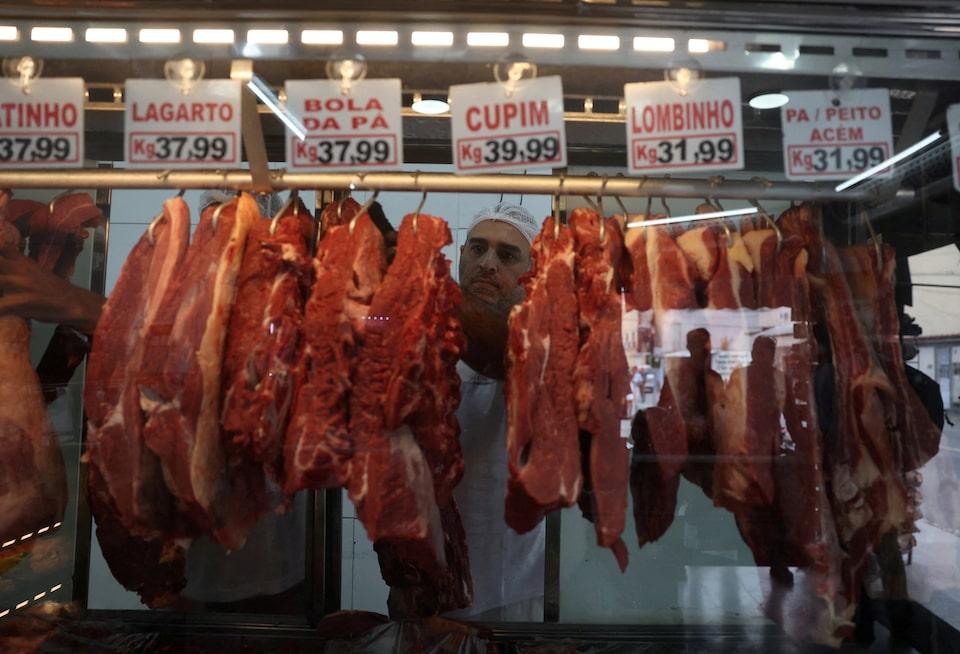
Companies in large Brazilian exporting states may not get permits initially Talks to sell beef to Japan gained momentum after a March state visit Australia and US are Japan's main suppliers SAO PAULO, Aug 5 (Reuters) - Ongoing talks to open the Japanese market to Brazilian beef are focusing on supplies from three small Brazilian exporting states, upsetting other parts of the South American country's industry that are eager to reach the high-paying customers, according to multiple sources. Brazil, the world's biggest beef exporter, has tried for two decades to crack the Japanese market without success. A deal would give Japan an alternative to its top suppliers, the United States and Australia, at a time when U.S. tariffs are reshaping global food trade. Sign up here. Negotiations gained momentum after a state visit of Brazil's President Luiz Inacio Lula da Silva in March to Japan, one of the world's largest beef importers. But the current state of talks, which focus on states representing less than 4% of Brazil's exports by volume, worries meatpackers in the big beef-producing states of Sao Paulo, Mato Grosso, Mato Grosso do Sul, and Para. Together, they accounted for nearly 60% of Brazil's total beef exports, or 1.72 million metric tons last year. A Brazilian government memo, issued after a technical visit by Japanese officials in June, showed Brasília answered "a questionnaire for the import of beef from the southern part of the Republic Federation of Brazil," naming Rio Grande do Sul, Parana, and Santa Catarina. Those three small exporting states were declared free of foot-and-mouth, a contagious viral disease in cattle, earlier than the other states, although Brazil acquired in May the national status of being free of the disease without vaccination from the World Organization for Animal Health. Brazil's last outbreak of the disease was in 2006, according to the government. The Brazilian Agriculture Ministry did not have an immediate comment on its talks with Japan. A local government source, who asked not to be named, confirmed talks were taking place by region. The person said Brazil initially has no plans to negotiate permits beyond the three states. Beef sector representatives, including exporters, told Reuters they hope more states will be included. "We know talks are difficult," said Paulo Mustefaga, head of beef lobbying group Abrafrigo, which represents Marfrig (MRFG3.SA) , opens new tab and smaller beef exporters. "The surprise for us is that this is now moving towards approval for only three states." Japan's Ministry of Agriculture, Forestry and Fisheries said it was aware of Brazil's status of being free of foot-and-mouth disease. It added that Japan is "conducting a risk assessment in accordance with Japanese procedures" ahead of issuing any export permits to Brazilian meatpackers, without elaborating. https://www.reuters.com/world/china/brazil-japan-beef-talks-focus-smaller-brazilian-states-upsetting-industry-2025-08-05/
2025-08-05 20:57
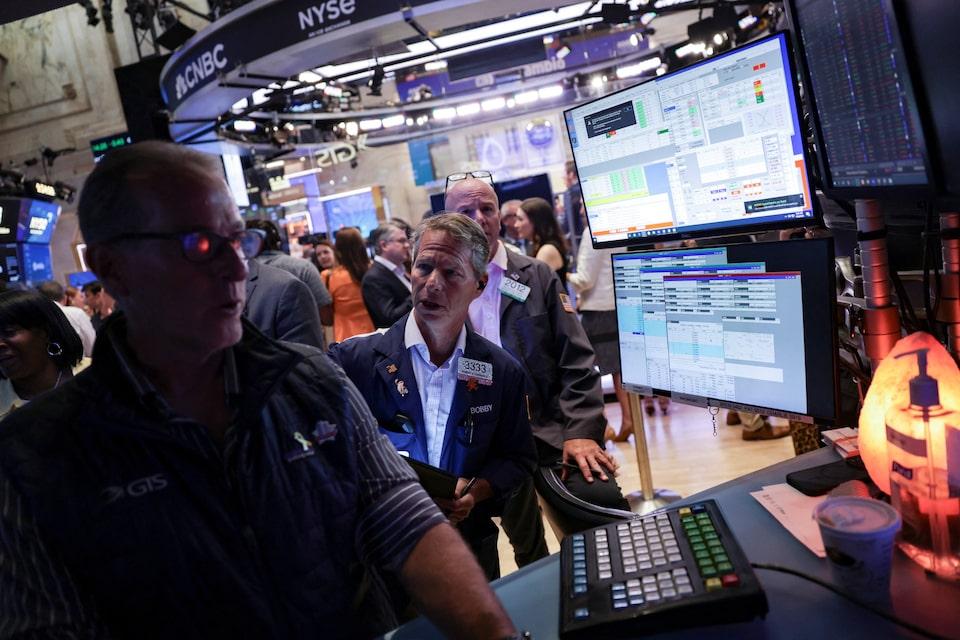
Caterpillar warns of tariff impact July's ISM nonmanufacturing PMI slipped to 50.1 Indexes: Dow down 0.1%, S&P 500 down 0.5%, Nasdaq down 0.7% NEW YORK, Aug 5 (Reuters) - U.S. stocks ended lower on Tuesday as investors weighed the impact of tariffs after Yum Brands (YUM.N) , opens new tab and other companies cited trade duties in their results or outlooks. The U.S. trade deficit narrowed in June on a sharp drop in consumer goods imports, and the trade gap with China shrank to its lowest in more than 21 years. Sign up here. In addition, a measure of activity in the U.S. services sector hit stall-speed in July, with businesses saying new import taxes are pushing costs higher. Shares of KFC parent Yum Brands (YUM.N) , opens new tab fell 5.1% after the company missed estimates for the second quarter, as steep trade duties restricted consumer spending. Caterpillar (CAT.N) , opens new tab warned U.S. tariffs would pose significant challenges in the second half of the year and cost it up to $1.5 billion in 2025, but its shares ended up 0.1%. The comments come at the tail end of the U.S. second-quarter earnings season, in which about 80% of reports from S&P 500 companies are beating analyst profit expectations. "If you look at results, they are trending above low-bar expectations," said Terry Sandven, chief equity strategist at U.S. Bank Wealth Management in Minneapolis, Minnesota. "The impact of tariffs remains a work in progress. We're not seeing any meaningful impact on company profitability with tariffs. We do know, however, that they loom." The Dow Jones Industrial Average (.DJI) , opens new tab fell 61.90 points, or 0.14%, to 44,111.74, the S&P 500 (.SPX) , opens new tab lost 30.75 points, or 0.49%, to 6,299.19 and the Nasdaq Composite (.IXIC) , opens new tab lost 137.03 points, or 0.65%, to 20,916.55. Trump on Tuesday said the U.S. could impose a "small tariff" on pharmaceutical imports before increasing the rate subsequently. He also signaled an announcement on tariffs on semiconductors and chips in the "next week or so." "Today's market action reflects investors that are merely in pause mode," Sandven said, noting that the backdrop for equities remains constructive for the year. The S&P 500 and Nasdaq hit a string of record highs recently, and the S&P 500 remains up 7.1% for the year so far. In other results-related news, Marriott International (MAR.O) , opens new tab cut its full-year forecast for revenue growth and profit and signaled slowing travel demand and economic uncertainties. Its stock closed up 0.2%. While the earnings period is winding down, investors look forward to more key results on Wednesday, with both Walt Disney (DIS.N) , opens new tab and McDonald's (MCD.N) , opens new tab due to report. Advancing issues outnumbered decliners by a 1.27-to-1 ratio on the NYSE. There were 158 new highs and 67 new lows on the NYSE. On the Nasdaq, 2,216 stocks rose and 2,365 fell as declining issues outnumbered advancers by a 1.07-to-1 ratio. Volume on U.S. exchanges was 16.29 billion shares, compared with the roughly 18.33 billion average for the full session over the last 20 trading days. https://www.reuters.com/business/wall-street-ends-lower-investors-consider-tariff-impact-results-economy-2025-08-05/