2025-08-05 12:18
BRASILIA, Aug 5 (Reuters) - Brazil's central bank on Tuesday flagged caution over the impact of steeper U.S. trade tariffs, reaffirming its commitment to a policy stance aimed at lowering inflation expectations after signaling interest rates will remain on hold for long. In the minutes from its latest policy meeting, where policymakers paused an aggressive tightening cycle that had increased the benchmark rate by 450 basis points to a near 20-year high of 15%, the bank said that the 50% U.S. levies on goods from Brazil could have "significant" effects on specific sectors. Sign up here. The broader macroeconomic effects remain uncertain and will depend on the course of negotiations and market perceptions of risk, it said. Policymakers emphasized they are closely monitoring potential effects on the real economy and financial markets, and reinforced the central bank's cautious stance in a scenario of heightened uncertainty. They also noted that inflation expectations among many market participants remain above the official 3% target, with no significant changes in longer-term projections, even as implied inflation measures derived from financial assets have declined. "The committee reaffirmed and renewed its commitment to reanchoring expectations and to conducting a monetary policy that supports such a movement," the minutes said. The current scenario "prescribes a significantly contractionary monetary policy for a very prolonged period to ensure the convergence of inflation to the target," it added. While acknowledging clearer signs of moderation in credit markets amid a high-interest rate environment, the central bank said the labor market remained resilient, and said it was "natural" to observe mixed signals at "turning points in the economic cycle." Latin America's largest economy is evolving broadly in line with expectations, said the central bank, with slowing growth seen as necessary to widen the output gap and ensure inflation control. https://www.reuters.com/world/americas/brazil-central-bank-warns-us-tariffs-vows-anchor-inflation-expectations-2025-08-05/

2025-08-05 12:10
SAO PAULO, Aug 5 (Reuters) - Brazilian planemaker Embraer (EMBR3.SA) , opens new tab on Tuesday reaffirmed its 2025 outlook and said U.S. tariffs did not significantly affect its second-quarter results, even as it described the levies as a "major concern" amid ongoing trade uncertainties. The company avoided a potential setback last week when U.S. President Donald Trump exempted aircraft from a 50% tariff imposed on U.S. imports from Brazil, but still faces a 10% duty first imposed in April, which it indicated was harmful but manageable. Sign up here. As it reported its April-June earnings, Embraer said it advocates for a "swift return to zero tariff rules for all aviation and aerospace industries" and again sought to underscore its ties to the U.S., including local jobs and investments. Embraer, whose E175 narrowbody is a workhorse of U.S. regional aviation, flagged last month that a 50% tariff from its No. 1 market could have triggered order cancellations, deferred deliveries and hammered its revenue like the pandemic did. Following last week's relief, Embraer now reiterated it expects to deliver between 77 and 85 commercial aircraft this year, and 145 to 155 executive jets. Full-year net revenue is forecast to hit $7 billion to $7.5 billion. The company late on Tuesday flipped on its reported adjusted net loss of $4.7 million, saying that it had not properly taken into account an impact from deferred income tax and social contribution. That adjustment brought the firm into the black, logging an adjusted net profit of $118.9 million. Adjusted earnings before interest, taxes, depreciation and amortization (EBITDA) reached $245.5 million, up from $190.4 million a year earlier. Net revenue came in at $1.82 billion, a 22% year-on-year increase. https://www.reuters.com/business/aerospace-defense/embraer-keeps-2025-outlook-us-tariffs-had-limited-impact-quarterly-results-2025-08-05/

2025-08-05 12:00
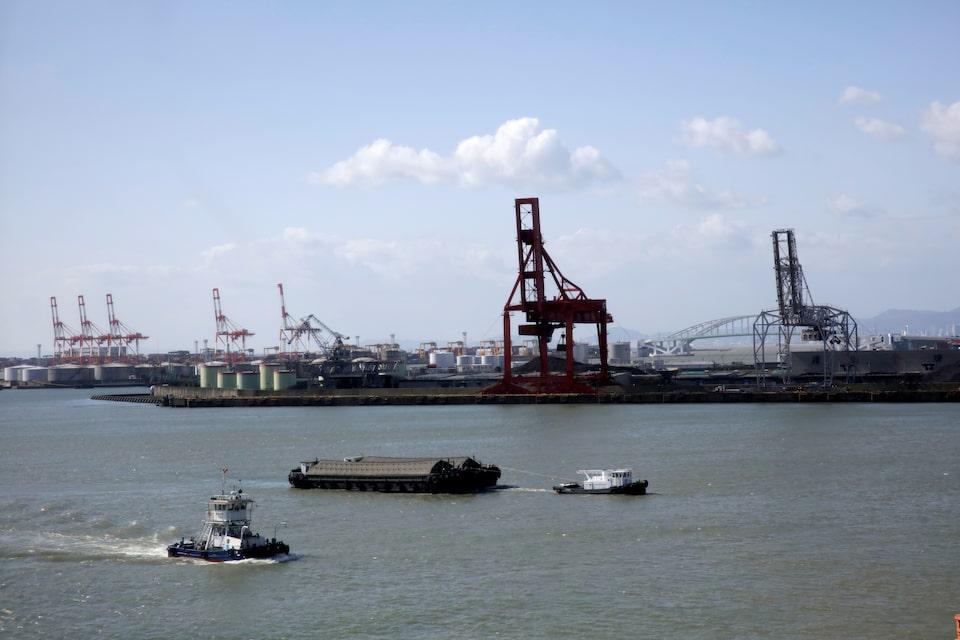
LAUNCESTON, Australia, Aug 5 (Reuters) - Asia's imports of seaborne thermal coal ticked up in July, but the increase was driven by the developed economies of North Asia and not heavyweights China and India. Total seaborne imports of the fuel used mainly to generate electricity rose to 70.66 million metric tons in July, up 12% from June's 63.02 million tons, according to data compiled by commodity analysts Kpler. Sign up here. The rise in July imports comes amid a weaker trend for Asia's seaborne thermal coal shipments, as top buyers China and India trimmed purchases amid plentiful domestic supplies and rising generation from renewables. July's arrivals were down 7.8% from the same month in 2024 and Asia's imports for the first seven months of the year were 8.4% lower at 479.54 million tons, according to Kpler data. The recovery in volumes in July from June was driven by higher imports in the developed economies of North Asia, namely Japan, South Korea and Taiwan. Japan, the world's third-biggest coal importer, saw arrivals of 10.0 million tons of thermal coal in July, up from 6.16 million in June. However, it's worth noting that June was the lowest month for seaborne thermal coal imports for Japan in Kpler data going back to January 2017. South Korea, the fourth-biggest coal buyer, saw imports of 7.49 million tons in July, up from 5.49 million in June and the highest monthly total since August last year. Taiwan's imports were 3.91 million tons in July, up from 3.72 million in June and the most since November last year. The stronger imports in North Asia reflect higher demand for electricity during the northern summer, but also likely show the cost competitiveness of thermal coal compared to liquefied natural gas. Japan, South Korea and Taiwan predominantly buy higher-grade thermal coal benchmarked against the Newcastle Index in Australia. This weekly assessment by price reporting agency Argus has been rising in recent weeks, ending at $112.06 a ton in the seven days to August 1. It has rallied 22.4% since hitting a four-year low of $91.58 a ton on April 25, reflecting the stronger demand from North Asia. PRICIER LNG While higher-grade thermal coal prices have risen, they are still competitive against spot LNG , with cargoes for delivery to North Asia being assessed at $12.10 per million British thermal units (mmBtu) in the week to August 1. The LNG price is down from its recent four-month high of $14 per mmBtu, but even at its current level it is still above $11.20, which is the upper end of the range at which a Japanese utility would find it more economical to burn coal, according to LSEG data. In contrast to the robust gain in prices for higher-grade Australian thermal coal, the lower-energy fuel preferred by China and India has seen much more modest increases. Coal with an energy content of 5,500 kilocalories per kilogram (kcal/kg) ended last week $67.49 a ton, up slightly from the recent four-year low of $66.00 in the week to July 11. Indonesian coal with an energy content of 4,200 kcal/kg ended at $41.20 a ton in the week to August 1, also up slightly from its four-year low of $40.45 in the seven days to July 4. The relative weakness in the lower-quality coal from the world's two biggest exporters reflects soft demand from the top importers, China and India. China's imports of seaborne thermal coal rose to 22.78 million tons in July, up from 18.21 million in June, according to Kpler. But it's worth noting that June's imports were a three-year low and July's arrivals were also down from the 26.99 million tons from the same month in 2024. China's seaborne thermal coal imports have dropped 17.1% in the first seven months of 2025 from the same period last year, according to Kpler data. Rising domestic coal output, which was up 5% in the first half of 2025, and a greater share of electricity generation from renewables have trimmed China's demand for imported coal. Renewables are also behind some of the weakness in India's coal imports, with analysis of official data showing coal-fired generation dropped nearly 3% in the first half of 2025, while renewables surged 24.4%. India's seaborne imports of thermal coal dropped to 11.51 million tons in July, down from 13.93 million in June, making it the weakest month since November last year, according to Kpler. Enjoying this column? Check out Reuters Open Interest (ROI), your essential new source for global financial commentary. ROI delivers thought-provoking, data-driven analysis of everything from swap rates to soybeans. Markets are moving faster than ever. ROI can help you keep up. Follow ROI on LinkedIn , opens new tab and X , opens new tab. The views expressed here are those of the author, a columnist for Reuters. https://www.reuters.com/markets/commodities/asia-thermal-coal-imports-rise-july-japan-south-korea-buy-2025-08-05/
2025-08-05 12:00
Aug 5 (Reuters) - Uranium Energy's (UEC.A) , opens new tab Sweetwater Uranium Complex in Wyoming has been selected by the U.S. government for a fast-tracked process of approval to add in-situ recovery capability, it said on Tuesday. In March, President Donald Trump had invoked emergency powers to boost domestic production of critical minerals as part of a broad effort to offset China's near-total control of the sector. Sign up here. The Uranium miner wants approval to use in-situ recovery mining methods within the existing permit boundary and to expand the boundary to include ISR-amenable deposits on nearby federally managed lands. In-situ mineral extraction combines drilling, rock fracturing and chemical leaching directly at the drill site. The Sweetwater facility has been added to the FAST-41 transparency dashboard, a federal initiative launched in 2015 to streamline approvals of critical infrastructure, the company said. "On completing this tack-on permitting initiative, Sweetwater will be the largest dual-feed uranium facility in the United States, licensed to process both conventional ore and ISR resin," CEO Amir Adnani said. Sweetwater's uranium complex in Illinois has a 3,000 ton per day conventional mill and an existing licensed capacity of 4.1 million pounds of U3O8 per year, the company said. In April, the White House had said it would fast-track permitting for 10 mining projects across the country as part of Trump's push to expand critical minerals production. https://www.reuters.com/business/energy/uranium-energys-sweetwater-plant-fast-track-in-situ-mining-approval-2025-08-05/

2025-08-05 11:50
At least four dead, more than 50 missing in Uttarakhand floods Army and disaster response teams deployed for rescue operations Experts link frequent floods to climate change and receding glaciers LUCKNOW, India, Aug 5 (Reuters) - Surging floodwaters and a torrent of mud swept through a village in the northern Indian Himalayan state of Uttarakhand, killing at least four people while more than 50 others were missing, authorities and local TV channels said on Tuesday. Teams from army and disaster response forces had reached the area, local authorities said, with workers trying to rescue people trapped under debris and sludge. Sign up here. TV news channels showed floodwaters and mud surging down a mountain and crashing into the village, sweeping away houses and roads as people ran for their lives. The mudslide cleaved through Dharali village, burying some houses, according to a video update shared by the state chief minister's office. Four people were killed and many more had been rescued so far, Uttarkashi district administrator Prashant Arya told local media. "A massive mudslide struck Dharali village in the Kheer Gad area near Harsil, triggering a sudden flow of debris and water through the settlement," the Central Command of the Indian Army said in a post on X. Prime Minister Narendra Modi expressed his condolences to those affected and said teams were making every attempt to provide assistance. Uttarakhand is prone to floods and landslides, which some experts blame on climate change. At least 200 people were killed in 2021, when flash floods swept away two hydroelectric projects in the state. There are about 10,000 glaciers in the Indian Himalayas, and many are receding due to the warming climate. https://www.reuters.com/sustainability/climate-energy/mudslide-engulfs-indian-village-least-four-dead-over-50-missing-2025-08-05/

2025-08-05 11:47
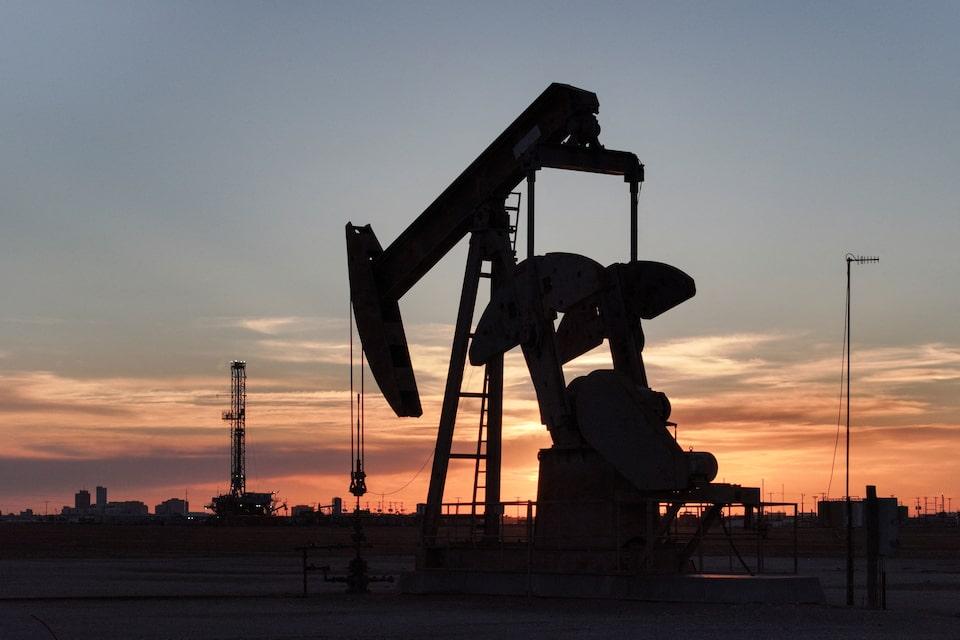
Exxon, Chevron oil and gas production hit record in Q2 Shell production drops to lowest in at least 20 years, BP's drops from year ago European majors hope to close a valuation gap with US rivals LONDON, Aug 5 - When playing catch up, picking up the pace may not be enough. One also has to hope rivals don't accelerate. Just ask Europe’s energy majors. Exxon Mobil (XOM.N) , opens new tab and Chevron's (CVX.N) , opens new tab bumper oil and gas output in the second quarter served as a sobering reminder to their European rivals of the ferocious challenge the latter face in their attempts to close the production gap that has expanded in recent years. Sign up here. Exxon pumped 4.63 million barrels of oil and gas equivalent per day (boed) in the second quarter, up by 6% from a year ago and a record for the period, following last year's $60 billion acquisition of Pioneer Natural Resources and rising output from low-cost operations in the Permian shale basin in the United States and offshore Guyana. The Texas-headquartered company is targeting between $27 and $29 billion in capital expenditures this year and aims to increase output to 5.4 million boed by 2030. And CEO Darren Woods signalled the company was willing to make further upstream acquisitions. Smaller rival Chevron also posted its highest-ever quarterly production of 3.4 million boed, up 3% on the year, on the back of rising output in the Permian and in Kazakhstan. Output is set to rise by up to 500,000 boed in the third quarter after Chevron completed the acquisition of Hess earlier this month, following a lengthy, bitter legal battle with Exxon. The story is quite different in Europe. Shell's (SHEL.L) , opens new tab production dropped 4.2% to 2.65 million boed, the lowest in at least 20 years, reflecting recent asset sales and the British energy company’s lower spending on oil and gas exploration earlier this decade, in its efforts to shift away from fossil fuels. At BP (BP.L) , opens new tab, production suffered a 3.3% annual decline to 2.3 million boed, also due to lower investment in recent years. And while France’s TotalEnergies grew production by 3.6% from a year ago, its output of 2.5 million boed is still well behind that of its U.S. rivals. Worryingly for these European giants, the window of opportunity to grow output meaningfully is narrowing in this capital-intensive industry, where it takes years to develop projects, competition from rising OPEC supplies is intensifying and the longer-term outlook for oil demand remains hazy amid the energy transition. MODEST GROWTH The European trio’s oil and gas production targets are also rather modest compared with Exxon and Chevron’s aggressive strategies. TotalEnergies – which has maintained the most consistent strategy among the three – aims to increase output by 3% on an annual basis between 2024 and 2030. BP last year abandoned a target to sharply reduce output by the end of the decade and now aims to keep production roughly stable at 2.3 to 2.5 million bpd. Shell aims to grow oil and gas production by 1% annually into 2030. Shell aims to hold upstream and integrated gas capital spending flat between 2022 and 2028 at $12-$14 billion per year. The company plans to start up around five upstream projects by 2027, but it has relatively limited reserves to sustain and grow its production over the long-term, meaning it will likely seek to acquire assets or another company. BP, which has been in deep turmoil following a leadership and strategy crisis which began in 2023, has plans for several new upstream projects in the coming years, including in Iraq and a complex development in the Kaskida field in the Gulf of Mexico. And the UK group announced on Monday that it had made its biggest oil discovery in 25 years in the Bumerangue block in offshore Brazil. If the discovery holds significant commercial volumes, it could certainly offer the company meaningful financial uplift, but once again, development would take years and billions of dollars. VALUE AND VOLUME Of course, larger oil and gas volumes do not necessarily equal stronger shareholder returns, but upstream operations have long been the core driver of profits – and this continues to be reflected in valuations today. Exxon's price-to-cash flow ratio, a key valuation metric, of 8.2 compares with Chevron's 7.7, which both far exceed Shell's 5.1, TotalEnergies' 4.6 and BP's 3.6, according to LSEG data. Importantly, the energy sector as a whole is fighting for a smaller pool of capital. It accounts for less than 5% of the S&P 500 index, down from a peak of 16% in 2008, reflecting years of weak returns, massive energy price volatility and growing environmental pressures. Given this backdrop, Europe’s energy majors have been focused on driving down costs and improving operations, while moderately growing upstream production following years of lower investment when they rolled out energy transition strategies between the late 2010s and 2023. But these new strategies to attract a shrinking pool of investment capital may be too little too late, because even if the Europeans speed up production, Exxon and Chevron won’t be standing still. Enjoying this column? Check out Reuters Open Interest (ROI), , opens new tab your essential new source for global financial commentary. ROI delivers thought-provoking, data-driven analysis. Markets are moving faster than ever. ROI , opens new tab can help you keep up. Follow ROI on LinkedIn and X. https://www.reuters.com/business/energy/record-production-exxon-chevron-humbles-european-rivals-2025-08-05/