2025-08-05 11:29
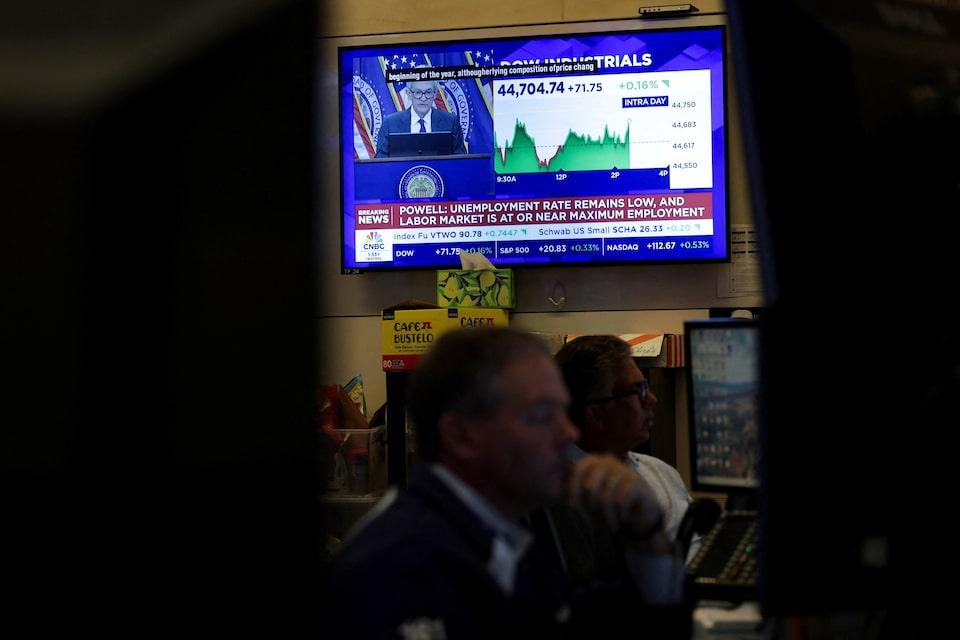
India accuses US, EU of double standard over Russian trade Highlights EU's 67.5 billion euros in trade with Russia Says US imports Russian uranium, palladium, fertilisers Both US and EU have heavily cut back on trade with Moscow NEW DELHI, Aug 5 (Reuters) - India has sharply criticised the United States and the European Union, saying it is being unfairly singled out by them over its Russian oil purchases when they both trade extensively with Moscow despite the war in Ukraine. India's criticism followed a renewed threat by U.S. President Donald Trump on Monday to raise tariffs on goods from India over its Russian oil purchases, deepening the trade rift between the two countries. Sign up here. In a rare show of unity, Prime Minister Narendra Modi's Bharatiya Janata Party (BJP) and the main opposition Congress on Tuesday condemned Trump's repeated criticism of New Delhi. India's Foreign Ministry said in a statement issued late on Monday that "it is revealing that the very nations criticising India are themselves indulging in trade with Russia". "It is unjustified to single out India," the ministry said. It said the EU conducted 67.5 billion euros ($78.02 billion) in trade with Russia in 2024, including record imports of liquefied natural gas (LNG) reaching 16.5 million metric tons. The United States, the statement said, continues to import Russian uranium hexafluoride for use in its nuclear power industry, palladium, fertilisers and chemicals. It did not give a source for the export information. The U.S. embassy and the EU's delegation in New Delhi did not immediately respond to a request for comment. Both the United States and EU have sharply scaled back their trade ties with Russia since it launched a full-scale invasion of Ukraine in February 2022. In 2021, Russia was the EU's fifth-largest trading partner, with goods exchange worth 258 billion euros, according to the EU executive European Commission. SUDDEN RIFT The sudden rift between India and the U.S. has been deepening since July 31, when Trump announced a 25% tariff on Indian goods being shipped to the U.S. and for the first time threatened unspecified penalties for buying Russian oil. India is one of the biggest buyers of crude from Russia, importing about 1.75 million barrels per day from January to June this year, up 1% from a year ago. Indian refiner Nayara Energy, a major buyer of Russian oil which is majority owned by Russian entities including oil major Rosneft (ROSN.MM) , opens new tab, was subjected to European Union sanctions targeting Russia's oil and energy industry in July. India has said it does not support "unilateral sanctions" by the EU. Trade experts say Trump's tariff could badly hurt India's economy. Ajay Srivastava of the New Delhi-based Global Trade Research Initiative said he expected Indian goods exports to the U.S. to fall 30% in the current fiscal year ending March 31, to $60.6 billion from $86.5 billion in the 2025 fiscal year. India's equity benchmarks fell after Trump's renewed threat of harsh tariffs on goods from India. Manish Tewari, a member of parliament and Congress leader, said Trump's "disparaging remarks hurt the dignity and self-respect of Indians". "The time has come to call out this constant bullying and hectoring," he added. BJP Vice President Baijayant Jay Panda quoted Henry Kissinger - the most powerful U.S. diplomat of the Cold War era - in a post on X: "To be an enemy of America can be dangerous, but to be a friend is fatal." https://www.reuters.com/world/india/india-accuses-eu-us-double-standard-over-russian-trade-2025-08-05/
2025-08-05 11:26
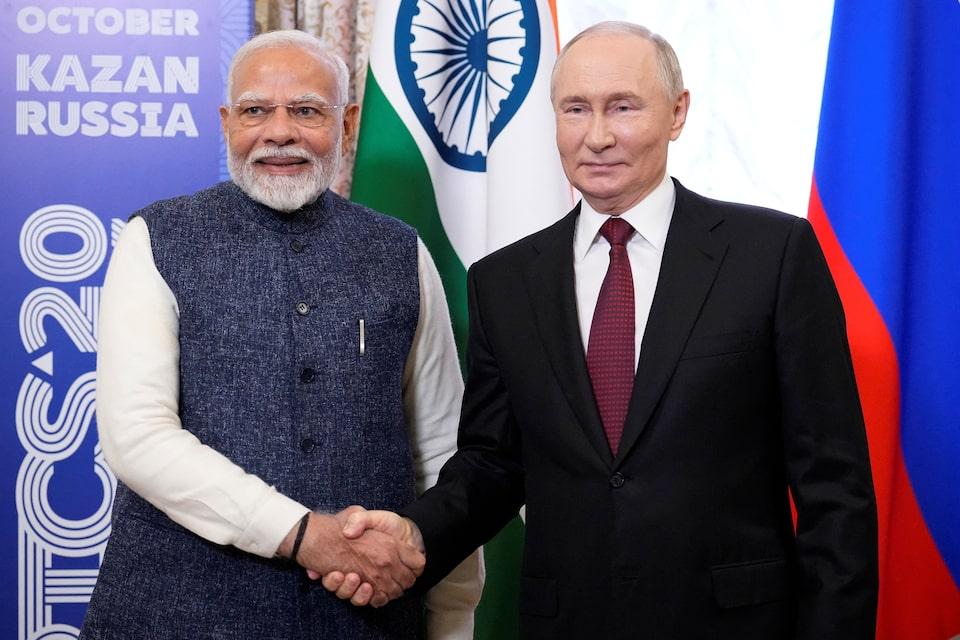
BEIJING, Aug 5 (Reuters) - China's renewable power potential in far-flung provinces is increasingly going unused, official statistics showed on Monday, as the country rushes to build more long-distance transmission and energy storage to bridge the gap. The curtailment rate for solar power rose to 6.6% in the first half of 2025 from 3.9% in the same period a year earlier while the rate for wind rose to 5.7% from 3%, according to the National New Energy Consumption Monitoring and Early Warning Center. Sign up here. Curtailment refers to how much grid managers have to limit the amount of power coming into the grid to maintain a balance with demand or due to grid infrastructure constraints. China has a national-level limit of 10% curtailment for renewables, a figure it relaxed last year from 5% previously as it became harder to incorporate rising amounts of renewable energy into the grid. China added 268GW of new solar and wind power in January-June, according to the energy administrator - nearly equal to all of the wind and solar the United States has ever built. On the curtailment front, China's national-level figures masked a larger increase in some renewable-heavy provinces. Tibet curtailed 30.2% of its wind power in the first half of 2025 compared with 2.3% a year earlier. It curtailed 33.9% of its solar power, up from 5.1%. Qinghai in the northwest curtailed 15.2% of its solar power, up from 8.8%. Regions with higher electricity demand continued to report low curtailment rates, including none in the megacities of Shanghai and Chongqing as well as in Fujian province. Underutilisation of renewables is spurring China to switch its focus from rapidly building renewable plants to making sure more of their power gets into the grid, analysts say. "China will still push for decarbonisation, but not necessarily on renewable installation. China might switch its policy focus or target focus from installation volume" to utilisation, Natixis economist Haoxin Mu said. More energy storage is needed, Mu said, which could help increase renewable utilisation by storing excess power when supply outpaces demand. Rising curtailment is also one reason China is investing in projects like the world's largest hydropower dam in Tibet, analysts at BMI said in a July note. Unlike wind and solar, hydropower is dispatchable, meaning output can be adjusted based on demand. China is also responding to increasing curtailment of non-hydro renewables over the past two years by building more high-voltage power transmission, the BMI analysts said, to move electricity from huge power plants in the west to electricity-hungry cities in the east. https://www.reuters.com/sustainability/climate-energy/chinas-renewable-capacity-soars-utilisation-lags-data-show-2025-08-05/
2025-08-05 11:19
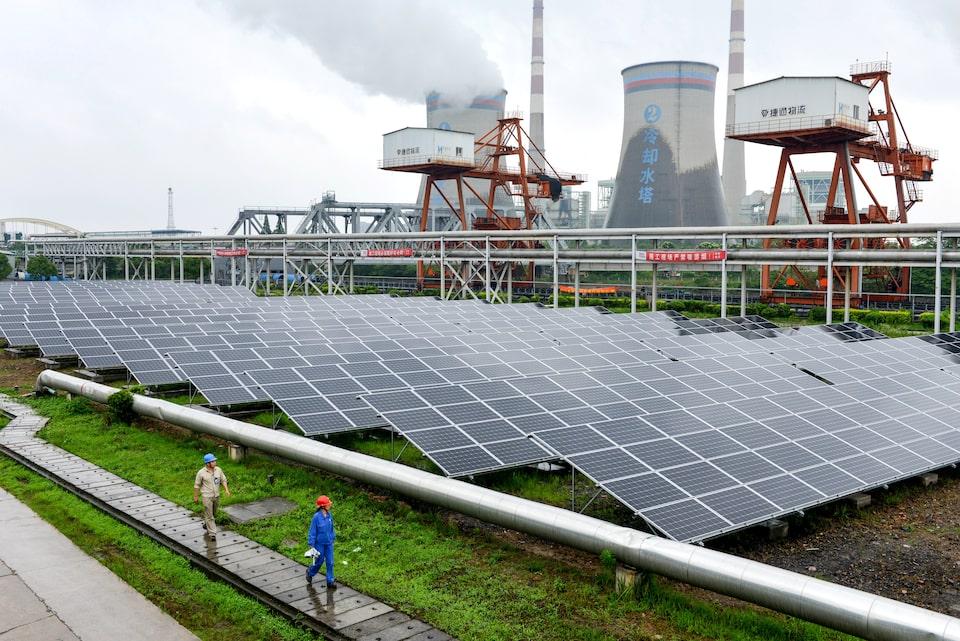
Most of Europe's 153 open coal plants to close by 2038 Data centres require grid connection, cooling Most supplies will come from renewable resources PARIS, Aug 5 (Reuters) - Some of Europe's ageing coal and gas fired power plants can look forward to a more high-tech future as big tech players, such as Microsoft and Amazon, seek to repurpose them as data centres, with ready-made access to power and water. Companies such as France's Engie (ENGIE.PA) , opens new tab, Germany's RWE (RWEG.DE) , opens new tab, and Italy's Enel (ENEI.MI) , opens new tab are looking to benefit from a surge in AI-driven energy demand by converting old power sites into data centres and securing lucrative long-term power supply deals with their operators. Sign up here. The data centre option offers the utilities a way to offset the hefty costs of shutting down ageing power plants as well as potentially underwriting future renewable developments. Tech companies see these sites as a quick way to secure power grid connections and water cooling facilities, two big bottlenecks in the AI industry. "You have all the pieces that come together like ... water infrastructure and heat recovery," said Bobby Hollis, vice president for energy at Microsoft (MSFT.O) , opens new tab. Lindsay McQuade, EMEA energy director at Amazon (AMZN.O) , opens new tab , said she expected permitting for data centres to move faster at old sites, where a big chunk of infrastructure was already in place. Utilities can either lease the land or build and operate the centres themselves, securing long-term power contracts with tech firms, he said. The deals offer much more than just the sale of unused land as they include opportunities for stable, high-margin revenue, said Simon Stanton, head of Global Partnerships and Transactions at RWE. "It's more about the long-term relationship, the business relationship that you get over time that enables you to de-risk and underwrite your infrastructure investments," Stanton said. Most of EU's and Britain's 153 hard coal and lignite plants are set to close by 2038 to meet climate targets, joining the 190 plants that have closed since 2005, based on data from NGO Beyond Fossil Fuels, which campaigns to accelerate closure of coal-fired power stations. NEW REVENUE STREAMS The economics of data centre deals can be compelling for the utilities, which can negotiate a long-term power supply contract to underwrite future renewable developments. Tech firms are paying premiums of up to 20 euros per megawatt-hour for low-carbon power, said Gregory LeBourg, environmental program director at French data centre operator OVH (OVH.PA) , opens new tab. Data centre power demands can be anywhere from a couple hundred megawatts to a gigawatt or more. So the annual 'green premium' - the extra price paid for low-carbon electricity - on top of a base market price could potentially translate into a long-term contract worth hundreds of millions or even billions of euros, based on Reuters' calculations. One long-term option is to build an "energy park" and connect the data centre to a new renewable development, relying on the grid for emergencies, but this is a relatively new concept, industry sources said. Engie wants to nearly double its installed renewable energy and battery capacity by 2030 from the current 52.7 GW. The group has identified 40 sites globally that it is marketing to data centre developers, including coal and gas plants that could be converted, said Sebastien Arbola, who runs the company's data centre business. One is the Hazelwood coal plant in Australia, which closed in 2017. He declined to disclose details of other sites, saying they are mostly in Europe. Other utilities, including Portugal's EDP (EDP.LS) , opens new tab, EDF, and Enel said they are also marketing old gas and coal sites for new data centre development. "It's business model diversification," said Michael Kruse, managing partner at consultancy Arthur D. Little. Utilities are creating a new type of business and also new revenue streams, he said. 'SPEED TO POWER' The appeal for tech companies is speed. Grid connection delays in Europe can stretch over a decade, while repurposed plants potentially offer speedier access to power and water. "You actually have the opportunity to move faster," said Hollis at Microsoft. Data centre capacity in Europe is much lower than the United States and Asia due to longer grid connection times and slower permitting, data from Synergy Research Group showed. The data centre operators can choose to buy the renewable power they need directly from the utilities in the form of long-term contracts or purchase from the power market. Real estate firm JLL is working on several conversions, including a 2.5 GW data centre at a former German coal plant and four sites in Britain for a major tech client, said Tom Glover, who works on data centre transactions at JLL. Developers do not often disclose more detail about data centre projects, including their clients, for security reasons. Britain's Drax (DRX.L) , opens new tab is also seeking a partner to develop unused parts of an old coal site in Yorkshire, now partially converted to biomass. It offers access to unused water cooling equipment, said Richard Gwilliam, Drax's carbon programme director. Drax is offering a "behind-the-meter" deal where the power plant will provide direct power to the data centre and it can pull from the grid if necessary. EDF has also chosen developers for two sites at gas power plants in central and eastern France. Tech companies are willing to pay more for projects that can start up sooner as they vie for market share in a rapidly growing industry, said Sam Huntington, director of research at S&P Global Commodity Insights. "Speed to power is just the phrase we keep hearing over and over again," he said. https://www.reuters.com/sustainability/climate-energy/europes-old-power-plants-get-digital-makeover-driven-by-ai-boom-2025-08-05/
2025-08-05 11:10
Aug 5 (Reuters) - Utility Ameren Corp's (AEE.N) , opens new tab Illinois unit said on Tuesday it has got approval to build and upgrade 380 miles of power lines across 13 counties in the state as part of a $1.6 billion project to boost energy access. Construction is set to begin later this year and is expected to be completed in 2029. Sign up here. U.S. utilities face growing pressure to boost grid capacity amid rising electricity demand and a shift toward cleaner energy sources. "At a time when the Midwest faces a persistent shortage of the electricity needed to meet rising demand, this vital project will provide energy access and certainty for businesses and residential growth," said Shawn Schukar, chairman and president of Ameren Transmission Company of Illinois. The Illinois Commerce Commission approved the proposed route through a Certificate of Public Convenience and Necessity, the company said. The project includes three new substations and upgrades to several others, with most of the work taking place along existing infrastructure corridors to minimize land use. Ameren Illinois serves 1.2 million electricity and more than 800,000 natural gas customers across 1,200 communities in the state. https://www.reuters.com/business/energy/ameren-unit-gets-green-light-16-billion-illinois-power-transmission-project-2025-08-05/

2025-08-05 10:59
Traders boost bets on Fed easing moves extending through 2026 Goldman Sachs expects Fed to deliver 3 consecutive rate cuts Fed could harden its view to protect independence, analysts say Investors still concerned about the tariff impact Aug 5 (Reuters) - The dollar edged up against the euro and the yen, but remained within striking distance of Friday’s lows, after weak U.S. jobs data boosted bets on Federal Reserve rate cuts and triggered a sharp selloff in the greenback. Investors are awaiting services data from the Institute for Supply Management (ISM), which should show a mild improvement supporting the greenback. Sign up here. Goldman Sachs expects the Fed to deliver three consecutive 25 basis-point rate cuts starting in September, with a 50 basis-point move possible if the next jobs report shows a further rise in unemployment. It also sees the European Central Bank as having concluded its easing cycle. Economists raised their growth forecasts for the euro area and Japan following relatively benign trade agreements, while arguing that Friday’s U.S. jobs report confirmed the economy is hovering near stall speed. Meanwhile the firing of the head of the Bureau of Labor Statistics (BLS) on Friday, and the resignation of Fed Governor Adriana Kugler, could harden the views of the FOMC to ensure its independence is protected, analysts said, recalling that the new appointee will be just one vote on the Fed’s Federal Open Market Committee (FOMC). The euro was last down 0.25% at $1.1544, after hitting on Friday $1.15855. The dollar index , which measures the U.S. currency against six counterparts, was up 0.30% at 98.864, after touching a one-week low earlier in the session at 98.609. "Traders likely inferred that the (U.S. jobs) report gave President Donald Trump even more justification to 'fire' Jay Powell," said Thierry Wizman, global forex and rates strategist at Macquarie Group. "Alternatively, it gave Trump even more support for giving the Chairmanship to someone that would be more 'structurally' dovish," he added, arguing that Friday's employment report shifted the outlook for where the Fed Funds rate target will be one year from now. Sterling edged higher against the dollar, as traders expect the Bank of England to maintain its rate guidance at this week’s policy meeting. It was last up 0.05% at $1.3291 . RATE CUTS Money markets are now pricing in a 92% chance of the Fed cutting rates in its next meeting in September, compared with 63% a week earlier. They also indicate 130 bps of rate cuts by October 2026, 30 bps more than the levels seen on Friday before U.S. jobs data. The Japanese yen was down 0.34% at 147.6 per dollar after minutes of its June policy meeting showed a few Bank of Japan board members said the central bank would consider resuming interest rate increases if trade frictions de-escalate. "The pressure to hike (rates) could also come from a wish to help support and stabilise the Japanese government bonds (JGB) market," said Derek Halpenny, head of research global markets at MUFG, mentioning a weak outcome of a JGBs auction. "But JGB market instability remains a downside risk for the yen," he added. The focus remains on tariff uncertainties, after the latest duties imposed on imports from scores of countries last week by Trump stoked worries about the health of the global economy. The 15% tariff that European Union goods face when entering the U.s. is all-inclusive, a senior EU official said on Tuesday. The Swiss franc extended losses for a second day, weakening 0.25% to 0.8103 per dollar after dropping 0.5% in the previous session. However it was still above the levels seen before Friday's economic figures, at around 0.8128. Switzerland is looking to make a "more attractive offer" in trade talks with Washington, to avert a 39% U.S. import tariff on Swiss goods that threatens its export-driven economy. https://www.reuters.com/world/middle-east/dollar-rises-versus-euro-yen-before-us-economic-data-2025-08-05/
2025-08-05 10:34
LONDON, Aug 5 (Reuters) - What matters in U.S. and global markets today By Mike Dolan , opens new tab, Editor-At-Large, Finance and Markets Sign up here. For all the fog surrounding Friday's payrolls data and the accuracy of the statistics, some Federal Reserve officials - unlike the White House - appear to be taking them at face value and are chiming in with souped up market easing expectations. Markets are now almost fully priced for a quarter-point Fed rate cut next month. That and the forecast-beating corporate earnings season, which saw tech and defence firm Palantir (PLTR.O) , opens new tab surge another 6% after the bell overnight, have allowed Wall Street stock indexes to recover all of Friday's steep losses - with futures still in positive territory early Tuesday as a stream of tech and pharma sector updates due later. * San Francisco Fed President Mary Daly said on Monday mounting evidence of a softening U.S. job market and few signs of persistent tariff-driven inflation meant the time was nearing for rate cuts. Wall Street banks have jumped the gun, with Goldman Sachs now expecting three 25 basis-point cuts from September, with a 50 bps move possible if the unemployment rate rises in the next report. With another heavy week of debt sales kicking off later, 10-year Treasury yields came within a whisker of three-month lows on Tuesday. But the dollar (.DXY) , opens new tab strengthened slightly. * Speculation remains about potential changes to U.S. tariffs before the new levies kick in on August 7. Switzerland said it was seeking to secure a better deal than the whopping 39% tariff it was hit with on Friday, and European Union trade chief Maros Sefcovic said he was in contact with U.S. officials Howard Lutnick and Jamieson Greer to turn July's framework trade deal into practice. EU officials added that the 15% goods tariff Europe faces is "all-inclusive," unlike the deals some other countries have struck with Washington * Stocks in Asia and Europe were broadly firmer on Tuesday, with the earnings season in full swing. Japan's Nikkei advanced as the yen weakened, with the Bank of Japan meeting minutes keeping rate rise expectations on the back burner as policymakers monitor fallout from U.S. tariffs. China and Hong Kong stocks climbed for a second consecutive session after a private-sector survey showed strong recovery in China's services activity in July. ake sure to check out today's column, where I explore why the latest curve ball thrown at markets – uncertainty about economic data – is so tough to price. Today's Market Minute * U.S. President Donald Trump again threatened on Monday to raise tariffs on goods from India over its Russian oil purchases, while New Delhi called his attack "unjustified" and vowed to protect its economic interests, deepening the trade rift between the two countries. * A record number of Chinese companies are seeking a U.S. listing this year as onerous domestic listing rules and the prospect of better valuations convince them to brave volatile Sino-U.S. relations and U.S. calls for strict oversight of Chinese firms. * South Korea will prepare measures to help companies cope with higher U.S. tariffs and expand into new markets, the Finance Ministry said on Tuesday, as it kicked off a task force to prepare the new administration's economic policy plans. * Trump's decision to fire a top labor official following weak jobs data doesn’t just send ominous signals about political interference in independent institutions, writes ROI columnist Jamie McGeever, it is also a major strategic own goal. * Asia's imports of seaborne thermal coal ticked up in July, but the increase was driven by the developed economies of North Asia and not heavyweights China and India. Find out more from ROI columnist Clyde Russell. Chart of the day For investors seeking to lock into two super cycles - AI and defence, Palantir Technologies has been the catch-all winner. The data analytics and defense software firm is getting a boost from President Donald Trump's focus on national security and a shift in the Pentagon's software-buying process towards commercial and "non-traditional" providers. Last week, the U.S. Army said it might purchase services of up to $10 billion from the company over a decade. Rising another 6% overnight after the firm raised its annual revenue forecast for the second time this year, Palantir's stock has been the standout performer of the past year - even putting the likes of Nvidia in the shade. Its market cap has soared to more than $363 billion - more than six times what it was this time last year. Today's events to watch * U.S. June international trade balance (8:30 AM EDT), July service sector surveys from S&P Global (9:45 AM EDT) and ISM (10:00 AM EDT): Canada June trade balance (8:30 AM EDT) * U.S. corporate earnings: AMD, Super Micro Computer, Pfizer, Amgen, Marathon, DuPont De Nemours, Caterpillar, News Corp, Fox, Apollo, Arista, Molson Coors, DaVita, Aflac, Assurant, Eaton, ADM, Progressive, International Flavors and Fragrances, Match, Mosaic, Duke Energy, Devon Energy, Broadridge, Jacobs, Henry Schein, Cummins, Gartner, TransDigm, Zoetis, Yum! Brands * U.S. Treasury auctions $58 billion of 3-year notes Want to receive the Morning Bid in your inbox every weekday morning? Sign up for the newsletter here. You can find ROI on the Reuters website , opens new tab, and you can follow us on LinkedIn , opens new tab and X. , opens new tab Opinions expressed are those of the author. They do not reflect the views of Reuters News, which, under the Trust Principles , opens new tab, is committed to integrity, independence, and freedom from bias. https://www.reuters.com/business/finance/global-markets-view-usa-2025-08-05/