2025-08-04 00:40
Asian stock markets: Nikkei slips in delayed reaction, S&P futures steady U.S. jobs shock leads markets to price in more rate cuts Dollar flat after Friday's sharp reversal Oil slips as OPEC+ increases production SYDNEY, Aug 4 (Reuters) - Asian share markets followed Wall Street lower on Monday as fears for the U.S. economy returned with a vengeance, spurring investors to price in an almost certain rate cut for September and undermining the dollar. Some early resilience in U.S. stock futures and a continued retreat in oil prices did help limit the losses, but the bleak message from the July payrolls report was hard to ignore. Sign up here. Not only had revisions meant payrolls were 290,000 below where investors had thought they would be, but the three-month average slowed to just 35,000 from 231,000 at the start of the year. "The report brings payroll growth closer in line with big data indicators of job gains and the broader growth dataset, both of which have slowed significantly in recent months," noted analysts at Goldman Sachs. "Taken together, the economic data confirm our view that the U.S. economy is growing at a below-potential pace." Neither did the reaction of President Donald Trump instil confidence, as the firing of the head of Labor Statistics threatened to undermine confidence in U.S. economic data. Likewise, news that Trump would get to fill a governorship position at the Federal Reserve early added to worries about the politicisation of interest rate policy. Analysts assume the appointee will be loyal to Trump alone, though the president did grudgingly concede that Fed Chair Jerome Powell would likely see out his term. "It opens the prospect of broader support on the Fed Board for lower rates sooner rather than later," said Ray Attrill, head of FX research at NAB. "Fed credibility, and the veracity of the statistics on which they base their policy decisions, are both now under the spotlight." Markets moved quickly to price in a lot more easing with the probability of a September rate cut swinging to 90%, from 40% before the jobs report. Futures extended the rally on Monday to imply 65 basis points of easing by year-end, compared to 33 basis points pre-data. Markets have essentially already eased for the Fed with two-year Treasury yields down another 4 basis points at 3.661%. They tumbled almost 25 basis points on Friday in the biggest one-day drop since August last year. DOLLAR DENTED The prospect of lower borrowing costs offered some support for equities and S&P 500 futures inched up 0.1%, while Nasdaq futures rose 0.2%. Asian share markets, however, were still catching up with Friday's retreat and the Nikkei (.N22%) , opens new tab fell 2.1%, while South Korea (.KS11) , opens new tab dipped 0.2%. MSCI's broadest index of Asia-Pacific shares outside Japan (.MIAPJ0000PUS) , opens new tab broke the mould and firmed 0.3%. Wall Street has also taken comfort in an upbeat results season. Around two-thirds of the S&P 500 have reported and 63% have beaten forecasts. Earnings growth is estimated at 9.8%, up from 5.8% at the start of July. Companies reporting this week include Disney (DIS.N) , opens new tab, McDonald's (MCD.N) , opens new tab, Caterpillar (CAT.N) , opens new tab and some of the large pharmaceutical groups. The dismal U.S. jobs data did put a dent in the dollar's crown of exceptionalism, snuffing out what had been a promising rally for the currency. The dollar dipped 0.1% to 147.24 yen , having shed an eye-watering 2.3% on Friday, while the euro stood at $1.1585 after bouncing 1.5% on Friday. The dollar index was pinned at 98.659 , having been toppled from last week's top of 100.250. Sterling was more restrained at $1.3287 as markets are 87% priced for the Bank of England to cut rates by a quarter point at a meeting on Thursday. The BoE board itself is expected to remain split on easing, while markets still favour two further cuts by the middle of next year. In commodity markets, gold was flat at $3,361 an ounce , having climbed more than 2% on Friday. Oil prices extended their latest slide as OPEC+ agreed to another large rise in output for September, which completely reverses last year's cuts of 2.2 million barrels per day. Brent dropped 0.6% to $69.24 a barrel, while U.S. crude also fell 0.6% to $66.93 per barrel. https://www.reuters.com/world/china/global-markets-wrapup-1-2025-08-04/
2025-08-04 00:25
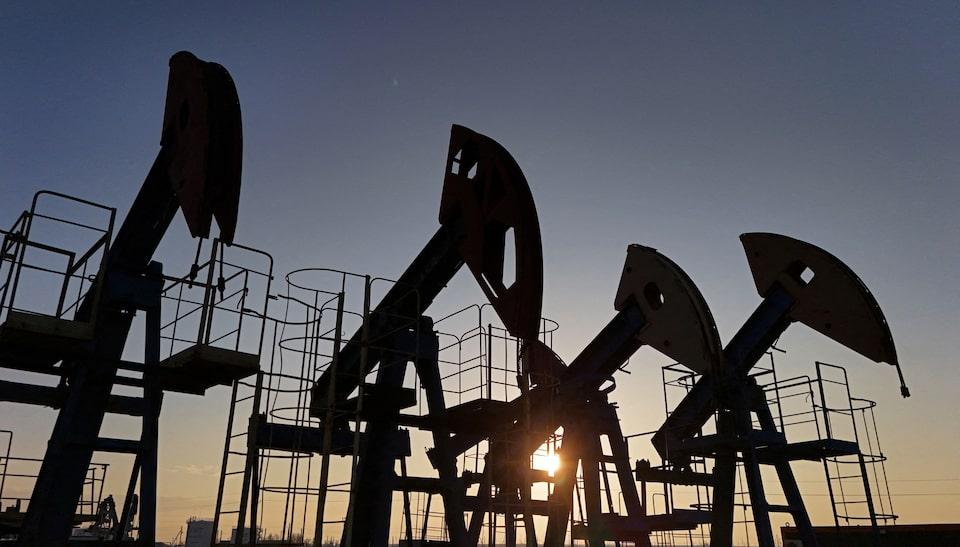
LAUNCESTON, Australia, Aug 4 (Reuters) - A couple of months ago it would have been a brave call to say that OPEC+ would be able to bring back 2.5 million barrels per day of crude production and still keep oil prices anchored around $70 a barrel. But this is exactly what has occurred, with the eight members of the producer group winding back the last of their 2.2 million bpd of voluntary cuts by September, as well as allowing a separate increase for the United Arab Emirates. Sign up here. The eight OPEC+ members met virtually on Sunday, agreeing to lift output by 547,000 bpd for September, adding to the increases of 548,000 bpd for August, 411,000 bpd for each of May, June and July, as well as the 138,000 bpd for April that kickstarted the unwinding of their voluntary cuts. OPEC+ stuck to their recent line that the rolling back of production cuts was justified by a strong global economy and low oil inventories. It's debatable as to whether this is actually the case. Certainly, demand growth in the top-importing region of Asia has been lacklustre. Asia's oil imports were about 25.0 million bpd in July, down from 27.88 million bpd in June and the lowest monthly total since July last year, according to data compiled by LSEG Oil Research. While China, the world's biggest crude importer, has been increasing purchases in recent months, much of this is likely because of lower prices that prevailed when June- and July-arriving cargoes were arranged. It's also the case that China has likely been adding to its stockpiles at a rapid pace, and while it doesn't disclose inventories, the surplus of crude once refinery processing is subtracted from the total available from domestic output and imports was 1.06 million bpd over the first half of 2025. OPEC+ LUCK? It appears more likely that OPEC+ has largely been fortunate in that it has been increasing output at a time of rising risks in the crude oil market, largely from geopolitical tensions. The brief conflict between Israel and Iran in June, which was later joined by the United States, did lead to an equally brief spike in crude prices, with benchmark Brent futures reaching a six-month high of $81.40 a barrel on June 23. The price has since eased back to trade around the $70 mark, with some early weakness in Asia on Monday seeing Brent drop to around $69.35. But the point is that the Israel-Iran conflict arrested a downtrend in oil prices that had been in place for much of the first half of the year. Crude prices have also been supported in recent days by U.S. President Donald Trump's threats of wide-ranging sanctions against buyers of Russian oil unless Moscow agrees to a ceasefire in its war with Ukraine. As with everything Trump, it pays to be cautious as to whether his actions will ultimately be as drastic as his threats. But it would also be foolhardy to assume that there will be no impact on crude supplies even if any eventual measures imposed by the United States are not as drastic as feared. There are effectively only two major buyers of Russian crude, India and China. Of these two, India is the far more exposed given its refiners export millions of barrels of refined products, many made with Russian oil. India imported 2.1 million bpd of Russian oil in June, according to data compiled by commodity analysts Kpler, which is the second-highest monthly total behind only 2.15 million bpd in May 2023. In recent months, India has been buying about 40% of its crude from Russia and if it were to replace that with other suppliers, it would have a severe impact on oil flows, at least initially. It's likely that a combination of Middle East, Africa and Americas exporters could make up for India's loss of Russian barrels, but this would tighten supplies considerably and likely keep prices higher. Whether Russia and its network of shadowy traders and shippers could once again work around sanctions remains to be seen, but even if they could, it would still take some time for them to get Russian crude through to buyers. For now, much remains up in the air and OPEC+ members are following a smart strategy in taking advantage of the uncertainty to bring their production back and rebuild market share. How long this play can work is the question. Even if Russian barrels do leave the market, it's also possible that demand growth disappoints in the second half as the impact of Trump's trade war becomes more apparent, cutting global trade and lowering economic growth. Enjoying this column? Check out Reuters Open Interest (ROI), your essential new source for global financial commentary. ROI delivers thought-provoking, data-driven analysis of everything from swap rates to soybeans. Markets are moving faster than ever. ROI can help you keep up. Follow ROI on LinkedIn , opens new tab and X , opens new tab. The views expressed here are those of the author, a columnist for Reuters. https://www.reuters.com/markets/commodities/energy/opec-gets-lucky-it-brings-back-oil-output-amid-uncertainty-2025-08-04/
2025-08-04 00:13
Aug 4 (Reuters) - Oil and gas producer Santos (STO.AX) , opens new tab on Monday said it will supply utility firm Engie (ENGIE.PA) , opens new tab with up to 20 petajoules of natural gas a year from its Narrabri project in New South Wales that has been entirely committed to the Australian domestic market. Santos has yet to make a final investment decision on the A$3.6 billion ($2.33 billion) project so details including start date and pricing have yet to be agreed. Sign up here. Earlier this year, Santos received approval from a tribunal to proceed with project, which is expected to ease energy supply constraints on Australia's east coast. Paris-listed Engie operates wind farms, large-scale batteries and gas-fired power stations, and provides energy services to commercial and industrial customers across Australia. The supply agreement is subject to Santos making a final investment decision on the project, which it previously said it would make by the end of this year, among other conditions. ($1 = 1.5458 Australian dollars) https://www.reuters.com/business/energy/australias-santos-commits-narrabri-gas-domestic-supply-deal-with-engie-2025-08-04/
2025-08-04 00:00
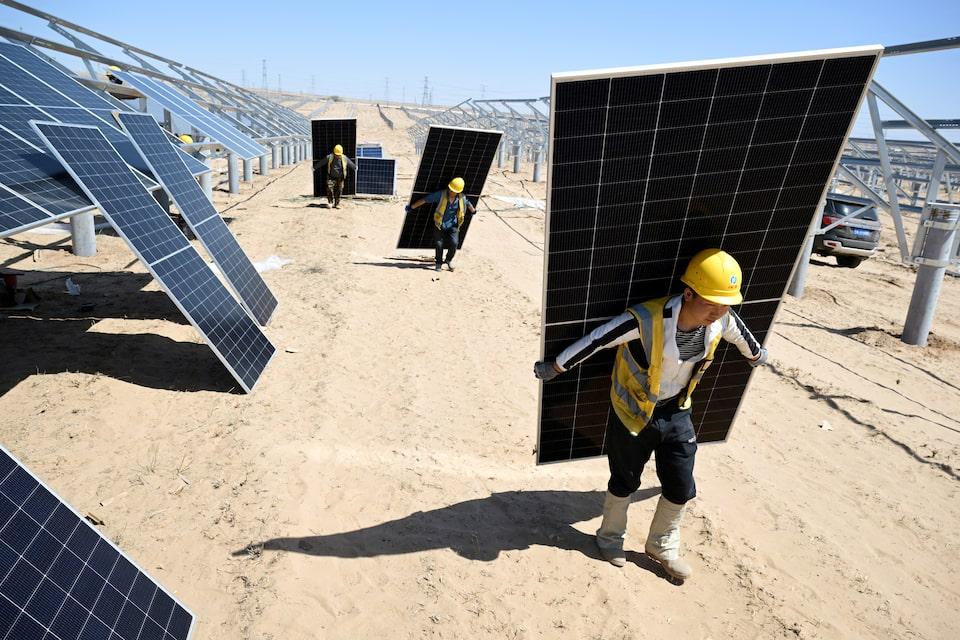
Over 40 solar firms have delisted, gone bankrupt or been sold since 2024 Job losses took place as companies attempted to cut costs, analysts say More cuts to industry capacity are needed, analysts and industry insiders say Beijing signals intervention to cut capacity, stabilize prices BEIJING, August 1 (Reuters) - China's biggest solar firms shed nearly one-third of their workforces last year, company filings show, as one of the industries hand-picked by Beijing to drive economic growth grapples with falling prices and steep losses. The job cuts illustrate the pain from the vicious price wars being fought across Chinese industries, including solar and electric vehicles, as they grapple with overcapacity and tepid demand. The world produces twice as many solar panels each year as it uses, with most of them manufactured in China. Sign up here. Longi Green Energy (601012.SS) , opens new tab, Trina Solar , Jinko Solar (688223.SS) , opens new tab, JA Solar (002459.SZ) , opens new tab, and Tongwei (600438.SS) , opens new tab, collectively shed some 87,000 staff, or 31% of their workforces on average last year, according to a Reuters review of employment figures in public filings. Analysts say the previously unreported job losses were likely a mix of layoffs and attrition due to cuts to pay and hours as companies sought to stem losses. Layoffs are politically sensitive in China, where Beijing views employment as key to social stability. Other than a 5% cut acknowledged by Longi last year, none of the firms mentioned above have announced any job cuts or responded to questions from Reuters. "The industry has been facing a downturn since the end of 2023," said Cheng Wang, an analyst at Morningstar. "In 2024, it actually got worse. In 2025, it looks like it's getting even worse." Since 2024, more than 40 solar firms have delisted, gone bankrupt or been acquired, according to a presentation by the photovoltaic industry association in July. China's solar manufacturers built new factories at a fever pitch between 2020 and 2023 as the state redirected resources from the sinking property sector to what it used to call the "new three" growth industries: solar panels, electric cars and batteries. That building spree led to falling prices and a brutal price war made worse by U.S. tariffs thrown up against exports from the many Chinese-owned factories in Southeast Asia. The industry lost $60 billion last year. MORE TO COME While analysts say it is unclear whether job cuts continued this year, Beijing is increasingly signalling it intends to intervene to cut capacity, sending polysilicon prices soaring nearly 70% in July while solar panel prices have increased more modestly. Major polysilicon producer GCL told Reuters on Thursday that top producers plan to set up an OPEC-like entity to control prices and supply. The group is also setting up a 50-billion yuan vehicle to buy and shut around a third of the industry's lower-quality production capacity. President Xi Jinping in early July called for an end to "disorderly price competition," and three days later the industry ministry pledged to calm price wars and retire outdated production capacity during a meeting with solar industry executives. While Beijing has not said when or how it will act, a source with direct knowledge of the matter said it was determined to focus on the issue before the end of the current five-year plan this year. Officials in eastern China's Anhui province, a manufacturing hub, told solar company executives in June to stop adding new manufacturing and shut production lines operating at under 30% capacity, according to two industry sources who declined to be identified due to the sensitivity of the matter. A board member at a solar firm in the province said new capacity had already required verbal approval from powerful state planner the National Development and Reform Commission (NDRC) this year. They asked for their company's name to be withheld because the discussions were private. NO EASY FIX But many provincial governments are likely to be reluctant to crack down hard on overcapacity, analysts say. These officials are scored on jobs and economic growth and are loathe to see local champions sacrificed to meet someone else's target. Trina Solar's chairman told an industry conference in June that new projects had begun this year despite the NDRC calling for a halt in February. The foot-dragging reflects the scale of the cull required. Jefferies analyst Alan Lau estimated at least 20-30% of manufacturing capacity would have to be eliminated for companies to return to profitability. "There's a lot of overcapacity in China, like steel, like cement, but you don't see any industry in the past having industry-wide cash loss for one and a half years already," Lau said. Company-level losses are on the same scale as in real estate, another crisis-hit sector, even though solar is only about one-tenth the size, he said. "This is highly unusual and highly abnormal." https://www.reuters.com/business/world-at-work/chinas-solar-giants-quietly-shed-third-their-workforces-last-year-2025-08-01/
2025-08-03 23:39
Total of six people dead from mine collapse Codelco to convene international experts to investigate Chilean authorities will evaluate when operations safe to restart SANTIAGO, Aug 3 (Reuters) - All five workers at Chile's El Teniente copper mine who were trapped in a collapse last week have been found dead, miner Codelco said on Sunday, as it vowed to investigate the cause and improve safety measures. The total death toll stood at six, including one person who died at the time of the accident on Thursday evening, 70 hours before the final trapped worker was found. Sign up here. Codelco Chairman Maximo Pacheco said the state-run miner would convene international experts to investigate the cause and determine "what we did wrong." The collapse was triggered by one of the largest tremors ever recorded at El Teniente, with the impact of a 4.2 magnitude quake. It is still unclear if the cause was a natural quake in the highly seismic country or mining activity. "We're the first ones who want to know what happened," Pacheco told reporters at Codelco's offices in the city of Rancagua, near the mine in central Chile. "This tragedy hits us hard." President Gabriel Boric called for three days of mourning for the miners. The trapped men were aged 29 to 34 and were employed by excavation firm Gardilcic, according to local media. Codelco is the world's biggest copper miner and Chile the largest global producer that supplies about a quarter of the world's red metal used in industries from construction to electronics. Throughout the weekend, dozens of people placed candles, Chilean flags and photos of the trapped workers at a makeshift memorial outside the entrance to El Teniente. The rescue effort began in earnest on Friday evening, once aftershocks from Thursday's tremor had subsided. In Codelco's final update on Sunday afternoon on the rescue effort, it said it had cleared 25.5 meters (84 feet) of passages near El Teniente's new Andesita section, removing 3,270 metric tons of material through heavy machinery operated remotely. Codelco discovered the first trapped worker on Saturday and the remaining four throughout the day on Sunday, working with a rescue team of about 100 people. Mining Minister Aurora Williams said the Labor Ministry and mining regulator Sernageomin would evaluate when it was safe for operations to resume at El Teniente, Codelco's flagship mine that last year produced 356,000 metric tons of copper. El Teniente, which is more than a century old and boasts the world's largest underground copper deposit, spans more than 4,500 kilometers (2,800 miles) of tunnels and underground galleries - nearly the distance between Chile and New York - in the Andes Mountains, about 75 kilometers (47 miles) southeast of Chile's capital Santiago. https://www.reuters.com/world/americas/codelco-ends-el-teniente-rescue-effort-after-five-miners-found-dead-2025-08-03/

2025-08-03 23:07
Small Chinese firms aim to double Iraq output to 500,000 bpd by 2030 Group won half of last year's Iraq exploration licences Baghdad taps Chinese independents to accelerate production Iraq aims to raise output by more than half to over 6 mln bpd by 2029 SINGAPORE/BAGHDAD, Aug 4 (Reuters) - China's independent oil companies are ramping up operations in Iraq, investing billions of dollars in OPEC's number two producer even as some global majors have scaled back from a market dominated by Beijing's big state-run firms. Drawn by more lucrative contract arrangements, smaller Chinese producers are on track to double their output in Iraq to 500,000 barrels per day by around 2030, according to estimates by executives at four of the firms, a figure not previously reported. Sign up here. For Baghdad, which is also seeking to lure global giants, the growing presence of the mostly privately run Chinese players marks a shift as Iraq comes under growing pressure to accelerate projects, according to multiple Iraqi energy officials. In recent years, Iraq's oil ministry had pushed back on rising Chinese control over its oilfields. For the smaller Chinese firms, managed by veterans of China's state heavyweights, Iraq is an opportunity to leverage lower costs and faster development of projects that may be too small for Western or Chinese majors. With meagre prospects in China's state-dominated oil and gas industry, the overseas push mirrors a pattern by Chinese firms in other heavy industries to find new markets for productive capacity and expertise. Little-known players including Geo-Jade Petroleum Corp (600759.SS) , opens new tab, United Energy Group (0467.HK) , opens new tab, Zhongman Petroleum and Natural Gas Group (603619.SS) , opens new tab and Anton Oilfield Services Group(3337.HK) , opens new tab made a splash last year when they won half of Iraq's exploration licensing rounds. Executives at smaller Chinese producers say Iraq's investment climate has improved as the country becomes more politically stable and Baghdad is keen to attract Chinese as well as Western companies. Iraq wants to boost output by more than half to over 6 million bpd by 2029. China's CNPC alone accounts for more than half of Iraq's current production at massive fields including Haifaya, Rumaila and West Qurna 1. PROFIT-SHARING, RISK TOLERANCE Iraq's shift a year ago to contracts based on profit-sharing from fixed-fee agreements - an attempt to accelerate projects after ExxonMobil and Shell scaled back - helped lure Chinese independents. These smaller firms are nimbler than the big Chinese companies and more risk-tolerant than many companies that might consider investing in the Gulf economy. Chinese companies offer competitive financing, cut costs with cheaper Chinese labour and equipment and are willing to accept lower margins to win long-term contracts, said Ali Abdulameer at state-run Basra Oil Co, which finalises contracts with foreign firms. "They are known for rapid project execution, strict adherence to timelines and a high tolerance for operating in areas with security challenges," he said. "Doing business with the Chinese is much easier and less complicated, compared to Western companies." Smaller Chinese firms can develop an oilfield in Iraq in two to three years, faster than the five to 10 years for Western firms, Chinese executives said. "Chinese independents have much lower management costs compared to Western firms and are also more competitive versus Chinese state-run players," said Dai Xiaoping, CEO of Geo-Jade Petroleum, which has five blocks in Iraq. The independents have driven down the industry cost to drill a development well in a major Iraqi oilfield by about half from a decade ago to between $4 million and $5 million, Dai said. TRADE-OFFS A Geo-Jade-led consortium agreed in May to invest in the South Basra project, which includes ramping up the Tuba field in southern Iraq to 100,000 bpd and building a 200,000-bpd refinery. Geo-Jade, committing $848 million, plans to revive output at the largely mothballed field to 40,000 bpd by around mid-2027, Dai told Reuters. The project also calls for a petrochemical complex and two power stations, requiring a multi-billion-dollar investment, said Dai, a reserve engineer who previously worked overseas with CNPC and Sinopec. Zhenhua Oil, a small state-run firm that partnered with CNPC in a $3 billion deal to develop Ahdab oilfield in 2008, the first major foreign-invested project after Saddam Hussein was toppled in 2003, aims to double its production to 250,000 bpd by 2030, a company official said. Zhongman Petroleum announced in June a plan to spend $481 million on the Middle Euphrates and East Baghdad North blocks won in 2024. Chinese firms' cheaper projects can come at the expense of Iraq's goal to introduce more advanced technologies. Muwafaq Abbas, former crude operations manager at Basra Oil, expressed concern about transparency and technical standards among Chinese firms, which he said have faced criticism for relying heavily on Chinese staff and relegating Iraqis to lower-paid roles. To be sure, some Western firms are returning to Iraq: TotalEnergies announced a $27 billion project in 2023, and BP is expected to spend up to $25 billion to redevelop four Kirkuk fields in the semi-autonomous Kurdish region, Reuters reported. https://www.reuters.com/business/energy/chinas-independent-oil-firms-elbow-into-iraqs-majors-dominated-market-2025-08-03/


