2025-12-03 04:50
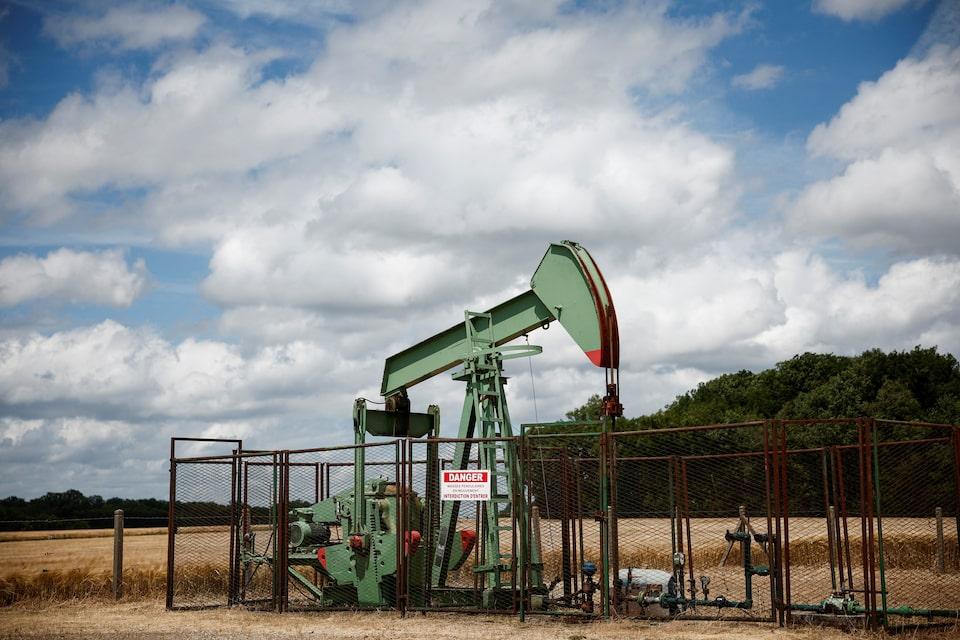
HOUSTON, Dec 3 (Reuters) - Oil prices settled higher on Wednesday after the U.S. and Russia failed to reach a deal to end the war in Ukraine that could have eased sanctions on Moscow's oil sector, though gains were held back by fears of oversupply. Brent crude closed 22 cents, or 0.4%, higher at $62.67, while U.S. West Texas Intermediate rose 31 cents, or 0.5%, to $58.95. Both contracts fell more than 1% in the previous session. Sign up here. U.S. crude, gasoline and distillate stocks rose last week, the Energy Information Administration said on Wednesday, adding to fears of an oversupply. Crude inventories rose by 574,000 barrels in the week ended November 28, the EIA said, compared with analysts' expectations in a Reuters poll for an 821,000-barrel draw. Gasoline stocks rose by 4.52 million barrels, far exceeding analysts' expectations in a Reuters poll for a 1.5 million-barrel build. Distillate stockpiles, which include diesel and heating oil, rose by 2.1 million barrels, which also surpassed expectations for a 0.7 million-barrel rise. The data was delayed and did not publish at 10:30 a.m. ET (1530 GMT) as expected, with the agency citing technical difficulties. "Overall global supply still remains pretty ample. The market is adjusting itself, as the Ukraine-Russian peace agreement is going to be delayed," said Dennis Kissler, senior vice president of trading at BOK Financial. "The market is still in a very nervous trade because we've got major geopolitical issues." Russia and the U.S. failed to reach a compromise after a five-hour meeting between Russian President Vladimir Putin and U.S. President Donald Trump's top envoys, the Russian government said on Wednesday. Oil markets are awaiting the outcome of the talks to see if a deal could lead to the removal of sanctions on Russian companies, including major oil companies Rosneft (ROSN.MM) , opens new tab and Lukoil (LKOH.MM) , opens new tab, that would free up restricted oil supply. Putin on Tuesday said European powers are hindering U.S. attempts to end the war by putting forward proposals they know are "absolutely unacceptable" to Moscow. Recent Ukrainian attacks on oil export sites on the Russian Black Sea coast have highlighted the geopolitical concerns stemming from the war. Ukraine also hit two sanctioned tankers involved in transporting Russian oil in the Black Sea last week. Putin on Tuesday said Russia will take measures against tankers of countries that help Ukraine, adding to geopolitical risks, analysts said. https://www.reuters.com/business/energy/oil-prices-fall-weak-demand-markets-await-ukraine-peace-effort-supply-signs-2025-12-03/
2025-12-03 04:44
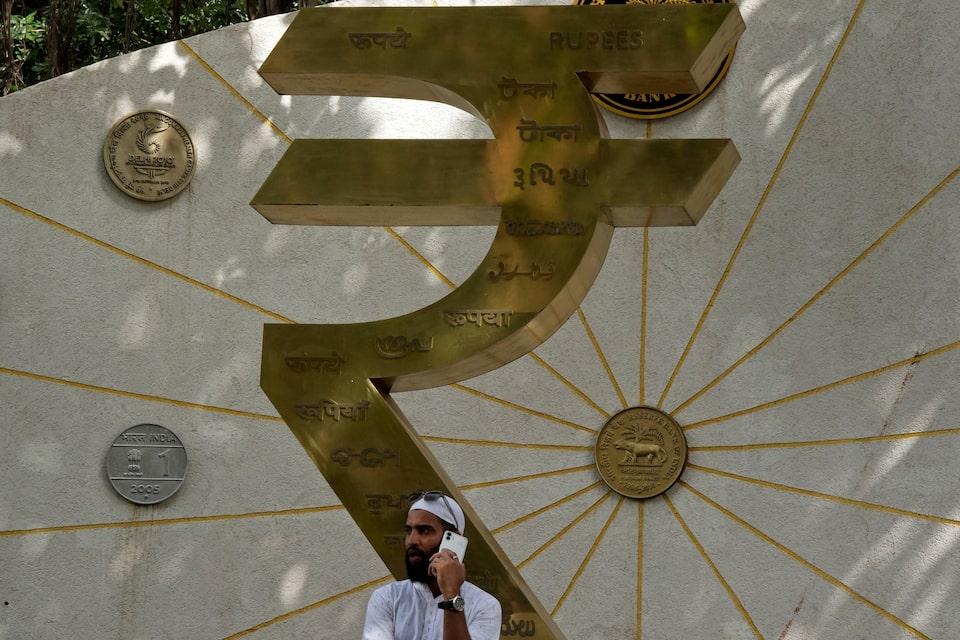
MUMBAI, Dec 3 (Reuters) - The Indian rupee weakened past the key psychological level of 90 to the dollar on Wednesday, extending a rough patch as anaemic trade and sustained portfolio flows weighed in the absence of positive news on a trade deal with Washington. By 9:40 a.m. (0410 GMT), the partially convertible rupee was trading at 89.9950/90.0050 per dollar, off a lifetime low of 90.14 earlier in the session. Sign up here. Here are comments from FX analysts and economists on the rupee outlook. SAT DUHRA, PORTFOLIO MANAGER, JANUS HENDERSON INVESTORS, SINGAPORE: "The weak macro picture in India makes weak currency performance inevitable. There has been a slide in so many data points recently – rising trade deficits, weakening nominal GDP growth, weak FDI and foreigner selling down domestic equities, etc. "However, while this has been happening for some time now. The recent tariff dispute with the United States has really accelerated the decline. Until this issue is resolved, with India now paying the highest U.S. tariffs globally, the pressure remains." ABHISHEK GOENKA, CEO, IFA GLOBAL, MUMBAI: "A relatively weaker rupee would help soften the impact of the tariff differential with peers to some extent. The RBI, it seems, is adopting a more soft-touch approach to intervention, given that it is already considerably short in forwards, including NDF. "It may therefore want to use its intervention power judiciously." CARL VERMASSEN, EM FIXED INCOME PORTFOLIO MANAGER, VONTOBEL ASSET MANAGEMENT, ZURICH: "We think that recent INR-negative factors are more than sufficiently priced in. We welcome very much the actions of RBI to support the currency. "Happy to see we are in good company deeming the INR undervalued. Regarding the sustainability of interventions, we should note that reserves are ample and the rise of gold and foreign reserve assets further reduces the net impact of the FX interventions. "Moreover, the timing and scale of intervention suggests the RBI expects an India–US trade deal soon." BANK OF AMERICA ANALYSTS, IN A NOTE: "The RBI's management of FX volatility is again being relied upon to keep a lid on INR weakness. "The RBI's reserves remain adequate to contain risks of a larger depreciation for now. "However, continued portfolio outflows could make these operations unsustainable or build-up of short USD positions on RBI's forward book may skew return expectations on INR. "We believe USD weakness next year should support mild INR appreciation and that could pick up pace around seasonally favourable Q1 for INR. "We forecast INR to reach 86/USD by end-2026." DHIRAJ NIM, ECONOMIST AND FX STRATEGIST AT ANZ, MUMBAI: "Not having a trade deal means they need to extend support to exporters and it seems like the central bank's resistance to a weaker rupee has diminished. "But still, it is known that the RBI does not like speculative build-ups or an overshooting of currency moves, so would expect the central bank's interventions to be somewhat heavier now than the last few days. "We expect the rupee to weaken to 91.30 by the end of next year, assuming status quo on U.S. trade tariffs, and views the risk it could happen sooner." SAKSHI GUPTA, PRINCIPAL ECONOMIST, HDFC BANK, MUMBAI: "We accept that a favourable trade deal announcement before the end of 2025 could lead to some appreciation in the INR versus the USD. However, this is unlikely to trigger a sustained appreciation trend in the pair over the coming months. "We also believe that the RBI might intervene and absorb any large dollar flows in this scenario (given the redemption of its rising short dollar forward book, last at $63.6 billion, as of October 2025." RADHIKA RAO, SENIOR ECONOMIST, DBS BANK, SINGAPORE: "The recent intervention bias suggests that the currency will be allowed to find its equilibrium, to better reflect underlying macro shifts. "The need to maintain the currency at competitive levels stems from the broader focus on manufacturing, unfavourable tariff differentials at this juncture and subdued portfolio flows outlook." https://www.reuters.com/world/india/indian-rupee-weakens-past-90dollar-persistent-outflows-absence-trade-deal-2025-12-03/
2025-12-03 04:33
MUMBAI, Dec 3 (Reuters) - The Indian rupee fell past a key psychological level of 90 to an all-time low against the dollar on Wednesday, extending an eight-month decline as weak trade and investment flows and a corporate rush to hedge against weakness sapped the currency. The rupee is one of Asia's worst performers, having fallen over 5% against the dollar year-to-date, as steep U.S. tariffs of up to 50% on Indian goods crimp exports to its biggest market, taking the sheen off its equities for foreign investors. Sign up here. The currency hit an all-time low of 90.29 against the dollar on Wednesday, before closing at 90.19, down nearly 0.4% on the day. The rupee's decline from 85 to 90 took a little under a year, or less than half the time it took to fall from 80 to 85. In terms of portfolio outflows, India is one of the worst hit markets globally, with foreign investors' net selling of its stocks amounting to nearly $17 billion so far this year. The weakness in portfolio investment has also coincided with a slowdown in foreign direct investment, adding to the pressure. India continues to attract gross investment flows, which reached $6.6 billion in September, but large exits from its booming IPO market have led to net outflows as private equity and venture capital firms cash out of earlier investments. Net foreign direct investment (FDI) turned negative for a second consecutive month in September, fuelled by a rise in outward FDI and repatriation of investments, the central bank, the Reserve Bank of India said in its November bulletin. "There continues to be a meaningful imbalance of supply and demand for dollars in India," said Michael Wan, senior currency analyst at MUFG. "This seems to be driven by higher import needs, a wider current account deficit, and, importantly, soft capital flows in FDI and portfolio inflows." The steep U.S. tariffs and a sharp surge in gold imports drove India's merchandise trade deficit to an all-time high in October. Concurrently, dollar flows generated by domestic firms' overseas borrowings and via non-resident Indians' deposits held by banks have also slowed. Bankers and traders say each phase of the slide - including Wednesday’s break of the 90 level - has triggered fresh dollar demand, particularly from importers, while exporters continue to hold back dollar sales. The imbalance has left the rupee exposed in the absence of meaningful capital inflows. "Left on its own, the Indian rupee is a shock absorber for the economy, and an automatic stabiliser for external finances," economists at HSBC said in a note. "A gradually weakening INR is the best shock absorber for high tariffs." Months of uncertainty over trade talks between New Delhi and Washington have also distorted India's FX hedging landscape by amplifying importer hedging while exporters hesitate, leaving the RBI to shoulder the resulting pressure on the currency. While the RBI has stepped in intermittently to slow depreciation, bankers said the scale and persistence of demand for dollars, from outflows and hedging by importers, continues to cast a pall on the currency. The RBI's efforts to shore up the rupee are reflected in a decline in foreign exchange reserves and an expansion of short U.S. dollar positions in the FX forward market to a 5-month high of $63.4 billion. https://www.reuters.com/world/india/rupee-cracks-below-90-dollar-hit-by-tariffs-capital-outflows-2025-12-03/

2025-12-03 02:52
MUMBAI, Dec 3 (Reuters) - The Indian rupee is expected to remain near the 90 per dollar level at open on Wednesday, with fragile sentiment and skewed flows likely to overshadow any relief from a softer U.S. currency. The 1-month non-deliverable forward indicated the rupee will open in the 89.86-89.92 range versus the U.S. dollar, having weakened 0.4% on Tuesday to 89.87. Sign up here. The currency dipped to a record low of 89.9475 on Tuesday, and inched past the 90 mark on the interbank order-matching system after the usual market hours for spot trading. Tuesday's decline marked a fifth straight day of weakness, a retreat that's unfolded despite regular intervention by the Reserve Bank of India. The rupee's slip past 88.80, a level the RBI had defended for weeks, has effectively "stripped away what had become a psychological and technical anchor for the market" and opened the door for more weakness, a currency trader at a private sector bank said. Moving past that threshold has left the rupee more vulnerable to factors that have for long been weighing on it in the background, he said, pointing to softness in capital flows, persistent importer demand and more recently, a pickup in speculative positions. The slump in capital flows is evident in India’s balance of payments data for the September quarter. Net capital flows fell to just $0.6 billion, from $8 billion in the previous quarter. DOLLAR DIPS ON FED CHAIR CHATTER The dollar index dropped on Tuesday, slipping further in Asia trading on Wednesday on rising expectations that the next Federal Reserve Chair will be Kevin Hassett. Morgan Stanley noted that President Donald Trump stated on Wednesday that of the original ten potential nominees, the choice has been narrowed "down to one," and he later refers to Hassett as "a potential Fed chair." Markets consider Hassett considerably softer on rates than the incumbent Fed team. KEY INDICATORS: ** One-month non-deliverable rupee forward at 90.08 ** Dollar index down at 99.22 ** Brent crude futures down 0.4% at $62.2 per barrel ** Ten-year U.S. note yield at 4.08% ** As per NSDL data, foreign investors sold a net $94.3 million worth of Indian shares on Dec. 1 ** NSDL data shows foreign investors bought a net $132.9 million worth of Indian bonds on Dec. 1 https://www.reuters.com/world/india/rupee-set-hold-near-90-with-shaky-sentiment-flows-overshadowing-dollar-dip-2025-12-03/

2025-12-03 00:46
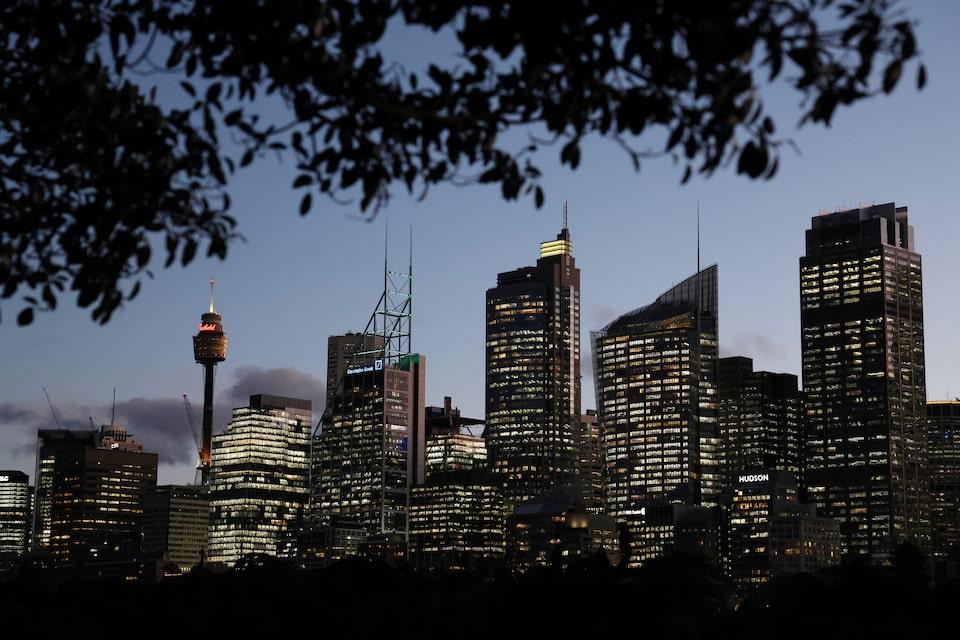
Strength seen across businesses, governments and consumers Quarterly rise weighed by large drawdown in inventories Nominal growth at staggering 5.4% for Q3 SYDNEY, Dec 3 (Reuters) - Australia's economy grew at the fastest annual pace in two years in the September quarter, fuelled by business, government and consumer spending as markets wagered the next move in interest rates could be up, rather than down. Data from the Australian Bureau of Statistics showed real gross domestic product (GDP) in the third quarter climbed by 2.1% from the same period a year earlier, the fastest since mid-2023 and above the RBA's estimate of trend growth of 2%. Sign up here. GDP rose by 0.4% from the prior quarter, missing forecasts for a gain of 0.7% and slowing from an upwardly revised 0.7% in the previous quarter. Inflation measures in the report also remained high just as the central bank chief has warned the economy could be already at its potential growth limit. "The economy is in good shape. Slightly too good, in fact, for the RBA," said Harry Murphy Cruise, head of economic research for Oxford Economics Australia. "With inflation rising and domestic momentum building, the central bank has its work cut out for it. Rate cuts are off the table for some time, and a hike next week to nip inflation in the bud can't be ruled out." The RBA board meets next Tuesday and is considered certain to hold rates at 3.60%, and perhaps turn more hawkish on the outlook for further easing. After the data was released, the Australian dollar climbed 0.2% to $0.6579, while three-year government bond futures wobbled but were last down 6 ticks to 95.99, the lowest since January. Swaps imply the Reserve Bank of Australia will remain on hold until late next year, but are now fully pricing in a rate hike by the end of 2026. The slowdown in quarter-on-quarter growth was mostly due to an outsized drag in inventories, which took off 0.5 percentage points from GDP. But, in a sign of underlying strength, domestic final demand picked up sharply to add 1.1 ppt on a quarterly basis to growth. BUSINESSES JOIN GROWTH STORY Private investment added 0.5 ppt in quarterly terms to growth, reflecting the ongoing expansion in data centres, the ABS said. That represents a long-delayed recovery in business investment after three rate cuts this year. Government spending also added 0.2 ppt to the quarterly growth, after barely contributing anything the previous quarter. Household consumption added 0.3 ppt, driven mostly by essential spending. The household savings ratio climbed to 6.4%, from an upwardly revised 6.0%, suggesting consumers still had plenty of spending power left. The robust domestic demand is one reason that inflation has been hotter than expected in recent months. Australia's inflation jumped to 3.8% in October while the trimmed mean measure of core inflation also climbed back to above the 2%-3% the RBA is targeting. Measures of inflation in the report showed the price deflator rose 1.3% in the quarter, which lifted nominal annual GDP growth to 5.4%. "There’s little dovish evidence for the RBA besides some easing of unit labour costs and slight improvement in productivity," said analysts at Citi Australia in a note to clients. "The relatively solid domestic demand in Q3 sets up for a tantalising Q4, where households are expected to unleash spending on big ticket items during the sale events. This keeps us wary of hawkish risks ahead." https://www.reuters.com/world/asia-pacific/australia-economy-grows-04-q3-misses-forecasts-2025-12-03/
2025-12-03 00:12
NEW YORK, Dec 2 (Reuters) - A Texas Christian summer camp for girls, where 27 campers died in a July 4 flash flood, announced plans to reopen in May at a nearby location with enhanced safety measures, despite earlier criticism from a family whose daughter was never found. The century-old Camp Mystic has remained closed after the girls were killed when floodwaters raged through the retreat on the banks of the Guadalupe River before dawn following torrential rains. Sign up here. The camp announced on Tuesday that it plans to reopen in late May and operate to early August for six terms, each lasting 10 days. "We are preparing for next summer at Camp Mystic Cypress Lake and we know that safety is of the utmost concern to all of you, as it is for us," the statement read. The location expected to host campers is about 500 yards (0.5 kilometers) from the site that was destroyed by flooding on July 4. The statement mentioned summer camp safety bills introduced by Texas authorities after the fatal flooding. "We thank the Heaven’s 27 families and our state leaders for passing legislation to help make camps safer, and it is our goal not only to be in compliance with the new camp safety laws, but to exceed their requirements," Camp Mystic said. The new safety system includes flood-warning river monitors, cabin speakers, and higher-capacity generators that will help maintain communication with emergency personnel in case of an emergency. The plan to reopen the camp, first announced in September, drew criticism from the parents of one of the victims, Cile Steward, the only child, who remains missing after the flood. "You are preparing to invite children to swim in the very river that may still hold our daughter's body," said the letter cited by KHOU 11 News in September. "We understand that deciding whether or not to return to camp this summer will be a difficult decision for many families," Camp Mystic said in the Tuesday statement. https://www.reuters.com/world/us/texas-camp-reopen-after-flood-that-killed-27-children-2025-12-03/