2025-08-01 21:48
Jobs data revisions raise doubts on Fed's ability to gauge economic trends Trump orders removal of BLS head, fueling worries over data integrity Fed Governor Kugler resigns NEW YORK, Aug 1 (Reuters) - Sharp downward revisions to past jobs data on Friday, followed by Trump’s sudden order to fire the head of the Bureau of Labor Statistics, stoked investor fears about the integrity of economic data and the Fed’s ability to read the true state of the economy. News of a surprise weakening in the U.S. labor market last month jolted investors, while revisions to job figures for the past two months raised worries the U.S. central bank may have been flying blind in recent months and may need to play catch-up with interest rate cuts, investors said. Sign up here. Fed Governor Adriana Kugler's early resignation from her term on Friday also potentially shakes up what was already a fractious succession process for Fed leadership amid difficult relations with Trump. "Kugler’s resignation allows the president to further shape the FOMC (Federal Open Market Committee) in his own image," said Jamie Cox, managing partner at Harris Financial Group. Nonfarm payrolls increased by 73,000 jobs in July after rising by a downwardly revised 14,000 in June, the Labor Department's Bureau of Labor Statistics said in its employment report on Friday. Economists polled by Reuters had forecast payrolls increasing by 110,000 jobs after rising by a previously reported 147,000 in June. The report comes two days after the U.S. central bank left unchanged its benchmark interest rate and avoided signaling imminent rate cuts, dialing back market expectations for an easing at the next policy meeting in September. That changed dramatically on Friday, with odds for a 25 basis point cut in September jumping to around 81% after the data from 38% on Thursday, according to CME Group data. "The Fed's job is becoming increasingly difficult based on the deterioration of the economic data," said Matthew Miskin, co-chief investment strategist at Manulife John Hancock Investments. "These revisions are massive and really are a game changer to the Fed's reaction function, and so I think this Fed meeting is one that they'd like to revise." U.S. President Donald Trump on Friday said, without evidence, that numbers contained in the July jobs report from the Bureau of Labor Statistics were rigged. "In my opinion, today’s Jobs Numbers were RIGGED in order to make the Republicans, and ME, look bad," Trump said in a Truth Social post. He ordered that the commissioner of the Labor Department's Bureau of Labor Statistics Erika McEntarfer be fired after the data release. "It’s definitely a case of shooting the messenger,” said Dean Smith, chief strategist at FolioBeyond. "Firing the head of BLS is not going to improve data collection and dissemination … it’s going to undermine confidence in the data going forward,” he added. 'UNRELIABLE DATA?' Revisions for May and June came in well above the norm, the Bureau of Labor Statistics said. It gave no reason for the revised data but noted that "monthly revisions result from additional reports received from businesses and government agencies since the last published estimates and from the recalculation of seasonal factors." May's nonfarm payroll gain was slashed by 125,000, from 144,000 to just 19,000, while June’s downward revision was by 133,000. In total, employment over the two months is now 258,000 lower than initially reported. "It is painfully obvious that the U.S. government has an improper model for payroll calculations," said Michael Green, portfolio manager at Simplify Asset Management. "If you don't have reliable data, you make bad policy." Spencer Hakimian, founder of macro hedge fund Tolou Capital Management, said layoffs across several government departments, part of Trump’s plans to reduce wasteful government spending, have prompted him to rely more heavily on alternative measures of economic strength than just government data, such as credit card data, and data from Truflation, an independent inflation index alternative to official government inflation measures. Fed Chair Jerome Powell said in a press conference on Wednesday the labor market remained strong, and that the central bank was still in the early stages of grasping how Trump’s overhaul of import taxes and other policy shifts would play out for inflation, employment, and economic growth. "Had those figures been the initial prints a month or two ago it would have significantly changed the labor market narrative over the entire summer," said Adam Hetts, global head of multi-asset and portfolio manager at Janus Henderson Investors, in a note. Treasury yields, which move inversely to bond prices, dropped on Friday, with benchmark 10-year yields down by a whopping 15 basis points to 4.22% - their biggest daily drop since April. Two-year yields were down by about 25 basis points to 3.69%, registering their biggest daily decline since August last year. Stocks declined too, also weighed on by Trump's latest tariffs salvo. The benchmark S&P 500 index (.SPX) , opens new tab lost 1.6%, bringing stocks to their lowest since early July. The deterioration in the labor picture comes amid steep U.S. tariffs on large trade partners that - while not as high as feared earlier this year - are still largely expected to worsen inflation and slow economic activity. "With job creation at stall-speed levels and the tariff headwind lying ahead, there’s a strong possibility of a negative payroll print in the coming months which may conjure up fears of a recession," said Jeff Schulze, head of economic and market strategy at ClearBridge Investments. https://www.reuters.com/business/data-credibility-fears-fueled-after-trump-orders-firing-labor-official-2025-08-01/

2025-08-01 21:39
Under adverse scenario EU GDP contracts by 6.3% in 2025-2027 No breach of capital requirements under transitional rules Some banks would face restrictions to dividends, bonuses MILAN, Aug 1 (Reuters) - Banks across the European Union are strong enough to weather an economic shock driven by geopolitical and trade tensions, the European Banking Authority said on Friday as it presented the outcome of its latest health check of the sector. The EBA tested how 64 European banks, including 51 euro zone lenders, would react to a prolonged recession across the EU and other advanced economies, finding none would breach their core capital requirement, and only one would breach its leverage requirement. Sign up here. "The results indicate that the EU banking system could withstand a severe but plausible macroeconomic scenario, reflecting the resilience built up by banks in recent years," the EBA said, urging lenders to maintain adequate capital. European and U.S. banking authorities introduced formal, comprehensive stress tests after the global financial crisis of 2008 led to costly state bailouts of banks. Some elements of this year's adverse scenario had begun to materialise, the EBA said, pointing to U.S. trade tariffs and escalating tension in the Middle East. Lenders accounting for three quarters of EU banks' total assets took part in the exercise, which simulates the losses banks would incur by analysing their performance over a three-year period under a baseline and an adverse scenario. The European Central Bank said it had conducted its own stress test on the 51 euro zone lenders assessed by the EBA plus another 45 smaller banks, confirming that results highlighted the sector's resilience. ADVERSE SCENARIO Under the adverse scenario, worsening geopolitical tensions and protectionist trade policies lift energy and commodity prices, disrupt supply chains and hurt consumption and investment, driving a cumulative 6.3% contraction in EU economic output over 2025-2027. That would translate into combined losses of 547 billion euros for the sampled banks, the EBA said, higher than the 496 billion euros envisaged in its 2023 stress test. While the hit to capital reserves is particularly severe for some European subsidiaries of major U.S. banks, all the lenders remained able to meet core capital requirements, the EBA said, although one would breach the requirement on the leverage ratio. It did not name the bank, but it published data for each lender. For 17 lenders, the adverse scenario would entail limits or adjustments to bonus and dividend payments for at least one of the three years. In terms of capital reserves - calculated using the current 'transitional' regime that tightens progressively through 2033 - the adverse scenario would knock 3.7 percentage points off the sample's aggregate core capital ratio, pushing it to 12.1% in 2027 from 15.8%. Deutsche Bank (DBKGn.DE) , opens new tab said in a statement that its core capital ratio in the final year under the adverse scenario would be 10.2%, below the average, but better than 8.1% in the 2023 stress test. Germany's second-biggest bank, Commerzbank (CBKG.DE) , opens new tab, said separately that its ratio in 2027 would stand at 10.5%, while Italy's largest bank, Intesa Sanpaolo , said its was 12%. When looking at individual countries, Irish, Danish, French, German and Belgian banks experienced the biggest capital impact, EBA data showed. For individual banks, Landesbank Baden-Wuerttemberg and two other German regional banks, as well as France's Credit Agricole and La Banque Postale, saw the largest capital depletion effect. While there is no pass/fail threshold in the EU-wide stress test, its outcome feeds into the risk assessment of lenders carried out by supervisors every year, setting bank-specific capital requirements and guidance known as 'Pillar 2'. https://www.reuters.com/sustainability/boards-policy-regulation/eu-banks-can-weather-recession-driven-by-global-trade-war-stress-test-shows-2025-08-01/

2025-08-01 21:31
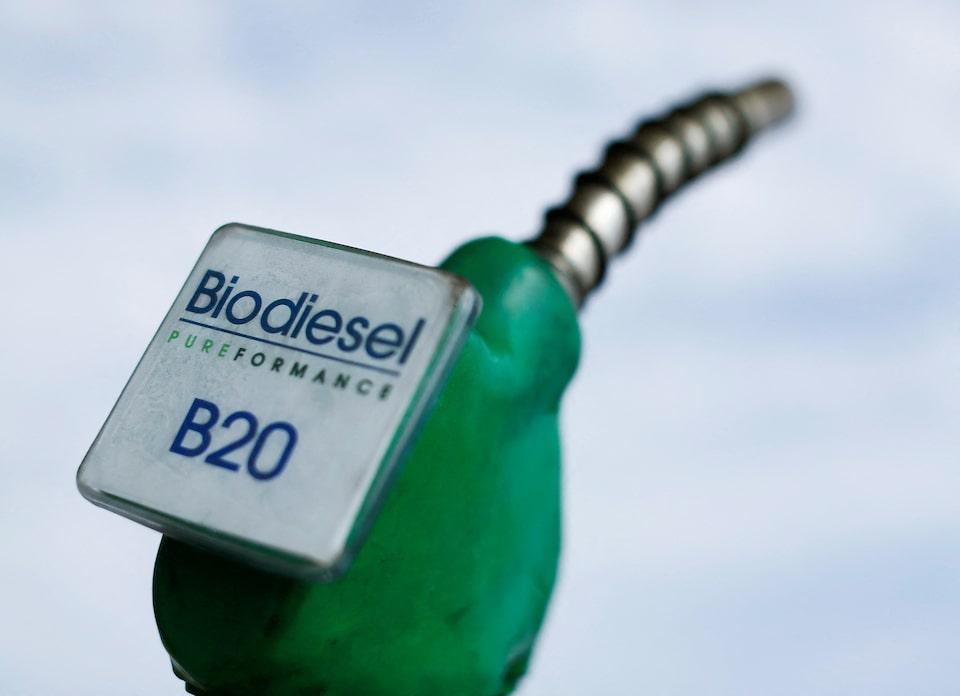
Proposed rule could increase RIN and fuel prices, study finds US net short on yellow grease, tallow, and canola oil ADM, Bunge, Cargill may see negative effects from global operations NEW YORK, Aug 1 (Reuters) - The Trump administration's push to discourage the use of foreign feedstocks in domestic biodiesel could lead to higher energy prices for U.S. consumers and restricted domestic production, according to some refining and biofuel trade groups. The warning reflects ongoing friction between President Donald Trump's Environmental Protection Agency and the administration's traditional allies in the energy and agriculture industries over biofuels policy. Sign up here. Trump has promised to slash consumer energy costs, but is also trying to advance his America First agenda to support domestic production through trade protectionism - which can often make costs go up instead. At issue is a proposal from the EPA in June that would for the first time allocate only half as many tradable renewable fuel credits to biodiesel that is either imported or made with foreign feedstocks. Under the Renewable Fuel Standard, refiners must blend large volumes of biofuels into the U.S. fuel supply or purchase the credits, called RINs, from those that do. While meant to help domestic farmers and producers, the new proposal - set to be finalized this autumn - would place unprecedented demand on domestic raw materials needed to make biodiesel like soybean oil, used cooking oil, and animal fat, in a market that currently must look abroad to meet its needs. Meanwhile, restricting the number of RINs that can be generated through such imports will raise credit prices, with a potential spillover impact on diesel and home heating oil, according to the industry groups. "This credit restriction ... will jeopardize the economic viability of renewable fuel production assets and raise overall compliance costs for all obligated parties, which ultimately harms U.S. consumers," Chet Thompson, head of the American Fuel and Petrochemical Manufacturers group representing refiners, said in a July 25 letter to top Republican lawmakers. The Advanced Biofuels Association also said the policy could mean ramped up consumer costs, by putting a $250 per metric ton premium on domestic versus imported feedstocks, according to a study it commissioned. "Economic analysis shows this would impose significant costs on U.S. biorefineries, raise fuel prices for millions of Americans, and benefit only a narrow set of stakeholders," ABFA President Michael McAdams said in a statement. The White House and EPA declined to comment directly on the price concerns, saying the administration is still seeking public comment on the proposal until August 8. Others in the biofuel industry backed the proposal. "American farmers need all the demand they can get. We should be developing our capacity here, rather than relying on imported used cooking oil from China, or giving Brazilian feedstocks preferential treatment at the expense of U.S. producers and their farm partners," said Emily Skor, CEO of Growth Energy. However, U.S. companies such as ADM (ADM.N) , opens new tab, Bunge (BG.N) , opens new tab and Cargill that have global assets and process U.S. soy, as well as foreign companies with significant U.S. operations, will likely see negative effects. That includes Australia's Nufarm (NUF.AX) , opens new tab, which contracts with farmers in South America to grow new oilseed crops. UNCERTAIN NUMBERS The biofuel industry had not been seeking the import shift in EPA's June proposal, according to multiple renewable fuel lobbyists and company officials. The White House has since held several meetings with industry officials to hear about potential unintended consequences of the changes, according to multiple sources. The EPA's proposal in June was meant to set out biofuel blending mandates for the next two years. It included a quota of 7.12 billion biomass-based diesel RINs for 2026 - a measurement of the number of tradable credits generated by blending the fuel - and projected that mandate would lead to the blending of 5.61 billion gallons. The biofuels industry and the American Petroleum Institute, an oil trade group, had banded together to lobby the administration to set biomass-based diesel mandates to at least 5.25 billion gallons. The mandate was just 3.35 billion gallons in 2025. Still, there are scenarios in the EPA's accounting that could lead to a lower volume outcome. If all the biodiesel and renewable diesel used in the U.S. next year came from domestic feedstocks, for example, the RIN mandate would yield just 4.45 billion gallons, according to several industry analyses reviewed by Reuters. Ditching the penalty on imported feedstocks could help raise that number, according to the analyses. "That probably aligns with what the administration was trying to do in terms of supporting the agricultural side and farmers," said one industry analyst, who asked to remain anonymous to speak candidly. https://www.reuters.com/sustainability/climate-energy/trumps-america-first-biodiesel-policy-could-cost-us-companies-consumers-trade-2025-08-01/
2025-08-01 21:29
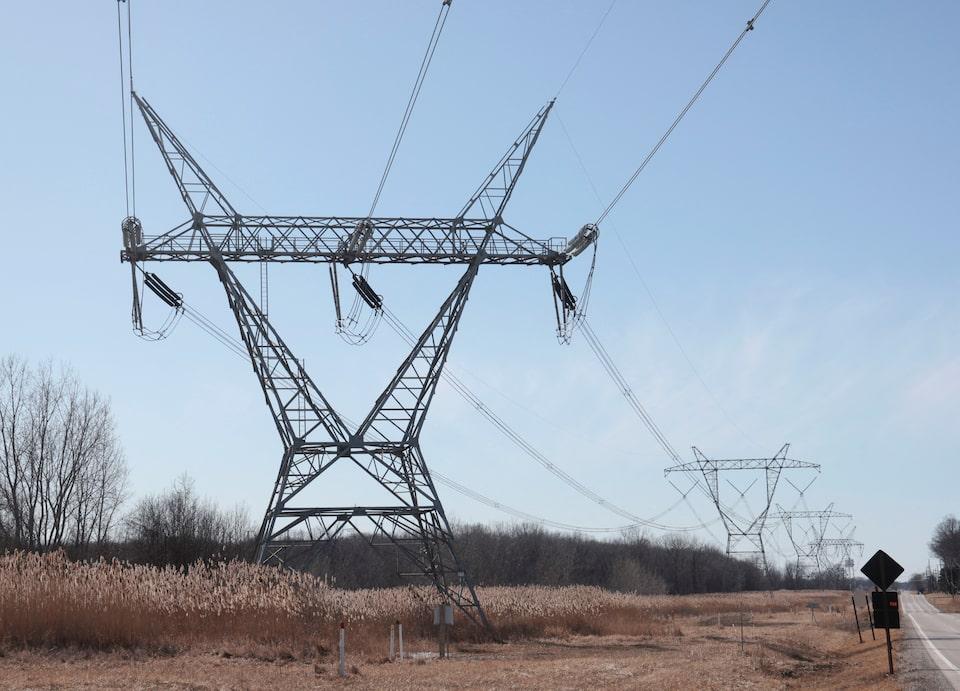
Aug 1 (Reuters) - Grid operators across the U.S. are revamping their forecasting methods, introducing reforms to power markets and streamlining interconnection processes to quickly connect more energy to the grid, as a potent combination of extreme weather and data center growth elevate power demand this summer. High temperatures and the expansion of power-hungry data centers are set to push 2025 summer power consumption to higher levels than the past four summers, federal regulators said earlier this year. Heat waves have already strained the power grid in parts of the country in recent weeks. Sign up here. “Extreme weather events are becoming more common, and we are adjusting our planning for that,” said Dan Lockwood, PJM Interconnection spokesperson. Here’s how grid operators are positioned to meet demand this summer, and longer-term measures they are taking to shore up the system. PJM Heading into the summer, PJM had forecast power consumption to peak at just over 154,000 MW. The company, which is the largest grid operator in the U.S. and serves one in five Americans, said it is prepared to meet that demand, but warned that it could touch an all-time high of 166,000 MW in an extreme scenario. In that case, it would call on customers to reduce their power use in exchange for compensation. PJM has been streamlining its interconnection process to bring new power onto the grid. It has also fast-tracked projects that do not require extensive grid upgrades to connect to the system to get them online quicker. CAISO California Independent System Operator estimated it has a power surplus of 1,451 MW this summer, measured against the industry-standard, one in 10 year emergency event. That marks a reversal from three years ago, when it estimated a shortfall of 1,700 MW. CAISO has also been moving to quickly add new power to its grid, with around 25 GW added over the last five years, said Dede Subakti, vice president of system operations. Much of this has been battery storage, which helps balance supply and demand, bringing CAISO’s total pool of battery storage to 11 GW. “With all this additional capacity, we’re sitting pretty good with 2025 summer,” Subakti said. However, the grid could still see shortfalls if a prolonged heat-wave affects the entire West, or if potential wildfires damage power transmission lines, CAISO said. ISO-NEW ENGLAND ISO New England anticipates electricity demand will touch 24,803 MW this summer under normal weather conditions - and potentially 25,886 MW in case of extended heat waves - but expects to have adequate power to meet that. ISO-NE is one of the grid operators that is evaluating changes to its capacity auction to bolster grid reliability. This includes transitioning to a “prompt” auction, held shortly before the power is needed, compared with the current practice of holding them three years in advance. In addition, it is looking to move to two seasonal commitment periods per year for the auction, to tackle the distinct risks that summer and winter demand pose to the grid. It intends to file an initial proposal for this new market structure with federal regulators before year end. MISO Midcontinent Independent System Operator predicted that peak demand in its footprint could reach nearly 123 GW this summer, with roughly 138 GW of available power generation to meet that. Like other grid operators, however, it warned that extreme weather events still present a risk to the grid. MISO, which has been operating near its minimum reserve margin requirement since 2022, has also been making changes to its wholesale markets as grid risks grow, including assessing the reliability of its infrastructure on a seasonal basis. It implemented a “reliability-based demand curve” in its latest auction, under which the price of electricity resources increases as the grid approaches its minimum requirements. MISO has added around 31 GW of nameplate power to its grid from 2020 through mid-2025, with another 10.9 GW estimated for this year. Meanwhile, nearly 11 GW of power resources have or are set to retire between 2020 through early 2026. https://www.reuters.com/business/energy/how-prepared-are-us-grid-operators-extreme-heat-this-summer-2025-08-01/
2025-08-01 21:23
Q2 oil and gas output at highest in more than 25 years Low production costs cushion impact of price fall Exxon is searching for M&A deals HOUSTON, Aug 1 (Reuters) - Exxon Mobil (XOM.N) , opens new tab beat Wall Street estimates for second-quarter profit on Friday as higher oil and gas output and low production costs offset the impact of lower crude prices. The biggest U.S. oil producer made clear that it is ready to take advantage of lower oil prices and make acquisitions, but only if it is confident that it can create additional value. Sign up here. The energy sector has struggled with price volatility as the OPEC+ group increased its production, pushing global benchmark Brent crude prices down 11% in the quarter. Global tariffs levied by U.S. President Donald Trump added to price weakness because they raised the prospect of a weakening global economy with knock-on effects for oil demand. Exxon's oil and gas production was the highest for any second quarter since the merger of Exxon and Mobil formed the company more than 25 years ago, Exxon Mobil said. "The second quarter, once again, proved the value of our strategy and competitive advantages, which continue to deliver for our shareholders no matter the market conditions or geopolitical developments," Exxon CEO Darren Woods said in a statement. Adjusted earnings during the second quarter were $7.1 billion, or $1.64 per share, surpassing consensus analyst estimates of $1.56 per share, data compiled by LSEG showed. Shares of Exxon declined 1.8% in morning trading. Exxon paid $4.3 billion in dividends and repurchased $5 billion worth of shares during the quarter. The buyback figure puts the company on track to meet its annual share repurchase goal of $20 billion. The company's main production areas include the Permian basin, the largest U.S. oilfield, as well as the prolific Stabroek Block off the coast of Guyana. The low cost of production in those fields allows them to stay profitable even during times of weaker oil prices, Exxon has said previously. Global production totaled 4.6 million barrels of oil equivalent per day (boepd) during the quarter, up from 4.5 million boepd in the previous three months. The start-up of Yellowtail, a fourth floating production, storage and offloading facility in Guyana, is anticipated next week, the company said. ON THE HUNT In a press briefing, Woods said he was keeping a high bar for potential acquisitions, searching for targets that have a similar culture to Exxon and where leaders from both companies can learn from one another. "We're not interested in buying volume," he said. "We're very focused on creating value." The Permian basin is one area of potential, given Exxon's technological work to increase oil recovery in that field, Woods said during a conference call with analysts. Exxon secured the lead in the Permian with $60 billion purchase of shale rival Pioneer in 2023. Last month, Exxon lost a legal challenge against Hess, one of its partners in Guyana, which cleared the way for rival Chevron CVX.N to complete its acquisition of Hess. Exxon argued it had a contractual pre-emptive right to purchase Hess' 30% stake in the Stabroek Block. Woods said Exxon sought out legal opinions from neutral, third parties about the joint operating agreement that governed the partnership between Exxon, Hess and China's CNOOC (600938.SS) , opens new tab in Guyana. "In every case, and I mean in literally every case, we were told that our rights were clear," Woods said. The arbitrators said that Exxon had a commercially reasonable argument but that it relied on a narrow textual interpretation, Woods said, adding that the company would take steps to strengthen future contracts as needed. Earnings from oil and gas production were $5.4 billion, down from $6.7 billion in the first quarter. Exxon said it expects lower scheduled maintenance in its refining business during the third quarter. https://www.reuters.com/business/energy/exxon-beats-profit-estimates-eyes-acquisition-opportunities-2025-08-01/

2025-08-01 21:23
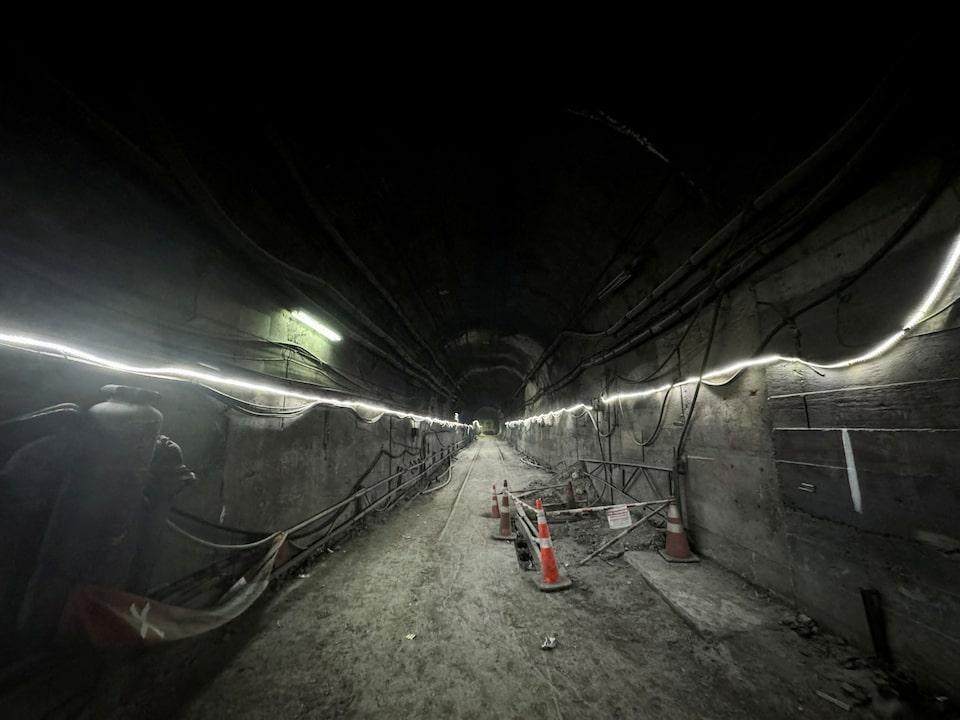
Five workers trapped after El Teniente mine collapse, one dead Codelco halts mining, continues concentrator and smelter operations Annual copper output may suffer, analyst says SANTIAGO, Aug 1 (Reuters) - Chilean copper giant Codelco has halted mining at its flagship El Teniente mine and postponed its quarterly results announcement as it continued efforts on Friday to reach five trapped workers following a deadly collapse. By afternoon, the workers had been trapped nearly a full day without contact following a 4.2 magnitude tremor on Thursday that killed one person at the new Andesita unit of the world's largest underground copper deposit. Sign up here. Codelco said it would reschedule the release of its first-half financial results, planned for Friday morning, due to its attention on rescue efforts, which were complicated by aftershocks. "The tunnels are closed, they've collapsed. There's no possibility of even radio communication," El Teniente's General Manager Andres Music told a press conference around midday. Codelco planned to send remotely operated equipment, similar to robots or drones, to help workers clear material blocking the tunnels once aftershocks subsided in the evening, Music said. Codelco halted copper mining at El Teniente as part of its emergency protocol, while continuing its processing and smelting operations, said Amador Pantoja, an El Teniente union leader. Codelco, the world's biggest miner that has been struggling to boost output, has not addressed how El Teniente's production could be affected. However, Chairman Maximo Pacheco told a press conference that unaffected areas of the mine should be able to operate normally. In the Andesita sector, 300 linear meters were severely damaged, and another 400 linear meters were moderately damaged. Chilean Mining Minister Aurora Williams said the government would formally order Codelco to suspend all underground operations at the mine, part of protocol for major accidents. Codelco is investigating whether the incident - which also left nine people injured - was due to natural causes in the earthquake-prone country, or mining activity. "The event we recorded yesterday is one of the largest events - if not the largest - that the El Teniente mine has experienced in decades," said Music, the mine's manager. He said neither explosives nor drilling had caused the accident, and that the first subsequent 48 hours would be critical to the rescue effort, for which some 100 people had gathered on site. PRODUCTION STRUGGLES Chile's prosecutors office also opened a criminal probe to determine whether any companies or workers violated safety standards or other regulations. The five trapped workers were hired by construction company Gardilic, while the man who died worked for Salfa Montajes, also a construction firm, Codelco said. Chile's Sernageomin mining regulator told Reuters last year that Codelco had been sanctioned 29 times since 2021 and has had seven fatal accidents, with most incidents in project construction. Andesita is one of Codelco's newest projects at its flagship El Teniente complex and had been due to open in the second quarter this year. Any initial production is still a small fraction of El Teniente's total output, which last year reached 356,000 metric tons. But delays in its ramp up, as well as an extended shut-down throughout El Teniente, will make it harder for Codelco to reach its year-end production target given ongoing challenges at other projects, said CRU analyst Nicolas Munoz. Andesita is expected to produce 60,000 to 70,000 metric tons a year when it reaches full capacity around the end of the decade, Munoz said. Codelco last year barely surpassed its production goal, after output hovered at the lowest levels in a quarter century. El Teniente could potentially make up for the losses in other sectors of the sprawling mine, Munoz said, but Codelco would still face challenges to significantly boost output. "Rock bursts and seismic conditions raise questions and pose a challenge for the company about how they will manage going forward, especially knowing that these sectors are key to sustaining El Teniente over the next decade," he said. The Andes Norte unit last year suffered from a rock explosion with the impact of a 3.9 magnitude quake that caused collapses in more than 2,000 meters (6,600 ft) of underground galleries. No workers died in the accident, but Codelco took a year to recover production in the sector. El Teniente, which is more than a century old, spans more than 4,500 kilometers (2,800 miles) of tunnels and underground galleries - nearly the distance between Chile and New York - in the Andes mountains, about 75 kilometers (47 miles) southeast of Chile's capital Santiago. https://www.reuters.com/world/americas/chiles-codelco-suspends-el-teniente-mine-operations-worker-rescue-2025-08-01/