2025-08-01 20:37
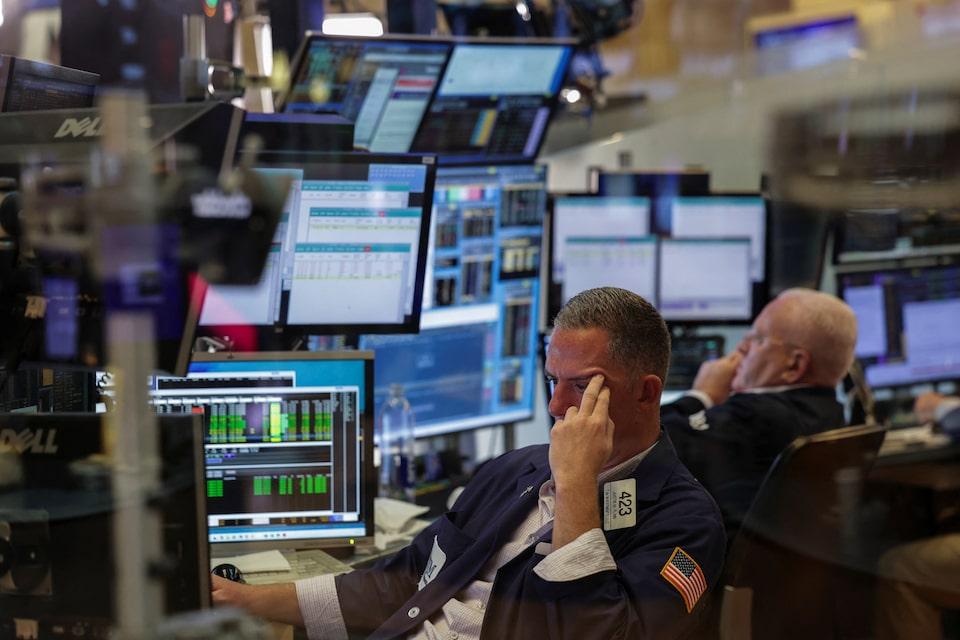
Amazon slides after cloud computing growth underwhelms investors U.S. job growth slowed more than expected in July Trump fires BLS Commissioner Indexes down: Dow 1.23%, S&P 500 1.6%, Nasdaq 2.24% NEW YORK, Aug 1 (Reuters) - U.S. stocks slumped on Friday, and the S&P suffered its biggest daily percentage decline in more than two months as new U.S. tariffs on dozens of trading partners and a surprisingly weak jobs report spurred selling pressure. Also weighing on equities was an 8.3% tumble in Amazon.com (AMZN.O) , opens new tab shares after the company posted quarterly results but failed to meet lofty expectations for its Amazon Web Services cloud computing unit. Sign up here. Just hours before the tariff deadline on Friday, President Donald Trump signed an executive order imposing duties on U.S. imports from countries, including Canada, Brazil, India and Taiwan, in his latest round of levies as countries attempted to seek ways to reach better deals. Further denting confidence in the economic picture, data showed U.S. job growth slowed more than expected in July while the prior month's report was revised sharply lower, indicating the labor market may be starting to crack. The report significantly pushed up expectations the Federal Reserve will cut interest rates at its September meeting. "There’s no way to pretty-up this report. Previous months were revised significantly lower where the labor market has been on stall-speed," said Brian Jacobsen, Chief Economist at Annex Wealth Management in Menomonee Falls, Wisconsin. "Last year the Fed messed up by not cutting in July so they did a catch-up cut at their next meeting. They’ll likely have to do the same thing this year." Market expectations the Fed will cut rates by at least 25 basis points at its September meeting stood at 86.5%, according to CME's FedWatch Tool , opens new tab, up from 37.7% in the prior session. The Dow Jones Industrial Average (.DJI) , opens new tab fell 542.40 points, or 1.23%, to 43,588.58, the S&P 500 (.SPX) , opens new tab lost 101.38 points, or 1.60%, to 6,238.01 and the Nasdaq Composite (.IXIC) , opens new tab lost 472.32 points, or 2.24%, to 20,650.13. The S&P 500 recorded its biggest single-day percentage decline since May 21 while the Nasdaq suffered its biggest daily percentage drop since April 21. For the week, the S&P 500 fell 2.36%, the Nasdaq declined 2.17%, and the Dow fell 2.92%. The CBOE Volatility Index (.VIX) , opens new tab, also known as Wall Street's fear gauge, closed up 3.66 points at 20.38, its highest close since June 20. Amazon was the biggest drag on the Dow, S&P 500 and Nasdaq and pushed the consumer discretionary index (.SPLRCD) , opens new tab, down nearly 3.6% as the worst performing of the 11 major S&P 500 sectors. Also reporting earnings was Apple (AAPL.O) , opens new tab, which lost 2.5% after it posted a current-quarter revenue forecast well above Wall Street estimates, but CEO Tim Cook warned U.S. tariffs would add $1.1 billion in costs over the period. Stocks briefly extended declines after Trump said he ordered the commissioner of the U.S. Bureau of Labor Statistics, Erika L. McEntarfer, to be fired in the wake of the jobs data. "(Trump) didn't seem to be disappointed with the last five jobs reports," said Art Hogan, Chief Market Strategist, B. Riley Wealth, Boston, saying that the firing stood out as irregular. "I think this is clearly something that happens in dictatorships, not in democracies.” The Federal Reserve said Governor Adriana Kugler is resigning early from her term and will exit the central bank on Aug. 8, enabling President Donald Trump to select a new governor as he has ramped up pressure against Chair Jerome Powell recently to cut interest rates. Declining issues outnumbered advancers by a 2.17-to-1 ratio on the NYSE, and by a 2.69-to-1 ratio on the Nasdaq. The S&P 500 posted eight new 52-week highs and 29 new lows, while the Nasdaq Composite recorded 29 new highs and 202 new lows. Volume on U.S. exchanges was 19.51 billion shares, compared with the 18.44 billion average for the full session over the last 20 trading days. https://www.reuters.com/business/stocks-slump-latest-tariffs-soft-jobs-data-2025-08-01/
2025-08-01 20:33
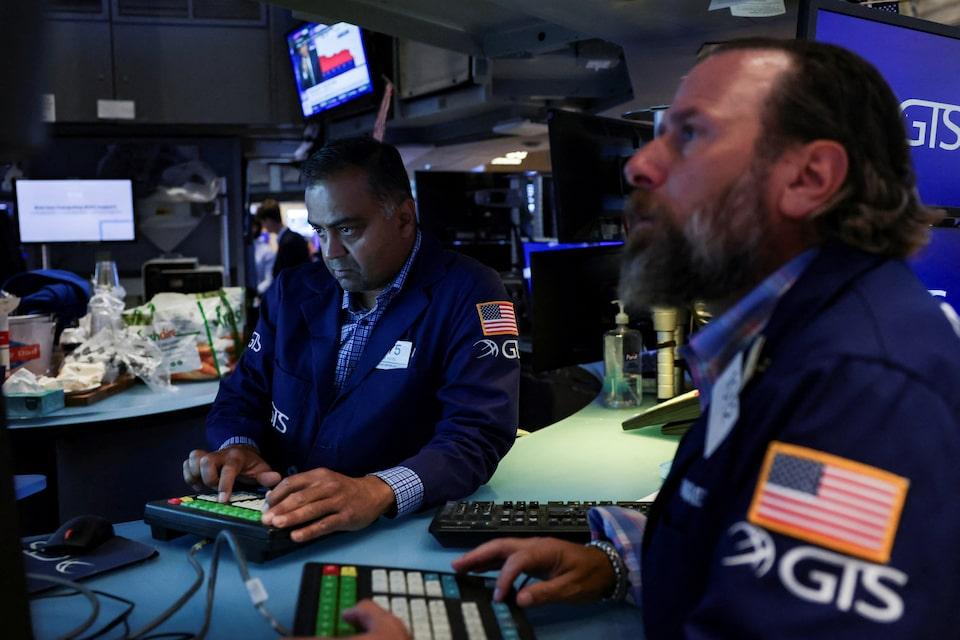
ORLANDO, Florida, Aug 1 (Reuters) - I'd love to hear from you, so please reach out to me with comments at [email protected] , opens new tab. You can also follow me at @ReutersJamie and @reutersjamie.bsky.social. Well, well, well. In a week jam-packed with global tariff, earnings, data and policy fireworks, the most explosive was kept for last: July's U.S. employment report, which shattered the optimism - or complacency - building around the U.S. economy and stock market. Sign up here. Weak job growth, together with the latest wave of steep tariffs imposed by U.S. President Donald Trump, triggered a huge selloff in global stocks and the dollar on Friday, floored bond yields, and revived expectations of a Fed rate cut next month. Today's Key Market Moves Now that's a reality check Global markets were floored on Friday by a powerful one-two punch from the latest U.S. employment data and U.S. tariffs slapped on dozens of countries. It was a sobering reminder that the economic foundations supporting Wall Street's record highs this week may not be that strong. The weak jobs growth seemed to fly in the face of Fed Chair Jerome Powell's assessment on Wednesday that the labor market is strong, and vindicate the two dissenters, Governors Christopher Waller and Michelle Bowman. Although to be fair to Powell, he did stress that downside risks were growing. Yet average earnings and hours worked rose in July, and the unemployment rate only inched up to 4.2%. That's effectively still full employment. If the bar to cutting rates is tied to the unemployment rate, it is still a high one. Rates futures traders don't see it that way though. They now see a rate cut next month as a near-certainty, and are pricing in 60 basis points of easing by year-end. Investors were also sideswiped on Friday by U.S. President Donald Trump's latest wave of tariffs on 69 trading partners, ranging from 10% to 41%, that will start in a week's time. This will raise the U.S. effective tariff rate closer to 20%, nearly 10 times higher than the end of last year. Of course, bilateral trade deals could be struck and these levies may be lowered, but it is a reminder that the growth and inflation outlook is challenging at best. With equity prices and optimism around Big Tech at such lofty levels, the correction when it came was always likely to be big. If that wasn't enough for investors to digest, Trump announced late on Friday he is firing the commissioner of the Labor Department's Bureau of Labor Statistics following the latest jobs data, and Fed Governor Adriana Kugler said she is resigning effective August 8 and returning to academia. This paves the way for Trump to appoint someone more aligned with his low interest rate view as her replacement. So the new trading month kicks off with world markets on a shaky footing, and the economy too. Asia's factory activity is deteriorating as tariff uncertainty weighs, and U.S. manufacturing is still in a funk. European factory activity is moving closer to stabilization, but is still contracting. Services, tech and AI-related activity and indicators are shining brighter of course, but even there caution will be creeping into investors' minds. Earnings reports from Apple, Microsoft and Meta were well-received by the market, to put it mildly, but the Nasdaq still shed nearly 2% on the week. August is the main summer holiday month in Europe and North America, so liquidity will thin out. With the VIX index back above 20.0 for the first time since April, trading next week could be choppy. Chart of the Week If you want evidence that Trump's tariffs on the rest of the world are starting to push up U.S. goods inflation, look no further. According to Ernie Tedeschi at the Budget Lab at Yale, PCE durable goods prices in the first six months of the year rose 1.7%. Excluding the pandemic, that's the biggest six-month rise since 1987. Here are some of the best things I read this week: What could move markets on Monday? Opinions expressed are those of the author. They do not reflect the views of Reuters News, which, under the Trust Principles , opens new tab, is committed to integrity, independence, and freedom from bias. Trading Day is also sent by email every weekday morning. Think your friend or colleague should know about us? Forward this newsletter to them. They can also sign up here. https://www.reuters.com/business/autos-transportation/global-markets-trading-day-graphic-2025-08-01/
2025-08-01 20:22
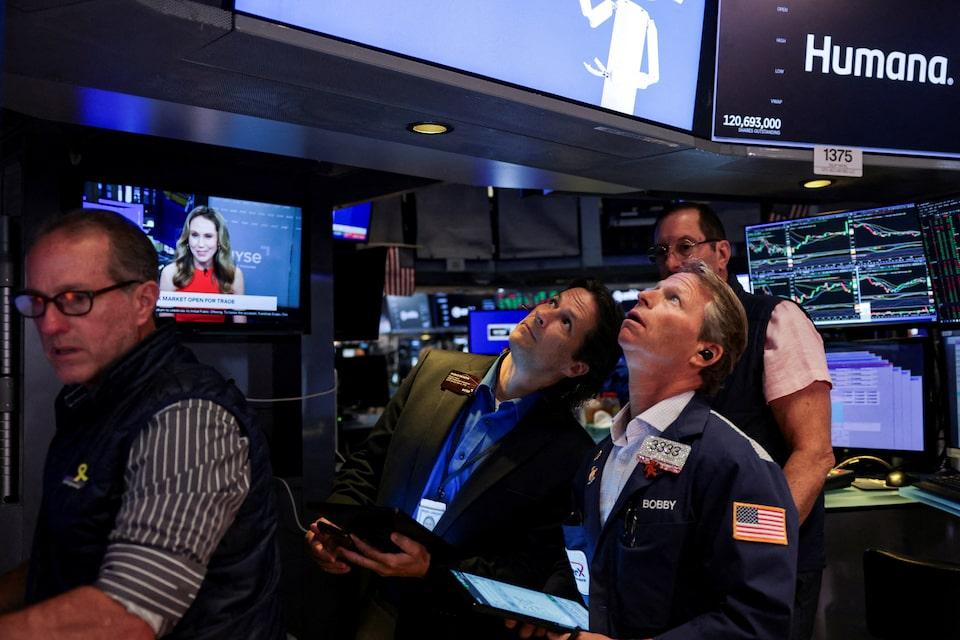
Aug 1 (Reuters) - The Federal Reserve said on Friday that Governor Adriana Kugler was resigning from the central bank effective Aug. 8. Separately, U.S President Donald Trump ordered that the commissioner of the U.S. Bureau of Labor Statistics, Erika L. McEntarfer, be fired after data showed employment growth was than expected last month. Sign up here. COMMENTS: SAM STOVALL, CHIEF INVESTMENT STRATEGIST, CFRA RESEARCH, ALLENTOWN, PENNSYLVANIA "If the President were to put in a very dovish head of the Bureau of Labor Statistics, and thereby, in a sense, make the data skewed toward favoring the administration policies, Wall Street would stop looking at that if it felt that it was being manipulated to support the administration's stance." "It could certainly put the U.S. exceptionalism notion into question. Yeah. One reason that the U.S. is regarded as one of the better places to invest is the accuracy of the data, where the data is not manipulated by the government to satisfy whatever the government is trying to communicate." PETER ANDERSEN, FOUNDER, ANDERSEN CAPITAL MANAGEMENT, BOSTON "Every little piece of data, every sentence that anybody from a federal position mentions is analyzed and scrutinized tremendously. That only just adds to tension in the market. I don't think it actually helps investors formulate a path forward." "So this is news even though she (Adriana) has not been very active, it is still interesting. The timing of these announcements seems to just be almost like the worst." "It certainly signals that there is going to be some substantial changes going forward, and I don't know how much change the markets can take. There are so many moving parts now that this just adds to the complexity for an investor to try and figure out what the right way is to make money." JAMIE COX, MANAGING PARTNER, HARRIS FINANCIAL GROUP, RICHMOND, VIRGINIA “It was noteworthy that Kuglar was absent and didn’t vote this week, and now we know why. Kuglar’s resignation allows the President to further shape the FOMC in his own image. It’s possible we’ll see one of the Kevins get a seat on the board earlier than expected." "On the labor chief front, it’s about time someone was held accountable for inconsistent data releases of such importance. Over the past few years, the variability has been so bad to the point it would be hard to believe any of the data released is accurate. “ STEVE SOSNICK, CHIEF MARKET ANALYST, INTERACTIVE BROKERS, CONNECTICUT "Governor Kugler missed the last meeting for personal reasons, so I have a feeling that one seems like we can take it at face value. It certainly gives an opportunity to the president to appoint someone extremely dovish to replace her." "But what strikes me as a standalone story is that I find the BLS situation to be troublesome. Yes, it's quite clear that something went amiss at the BLS. I can't recall revisions of this magnitude, but I also think that it's really unprecedented for a president to just fire someone for numbers they don't like without really trying to determine why first. And that's not a good sign." "It calls into question whether this type of information can be trusted and is unbiased actually going forward. Because if the people collecting the data are subject to the political whims of the president, that can call into question the veracity of that data." TOM DI GALOMA, MANAGING DIRECTOR, MISCHLER FINANCIAL GROUP, PARK CITY, UTAH "It seems Adriana Kugler wanted to make a statement with the resignation, that there is too much pressure now on the Fed. The administration has been very clear about wanting lower rates." "The BLS firing is Trump comparing the lower job creation in recent months to what it used to be during the Biden administration. If you look at the Treasury auctions, they have been very successful, with lower yields and high demand. Dealers are not getting the usual 15% of auctions they used to, they are getting only around 4%, I have never seen this. Maybe banks are buying more Treasuries after the announced SLR changes." BRIAN JACOBSEN, CHIEF ECONOMIST, ANNEX WEALTH MANAGEMENT, MENOMONEE FALLS, WISCONSIN "The BLS has more than 2,000 employees who all are involved in the data collection and analysis. Changing the Commissioner won't change the numbers." PETER CARDILLO, CHIEF MARKET ECONOMIST, SPARTAN CAPITAL SECURITIES, NEW YORK "Obviously, (Adriana's resignation) is a negative, and that'll probably continue to pressure the dollar. That's not a good sign, when someone resigns, unless there is a personal reason, there is always a question mark as to why. So the unknown factor of that usually adds to uncertainties. "Of course, you had a major revision in the employment numbers so it's a fact that Trump fired the Commissioner of Labour Statistics, basically questioning the accuracy of these numbers because of that huge revision that we had. So, anytime something like this happens, it always raises uncertainties." CHRISTOPHER HODGE, CHIEF US ECONOMIST, NATIXIS ,NEW YORK “The interim BLS Chief looks to be an accomplished technocrat, which is a great sign. Going forward, should the fidelity of the data be compromised, this would place the markets and Fed in a very precarious position. I would expect the Fed to rely more and more on the anecdotes it collects from the Beige Book. Her (Adriana Kugler’s ) term was set to expire in January, so no great change in policy. I have not seen an indication that she is resigning in protest, but the timing is very curious” JODY CALEMINE, DIRECTOR OF ADVOCACY, AFL-CIO, WASHINGTON, D.C. “Today was probably the last reliable jobs report we will ever see. This isn’t good for anybody looking to see what’s going on with the economy, not just for workers but for the business community in general.” “This morning’s jobs report was showing what was the first indicators of probably a coming recession…it’s clear he fired her (McEntarfer) for issuing a jobs report he just didn’t like.” On Kugler: “The Fed board should be independent of the president, that’s for sure. He (Trump) is wielding increasingly authoritarian control over different agencies, and clearly he wants to wield that control over the Fed. The markets have kept that impulse in check so far. He’s increasingly out of control.” JUAN PEREZ, SENIOR DIRECTOR OF TRADING, MONEX USA, WASHINGTON "The way (the market) is going to interpret (the departures) is in a very dollar-negative way." "No matter what the economic picture in the United States, the one thing that holds the U.S. dollar strong in the eyes of the world is the authority and the independence of the Federal Reserve. Whenever anything comes to potentially put that into compromise then that's when the U.S. dollar spirals down." PETER TUZ, PRESIDENT OF CHASE INVESTMENT COUNSEL IN CHARLOTTESVILLE, VIRGINIA "There will be an opening for the Trump administration to fill. It's likely he will choose somebody whose views on interest rates match his own. Then Treasury Secretary Bessent wants to have a list of possible replacements for the Fed Chair by the end of the year so, Trump is getting a bigger chance to appoint people whose views match his own." Regarding Trump's order to fire Erika L. McEntarfe, he said: "I don't like to see a bureaucrat fired just because the data that gets presented doesn't support the administration's policies. We have a president who believes the economy is strong and that interest rates should be cut . I have read nothing that suggests she was not doing a good job or conscientious. It's upsetting. We're killing the messenger here instead of trying to see what the data really says and go from there. I see no evidence that the numbers were ever manipulated. It wouldn't be big news today if it happened a lot. Certainly, it's unusual." ART HOGAN, CHIEF MARKET STRATEGIST, B. RILEY WEALTH, BOSTON “(Trump) didn't seem to be disappointed with the last five jobs reports. It was only today's where this member of the BLS seems to be incompetent, so that stands out as irregular. I think this is clearly something that happens in dictatorships, not in democracies.” https://www.reuters.com/business/view-investors-react-kuglers-resignation-firing-of-bls-commissioner-2025-08-01/
2025-08-01 20:04
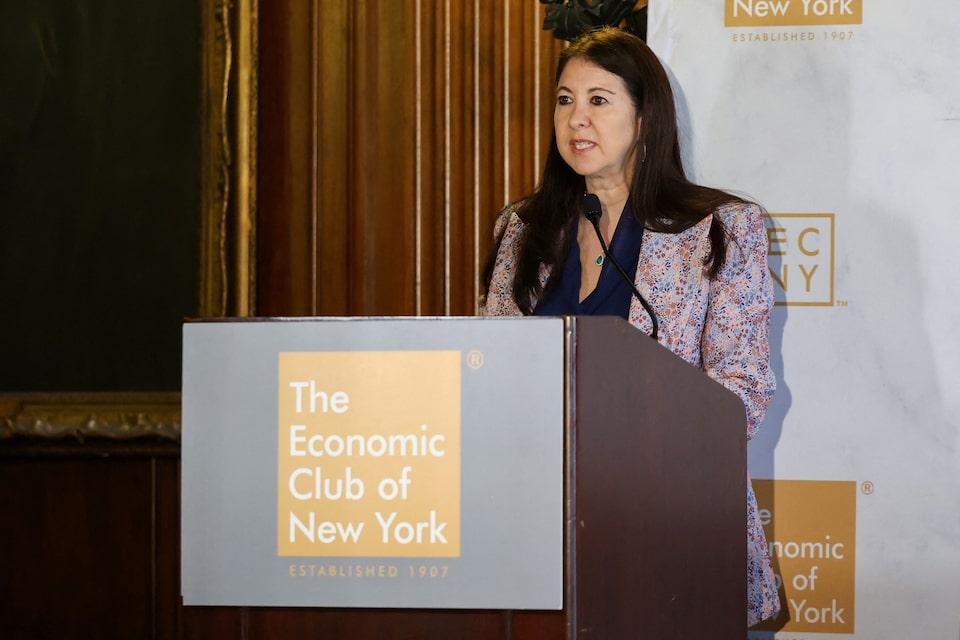
Dollar falls broadly against peers after weak US jobs report Swiss franc, Canadian dollar earlier hit by country tariffs Bank of Japan signals no hurry to resume rate hikes NEW YORK, Aug 1 (Reuters) - The dollar dropped on Friday and was on track for its biggest daily loss against the yen since January 2023 after data showed that U.S. employers added fewer jobs in July than economists had expected, while last month’s jobs gains were revised sharply lower, leading traders to ramp up bets on how many times the Federal Reserve is likely to cut rates this year. Employers added 73,000 jobs last month, below the 110,000 expected by economists polled by Reuters, while the unemployment rate edged higher to 4.2%, as anticipated, up from 4.1% in June. Job gains for June were revised down to 14,000, from the previously reported 147,000. Sign up here. “It's worse than anyone expected and the kicker is that downward revision for the prior month too,” said Helen Given, director of trading at Money USA in Washington. The dollar index , which measures the greenback against a basket of currencies including the yen and the euro, was last down 1.23% on the day at 98.80. The euro rose 1.37% to $1.1571 and was on track for its biggest daily gain since April. The single currency reached $1.1389 earlier on Friday, the lowest since June 10. Against the Japanese yen , the dollar weakened 2.23% to 147.37. The greenback earlier reached 150.91, the highest since March 28. The Fed has indicated it is in no rush to cut rates due to concern that President Donald Trump’s tariff policies will reignite inflation over the coming months. Fed funds futures traders pared bets on how many times the U.S. central bank is likely to cut rates this year after Fed Chair Jerome Powell on Wednesday offered a hawkish outlook for monetary policy and declined to indicate that a cut in September was likely. But they ramped up bets on cuts again on Friday after the jobs data. Traders are now pricing in 63 basis points of cuts by year-end, up from around 34 basis points on Thursday, with the first cut seen in September. The dollar extended its drop on Friday after the Fed said Governor Adriana Kugler was resigning from the Federal Reserve effective Aug. 8. Trump on Friday also ordered that the commissioner of the Labor Department's Bureau of Labor Statistics Erika McEntarfer be fired after the weaker than expected jobs data and downward revisions. Whether the Fed cuts in September may now depend on the next jobs report for August. “(Powell) did say on Wednesday that we were looking at holding rates steadier for longer, but that we were going to get two sets of employment data before the next Fed meeting. So as this first set has been so decidedly negative… the labor market is clearly, clearly cooling, that's going to raise the importance of that September figure as well,” said Given. The August jobs data will be released on September 5, with the Fed due to meet on September 16-17. A more dovish Fed would likely be negative for the U.S. currency, even after it has appeared to find its footing in recent weeks following a rough first half of the year. "Our forecast for the dollar to strengthen in the second half of the year relies in large part on our view that the US economy will remain resilient and the FOMC keep policy on hold until 2026," Jonas Goltermann, deputy chief markets economist at Capital Economics said in a note. "Plainly, that now looks less probable; in a recession scenario the dollar is likely to weaken against lower yielding currencies such as the yen and the euro, even if it may rally against other, riskier currencies," he said. The dollar had gained earlier on Friday after Trump imposed new tariff rates on dozens of trade partners. The Swiss franc was among the hardest hit as Switzerland now faces a 39% rate. The Swissie fell against a range of currencies in response to Trump's hefty duties and to his demand that pharma companies - key Swiss exporters - lower the prices at which they sell to U.S. consumers. The dollar was last down 0.9% against the Swiss franc at 0.805 , after earlier reaching 0.8171, the highest since June 23. The Canadian dollar strengthened 0.43% versus the greenback to C$1.38 per dollar, after earlier easing to C$1.3879, the weakest since May 22. Canada was hit with a 35% tariff, instead of the threatened 25%. The dollar had also gained against other currencies due to drivers other than tariffs. The yen was earlier headed for its largest weekly loss this year after the Bank of Japan signaled it was in no hurry to resume interest rate hikes, prompting Finance Minister Katsunobu Kato to say on Friday that officials were "alarmed" by currency moves. In cryptocurrencies, bitcoin fell 2.65% to $113,432. https://www.reuters.com/world/africa/dollar-tumbles-traders-bet-more-us-rate-cuts-after-weak-jobs-report-2025-08-01/
2025-08-01 19:51
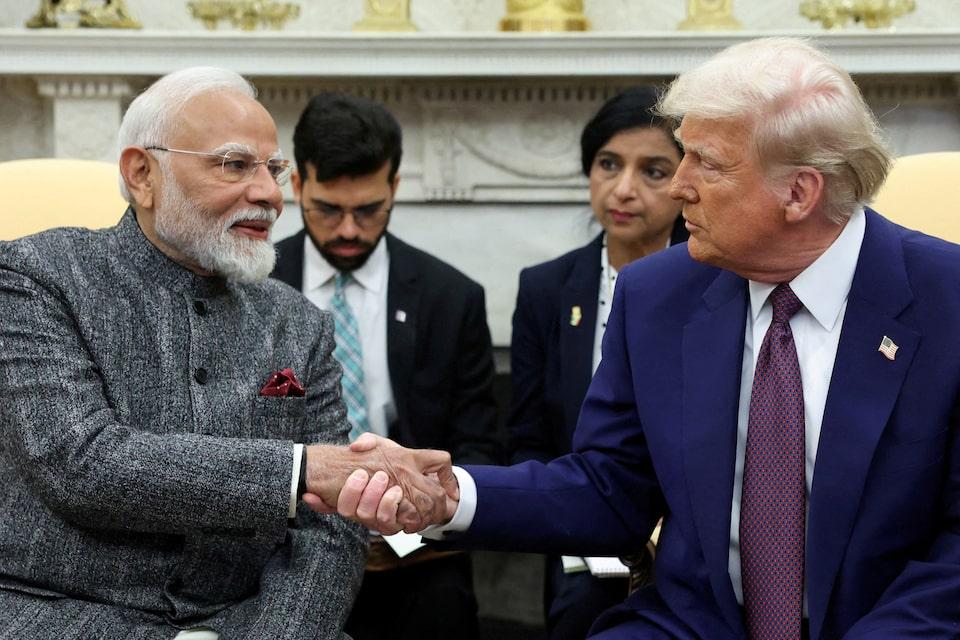
NEW DELHI, Aug 1 (Reuters) - India is engaged in trade talks with the United States, an Indian government source with knowledge of the discussions said on Friday, a day after U.S. President Donald Trump signed an order imposing a 25% tariff on New Delhi's exports. Trump set steep import duties on dozens of trading partners, including a 35% tariff on many goods from Canada, 50% for Brazil, 20% for Taiwan and 39% for Switzerland, according to a presidential executive order. Sign up here. A U.S. delegation is expected to visit New Delhi later this month, the government source said. "We remain focused on the substantive agenda that our two countries have committed to and are confident that the relationship will continue to move forward," India's foreign ministry said in a statement on Friday. Trade talks between Washington and New Delhi have been bogged down by issues including access to India's highly protected agriculture and dairy sector. Nearly $40 billion worth of exports from the South Asian nation - the world's fifth largest economy - could be impacted by Trump's tariff salvo, according to the source. Without a deal, the rate singles out India for harsher trade conditions than its major peers, potentially damaging the economy of a strategic U.S. partner in Asia that is seen as a counterbalance to Chinese influence. The source said there is no question of compromising on India's agriculture and dairy sectors, especially not allowing import of dairy products due to religiously based opposition to animal feed in these products. On Wednesday, Trump also threatened additional penalties on India for its commercial dealings with Russia and membership in the BRICS group of major emerging and developing economies. There is no clarity yet on the penalty. Trump accuses BRICS of pursuing "anti-American policies". Differences between the U.S. and India cannot be resolved overnight to arrive at a trade deal, a senior U.S. official said on Thursday. The U.S. has a trade deficit of $46 billion with India. https://www.reuters.com/world/india/india-engaged-further-trade-talks-with-us-indian-government-source-says-2025-08-01/
2025-08-01 19:40
Equities sink, dollar and Treasury yields tumble US July nonfarm payrolls weaker than expected, June sharply lower Trump orders firing of head of BLS, Fed's Kugler resigns early US announces new tariff rates ahead of trade talks deadline Oil prices in steep decline on supply boost worries NEW YORK/LONDON, Aug 1 (Reuters) - MSCI's global equities index sold off sharply on Friday and the dollar took a dive after weaker-than-expected U.S. jobs data fueled economic worries and boosted bets for September interest rate cuts while investors also considered U.S. President Donald Trump's latest tariff announcements and key personnel changes. U.S. Treasuries were in demand after the Labor Department reported that the U.S. economy added 73,000 nonfarm payrolls last month, below economists' expectations for 110,000. June's job growth was revised sharply lower to 14,000 from 147,000. Sign up here. After the report, Trump said he ordered his team to fire the commissioner of the U.S. Bureau of Labor Statistics, Erika L. McEntarfer, nominated by prior President Joe Biden for the role. Then the dollar index and U.S. Treasury yields lost further ground when the Federal Reserve said Governor Adriana Kugler is resigning early from her term on Aug. 8, causing some investors anxiety at a time when Trump has loudly disagreed with Fed rate policies. Late on Friday, traders were betting on an 87.5% probability for a September rate cut compared with 37.7% on Thursday, according to CME Group's FedWatch tool. "The market is reacting to the possibility of the economy flipping into recession. The weak jobs data is piling on to weak earnings reports and weak guidance from some corporations," said Luke Tilley, Chief Economist, Wilmington Trust. MSCI's gauge of stocks across the globe (.MIWD00000PUS) , opens new tab fell 12.23 points, or 1.32%, to 917.39, suggesting its biggest daily drop since mid-April. The softer jobs data added to losses for the global index, which was already in the red after a host of tariff announcements from Trump the day before. On Thursday, Trump ordered tariffs ranging from 10% to 41% on U.S. imports from several major trading partners. He increased duties on Canadian goods to 35% from 25% for all products not covered by the U.S.-Mexico-Canada trade agreement. He set a 25% rate for India's U.S.-bound exports, 20% for Taiwan's, 19% for Thailand's and 15% for South Korea's. Mexico, however, got a 90-day reprieve from higher tariffs to allow for deal talks. On the earnings front, market heavyweight Amazon (AMZN.O) , opens new tab tumbled more than 8% on Friday after its quarterly report showed cloud computing growth that disappointed investors. On Wall Street, the Dow Jones Industrial Average (.DJI) , opens new tab fell 542.40 points, or 1.23%, to 43,588.58, the S&P 500 (.SPX) , opens new tab fell 101.38 points, or 1.60%, to 6,238.01, for its biggest one-day percentage drop since May 21 and the Nasdaq Composite (.IXIC) , opens new tab fell 472.32 points, or 2.24%, to 20,650.13, its steepest one-day drop since April 21. Earlier, the pan-European STOXX 600 (.STOXX) , opens new tab index ended down 1.89%, its biggest drop since April 9. In currencies, the greenback reversed course to fall sharply after the data due to increased expectations for rate cuts. Earlier it had found support in fading hopes for U.S. rate cuts. The dollar index , which measures the greenback against major currencies including the yen and the euro, fell 1.37% to 98.66, the euro was up 1.52% at $1.1589. Against the Japanese yen , the dollar weakened 2.26% to 147.32. "The way (the market) is going to interpret (the departures) is in a very dollar-negative way," Juan Perez, senior director of trading, Monex USA, referring to both the Kugler and McEntarfer news. "No matter what the economic picture in the United States, the one thing that holds the U.S. dollar strong in the eyes of the world is the authority and the independence of the Federal Reserve. Whenever anything comes to potentially put that into compromise then that's when the U.S. dollar spirals down." U.S. Treasury yields plunged on the jobs data and the increased bets for September rate cuts, and fell to fresh session lows in the late afternoon after the Kugler announcement. Peter Tuz, president of Chase Investment Counsel, said Trump "is getting a bigger chance to appoint people whose views match his own" at the Fed. Regarding the BLS firing Tuz said "I don't like to see a bureaucrat fired just because the data that gets presented doesn't support the administration's policies." The yield on benchmark U.S. 10-year notes fell 14 basis points to 4.22%, from 4.36% late on Thursday. The 30-year bond yield fell 6.4 basis points to 4.8211%. The 2-year note yield, which typically moves in step with interest rate expectations for the Federal Reserve, fell 26.1 basis points to 3.69%. In energy markets, oil prices sank about 2.8% after the jobs data and on jitters about a possible production increase by OPEC and its allies. Oil had settled around 1% lower on Thursday. U.S. crude settled down 2.79%, or $1.93 at $67.33 a barrel and Brent settled at $69.67 per barrel, down 2.83%, or $2.03 on the day. Elsewhere in commodities, gold prices rallied to a one-week high as investors sought safety after the weak jobs report, policy easing expectations and the latest tariff announcements. Spot gold rose 2.14% to $3,360.45 an ounce. https://www.reuters.com/world/china/global-markets-wrapup-9-graphics-2025-08-01/