2025-08-01 16:20
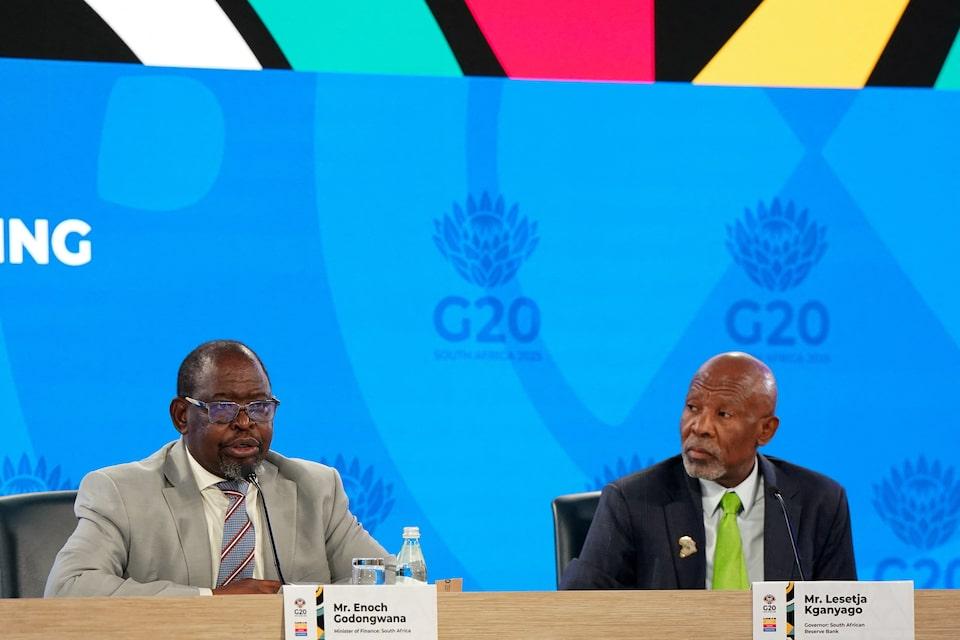
SARB surprises by aiming for lower inflation level Finance minister yet to approve formal target change Top finance officials rarely disagree in public Raises questions about policy cohesion JOHANNESBURG, Aug 1 (Reuters) - The South African central bank's decision to lower its inflation target on Thursday without the sign-off of the finance ministry has raised questions among investors about policymaking cohesion in Africa's largest economy. South African Reserve Bank Governor Lesetja Kganyago and Finance Minister Enoch Godongwana rarely disagree in public, but they have been at odds on this issue. Godongwana on Friday dismissed expectations that he would quickly endorse the bank's preference to aim for 3% inflation rather than the middle of the 3%-6% target range. Sign up here. Kim Silberman, portfolio manager at Matrix Fund Managers, said Thursday's SARB announcement raised "questions around where the mandate for inflation targeting sits". Markets nevertheless cheered the decision, with South African government bonds outperforming and yields at five-year lows. They are set for a 2.2% return this week, outstripping Turkey, Chile, Brazil and Mexico. Piotr Matys, senior FX analyst at InTouch Capital, said the SARB's commitment to anchor inflation would have long-term benefits. "But over the short term it could prove a risky move, being an additional burden on the economy that faces the prospect of tariffs to the U.S." Many investors' base case was that the target would eventually be lowered, but Kganyago going it alone gave investors a jolt. "The decision itself was no surprise to the market. It was the SARB's explicit preference to aim for the lower 3% band of its existing 3-6% CPI target, ahead of the National Treasury formally adjusting the target lower, that caught most by surprise," said Jeffrey Schultz, Head of CEEMEA Economics at BNP Paribas Markets 360. THE TARGET, OR THE PROCESS? Kganyago says the current target band is too wide and erodes competitiveness, while Godongwana says decisions on the target should not be taken without the necessary technical and political engagements. Inflation has moved below the current 4.5% target, and inflation expectations have dropped below that figure. Kganyago said on Thursday that the bank could lock in these gains and make sure that South Africans benefit from them. Godongwana, without openly disagreeing about inflation, said he wanted to stick to procedures for making any target changes. "Any adjustments to our inflation-targeting framework will follow the established consultation process," he said in a statement on Friday. "This means comprehensive consultation between National Treasury, the Reserve Bank, Cabinet, and relevant stakeholders – not unilateral announcements that pre-empt legitimate policy deliberation." Lowering the inflation target could cause some short-term pain. Some analysts, like those at Goldman Sachs, expect the central bank may front-load interest rate cuts. That's based on inflation forecasts more benign than those of the central bank. But equally, it may find itself constrained and need to keep them higher for longer to combat global risks and to force prices lower. Wages and prices also adjust slowly, likely resulting in lower spending, faltering investment, and job losses before benefits can be felt. Trade unions have previously voiced their objections. Governor Kganyago pointed to Section 224 of the constitution, which states the bank must protect the value of the currency, Silberman said. "According to the MPC (Monetary Policy Committee), this decision is procedurally equivalent to when the SARB announced in 2017 that it would explicitly target 4.5%," said Silberman at Matrix Fund Managers. "Despite any possible tensions between the two institutions, we do not expect that the latest change in the MPC’s reaction function with respect to targeting 3.0% will be retracted," she added. At Thursday's briefing, Kganyago said: "Changing policy is never easy." "What you can't do is to refuse to make a decision, because there are costs to a policy. There are costs in sticking to the existing target as well," he said. The finance ministry has previously voiced concerns about the impact on consumers, said Annabel Bishop, chief economist at Investec. "But the MPC has said it will be flexible in aiming to achieve 3% sustainably." https://www.reuters.com/world/africa/south-africas-finance-minister-central-bank-governor-odds-over-inflation-target-2025-08-01/
2025-08-01 13:58
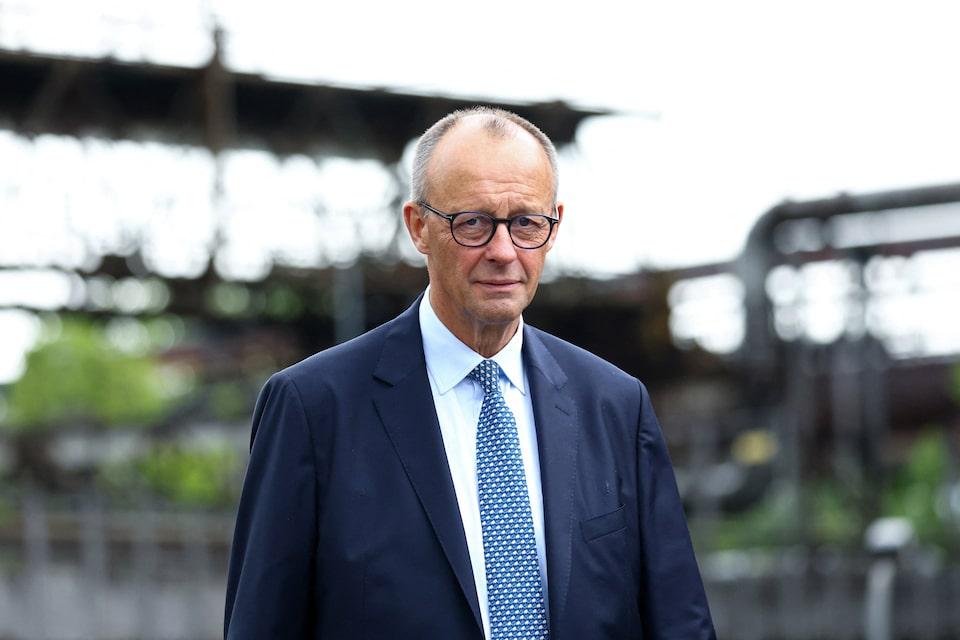
BERLIN, Aug 1 (Reuters) - German Chancellor Friedrich Merz on Friday said the European Union will negotiate with the United States on steel, focusing on quotas that can be exported without too high tariffs, after the two sides struck a trade deal last month. The EU's trade deal with Trump in July was greeted with a mix of relief and anger, with tariffs set at 15% for most products but negotiations continuing for certain sectors, including steel and aluminium, which carries tariffs of 50%. Sign up here. The task now is to work out the "fine print," Merz said in the city of Saarbruecken. "This will particularly concern quotas that we can then export without being burdened with excessive tariffs." Merz described the agreement as "painful" for the entire European industry but said the EU was not in a position to trigger a full-blown trade dispute. "There would have been only losers, and the biggest losers would probably have been us, the Europeans." https://www.reuters.com/world/europe/germanys-merz-will-negotiate-steel-export-quotas-with-us-2025-08-01/
2025-08-01 13:53
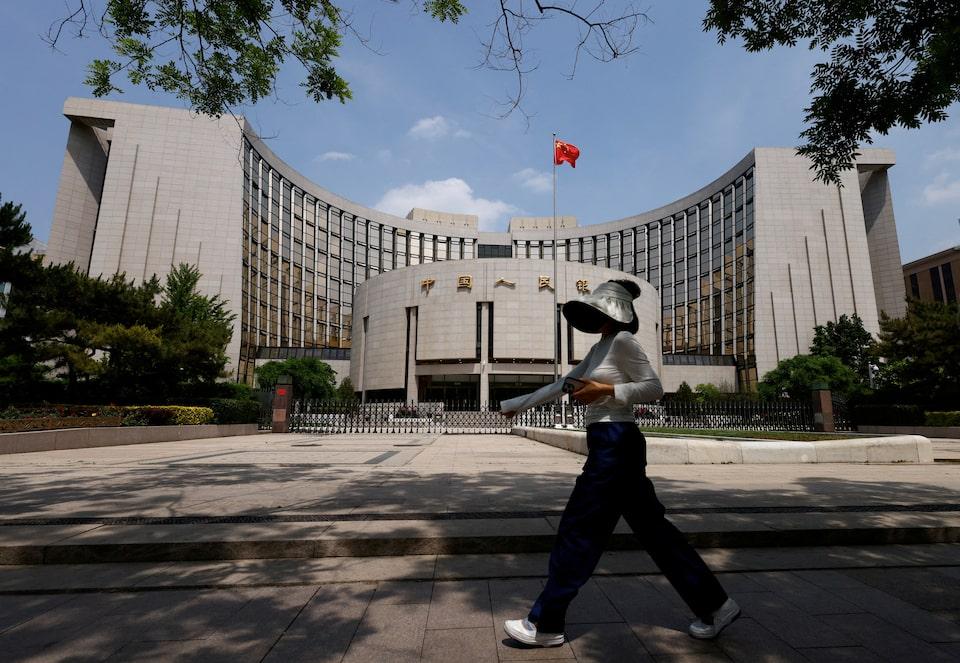
BEIJING, Aug 1 (Reuters) - China's central bank has set up a macroprudential and financial stability committee to help defuse financial risks, it said on Friday, pledging to maintain accommodative policy. In its mid-year work summary, the People's Bank of China (PBOC) said it will focus on preventing and resolving key financial risks, supporting local government financing platforms in debt resolution, and managing risks in key regions and institutions in an orderly way. Sign up here. It will further strengthen risk monitoring, assessment, and macroprudential management, it said. The PBOC will continue to implement an "appropriately loose" monetary policy in the second half of this year, use various monetary policy tools to keep liquidity ample and guide financial institutions to sustain reasonable credit growth. The central bank will ensure the financing needs of Chinese trade-related firms, and maintain the flexibility of the yuan exchange rate, it said. The PBOC also pledged to push yuan internationalisation "in a steady and prudent" manner, expand the yuan's use in trade, strengthen its role as a financing currency, and optimise policies for currency pools and overseas listings of domestic firms. https://www.reuters.com/markets/currencies/chinas-central-bank-sets-up-new-financial-stability-committee-2025-08-01/
2025-08-01 13:20
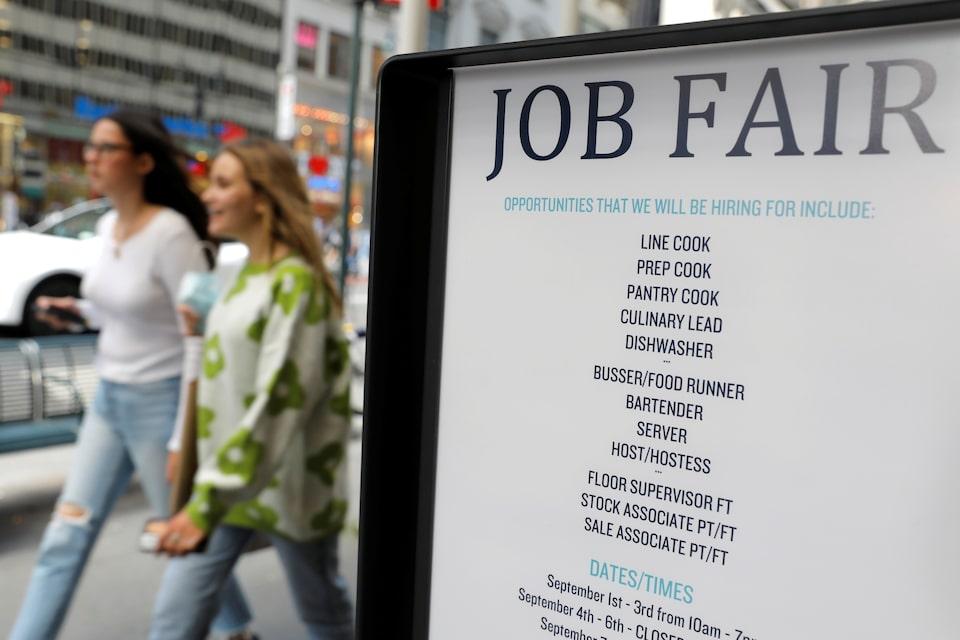
NEW YORK, July 31 (Reuters) - U.S. job growth slower much more than expected in July, and the data from the prior month was revised sharply lower, indicating the labor market could be showing signs of stalling. Nonfarm payrolls increased by 73,000 jobs in July, after rising by a downwardly revised 14,000 in June, the Labor Department data showed on Thursday. Economists polled by Reuters had forecast 110,000 jobs added last month. Sign up here. The unemployment rate rose to 4.2% in July from 4.1% in the previous month. MARKET REACTION STOCKS: S&P E-minis briefly pared declines and were last down 1.05% BONDS: Treasury yields dropped, with the yield on the benchmark U.S. 10-year note down 9.9 basis points at 4.261% and the two-year note yield down 18.2 basis points to 3.77% FOREX: The dollar weakened sharply, with the dollar index down 1.16% to 99.31 COMMENTS: HELEN GIVEN, DIRECTOR OF TRADING, MONEX USA, WASHINGTON: “It's worse than anyone expected and the kicker is that downward revision for the prior month too…that figure going from 147,000 to just 14,000, it's frankly pretty shocking.” “This is what Powell was emphasizing in his press conference on Wednesday. He did say on Wednesday that we were looking at holding rates steadier for longer, but that we were going to get two sets of employment data before the next Fed meeting. So as this first set has been so decidedly negative… the labor market is clearly, clearly cooling, that's going to raise the importance of that September figure as well.” “I still don't think it's likely that the Fed will cut interest rates in September, I think they might keep holding off if we get an August jobs report that's not that bad. They might hold off further, but we'll definitely see a cut in October, and I would say definitely again in December as well. So, we're going to see likely 50 basis points of easing this year, which is a market change in overnight swaps from yesterday.” JEFF SCHULZE, HEAD OF ECONOMIC AND MARKET STRATEGY, CLEARBRIDGE INVESTMENTS, NEW YORK (emailed comment) "The July jobs report officially confirms that the labor market has kicked into a lower gear after today’s headline miss coupled with negative revisions of -258k to the prior two months. Investors will need to recalibrate their views on what is the 'normal' pace of employment growth going forward given the headwinds of lower immigration, an aging demographic and the arrival of DOGE related layoffs. "This payroll report kicks the door wide open for a September rate cut. Although the effects of tariff pass-through still lie ahead, the Fed will not want to wait too long to begin its cutting cycle with the nonfarm payrolls flatlining at 35k on average over the past 3 months and the unemployment rate ticking higher. "While investors have been viewing the commencement of the Fed cutting cycle as a positive catalyst for risk assets, today’s release is best characterized as 'bad news is bad news' in our view. With job creation at stall speed levels and the tariff headwind lying ahead, there’s a strong possibility of a negative payroll print in the coming months which may conjure up fears of a recession. This print should pressure risk assets and cause safe haven buying in US treasuries.” JAMIE COX, MANAGING PARTNER, HARRIS FINANCIAL GROUP, RICHMOND, VA (emailed comment) "Powell is going to regret holding rates steady this week. September is a lock for a rate cut and it might even be a 50-basis point move to make up the lost time." ART HOGAN, CHIEF MARKET STRATEGIST, B. RILEY WEALTH, BOSTON (emailed comment) "Today’s jobs report is unambiguously soft and a reflection of the trade and tariff impact on economic growth. Both the actual report and the big negative revisions are more evidence that the trade policy will slow growth. "What we know about our workforce population growth is that we need to create between 100 and 150 thousand jobs a month to keep the unemployment rate unchanged. That is down from a range of 150 to 200 thousand last year due to less immigration. The three-month average coming to today’s report was 150 thousand. The new three-month average of job creation is now 80 thousand. Not great news." SEEMA SHAH, CHIEF GLOBAL STRATEGIST, PRINCIPAL ASSET MANAGEMENT, LONDON (emailed comment) "Not only was this a much weaker than forecast payrolls number, the monster downward revisions to the past two months inflicts a major blow to the picture of labor market robustness. What’s more concerning is that with negative impact of tariffs only just starting to be felt, the coming months are likely to see even clearer evidence of a labor market slowdown. "Of course, with Powell emphasizing his focus on the unemployment rate which has only ticked up to 4.2%, perhaps it is too early to press the panic button. The shrinking of labor supply is somewhat offsetting the weakness in labor demand, keeping the labor market in an uneasy state of equilibrium. Even so, the sheer weakness of today’s payrolls number means that Powell will have to take notice. The odds of a September cut just took a big leap higher." CHRIS ZACCARELLI, CHIEF INVESTMENT OFFICER, NORTHLIGHT ASSET MANAGEMENT, CHARLOTTE, NC (emailed comment): "Just two days after the conclusion of this month’s Fed meeting, suddenly the dual mandate is back on the table. With this morning’s payroll miss – and the downward revisions that came with it – the Fed will again need to balance a slowing job market with inflation which isn’t slowing fast enough. "The knee jerk reaction from markets is for interest rates to drop and stock futures to give up ground. While normally it would make sense to focus more on the 3-month moving average and not the headline number, both are in play today because of the -258,000 revision to prior months’ jobs numbers. "The stock market will probably move past this particular report and keep climbing this month, but today could be an ugly day in the market given the confluence of new tariff announcements and more evidence that the job market is slowing." BRIAN JACOBSEN, CHIEF ECONOMIST, ANNEX WEALTH MANAGEMENT, MENOMONEE FALLS, WISCONSIN: "If Powell knew then what he knows now, maybe even he would have dissented from the decision to continue the rate cut pause. There’s no way to pretty-up this report. Previous months were revised significantly lower where the labor market has been on stall-speed. "History is repeating itself. Last year the Fed messed up by not cutting in July so they did a catch-up cut at their next meeting. They’ll likely have to do the same thing this year." https://www.reuters.com/business/view-us-job-growth-sharply-slows-july-unemployment-rate-ticks-higher-2025-08-01/
2025-08-01 12:52
NEW DELHI/MOSCOW, Aug 1 (Reuters) - At least two vessels loaded with Russian oil bound for refiners in India have diverted to other destinations following new U.S. sanctions, trade sources said, and LSEG trade flows showed. The U.S. Treasury Department this week imposed sanctions on more than 115 Iran-linked individuals, entities, and ships, some of which are involved in transporting Russian oil. Sign up here. U.S. President Donald Trump has urged countries to halt purchases of oil from Moscow, threatening 100% tariffs unless Russia agrees to a significant peace deal with Ukraine. Three ships - the Aframaxes Tagor and Guanyin and the Suezmax Tassos - were scheduled to deliver Russian oil to Indian ports this month, trade sources said. All three vessels are under U.S. sanctions. Tagor was bound for Chennai on India's east coast, while Guanyin and Tassos were headed to ports in western India, according to trade sources and Russian ports data. Tighter Western sanctions aimed at cutting Russia's oil revenue, seen as funding its war against Ukraine, have been increasingly hitting Russian oil supplies for India, which buys more than a third of its oil needs from Russia. Tagor is now heading to Dalian in China, while Tassos is diverting to Port Said in Egypt, the data shows. Guanyin remains on course to Sikka, a port used by Reliance Industries (RELI.NS) , opens new tab and Bharat Petroleum Corp Ltd. (BPCL.NS) , opens new tab. Indian Oil Corp (IOC.NS) , opens new tab, which was to receive the Tagor shipment, and BPCL did not respond to Reuters' emailed requests for comment. Zulu Shipping, linked to Panama-flagged Tassos and Tagor, and Guanyin-owner Silver Tetra Marine could not be reached for comments. Both companies are under U.S. sanctions. A Reliance spokesperson said that "neither of these two vessels, Guanyin and Tassos, is coming to us". Reliance has previously purchased oil in Guanyin. Separately, two other vessels, Achilles and Elyte, loaded with Russian oil, are preparing to discharge Russian Urals for Reliance, according to LSEG data. Both these vessels are sanctioned by Britain and the European Union. India has condemned the EU sanctions. https://www.reuters.com/business/energy/us-sanctions-force-vessels-with-russian-oil-divert-india-sources-say-2025-08-01/

2025-08-01 12:52
Aug 1 (Reuters) - Canadian oil producer Imperial Oil (IMO.TO) , opens new tab posted a fall in second-quarter profit on Friday, hurt by lower crude prices and a decline in refinery throughput. Benchmark Brent crude prices were lower during the April-June quarter compared to a year earlier, pressured by weak global demand, market volatility due to tariffs and increased oil supply from OPEC+. Sign up here. The Calgary, Alberta-based company's total throughput volumes, or the amount of crude processed, fell to 376,000 barrels per day during the second quarter, from 387,000 bpd a year ago. Refinery utilization stood at 87%, down from 89% in the same quarter last year. Imperial CEO John Whelan announced the start-up of a renewable diesel facility that will deliver lower-emission fuels to the Canadian transportation sector. The company said significant uncertainty exists regarding the effects that tariff-related actions could have on Imperial, its suppliers and its customers. It plans to monitor the global trade environment and work to mitigate potential impacts. However, upstream production for the April-June quarter was 427,000 gross barrels of oil equivalent per day (boepd), higher than the 404,000 gross boepd a year earlier. Imperial Oil is majority owned by U.S. oil and gas major ExxonMobil(XOM.N) , opens new tab, which beat analysts' estimates for quarterly profit earlier on Friday. The company said its net income fell to C$949 million ($684.31 million), or C$1.86 per share, in the quarter ended March 31, from C$1.13 billion, or C$2.11 per share, a year earlier. ($1 = 1.3868 Canadian dollars) https://www.reuters.com/business/energy/canadas-imperial-oil-posts-fall-quarterly-profit-lower-crude-prices-2025-08-01/