2025-12-02 23:49
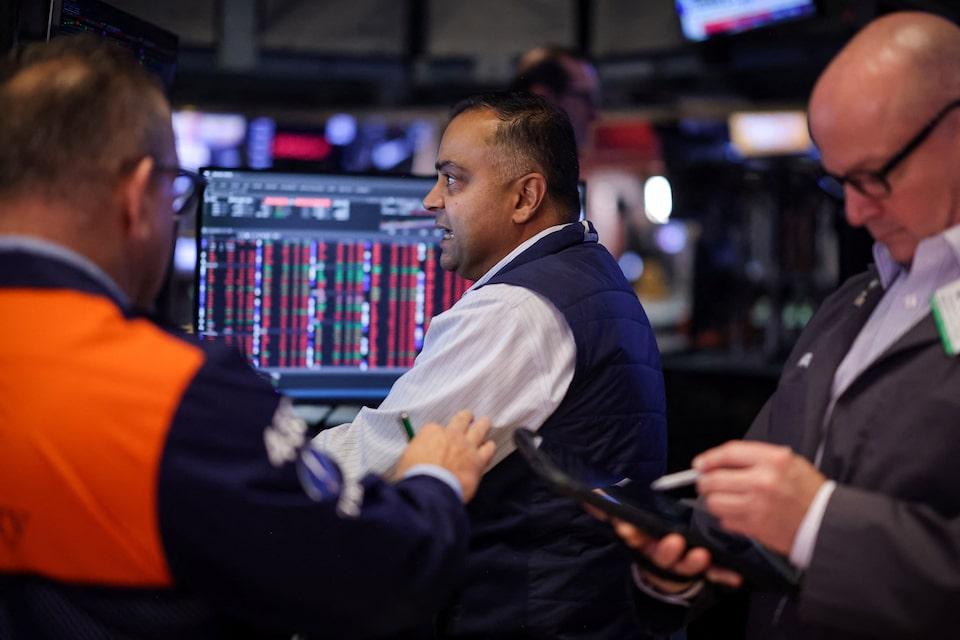
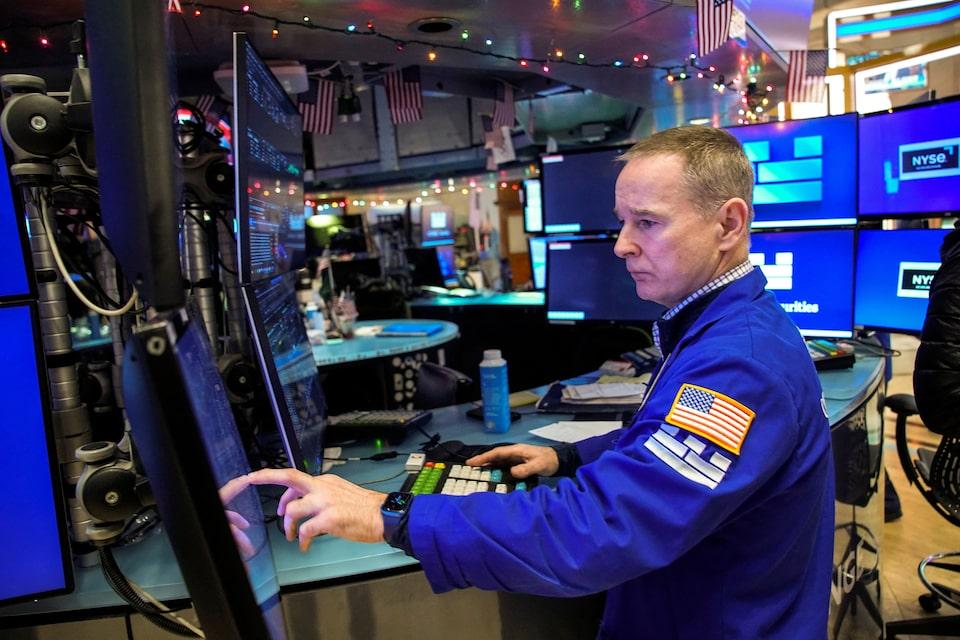
Boeing expects higher deliveries of jets in 2026 Bitcoin stabilizes following massive losses Warner Bros advances on reports of Netflix offer Indexes up: Dow 0.39%, S&P 500 0.25%, Nasdaq 0.59% NEW YORK, Dec 2 (Reuters) - U.S. stocks closed higher to record their sixth gain in seven sessions in muted trading on Tuesday, buoyed by gains in technology shares as expectations the Federal Reserve will cut interest rates next week remain elevated. Equities declined on Monday amid soft data on the manufacturing sector, a jump in U.S. Treasury yields as Japanese bond yields surged, and a drop in bitcoin and crypto-related stocks. Sign up here. But with a dearth of economic data for the session, the rise in bond yields eased and bitcoin rebounded, which enabled stocks to recover somewhat as the focus shifted to the Fed. "It's possible that both of those things are adding a little bit of volatility to the market at a time when there's kind of a catalyst vacuum until the Fed," said Ross Mayfield, investment strategist at Baird in Louisville, Kentucky. "On the flip side, it seems like largely you can take away positive consumer read-throughs on some of these Black Friday, Cyber Monday, data points. I'm more content or happier to see the strength in the consumer versus some of these things happening under the surface with yields and bitcoin. Those are things that will pass." BOEING SURGES ON FORECAST The Dow Jones Industrial Average (.DJI) , opens new tab rose 185.13 points, or 0.39%, to 47,474.46, the S&P 500 (.SPX) , opens new tab gained 16.74 points, or 0.25%, to 6,829.37 and the Nasdaq Composite (.IXIC) , opens new tab gained 137.75 points, or 0.59%, to 23,413.67. Boeing (BA.N) , opens new tab shot up 10.1% as the biggest boost to the Dow, accounting for roughly 117 points to the upside, after the planemaker forecast higher deliveries for its 737 and 787 jets next year. Boeing also lifted the S&P 500 industrials (.SPLRCI) , opens new tab index 0.9%, making it the best performing of the 11 major S&P sectors. Also higher was tech (.SPLRCT) , opens new tab, which rose 0.8%, fueled by gains in megacaps Apple (AAPL.O) , opens new tab, Nvidia (NVDA.O) , opens new tab and Microsoft (MSFT.O) , opens new tab of about 1% each, while Intel (INTC.O) , opens new tab shares jumped. Recent data has pointed to a gradually cooling economy, and policymakers had urged caution on rate cuts, warning that inflation pressures could be rekindled. But comments from several Fed officials in recent days sent market expectations soaring for a rate cut at the central bank's December meeting. Expectations for a rate cut of 25 basis points at the Fed meeting are at 89.2%, according to CME's FedWatch Tool , opens new tab, up from 63% a month ago. Friday's release of the Personal Consumption Expenditures Index, the Fed's preferred inflation gauge, could further solidify expectations for the central bank's policy call next week. Markets were also eyeing who may succeed Fed Chair Jerome Powell when his term ends next year, with reports suggesting White House economic adviser Kevin Hassett is a top contender. Trump said on Tuesday he would announce his selection early next year. On the downside, Procter & Gamble (PG.N) , opens new tab declined 1.1% after the consumer packaged goods company flagged a hit from the U.S. government shutdown. Warner Bros Discovery (WBD.O) , opens new tab climbed 2.8% after reports said it received a second round of bids, including an offer from Netflix (NFLX.O) , opens new tab. Crypto stocks advanced, including Strategy (MSTR.O) , opens new tab, up 5.8%, and Coinbase (COIN.O) , opens new tab, up 1.3%, as bitcoin prices rebounded after its largest dollar loss since May 2021 in the previous session. Advancing issues outnumbered decliners by a 1.01-to-1 ratio on the NYSE, while on the Nasdaq, declining issues outnumbered advancers by a 1.07-to-1 ratio. The S&P 500 posted 11 new 52-week highs and three new lows while the Nasdaq Composite recorded 70 new highs and 100 new lows. Volume on U.S. exchanges was 15.35 billion shares, compared with the 18.42 billion average for the full session over the last 20 trading days. https://www.reuters.com/business/us-stock-futures-steady-after-wall-st-selloff-eyes-fed-2025-12-02/
2025-12-02 23:16
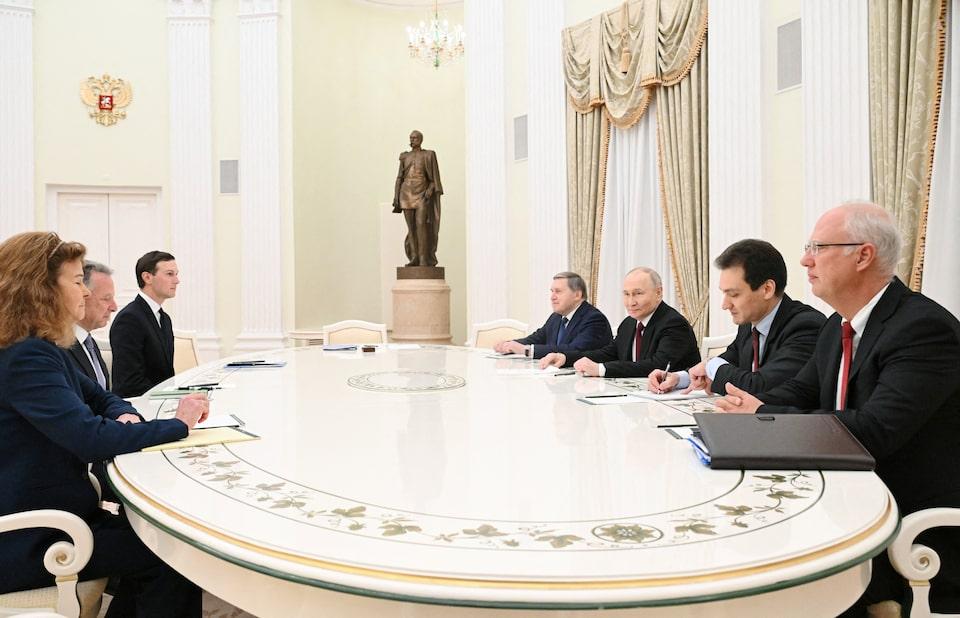
Putin speaks to Witkoff and Kushner for five hours Kremlin says no compromise reached but talks constructive Kremlin says Russia and U.S. did not agree on territory Zelenskiy warns against dealing behind Ukraine's back Trump says the war is 'a mess' MOSCOW, Dec 3 (Reuters) - Russia and the U.S. did not reach a compromise on a possible peace deal to end the war in Ukraine after a five-hour Kremlin meeting between President Vladimir Putin and Donald Trump's top envoys, the Kremlin said on Wednesday. Trump has repeatedly complained that ending Europe's deadliest conflict since World War Two has been one of the elusive foreign policy aims of his presidency. The U.S. president has at times scolded both Putin and Ukrainian President Volodymyr Zelenskiy. Sign up here. Talks in Moscow between Putin and Trump's special envoy, Steve Witkoff, and son-in-law Jared Kushner went past midnight. Afterward, Putin's top foreign policy aide, Yuri Ushakov, said "Compromises have not yet been found. "There is still a lot of work to be done," Ushakov told reporters at a briefing in the Kremlin. Putin reacted negatively to some U.S. proposals, Ushakov said. Witkoff went to the U.S. embassy in Moscow after the talks to brief the White House, Ushakov said. Ushakov added that a meeting between Putin and Trump was not currently planned, though he said the talks were constructive and that there were huge opportunities for U.S.-Russian economic cooperation. NO FURTHER AWAY FROM PEACE Ushakov said Putin had sent a series of important signals and his greetings to Trump, but that the sides had agreed not to disclose details to the media. He added that they had discussed the "territorial problem", Kremlin shorthand for Russian claims to the whole of Donbas, though Ukraine controls at least 5,000 square km (1,900 square miles) of the area which Russia claims as its own. Almost all countries recognise Donbas as part of Ukraine. "Some American draft proposals look more or less acceptable, but they need to be discussed," Ushakov said. "Some of the formulations that have been proposed to us are not suitable for us, that is - the work will continue." Witkoff, a billionaire U.S. real estate developer who has known Trump since the 1980s, and Kushner, the husband of Trump's daughter Ivanka, began talks in the Kremlin after a stroll across Red Square past the mausoleum of Soviet founder Vladimir Lenin to the towers of the Kremlin. They talked with Putin, Ushakov and Putin's envoy Kirill Dmitriev, via interpreters. "Our people are over in Russia right now to see if we can get it settled. Not an easy situation, let me tell you. What a mess," Trump said on Tuesday in Washington, adding that there were casualties of 25,000 to 30,000 per month in the war. Russia invaded Ukraine in February 2022, triggering the biggest confrontation between Moscow and the West since the depths of the Cold War. EUROPEAN POWERS WORRIED BY U.S. EFFORTS A leaked set of 28 U.S. draft peace proposals , opens new tab emerged in November, alarming Ukrainian and European officials who said it bowed to Moscow's main demands. European powers then came up with a counter-proposal, and at talks in Geneva, the U.S. and Ukraine said they had created an "updated and refined peace framework" to end the war. Zelenskiy, speaking in Dublin, said everything would depend on the talks in Moscow but that he was afraid the U.S. could lose interest in the peace process. "There will be no easy solutions ... It is important that everything is fair and open, so that there are no games behind Ukraine's back," he said. Just before the Kremlin meeting with Witkoff, Putin said Russia did not want war with Europe, but that if Europe started one, it would end so swiftly that there would be no one left for Russia to negotiate with. Putin threatened to sever Ukraine's access to the sea in response to drone attacks on tankers of Russia's "shadow fleet" in the Black Sea. Ukraine's Foreign Minister, Andrii Sybiha, said Putin's remarks showed he was not ready to end the war. https://www.reuters.com/world/china/putin-witkoff-discuss-peace-options-ukraine-past-moscows-midnight-2025-12-02/
2025-12-02 23:09
CHICAGO, Dec 2 (Reuters) - Shipments of U.S. crops to China are accelerating after a tense tariff war had stalled trade for months, with at least six bulk cargo vessels scheduled to load with soybeans at Gulf Coast terminals through mid-December, according to a shipping schedule seen by Reuters on Tuesday. A seventh U.S. soybean cargo was loaded over the past weekend and is already en route to China, the first such shipment since May. Sign up here. U.S. farmers and grain traders have been waiting for shipments to begin after trade talks between presidents Donald Trump and Xi Jinping in South Korea in late October and, according to the White House, a vow by Beijing to buy 12 million metric tons by the end of the year. Beijing has not confirmed details from that meeting, including any vows to purchase sizable volumes of U.S. soy. U.S. Agriculture Secretary Brooke Rollins said last month that the Trump administration expects to with China by this week. She said on Tuesday that the administration would unveil an aid package next week for farmers hurt by low crop prices and trade turmoil. Chinese importers booked nearly 2 million metric tons of U.S. soybeans last month for shipment in the 2025/26 marketing year that ends in August 2026, according to U.S. Department of Agriculture data, although only minimal purchases have been confirmed since then. Total Chinese purchases remain well short of the volumes seen before the trade war. China's absence from the market had pushed down the price of soybean futures to near five-year lows. The cargo vessel Tokugawa was being loaded with soybeans on Tuesday, and the vessel Katagalan Brave was set to load in the coming days, according to shipping data. Four others - RB Eden, Hua Xing Hai, Donna Alexandra and SSI Dominion - were due to arrive for loading over the next two weeks. U.S. sorghum shipments to China have also restarted for the first time since March. One cargo vessel, the Bungo Queen, is currently loading at a Texas Gulf Coast terminal, and a second ship, the YM Navigator, is due to load late next week at a terminal in the Pacific Northwest, shipping data showed. https://www.reuters.com/world/china/more-us-soybean-shipments-china-due-load-through-mid-december-2025-12-02/

2025-12-02 22:23
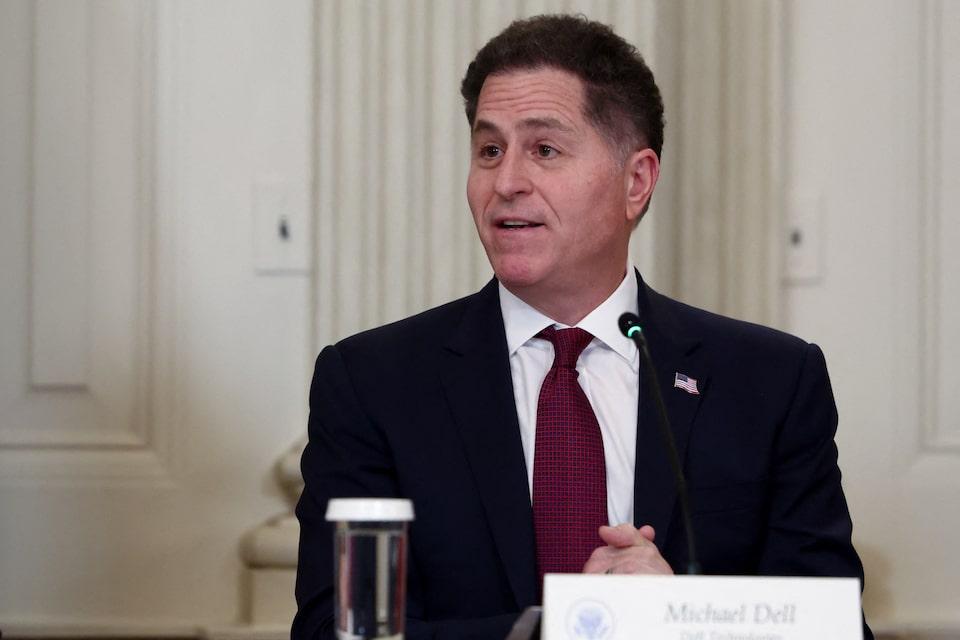
WASHINGTON, Dec 2 (Reuters) - Entrepreneur Michael Dell and his wife, Susan, will deposit $250 in the individual investment accounts of 25 million American children in a $6.25 billion philanthropic pledge as part of the Trump administration's Invest America initiative. The initiative, known as "Trump accounts", was created this year under President Donald Trump's One Big Beautiful Bill Act and has sparked a scramble by financial firms looking to participate. The U.S. Treasury will deposit $1,000 into investment accounts for all children born between 2025 and 2028. Sign up here. The Invest America accounts are expected to open on July 4 next year, but details about how they will work are still unknown. The funds - required to be invested in an index fund that mirrors the performance of the broader stock market - become available at the age of 18 for education, job training, a first home or starting a business. "We believe the smartest investment that we can make is an investment in children," Michael Dell said at a White House event announcing the donation. Shares of Dell (DELL.N) , opens new tab - which is not affiliated with the couple's foundation - were up more than 3%. Michael Dell founded the technology company in 1984 and serves as its chairman and chief executive officer. Trump said at the White House that the gift would give middle-class children a stake in American economic and stock market growth. "It really gives them a shot at the American dream," he said. He added that he would make a personal contribution towards the effort. The Dells said the funds are mainly aimed at children up to age 10, but kids who are older may benefit if the funds remain available after initial sign-ups. They will put money into the accounts of children who live in ZIP codes where the median family's income is $150,000 or less, according to a spokesperson for the Dells. Since its creation in 1999, the Michael & Susan Dell Foundation has given about $2.9 billion for charitable works, mainly focused on education. The couple's $6.25 billion commitment for Invest America comes from other charitable funds and not their foundation. Michael Dell, who started the company with $1,000 in his freshman dorm room at the University of Texas, is worth nearly $150 billion, according to the Forbes real-time billionaire list. LOBBYING SCRAMBLE Financial firms have been scrambling to grab a piece of the program, according to public lobbying records. The Investment Company Institute, a Washington trade group representing the world's largest asset managers, on October 29 wrote to the Treasury , opens new tab urging it to create a "robust and competitive marketplace for account trustees and custodians," rather than picking a single provider for the program. A competitive marketplace is key to the program's long-term success by incentivizing providers to promote the accounts and provide important educational information, the group said. In a Tuesday statement, ICI reiterated that position and also called for "flexibility in the eligible investments." Several other industry groups and asset managers, including BlackRock, Franklin Templeton, and Ameriprise Financial, have also been lobbying on Trump accounts, public records show. The companies did not immediately respond to requests for comment. https://www.reuters.com/technology/michael-susan-dell-pledge-625-billion-investment-accounts-us-children-2025-12-02/
2025-12-02 22:03
ORLANDO, Florida, Dec 2 (Reuters) - World stocks rose on Tuesday, regaining their poise after wobbling the previous day and lifted by an extended upswing in tech and AI sentiment as investors also continued to wager the Federal Reserve will lower U.S. interest rates next week. More on that below. In my column today, I look at how overseas demand for U.S. equities has re-accelerated in recent months and is running at its fastest pace on record. The big question, of course, is can this continue into next year? Sign up here. If you have more time to read, here are a few articles I recommend to help you make sense of what happened in markets today. Today's Key Market Moves Today's Talking Points * Could Fed back away from rate cut? When the Fed entered the 'blackout period' last week ahead of its Dec 9-10 policy meeting, rates markets were pricing a near 100% chance of a rate cut. That fell to as low as 80% after manufacturing ISM data showed prices rising in October even though activity contracted again. An 80% probability is still overwhelmingly strong odds for a cut. But what if Friday's PCE inflation is higher than expected? Will traders reduce their rate cut bets further? The Fed would be loath to surprise markets, so Chair Powell will no doubt be hoping the PCE report is broadly in line with forecasts. * Yield curves steepen as inflation percolates If global signals are worth anything, the U.S. PCE inflation report on Friday may indeed offer an upside surprise. Last week figures showed Tokyo inflation slightly stronger than expected, supporting BOJ rate hike bets; on Tuesday, flash euro zone inflation estimates were also slightly higher than forecast, cooling any outside bets on ECB easing next year. From a bond market perspective, the upshot is long yields creeping higher and curves steepening. Long-dated JGB yields are at record highs and the 2s/10s curve is the steepest since 2012; benchmark U.S. and euro zone curves are not far from their steepest levels since 2022-23. * U.S. tech finds its Mojo Although Wall Street hasn't revisited its peaks from late October, AI sentiment is driving a wider recovery that has delivered six 'up' days in the last seven. Tech is up around 8% in that time, and the Philadelphia Fed semiconductor index's gains are double that. The latest 'Big Tech' tie-up will see Amazon's AWS cloud computing unit adopt key Nvidia technology in future generations of AI computing chips, while Amazon also introduced new versions of its AI models known as Nova. Announcements like these are becoming more frequent, and sometimes they are treated with caution. Not today. Global demand for US stocks isn't waning. It's increasing Given the outperformance of many major European and Asian equity markets over Wall Street this year, it might appear that foreign investors are turning sour on U.S. equities. But that's not the case. Not only are overseas private sector inflows into U.S. stocks running at record levels, they have re-accelerated in recent months. The big question now is whether this can be sustained next year. The latest official Treasury International Capital data - which comes with a lag but is the gold standard for measuring overseas appetite for U.S. assets - shows that net purchases of U.S. stocks from foreign private sector investors in the 12 months through September totaled $646.7 billion. Indeed, TIC data shows that inflows from abroad have been breaking records by this measure almost every month this year, having smashed through the previous peak of $392 billion, from 2021, in January. RE-ACCELERATING INFLOWS That rolling 12-month figure is partially boosted by strong inflows around the 2024 U.S. Presidential election. Monthly net purchases of U.S. stocks from foreign private sector investors rarely exceed $100 billion, but they did in September and November last year as investors hoovered up stocks in the belief that an incoming Trump administration would pursue an unabashedly pro-growth, "market-friendly" agenda of slashing taxes and regulation. That initial wave of bullish optimism faded early this year, however, and was quickly replaced by unease surrounding Trump's tariffs and protectionist trade policy. But overseas demand for U.S. stocks didn't cool for long before the artificial intelligence frenzy brought it roaring back. Net foreign purchases have topped $100 billion in three of the past five months, and exceeded $90 billion in another. The near $650 billion that overseas investors poured into Wall Street on a net basis in the year to September is around 40% of the net $1.59 trillion that flooded into U.S. assets in that time. It is the biggest foreign flow into any single U.S. asset class over the period - Treasuries drew in $493 billion, corporate bonds $319 billion, and agency debt $127.5 billion. WEAK DOLLAR BOOSTS NON-U.S. RETURNS In some ways, these inflows from abroad are unsurprising. The whole world has wanted in on the U.S.-led AI boom this year. Yet other slices of capital flows paint a different picture, and many key stock markets around the world have matched or bettered Wall Street this year, especially since the post-"Liberation Day" lows in early April. The S&P 500 may be up 15% in 2025 thus far, but the MSCI Asia ex-Japan index has increased nearly 25%, while both Germany's DAX and Britain's FTSE 100 are up almost 20%. Importantly, gains in non-U.S. markets are in local currency, meaning in dollar terms they can be boosted even further thanks to the greenback's decline. Brazil's Bovespa is up 30% year-to-date, and up a further 20 percentage points in dollar terms. All told, analysts at JP Morgan Asset Management estimated that international equities were outperforming their U.S. counterparts by 1,520 basis points in the year through mid-November, the biggest outperformance since 1993. They estimate that the dollar is still 10% too expensive relative to "fair value" and reckon the U.S. equity premium over international stocks is 34%, substantially higher than the long-run average of 19%. What's more, the U.S. share of global equity market cap has risen to as much as 65% by some measures. So foreign allocation to U.S. stocks is still extreme, even if more of the dollar exposure is now hedged. CAN IT CONTINUE? Where non-U.S. investors put their next marginal dollar could depend largely on the answers to three market-specific questions for 2026: Are U.S. stocks too expensive? Can U.S. earnings remain so robust? And is AI a bubble? There are three months of 2025 TIC flows still to be released, and it remains to be seen how investors' sentiment has been affected by year-end profit-taking or the record-long U.S. government shutdown. It's plausible that the all-too familiar fears over U.S. valuations, market concentration, and future returns on AI spending could force overseas investors to slow their purchases of U.S. equities. Wall Street would be vulnerable to outright correction, relative underperformance, or both. But the available evidence shows that, despite all the U.S. economic, political and policy turbulence in 2025, foreign appetite for U.S. stocks has never been stronger. What could move markets tomorrow? Want to receive Trading Day in your inbox every weekday morning? Sign up for my newsletter here. Opinions expressed are those of the author. They do not reflect the views of Reuters News, which, under the Trust Principles , opens new tab, is committed to integrity, independence, and freedom from bias. https://www.reuters.com/world/china/global-markets-trading-day-graphic-2025-12-02/
2025-12-02 22:01
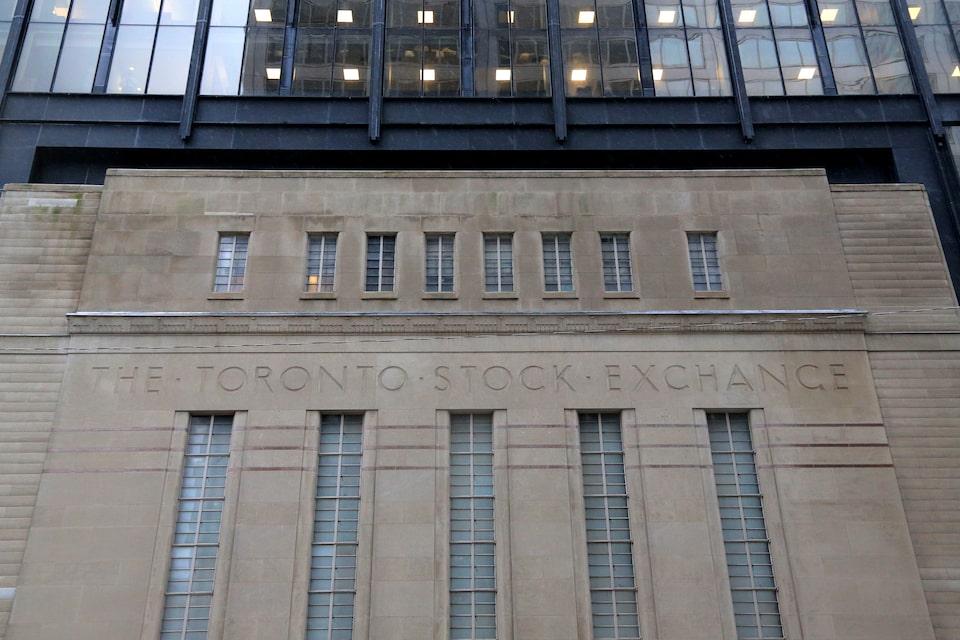
TSX ends up 0.2% at 31,049.28 Bank of Nova Scotia beats Q4 profit estimates Laurentian Bank jumps after acquisition by Fairstone Bank Shopify shares climb after record holiday weekend sales Dec 2 (Reuters) - Canada's main stock index edged down on Tuesday as declines for resource shares outweighed Bank of Nova Scotia earnings beating expectations and optimism around expected U.S. interest rate cuts. Toronto's main stock index (.GSPTSE) , opens new tab ended down 52.50 points, or 0.2%, at 31,049.28, extending its pullback from a record closing high on Friday. Sign up here. "I think that a correction was required and is healthy and may not be complete," said Joseph Abramson, co-chief investment officer at Northland Wealth Management. "The real point is we remain constructive on risk assets. Growth remains positive, liquidity is being added and there might be a substantial amount of liquidity added." The Bank of Canada has signaled that its easing campaign is on hold but the Federal Reserve has left the door open to additional interest rate cuts. Investors expect about 90 basis points of easing from the U.S. central bank by the end of next year. "Within that world, the U.S. dollar goes down which could pressure the Canadian dollar up, and gold would do well as well as some other commodities," said Abramson. Resource shares account for 34% of the Toronto market's weighting. The materials group (.GSPTTMT) , opens new tab, which includes metal mining shares, fell 1.8% on Tuesday as gold and copper prices declined. Oil prices also fell, settling 1.15% lower at $58.64 a barrel, which weighed on energy (.SPTTEN) , opens new tab. The sector was down 1.6%. Financials (.SPTTFS) , opens new tab were a bright spot, rising 0.7%, as Bank of Nova Scotia (BNS.TO) , opens new tab kicked off bank earnings season on a positive note. Shares of Scotiabank were up 2.8%, notching a record high. Laurentian Bank (LB.TO) , opens new tab shares jumped 18.4% after Fairstone Bank said it would buy the lender. Technology added 0.3%, with e-commerce company Shopify Inc (SHOP.TO) , opens new tab up 4.9% after the company said merchants achieved record sales over the Black Friday to Cyber Monday weekend, jumping 27% from last year. https://www.reuters.com/business/tsx-futures-steady-bank-earnings-loom-2025-12-02/