2025-08-01 11:47
LADANYBENE, Hungary, Aug 1 (Reuters) - Farmers in southern Hungary's key agricultural area are grappling with increasingly severe drought as climate change cuts crop yields and reduces groundwater levels, with some considering relocating or alternative employment. The vast flatland, situated between the Tisza and the Danube rivers, produces corn, grain, and sunflower seed, but scientists warn that rising temperatures and insufficient rainfall are threatening its agricultural viability. Sign up here. The Hungarian meteorological service said on Thursday that soil in central Hungary remains "critically dry" despite recent rains, with summer crops severely affected. Krisztian Kisjuhasz, a beekeeper in Ladanybene would normally move his bees home to his farm at the end of the honey-producing season in July, and start preparing them for the winter. This year, however, he packed up his bees in the middle of the night, wearing a headlamp with red light to move them to a flood zone of the Tisza river, more than 80 kilometers from his home to ensure they have access to pollen. "Last year 30% of our bees died mainly because there was not enough pollen due to the drought ... they were not strong enough for the winter," he said, adding that the costs of commuting to tend to his bees will force him to raise honey prices. Kisjuhasz, whose farm has been in his family for five generations, is now contemplating selling it and moving to a less dry area. "There is no future for beekeeping in the Homokhátság," he said. In May, the government launched a project worth about 5 billion forints ($14.29 million) to clean canals and focus on water retention to combat drought. However, the government cannot completely protect the country from the drought, Prime Minister Viktor Orban said in an interview with website baon.hu last month. "We are doing everything we can, but even these efforts will only be sufficient to alleviate the damage caused by drought," he said. In 2022, a droughtcaused 1000 billion forints ($2.86 billion) of losses for the agricultural sector and contributed to a rise in Hungarian inflation to two-decade highs. Csaba Toldi, a farmer in Jaszszentlaszlo, said his grasslands produced a loss this year for the first time due to the drought and he is seeking alternative work. Water needs to be returned to the Homokhatsag region, either through channels or water retention, Toldi says, otherwise "this area will completely dry out." ($1 = 350.0000 forints) https://www.reuters.com/sustainability/cop/farmers-consider-abandoning-drought-hit-region-central-hungary-2025-08-01/

2025-08-01 11:46
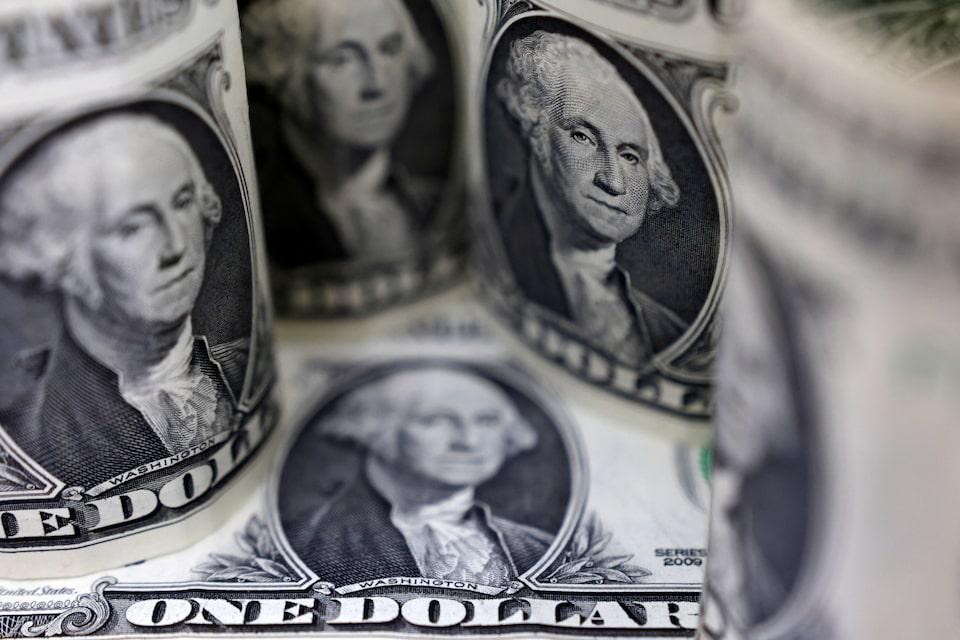
Dollar hits new highs after levies raised for some countries Swiss franc, Canadian dollar hit by country tariffs Yen sinks, Bank of Japan signals no hurry to resume rate hikes US monthly jobs data due later LONDON, Aug 1 (Reuters) - The dollar headed for its strongest weekly performance in almost three years against other major currencies, maintaining momentum on Friday after U.S. President Donald Trump imposed new tariff rates on dozens of trade partners. Some of the currencies of the countries that were hit the hardest, such as Switzerland, which now faces a 39% rate, fell sharply. The Swiss franc touched its weakest in six weeks, while the Canadian dollar was set for a seventh straight weekly loss. Sign up here. The dollar also gained against other currencies due to drivers other than tariffs. The yen headed for its largest weekly loss this year after the Bank of Japan signalled it was in no hurry to resume interest rate hikes, prompting Finance Minister Katsunobu Kato to say on Friday that officials were "alarmed" by currency moves. Friday also brings the monthly U.S. employment report, which is expected to show 110,000 workers were added to nonfarm payrolls in July. A large part of the dollar's strength this month has come from the perception among investors that Trump's tariffs have not derailed the economy and, so far, have not drastically lifted inflation. The Federal Reserve, despite pressure from Trump on Chair Jerome Powell to cut rates, has indicated it is in no rush to do so. Friday's payrolls report may not move the needle much on that assumption, even if a weaker reading elicits some selling of U.S. assets like the dollar, according to IG strategist Chris Beauchamp. "Fundamentally the U.S. economy is okay, it's not in the most wonderful place, tariffs will hurt a little bit and the market looks like it could be vulnerable in the short term to more selling, simply as an excuse to take some money off the table to sit it out and wait and see what happens," he said. "You'd have to have a lot of very bad data in a very short period of time between now and September to revive the corpse of a September rate cut," he said. The dollar index , which tracks the U.S. currency against a basket of six others, is on course to rise 2.4% this week, its best weekly performance since a 3.1% rally in September 2022. It was last up 0.1% at 100.13, its highest since late May. TARIFF HITS The Swissie fell against a range of currencies, surrendering its habitual safe-haven label in the face of a selloff in stocks and commodities, in response to Trump's hefty duties and to his demand that pharma companies - key Swiss exporters - lower the prices at which they sell to U.S. consumers. The dollar rose by as much as 0.6% to a high of 0.8173 francs, the most in six weeks, while the euro gained 0.4% to trade at 0.931 francs. The yen, another classic safe-haven currency, was last a touch stronger on the day against the dollar, which fell 0.3% to 150.37 yen, having earlier traded at its strongest since late March. The dollar also advanced on the Canadian dollar , up 0.1% at $1.3867, after Canada was hit with a 35% tariff, instead of the threatened 25%. The euro remained pinned near an almost two-month low around $1.14093, as it continues to be weighed down by what markets see as a lopsided trade agreement with Washington. "In the short-term, you can make the case for more dollar strength," said Mike Houlahan, director at Electus Financial in Auckland. "The lion's share of the tariff news has washed through." "The big move of the week has really been the euro getting re-rated downwards," he said. "The net result would be the EU-U.S. trade deal is a further headwind for the euro." The EU's framework trade agreement with the U.S., struck on Sunday, was quickly criticized by French leaders and the German head of the European Parliament's trade committee as being unfair for Europe. https://www.reuters.com/world/africa/dollar-forges-higher-trump-releases-new-tariff-barrage-2025-08-01/
2025-08-01 11:44
H1 EBIT excluding nuclear fell 9.4% from year earlier Higher gas distribution failed to offset lower energy sales prices Engie to pursue existing projects in US, but more cautious on new FIDs, CEO says PARIS, Aug 1 - French utility Engie (ENGIE.PA) , opens new tab plans to move forward with its existing wind, solar and battery projects in the United States despite President Donald Trump rolling back subsidies, its CEO said on Friday. Europe's largest gas network operator reported a 9.4% fall in first-half earnings before interest and taxes (EBIT), excluding nuclear, to 5.1 billion euros ($5.82 billion) due to lower energy prices. Sign up here. "These results are solid in normalising market conditions and in an uncertain economic and geopolitical context," CEO Catherine MacGregor said. After reviewing its project pipeline in the U.S. - a major growth market for Engie, where it holds 8 Gigawatts (GW) of renewables - the group will continue building 1.1 GW of projects that have already received final investment decisions. "Our clients and counterparties in the U.S. have adapted to the new market reality, notably by adding contractual clauses that better share residual risks, which will allow us to proceed with these three projects with confidence," MacGregor told journalists on a call. Engie will also work to reduce the number of Chinese-made parts in its supply chain in a bid to keep benefiting from U.S. tax credits. It could lose other U.S. subsidies for early-stage renewable projects if a decision on tightening the definition of the start of construction, expected later this month, means Engie is deemed to have begun building after 2025. MacGregor said Engie would be more cautious when making FIDs in the U.S., but she remained hopeful that rising power demand would create additional opportunities for renewables. If necessary, Engie has options to build in other countries to meet its growth targets, she added. Engie shares fell as much as 8% before paring early losses to stand 2% lower at 19.20 euros by 1142 GMT, with analysts at Barclays pointing to the company confirming rather than raising its 2025 guidance. The shares are up 28% year-to-date. Engie, which is exiting nuclear and coal to focus on natural gas and renewables, expects EBIT, excluding nuclear, of between 8 billion and 9 billion euros this year, and a group share of net recurring income between 4.4 billion and 5 billion euros. Colder weather and higher transportation and usage tariffs boosted natural gas distribution in the first half, with earnings from energy infrastructure activities up 38% to 1.9 billion euros. But it failed to offset a fall in energy production and sales caused by lower prices, less rainfall and nuclear outages. Energy management and sales fell 32% to 1.5 billion euros, as energy prices normalised after a better-than-usual 2024, CFO Pierre-Francois Riolacci said. EBIT at Engie's batteries and power production unit fell 13.4% to 1.98 billion euros. In March, the company finalised an agreement with Belgium, to transfer its two newest nuclear reactors into a joint venture to operate through 2035, with waste-related liability falling on the state. Its two other operational reactors in the country will be retired by year-end. ($1 = 0.8757 euros) https://www.reuters.com/sustainability/climate-energy/frances-engie-optimistic-us-renewables-projects-after-lower-energy-prices-dent-2025-08-01/

2025-08-01 11:44
Trump hits dozens of countries with steep tariffs Gold down 1.4% so far this week Silver, platinum, palladium set for weekly losses Aug 1 (Reuters) - Gold prices rose on Friday as investors turned to the safe-haven asset after United States President Donald Trump imposed fresh tariffs on a broad range of countries, while the market's focus shifted to the U.S. non-farm payrolls report. Spot gold was up 0.3% at $3,299.54 per ounce, as of 1119 GMT. However, bullion is down 1.4% so far this week. Sign up here. U.S. gold futures rose 0.1% to $3,351.40. The precious metal should remain supported amid the still-uncertain impact from U.S. tariffs on global economic growth, said Han Tan, chief market analyst at Nemo.Money. Trump slapped steep tariffs on exports from dozens of trading partners including Canada, Brazil, India and Taiwan pressing ahead with his plans to reorder the global economy ahead of a Friday trade deal deadline. U.S. inflation increased in June as tariffs on imports started raising the cost of some goods. Focus now shifts to U.S. jobs data, due later on Friday, as investors assess the Federal Reserve's policy trajectory, with July job growth expected to have slowed and the unemployment rate projected to rise to 4.2%. "The incoming US jobs report may also trigger another big move for gold. Another demonstration of resilience by the U.S. jobs market could send gold southbound towards $3,200," Tan added. Fed held rates steady in the 4.25%-4.50% range on Wednesday and dampened expectations for a September rate cut. Gold, often considered a safe-haven asset during economic uncertainties, tends to perform well in a low-interest-rate environment. Physical gold demand in key Asian markets improved slightly this week as a pullback in prices sparked buying interest, though volatility kept some buyers cautious. Spot silver fell 0.7% to $36.49 per ounce, platinum lost 1.6% at $1,269.27 and palladium was down 1.7% at $1,170.35. All the three metals were headed for weekly losses. https://www.reuters.com/world/china/gold-gains-safe-haven-demand-spotlight-shifts-us-jobs-data-2025-08-01/

2025-08-01 11:37
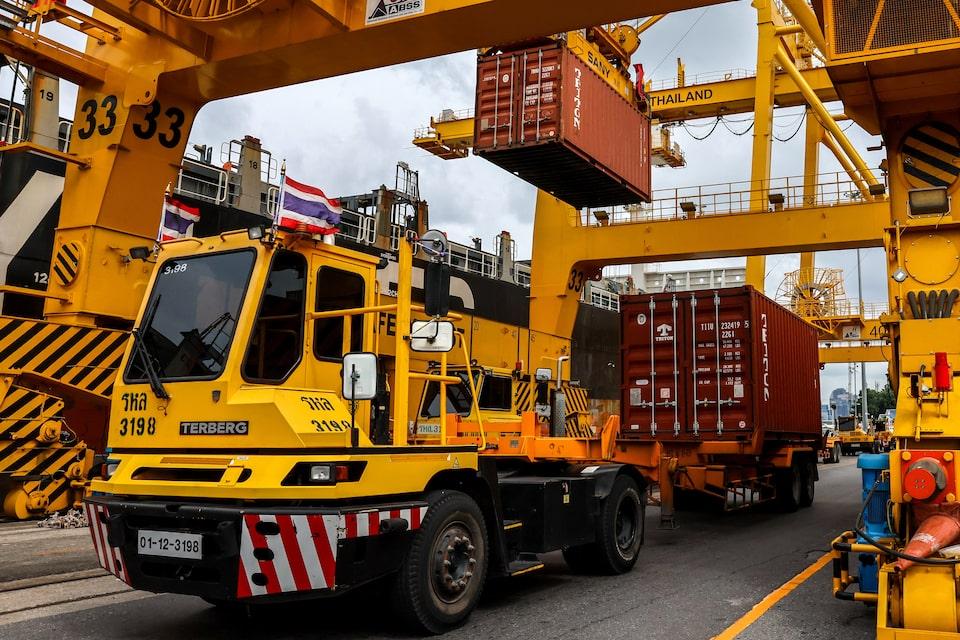
Mexico avoids 30% tariff on non-automotive, non-metals goods A 35% tariff on many Canadian goods Brazil hit with 50% tariff, some sectors excluded China trade deal not finalized, August 12 deadline looms Trump administration teases additional trade deals WASHINGTON/BANGKOK, Aug 1 (Reuters) - U.S. President Donald Trump's latest wave of tariffs on exports from dozens of trading partners, including Canada, Brazil, India and Taiwan, sent global stock markets down on Friday as countries pushed for talks to clinch better deals. Trump's new tariff rates include a 35% duty on many goods from Canada, 50% for Brazil, 25% for India, 20% for Taiwan and 39% for Switzerland. Sign up here. The presidential order , opens new tab listed higher import duty rates of 10% to 41% starting in seven days for 69 trading partners, effectively taking the U.S. effective tariff rate to about 18%, from 2.3% last year, according to analysts at Capital Economics. Global shares stumbled, with the STOXX 600 (.STOXX) , opens new tab down 1.3% at its lowest in a month. U.S. stock index futures , were down 1%, indicating a drop at the start of trade on Wall Street later. Futures tied to Canada's main stock index slipped. The market response was not as volatile as April's global asset declines, said Wei Yao, research head and chief economist in Asia at Societe Generale, referring to the market slide after Trump's initial tariffs announced on April 2. "We are all getting much more used to the idea of 15-20% tariffs being manageable and acceptable, thanks to the worse threats earlier," she said. But Trump's tariff rollout comes amid evidence they have begun driving up prices. U.S. Commerce Department data released Thursday showed prices for home furnishings and durable household equipment jumped 1.3% in June, the biggest gain since March 2022. NO WINNERS? Countries hit with hefty tariffs said they will seek to negotiate with the U.S. in hopes of getting a lower rate. Switzerland said it would push for a "negotiated solution" with the U.S. "It’s a massive shock for the export industry and for the whole country. We are really stunned," said Jean-Philippe Kohl, deputy director of Swissmem, representing Switzerland's mechanical and electrical engineering industries. Taiwan President Lai Ching-te said the new 20% tariff rate for the island was "temporary" and that he expected to reach a lower figure. South Africa's Trade Minister Parks Tau said he was seeking "real, practical interventions" to defend jobs and the economy against the 30% U.S. tariff it faces. Southeast Asian countries breathed a sigh of relief after the U.S. tariffs on their exports that were lower than threatened and levelled the playing field with a rate of about 19% across the region's biggest economies. Thailand's finance minister said a reduction from 36% to 19% would help his country's economy. "It helps maintain Thailand's competitiveness on the global stage, boosts investor confidence and opens the door to economic growth, increased income and new opportunities," Pichai Chunhavajira said. Australian products could become more competitive in the U.S. market, helping businesses boost exports, Trade Minister Don Farrell said, after Trump kept the minimum tariff rate of 10% for Australia. But businesses and analysts said the impact of Trump's new trade regime would not be positive for economic growth. "No real winners in trade conflicts," said Thomas Rupf, co-head Singapore and CIO Asia at VP Bank. "Despite some countries securing better terms, the overall impact is negative." "The tariffs hurt the Americans and they hurt us," winemaker Johannes Selbach said in Germany's Moselle Valley. "Thousands of families who produce wine in Europe and thousands of families in the importing, wholesaling, retailing, restaurant business in the U.S. are dependent on the flow from both sides," he said, adding jobs and profits would be hit. Goods from all other countries not listed in Trump's executive orders will face a 10% U.S. import tax. Trump had previously said that rate might be higher. The administration also teased that more trade deals were in the pipeline. CANADA, INDIA, CHINA The Republican president has tapped emergency powers, pressured foreign leaders, and pressed ahead with trade policies that sparked a market sell-off when they were first announced in April. Trump's order said some trading partners, "despite having engaged in negotiations, have offered terms that, in my judgment, do not sufficiently address imbalances in our trading relationship or have failed to align sufficiently with the United States on economic and national-security matters." Trump issued a separate order , opens new tab for Canada that raises the rate on Canadian goods subject to fentanyl-related tariffs to 35%, from 25% previously, saying Canada had "failed to cooperate" in curbing illicit narcotics flows into the U.S. The higher tariffs on Canadian goods contrasted sharply with Trump's decision to grant Mexico a 90-day reprieve from higher tariffs of 30% on many goods to allow time to negotiate a broader trade pact. Canadian Prime Minister Mark Carney said he was disappointed by Trump's decision, and vowed to take action to protect Canadian jobs and diversify exports. India is in trade talks with the U.S. after Washington imposed a 25% tariff on New Delhi, a move that could impact about $40 billion worth of its exports, an Indian government source with knowledge of the talks told Reuters on Friday. China is facing an August 12 deadline to reach a durable tariff agreement with Trump's administration. A U.S. official told reporters that they are making progress toward a deal. The European Union struck an agreement on a blanket 15% tariff with the U.S. at the end of July. https://www.reuters.com/world/china/trump-hits-more-countries-with-steep-tariffs-markets-tumble-2025-08-01/
2025-08-01 11:36
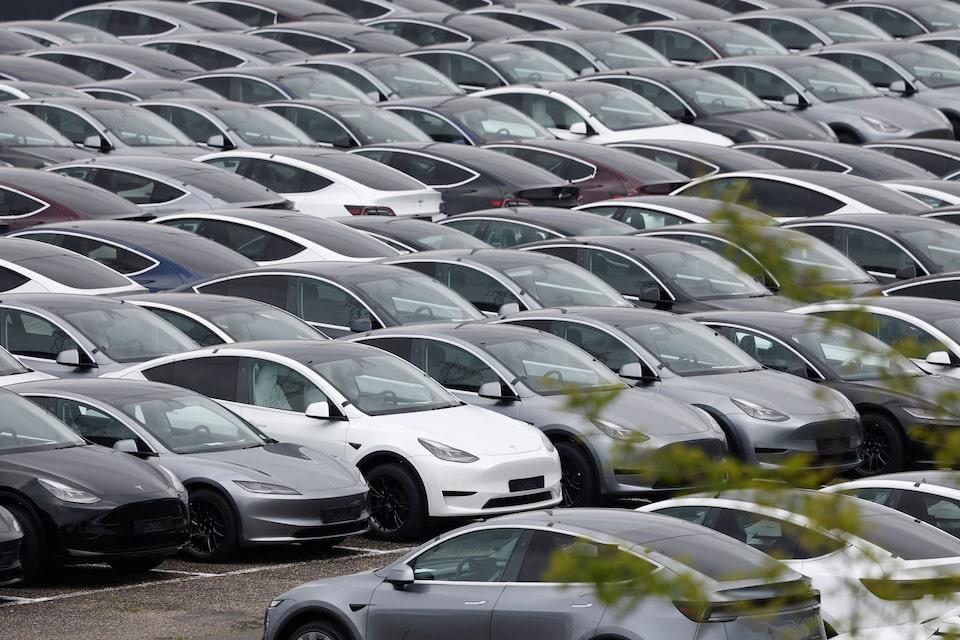
Tesla July registrations down 86% in Sweden, 27% in France They were up 83% in Norway and 27% in Spain Model Y sales down 88% in Sweden, up fourfold in Norway Musk: regulatory issues make it harder to sell in Europe Aug 1 (Reuters) - Registrations of new Tesla (TSLA.O) , opens new tab cars in several key European markets fell in July, despite a revamp to its signature Model Y, as the EV maker struggles with a backlash to CEO Elon Musk's political views, regulatory challenges and rising competition. Tesla's aging lineup is facing a wave of low-cost EV rivals, especially from China. It is rolling out a revamped Model Y and starting to produce a new, cheaper model, but production of that will only ramp up next quarter, later than initially expected. Sign up here. The brand's registrations - a close proxy of sales - fell 86% year-on-year in July to 163 cars in Sweden, 52% to 336 cars in Denmark, 27% to 1,307 in France and 62% to 443 in the Netherlands, official industry data showed, marking a seventh straight monthly drop in all of those countries. Tesla sales dropped by over a third in Europe in the first six months of the year. Norway and Spain bucked the trend, with Tesla's registrations up 83% and 27% to 838 cars and 702 cars, respectively. Spain recorded a 155% jump in total sales of electrified cars - either battery electric or plug-in hybrid. Tesla's Chinese competitor BYD (002594.SZ) , opens new tab sold 2,158 cars in Spain in July, almost eight times more than in July 2024. With no more affordable-end vehicles on the horizon until the last three months of the year and the upcoming end of a $7,500 U.S. tax break for EV buyers, Musk acknowledged in July that Tesla (TSLA.O) , opens new tab could have "a few rough quarters". He said tough automated driving regulations in Europe made it harder to sell the Model Y in some countries, as the vehicle's optional supervised self-driving is "a huge selling point". "Our sales in Europe, we think will improve significantly once we are able to give customers the same experience that they have in the U.S.," he told analysts. Tesla began selling a long-range four-wheel version of the revamped Model Y in Europe in March 2025, while sales of the two rear-wheel drive variants began in May. Model Y registrations in Sweden and Denmark fell by 88% and 49% respectively in July, while they jumped more than fourfold to 715 cars in Norway. Norway, where almost all new cars sold are fully-electric and where Tesla has been the best-selling brand since 2021, has seen a surge in orders for the model since May after the automaker launched 0% interest loans in some Nordic countries to drum up demand. Tesla launched in June a trial robotaxi service in Austin, Texas, using about a dozen Model Y SUVs controlled by its autonomous-driving software. But the roll-out of its self-driving features elsewhere in the U.S. is bogged down because it hasn't received the required permits. Overall car sales were up 20% in Denmark, 6% in Sweden, 48% in Norway, 17% in Spain and 9% in the Netherlands, while they slid 8% in France in July, industry data showed. Other European countries are expected to release July car sales data later on Friday. European automakers Volkswagen (VOWG.DE) , opens new tab, Mercedes-Benz (MBGn.DE) , opens new tab, Stellantis (STLAM.MI) , opens new tab, Renault (RENA.PA) , opens new tab and BMW (BMWG.DE) , opens new tab have published downbeat second-quarter results, warning of pressure from U.S. import tariffs and falling demand. https://www.reuters.com/business/autos-transportation/tesla-sales-drop-again-around-europe-despite-model-y-revamp-2025-07-31/