2025-08-01 11:29
Aug 1 (Reuters) - AngloGold Ashanti's (AU.N) , opens new tab, second-quarter profit jumped 151% on record gold prices and increased output, allowing the company to bump up its quarterly dividend, it said on Friday. The gold miner's headline earnings were $639 million in the three months to June 30, up from $255 million a year earlier. Sign up here. AngloGold Ashanti's gold production increased by 21% to 804,000 ounces during the quarter, driven by strong contributions from the Obuasi mine in Ghana, the Geita mine in Tanzania and the addition of Egypt's Sukari mine, in which it acquired a 50% share last year. The company said its average gold price increased to $3,287 per ounce in the second quarter of 2025, from $2,330 an ounce during the same period last year. AngloGold Ashanti declared a quarterly dividend of $0.80 per share, above its minimum quarterly payout of $0.125 per share, reflecting "the strength of cash flows and confidence in the outlook", the company said. https://www.reuters.com/world/africa/anglogold-ashanti-raises-dividend-after-151-jump-second-quarter-profit-2025-08-01/
2025-08-01 11:29
US announces 39% tariff on imports from Switzerland Swiss manufacturers say tens of thousands of jobs at risk Talks to continue ahead of August 7 introduction RUETLI, Switzerland, Aug 1 (Reuters) - Swiss manufacturers warned on Friday that tens of thousands of jobs were at risk after U.S. President Donald Trump hit them with one of the highest tariff rates in his global trade reset, even if there was some relief for now for the key drugs sector. The government said it was "disappointed" and would decide how to proceed after Trump set a 39% tariff on the export-reliant country - more than double the 15% rate for most European Union imports into the United States. Sign up here. The levy - up from an originally proposed 31% tariff that Swiss officials had described as "incomprehensible" - is a body blow for the small Alpine nation, which counts the U.S. as the top export market for its pharmaceuticals, watches, machinery and chocolates. The White House said on Friday it had made the move because of what it called Switzerland's refusal to make "meaningful concessions" by dropping trade barriers. "Switzerland, being one of the wealthiest, highest income countries on earth, cannot expect the United States to tolerate a one-sided trade relationship," a White House official said. Swiss President Karin Keller-Sutter earlier told Reuters the government would keep talking to Washington, but there were only limited concessions it could offer, as U.S. imports already enjoyed 99.3% free market access. "We have companies that have made very important direct investments (in the U.S.). It's really difficult to give more," she said on the sidelines of a Swiss National Day event in Ruetli. Keller-Sutter said the government was disappointed, with the 39% tariff "much higher" than what had been negotiated following "very constructive talks" with Washington in July. Swiss media had reported that the government had expected a rate of around 10%. Switzerland's main export to the U.S. is pharmaceutical products - worth $35 billion last year - though officials said drugmakers should not be affected by the higher rate for now. Swissmem, a group representing the mechanical and electrical engineering industries, said it was "really stunned" by the U.S. move. "It's a massive shock for the export industry and for the whole country," said its deputy director Jean-Philippe Kohl. "The tariffs are not based on any rational basis and are totally arbitrary ... This tariff will hit Swiss industry very hard, especially as our competitors in the European Union, Britain and Japan have much lower tariffs." The U.S. is Switzerland's top foreign watch market, accounting for 16.8% of exports, or about 4.4 billion francs, according to the Federation of the Swiss Watch Industry. Shahzaib Khan, who runs two businesses selling Swiss luxury watches abroad, said the tariffs were "hard to digest". "This is getting out of hand a little bit... I don't think brands can absorb 39%," Khan told Reuters. The new rate is set to take effect on August 7, and a Swiss source familiar with the matter said negotiations would continue. UBS Global Wealth Management's Chief Investment Office said its base case remains that Switzerland would eventually reach a deal similar to the one secured by the EU, which had 15% tariffs on imports to the United States. "We expect weak growth but no recession for the Swiss economy in the coming quarters," it added. PHARMA STILL FACES THREAT There was some respite for the pharmaceuticals sector, which includes industry giants Roche (ROG.S) , opens new tab and Novartis (NOVN.S) , opens new tab, as they were not included in the 39% rate. "Swiss authorities understand that the tariffs should not include the pharmaceuticals sector," a spokesperson for the Economy Ministry said. The sector still faces the possibility of separate levies. Pharmaceuticals have historically been spared from trade wars due to the potential harm to patients. But Trump has said he wants to reduce the industry's reliance on foreign-made drugs and bring prices down. He has launched a Section 232 national security investigation into the pharmaceutical sector worldwide, with a decision on whether to impose separate tariffs on that sector expected in the coming weeks. Trump said in July those duties could be as high as 200%. Scienceindustries, a Swiss business association of more than 250 chemical, pharmaceutical, biotech and other scientific firms, warned that the chemical and pharmaceutical industry could still be affected by these tariffs. "Pharmaceutical products are part of complex, globally interconnected supply chains. New tariffs would place a heavy burden on these structures, with growing uncertainty for companies and serious risks to the supply of vital medicines, particularly in the USA," the association said in a statement. SHIFT IN STATEMENT Trump's announcement differs significantly from a joint draft statement approved by the Swiss government on July 4 after intensive talks with the U.S., the finance ministry said in a statement, without giving details. Swiss officials have been waiting since then for a sign-off on what was understood to be a preliminary framework for a deal, according to a person familiar with the matter. Keller-Sutter, who also serves as finance minister, and Economy Minister Guy Parmelin had visited Washington to press their case; Switzerland is the seventh-largest investor in the United States. Switzerland sent about 65 billion Swiss francs of goods to the United States last year, or about one-sixth of its total exports, giving it a goods trade surplus with the U.S. of almost 38.7 billion francs. In services, it had a deficit of nearly 20.4 billion francs. https://www.reuters.com/world/europe/swiss-stunned-by-us-tariff-hike-seek-negotiated-solution-2025-08-01/

2025-08-01 11:23
Aug 1 (Reuters) - Futures tied to Canada's main stock index slipped on Friday, as investors woke up to U.S. President Donald Trump's new tariff regime that included fresh levies on Canada and dozens of other countries. Futures on the S&P/TSX index were down 1% at 1,605.40 points by 06:52 a.m. ET (1052 GMT). The benchmark index gave back some of its monthly gains in the previous session. Sign up here. Trump late on Thursday signed an executive order increasing tariffs on all Canadian goods not covered by the U.S.-Mexico-Canada trade agreement to 35% from 25%. He also imposed steep tariffs on imports from dozens of other trading partners including Brazil, India, Taiwan and Switzerland, pressing ahead with his plans to reorder the global economy. Adding to investors' concerns, Trump sent letters to the leaders of 17 major pharmaceutical companies outlining how they should slash U.S. prescription drug prices to match those paid overseas. In commodities, gold prices held steady on Friday, while oil prices were little changed and copper prices stabilised. In corporate news, Canadian auto parts supplier Magna International (MG.TO) , opens new tab raised its annual sales forecast and topped second-quarter estimates, benefiting from its cost-cutting measures. Focus will be on the U.S. jobs data, due later in the day. FOR CANADIAN MARKETS NEWS, CLICK ON CODES: TSX market report Canadian dollar and bonds report CA/ Reuters global stocks poll for Canada , Canadian markets directory https://www.reuters.com/markets/europe/tsx-futures-fall-after-trump-slaps-fresh-tariffs-canada-2025-08-01/
2025-08-01 11:02
Aug 1 (Reuters) - Coinbase (COIN.O) , opens new tab shares slumped 15% and hit their lowest in more than a month on Friday, after the crypto exchange reported a drop in second-quarter adjusted profit due to a slowdown in trading. The stock was last trading at $321.68, set to wipe out $14.3 billion of market value if current levels hold. It has gained 52% this year as of last close, ranking among the top 15 gainers on the benchmark S&P 500 (.SPX) , opens new tab index, which Coinbase joined in May. Sign up here. "We see the shares as significantly overvalued. We believe that the market is projecting too much future growth for the firm," Morningstar analyst Michael Miller wrote in a note. The sharp investor reaction underscores the challenge Coinbase, as a major player in the crypto space, faces to sustain its recent strong revenue growth. By contrast, Robinhood (HOOD.O) , opens new tab, which has a smaller footprint in the segment, reported that its crypto trading revenue had nearly doubled in the second quarter. "We believe investor enthusiasm had reached a 'fever pitch' heading into last night's results, as valuation has detached from underlying fundamentals," analysts at H.C. Wainwright wrote in a note. Coinbase posted adjusted profit of $33.2 million, or 12 cents per share, during the three months ended June 30, compared with $294.4 million, or $1.10 apiece, a year earlier. Bullish crypto sentiment encouraged investors to hold their assets, limiting trading activity and contributing to the lower volatility Coinbase saw during the period. Analysts, however, said trading volumes could improve this quarter, based on the company's revenue estimates for July. The month saw a surge in crypto enthusiasm after the Genius Act was signed into law. The landmark legislation pushed bitcoin to a record high. https://www.reuters.com/business/coinbase-shares-sink-after-trading-weakness-hits-quarterly-profit-2025-08-01/
2025-08-01 10:43
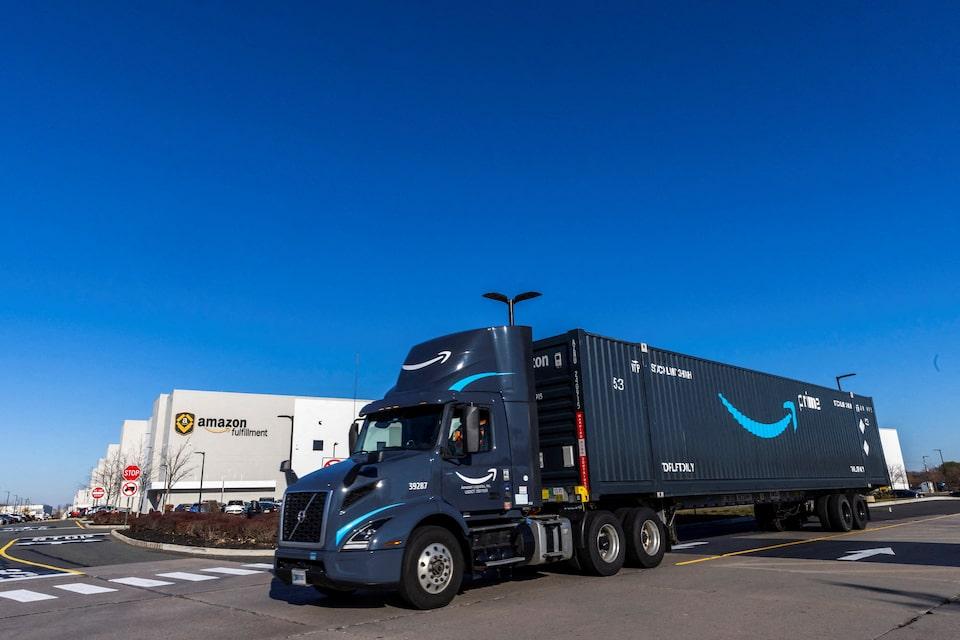
LONDON, Aug 1 (Reuters) - What matters in U.S. and global markets today By Mike Dolan , opens new tab, Editor-At-Large, Finance and Markets Sign up here. A tariff day blitz, pharma hit and Amazon stumble all left a cloud over Friday's stock markets as the U.S. monthly employment report is set to test faded Federal Reserve easing bets. The bombardment of tariff developments, economic data and earnings news this week has left macro markets slightly nonplussed, but Wall Street futures and global bourses took a dimmer view of the whole picture heading into the final day. * As U.S. President Donald Trump detailed his August 1 tariff list, Canada failed to escape 35% levies - unlike the reduced 15% rates Japan and Europe had negotiated - and the Canadian dollar plumbed two-month lows. Mexico got another 90 day reprieve. Brazil faces 50%, though for a more limited series of goods than feared. Switzerland faces 39%. * Amazon blotted the otherwise impressive megacap earnings copybook, with a poorly received earnings outlook that sent its shares down 7% overnight. Apple's beat lifted its stock 1%. But pharmaceutical stocks in the U.S. and abroad were knocked back. Trump sent letters to 17 major pharma firms outlining how they should slash U.S. prescription drug prices. U.S. index futures and European bourses were down more than 1% ahead of Friday's bell. * Markets now await the July payrolls report, with a slowdown in jobs growth to 110,000 last month expected even though immigration curbs have also cut the available workforce. A wary Fed is absorbing a week of relatively hot growth and inflation numbers, with futures seeing less than a 50% chance of rate cuts resuming at its next meeting in September. U.S. economic surprise indexes are at their most positive since February, while euro zone equivalents are the highest in more than a year. The rejuvenated dollar continues to probe higher, with its DXY index at two-month highs as dollar/yen shrugged off mixed Bank of Japan signals by hitting its highest since March. Today's Market Minute * President Trump slapped steep tariffs on exports from dozens of trading partners including Canada, Brazil, India and Taiwan, pressing ahead with his plans to reorder the global economy ahead of a Friday trade deal deadline. * As Trump's new tariff regime clicks into gear on Friday, producers around Europe are feeling the impact, some holding back shipments, others hiking sticker prices or taking a hit to margins. Some fear they won't survive at all. * Asia's factory activity deteriorated in July as soft global demand and lingering uncertainty over U.S. tariffs weighed on business morale, private sector surveys showed on Friday, clouding the outlook for the region's fragile recovery. * Federal Reserve Chair Jerome Powell made it clear that the resilient U.S. labor market is currently the primary determinant of monetary policy, a signal that strong July employment figures could snuff out all bets for a September rate cut and reduce the likelihood of any further easing this year. Read the latest from ROI columnist Jamie McGeever. * Europe and Asia could leverage Trump’s "America First" strategy for their own benefit, writes TPW Advisory Founder Jay Pelosky, eventually spurring the development of regional tripolar FX blocs that could erode the dominance of the U.S. dollar and reshape global markets. Weekend Reads POPULATION GROWTH RESET: Compounded by halted immigration and aging, U.S. population growth has halved to an annualized rate of just 0.5% since late 2023 and the 'breakeven rate' of monthly payroll growth that would keep pace up with the labor force has almost halved over the past year to 86,000 in June 2025 , opens new tab. So concludes Peterson Institute fellow Jed Kolko, adding: "any given level of monthly payroll growth, consumption growth or output growth reflects a stronger economy than it did a year ago." MONETARY CONDITIONS INDEX: A Bank for International Settlements working paper introduces a new monetary policy conditions index , opens new tab (MCI) that combines the impact of both interest rate settings and the size of central bank balance sheets to help policymakers coordinate both aspects. "At the current juncture, the MCI highlights the persistence of large central bank balance sheets - either considering the U.S. or at the global level - loosens the stances of monetary policy." EUROPE ROLLS OVER?: In a stinging critique of the European Union's decision to accept higher U.S. tariffs without retaliation and pledge hundreds of billions in spending to boot, Alberto Alemanno, Professor of European Union Law at HEC Paris, writes of "Europe's Economic Surrender" , opens new tab. In a column on Project Syndicate, Alemanno said the EU deal highlights the bloc's inability to present a united front and cements its dependence on the United States - rendering it a "prosperous yet powerless appendage" of America. INDEPENDENCE AND SPACE: Greater central bank independence from politics actually offers governments more fiscal space , opens new tab by reducing the costs of borrowing over time and allowing higher debt-to-GDP ratios, according to a World Bank working paper that examines the experience of 155 countries over 50 years. POWELL AND CREDIBILITY: Using data from online betting platform Polymarket, University of California, Berkeley Professor Barry Eichengreen and co-authors look at how Donald Trump's relentless pressure on Fed Chair Jerome Powell affects ideas of central bank independence , opens new tab and market outcomes. In a column on CEPR's VoxEU, they show that rising criticism of the Fed boss matches expectations of lower short-term interest rates - along with higher long-term borrowing rates and higher recession fears. 'ASLEEP AT THE WHEEL'?: In a critique of the latest benign world economic forecasts from the International Monetary Fund, former IMF official Desmond Lachman accuses the Fund of failing to warn of outsize global macro risks , opens new tab from rising U.S. deficits and protectionism. In a piece published by the American Enterprise Institute think tank, Lachman lambasts the IMF's record on crisis warnings and said it's "difficult to see how (the U.S.) economy too will not come to a sorry end as a result of its public finance excesses." LESS RAIN, MORE WHEAT: A revolution in farm management has enabled Australia to produce 15 million metric tons more wheat annually than in the 1980s - despite hotter, drier conditions. The increase is equivalent to 7% of all wheat shipped around the planet each year. In a Reuters Special Report, Peter Hobson shows how the ability of Australia's farmers to produce more owes largely to innovations that changed the seeds they plant, how they plant them and how they cultivate the soil. Chart of the day The United States imposed steep import tariffs on goods from dozens of trading partners, including Canada, Brazil, India and Taiwan, as Friday's deadline hit, pressing ahead with plans to reorder the global economy. The order listed higher import duty rates of 10% to 41% starting in seven days for 69 trading partners. The seven-day lead time offered some hope that last-minute deals may yet emerge. In the meantime, U.S. federal appeals court judges questioned Trump's use of emergency powers to justify his tariffs as hearings began on Thursday and a final decision is expected later in the month. Today's events to watch * U.S. July employment report (8:30 AM EDT), July manufacturing surveys from ISM (10:00 AM EDT) and S&P Global (9:45 AM EDT), University of Michigan final July consumer sentiment reading (10:00 AM EDT) * U.S. corporate earnings: Exxon Mobil, Chevron, Moderna, Regeneron, Colgate Palmolive, T Rowe Price, Kimberly-Clark, WW Grainger, LyondellBasell, Dominion Energy, Franklin Resources, Linde, Church & Dwight Want to receive the Morning Bid in your inbox every weekday morning? Sign up for the newsletter here. You can find ROI on the Reuters website , opens new tab, and you can follow us on LinkedIn , opens new tab and X. , opens new tab Opinions expressed are those of the author. They do not reflect the views of Reuters News, which, under the Trust Principles , opens new tab, is committed to integrity, independence, and freedom from bias. https://www.reuters.com/business/finance/global-markets-view-usa-2025-08-01/
2025-08-01 10:27
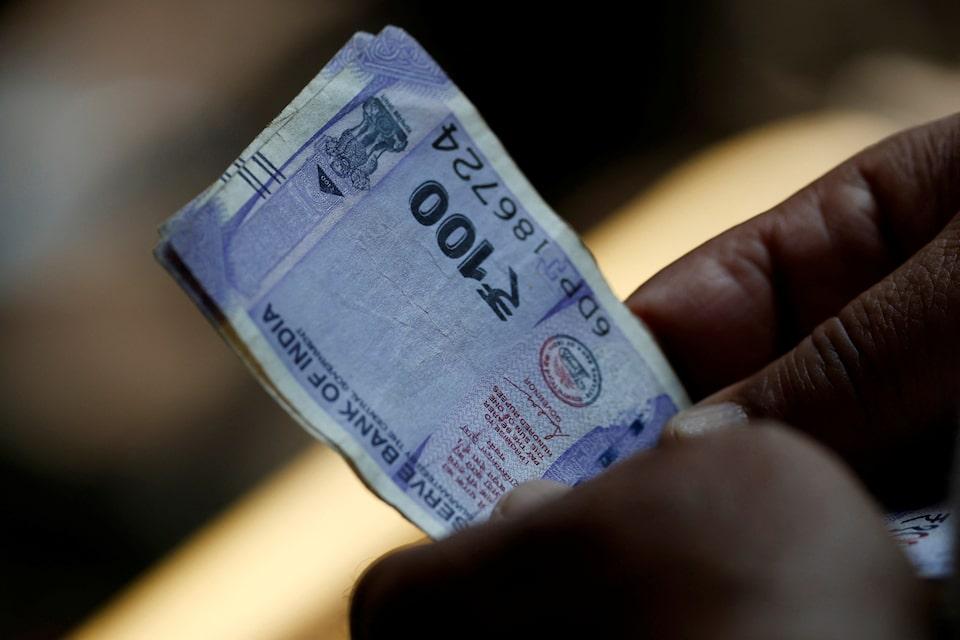
MUMBAI, Aug 1 (Reuters) - The Indian rupee nudged higher on Friday, supported by likely intervention from the Reserve Bank of India, but still logged its worst weekly drop since late 2022 due to worries over U.S. tariffs and sustained foreign portfolio outflows. The rupee closed at 87.54 against the U.S. dollar on Friday, a tad higher than its close at 87.5950 in the previous session. On the week, the currency declined 1.2%, its worst performance since December 2022. Sign up here. The South-Asian currency fell to 87.74 on Thursday, just shy of its all-time low of 87.95 in February, following President Donald Trump's announcement of a steeper-than-expected 25% tariff on Indian imports. Firm intervention by the central bank on Friday helped the rupee find some footing, but traders and analysts expect a depreciation bias in the near term. Consistent foreign outflows from local stocks alongside elevated corporate dollar demand are likely to keep the local currency under pressure, traders said. Foreign investors net sold $2 billion of Indian equities in July. India's equity benchmarks, the BSE Sensex (.BSESN) , opens new tab and Nifty 50 (.NSEI) , opens new tab were lower on the day and logged their fifth consecutive weekly fall. Meanwhile, Asian currencies fell after the U.S. imposed sweeping new tariffs on dozens of trading partners. The Korean won led losses with a near 1% fall. The Reserve Bank of India's monetary policy decision and developments related to U.S. trade tariffs will be the key drivers for the rupee next week. "The market now firmly believes that tariffs are transactional rather than ideological," ING said in a note. "Perhaps the biggest risk now is that of secondary sanctions on the likes of China, India and Turkey as Washington tries to turn the screws on Russia and those buying its cheap oil," the brokerage added. The dollar index was up 0.1% at 100.1, as investors await key U.S. labour market data later on Friday to gauge the future path of policy rates in the world's largest economy. (This story has been corrected to change the rupee closing level to 87.54 from 87.53, in paragraph 2) https://www.reuters.com/world/india/rupee-steadies-cap-rough-week-dominated-by-trumps-tariff-jolt-2025-08-01/