2025-08-01 09:52
PARIS, Aug 1 (Reuters) - The trade deal between the European Union and the United States should not impact the business of French nuclear fuels company Orano, as so far the U.S. has not imposed tariffs on uranium products, its CEO Nicolas Maes told reporters on Friday. Under the deal announced last Sunday, the EU agreed to purchase nuclear energy products along with U.S. liquefied natural gas and oil worth in total $750 billion over the next three years. Sign up here. "We have looked at the material, and for all the deals that have been signed so far between the U.S. and other regions of the world, and isotopes, uranium, enriched uranium are exempted," Maes said. However, he said the deal's provision for exports of nuclear fuel from the U.S. to Europe was surprising, given that the U.S. is an importer, rather than exporter of the fuel it needs for its nuclear power plants. "The U.S. market is structurally importing nuclear material and not exporting," Maes said. He also said Orano's plans to expand the company's nuclear enrichment facilities in Oak Ridge, Tennessee, should not be affected by either the trade deal or U.S. President Donald Trump's executive order deregulating the nuclear sector. Trump signed an executive order In May to reduce regulations and fast-track new licences for nuclear reactors and power plants and reinvigorate uranium production and enrichment in the country. Maes said that Orano will maintain its nuclear safety standards but the order may result in easier dialogue between the nuclear safety authority and the utilities during the permitting process. He repeated an earlier comment that a final investment decision on the project is expected in 2027. https://www.reuters.com/business/energy/nuclear-fuels-producer-orano-does-not-expect-any-impact-eu-us-deal-2025-08-01/
2025-08-01 09:06
Aug 1 (Reuters) - As Donald Trump's latest round of tariff turmoil ripples through markets and the global economy, U.S. company results continue to trickle in, policymakers in Britain and Mexico decide on rates, and oil exporting countries meet to adjust output quotas. Here's your weekahead from Bill Schomberg and Karin Strohecker in London, Kevin Buckland in Tokyo and Alden Bentley in New York. Sign up here. 1/RESULTS AND REFINANCING A raft of bellwether blue chips are reporting to Wall Street with Caterpillar (CAT.N) , opens new tab due on Tuesday, then Disney (DIS.N) , opens new tab, and McDonald's (MCD.N) , opens new tab on Wednesday. All are in the Dow 30 index, which has been flirting with record highs. Beats or upbeat outlooks from these could help lift this bellwether over the line. It is the only benchmark that has yet to hit a new peak after April's tariff panic. Some data points will help gauge the health of the world's largest economy, with durable goods orders out on Monday, and the ISM services purchasing managers' index on Tuesday. Meanwhile, U.S. Treasury auctions for benchmark 10-year and 30-year bonds will show if strong demand seen in shorter-dated papers in recent days can be replicated further out the curve. 2/SLOWING STIMULUS It's been a challenge for Beijing: how do you stir animal spirits while pivoting the world's number two economy to one built on consumers instead of factories? Trade data on Thursday and inflation figures two days later will give the latest reading on how arduous the task remains. The numbers come on the back of a closely-watched Politburo meeting, where policymakers vowed a crackdown on crippling domestic price wars but not offering much concrete new stimulus - much to the chagrin of domestic investors. Analysts say that's a good thing, chalking up slowing support measures to a stronger-than-expected economy and smoother-than-anticipated tariff negotiations with Washington. Meanwhile, trade talks with the U.S. ended without a breakthrough though look on track for an extension to the August 12 deadline. 3/JOBS AND PRICES Rising inflation and falling employment will be at the heart of the Bank of England's conundrum when policymakers meet on Thursday to set interest rates. Analysts expect a quarter-point cut to 4% and another "gradual and careful" message about its following moves. Markets are pricing another cut before year-end and one more in 2026. But some analysts think the BoE might have to call a halt to the process perhaps as soon as next week, given the warning signals about inflation. Another three-way split among policymakers looks likely amid differences over which danger is most pressing. The BoE is expected to assess the impact of its push to run down government debt stockpiles ahead of a September decision on the pace of sales over the following 12 months. 4/TRADE AND RATES Mexico's central bank policymakers also meet on Thursday to decide on interest rates, and are expected to deliver another 25-basis-point cut to lower rates to 7.75% - which would be a three-year trough. But the outlook is clouded - minutes from the July meeting confirm a shift in the easing cycle, notably, policymakers pre-committing to more easing as they face persistent inflation and weak domestic demand. And the outlook for Mexico's trade relationship with its northern neighbour is adding to uncertainty. Mexican President Claudia Sheinbaum said on Thursday she secured a pause on new tariffs coming into effect and a 90-day period to work on a trade deal. 5/SECONDARY SANCTIONS The Organization of the Petroleum Exporting Countries and allies led by Russia are meeting on Sunday to decide on increasing oil output for September. Expectations are the group will raise output by 550,000 barrels per day in what would be its last move for now - though the decision comes at a delicate moment for energy markets. Analysts are trying to sift through the fog of what the economic impact - and change in crude oil demand - will be in the wake of Trump's tariff onslaught. Looming even larger is the question of secondary sanctions on Russian oil exports from Washington: Trump said on Monday that Russian President Vladimir Putin had only 10 to 12 days to reach a deal to end the war in Ukraine before Washington would impose such curbs, short circuiting the previous 50-day timeframe set on July 14. https://www.reuters.com/business/take-five/global-markets-themes-graphic-2025-08-01/
2025-08-01 08:50
LONDON, Aug 1 (Reuters) - The pound held steady on Friday, having posted its worst monthly performance against the dollar in three years, as the U.S. currency rallied after President Donald Trump imposed new tariff rates on dozens of trade partners. Sterling lost nearly 4% in value in July, its biggest monthly decline since September 2022's so-called "mini-budget crisis" that drove the currency to a record low against the dollar and sparked turmoil across the UK bond market. Sign up here. The Bank of England meets next week and is widely expected to cut interest rates by a quarter point to 4%, their lowest in 2-1/2 years. The pound was last flat on the day at $1.3203, near its lowest since mid-May, having struck a near four-year high of $1.3787 just a month ago. Friday's U.S. nonfarm payrolls report is likely to be key in either cementing the dollar's recent rally or bringing it to an end. A reading above the 110,000 increase forecast in a Reuters poll of economists could give the dollar an even bigger boost, especially as the worst fears over the impact of U.S. tariffs have ebbed. "This dynamic is unlikely to change ahead of the weekend either, with little of note in the UK calendar for today. That leaves U.S. events top of mind for sterling traders, with uncertainty the dominant theme," Monex analysts said. The biggest catalyst driving the pound down has been the deterioration in UK economic data. The BoE, among the more conservative of the major central banks when it has come to lowering borrowing costs, is now expected to deliver more rate cuts in the coming six months than either the European Central Bank or the Federal Reserve, based on money markets. https://www.reuters.com/world/uk/sterling-steadies-after-worst-monthly-performance-since-2022-2025-08-01/
2025-08-01 07:53
Trump hits dozens of countries with steep tariffs US dollar index hovers near two-month high Silver, platinum, palladium set for weekly losses Aug 1 (Reuters) - Gold prices held steady on Friday, but is poised for a third consecutive weekly loss pressured by a stronger dollar and diminished expectations for U.S. rate cuts, while uncertainty from U.S. tariffs on trading partners offered support. Spot gold was steady at $3,288.89 per ounce, as of 0733 GMT. Bullion is down 1.4% so far this week. Sign up here. U.S. gold futures edged down 0.3% to $3,339.90. The dollar index (.DXY) , opens new tab hit its highest level since May 29, making gold more expensive for other currency holders. "Gold remains weighed by reduced bets for Fed rate cuts for the rest of 2025. This week's U.S. GDP, weekly jobless claims, and PCE figures also shored up the Fed's reluctance to commit to a rate cut," said Han Tan, chief market analyst at Nemo.Money. Fed held rates steady in the 4.25%-4.50% range on Wednesday and dampened expectations for a September rate cut. U.S. President Donald Trump slapped steep tariffs on exports from dozens of trading partners, including Canada, Brazil, India and Taiwan, pressing ahead with his plans to reorder the global economy ahead of a Friday trade deal deadline. "The precious metal should, however, remain supported amid the still-uncertain impact from U.S. tariffs on global economic growth," Tan said. U.S. inflation increased in June as tariffs on imports started raising the cost of some goods. Focus now shifts to U.S. jobs data, due later on Friday, as investors assess the Federal Reserve's policy trajectory, with July job growth expected to have slowed and the unemployment rate projected to rise to 4.2%. Gold, often considered a safe-haven asset during economic uncertainties, tends to perform well in a low-interest-rate environment. Physical gold demand in key Asian markets improved slightly this week as a pullback in prices sparked buying interest, though volatility kept some buyers cautious. Spot silver fell 0.7% to $36.50 per ounce, platinum lost 0.8% at $1,278.40 and palladium was down 0.2% to $1,188.28. All three metals were headed for weekly losses. https://www.reuters.com/world/china/gold-set-third-weekly-loss-amid-stronger-dollar-reduced-fed-rate-cut-hopes-2025-08-01/
2025-08-01 07:50
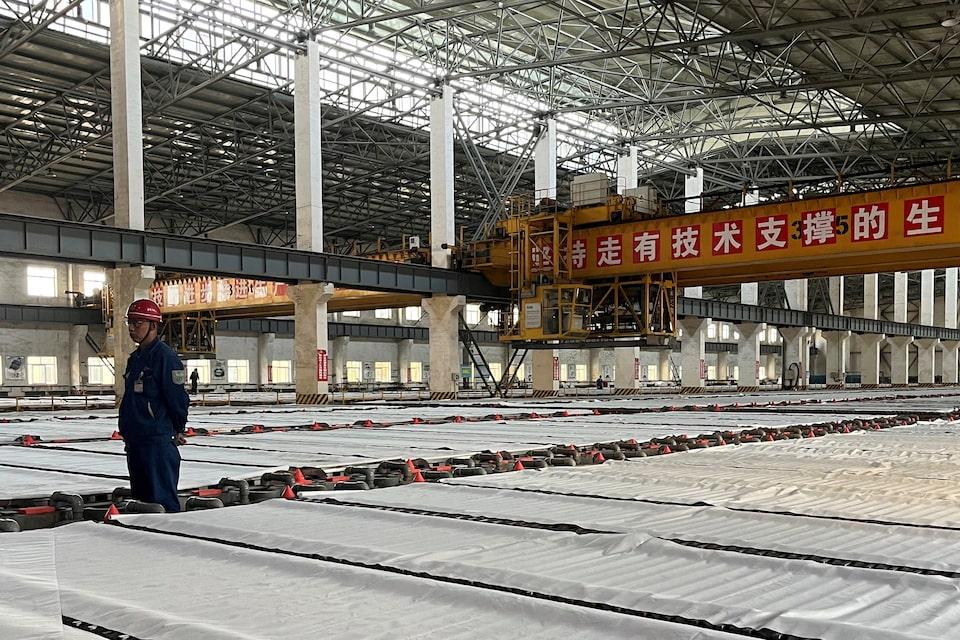
China 2025 refined copper output growth estimated at 7.5%-12% Increase will take China's share of global output to nearly 60% Analysts revise up forecasts for China's copper demand BEIJING, Aug 1 (Reuters) - China's refined copper output is set to hit a record high in 2025, analysts say, as its giant smelting sector powers through a global shortage of copper ore that is forcing some overseas competitors out of business. Refined copper production in China, which already accounts for more than half of the world's output of the metal, will climb between 7.5% and 12% this year and surpass last year's record high of 13.64 million metric tons, according to estimates from five analysts. Sign up here. Copper is vital for power, construction and manufacturing, and growing output in the world's top producer and consumer is sucking in scarce copper concentrate, the main ingredient for smelters, increasing pressure on struggling competitors and cementing China's dominance over the industry. Available concentrate began tightening in late 2023 as anaemic supply growth was worsened by mine closures and rapidly expanding smelting capacity, particularly in China. That pushed processing fees - what smelters are paid to turn concentrate into metal - to record lows, slashing profitability and forcing some smelters outside China to pause production. Chinese smelters have managed to grow output faster than concentrate imports by running down inventories and using scrap from the government's consumer goods trade-in programmes, said Alice Fox, commodities strategist at Macquarie Group. "Chinese refined production has been impressively strong year to date despite tight concentrates and low treatment charges," Fox said. China's refined copper output grew 9.5% in the first half of the year, with many of its state-of-the-art smelting plants partly offsetting losses with growing revenue from byproducts, particularly sulphuric acid and rare elements. China's copper concentrate imports, meanwhile, grew 6.4% in the first half of the year, well ahead of the 0.3% to 0.87% increase in global ore supply analysts had forecast for 2025. That left smelters in other regions with insufficient copper ore to process. China's Sinomine Resource Group (002738.SZ) , opens new tab said last month it had temporarily paused operations at its Tsumeb plant in Namibia because of a concentrate shortage. Glencore (GLEN.L) , opens new tab put its Philippine copper smelter into maintenance in February, citing challenging market conditions. Analysts expect global refined copper output to grow between 0.9% and 2% this year. With China's output rising faster, its share of global refined copper production will rise to 57% this year, according to consultancy Benchmark Mineral Intelligence (BMI). BETTER DEMAND The growth in China's output is being driven by stronger-than-expected exports plus growing investment in the power grid sector, both of which are leading analysts to revise up their copper demand forecasts. BMI increased its forecast for China's copper demand growth this year to 3.8%, versus a forecast of 2.9% at the beginning of the year. Macquarie increased its forecast to 4.2% from 2.4%. The big output jump is also expected to pull down China's refined copper imports, which in 2024 stood at 3.74 million tons or about 20% of national demand. BMI forecasts the imports will fall by 8% in 2025. Refined copper imports have already dropped 8.6% in the first half of the year, partly as traders sent more cargoes to the United States to beat the copper tariffs that U.S. President Donald Trump has been threatening since February. That rush to front-run shipments to the U.S. supported the market against the growing supply, with benchmark copper prices still up 8.8% so far this year. Trump on Wednesday surprised markets with pared back tariffs of 50% on copper pipes and wiring, short of the sweeping restrictions threatened and leaving out copper ores, concentrates and cathodes. The weaker-than-expected tariffs are unlikely to impact Chinese copper production or demand, according to BMI's Zhao Yongcheng. https://www.reuters.com/markets/commodities/china-2025-copper-output-set-hit-record-high-despite-feedstock-shortages-2025-08-01/
2025-08-01 07:33
COPENHAGEN, Aug 1 (Reuters) - Norway's biggest utility, state-owned Statkraft, said on Friday it had agreed to sell its renewables portfolio in Canada, Enerfin Canada, to Atlantica Sustainable Infrastructure for an undisclosed sum. Statkraft said the deal included Enerfin Canada's staff, two operating wind farms totalling 236 megawatt installed capacity and a 0.8 gigawatt portfolio of six wind and solar projects under development. Sign up here. The transaction is expected to close before the end of this year, Statkraft added. The company has said it will restructure its portfolio after heavy losses. https://www.reuters.com/sustainability/climate-energy/norways-statkraft-sells-renewables-portfolio-canada-2025-08-01/