2025-08-01 07:24
Mitsui, Marubeni, Itochu benefit from food businesses Buffett's Berkshire Hathaway holds minority stakes in Japanese trading houses TOKYO, Aug 1 (Reuters) - Higher profits at the diversified food businesses run by Japanese trading houses offset weaker performances at their commodities units, disclosures by Mitsui, Marubeni and Itochu showed on Friday. This diversification from the traditional commodity trading businesses at Itochu (8001.T) , opens new tab, Marubeni (8002.T) , opens new tab, Mitsui (8031.T) , opens new tab is part of what drew Warren Buffett's Berkshire Hathaway (BRKa.N) , opens new tab to take minority stakes in the companies. Sign up here. Profits at Mitsui (8031.T) , opens new tab for the three months ended on June 30 fell 31% from a year earlier partly because of weaker iron ore prices but income at its lifestyle unit, including overseas shrimp and broiler processing as well as domestic foods, grew by around 1 billion yen, accounting for 8% of the total 191.6 billion yen ($1.3 billion) the company earned. Marubeni's food and agriculture business saw a profit increase of 4 billion yen for the same period to 35.5 billion yen, or 23% of its 154.4 billion yen total. Income at the company's metals and mineral resources unit fell by 6 billion yen to 28.7 billion yen. Itochu's profits from its food business rose by nearly 10 billion yen to a record 28.8 billion yen while profits at its FamilyMart convenience store chain rose by 4.5 billion yen to 15.4 billion yen. Combined, they made 16% of Itochu's 284 billion yen quarterly net profit, highest so far. Mitsui, Marubeni and Itochu kept their full fiscal year profit forecasts unchanged on Friday at 770 billion yen, 510 billion yen and 900 billion yen, respectively. ($1 = 150.4600 yen) https://www.reuters.com/markets/asia/food-businesses-offset-commodity-price-hits-japanese-trading-houses-2025-08-01/
2025-08-01 07:11
Aug 1 (Reuters) - Oil prices were little changed on Friday after falling more than 1% in the previous session as traders digested the impact of higher U.S. tariffs that may curtail economic activity and lower global fuel demand growth. Brent crude futures were down 7 cents, or 0.1%, to $71.63 a barrel at 0656 GMT. U.S. West Texas Intermediate crude was down 10 cents, or 0.14%, to $69.16 a barrel. Sign up here. Still, Brent prices are set to gain 4.9% for the week while WTI is set to climb 6.4% after U.S. President Donald Trump earlier this week threatened to place tariffs on buyers of Russian crude, particularly China and India, to try to pressure Russia into halting its war against Ukraine. "We think the resolution of trade deals to the satisfaction of the market – more or less, barring a few exceptions – has been the key driver for oil price bullishness in recent days, and further progress on trade talks with China in future could be a further confidence booster for the oil market," said Suvro Sarkar, energy sector team lead at DBS bank. On Friday though, investors were more focused on Trump's imposition of new, and mostly higher, tariff rates on U.S. trading partners set to go into effect from August 1. Trump signed an executive order on Thursday imposing tariffs ranging from 10% to 41% on U.S. imports from dozens of countries and foreign territories including Canada, India and Taiwan that failed to reach trade deals by his deadline of August 1. Some analysts have warned the levies will limit economic growth by raising prices, which could weigh on oil consumption. On Thursday, there were signs that existing tariffs are already pushing prices higher in the U.S., the world's biggest economy and oil consumer. U.S. inflation increased in June as tariffs boosted prices for imported goods such as household furniture and recreation products. This is supporting views that price pressures could pick up in the second half of the year and delay Federal Reserve interest rate cuts until at least October. Maintaining interest rates could also impact oil as higher borrowing costs can limit economic growth. At the same time, Trump's threats to impose 100% secondary tariffs on Russian crude buyers have supported prices because of concerns that would disrupt oil trade flows and remove some oil from the market. DBS' Sarkar said that India's slowing of Russian imports may lead to some supply curtailment, but that that would be mostly negated by Chevron resuming oil production in Venezuela, record U.S. production, and growing U.S. supply. JP Morgan analysts said in a note on Thursday that Trump's warnings to China and India of penalties on their ongoing purchases of Russian oil potentially put 2.75 million barrels per day of Russian seaborne oil exports at risk. The two countries are the world's second- and third-largest crude consumers, respectively. "The Trump administration, like its predecessors, will likely find sanctioning the world's second-largest oil exporter unfeasible without spiking oil prices," the analysts said, referring to Russia. https://www.reuters.com/business/energy/oil-steadies-concerns-about-tariff-impacts-vie-with-russian-supply-threats-2025-08-01/
2025-08-01 07:11
BOJ elaborates in report risk from persistent food inflation Shift in inflation bias, receding gloom from tariffs also key Ueda warns of uncertainty but notes policy rate still very low BOJ de-activates rate hike pause, wage outlook key TOKYO, Aug 1 (Reuters) - The Bank of Japan laid the groundwork this week for resuming interest rate hikes by spelling out explicitly for the first time the risks that persistent food price rises fan broad-based inflation. While markets took a dovish reading of BOJ Governor Kazuo Ueda's commentary after Thursday's policy meeting, much of his guidance suggests the bank is inching back towards action after a period of waiting and watching, analysts say. Sign up here. A shift in the board's inflation bias and its less gloomy view on the impact of U.S. tariffs also underscore the BOJ's resolve to pull the trigger once it is convinced the damage from higher levies will be within its expectations. Such hawkish signals in the BOJ's quarterly report, which represents the board's consensus view on the policy outlook, were qualified by Ueda's comments suggesting he was in no rush to raise interest rates. Still, Ueda said Japan was making some progress towards durably hitting the BOJ's 2% inflation target and stressed that its policy rate - at 0.5% - remains very low. "It's not as if we will wait until underlying inflation is firmly at 2%. Our decision is dependent on how likely underlying inflation will reach that level," Ueda told a news conference on Thursday when asked about the next rate-hike timing. All in all, the signals show the BOJ is preparing for another rate hike, while leaving all options open on the exact timing, analysts say. "The outlook report clearly shows the BOJ is starting to lay the groundwork for a rate hike," said Naomi Muguruma, chief bond strategist at Mitsubishi UFJ Morgan Stanley Securities. "The BOJ seems confident about prospects for durably hitting its inflation target," she said. "It may not be in a rush, but signaling that every policy meeting from now will be live." The BOJ holds its next policy meeting in September and another in October, when the board conducts a quarterly review of growth and price forecasts. It holds its final meeting for this year in December. A Reuters poll last month showed a majority of economists expect another rate hike by year-end. Swap rates indicate a 54% chance the BOJ will raise rates to 0.75% in October and a 71% chance in December. SECOND-ROUND EFFECTS When the BOJ compiled its previous outlook report on May 1, Ueda signalled a pause in its rate-hike cycle as President Donald Trump's April announcement of sweeping "reciprocal" tariffs jolted markets and stoked fears of global recession. Thursday's report showed signs the BOJ has ended that pause, as markets restored some calm and Japan's trade agreement with the U.S. in July reduced some uncertainty. For one, the BOJ removed the word "extremely" in describing uncertainty over U.S. trade policy. While Ueda stressed the need to await more data on the impact from U.S. tariffs, he said the risk of the economy "falling off the cliff" has diminished. The board also revised up its inflation forecast and said risks to the price outlook were balanced - a more neutral stance from that of May 1 describing risks as skewed to the downside. Furthermore, the BOJ report for the first time included a detailed assessment of how rising food costs - once seen as transitory - may lead to broad-based price rises. "It is possible that price rises will persist for longer than expected" as companies are passing on not just raw material but labour and distribution costs, the report said. A steady rise in the price of items like food, which consumers buy frequently, may induce "second-round effects" on underlying inflation, the BOJ said in the strongest warning to date on mounting price pressure. To be sure, food prices are among several factors the BOJ looks at in judging whether underlying inflation - or price rises driven by domestic demand - will durably hit its 2% target and justify raising rates. Other measures show underlying inflation remains short of 2%, Ueda said, brushing aside the view the BOJ may be behind the curve in addressing the risk of too-high inflation. But he said the BOJ must keep an eye out on how food prices and headline consumer inflation, which has remained above its target for well over three years, could affect inflation expectations. In exiting a decade-long stimulus last year and raising rates to 0.5% in January, the BOJ pointed to growing signs companies were shedding their long-held aversion to price hikes. Such change in corporate behaviour may be accelerating. A total of 1,010 food and beverage items saw prices rise in August with more than 3,000 items likely to see higher prices in October, think tank Teikoku Databank said on Thursday. "Food inflation will undoubtedly persist, which is probably why the BOJ highlighted the risk so clearly in the report," said veteran BOJ watcher Mari Iwashita. "Once there's more clarity that wage hikes will continue, the BOJ might go ahead and raise rates." https://www.reuters.com/business/boj-gears-up-hike-rates-again-leaves-free-hand-timing-2025-08-01/
2025-08-01 06:52
EBIT excluding nuclear fell 9.4% vs a year earlier Higher gas distribution failed to offset lower energy sales prices Engie to pursue existing projects in US, but more cautious on new FIDs, CEO says PARIS, Aug 1 - French utility Engie (ENGIE.PA) , opens new tab posted a 9.4% fall in half-year earnings on Friday, as higher income from natural gas distribution failed to offset lower energy prices and hydropower production. Europe's largest gas network operator said first-half earnings before interest and tax (EBIT), excluding nuclear, came to 5.1 billion euros ($5.82 billion), compared to 5.6 billion euros a year earlier. Sign up here. "These results are solid in normalising market conditions and in an uncertain economic and geopolitical context," said CEO Catherine MacGregor. Engie said last month that a colder 2025 had resulted in an increase of 6.5 terawatt-hours (TWh) of gas distributed versus the prior year. However, that was tempered by a 2.1 TWh drop in French hydropower production due to less rain, and a 2.2 TWh drop in nuclear production, after Belgium permanently retired Engie's Doel 1 nuclear plant in February and took the Tihange 3 plant offline in April for life-extension upgrades. Engie has sought in recent years to exit the nuclear business, refocus on its core natural gas holdings and reinvest the profits into renewables. The lower rainfall affected profit at the group's renewables and flexible power unit, which includes batteries and gas-fired power plants as well as hydropower plants, with EBIT down 13.4% to 1.98 billion euros in the first half. Engie said it continues to invest in new projects, and is moving ahead with three wind and solar projects that have already received a final investment decision in the United States, after President Donald Trump signed the annual U.S. budget into law. "Our clients and counterparties in the U.S. have adapted to the new market reality, notably by adding contractual clauses that better share residual risks, which will allow us to proceed with these three projects with confidence in the coming weeks and months," MacGregor told journalists on a call. U.S. projects at earlier stages are being treated more cautiously, however, as certain green tax credits under the Biden-era Inflation Reduction Act have been rolled back, increasing costs, she said. ($1 = 0.8757 euros) https://www.reuters.com/sustainability/climate-energy/engie-first-half-profit-falls-lower-gas-price-2025-08-01/
2025-08-01 06:52
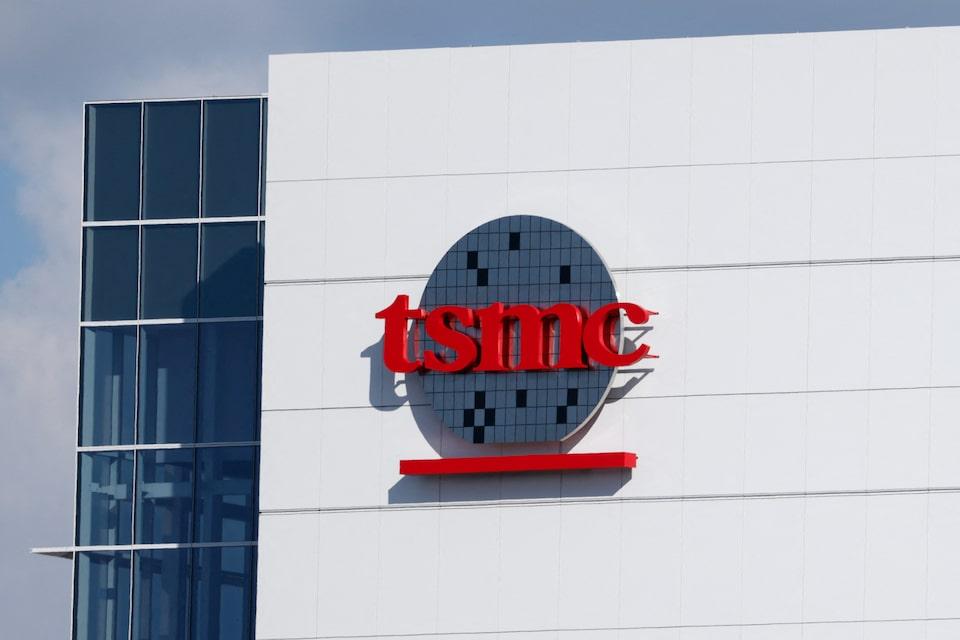
Tech stocks in South Korea, Taiwan fall after new U.S. tariffs Uncertainty persists as U.S.-China trade deal unresolved Investors expect higher average tariffs even after more deals Aug 1 (Reuters) - U.S. President Donald Trump's Friday tariff deadline brought little reprieve for markets, with stocks around the world taking a hit as investors fretted over the cost of disrupting global supply chains and the outcome of talks with China. For traders inured to Trump's repeated threats, his follow-through on blanket tariffs for dozens of nations may be a wake-up call, as the deadline to strike trade deals with the United States expired and new levies arrived right on cue. Sign up here. Trump's new tariff rates include a 35% duty on many goods from Canada, 50% for Brazil, 25% for India, 20% for Taiwan and 39% for Switzerland. The new export duties are below the "Liberation Day" tariffs unveiled on April 2, but several countries are still in talks with the United States, fueling uncertainty. Investors are also still on edge over whether the United States and China will be able to clinch a deal to avert a tariff of 55% before their trade truce ends on August 12. "The market – even before yesterday evening's announcements – looked complacent on the risk of a U.S.-led global growth slowdown, which we think is to come given tariff pressures," said Andreas Bruckner, European equity strategist at Bank of America. It is a reminder that a U.S. president who has consistently advocated protectionist policies for decades now has the power to force higher costs on companies across complex global supply chains that took just as long to build. The MSCI All Country World Index (.MIWD00000PUS) , opens new tab is up 21.2% from April lows, but has fallen for the past six consecutive sessions. Trump hit Taiwan with a tariff of 20% on Friday, higher than the 15% the United States agreed with Japan and South Korea, though the government said it would continue to negotiate for a lower duty. Taiwan and South Korea are critical links in the supply chain of advanced logic chips and memory chips, respectively. Stocks in Asia Pacific's biggest tech hardware producers suffered the brunt of the selling, with South Korea's Kospi index (.KS11) , opens new tab dropping as much as 3.8% and Taiwan's benchmark index (.TWII) , opens new tab down as much as 1.6% before recovering. Taiwan Semiconductor Manufacturing Company (2330.TW) , opens new tab shed 1.7%, as its supplier Tokyo Electron's shares (8035.T) , opens new tab plunged 18% after the company cut its profit forecasts by a fifth. Tech shares across the globe felt the heat too, with Europe's tech index (.SX8P) , opens new tab dropping 2.3%. Shares of the world's biggest supplier of computer chip-making equipment, ASML (ASML.AS) , opens new tab, were down 2.7%. The tech-heavy Nasdaq index (.IXIC) , opens new tab shed 2.2%, easing from record highs. The sector shrugged off better-than-expected earnings from Apple (AAPL.O) , opens new tab and focused instead on a warning from CEO Tim Cook that U.S. tariffs would add $1.1 billion in costs over the period. "We're worried about consumer electronics companies ... anywhere that's facing large-scale consumer electronics, be it PCs or consoles or smartphones, those are the areas where we're a bit more concerned about tariffs," said Ben Barringer, global technology analyst at Quilter. Weaker-than-expected results from Amazon.com's (AMZN.O) , opens new tab cloud-computing unit added to the gloom. Just in the last two weeks of July, global companies have reported a combined loss of $10.8 billion to $12 billion from tariffs. Automotive, aerospace and pharmaceutical sectors are among the worst hit. The average tariff rate is going from about 2.5% to 15.3%, said Prashant Bhayani, chief investment officer for Asia at BNP Paribas Wealth Management. "That's a steep change," he said. "But if everyone's getting tariffed, it's more about that relative (level), because that affects how much you get, and perhaps relative to your competitors." The latest tariffs also rattled currency markets, with the Swiss franc hitting a six-week low against the dollar at one point, after Trump set a 39% tariff on Swiss imports, one of the highest tariff rates in his global trade reset. The South Korean won weakened past 1,400 per dollar for the first time since May 19 and the Taiwan dollar breached 30 against the greenback for the first time since June 4. Most of the currencies recouped their losses after the dollar fell broadly on data showing U.S. job growth slowed much more than expected in July. But even after the tariff deadline, some market participants said they expected agreements to remain in flux. "It is tempting to think that a large part of the tariff uncertainty is behind us now, but we remain cautious," said Wei Yao, head of research, Asia Pacific, at Societe Generale. "Deals are far from finalized. The framework agreements reached so far are very vague on details, and in some cases, the U.S. has a different interpretation from the other side." https://www.reuters.com/business/retail-consumer/investors-see-few-winners-tariff-storm-lashes-global-markets-2025-08-01/
2025-08-01 06:41
Trump hits dozens of countries with steep tariffs US dollar index hovers near two-month high Silver, platinum, palladium set for weekly losses Aug 1 (Reuters) - Gold prices ticked higher on Friday, supported by uncertainty stemming from a slew of U.S. tariffs slapped on trading partners, although a stronger dollar kept bullion on track for a weekly loss. Spot gold was up 0.2% at $3,299.08 per ounce, as of 0553 GMT. Bullion is down 1.2% so far this week. Sign up here. U.S. gold futures edged up 0.1% to $3,351.60. The dollar index (.DXY) , opens new tab hit its highest level since May 29, making gold more expensive for other currency holders. "Gold has been in a $3,250 to $3,450 range for about two months now, and we see it heading towards the bottom end of the range and perhaps breaking it," said Marex analyst Edward Meir, adding that the dollar's strength was driven by the Federal Reserve's hawkish stance, which also weighed on the bullion. The Fed held interest rates steady in the 4.25%-4.50% range on Wednesday and dampened expectations for a September rate cut. Trump signed an executive order on Thursday imposing "reciprocal" tariffs ranging from 10% to 41% on imports from dozens of countries and foreign locations ahead of a Friday trade deal deadline. He increased duties on Canadian goods to 35% from 25% for all products not covered by the U.S.-Mexico-Canada trade agreement, but gave Mexico a 90-day reprieve to negotiate a broader deal. "If various countries cannot renegotiate these tariff rates lower, we could see (gold) prices move higher again if trade tensions increase," Meir said. Meanwhile, U.S. inflation increased in June as tariffs on imports started raising the cost of some goods. Focus now shifts to U.S. jobs data, due later in the day, to gauge the Fed's policy trajectory. Gold thrives in a low-interest rate environment as it is a non-yielding asset. Spot silver fell 0.1% to $36.69 per ounce, platinum was up 0.4% at $1,295.76 and palladium rose 1.1% to $1,203.72. All three metals were headed for weekly losses. https://www.reuters.com/world/china/gold-heads-weekly-loss-stronger-dollar-2025-08-01/