2025-08-01 06:35
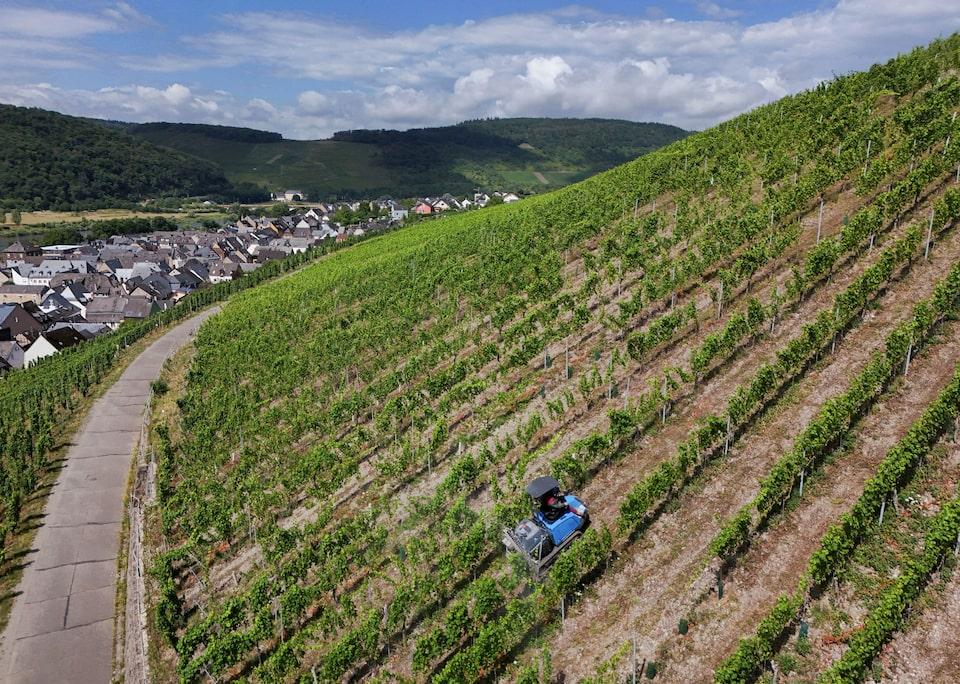
European companies face shipment delays and reassess supply chains Luxury brands and big firms adapt with pricing power or production shifts Smaller firms struggle with tariff impact, seek new markets or strategies Trump tariffs highest since 1930s, impacting global trade Champagne and perfume producers face unique challenges due to tariff constraints LONDON/MARSEILLE, France, Aug 1 (Reuters) - As U.S. President Donald Trump's new tariff regime clicks into gear on Friday, producers around Europe are feeling the impact, some holding back shipments, others hiking sticker prices or taking a hit to margins. Some fear they won't survive at all. The United States will impose a 15% tariff on most European exports from Friday, part of a wider barrage of levies set to redraw global trade. While down from even more elevated threatened rates, the tariffs are the highest since the 1930s. Sign up here. "Companies are waking up to the fact that we're dealing with an historically higher tariff rate," said International Chamber of Commerce Deputy Secretary General Andrew Wilson. "It's difficult to see that moving unless there are catastrophic consequences of the U.S. economy." He added the chamber was seeing shipment delays and companies reassessing supply chain strategies. Trading with the United States was now "hellishly more difficult." "The complexity of doing business with the U.S. has gone to levels nobody could have imagined," he said. In Germany's Moselle Valley, winemaker Johannes Selbach said tariffs were damaging for the industry on both sides of the Atlantic. They had been hoping for zero-for-zero tariffs, but face 15% for now, with sector specific talks ongoing. "The tariffs hurt the Americans and they hurt us," Selbach said in a warehouse surrounded by crates of wine with "USA" written on them in black letters. "Thousands of families who produce wine in Europe and thousands of families in the importing, wholesaling, retailing, restaurant business in the U.S. are dependent on the flow from both sides," he said, adding jobs and profits would be hit. Different sectors face varying degrees of pain. Higher-end luxury brands have more pricing power to adapt to the tariffs. Big companies can swallow some margin loss or shift some production into the United States, though often not all of it. Even big consumer firms like Procter & Gamble (PG.N) , opens new tab have flagged U.S. price hikes to deal with the tariff impact. Adidas (ADSGn.DE) , opens new tab said it could increase prices. Reuters' global tariff tracker shows at least 99 out of nearly 300 companies monitored have announced price hikes in response to the trade war, most from Europe. Trump has said the tariffs are a response to persistent U.S. trade imbalances and declining U.S. manufacturing power, and that the moves will bring jobs and investment to the nation. WE CANNOT RELOCATE CHAMPAGNE VINES Diverging U.S. tariffs globally remain a challenge, however, with big manufacturing centers like Mexico, Canada, India and Vietnam having higher rates than others like South Korea or Europe. Smaller players often can't make quick changes to production and supply chains. Hugo Drappier, a champagne maker who runs his own firm Champagne Drappier, pointed out that the bubbly beverage could only be produced in a particular region of France. "It's an industry that employs a lot of workers who can't be relocated, precisely because the work is done here. We don't have the option of relocating champagne vines elsewhere in the world," he said. He said some orders had been held up due to tariff uncertainty, though he retained hopes that trade talks were becoming more positive, with the 15% rate better than previous threats of 30%. Laurent Cohen, CEO of family-owned perfumery Corania, based in a northern suburb of French city Marseille, is scouring for new markets and ways to maintain business in the United States, which accounts for a quarter of sales. That may mean a hit to margins and higher U.S. prices, he said. "I praise the fact that we are no longer in a state of uncertainty," he said, referring to the U.S. trade deal. "But with 15% customs duty on our products - which are affordable perfume products - we will now have to show immense ingenuity to keep on going in the U.S. market." https://www.reuters.com/world/europe/europe-inc-wakes-up-trumps-new-tariff-reality-2025-08-01/
2025-08-01 06:29
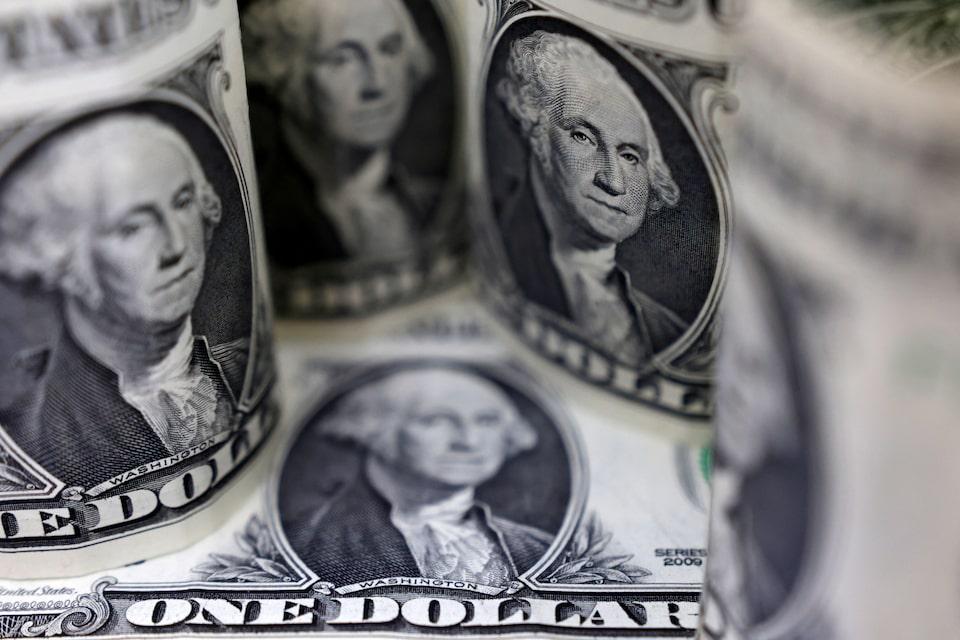
U.S. currency hits new highs after levies raised for some countries, including Canada Yen on back foot after Bank of Japan signals no hurry to resume rate hikes U.S. monthly jobs data due later in the day TOKYO, Aug 1 (Reuters) - The dollar headed for its best week in almost three years against its major peers, maintaining momentum on Friday after U.S. President Donald Trump imposed new tariff rates on dozens of trade partners. The dollar also gained on non-tariff catalysts, with the yen touching a four-month low, extending a steep decline from Thursday after the Bank of Japan signalled it was in no hurry to resume interest rate hikes. Sign up here. That prompted Japanese Finance Minister Katsunobu Kato to say on Friday that officials are "alarmed" by currency moves. The yen last changed hands at 150.46 per dollar after earlier dipping to 150.915 per dollar, its weakest since March 28. The U.S. dollar index - which measures the currency against a basket of six major peers including the euro, yen, Swiss franc and Canada's dollar - is on course to rise 2.4% this week, its best weekly performance since a 3.1% rally in September of 2022. On Friday, it ticked up 0.1% to 100.14, its highest since May 29. Some countries fared much worse than others in tariff rates, hurting their currencies. Canada received a 35% levy instead of an earlier threatened 25%, briefly pushing the loonie down 0.12% to C$1.3872, its lowest since May 22 versus its U.S. peer. The Swiss franc eased as much as 0.26% to 0.8120 per dollar after Trump set a 39% duty on Swiss imports, up from the 31% he previously mooted. Asian emerging markets got swept up in the selloff as the tariff fallout rippled through the region. The Philippine peso slumped to its weakest level in six months, while Taiwan's dollar hit its lowest since early June. South Korea's won sank to levels last seen in mid-May. The euro remained pinned near an almost two-month low around $1.1428, as it continues to be weighed down by what markets see as a lopsided trade agreement with Washington. That wasn't far from Wednesday's low of $1.1401, a level not seen since June 10. "In the short-term, you can make the case for more dollar strength," said Mike Houlahan, director at Electus Financial in Auckland. "The lion's share of the tariff news has washed through." "The big move of the week has really been the euro getting rerated downwards," he said. "The net result would be the EU-U.S. trade deal is a further headwind for the euro." The EU's framework trade agreement with the U.S., struck on Sunday, was quickly criticized by French leaders and the German head of the European Parliament's trade committee as being unfair for Europe. PAYROLL DATA TO COME The U.S. dollar stayed strong even though Trump continued his attacks on Federal Reserve Chair Jerome Powell overnight, calling him a "terrible" Fed Chair and calling his own decision to appoint Powell to the position a "mistake". Trump's repeated threats to fire Powell and calls for the Fed to drastically cut rates have put the central bank's independence in question, hurting the dollar in recent months. The Fed shrugged off that pressure on Wednesday by holding policy steady, citing "somewhat elevated" inflation and a "solid" labour market. That view of employment will be tested later in the day with the release of the closely watched monthly payrolls data. Economists forecast that employment growth dropped to 110,000 new jobs in July from 147,000 new jobs the previous month, a notable slowdown but one that is not expected to be particularly worrying. "Data-wise, the U.S. looks resilient," said Shoki Omori, chief desk strategist at Mizuho Securities. "If the U.S. economy is already operating above potential, that bump can translate into a slightly higher neutral rate of interest, which is supportive for front-end bond yields and therefore the U.S. dollar," he said. https://www.reuters.com/world/africa/dollar-strong-trump-imposes-new-tariff-rates-yen-slide-spurs-government-warning-2025-08-01/
2025-08-01 06:14
HANOI, Aug 1 (Reuters) - Flooding triggered by heavy rain has left at least 14 people dead or missing in Vietnam's northern province of Dien Bien, state media reported on Friday. Floodwater rose quickly on Thursday night after hours of heavy rain, inundating houses in low-lying areas and causing flash floods and mudslides in mountainous parts of the province, Tien Phong newspaper reported. Sign up here. The mountain village of Xa Dung suffered the heaviest casualties, with one death and six missing, the report said. Traffic and power lines to several parts of the province have been cut off due to the floods, according to a statement from the provincial People's Committee. Two children in Hang Pu Xi village have been buried in mudslides and rescuers are yet to find their bodies, according to the statement. Media reports said ongoing heavy rain in the province is hindering the search for the missing. https://www.reuters.com/business/environment/flooding-leaves-14-dead-missing-vietnams-dien-bien-2025-08-01/

2025-08-01 06:03
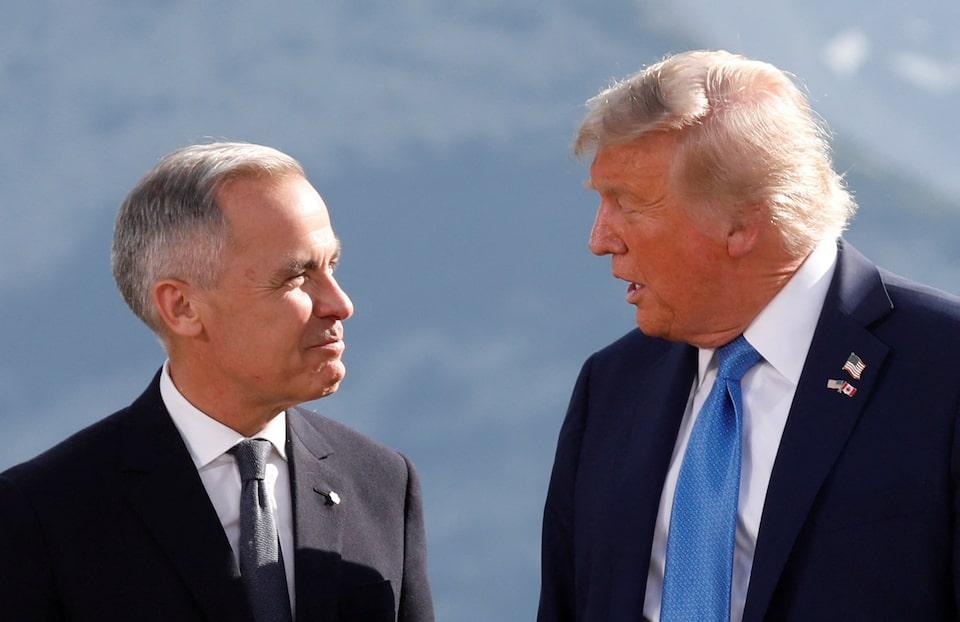
New tariff rate increases from 25% to 35% Trump says Carney called but the two have not talked ahead of tariff deadline Carney says disappointed by Trump's decision Lutnick says Trump may reconsider tariff on Canada if Carney turns on charm, removes retaliation WASHINGTON/TORONTO, Aug 1(Reuters) - U.S. President Donald Trump on Thursday signed an executive order increasing tariffs on Canadian goods to 35% from 25% on all products not covered by the U.S.-Mexico-Canada trade agreement, the White House said. Goods transshipped to another country to evade the new tariffs would be subject to a transshipment levy of 40%, according to a White House fact sheet. Sign up here. The move - which Washington linked in part to what it said was Canada's failure to stop fentanyl smuggling - is the latest blow in a months-long tariff war which Trump initiated shortly after taking power. The announcement blaming Canada's "continued inaction and retaliation" comes after Trump said Canadian Prime Minister Mark Carney reached out ahead of an August 1 tariff deadline, but no conversations between the two took place. Trump had said any country failing to strike a deal with the U.S. before Friday will be subjected to higher tariffs imposed on goods. Carney early on Friday said he was disappointed by Trump's decision. "While we will continue to negotiate with the United States on our trading relationship, the Canadian government is laser focused on what we can control: building Canada strong," Carney said in a post on X. U.S. duties and tariffs will heavily affect lumber, steel, aluminum, and automobiles, he added, vowing action to protect Canadian jobs, buy Canadian goods, invest in industrial competitiveness and diversify export markets. To justify its step, the U.S. has cited the cross-border flow of fentanyl, even though Canada accounts for just 1% of U.S. fentanyl imports and has been working intensively to further reduce the volumes, Carney added. Trump told NBC News on Thursday he was open to further discussions with Canada, adding that he may even speak with Carney later in the night. Premier Doug Ford of Ontario, which accounts for around 40% of Canadian GDP and is the country's industrial heartland, demanded Ottawa slap a 50% counter tariff on imports of U.S. steel and aluminum. "Canada shouldn't settle for anything less than the right deal. Now is not the time to roll over. We need to stand our ground," he said in a post on X. Trump said that while he loved Canada, it had treated the United States "very badly" for years. U.S. Commerce Secretary Howard Lutnick said Trump could reconsider the tariff if Carney "starts turning on the charm and if he takes off his retaliation." Earlier Thursday, Trump agreed to give Mexico a 90-day window to work toward a deal, allowing it to avoid a 30% tariff that he threatened to impose by August 1. Mexico will still have to pay a 25% duty on U.S.-bound exports that are non USMCA-compliant, a tariff that Trump has linked to demands that Mexico do more to curb drug and human smuggling. Canada sends around 75% of all its exports south of the border and is vulnerable to U.S. trade action. The economy has shown surprising resilience in the face of tariffs and is expected to avoid recession, economists say. About 90% of Canadian exports to the U.S. in May were exempt under the USMCA. The compliance level has shot up dramatically in the last few months, while some companies have diversified exports to avoid tariffs. Canadian government data shows exports to the U.S. dropped by 10 percentage points to 68% of total exports between May 2024 and May 2025, focused on manufacturing products such as cars and parts, and products made with steel and aluminum. Carney told reporters in June that if the two countries do not reach a trade deal by August 1, Canada would likely impose more counter levies on U.S. exports of steel and aluminum. https://www.reuters.com/world/americas/trump-increases-tariff-canada-35-25-cites-fentanyl-2025-07-31/
2025-08-01 06:02
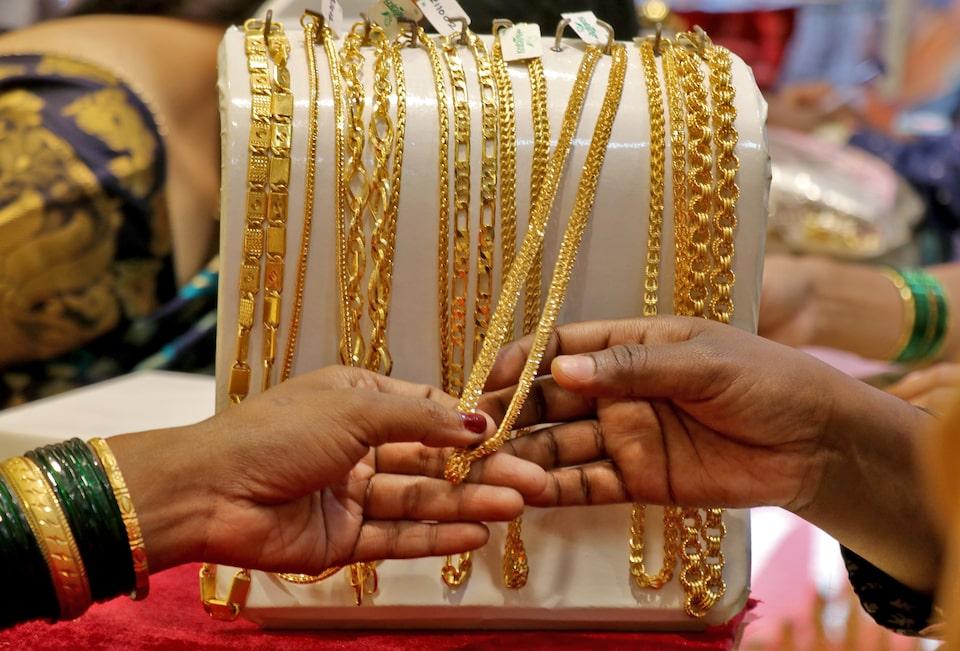
Discount in India narrows to $7/oz this week India's gold demand in 2025 may hit a 5-year low due to high prices, WGC says China offered discount of $4.2 to premium of $12 this week Aug 1 (Reuters) - Physical gold demand in key Asian markets improved slightly this week as a pullback in prices sparked buying interest, though volatility kept some buyers cautious. Spot gold hit its lowest level in a month on Wednesday and was headed for third consecutive weekly loss. Sign up here. "This week, footfall was better than last week. Buyers were inquiring about price trends and making small purchases," said a Pune-based jeweller. Domestic gold prices were trading around 97,700 rupees per 10 grams on Friday after rising to 100,555 rupees last week. Discounts offered by Indian dealers narrowed to as much as $7 an ounce over official domestic prices, inclusive of 6% import and 3% sales levies, compared to up to $15 last week. Jewellers were keen to make purchases to replenish inventory after a correction in overseas prices, but a significant drop in the rupee offset the impact of the price fall to an extent, said a Mumbai-based bullion dealer with a private bank. India's gold consumption in 2025 is set to fall to a five-year low, as record-high prices are denting jewellery purchases, the World Gold Council said on Thursday. In China, dealers quoted gold in a wide range, between a discount of $4.2 and a premium of $12 per ounce above international rates. "China appears to slightly buy the dip in gold... trading volume for the physical proxy contract AU9999 on the Shanghai Gold Exchange has been on the rise (11 tons traded yesterday), reflecting a renewed interest in the metal," said Hugo Pascal, a precious metals trader at InProved. In Hong Kong gold was sold at par to a $1.50 premium, while Singapore prices ranged from par to a $1.40 premium. In Japan, bullion was sold at par to a premium of $0.60. "There was lots of demand to buy if the price dropped even slightly. Regardless of the Japan-U.S. trade deal, gold is being purchased as an asset class amid low interest rates," a Japan-based trader said. https://www.reuters.com/world/china/asia-gold-gold-demand-key-asian-hubs-improves-amid-price-correction-2025-08-01/
2025-08-01 05:56
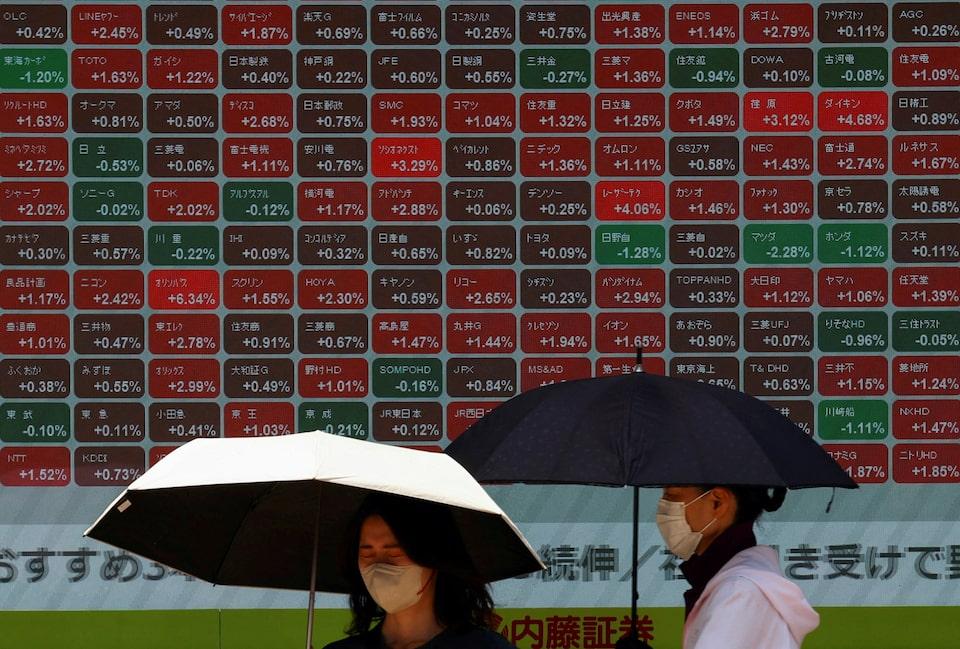
US announces new tariff rates ahead of trade talks deadline Asian shares set for worst week since April, Nasdaq futures dip Dollar set for 2.4% weekly gain, best in nearly 3 years US jobs data pivotal for Sept rate cut hopes SYDNEY, Aug 1 (Reuters) - Asian shares were headed for the worst week since April on Friday after the U.S. slapped dozens of trading partners with steep tariffs, while investors anxiously await U.S. jobs data that could make or break the case for a Fed rate cut next month. European stock markets are on track for a lower open, with EUROSTOXX 50 futures down 0.5%. Both Nasdaq futures and S&P 500 futures slipped 0.2% after earnings from Amazon (AMZN.O) , opens new tab failed to meet lofty expectations, sending its shares tumbling 6.6% after hours. Sign up here. Late on Thursday, President Donald Trump signed an executive order imposing tariffs ranging from 10% to 41% on U.S. imports from foreign countries. Rates were set at 25% for India's U.S.-bound exports, 20% for Taiwan's, 19% for Thailand's and 15% for South Korea's. He also increased duties on Canadian goods to 35% from 25% for all products not covered by the U.S.-Mexico-Canada trade agreement, but gave Mexico a 90-day reprieve from higher tariffs to negotiate a broader trade deal. "The latest tariff announcement offers some surface-level clarity, but beneath it lies a fog of uncertainty," said Thomas Rupf, Chief Investment Officer, Asia of VP Bank. "Despite some countries securing better terms, the overall impact is negative. We're entering an era of higher barriers to trade, which will have an impact and hurt growth." MSCI's broadest index of Asia-Pacific shares outside Japan (.MIAPJ0000PUS) , opens new tab fell 1.1% to bring the total loss this week to 2.2%, the biggest since April. South Korea's KOSPI (.KS11) , opens new tab plunged 3.5% while Taiwanese shares (.TWII) , opens new tab fell 0.5%. Japan's Nikkei (.N225) , opens new tab dropped 0.6%. Chinese blue chips (.CSI300) , opens new tab fell 0.7% and Hong Kong's Hang Seng index (.HSI) , opens new tab lost 0.8%. Overnight, Wall Street failed to hold onto an earlier rally. Data showed inflation picked up in June, with new tariffs pushing prices higher and stoking expectations that price pressures could intensify, while weekly jobless claims signalled the labour market remained on a stable footing. Fed funds futures imply just a 39% chance of a rate cut in September, compared with 65% before the Federal Reserve held rates steady on Wednesday, according to the CME's FedWatch. Much now will depend on the U.S. jobs data due later in the day and any upside surprise could price out the chance for a cut next month. Forecasts are centred on a rise of 110,000 in July, while the jobless rate likely ticked up to 4.2% from 4.1%. The greenback found support from fading prospects of imminent U.S. rate cuts, with the dollar index up 2.5% this week against its peers to 100, in the biggest weekly rise since late 2022. The Canadian dollar was little impacted by the tariff news, having already fallen about 1% this week to a 10-week low. The yen was the biggest loser overnight, with the dollar up 0.8% to 150.7 yen, the highest since late March. The Bank of Japan held interest rates steady on Thursday and revised up its near-term inflation expectations but Governor Kazuo Ueda sounded a little dovish in the press conference. Treasuries were largely steady on Friday. Two-year Treasury yields were flat at 3.9510%, while benchmark 10-year yields ticked up 2 basis points to 4.3781%, after slipping 2 bps overnight. In commodity markets, oil prices were little changed after falling 1% overnight. U.S. crude rose 0.1% to $69.36 per barrel, while Brent was at $71.8 per barrel, up 0.1%. Spot gold prices were up a fraction at $3,294 an ounce. https://www.reuters.com/world/china/global-markets-wrapup-3-2025-08-01/