2025-08-01 05:54
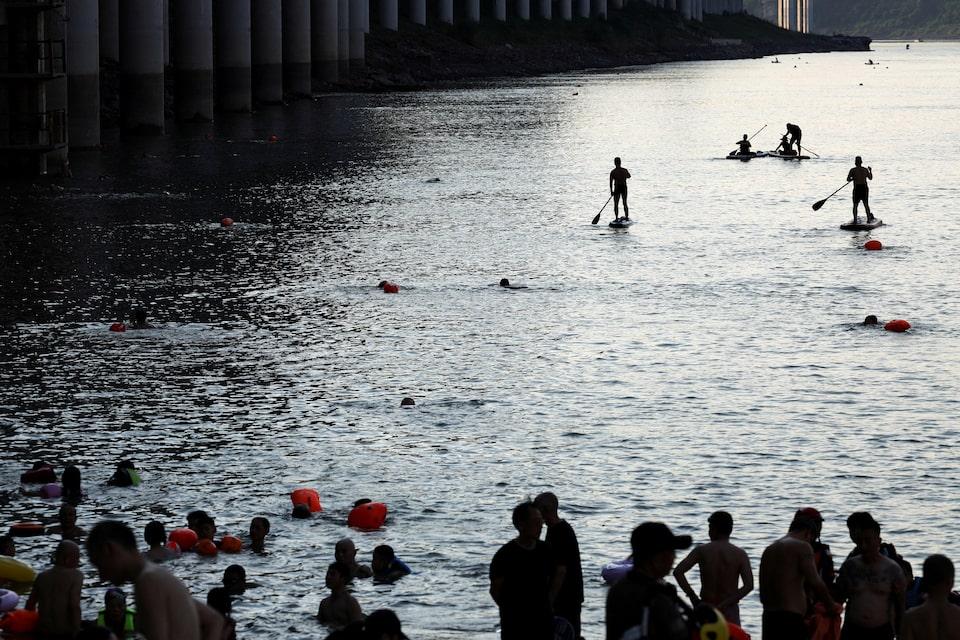
CHONGQING, China, August 1 (Reuters) - Temperatures topping 40 degrees Celsius (104 Fahrenheit) have broiled Chongqing, a metropolis in China's southwest known for its fiery hotpot restaurants and cyberpunk cityscape, pushing some locals to cope with the increasingly hot weather in innovative ways. "It's getting hotter and hotter," said Liu Fengying, 60, a local resident. Sign up here. As afternoon temperatures soared on Thursday, Liu avoided the heat by playing card games and sharing snacks with friends among around 100 retirees sheltering in the air-conditioned chill of a subway entrance. "Aside from coming here, there's really no other way to avoid the heat. Last night, even with the AC set to 17 degrees C, it was still hot and wouldn't cool down." Record heat across China has strained its power grid as demand surges to new all-time highs, now in excess of 1.5 billion kilowatts, with records broken four times just in July. After daily peaks exceeding 40 C for a week, Chongqing elevated its heat-wave warning to the highest level - a red alert - on Thursday, with 21 out of its 38 districts forecast to hit up to 43 C. A peak of 44 C is projected for Sunday. Historically, daily peaks in the city of nearly 32 million people have rarely exceeded 39 C in July, which is already very hot by global standards. Since the start of May, the number of days the city recorded temperatures exceeding 35 C this year was double the historic average. But some Chongqingers remain unfazed - for now. Xie, 79, one of dozens of swimmers who gathered at a tributary of the Yangtze as the sun started to set on Thursday, cools down with regular swims in China's longest river. "Chongqing has always been a furnace city, but we have the river to cool down," he said before diving off a two-metre tall river bank in his underwear. On the same night, Qiu Xianhui, 36, came with friends to eat hotpot, Chongqing's famously spicy broth, at a restaurant in one of the city's old bomb shelters, where the air cools naturally. "We're locals, so we're used to 40-plus degree weather. We've seen it all," he said. ($1 = 7.2087 Chinese yuan renminbi) https://www.reuters.com/sustainability/climate-energy/chongqing-residents-seek-shelter-heatwave-hits-chinas-southwest-2025-08-01/
2025-08-01 05:39
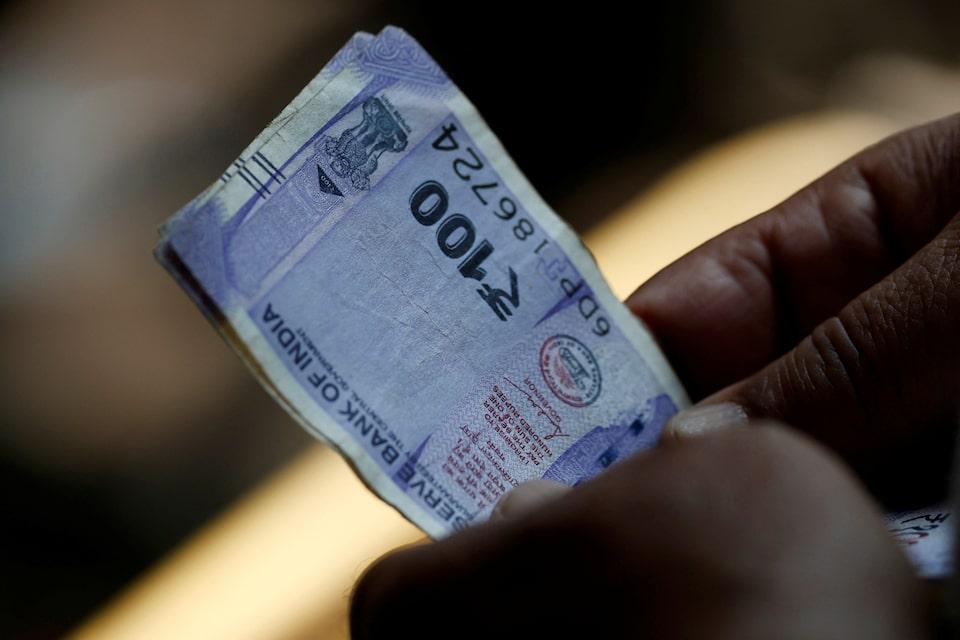
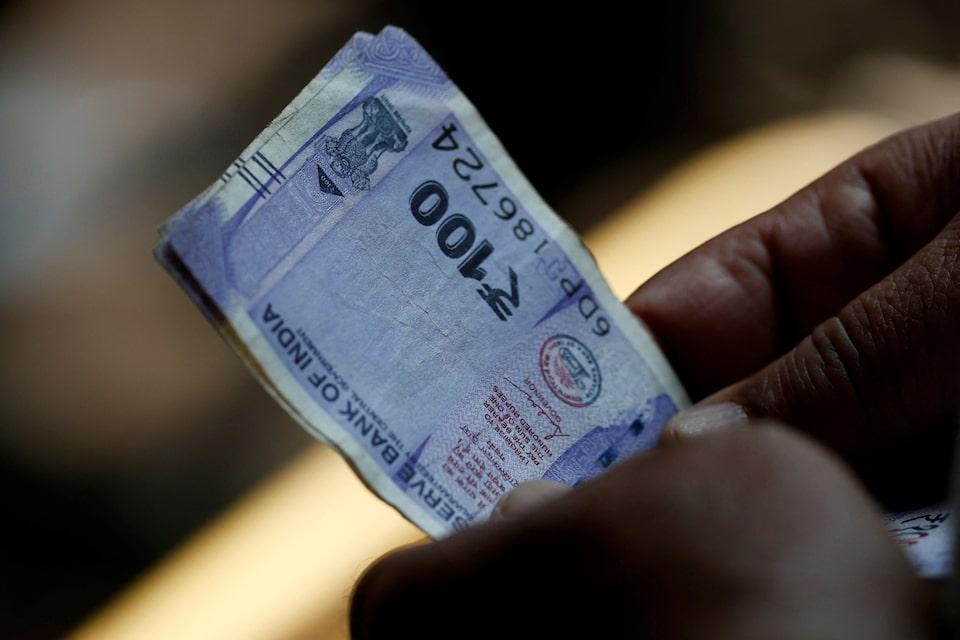
MUMBAI, August 1 (Reuters) - The Indian rupee found its footing on Friday after slipping to within striking distance of a record low in the previous session, as firm intervention by the central bank and a cutting of short bets against the currency helped it stabilise. The rupee strengthened to 87.3025 against the U.S. dollar as of 11:00 a.m. IST, up 0.3% on the day, following 12 consecutive sessions of either logging a decline or closing flat. Sign up here. The currency had declined to a low of 87.74 on Thursday, inches away from its all-time low of 87.95, after President Donald Trump slapped steeper-than-expected tariffs on Indian goods, with analysts also warning of sustained pressure on the country's growth. The Reserve Bank of India likely intervened in both the non-deliverable forward market and the local over-the-counter spot market to support the rupee, traders said. The central bank seems to be inclined to stabilise the currency, and "they have been heavily hitting the (USD/INR) pair since the morning,” a trader at a state-run bank said. The intervention also spurred traders to exit short bets against the currency, which helped it extend its gains, a second trader at a bank said. Foreign portfolio outflows have also been a consistent pain point for the rupee as overseas investors remained net sellers of Indian stocks over the last nine consecutive trading sessions. Sentiment on the rupee is quite weak right now, so it makes sense for the RBI to step in, said Dilip Parmar, a foreign exchange research analyst at HDFC Securities. Meanwhile, the dollar index was hovering at the 100 mark, and Asian currencies fell as investors fled riskier regional assets after the U.S. imposed sweeping new tariffs on dozens of trading partners. The Korean won led losses with a 0.6% decline as investors also awaited key U.S. labour market data due later in the day to gauge the future path of benchmark policy rates in the world's largest economy. https://www.reuters.com/world/india/firm-central-bank-intervention-short-culling-helps-shore-up-rupee-2025-08-01/
2025-08-01 05:29
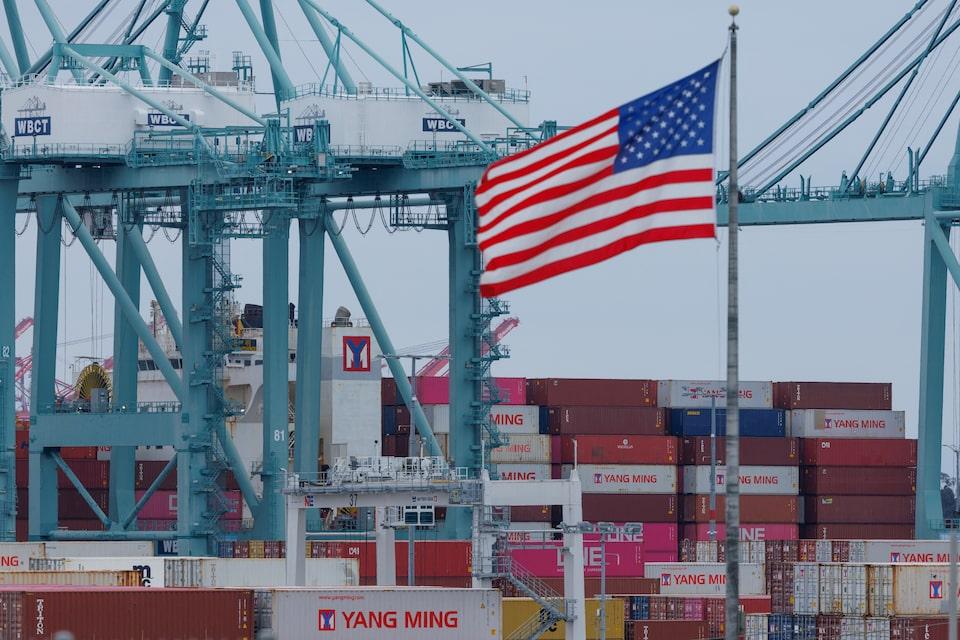
Mexico avoids 30% tariff on non-automotive, non-metals goods A 35% tariff on many Canadian goods Brazil hit with 50% tariff, some sectors excluded China trade deal not finalized, August 12 deadline looms Trump administration teases additional deals WASHINGTON, July 31 (Reuters) - U.S. President Donald Trump slapped steep tariffs on exports from dozens of trading partners including Canada, Brazil, India and Taiwan, pressing ahead with his plans to reorder the global economy ahead of a Friday trade deal deadline. Trump set rates including a 35% duty on many goods from Canada, 50% for Brazil, 25% for India, 20% for Taiwan and 39% for Switzerland, according to a presidential executive order. Sign up here. The order , opens new tab listed higher import duty rates of 10% to 41% starting in seven days for 69 trading partners as the 12:01 a.m. EDT (0401 GMT) deadline approached. Some of them had reached tariff-reducing deals; others had no opportunity to negotiate with his administration. Trump included an exception for some goods shipped within the coming week. Goods from all other countries not listed would be subject to a 10% U.S. import tax. Trump had previously said that rate might be higher. The administration also teased that more trade deals were in the pipeline as it seeks to close trade deficits and boost domestic factories. Facing a Friday deadline of his making, the Republican president has tapped emergency powers, pressured foreign leaders, and pressed ahead with trade policies that sparked a market sell-off when they were first announced in April. This time, markets had a more muted reaction. Stocks and equity futures fell modestly in Friday morning trading in Asia. Trump's order said that some trading partners, "despite having engaged in negotiations, have offered terms that, in my judgment, do not sufficiently address imbalances in our trading relationship or have failed to align sufficiently with the United States on economic and national-security matters." Other details are still to come, including on the "rules of origin" that will determine what products might face even higher tariffs. Trump also said "we have made a few deals today that are excellent deals for the country," and a U.S. official later told reporters that they were still to be announced. CANADA, MEXICO Trump issued a separate order , opens new tab for Canada that raises the rate on Canadian goods subject to fentanyl-related tariffs to 35%, from 25% previously, saying Canada had "failed to cooperate" in curbing illicit narcotics flows into the U.S. The higher tariffs on Canadian goods contrasted sharply with Trump's decision to grant Mexico a 90-day reprieve from higher tariffs of 30% on many goods to provide more time to negotiate a broader trade pact. Trump complained to reporters earlier that Canada had "been very poorly led." Canadian Prime Minister Mark Carney said he was disappointed by Trump's decision, and vowed to take action to protect Canadian jobs and diversify the country's export markets. "While we will continue to negotiate with the United States on our trading relationship, the Canadian government is laser focused on what we can control: building Canada strong," he said in a post on X. The extension for Mexico avoids a 30% tariff on most Mexican non-automotive and non-metal goods compliant with the U.S.-Mexico-Canada Agreement on trade and came after a Thursday morning call between Trump and Mexican President Claudia Sheinbaum. "We avoided the tariff increase announced for tomorrow," Sheinbaum wrote on X, adding that the Trump call was "very good." About 85% of U.S. imports from Mexico comply with the rules of origin outlined in the USMCA, shielding them from 25% tariffs related to fentanyl, according to Mexico's economy ministry. Trump said the U.S. would continue to levy a 50% tariff on Mexican steel, aluminum and copper and a 25% tariff on Mexican autos and on non-USMCA-compliant goods subject to tariffs related to the U.S. fentanyl crisis. "Additionally, Mexico has agreed to immediately terminate its Non Tariff Trade Barriers, of which there were many," Trump said in a Truth Social post, without providing details. INDIA DISCORD Goods from India appeared to be headed for a 25% tariff after talks bogged down over access to India's agriculture sector, drawing a higher-rate threat from Trump that also included an unspecified penalty for India's purchases of Russian oil. Although negotiations with India were continuing, New Delhi vowed to protect the country's labor-intensive farm sector, and the threat of higher rates from Trump triggered outrage from the opposition party and a slump in the rupee. Trump's rollout of higher import taxes on Friday comes amid more evidence they have begun driving up consumer goods prices. Commerce Department data released Thursday showed prices for home furnishings and durable household equipment jumped 1.3% in June, the biggest gain since March 2022. Recreational goods and vehicles prices shot up 0.9%, the most since February 2024. Prices for clothing and footwear rose 0.4%. TOUGH QUESTIONS FROM JUDGES Trump hit Brazil's exports on Wednesday with a steep 50% tariff as he escalated his fight with Latin America's largest economy over its prosecution of his friend and former President Jair Bolsonaro, but softened the blow by excluding sectors such as aircraft, energy and orange juice from heavier levies. The run-up to Trump's tariff deadline was unfolding as federal appeals court judges sharply questioned Trump's use of a sweeping emergency powers law to justify his sweeping tariffs of up to 50% on nearly all trading partners. Trump invoked the 1977 International Emergency Economic Powers Act to declare an emergency over the growing U.S. trade deficit and impose his "reciprocal" tariffs and a separate fentanyl emergency. The Court of International Trade ruled in May that the actions exceeded his executive authority, and questions from judges during oral arguments before the U.S. Appeals Court for the Federal Circuit in Washington indicated further skepticism. Meanwhile, China is facing an August 12 deadline to reach a durable tariff agreement with Trump's administration, after Beijing and Washington reached preliminary deals in May and June to end escalating tit-for-tat tariffs and a cut-off of rare earth minerals. A U.S. official told reporters that they are making progress toward a deal. https://www.reuters.com/world/americas/trump-hits-dozens-countries-goods-with-steep-tariffs-2025-07-31/
2025-08-01 04:49
At least 10 Hong Kong-listed companies raise over $1.5 billion in July to fund crypto business Hong Kong's stablecoin bill takes effect on Friday Investor enthusiasm drives rapid equity offerings over the past month Regulator cautions against 'frothiness' and 'exuberance' due to stablecoin hype HONG KONG/SHANGHAI, Aug 1 (Reuters) - Fintech companies are rushing to raise equity in Hong Kong to fund expansions in cryptocurrencies, capitalising on investor fervour as the city starts accepting applications for stablecoin issuer licences on Friday. At least 10 Hong Kong-listed companies raised a total of more than $1.5 billion from share placements in July to be invested in areas including stablecoins, digital assets and blockchain-based payments, according to a Reuters calculation based on exchange filings. Sign up here. They include digital asset platform OSL Group (0863.HK) , opens new tab, China's biggest retail cloud solution provider Dmall Inc (2586.HK) , opens new tab and artificial intelligence giant SenseTime Group (0020.HK) , opens new tab. The equity offerings had been snapped up by investors upbeat about stablecoins, which are cryptocurrencies pegged to assets such as the U.S. dollar. Hong Kong's stablecoin bill passed in May is taking effect on Friday as the Asian financial hub races the United States in setting up a regulated market for such tokens, seen as a key lubricant in the burgeoning digital economy. Before the bill passed, raising funds for stablecoin development in Hong Kong held less appeal for investors. "We're seeing a notable increase in fundraising activity linked to stablecoins and digital assets," said Anthony Pang at international law firm Baker McKenzie, which advised on Dmall's HK$388 million ($49.43 million) share placement last month. "The momentum in this space is real, and it's accelerating." OSL raised $300 million in late July to support global initiatives including development in stablecoins and a digital payment network. The equity raising was completed within three days after the company appointed Macquarie (MQG.AX) , opens new tab to help with the offering, and the bookbuilding - which attracted sovereign wealth funds and big hedge funds - took less than three hours. "Investor zeal toward cryptocurrencies and stablecoins was palpable," OSL Chief Financial Officer Ivan Wong said. An index tracking Hong Kong-listed stablecoin concept stocks has surged 65% this year, far outperforming the benchmark Hang Seng Index (.HIS) , opens new tab, which is up roughly 23%. Hong Kong's de facto central bank cautioned the public last week against "growing frothiness" and "excessive exuberance" due to the recent hype around stablecoins. PRIVATE MARKET The crypto exuberance has also spilled into the private equity and startup markets. "Venture capitalists are very interested in this area, and many are actively looking at such projects," said Liu Honglin, a Shanghai-based attorney at Man Kun Law Firm, who helped venture capital-backed digital payment service provider Kun raise more than $50 million in Hong Kong last month. "There's definitely a lot of excitement around stablecoin, but the sector is far from being frothy. It's just the start of a trend." JF SmartInvest Holdings (9636.HK) , opens new tab raised HK$785 million last month to invest in Real World Assets (RWA), a term used for digital tokens that represent traditional assets such as stocks and commodities. Chinese AI giant SenseTime raised HK$2.5 billion and will use part of the proceeds to explore areas such as blockchain, RWA and stablecoins. Other companies that tapped the crypto craze include ZA Online (6060.HK) , opens new tab, Crypto Flow Technology (8198.HK) , opens new tab and Easou Tech (2550.HK) , opens new tab. Traditional finance players such as custodians and investment managers want a piece of the action, so "interest in these topics, and fintech applications more generally, is set to continue," said Kishore Bhindi, a Hong Kong-based partner at law firm Linklaters. ($1 = 7.8499 Hong Kong dollars) https://www.reuters.com/world/china/fintech-firms-rush-raise-equity-hong-kong-tap-crypto-frenzy-2025-08-01/
2025-08-01 04:31
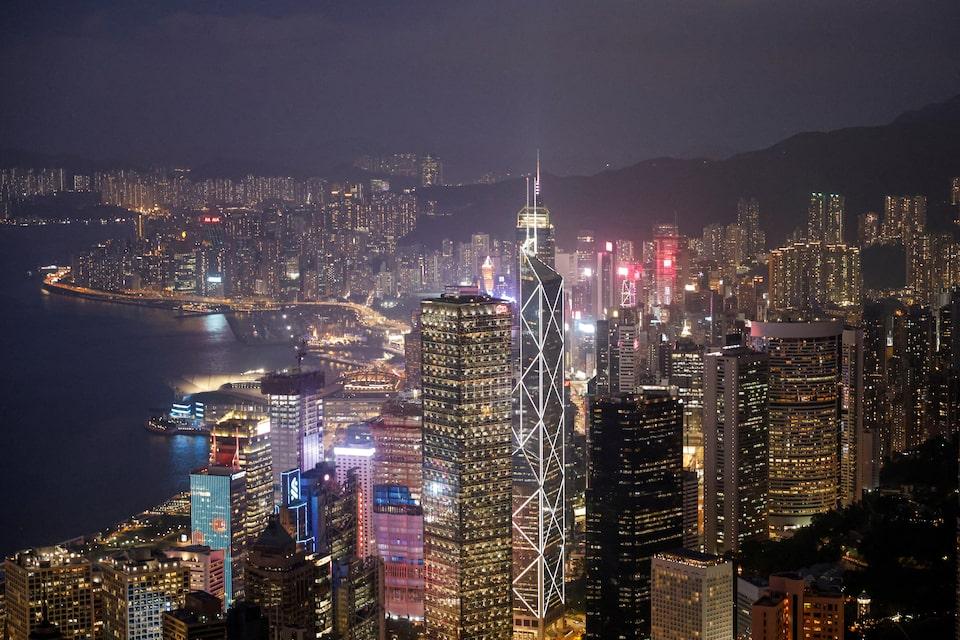
A look at the day ahead in European and global markets from Stella Qiu: It is tariff deadline day and President Donald Trump delivered by slapping fresh levies on imports from dozens of countries, including those that do not have a trade deal yet. Sign up here. Rates were set at 35% for Canada, 25% for India, 20% for Taiwan and 19% for Thailand. Switzerland got a whopping 39% -- one of the steepest -- raising the question: what's Trump got against the Swiss? Not buying enough American chocolate or watches? The big day comes after months of posturing, meetings, delays and truces, which prompted some investors to question what was a real threat and what was a bluff. Indeed, there is still much to be resolved. Arguably, most levies are lower than those threatened on April 2, which back then sent markets into a tailspin. Plus the big trade deals with Japan and the European Union have been reached while talks with China and Mexico are still ongoing. That is probably why market reaction this time has been much more muted. Sure, most Asian shares fell, but only modestly. South Korea is an exception, tumbling over 3%, in part due to domestic tax cuts being rolled back. Taiwan's president said the 20% levy is only temporary and is expected to be reduced further when a deal is reached. Wall Street and European shares did not seem to be too bothered by the tariff news. EUROSTOXX 50 futures slipped 0.3%. Both Nasdaq futures and S&P 500 futures fell 0.2%, thanks to a 6% tumble in Amazon (AMZN.O) , opens new tab after its earnings failed to meet lofty expectations. Now, with the tariff news out of the way, euro zone flash CPI is due later in the day and expectations are for a slight easing to 1.9% in July from 2.0% in annual terms. Markets have only priced in half a cut from the European Central Bank by early next year. And then it's all about waiting for payrolls, which will be pivotal for hopes for a rate cut from the Federal Reserve in September, which is now priced at just 40%, way off 75% a month ago. Forecasts are centred on a 110,000 rise in July, while the jobless rate likely ticked up to 4.2% from 4.1%. Any upside surprises could price out the chance of a move next month, giving dollar bulls another reason to rally. The greenback is headed for the best week - with a gain of 2.5% against its peers - in nearly three years, solidifying its recent uptrend from a three-year low. It has found support from a hawkish Fed that has held off policy easing on tariff risks. And indeed, the Fed's preferred gauge of inflation came in a tad hotter overnight, showing some tariff impact. Key developments that could influence markets on Friday: -- Euro zone flash CPI for July -- U.S. payrolls for July, ISM Manufacturing survey Trying to keep up with the latest tariff news? Our new daily news digest offers a rundown of the top market-moving headlines impacting global trade. Sign up for Tariff Watch here. https://www.reuters.com/world/china/global-markets-view-europe-2025-08-01/
2025-08-01 02:55
MUMBAI, August 1 (Reuters) - The Indian rupee is expected to open slightly weaker on Friday, with traders expecting the currency to hold a depreciation bias in the near term amid worries over the impact of steep U.S. tariffs on Indian exports and persistent portfolio outflows. The 1-month non-deliverable forward indicated the rupee will open in the 87.65-87.70 range versus the U.S. dollar, compared with 87.5950 in the previous session. Sign up here. The rupee declined about 2% in July, with U.S. President Donald Trump's threat of a 25% levy on Indian goods, alongside an unspecified penalty, pushing it closer to its all-time low of 87.95. Economists estimate that the 25% tariff announced could shave off the South Asian nation's growth in 2025-26 by up to 40 basis points, but analysts and investors also reckon that India may be able to achieve a lower rate via negotiations. "India remains a strategic partner for the U.S. and stands to benefit from opening up its large market. We, therefore, believe there is a path forward and expect India will eventually secure a relatively favourable deal," analysts at BMI said in a note. A tariff on pharmaceutical exports from India, if implemented, would have a more serious impact on India's growth, the note added. Uncertainty on trade is also expected to be a near-term drag on foreign investors' outlook on Indian equities. Overseas investors net pulled out over $600 million from local stocks on Thursday, per provisional exchange data. The 25% tariff may mark the beginning of protracted negotiation, but "India needs some positive news to grab foreign investors’ interest as they have continued to dump Indian equities and North Asia, with its value, income and reform tilt is faring much more strongly," said Sat Dhura, portfolio manager at Janus Henderson Investors. "It will take more than a trade announcement to reverse that," Dhura said. Meanwhile, Asian currencies were down between 0.1% and 0.5% on the day, while slimmed hopes of a rate cut by the U.S. Federal Reserve in September helped the dollar cling to the 100 handle, its highest in about two months. KEY INDICATORS: ** One-month non-deliverable rupee forward at 87.77; onshore one-month forward premium at 13 paisa ** Dollar index at 100.09 ** Brent crude futures down 0.1% at $71.6 per barrel ** Ten-year U.S. note yield at 4.38% ** As per NSDL data, foreign investors sold a net $18.6mln worth of Indian shares on Jul. 30 ** NSDL data shows foreign investors bought a net $6mln worth of Indian bonds on Jul. 30 https://www.reuters.com/world/india/clouds-gather-over-rupee-tariff-worries-persistent-outflows-2025-08-01/