2025-07-31 22:24
July 31 (Reuters) - Strategy (MSTR.O) , opens new tab reported its first profit in six quarters on Thursday, as the biggest corporate holder of bitcoin benefited from a remarkable quarter for cryptocurrencies. In a watershed moment of legitimacy for the crypto industry, U.S. President Donald Trump signed the GENIUS Act into law earlier this month. Sign up here. Industry anticipation leading up to the moment helped rally bitcoin — the largest cryptocurrency — past $120,000 for the first time as investors cheered Washington's long-awaited approval on digital assets. Strategy held 597,325 bitcoins as of June 30, at an average cost of $70,982. Bitcoin currently trades around $116,600. It recorded a $14 billion unrealized fair value gain on digital assets during the quarter that saw corporations ranging from major U.S. banks to payment firms embrace crypto. Until the fourth quarter of 2024, the company could only record losses when bitcoin's value fell below its purchase price, but could not recognize price increases unless it sold bitcoin. The company's net profit was $9.97 billion, or $32.60 per share, for the three months ended June 30, compared with a loss of $102.6 million, or 57 cents per share, a year earlier. Strategy began buying bitcoin with cash in 2020 and then started issuing low-cost convertible bonds and stock sales to finance its accumulation drive. Its shares are up nearly 39% this year, eclipsing bitcoin's 25% climb, a phenomenon that has now inspired several public companies to pivot their operations and mimic founder and executive chairman Michael Saylor's buy-and-hold treasury approach. "We're in a hyper-growth, hyper-adoption phase for bitcoin as a treasury reserve asset," said Saylor on a post-earnings call. A few among these companies are now also pivoting to smaller tokens like ether, often listing via mergers with blank-check vehicles to wrap crypto assets into equity. Strategy's stock nearly fivefold last year, helping it secure a spot in the Nasdaq 100 index in December. https://www.reuters.com/business/saylors-strategy-swings-quarterly-profit-treasury-strategy-gains-momentum-2025-07-31/

2025-07-31 21:58
July 31 (Reuters) - The mayor of a Texas city at the center of flash flooding that killed over 130 people earlier this month asked state lawmakers on Thursday to help get a warning system in place within a year. Kerrville Mayor Joe Herring told a joint Senate-House committee that met in his town northwest of San Antonio that he wanted a flood warning system to be designed and installed by next summer. Sign up here. "We need solutions in place that protect the public and save lives," Herring said. "We will need your help to achieve this goal." The flooding was on the agenda of a special legislative session Texas Governor Greg Abbott called. The flooding sent a wall of water down the Guadalupe River in the state's Hill Country early on July 4, washing away camps of children and Fourth of July weekend goers. After an initial committee meeting on the issue last week in the state capital lawmakers traveled to the flood-hit area to hear from Herring, several other local leaders and local residents on Thursday. Kerr County Sheriff Larry Leitha questioned whether a warning system would have done any good. "The water came too fast," Leitha told lawmakers. Speaker of the House Dustin Burrows said lawmakers would come up with "some solutions" during the special session, which lasts for 30 days, but that the effort would take time. "Our commitment is to continue beyond this session and these hearings, into the next session and the session after that," Burrows said. The high casualty toll ranked as one of the deadliest U.S. flood events in decades, raising questions about the lack of flash-flood warning sirens in hardest-hit Kerr County. Many have expressed concern about vacancies at National Weather Service offices due to staffing cuts under President Donald Trump. Several residents impacted by the flooding testified before the committee, with many saying they felt abandoned by city, county and state governments. (This story has been refiled to delete an extraneous letter in paragraph 1) https://www.reuters.com/sustainability/climate-energy/texas-mayor-calls-flash-flood-warning-system-lessen-future-fatal-disasters-2025-07-31/

2025-07-31 21:28
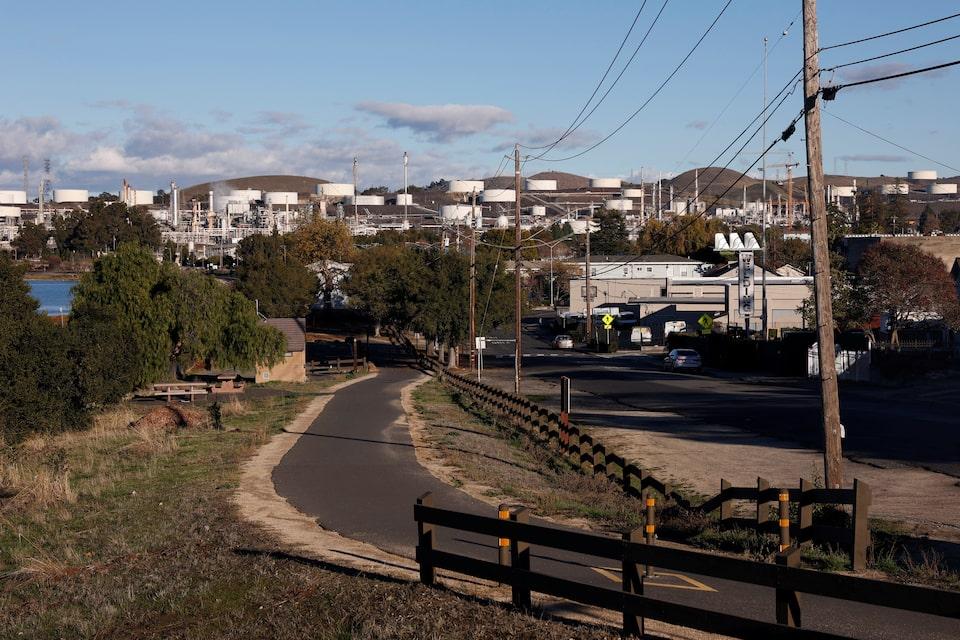
Phillips 66 ordered to pay Propel Fuels $195 million in punitive damages Phillips 66 to evaluate legal options after court ruling NEW YORK, July 31 (Reuters) - U.S. refiner Phillips 66 (PSX.N) , opens new tab was ordered to pay biofuel maker Propel Fuels $800 million in damages for stealing trade secrets to build up its renewable-fuel capabilities, according to a California state court document. A state court in Alameda, California, on Wednesday ordered Phillips 66 to pay $195 million in punitive damages, in addition to $604.9 million in compensation the refiner was ordered to pay following a separate verdict. Sign up here. "In summary, the court finds that Phillips 66's misconduct was 'reprehensible' from a business perspective. The evidence at trial reflects that Phillips 66 took advantage of Propel Fuels by abusing its bargaining power during due diligence," the court order said. In October, a jury in the California court decided that Houston-based Phillips 66 stole trade secrets under the guise of gathering information for a potential acquisition and then used that information to create a competing business. "We received the order and continue to evaluate all our legal options," a Phillips 66 spokesperson said on Thursday. Sacramento-based Propel Fuels specializes in low-emissions gasoline and diesel fuel. According to the legal document, Phillips 66 approached Propel Fuels in 2017 about acquiring the company to enhance its renewable fuel business in California. Phillips 66 abruptly withdrew from the deal in 2018 and began selling its own renewable fuel in 2019. Propel Fuels sued the refiner in 2022, accusing Phillips of unlawfully using trade secrets, including financial data and business strategies, that the biofuel company had shared during their talks. "This is the result of years of perseverance by our client," said Michael Ng, lawyer at Kobre & Kim and co-counsel for Propel Fuels. "It was really important to them that they stand up, not just for themselves, but for innovators generally." https://www.reuters.com/sustainability/boards-policy-regulation/phillips-66-hit-with-800-million-penalty-biofuel-trade-secrets-case-2025-07-31/
2025-07-31 21:13
July 31 (Reuters) - Strategy (MSTR.O) , opens new tab reported its first profit in six quarters on Thursday, as the biggest corporate holder of bitcoin benefited from a remarkable quarter for cryptocurrencies. In a watershed moment of legitimacy for the crypto industry, U.S. President Donald Trump signed the GENIUS Act into law earlier this month. Sign up here. Industry anticipation leading up to the moment helped rally bitcoin — the largest cryptocurrency — past $120,000 for the first time as investors cheered Washington's long-awaited approval on digital assets. Strategy held 597,325 bitcoins as of June 30, at an average cost of $70,982. Bitcoin currently trades around $116,600. It recorded a $14 billion unrealized fair value gain on digital assets during the quarter that saw corporations ranging from major U.S. banks to payment firms embrace crypto. Until the fourth quarter of 2024, the company could only record losses when bitcoin's value fell below its purchase price, but could not recognize price increases unless it sold bitcoin. The company's net profit was $9.97 billion, or $32.60 per share, for the three months ended June 30, compared with a loss of $102.6 million, or 57 cents per share, a year earlier. Strategy began buying bitcoin with cash in 2020 and then started issuing low-cost convertible bonds and stock sales to finance its accumulation drive. Its shares are up nearly 39% this year, eclipsing bitcoin's 25% climb, a phenomenon that has now inspired several public companies to pivot their operations and mimic founder Michael Saylor's buy-and-hold treasury approach. A few among these companies are now also pivoting to smaller tokens like ether, often listing via mergers with blank-check vehicles to wrap crypto assets into equity. Strategy's stock nearly fivefold last year, helping it secure a spot in the Nasdaq 100 index in December. https://www.reuters.com/business/saylors-strategy-swings-quarterly-profit-amid-crypto-goldrush-2025-07-31/

2025-07-31 21:09
ORLANDO, Florida, July 31 (Reuters) - TRADING DAY Making sense of the forces driving global markets Sign up here. By Jamie McGeever, Markets Columnist Wall Street took a breather on Thursday, but not before another tech whoosh lifted the S&P 500 and Nasdaq to new highs, while the dollar and bond yields ended little changed as investors trimmed positions ahead of Friday's U.S. jobs data. More on all that below. In my column today I analyze Fed Chair Jerome Powell's press conference, and the message that came across loud and clear - as long as the unemployment rate stays low, it will be very hard to justify rate cuts. If you have more time to read, here are a few articles I recommend to help you make sense of what happened in markets today. Today's Key Market Moves What stops the tech juggernaut? It's easy to forget in the midst of the bullish frenzy, but asset price booms do end, either over time, or more suddenly and painfully. Predicting the catalyst can be difficult, getting the timing right is akin to a lottery. Right now, the rally in U.S. Big Tech looks unstoppable. Inflation, a hawkish Fed, rising bond yields, tariffs, AI overspend worries? They've all been thrown at the sector but it has powered ahead, lifting the S&P 500 and Nasdaq to record high after record high in recent weeks. Meta and Microsoft did the heavy lifting on Thursday, with Microsoft joining Nvidia in the rarified air of the $4 trillion market cap club. Both Meta and Microsoft's after-hours earnings reports on Wednesday show their AI bets are paying off. The global equity picture was much gloomier, however, as Powell's hawkish signals on Wednesday and U.S. inflation data on Thursday pushed most major indices into the red. On the macro front, annual U.S. core PCE inflation was 2.8% and the Dallas Fed's trimmed mean PCE rate shot up to 3.4%, the highest since February last year. There are signs the tariff effect on goods prices is kicking in. Ernie Tedeschi at the Budget Lab at Yale posted on X that PCE durable goods prices are up 1.7% this year. Excluding the pandemic, that's the biggest six-month rise since 1987. On tariffs, U.S. President Donald Trump on Thursday gave Mexico a 90-day reprieve to negotiate a broader trade deal, but is later expected to slap new levies on countries that have not struck trade deals by his 12:01 a.m. EDT (0401 GMT) deadline. As economist Phil Suttle points out, the so-called 'BRICS' countries have stood up to Trump more than developed economies, who have "generally preferred to sue for peace." But they're paying a price - as things stand, China and Brazil are facing tariffs of up to 50%; South Africa 30%; and India 25%. "This is a case of a world turned upside down, and not one that improves the global outlook," Suttle says. The focus now turns to July's U.S. employment data on Friday. Solid job growth and, more importantly, a low unemployment rate could snuff out all bets on a September rate cut. Right now, market pricing shows a September cut is basically a coin toss. Have we seen Powell's last rate cut as Fed chair? Federal Reserve Chair Jerome Powell made it clear on Wednesday that the resilient U.S. labor market is currently the primary determinant of monetary policy, a signal that strong July employment figures could snuff out all bets for a September rate cut and reduce the likelihood of any further easing this year. At his press conference following the Federal Open Market Committee's meeting on Wednesday, Powell insisted that the rate-setting body's next move will depend on the "totality" of incoming economic data. He acknowledged the case for easing, like the softening in consumer spending, GDP growth of only 1.2% in the first half of the year, and downside risks to the job market from weakening labor demand and supply. But he signaled why the Fed is maintaining its mildly restrictive stance: "The main number you have to look at right now is the unemployment rate," Powell told reporters. This firm position is particularly notable given that Governors Christopher Waller and Michelle Bowman voted to ease, the first time in over 30 years that there have been two dissenters at a Fed policy meeting. But Powell has a point. The labor market is still broadly in balance, thanks to tighter immigration controls capping the inflow of foreigners into the workforce. Other indicators like job quits and openings rates are holding up well too. Plus, an unemployment rate of only 4.1% is hardly justification for a rate cut. The initial market reaction – a retreat on Wall Street, rise in bond yields, surge in the dollar and further cooling of rate cut bets in money markets – suggests investors heard Powell's message loud and clear. Rates futures markets now indicate that the probability of a quarter-point cut in September is essentially a coin toss, the least dovish pricing in over a year. Only one rate cut by the end of this year is fully priced. Steven Englander, head of global G10 FX research at Standard Chartered, says it's difficult to argue with the market's interpretation based on Powell's tone. "Powell is pretty clear that he's tying himself to the unemployment rate," Englander notes. PRECARIOUS FULL EMPLOYMENT The labor market's resilience shows why financial markets have once again overestimated the Fed's appetite for easing. The unemployment rate has been anchored at 4.0-4.2% for over a year. That's historically low, and as Powell says, essentially shows the economy is running at full employment. As long as that remains the case it will be difficult to justify cutting rates, even if that balance is increasingly precarious due to the "dual slowing" of labor supply and demand, as RBC's Mike Reid puts it. And we mustn't ignore inflation, which also arguably warrants Powell's "modestly" restrictive policy stance. Annual inflation is running "somewhat" above the Fed's 2% target, according to Powell, with core CPI at 2.9% and core PCE at 2.8%. And with the pass through from tariffs yet to be fully felt, the risks to prices are skewed to the upside. Powell reckons that tariffs should represent a one-off price rise only, but he admits no one can be sure. If the nascent tariff-fueled creep in goods prices persists, the Fed may feel it has to wait to ease policy until the impact subsides. And that probably won't be until next year. At the height of the post-Liberation Day turmoil in early April, traders were pricing in more than 130 basis points of easing this year. And just one month ago, they were expecting around 70 bps of cuts by year end, but that's now down to around 35 bps. Looking further out, only 65 bps of easing is priced into the futures curve by May of next year when Powell's term as Fed Chair ends. Could Powell have presided over his last rate cut as Fed Chair? That's unlikely, but certainly not impossible. What could move markets tomorrow? Want to receive Trading Day in your inbox every weekday morning? Sign up for my newsletter here. Opinions expressed are those of the author. They do not reflect the views of Reuters News, which, under the Trust Principles , opens new tab, is committed to integrity, independence, and freedom from bias. https://www.reuters.com/business/global-markets-trading-day-2025-07-31/
2025-07-31 21:03
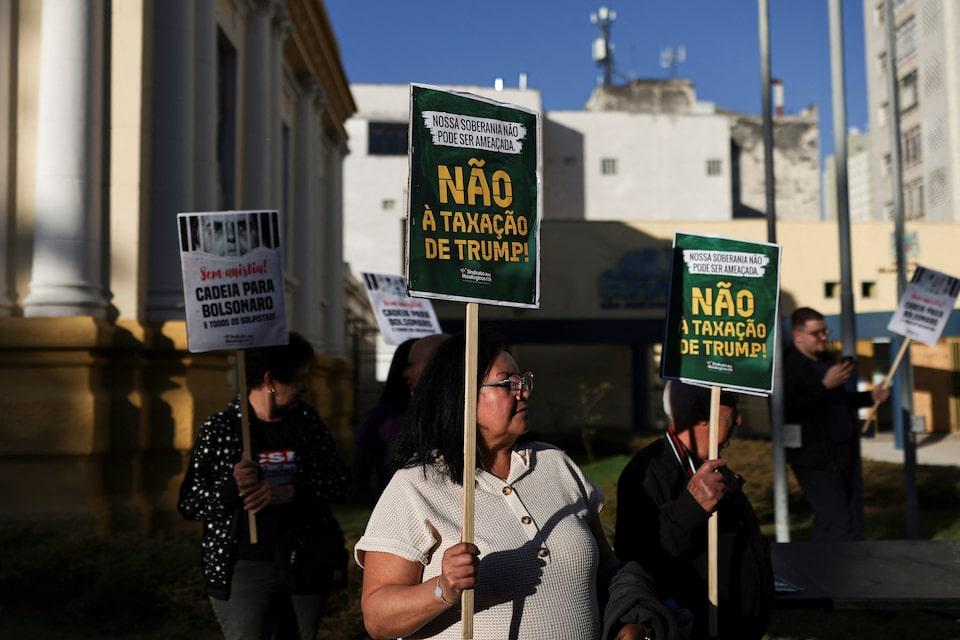
U.S. surprised Brazilian companies with nearly 700 exemptions to full tariff Brazil estimates tariff will impact 35.9% of sales to the U.S. Critical products including coffee and beef absent from exemption list SAO PAULO, July 31 (Reuters) - Brazilian companies reacted with a mix of relief and doubt after the White House surprised them on Wednesday with a list of nearly 700 exceptions to the 50% tariff U.S. President Donald Trump imposed on the country's exports from August 6. While the exemptions cover major Brazilian exports such as aircraft, iron ore, and orange juice, the country estimates that 35.9% of its sales to the U.S. by value will be hit by the new tariff. Key exports like beef and coffee were notably absent from the exemption list. Sign up here. "We can say that it was a very surgical selection, insofar as the United States chose products of greatest relevance to them and also in Brazil's export agenda," said Gilberto Braga, an economist at IBMEC university. Andre Ribeiro Chaves, director of the Fergubel steel mill in the state of Minas Gerais, said he would call back more than a hundred workers he had put on leave. "These exceptions gave us a certain comfort," he said. But Abrafrigo, a beef lobby that represents Marfrig (MRFG3.SA) , opens new tab and small Brazilian meatpackers, said the new tariffs make sales to the U.S. impossible, adding that exporters may lose $1.5 billion in sales of beef and byproducts through the end of the year. Still, even as some companies celebrated and others calculated their losses, many remained confused about the exemptions. While some lumber products benefited from exclusions, for example, companies in the sector are still trying to understand which segments of the industry will be affected by the new tariffs. Millpar, a manufacturer of wood-based products in southern Brazil, said it was still unsure about whether to call back the hundreds of workers it had put on leave. In the U.S., the exemptions to the full tariff were similarly welcomed. The Consumer Brands Association expressed optimism with the Trump administration's recognition of the scarcity of certain natural resources, like eucalyptus and other wood pulp products. "We strongly encourage Brazilian officials to pursue a deal with the Trump administration that achieves the same recognition for coffee and other key inputs critical to the U.S.," said Tom Madrecki, vice president of supply chain resiliency at the association. Many in Brazil remain hopeful for further exemptions. "We believe there is scope for this flexibility, especially since Brazilian beef is a staple for everyday consumption in the U.S.," said Fabrizzio Capuci, the commercial director at Naturafrig Alimentos, a beef exporter that has suspended shipments to the United States. (This story has been republished to change an image with no changes to text) https://www.reuters.com/business/aerospace-defense/brazilian-companies-react-trumps-tariffs-with-relief-doubt-2025-07-31/