2025-07-31 12:44
Refiners have not sought Russian crude for about a week-sources India bought more Russian oil after Russia's Ukraine invasion Trump has warned countries not to buy Russian oil NEW DELHI, July 30 (Reuters) - Indian state refiners have stopped buying Russian oil in the past week as discounts narrowed this month and U.S. President Donald Trump warned countries not to purchase oil from Moscow, industry sources said. India, the world's third-largest oil importer, is the biggest buyer of seaborne Russian crude, a vital revenue earner for Russia as it wages war in Ukraine for a fourth year. Sign up here. The country's state refiners - Indian Oil Corp (IOC.NS) , opens new tab, Hindustan Petroleum Corp (HPCL.NS) , opens new tab, Bharat Petroleum Corp (BPCL.NS) , opens new tab and Mangalore Refinery Petrochemical Ltd (MRPL.NS) , opens new tab - have not sought Russian crude in the past week or so, four sources familiar with the refiners' purchase plans told Reuters. IOC, BPCL, HPCL, MRPL and the federal oil ministry did not immediately respond to Reuters' requests for comment. The four refiners regularly buy Russian oil on a delivered basis and have turned to spot markets for replacement supply - mostly Middle Eastern grades such as Abu Dhabi's Murban crude and West African oil, sources said. Private refiners Reliance Industries (RELI.NS) , opens new tab and Nayara Energy, majority owned by Russian entities including oil major Rosneft (ROSN.MM) , opens new tab, have annual deals with Moscow and are the biggest Russian oil buyers in India. On July 14, Trump threatened 100% tariffs on countries that buy Russian oil unless Moscow reaches a major peace deal with Ukraine. Indian refiners are pulling back from Russian crude as discounts shrink to their lowest since 2022, when Western sanctions were first imposed on Moscow, due to lower Russian exports and steady demand, sources said. Refiners fear the latest EU curbs could complicate overseas trade including fund raising — even for buyers adhering to the price cap. India has reiterated its opposition to "unilateral sanctions". Trump on Wednesday announced a 25% tariff on goods imported from India from August 1, but added that negotiations were ongoing. He also warned of potential penalties for purchase of Russian arms and oil. On Monday Trump cut the deadline to impose secondary sanction on buyers of Russian exports to 10-12 days from the previous 50-day period, if Moscow does not agree a peace deal with Ukraine. Russia is the top supplier to India, responsible for about 35% of India's overall supplies. Private refiners bought nearly 60% of India's average 1.8 million barrels per day of Russian oil imports in the first half of 2025, while state refiners that control over 60% of India's overall 5.2 million bpd refining capacity, bought the remainder. Reliance purchased Abu Dhabi Murban crude for loading in October this month, an unusual move by the refiner, traders said. https://www.reuters.com/business/energy/indian-state-refiners-pause-russian-oil-purchases-sources-say-2025-08-01/

2025-07-31 12:40
Second quarter earnings mixed across the sector Companies warn tariffs could divert shipments to Europe ArcelorMittal sees more resilience in European demand ArcelorMittal, Outokumpu, Aperam shares fall July 31 (Reuters) - ArcelorMittal (MT.LU) , opens new tab, Outokumpu (OUT1V.HE) , opens new tab and Aperam (APAM.AS) , opens new tab warned of mounting pressures from tariffs and weak demand, as the outlook for European steelmakers worsened following a mixed second quarter. ArcelorMittal's quarterly core earnings were broadly in line with market expectations, while Outokumpu and Aperam beat analysts' estimates but projected lower earnings for the third quarter. Their shares fell between 4% and 5% by 1100 GMT. Sign up here. They followed peers Acerinox (ACX.MC) , opens new tab and SSAB (SSABa.ST) , opens new tab, which last week missed expectations and flagged that trade tensions and economic softness were dragging on the sector. The results paint a cautious picture for the rest of the year. While quarterly earnings held up better than feared, steelmakers are bracing for falling demand and price volatility as U.S. tariffs distort trade flows and feed a weakening sentiment. The companies have warned that U.S. President Donald Trump's 50% tariffs on steel imports could divert U.S.-bound shipments towards Europe, leading to steeper price declines in a region already struggling with competition from cheaper Asian imports. EUROPEAN STEEL SECTOR OUTLOOK ArcelorMittal, the world's second-largest steelmaker, stood out with its relatively more resilient forecast for Europe, while Outokumpu and Aperam struck a more downbeat tone similar to Acerinox and SSAB a week earlier. Outokumpu sees continued price pressure and sluggish demand on the continent. Its CEO Kati ter Horst said low-priced imports from Asia and elevated energy costs would continue to weigh on the stainless steel maker. "There is no real strong demand out there in the market," Outokumpu CFO Marc-Simon Schaar told Reuters, after the Finnish company projected a 5-15% drop in stainless steel deliveries for the third quarter, mainly due to weakness in Europe. Aperam also flagged high uncertainty for the rest of 2025 that would likely lead to a sequential profit decline. "In Europe demand remains persistently depressed," Aperam CEO Timoteo Di Maulo said. However, ArcelorMittal is seeing more resilience in European demand than in other regions, aided by its exposure to the automotive sector, which CFO Genuino Christino said was holding up relatively well despite a slowdown in global car demand. The divergence between ArcelorMittal's relatively upbeat tone on Europe and its peers' gloomier views underscores the uneven dynamics across subsectors and geographies. Luxembourg-based ArcelorMittal lowered its forecast for global steel demand growth outside China to between 1.5% and 2.5%, highlighting slower activity in the U.S., though it also trimmed down its estimate for Europe. It also raised its estimate of the financial impact from U.S. tariffs and now expects them to reduce its core profit by $150 million this year. https://www.reuters.com/business/european-steelmakers-warn-pressure-demand-pricing-2025-07-31/
2025-07-31 12:38
BEIJING/LONDON, July 31 (Reuters) - Proposed limits on U.S. scrap copper exports which aim to reduce reliance on overseas production of the metal, are unlikely to have much impact, analysts say, with exports already below the planned cap. Copper is a vital material for the power generation and transmission industries, for artificial intelligence and data centres and for electric vehicles. Sign up here. In new tariff announcements on Wednesday, the White House said it would require 25% of high-quality copper scrap produced in the U.S., the world's largest scrap exporter, to be sold at home, in a move to boost domestic production of refined copper using scrap as a raw material. The executive order did not define high-quality or specify when the domestic use requirement would begin, though a separate report from the Secretary of Commerce said 2027. Trade flows were unlikely to change as a result, Goldman Sachs analysts said in a note on Thursday, in part because "high quality scrap is probably kept domestically already." "If we're looking at the copper scrap market as a whole, there's nothing to see here because the US is already consuming upwards of 40% of copper scrap in its own metal production," said Duncan Hobbs, Research Director at commodity merchant Concord Resources. The United States exported $4.5 billion of copper scrap last year, around half going to China. However exports to its largest customer have dropped sharply since the on-off trade war, muting any potential impact from Trump's latest proposal. Exports of scrap copper to China in May were worth just $7.4 million, down from $248 million a year earlier, according to U.S. customs data. The share of China's scrap copper imports from the US by volume fell to 1% in June from 20.8% in January, Chinese customs data showed. https://www.reuters.com/sustainability/land-use-biodiversity/trumps-scrap-copper-quotas-too-small-shift-market-2025-07-31/

2025-07-31 12:35
July 31 (Reuters) - Sempra Infrastructure, a unit of U.S. energy company Sempra (SRE.N) , opens new tab, will supply 1.5 million tonnes of liquefied natural gas (LNG) per year to Japan's biggest power generator JERA in a 20-year deal, it said on Thursday. The LNG would be supplied from Sempra's Port Arthur LNG Phase 2 development project in Texas, it added. Sign up here. The United States is the world's largest exporter of LNG, shipping 11.9 billion cubic feet per day of the supercooled fuel in 2024, and has gained further momentum following President Donald Trump's lifting of a moratorium on new export permits in January. Sempra Infrastructure CEO Justin Bird said the company remains focused on advancing its Port Arthur LNG Phase 2 development project to a final investment decision. The project has received all its key permits and is expected to include two liquefaction trains capable of producing about 13 Mtpa of LNG, the companies said in a statement. In May, Sempra's Port Arthur Phase 2 project in Texas had won U.S. approval to export liquefied natural gas to markets in Europe and Asia. Trump has pushed allies like Japan, which is the world's second-largest LNG buyer, and South Korea to buy U.S. oil and gas while threatening tariffs on their exports. The Port Arthur LNG Phase 1 project, which is currently under construction, is expected to achieve commercial operation in 2027 and 2028 for trains 1 and 2, respectively. U.S. liquefied natural gas producer NextDecade (NEXT.O) , opens new tab had also signed a 20-year deal in late May to supply JERA with 2 million tonnes per annum of LNG from its Rio Grande project's fifth liquefaction facility. https://www.reuters.com/business/energy/sempra-japans-jera-enter-into-20-year-lng-supply-deal-2025-07-31/

2025-07-31 12:29
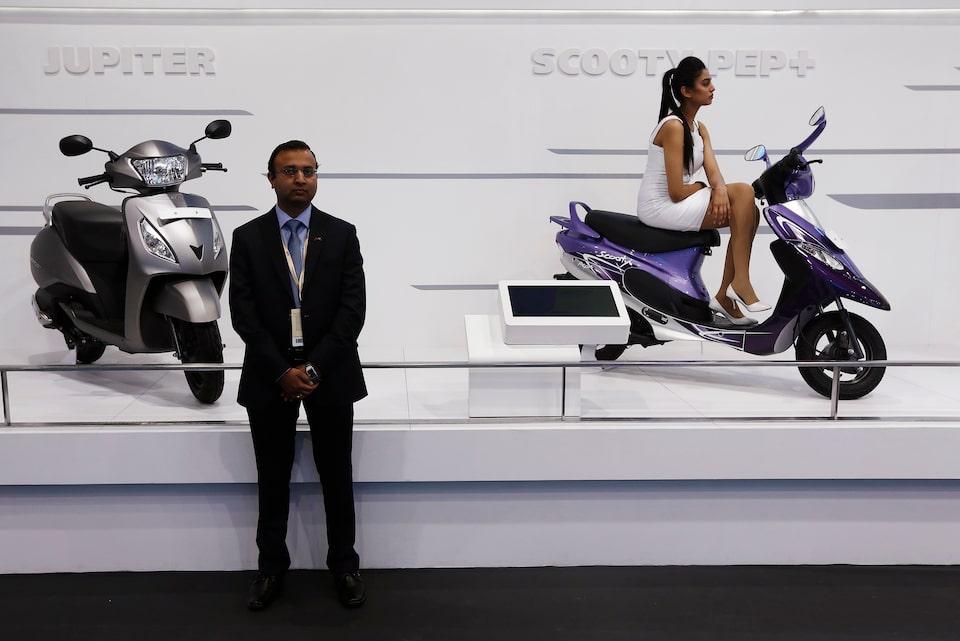
TVS first-quarter profit jumps 35% on-year Firm explores alternatives for rare-earths July 31 (Reuters) - TVS Motor (TVSM.NS) , opens new tab, India's top electric two-wheeler maker by sales, beat quarterly profit estimates on Thursday on strong local sales and exports, and said it plans to seek alternative sources for rare-earth magnets in light of China's export ban. The company, which also makes three-wheelers, had earlier flagged short- to medium-term challenges in securing magnets, which are key for electric motors and components. Sign up here. China, which produces about 90% of the world's rare earth magnets, imposed export curbs in April. While some shipments to the U.S. and Europe have resumed, Indian firms are still awaiting Beijing's nod. TVS is looking at "HRA-free, cerite-based, magnet-free" alternatives - which do not include heavy rare earth elements - and also at alternate countries, chief executive officer K N Radhakrishnan said in a post earnings conference call. On Wednesday automakers Mahindra and Mahindra (MAHM.NS) , opens new tab and Hyundai India (HYUN.NS) , opens new tab shrugged off medium-term issues from the export ban, with Mahindra saying it was using alternatives such as light rare-earths and ferrites. TVS Motor's overall two-wheeler sales rose 17% to about 1.2 million units in the quarter ending June 30, fuelled by a rising share of premium models, such as the Apache series, which account for roughly 25% of total revenues. Its electric vehicle sales surged 35% in the June quarter, while exports, which make up nearly a fourth of the company's overall revenue, grew 39%. The Jupiter scooter maker's profit jumped 34.9% from a year earlier to 7.79 billion rupees ($88.92 million) in the June quarter, beating analysts' estimate of 7.63 billion rupees, per data compiled by LSEG. Revenue from operations rose 20.4% to 100.81 billion rupees, above analysts' estimate of 99.36 billion rupees. Analysts said TVS is moving to a "richer product mix," where high-margin offerings like high engine capacity bikes and scooters are gaining traction over entry-level models. This shift helped push its core earnings higher, with operating EBITDA margin expanding to 12.5% in the first quarter, up from 11.5% a year earlier. ($1 = 87.6060 Indian rupees) https://www.reuters.com/world/india/indias-tvs-motor-beats-quarterly-profit-view-seeks-rare-earth-alternatives-2025-07-31/
2025-07-31 12:25
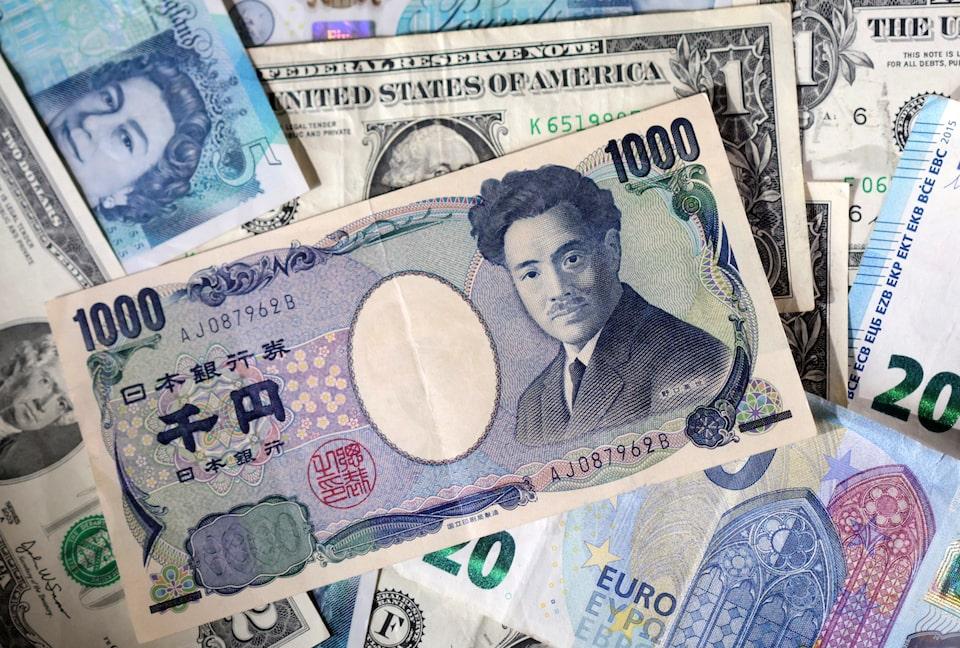
BOJ revises up inflation forecasts; yen strengthens slightly Dollar buoyant with year's first monthly gain in sight Fed reiterates patient approach on rates South Korea to face 15% US tariffs, more trade deals awaited LONDON, July 31 (Reuters) - The dollar headed for its first monthly rise of 2025 on Thursday, fuelled by investor confidence in the resilience of the U.S. economy as trade war fears fade, while a more upbeat signal from the Bank of Japan unsettled the yen. At the conclusion of its two-day policy meeting, the BOJ kept short-term interest rates steady at 0.5% in a unanimous vote, but upgraded its inflation forecasts for all three years through fiscal 2027 and said risks to the price outlook were "roughly balanced". Sign up here. The yen initially rallied, as traders priced in a stronger chance of a rate rise later this year, before reversing course to trade roughly unchanged on the day. In the broader market, the dollar traded around two-month highs after Federal Reserve Chair Jerome Powell on Wednesday indicated he was in no rush to lower rates and offered little insight on when they might fall again. The greenback was also on track for its first monthly gain for the year, bolstered by a hawkish Fed and U.S. economic resilience, with uncertainty over U.S. President Donald Trump's chaotic tariffs easing after an array of trade deals. The euro has been one of the biggest casualties of the dollar's ascent this month, as investors have rushed to unwind bets laid on earlier this year on the premise that the European market may offer better opportunities. The European Union's agreement this month to 15% tariffs on U.S. exports has cleared up a lot of uncertainty, but at the same time, delivered a blow to confidence. "I think there was too much optimism in the price of the euro. And I think that's come back this week. There's been a lot of commentary about how the EU conceded to the U.S. on this trade deal and that's been a dose of reality for the Europeans," Rabobank strategist Jane Foley said. She added that the dollar had lagged an improvement in other U.S. assets in recent weeks, as the S&P 500 has hit record highs and long-term bond yields have retreated from the year's peaks. "There were signs that the rotation trade that we saw in the early part of the year of pulling assets out of the U.S. was over. And yet, despite all of this... the dollar remained in the doldrums ... from that point of view, this (upward) direction in the dollar was necessary. We needed to get back to a more neutral position," Foley said. The euro was last up 0.36% at $1.144, having hit a seven-week low on Wednesday. Still, it remained on track to lose nearly 3% this month. Against a basket of currencies, the dollar dipped slightly to 99.77 , set for a monthly gain of about 3%. BOJ HINTS AT HIKES In Japan, the BOJ said persistent rises in food costs could affect public perceptions of future price moves and speed up underlying inflation. "Underlying inflation still remains short of our 2% target, but is expected to rise moderately," Governor Kazuo Ueda told a news conference, in comments some analysts viewed as a possible signal for a rate rise. "There is definitely a clear justification for them to hike rates," said Khoon Goh, head of Asia research at ANZ. "Now, the fact that Japan has finally reached a deal with the U.S. does remove some element of that uncertainty for themselves. So I think the question is whether the BOJ is now prepared to hike in October." The yen softened slightly, leaving the dollar up 0.2% at 149.85, having fluctuated between a 0.2% gain on the day to a 0.6% loss. New U.S. trade deals included one with South Korea, which Trump said on Wednesday would pay a 15% tariff on its U.S. imports. The Korean won strengthened on the news and last stood at 1,393 per dollar. Trump on Wednesday also slapped a 50% tariff on most Brazilian goods and said the United States is still negotiating with India. The blitz of tariff announcements comes ahead of an August 1 deadline for countries to secure trade deals or face steep levies. https://www.reuters.com/world/africa/dollar-set-first-monthly-gain-2025-yen-choppy-after-boj-2025-07-31/