2025-12-02 19:28
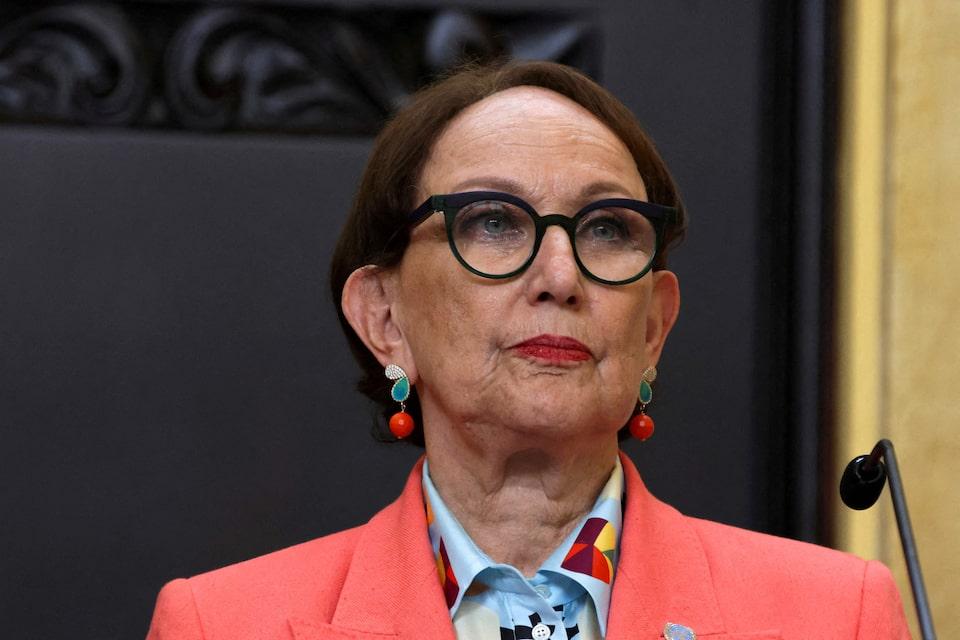
LONDON, Dec 2 (Reuters) - The financial system risks undermining global trade if it fails to adapt to the economy's needs, with developing countries likely to suffer the most, the UN Trade and Development Agency said on Tuesday. Shifts in financial markets now drive global trade almost as much as real economic activity, with financial conditions increasingly determining global trade flows and shaping development prospects worldwide, the UNCTAD report, which was presented in London, said. Sign up here. "Trade is not just a chain of suppliers. It is also a chain of credit lines, payment systems, currency markets and capital flows," UNCTAD's secretary-general, Rebeca Grynspan, said in a statement. Grynspan told Reuters in an interview that the financial and trade systems are so closely synchronised that any rise in market volatility or uncertainty will have a significant impact on global trade. UNCTAD said global growth was expected to slow from 2.9% in 2024 to 2.6% in 2025 due to rising financial volatility and geopolitical tensions. More than 90% of global trade relies on bank financing, with dollar liquidity and cross-border payment systems remaining essential to international commerce. "This deep reliance on financial channels makes trade closely linked to global financial and monetary conditions," the report said. "A shift in interest rates or investor sentiment in a major financial centre can affect trade volumes worldwide." The report said although developing economies are expected to grow faster than advanced ones, they face higher financing costs, volatile capital flows, and rising climate-related risks, factors that constrain the fiscal and investment space needed to sustain growth. The dollar remains central to global finance. That offers stability in uncertain times, but it also ties developing economies to financial cycles they have little power to influence, the agency said. "We need to find ways in which the instruments of the payment system, of the insurance, of the capacity of these countries to lend or do things in their own currency will be part of the resilience of the system for the future," Grynspan said. UNCTAD called for reforms to align trade and finance and ensure long-term stability, including modernising trade rules, reforming the international monetary system to limit damaging currency and capital-flow volatility, and strengthening capital markets to expand affordable long-term finance. "What does genuine resilience require? Integrated policy frameworks that recognise links between trade, finance and sustainability," Grynspan said. "Fundamentally, we cannot understand trade isolated from finance." https://www.reuters.com/business/finance/global-financial-system-must-adapt-better-serve-economy-un-trade-agency-says-2025-12-02/
2025-12-02 19:17
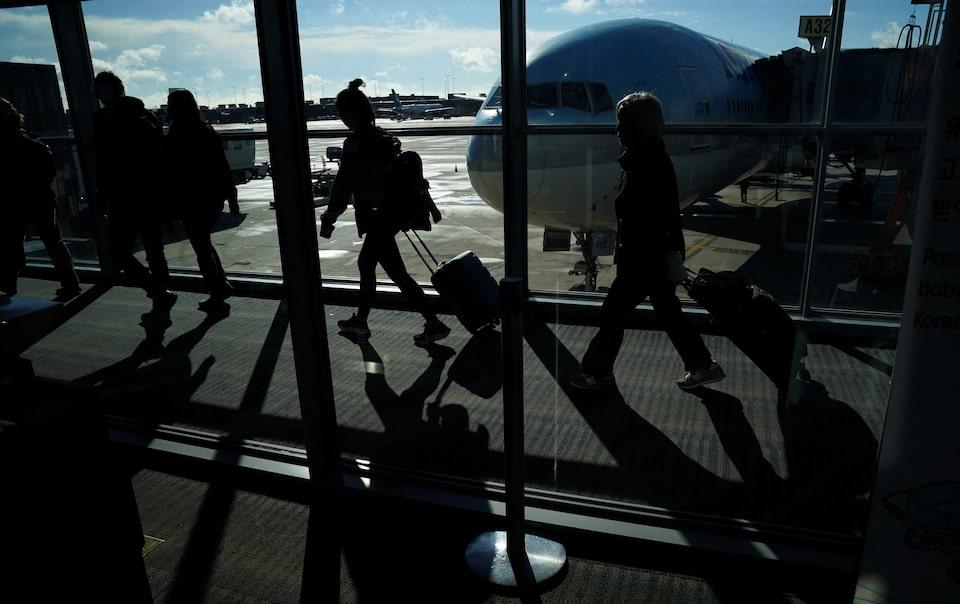
Trump criticizes Dulles, plans new design for airport Dulles serves 27 million passengers annually Located in Virginia, it is a major United Airlines hub WASHINGTON, Dec 2 (Reuters) - President Donald Trump said on Tuesday his administration intends to overhaul federally owned Washington Dulles International Airport in Virginia, the primary international airport for the U.S. capital area, calling it a bad facility. The airport, which is located about 25 miles (40 km) from the U.S. capital and opened in 1962, serves approximately 27 million passengers annually. Trump's motorcade made an unscheduled drive through the airport property in October to assess future projects. Sign up here. "We're also going to rebuild Dulles airport because it's not a good airport. It should be a great airport. It's not a good airport at all," Trump said on Tuesday during a cabinet meeting at the White House. "They have a great building and a bad airport." The Republican president said he has a new design for Dulles. Finnish architect Eero Saarinen designed the airport's Terminal Building, a distinctive structure with a sloping roof that sweeps up toward the sky on opposite sides. It is considered a leading example of Mid-Century Modern architecture. The U.S. Transportation Department said in a notice it was seeking proposals to completely overhaul Dulles, including potentially tearing down the historic main terminal. It criticized the "jet fuel smell in the concourses" and the "paltry" number of gates in the main terminal, adding Dulles "is no longer an airport suitable and grand enough for the capital of the United States." The airport, a major United Airlines (UAL.O) , opens new tab hub, is operated by the Metropolitan Washington Airports Authority under a 50-year lease approved by Congress. United said it looked forward to working with Trump and USDOT "to continue to enhance the airport’s infrastructure and operations in a meaningful and cost-effective way." The airport authority said on Tuesday it appreciates the administration's interest in making improvements and working collaboratively. "We want to build on the existing $7 billion capital plan for Dulles, which is underway with a new concourse under construction and expected to open next fall," the authority said in a statement. Legislation has been introduced in Congress by some Republicans to rename Dulles after Trump. The airport is currently named after John Foster Dulles, who served as U.S. secretary of state under President Dwight Eisenhower in the 1950s. Transportation Secretary Sean Duffy also wants proposals to replace the shuttle vehicles, called "mobile lounges," that transport passengers between the terminal and planes. Two separate collisions in November involving the mobile lounges drew attention to the system. The airport currently has 130 gates. In July, the airport authority approved a master plan to expand the facility to handle 38 million annual passengers in 2030 and 45 million annual passengers and 154 gates by 2045. The plan envisions expanding it to eventually to serve 90 million annual passengers with 218 gates. https://www.reuters.com/world/us/trump-administration-rebuild-washingtons-dulles-airport-2025-12-02/
2025-12-02 19:12
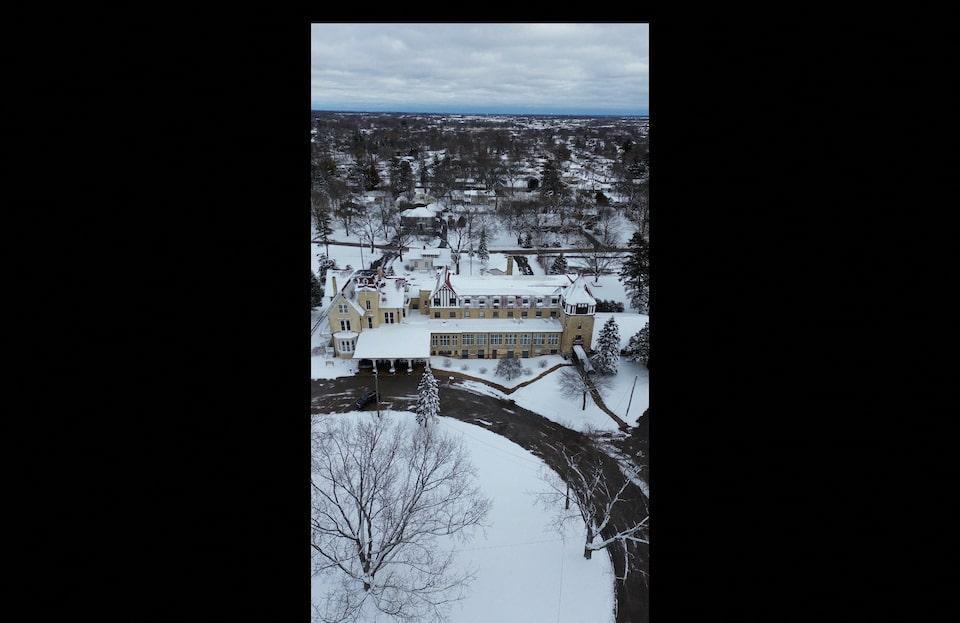
Dec 2 (Reuters) - An intensifying weather system was expected to bring heavy snow or rain to parts of the U.S. Midwest, the Appalachians and the Northeast on Tuesday, with more than 50 million Americans under a winter storm advisory. Up to a foot of snow is forecast across the Ohio Valley, Pennsylvania, upstate New York and into New England, with some areas getting up to an inch an hour, said Ashton Robinson Cook, a forecaster at the National Weather Service's Weather Prediction Center. Sign up here. "If you don't have to be on the roads today, stay home," Cook said. "In areas of heavy snow, it's best not to travel. But if you have to go out, give yourself a lot of extra time." Between three and five inches of snow had fallen by early Tuesday afternoon across Indiana, Pennsylvania, Central New York and parts of New England, forecasters said, with snow expected to keep falling throughout the day. Hundreds of school districts from Cincinnati and western Pennsylvania to New Hampshire and Maine announced school closures or delayed openings. The snow is expected to miss some areas east of Interstate 95, a major north-south route that hugs the Atlantic Coast, but residents can expect rain and freezing rain up and down the corridor, including in Washington, Philadelphia and New York City, where temperatures will hover above the freezing point. Further north in Boston, the precipitation may toggle between snow and rain later on Tuesday, Cook said. In addition, some areas along the central and southern Appalachians will see freezing rain and slick roads. Chad Merrill, a senior meteorologist with AccuWeather, a private weather forecasting company, said that more winter weather was on the way later this week. "We'll see an Arctic cold front coming down through Canada on Thursday that could bring some more snow showers in the Northeast and Mid-Atlantic," he said. Accumulations of an inch or so are expected by Friday. The bad weather will also dip farther south, bringing snow, sleet and freezing rain to the Appalachians, including the western parts of the Carolinas, he said. https://www.reuters.com/business/environment/heavy-snow-expected-parts-us-midwest-northeast-2025-12-02/
2025-12-02 19:04
MOSCOW, Dec 2 (Reuters) - President Vladimir Putin warned European powers on Tuesday that if they started a war with Russia then Moscow was ready to fight and that the defeat of European powers would be so absolute that there would be no one left to even negotiate a peace deal. Almost four years into thewar in Ukraine, the deadliest conflict in Europe since World War Two, Russia has failed to conquer the country, a much smaller neighbour which has been supported by European powers and the United States. Sign up here. Ukraine and European powers have repeatedly warned that if Putin wins the Ukraine war then he could attack a NATO member, a claim which Putin has repeatedly dismissed as nonsense. Asked by a reporter about remarks in the Russian media that Hungarian Foreign Minister Peter Szijjarto had cautioned that Europe was preparing a war against Russia, Putin said that Russia did not want a war with Europe. "If Europe suddenly wants to start a war with us and starts it," Putin said, then it would end so swiftly for Europe that Russia would have no one left to negotiate with. Putin used the Russian word for "war". He also suggested that the war in Ukraine was not a full-blown war and that Russia was acting in a "surgical" manner which would not be repeated in a direct confrontation with European powers. PUTIN SAYS EUROPE IS HINDERING TRUMP'S PEACE EFFORTS Putin sent tens of thousands of troops into Ukraine in February 2022, triggering the biggest confrontation between Russia and the West since the depths of the Cold War. U.S. officials say more than 1.2 million Russian and Ukrainian men have been killed in the war. Neither Ukraine nor Russia discloses its losses. Putin accused European powers of hindering U.S. President Donald Trump's attempts to end the war in Ukraine by putting forward proposals they knew would be "absolutely unacceptable" to Moscow so they could then accuse Russia of not wanting peace. Putin said European states had locked themselves out of peace talks on Ukraine by cutting off contacts with Russia, adding: "They are on the side of war." Putin also threatened to sever Ukraine's access to the sea in response to drone attacks on tankers of Russia's "shadow fleet" in the Black Sea. https://www.reuters.com/world/europe/putin-says-that-if-europe-wants-war-then-russia-is-ready-2025-12-02/
2025-12-02 17:29
Dec 2 (Reuters) - Leveraged exchange‑traded funds (ETFs) linked to bitcoin hoarder Strategy (MSTR.O) , opens new tab are among the biggest casualties of this year's crypto slump, as falling bitcoin price battered shares of the largest corporate holder of the token. The T‑Rex 2X Long MSTR Daily Target ETF and Defiance Daily Target 2x Long MSTR ETF , both of which offer twice the return on Strategy shares, have lost nearly 85% of their value so far in 2025. T-Rex 2X Inverse MSTR Daily Target ETF has shed 48% during the same period. Sign up here. Shares of Strategy have tumbled more than 40% this year, with the latest fall driven by bitcoin's slide that sent it below $90,000. The cryptocurrency touched a record high of $126,223.18 in October but has since been dragged down by a global risk aversion. Michael Saylor's Strategy, which pioneered the buy-and-hold crypto treasury strategy, has inspired dozens of copycats. But their shares have also lagged substantially this year. Investor focus is on Strategy's "mNAV" metric, its enterprise value relative to its bitcoin holdings, following CEO Phong Le's remarks on the "What Bitcoin Did" podcast Friday that the company may consider selling bitcoins if the ratio drops below 1. Reuters calculations, based on LSEG data, estimate the ratio at around 1.1. Mike O'Rourke, chief market strategist at JonesTrading, said Le Phong's comments undermined the company's central marketing message of not selling bitcoin despite volatile market conditions. Strategy did not immediately respond to a Reuters request for comment. EARNINGS SLASHED, SHORT SELLERS GAIN On Monday, Strategy slashed its full‑year outlook to between a $6.3 billion profit and a $5.5 billion loss, compared with a previous forecast of $24 billion in net profit. The earlier estimate, published October 30, assumed bitcoin would hit $150,000 by the end of the year, the company said. "Great strategy from Strategy, while prices go up. When they go down, well, the strategic options left to the company are limited," said Vincenzo Vedda, chief investment officer at DWS. Strategy also disclosed a $1.44 billion reserve to fund dividends on preferred stock and interest on outstanding debt. Short sellers have reaped more than $2.5 billion in profit on the stock so far this year, including about $156 million on Monday, according to analytics firm Ortex. Strategy shares have more than halved in the year since joining the Nasdaq 100 index (.NDX) , opens new tab, sliding about 70% from their November 2024 peak. ANALYSTS STAY FIRM Despite the dismal performance, analysts' ratings have remained largely optimistic so far. Of the 16 brokerages covering Strategy, 10 rate it "buy" equivalent, four "strong buy" and two "hold," with a median price target of $485, implying a 183% jump over the next 12 months, according to LSEG data. Saylor is set to deliver a keynote titled "The Undeniable Case for Bitcoin" at a Binance conference in Dubai on Wednesday. https://www.reuters.com/business/finance/strategys-leveraged-etfs-hit-hard-by-crypto-slump-2025-12-02/
2025-12-02 12:39
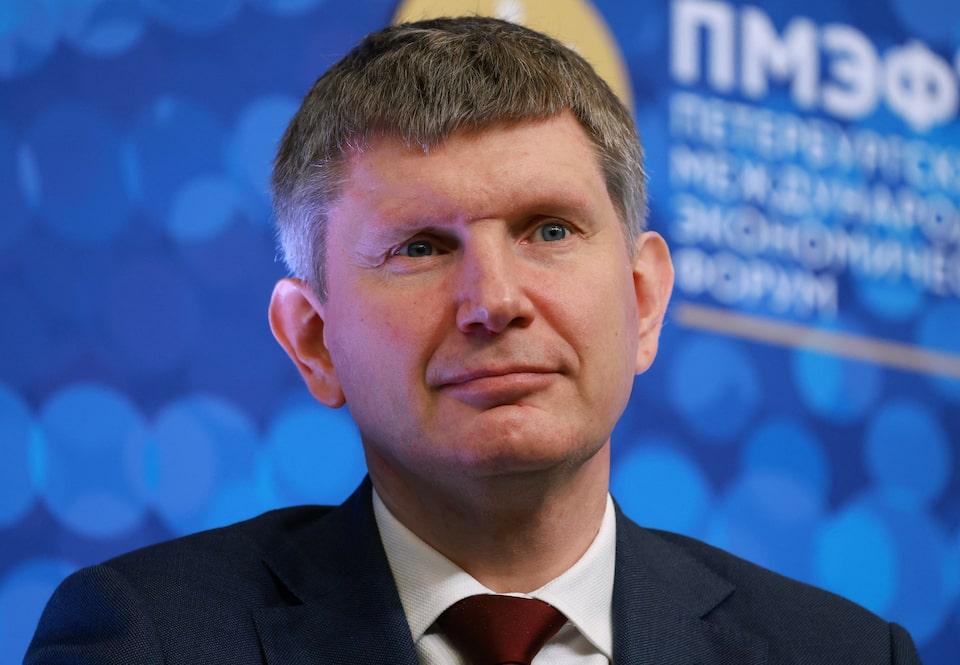
Rouble will remain strong, economy minister says Export-oriented firms may suffer losses The government will review exchange rate forecasts in April Officials urge companies to adjust to stronger rouble MOSCOW, Dec 2 (Reuters) - The Russian rouble will be stronger than previously expected, which represents a challenge for the economy, with several major export-oriented mega projects potentially suffering losses, top Russian officials said on Tuesday. The rouble has rallied by over 46% since the start of the year due to the central bank's tight monetary policy and expectations for a peaceful settlement in Ukraine, following the start of U.S.-Russia negotiations in February. Sign up here. A strong rouble hits revenues of major Russian commodity firms, which make up the backbone of the country's economy, exporting oil, gas, metals and grains, and also helping to fill the state coffers with their taxes. Most analysts and businessmen expected the rouble to weaken, arguing that the Russian currency's fair value was around 100 to the U.S. dollar, compared to the current level of 77.5 to the dollar. Such expectations have so far failed to materialise. Economy Minister Maxim Reshetnikov told the "Russia Calling" investment conference that due to weak imports and weak capital outflows, the stronger rouble was expected to stay, and companies had no choice but to adjust to it. "Strategically, the exchange rate will be stronger than it seemed to us one or two years ago," Reshetnikov said. The government changed its forecast for the average rouble rate in 2026 from 100.2 to the dollar to 92.2 last September. LIVE WITH NEW REALITIES Reshetnikov said that the government's policy of import substitution, which was introduced to counter Western sanctions and replace equipment and machinery previously imported from the West, was also working to strengthen the rouble. "We will have to live with these new realities," Reshetnikov added, stressing that several large export-oriented projects under development with support from the government targeted export volumes of up to $70 billion. He said that some of these exports would not be profitable at the stronger exchange rate of the rouble and would have to be abandoned. Reshetnikov said that several mega projects could be affected such as Sibur's Amur gas and chemicals plant in the Far East, Gazprom's gas processing plant in Ust Luga on the Baltic Sea, and billionaire Alisher Usmanov's Udokan Copper project. "Some enterprises are expecting that they just need to wait a little longer and by some miracle the exchange rate will weaken. This strategy is no longer working," Reshetnikov said. Central Bank Governor Elvira Nabiullina said that the share of the rouble in payments for Russian exports has reached 57% this year, compared to only 14% in 2021. The rouble's share in payments for imports was 55%, she said. CRYPTOCURRENCY MINING UNDERMINES FOREIGN CURRENCY DEMAND The rouble's rate to the dollar is determined through an opaque over-the-counter trade between banks. Speaking to Reuters this week, Andrei Kostin, CEO of Russia's second-largest bank VTB, said the current rate suited neither exporters nor the government. "Demand for foreign currency has fallen for everyone, even ordinary people have stopped saving in dollars," he said. President Vladimir Putin's economy aide Maxim Oreshkin said that mining of cryptocurrencies was one of the factors behind the falling demand for foreign currencies since cryptocurrencies could be used to pay for some imports. He said that several government decisions, limiting imports, such as an increase in scrappage fees for foreign-made cars or a clampdown on gray imports going through the Central Asian states, also played a role. Oreshkin said that foreign investors were gradually finding ways to invest in high-yielding Russian assets, such as government bonds with yields around 13%, contributing to an inflow of capital, which supported the rouble. "If the government believes that it needs a weaker rouble for some reason, it needs to carry out an aggressive policy to increase imports. Right now I don't see it from the government," Oreshkin said. https://www.reuters.com/business/russian-economy-will-have-live-with-stronger-rouble-economy-minister-says-2025-12-02/