2025-07-31 07:22
July 31 (Reuters) - Finnish stainless steel maker Outokumpu (OUT1V.HE) , opens new tab on Thursday reported a core profit above market expectations for the second quarter and said it had increased its short-term cost saving target to 60 million euros ($68.6 million) by the end of 2025. Its adjusted profit before interest, taxes, depreciation and amortisation was 75 million euros in the April-June quarter, while analysts had expected 69 million in a consensus provided by Outokumpu. Sign up here. "During the second quarter, we continued to benefit from our strong market positions in both Europe and the U.S.," CEO Kati ter Horst said in an earnings statement. She said, however, that the quarter was marked by uncertainty and heightened geopolitical tensions, leading to increased caution among customers. European steelmakers, already struggling with weak demand, high costs and competition from cheaper Chinese imports, face an additional challenge this year from President Donald Trump's tariffs on U.S. imports. Aside from raising costs when exporting from Europe, Trump's tariffs on steel and aluminium, first rolled out at 25% in March and raised to 50% in June, are diverting shipments meant for the U.S. market, risking an increase in cheap imports into Europe. "Asian imports to Europe remain high compared to the low demand in the stainless steel market," Outokumpu said. The company's stainless steel deliveries rose slightly to 483,000 tonnes in the second quarter, but are expected to decline by 5-15% in the third due to seasonality effects and market weakness, it said. ($1 = 0.8744 euros) https://www.reuters.com/markets/europe/finlands-outokumpu-beats-earnings-estimates-challenging-environment-2025-07-31/
2025-07-31 07:11
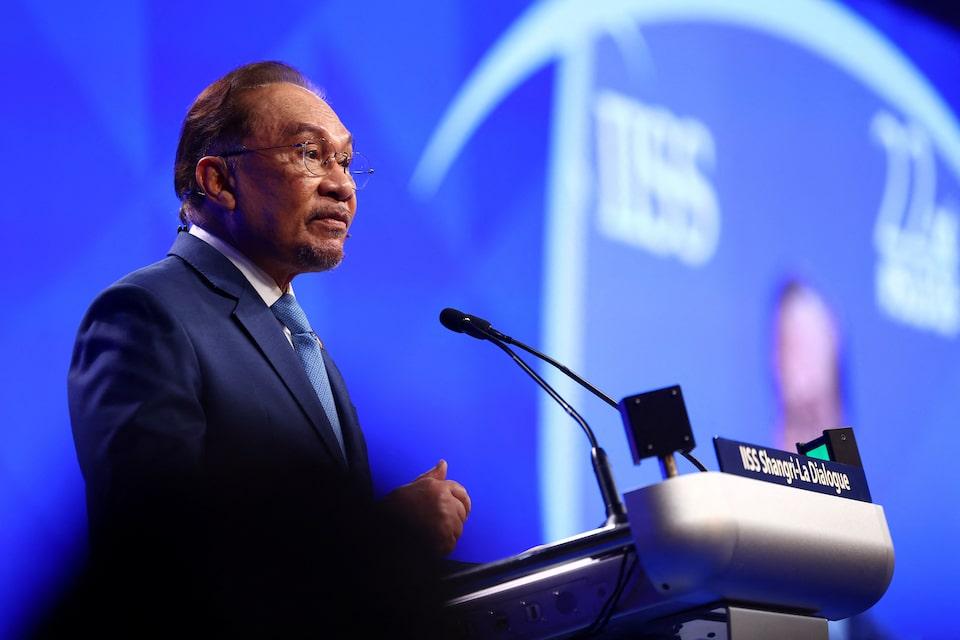
Malaysia PM holds phone call with Trump Trump to review U.S. tariff rate on Malaysia, PM Anwar says Malaysia PM says Trump to attend ASEAN meeting in October Malaysia targets 4.5%-5.5% GDP growth over next 5 years KUALA LUMPUR, July 31 (Reuters) - The U.S. tariff rate on Malaysian goods will be announced on Friday, Malaysian Premier Anwar Ibrahim said on Thursday after speaking to U.S. President Donald Trump. Malaysia is facing a 25% tariff on its exports to the United States unless a deal with Washington is reached by Friday. Sign up here. The two countries have held multiple rounds of talks, with Malaysia's trade minister saying several sticking points remained, particularly on non-trade barriers. Anwar said he discussed tariffs "in the spirit and principle of free trade" during a phone conversation with Trump early on Thursday. "After the explanation I provided, he (Trump) decided to review the tariff rates imposed on Malaysia, with an announcement expected tomorrow" Anwar said in a speech to parliament to present the country's new five-year economic plan. Anwar did not provide further details. Anwar also said Trump confirmed that he would attend a meeting of the Association of Southeast Asian Nations in Malaysia in October. Malaysia will target annual gross domestic product growth of 4.5% to 5.5% from 2026 to 2030, with a deficit of less than 3% of GDP by the end of that period, Anwar said when launching the new five-year plan. The Southeast Asian nation is also targeting export growth of 5.8% a year in the plan, and will strive to keep inflation at an average rate of 2%-3% for the period, he said. Malaysia will allocate 611 billion ringgit ($143.76 billion) for the economic plan, with 430 billion ringgit of the total coming from the government's coffers, and the remainder from government-linked companies and the private sector, Anwar added. "The next five years will be a crucial period for Malaysia to not only transition into a high-income nation but also to provide a high quality of living for the people," Anwar said. Malaysia's central bank on Monday lowered its growth forecast for 2025 to a range of 4% to 4.8% from 4.5% to 5.5% due to global tariff uncertainties and shifting trade policies. The bank also cut interest rates for the first time in five years earlier this month to "pre-emptively preserve" the export-oriented economy's growth. ($1 = 4.2500 ringgit) https://www.reuters.com/world/asia-pacific/malaysia-pm-says-us-tariff-rate-malaysian-goods-be-announced-friday-2025-07-31/
2025-07-31 07:02
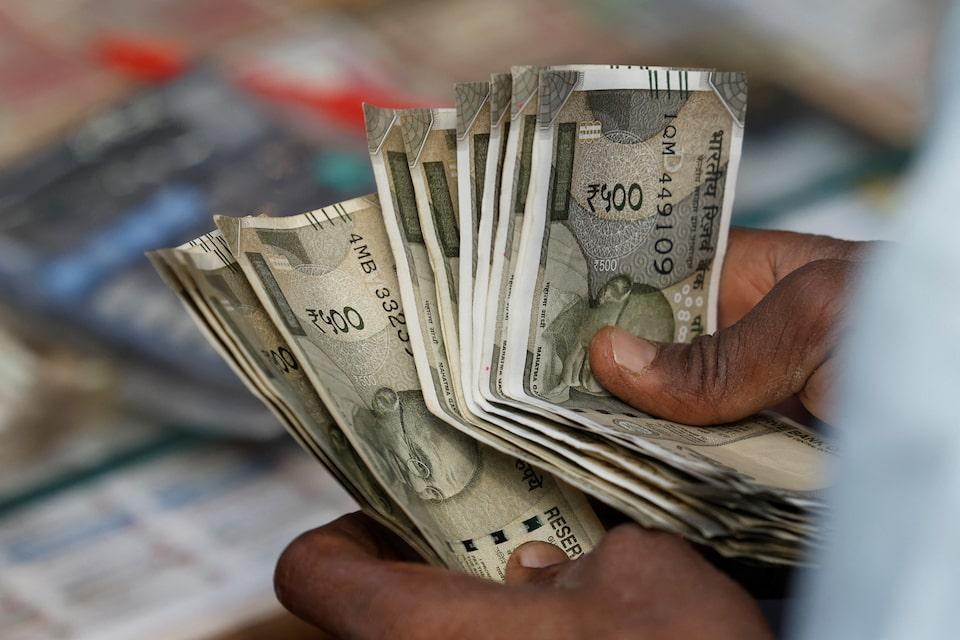
MUMBAI, July 31 (Reuters) - The Indian rupee fell to an over five-month low on Thursday, hurt by U.S. President Donald Trump's threat of a 25% tariff on the Asian country's exports, and the central bank likely stepped in to arrest its fall towards a record low, traders said. The rupee slipped to 87.74 per U.S. dollar before paring losses to quote at 87.56 as of 11:30 a.m. IST, down 0.2% on the day. Sign up here. The currency, within touching distance of its all-time low of 87.95 hit in February, is down 2% so far this year, making it one of the worst Asian performers. On Wednesday, President Trump said the United States is still negotiating with India on trade after announcing earlier in the day that the U.S. would impose a 25% tariff and unspecified penalties on goods imported from the country starting Friday. The Indian government said it is studying the implications of Trump's announcements and added it remains dedicated to securing a fair trade deal. Analysts reckon that India-U.S. trade negotiations may yield a lower levy. "The key for markets and our forecast profile for INR is whether a trade deal between India and U.S. is delayed but not denied," Michael Wan, senior currency analyst at MUFG said in a note. ANZ said the uncertainty on trade is likely to keep the rupee under pressure and the Reserve Bank of India will likely step in to contain volatility, "if not aggressively defend a level for long." India's equity benchmarks, the BSE Sensex (.BSESN) , opens new tab and Nifty 50 (.NSEI) , opens new tab, fell about 0.4% each on the day. Meanwhile, dollar-rupee forward premiums declined, with traders pointing to diminished odds of rate cuts by the Federal Reserve and mid-to-far tenor dollar-rupee buy/sell swaps conducted by state-run banks. https://www.reuters.com/world/india/indian-rupee-slumps-trump-tariff-jolt-central-bank-likely-cushions-fall-2025-07-31/
2025-07-31 06:58
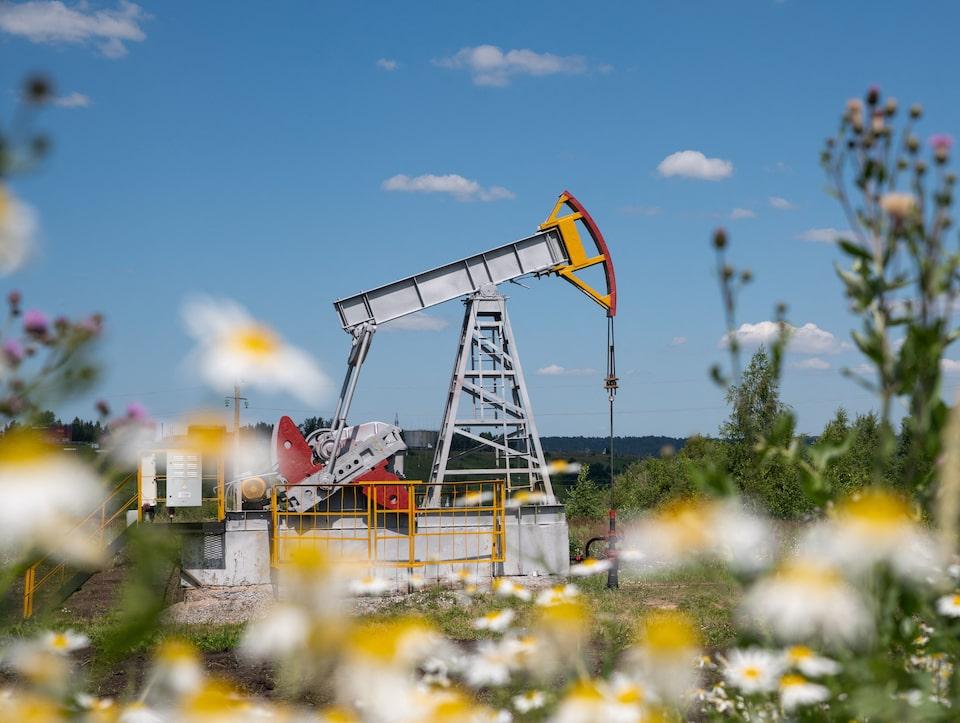
SINGAPORE, July 31 (Reuters) - Oil prices eased on Thursday as investors weighed the risk of supply shortages amid U.S. President Donald Trump's push for a swift resolution to the war in Ukraine through more tariffs, though a surprise build in U.S. crude stocks weighed on prices. Brent crude futures for September , set to expire on Thursday, fell 18 cents, or 0.3%, to $73.06 a barrel at 0650 GMT. The more active Brent October contract was down 26 cents, or 0.4%, at $72.21. Sign up here. U.S. West Texas Intermediate crude for September dropped 17 cents, or 0.2%, to $69.83 a barrel. Both benchmarks settled 1% higher on Wednesday. "Oil contracts have been caught in a holding pattern today, oscillating within a tight range as neither buyers nor sellers muster the conviction to take prices decisively higher or lower, especially on the crux of the August 1 deadline" for new U.S. tariffs, said Priyanka Sachdeva, a senior market analyst at Phillip Nova. "On one hand, Trump's hawkish rhetoric on Russian oil sanctions continues to underpin tight-market premiums; on the other, a firm dollar, tepid global growth indicators, and that surprise EIA build are capping gains," Sachdeva added. Trump said he would start imposing measures on Russia, including 100% secondary tariffs on its trading partners, if it did not make progress on ending the war within 10-12 days, moving up an earlier 50-day deadline. "Concerns that secondary tariffs on countries importing Russian crude will tighten supplies continue to drive buying interest," said Toshitaka Tazawa, an analyst at Fujitomi Securities. The U.S. has also warned China, the largest buyer of Russian oil, that it could face huge tariffs if it kept buying. On Wednesday, the U.S. Treasury Department announced fresh sanctions on over 115 Iran-linked individuals, entities and vessels, in a sign the Trump administration is doubling down on its "maximum pressure" campaign after bombing Tehran's key nuclear sites in June. Meanwhile, U.S. crude oil inventories rose by 7.7 million barrels in the week ending July 25 to 426.7 million barrels, driven by lower exports, the Energy Information Administration said on Wednesday. Analysts had expected a 1.3 million-barrel draw. Gasoline stocks fell by 2.7 million barrels to 228.4 million barrels, far exceeding forecasts for a 600,000-barrel draw. "U.S. inventory data showed a surprise build in crude stocks, but a bigger-than-expected gasoline draw supported the view of strong driving season demand, resulting in a neutral impact on oil market," Fujitomi Securities' Tazawa said. https://www.reuters.com/business/energy/oil-dips-market-weighs-trump-tariff-threats-surprise-us-stockbuild-2025-07-31/
2025-07-31 06:56
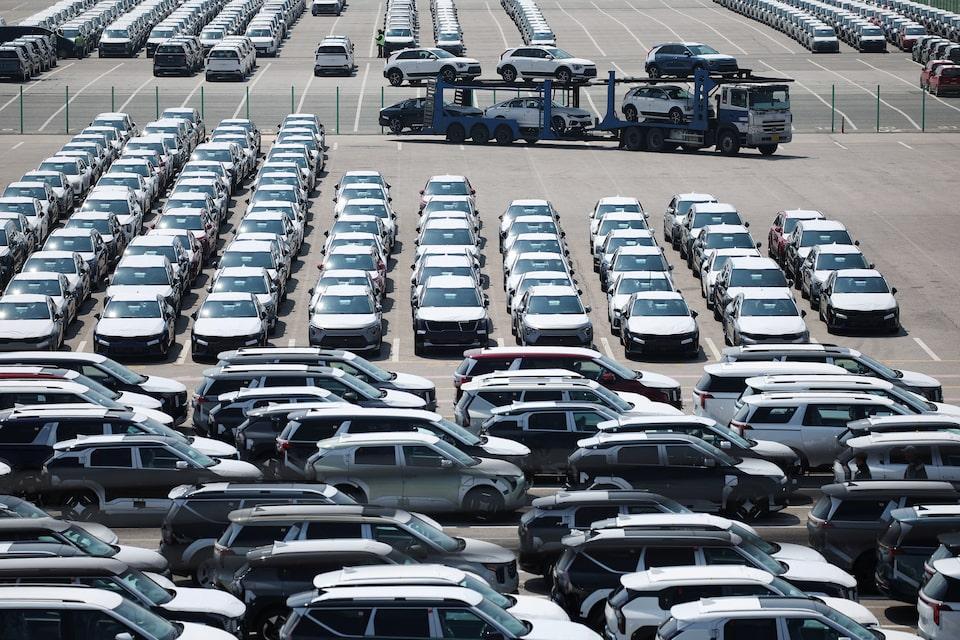
Seoul, July 31 (Reuters) - Shares of South Korean automakers Hyundai Motor (005380.KS) , opens new tab and Kia Corp (000270.KS) , opens new tab fell on Thursday after U.S. President Donald Trump said the U.S. will charge a 15% tariff on imports from South Korea, including autos, as part of a trade deal. While the agreement reduces auto tariffs from 25%, it removes the 2.5 percentage point advantage in tariffs that South Korean automakers had enjoyed over Japanese rivals under the Korea-U.S. free trade deal. Sign up here. Some analysts said the share falls may have been driven by profit-taking as news of the tariffs was already factored in after South Korean automaker shares surged last week following news that Trump agreed to reduce Japanese auto imports to 15%, a move that stoked optimism about a similar deal for Seoul. South Korea's auto association said the tariff cuts are "fortunate" and said it removes uncertainty and creates a level playing ground with Japanese and European rivals. Hyundai Motor said the deal "validates our unwavering confidence in the U.S. market and our commitment to American manufacturing." Hyundai Motor Group in March announced a $21 billion investment in the United States with Trump at the White House, including a $5.8 billion steel factory and an expansion of Hyundai Motor's new car factory in Georgia. Before Washington imposed 25% auto tariffs in April, there were zero tariffs on most South Korean auto imports under a bilateral trade deal, while there was a 2.5% tariff on Japanese auto imports. South Korean negotiators demanded 12.5% auto tariffs, but Trump wanted the rate to be 15%, the presidential office said. "The non-tariff premium for Korean automakers is gone," said Shin Yoon-chul, an analyst at Kiwoom Securities. But James Hong, head of mobility research at Macquarie, said the difference is "manageable," given the brand value and more sales of higher-price vehicles for Korean automakers. Korean automakers are also better positioned than U.S. automakers which have been paying up to 25% on vehicles imported from Mexico, said Ester Yim, an analyst at Samsung Securities. Hyundai Motor shares ended down 4.5% and Kia Corp stock lost 7.3%. https://www.reuters.com/business/autos-transportation/south-korea-automaker-shares-slip-after-us-trade-deal-2025-07-31/
2025-07-31 06:53
BOJ keeps short-term policy rate steady at 0.5%, as expected Board revises up price forecasts, tweaks view on risk balance BOJ tones down warning on uncertainty over trade policy Report warns of second-round effect from rising food costs Ueda says Japan making progress toward meeting price goal TOKYO, July 31 (Reuters) - The Bank of Japan revised up its inflation forecasts on Thursday and offered a less gloomy outlook on the economy than three months ago, keeping alive the possibility of a resumption in interest rate hikes this year. The central bank also cited persistent rises in food costs as a potential driver of public perceptions around inflation and underlying price pressures. Sign up here. "Underlying inflation still remains short of our 2% target, but is expected to rise moderately," Governor Kazuo Ueda told a news conference. "If headline inflation is high for very long, we must be mindful of the risk it could affect underlying inflation," he said, stressing that the BOJ will scrutinise the extent to which companies will keep raising food prices. In a widely expected move, the BOJ kept short-term interest rates steady at 0.5% by a unanimous vote. The central bank maintained a pledge to keep hiking borrowing costs if economic and price developments moved in line with forecasts, adding that Japan will see rising wages and prices push underlying inflation towards the bank's 2% target. Japan's trade deal struck with President Donald Trump this month lowers U.S. tariffs for imports of goods including its mainstay automobiles, easing the pain for the export-reliant economy and clearing a key hurdle for further BOJ rate hikes. Ueda said the trade deal reduced uncertainty on the outlook and heightened the likelihood of Japan durably hitting the BOJ's 2% inflation target - a prerequisite for further rate hikes. However, he cautioned that the impact of higher U.S. levies on Japan's economy remains uncertain. "I don't think the fog will clear immediately," Ueda said. Following the BOJ's decision, Japanese stocks , opens new tab rose while the yen shed early gains as Ueda flagged continuing risks to the economic outlook in keeping interest rates steady. NOT BEHIND THE CURVE The BOJ said in its quarterly report that uncertainty over the impact of U.S. trade policy "remains high" - a less pessimistic view than in May when it said uncertainty was "extremely high." The central bank also sharply upgraded its inflation forecast for the current fiscal year and said risks to the price outlook were "roughly balanced." The price risk assessment was more hawkish than in May when it said risks were "skewed to the downside," a sign the BOJ was growing more convinced Japan will make progress clearing hurdles for further rate hikes. Underscoring its caution on mounting price pressure, the central bank also said rises in food costs could "persist for longer than expected" and have second-round effects on underlying inflation. Ueda brushed aside suggestions the BOJ may be behind the curve in addressing inflation risk, saying that wages and service-sector inflation were rising but not at an alarmingly fast pace. "I don't think we're behind the curve, or that the risk of us being behind the curve is large," he said when asked whether the BOJ was being too cautious in managing price pressures. "What stood out today was how the BOJ highlighted its focus on upward price pressure from rising food costs," said Mari Iwashita, executive rates strategist at Nomura Securities. "The BOJ may scrutinise data for two to three months, and hike rates in October at the earliest," she said. The BOJ revised up this fiscal year's core consumer inflation forecast to 2.7% from 2.2% seen three months ago. It projected inflation to hit 1.8% in fiscal 2026 and 2.0% in 2027, a sign of its conviction inflation will stay around its target. But the central bank downgraded its assessment on consumption for the first time since March last year, and warned it would stagnate for the time being, squeezed by higher prices. The BOJ's monetary policy shift began last year, exiting a decade-long stimulus programme and raising rates to 0.5% in January. A Reuters poll earlier this month showed a majority of economists expect another rate hike by year-end, underscoring the delicate balance the BOJ faces between supporting a fragile economy and managing inflationary risks. https://www.reuters.com/business/boj-turns-less-gloomy-economy-keeps-rate-hike-chance-alive-2025-07-31/