2025-07-31 06:52
OSLO, July 31 (Reuters) - Norway's Aker ASA (AKER.OL) , opens new tab said on Thursday it is partnering with Nscale Global Holdings and OpenAI to build an artificial intelligence facility in northern Norway, aiming to install 100,000 NVIDIA (NVDA.O) , opens new tab chips by the end of 2026. The partnership, called Stargate Norway, will use 100% renewable energy to power the AI facility, Norwegian conglomerate Aker said in a joint statement with Nscale and OpenAI. Sign up here. Stargate Norway will be owned by a 50/50 joint venture between Nscale and Aker, investing about $1 billion for the initial phase of the project and with the potential to increase the site's capacity tenfold in future phases, they said. The facility, located in a hydropower-rich region of Norway, will be among the first AI gigafactories in Europe, Nscale CEO Josh Payne said in the statement. "Sovereign, scalable and sustainable infrastructure is now essential to remain competitive," he added. https://www.reuters.com/technology/aker-nscale-openai-plan-1-bln-norway-ai-facility-2025-07-31/

2025-07-31 06:47
Oil price in second quarter dropped on OPEC+ output hikes Quarterly profit at $4.26 bln vs estimate average of $3.74 bln Keeps pace of share buybacks at $3.5 bln/quarter LONDON, July 31 (Reuters) - Shell's (SHEL.L) , opens new tab second-quarter adjusted earnings, its definition of net profit, tumbled by almost a third on Thursday, dragged down by a drop in oil prices, but still easily beat analysts' forecasts. The oil major said it would maintain the pace of its share buyback programme at $3.5 billion over the next three months, the 15th consecutive quarter of at least $3 billion. Sign up here. Shell has, meanwhile, achieved $3.9 billion in cost cuts compared with 2022, part of a cost-cutting programme aimed at saving between $5 billion and $7 billion by the end of 2028. It recorded cash flow from operations of $11.9 billion in the quarter, down from $13.5 billion a year ago. Together with $2.1 billion in dividends, that brings shareholder distributions to 46% of operating cashflow, within its 40% to 50% guided range. Shell's adjusted earnings reached $4.264 billion in the second quarter, smashing the $3.74 billion average in an analyst poll provided by the company but down 32% from a year ago. Global benchmark Brent crude prices averaged around $67 a barrel during the April-to-June quarter, compared with $75 a barrel in the first quarter and $85 a year earlier. Crude oil prices fell in the quarter as OPEC+, made up of the Organization of the Petroleum Exporting Countries and allies such as Russia, began unwinding self-imposed production cuts aimed at supporting the market. Their most recent decision calls for an oil output increase of 548,000 barrels per day in August. Shell had guided in a trading update that it expected earnings to be hit by weaker trading in its integrated gas division and losses at its chemicals and products operations after an outage at its U.S. Monaca polymer plant. https://www.reuters.com/business/energy/shells-profit-drops-by-almost-third-easily-beats-expectations-2025-07-31/
2025-07-31 06:46
SEOUL, July 31 (Reuters) - U.S. President Donald Trump said on Wednesday the U.S. would charge a 15% tariff on imports from South Korea as part of an agreement to avoid even higher levies. The deal includes a South Korean investment of $350 billion in the U.S., but other non-tariff barriers, as well as security and foreign exchange issues, were left out. Sign up here. AUTOS The deal reduces U.S. tariffs on South Korean autos from 25% to 15%, the same rate as on Japan and the European Union. Trump said South Korea would also accept American cars and trucks into its markets and without imposing duties on them. South Korea already imposes zero tariffs on manufactured goods under a free trade agreement, according to the finance ministry. Seoul said the countries would continue negotiations on safety regulations for auto imports from the U.S., a factor that Washington has cited as a non-tariff barrier. STEEL, CHIPS AND PHARMACEUTICALS The U.S. agreed that South Korean firms would not be put at a disadvantage compared with other countries over upcoming tariffs on chips and pharmaceutical products, while retaining 50% tariffs on steel and aluminium. INVESTMENTS Trump said South Korea would invest $350 billion in the United States in projects "owned and controlled by the United States" and selected by Trump. South Korea said $150 billion has been earmarked for shipbuilding cooperation, while investments in chips, batteries, biotechnology and nuclear energy cooperation accounted for the remaining $200 billion. Loans and guarantees would account for a majority of the fund, while direct investments would represent a small portion, South Korean officials said, adding there were also "safeguards", such as purchase guarantees, under the plan. Asked about fund details, South Korean presidential adviser Kim Yong-beom said the structures had not been specified and that "ambiguity is good". U.S. Commerce Secretary Howard Lutnick said 90% of profits from these investments would go to the American people, while Kim said he understood this as meaning "re-investment" in the U.S., not repatriated. ENERGY PURCHASES Trump said South Korea would purchase $100 billion worth of liquefied natural gas or other energy products, which the Asian country said would mean a slight shift in energy imports from the Middle East in the next four years. In relation to a $44 billion Alaska gas project pushed by Trump, South Korean officials have expressed caution, citing the feasibility of the project. AGRICULTURE Trump said South Korea would accept American farm products into its markets without duties. South Korea has already opened 99.7% of its market, with some 10 products left out as exceptions, such as politically sensitive rice, according to the presidential office. Kim said there was no agreement to further open up the rice and beef markets. South Korea, the world's biggest buyer of U.S. beef, is already set to lower tariffs to zero by 2026 under the free trade pact, but restricts imports derived from animals older than 30 months, citing concerns over mad cow disease. Still, the two countries agreed to continue negotiations over non-tariff barriers such as food safety control. DIGITAL SERVICES South Korea's proposed legislation regulating online platform companies, which had been one of the most sensitive issues raised by the U.S. during working-level negotiations, was not addressed in the deal. The government has a number of legislative proposals to regulate tech companies at home and abroad, such as Google (GOOGL.O) , opens new tab, Facebook (META.O) , opens new tab and South Korea's Naver (035420.KS) , opens new tab and Kakao (035720.KS) , opens new tab, but the ruling Democratic Party put brakes on the process to smooth negotiations with the U.S. Other non-tariff barriers cited in the U.S. foreign trade barriers report, such as restrictions on the export of location-based data, were not included in the deal either. SECURITY Trump has complained that South Korea should pay more for some 28,500 U.S. troops stationed in the country, but officials said security matters were not discussed in these negotiations. Instead, they will be discussed at a summit between Trump and South Korean President Lee Jae Myung in coming weeks. FOREIGN EXCHANGE At the opening round of trade negotiations in late April, South Korea agreed with the U.S. to consult on currency policy via a separate channel between finance officials. The U.S. has accused some countries of keeping their currencies artificially low in order to boost their trade competitiveness. The matter was not discussed for the deal, said Finance Minister Koo Yun-cheol, whose meeting with U.S. Treasury Secretary Scott Bessent scheduled for Thursday was cancelled after trade negotiations were concluded. Still, consultations were ongoing separately from the deal, according to the ministry. CHINA CURBS There was no discussion about export or supply chain restrictions to curb China, such as penalty tariff rates for trans-shipments introduced in U.S. trade deals with Vietnam and Indonesia, South Korean Industry Minister Kim Jung-kwan said. Earlier this year, South Korea stepped up investigations into foreign attempts to disguise foreign products as Korean exports, after it found breaches primarily from China. https://www.reuters.com/world/china/what-we-know-about-south-koreas-trade-deal-with-us-2025-07-07/

2025-07-31 06:45
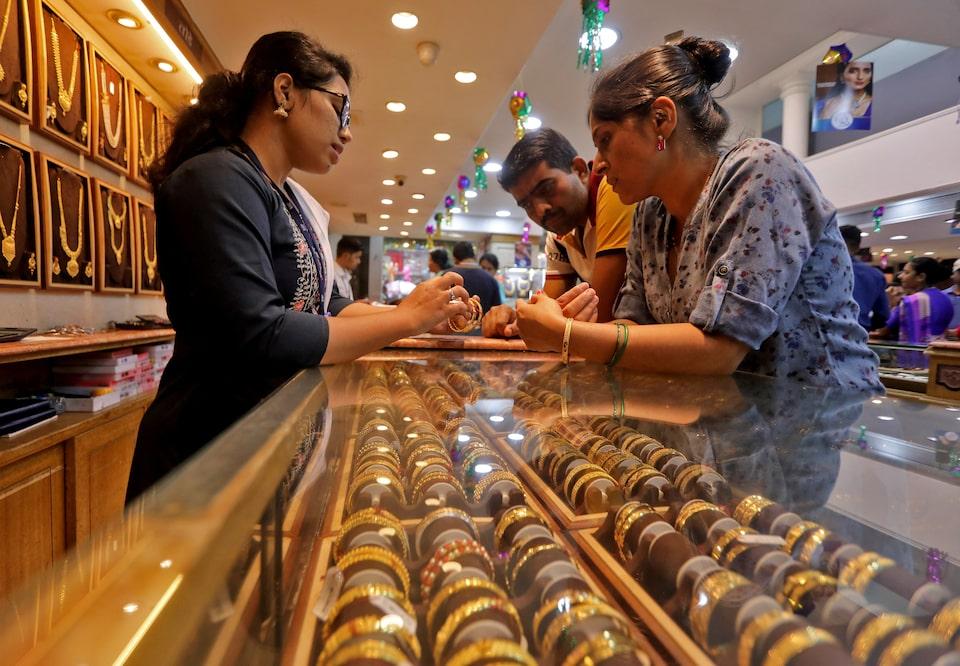
MUMBAI, July 31 (Reuters) - India's gold consumption in 2025 is set to fall to a five-year low, as record-high prices are denting jewellery purchases, overshadowing a slight boost in investment demand, the World Gold Council said on Thursday. Gold demand in the world's second-biggest consumer of the precious metal could stand between 600 metric tons and 700 metric tons in 2025, the lowest since 2020, and down from last year's 802.8 tons, Sachin Jain, CEO of WGC's Indian operations, told Reuters. Sign up here. Demand could reach 700 tons if prices stabilise, but a 10%–15% price rise driven by geopolitical factors may pull it down to the lower end of the range, he said. Local gold prices , which hit a record high of 101,078 rupees per 10 grams in June, have risen 28% so far in 2025, after a 21% gain in 2024. India's gold consumption in the April-to-June quarter fell 10% from a year ago to 134.9 tons, as jewellery demand fell 17% while investment demand rose 7% in the quarter, the WGC said. Demand in the September quarter is expected to be lower than last year's 248.3 tons, when New Delhi's move to reduce import duties boosted purchases, Jain said. The precious metal has been outperforming other asset classes, drawing investors who favour both physical gold and gold exchange traded funds, he said. "Gold ETFs in India are at a very important cusp for growth, and as India becomes more digitised, they are gaining popularity and prominence," he said. Gold ETFs in India saw inflows surge ten-fold month-on-month to 20.81 billion rupees ($237.5 million) in June, hitting a five-month high, data from the Association of Mutual Funds in India showed earlier this month. ($1 = 87.6390 Indian rupees) https://www.reuters.com/world/india/indias-gold-demand-hit-5-year-low-record-prices-dent-jewellery-sales-wgc-says-2025-07-31/
2025-07-31 06:42
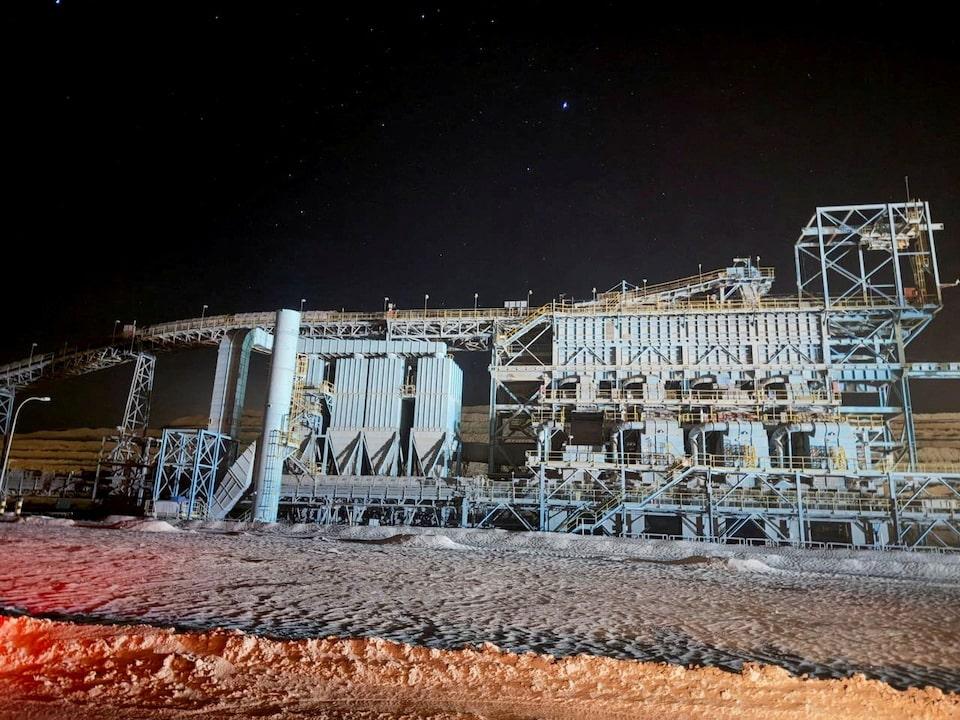
Copper prices expected to hit fresh records Alternatives such as aluminium abandoned for data centre cabling Copper market deficit expected to widen July 31 (Reuters) - Copper demand is rising faster than the industry anticipated, driven by billions of dollars being invested worldwide to modernise and expand power grids for the digital and clean energy revolutions that need vast amounts of electricity. Meanwhile, supply from major producers including Chile and the Democratic Republic of Congo is constrained by a lack of investment in new mines, setting the stage for a prolonged period of high prices. Sign up here. Some analysts predict copper prices will hit records above $12,000 a ton before the end of the decade, an increase of 23% from current levels around $9,700 a ton. Consumers are exploring alternatives, but copper's superior conductivity, durability, and versatility has made it hard to replace. Grid investment alone is forecast to top $400 billion this year having set a record high of $390 billion in 2024, according to the International Energy Agency. "Copper is often a massively underestimated part of grid infrastructure. People recognise the need to expand the grid, but often misjudge the sheer volume of copper this will require," said Michael Finch, head of strategic initiatives at consultancy Benchmark Mineral Intelligence (BMI), pointing to investment needed in the U.S., the UK and China in particular. BMI expects copper demand for upgrading power generation and transmission networks globally to rise to 14.87 million metric tons by 2030 up from 12.52 million tons this year, in new figures given to Reuters. DATA CENTRES, ELECTRIC VEHICLES DRIVE GRID DEMAND Bank of America analyst Michael Widmer expects global copper demand to increase 10% to 30.32 million tons by 2030 from this year. Widmer expects the global copper market deficit to reach 1.84 million tons in 2030. The need for resilient grids is particularly acute in regions experiencing rapid growth of data centres powering artificial intelligence and machine learning. "Artificial Intelligence and machine learning data centres need bigger, better, faster computing," and that means more power, said Peter Charland, Global Information and Communications Technology Leader at AECOM, a global infrastructure consulting company. Consultancy CRU told Reuters it expects copper demand from data centres to reach 260,000 tons this year, up from 78,000 tons in 2020 and exceeding 650,000 tons by 2030. "Electricity grid infrastructure is a bottleneck and not limited to data centre application. It extends to onshore and offshore wind power, solar and electric vehicles," said Egest Balla, wire and cable research analyst at consultancy CRU. Electric vehicles also require significantly more copper than traditional internal combustion engine vehicles. BMI forecasts copper demand for electric vehicles will jump to 2.2 million tons in 2030, compared with 1.2 million tons in 2025, up from just 204,000 tons in 2020. "We are moving from copper demand that was cyclical to demand that is more structural," said Maria Cristina Bifulco, chief investor relations and sustainability officer at Italian cable producer Prysmian, the world's largest copper buyer. Prysmian (PRY.MI) , opens new tab buys 2%-3% of global refined copper production. ALUMINIUM, FIBRE OPTIC CABLING CONSIDERED Looming shortages and record high prices have triggered a wave of innovation including substitution and recycling in industries such as construction and manufacturing where copper costs are a large proportion of total production costs. While aluminium has long been considered a cheaper alternative, at roughly a third of the costs of copper, its use in data centres for wiring has been largely abandoned. "There was a period of time when copper was having issues meeting demand, some folks were taking aluminum cable and copper coating it," AECOM's Charland said. "That was very short-lived given the performance issues." Recycling could help sustainability targets as producing refined or secondary copper from scrap can use 65% less energy than primary production. Analysts estimate copper from scrap will rise to 11 million tons in 2030 from around 10 million tons this year. Copper has already been displaced in data transmission by fibre optic cables, which have superior bandwidth and efficiency and are essentially glass made out of silicon from sand. "It's a lot cheaper to produce glass than it is to mine copper," said Matt Miller, Global Networks Leader at AECOM. "Silicon is incredibly abundant, you can go down to the beach and grab as much as you want." Possible solutions seem unlikely to bridge the supply crunch for copper anytime soon, analysts say, especially for the structural projects governments are pinning their future economic growth prospects on. "You can do all the green energy stuff, but if you don't have a grid system to support, it will be a challenge." CRU's Balla said. https://www.reuters.com/sustainability/climate-energy/global-power-grid-expansion-fuels-fresh-copper-demand-surge-2025-07-31/
2025-07-31 06:39
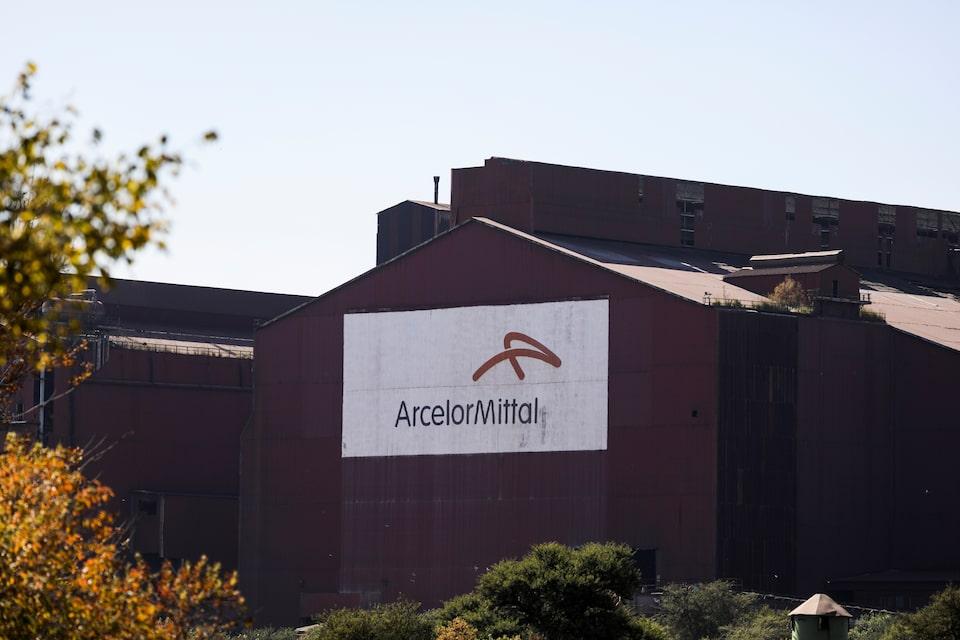
July 31 (Reuters) - ArcelorMittal South Africa (ACLJ.J) , opens new tab said on Thursday it is still on track to close its loss-making long steel operations in September, as talks with the government have not provided a solution. The steelmaker also posted a half-year headline loss of 1.014 billion rand ($56.4 million), slightly narrower than a 1.1 billion rand loss reported previously, on persistently low sales volumes and low prices. Sign up here. Its revenue fell 17% to 17 billion rand and sales volumes declined 11% to 1.05 million metric tons due to weak demand from key steel consuming sectors in South Africa. ArcelorMittal South Africa has twice deferred the closure of its long steel plants in Newcastle and near Johannesburg, initially announced in November 2023, to allow talks with the government aimed at saving 3,500 direct jobs. "In the absence of a sustainable solution, the final wind-down of the longs business remains scheduled for 30 September 2025," the company said in a statement. South Africa's trade and industry minister Parks Tau told lawmakers on July 4 that the government was in "firefighting mode" as it tries to avoid the plant closures. The company says its long steel operations are buckling under the pressure of weak local demand, high electricity tariffs, poor freight logistics, competition from local scrap metal recycling mini-mills and imports from China. The long steel plants supply rail, roads and bars to the construction, mining and manufacturing sectors as well as components for the automotive industry. ($1 = 17.9656 rand) https://www.reuters.com/sustainability/boards-policy-regulation/arcelormittal-south-africa-says-course-close-long-steel-plants-september-2025-07-31/