2025-07-31 06:33
Trump announces tariffs on copper, Brazil, and small-value shipments Trump says US will set 15% tariff on South Korean imports US Federal Reserve leaves policy rate unchanged July 31 (Reuters) - Gold prices rebounded on Thursday from a one-month low hit in the previous session, as trade uncertainty stemming from fresh U.S. tariff announcements lifted the bullion's appeal, even as expectations for a U.S. rate cut in September eased. Spot gold was up 0.8% at $3,301.49 per ounce, as of 0612 GMT. Bullion hit its lowest level since June 30 at $3,267.79 on Wednesday. Sign up here. U.S. gold futures were steady at $3,295.80. "Gold at sub-$3,300 levels has attracted buying interest from traders as a value play, particularly with the prevailing economic uncertainty, which goes hand in hand with U.S. President Donald Trump's secondary tariff threats," KCM Trade Chief Market Analyst Tim Waterer said. Trump on Wednesday issued a blitz of tariff announcements, ranging from changes to previously threatened levies on imports of copper and on goods from Brazil to ending an exemption for small-value shipments from overseas. Trump announced a deal with South Korea involving a 15% U.S. tariff on imports from the country, while confirming ongoing negotiations with India after declaring a 25% tariff on Indian goods effective Friday. He also expressed optimism about trade talks with China, stating he expects a fair deal to be reached. Meanwhile, the U.S. Federal Reserve held interest rates steady on Wednesday, while Chair Jerome Powell's comments dampened expectations for a rate cut in September. Gold, often considered a safe-haven asset during economic uncertainties, tends to perform well in a low-interest-rate environment. "Support around the $3,250 region is shaping as a key level to potentially protect against a move of more significance to the downside. But any breach could open the door lower to $3,200," Waterer said. The U.S. core PCE index data will be in focus later in the day. It was expected to have risen 0.3% month-on-month and 2.7% year-on-year, per a Reuters poll. Spot silver was up 0.2% at $37.19 per ounce, platinum rose 0.7% to $1,321.50, and palladium gained 1.1% to $1,218.14. https://www.reuters.com/world/india/gold-rebounds-1-month-low-renewed-trade-uncertainty-2025-07-31/
2025-07-31 06:30
BUDAPEST, July 31 (Reuters) - Hungary has taken a key step towards importing small modular nuclear reactor technology by partnering with Poland's Synthos Green Energy, which holds the rights to GE Vernova Hitachi's technology in central Europe. Hungarian nuclear energy development firm Hunatom signed a letter of intent with Synthos, which serves as project developer for building BWRX-300 reactors in the region. Sign up here. "This agreement is about initiating the technological, infrastructural, financial, and legal preparatory work needed to bring this American nuclear technology to Hungary," Hungarian Foreign Minister Péter Szijjártó said late on Wednesday. GE Vernova Hitachi is a joint venture between General Electric (GE.N) , opens new tab and Japanese conglomerate Hitachi (6501.T) , opens new tab. It was not immediately clear how many reactors Hungary wants. In 2023, Energy Minister Csaba Lantos said that Hungary will need to build at least one small modular reactor. "The United States and Hungary are deepening our relationship across the board: in defense, in commerce, in space, and in energy," Robert Palladino, Chargé d’Affaires at the U.S. embassy in Hungary, said after the signing ceremony. Hungary currently has a nuclear plant with four Soviet-made VVER reactor units, first brought online between 1982 and 1987. In 2014, Hungary signed an agreement with Russian nuclear firm Rosatom worth 12.5 billion euros to build two 1.2 gigawatt reactors at Paks on top of the four existing reactors. However, the project, called Paks 2, has experienced long delays. The project was awarded to Rosatom without a tender, and it is often cited as a sign of continued close ties between NATO and European Union member Hungary and Russia, despite the war in Ukraine - a connection that has unnerved Western allies. https://www.reuters.com/business/energy/hungary-plans-bring-us-small-modular-reactor-tech-with-polish-partner-2025-07-31/

2025-07-31 06:27
July 31 (Reuters) - ArcelorMittal , the world's second largest steelmaker, reported quarterly earnings slightly above market expectations on Thursday, but trimmed its forecasts for steel demand due to U.S. President Donald Trump's tariffs. The Trump administration rolled out some of its first trade measures with a 25% tariff on most imported steel and aluminium in March. It doubled the rate to 50% for most countries in June. Sign up here. ArcelorMittal's core earnings (EBITDA) were $1.86 billion in the second quarter, just above analysts' consensus of $1.85 billion provided by the company. The results were helped by a positive price-cost effect in Europe, where improved selling prices outpaced input cost growth, and a higher contribution from India, the Luxembourg-based group said. It cut its annual forecast for global steel demand outside of China, citing weaker U.S. consumption and trade disruptions. It sees growth of 1.5% to 2.5% in global steel demand this year excluding China, which is the world's top consumer and producer of the metal, compared with the forecast of 2.5% to 3.5% it had given in February. Tariff concerns and subdued economic activity have dampened demand in the U.S., where apparent steel consumption was expected to stay unchanged or decline by up to 2% in 2025, down from 1% to 3% previously. ArcelorMittal said European demand was holding up better than other regions, but trimmed its 2025 forecast for apparent steel consumption growth to between -0.5% and +1.5%, reflecting limited tariff impacts and support from lower interest rates. The positive comments about Europe come in contrast with more downbeat views from European peers, with Acerinox (ACX.MC) , opens new tab and SSAB (SSABa.ST) , opens new tab having earlier flagged weak demand, high inventories and tariff-driven market uncertainty in the region. ArcelorMittal shipped some 13.8 million tonnes of steel in the second quarter, slightly down from the same period last year but up 1.4% from the first quarter of 2025. It confirmed it would invest between $4.5 billion and $5.0 billion this year, mainly in Brazil, India and the United States. https://www.reuters.com/business/arcelormittal-trims-steel-demand-forecasts-tariffs-dampen-us-sentiment-2025-07-31/
2025-07-31 06:13
US stock futures surge on Meta, Microsoft earnings Yen firms after BOJ provides upbeat econ outlook Dollar hovers near two month highs after Fed holds rates SINGAPORE, July 31 (Reuters) - Asian equities slipped on Thursday, weighed down by weaker-than-expected Chinese activity data and a plunge in copper prices, while the yen firmed after the Bank of Japan raised its inflation forecast for the fiscal year and held rates steady. The revised forecast suggested cautious optimism that Japan's trade deal with the U.S. would help the economy avert a steep downturn and set the BOJ on a path to hike interest rates later in the year. Governor Ueda will speak to media at 0630GMT. Sign up here. The yen appreciated 0.4% to 148.62 per U.S. dollar immediately after the central bank maintained short-term interest rates at 0.5%, as expected, by a unanimous vote. "The inflation forecast being raised suggests a higher likelihood for a rate hike," said David Chao, global market strategist for Asia-Pacific at Invesco. "Today's announcement increases the chance of an earlier than expected rate hike. It's possible we could see a rate hike as soon as October." Japanese shares (.N225) , opens new tab showed little reaction to the decision and were last up 0.9%. Japan's shorter-dated bonds pared losses after the Bank of Japan policy statement caused market participants to push out expectations for any future interest rate hike. In an action-packed 24 hours, investors were also digesting a trade deal between the U.S. and South Korea, a Federal Reserve decision to hold rates steady and strong earnings from megacap tech firms. The Korean won appreciated 0.3% after U.S. President Donald Trump said the U.S. will charge a 15% tariff on imports from South Korea, which will in return invest $350 billion in U.S. projects and purchase $100 billion in U.S. energy products. The announcement is the latest in a series of trade policy deals rushed out before an August 1 deadline to avert the imposition of the April 2 "Liberation Day" tariffs. The Malaysian ringgit weakened 0.2% after Malaysian Prime Minister Anwar Ibrahim said on Thursday, following a conversation with Trump, that the tariff rate on Malaysian goods would be announced on Friday. The Thai baht held steady after Thailand's Finance Minister said the country expects to receive information on the U.S. tariff rate within 24 hours. Trump's tariff blitz cast a shadow on global markets, with negotiations on trade with India still under way after Trump earlier announced that the U.S. would impose a 25% tariff on goods imported from the country. Indian stocks (.NSEI) , opens new tab fell 0.4%. Meanwhile, copper futures plunged 19.4% after Trump said the U.S. will impose a 50% tariff on copper pipes and wiring, falling short of the expectation of sweeping restrictions. Nasdaq futures surged 1.3% after better-than-expected earnings from Microsoft (MSFT.O) , opens new tab and Meta Platforms (META.O) , opens new tab. S&P 500 futures advanced 0.8%, while European futures were 0.17% higher. MSCI's broadest index of Asia-Pacific shares outside Japan (.MIAPJ0000PUS) , opens new tab fell 0.7%, though it was still on track for its fourth consecutive monthly gain in July. Stocks in Hong Kong and China led declines after official PMI gauges showed weaker-than-expected economic activity during July. The Federal Reserve's rate-setting committee voted 9-2 on Wednesday to hold interest rates steady for the fifth consecutive meeting, with two Fed governors dissenting for the first time in more than three decades. Fed Chair Jerome Powell's comments after the decision undercut confidence that borrowing costs would begin to fall in September. The dollar index was at 98.812, just shy of the two-month high of 99.987 it touched on Wednesday. The index is set to clock a 3.1% gain for the month, its first in 2025. "Although the Federal Reserve decided to keep rates steady at its recent rate setting decision, the chance of rate cuts at upcoming meetings remain live as they balance softening economic data with the potential for persistent inflation," said Manusha Samaraweera, fixed income investment director at Capital Group. U.S. gross domestic product growth rebounded more than expected in the second quarter, but the details of the report painted a picture of an economy that was losing steam and plagued by uncertainty from Trump's protectionist trade policies. Oil prices were little changed on Thursday, with Brent crude futures for September delivery , which are set to expire on Thursday, down 0.19% at $73.1 a barrel, while U.S. West Texas Intermediate crude for September was flat at $70.01 a barrel. The more active Brent October contract eased 0.14% to $72.37 per barrel. https://www.reuters.com/world/china/global-markets-wrapup-3-2025-07-31/
2025-07-31 06:01
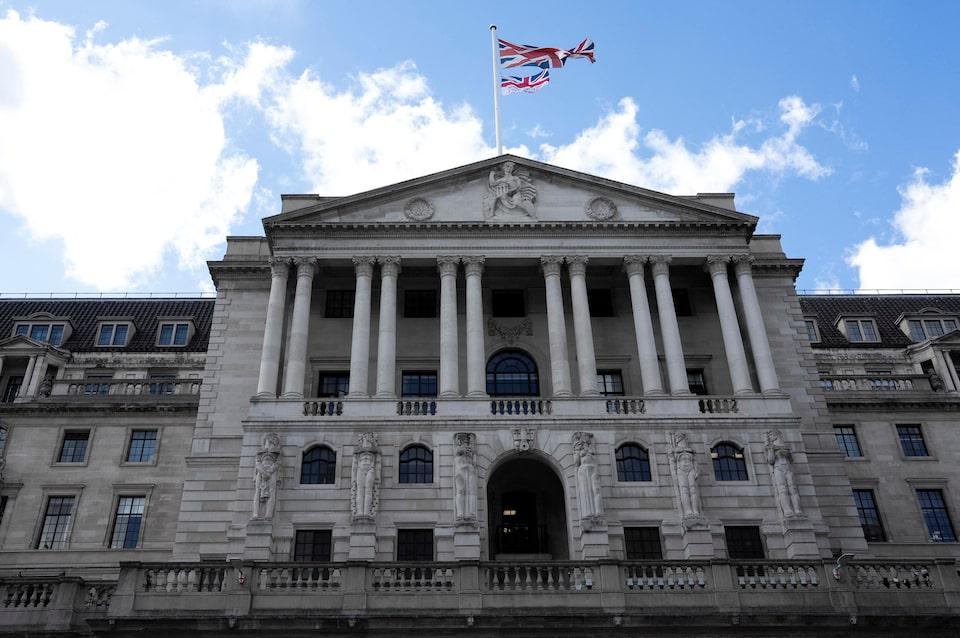
BoE likely to cut Bank Rate to 4% from 4.25% on August 7 Policymakers expected to divide three ways again UK inflation pressures persist but job market weaker BoE to report on impact of bond sale programme LONDON, July 31 (Reuters) - The Bank of England is expected to cut interest rates next week but the likelihood of a fresh three-way split among policymakers underscores the conflicting risks posed by rising inflation and a weakening job market to Britain's economy. The BoE's Monetary Policy Committee still appears divided between those who want aggressive action to offset the slowing job market, others who worry about persistent inflation pressure and a majority in the middle who favour gradual rate cuts. Sign up here. The MPC's vote broke three ways in May when the BoE cut its benchmark rate by 25 basis points. Many analysts expect a similar outcome on August 7 with the majority backing another quarter-point cut in Bank Rate while others call for a bigger half-point move and some favour no cut at all. Governor Andrew Bailey and most of his colleagues have stuck to their "gradual and careful" messaging about how quickly they are likely to ease the burden of high interest rates on Britain's economy. But some analysts think the BoE might be approaching the end of its run of reducing borrowing costs. Robert Wood and Elliott Jordan-Doak, economists at Pantheon Macroeconomics, predict a "one-and-done" cut next week and expect inflation to hold above the BoE's target of 2% through 2026 and 2027 - in contrast to the BoE's view that CPI will return to 2% early in 2027. "We think the Monetary Policy Committee will have to press pause after one more cut," they said. "Six years of near-continuous inflation overshoots cannot be ignored." By contrast, most economists polled by Reuters earlier this month expected the BoE to cut rates in November as well as next week, followed by two more quarter-point cuts in 2026. That would take Bank Rate down to 3.25% from its peak of 5.25% following a surge in inflation above 11% in 2022. But it would still be a lot higher than its level of 0.5% that held for much of the decade after the 2007-08 global financial crisis. RATE CUTS RUNNING OUT OF ROAD? Finance minister Rachel Reeves has often pointed to the four rate cuts since last August as a sign of recovery in the British economy since her Labour Party took power just over a year ago. However, some economists see the BoE's gradualist approach to cutting rates turning even more cautious after a run of data that suggests Britain's high inflation rate is stickier than previously thought. Headline consumer price inflation unexpectedly rose to 3.6% in June and surveys of inflation expectations have shown the public is largely expecting stronger price growth. Elizabeth Martins and Chris Hare, economists at HSBC, said the BoE might increase its forecast for inflation's peak this year to as high as 4% - double its 2% target - from a previous estimate of 3.7%. Policymakers could also sound more concerned about a potential knock-on impact from higher inflation on the public's expectations for inflation and pay growth over the medium term. "The June minutes noted that rising food inflation increases the risk," Martins and Hare said. But they added that the signs of weakness in the labour market meant the BoE was likely to keep its forecast for inflation in two years' time just below target at 1.9%. The BoE will announce the MPC's latest decision and forecasts for the economy at 1100 GMT, half an hour before Bailey and other top officials hold a press conference. The central bank is also expected to assess the impact of its programme of running down its stockpile of government debt ahead of a decision in September on the pace of sales over the following 12 months, a key decision for bond investors. https://www.reuters.com/world/uk/bank-england-set-split-again-face-inflation-job-risks-2025-07-31/
2025-07-31 05:51
ZURICH, July 31 (Reuters) - The Swiss National Bank (SNBN.S) , opens new tab on Thursday reported a loss of 15.3 billion Swiss francs ($18.83 billion) for the first half of the year as the weakening dollar took a big bite out of the value of the central bank's U.S investments. The SNB made a loss of 22.7 billion francs on its foreign currency positions during in the six months to the end of June, as the dollar's slide wiped out price gains and payments when translated back to francs. Sign up here. The results showed how the results of the SNB, with 727 billion francs in foreign currency stocks and bonds, are extremely sensitive to currency movements. During the first half of the year the dollar, in which the SNB holds 37% of its forex reserves, fell roughly 12% versus the franc on concerns about U.S. debt and President Donald Trump's unpredictable trade policies. A valuation gain of 8.6 billion Swiss francs on the central bank's gold holdings narrowed the loss, as the precious metal increased in value by 11% during the year. The overall loss was in line with UBS estimates for a first-half loss of 10 to 20 billion francs. "The loss illustrates how damaging the depreciation of the dollar is for the SNB's profits and loss and it will now be very difficult for the SNB to make a profit this year," said UBS economist Alessandro Bee. ($1 = 0.8125 Swiss francs) https://www.reuters.com/business/finance/swiss-national-bank-posts-h1-loss-153-bln-francs-dollar-weakness-weighs-2025-07-31/