2025-07-31 05:38
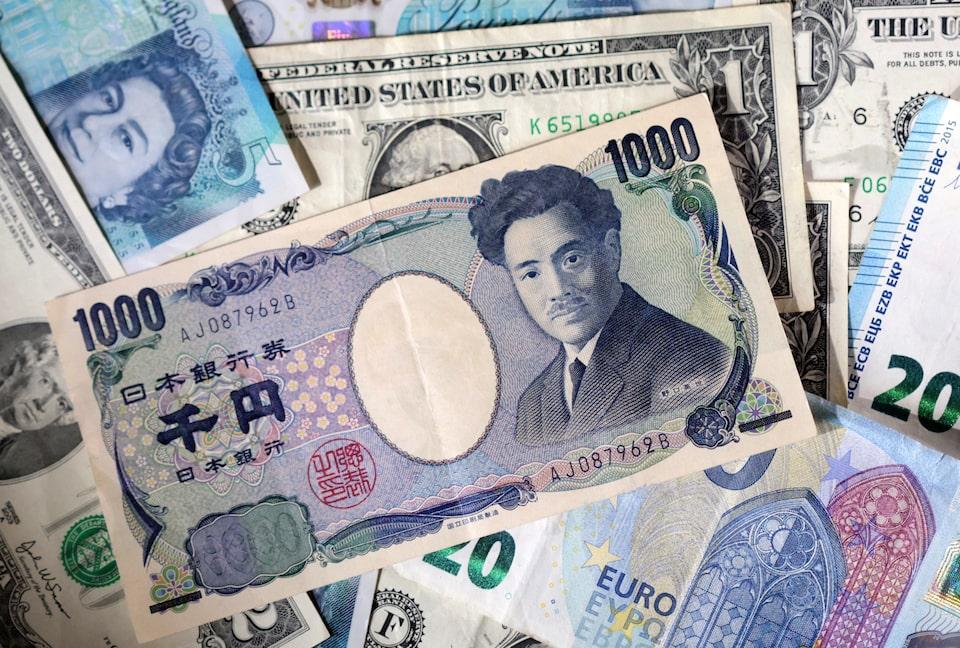
BOJ revises up inflation forecasts; yen strengthens slightly Dollar buoyant, eyes first monthly gain for the year Fed reiterates patient approach on rates South Korea to face 15% US tariffs, more trade deals awaited SINGAPORE, July 31 (Reuters) - The yen edged marginally higher on Thursday following the Bank of Japan's upward revision to its inflation forecasts and cautiously optimistic view on the economic outlook, even as it chose to stand pat on rates. At the conclusion of its two-day policy meeting, the BOJ kept short-term interest rates steady at 0.5% in a unanimous vote, although upgrading its inflation forecasts for all three years through fiscal 2027 and saying risks to the price outlook were "roughly balanced". Sign up here. The yen gained slightly after the decision as the central bank's latest assessment of the economy kept alive the possibility of a resumption in interest rate hikes this year. It was last about 0.5% higher at 148.78 per dollar. "There is definitely a clear justification for them to hike rates," said Khoon Goh, head of Asia research at ANZ. "Now, the fact that Japan has finally reached a deal with the U.S. does remove some element of that uncertainty for themselves. So I think the question is whether the BOJ is now prepared to hike in October." Focus now turns to Governor Kazuo Ueda's press conference later in the day for further clues on the timing of the BOJ's next rate hike. In the broader market, the dollar flirted with a two-month peak after Federal Reserve Chair Jerome Powell stuck to his patient approach on rates in a closely watched policy decision and offered little insight on when they could be lowered. The greenback was also on track for its first monthly gain for the year, bolstered by a hawkish Fed and U.S. economic resilience, with uncertainty over tariffs beginning to ease given recent trade deals struck by Washington. Against a basket of currencies, the dollar dipped slightly to 99.67 , but was not far from a two-month peak hit in the previous session. The dollar index was set for a monthly gain of about 3%. U.S. President Donald Trump's chaotic tariffs and fears of the dollar's demise earlier this year had undermined the currency and given it the worst start to the year since the floating exchange rate period. Those worries have since abated, easing pressure on the dollar. "We've seen the classic correlation still holding, in the sense that we've seen a hawkish Fed push up front-end yields and the U.S. dollar, equities have struggled, and the credibility of the Fed has also been probably reinforced by the view that the Fed chair is still in command," said Rodrigo Catril, senior currency strategist at National Australia Bank. "The dollar is not just consolidating, but it's actually getting a little bit of upward momentum ... The broader picture as well is that all these tariffs, there's at least an initial impression that the U.S. is the one that's got the upper hand." The euro was last 0.3% higher at $1.1441, nursing some losses after sliding to a seven-week low in the previous session. Still, it remained on track to lose nearly 3% for the month. Sterling languished near a 2-1/2-month low and last bought $1.3272. It was similarly headed for a nearly 3.3% monthly decline. Traders have scaled back expectations for Fed cuts this year following Powell's comments, now pricing in about 36 basis points worth of easing by December. Markets have also been faced with a blitz of tariff announcements ahead of an August 1 deadline for countries to secure trade deals or face steep levies. South Korea became one of the latest nations to reach an agreement with the U.S., after Trump on Wednesday said Washington will charge a 15% tariff on imports from the key Asian ally. The South Korean won strengthened on the news and last stood at 1,389.60 per dollar. Trump on Wednesday also slapped a 50% tariff on most Brazilian goods and said the United States is still negotiating with India on trade. In other currencies, the Australian and New Zealand dollars recouped some of their losses after sliding more than 1% each in the previous session. The Aussie was up 0.5% to $0.6468, while the kiwi advanced 0.54% to $0.5926. Still, both currencies were headed for monthly losses of 1.7% and 2.8%, respectively. The onshore yuan struggled near an almost two-month low and last stood at 7.1918 per dollar. Data on Thursday showed China's manufacturing activity shrank for a fourth straight month in July, suggesting a surge in exports ahead of higher U.S. tariffs has started to fade while domestic demand remained sluggish. https://www.reuters.com/world/africa/yen-upbeat-boj-turns-less-gloomy-dollar-set-monthly-gain-2025-07-31/
2025-07-31 04:39
A look at the day ahead in European and global markets from Gregor Stuart Hunter We are now about halfway through the most action-packed part of the week. The eye of the storm, if you will. Sign up here. In case you have forgotten, today we are catching up on corporate earnings, key economic data releases, several central bank interest rate decisions, and all the latest twists and turns in trade negotiations before new U.S. tariffs kick in on Friday. Hot off the presses: The yen appreciated 0.6% immediately after the Bank of Japan kept rates on hold as widely expected. Markets are focused on an upwards revision in inflation forecasts, with Governor Ueda due to speak shortly as traders anticipate rate hikes may be back on the agenda this year. With second-quarter earnings season halfway complete, Nasdaq futures ripped 1.3% higher after blow-out earnings from Microsoft (MSFT.O) , opens new tab and Meta Platforms (META.O) , opens new tab. The U.S. dollar held steady after hitting a two-month high, on track to tally its first monthly gain all year. "It has been a great earnings season so far, and that's the primary reason why U.S. stocks continue to do well, but the full brunt of the tariffs hasn't been felt," said David Chao, global market strategist for Asia-Pacific at Invesco in Singapore. MSCI's broadest index of Asia-Pacific shares outside Japan (.MIAPJ0000PUS) , opens new tab fell 0.7%, though it was still on track for its fourth consecutive monthly increase. Stocks in Hong Kong (.HSI) , opens new tab led declines, down 1.1% after official PMI gauges showed weaker-than-expected activity during July. Copper futures plunged 19.4% after U.S. President Donald Trump said the U.S. will impose a 50% tariff on copper. The Korean won appreciated 0.1% after Trump said the U.S. will charge a 15% tariff on imports from South Korea. The Asian country will invest $350 billion in U.S. projects and purchase $100 billion in U.S. energy products. The announcement is the latest in a series of trade policy deals rushed out before the August 1 deadline that Trump set for trade deals before the U.S. imposes what he called Liberation Day tariffs. Trump also issued a blitz of tariff announcements ranging from goods from Brazil to small-value shipments from overseas. In early European trades, pan-region futures were up 0.2%, German DAX futures were up 0.2% and FTSE futures were up 0.1% ahead of another flurry of earnings and inflation data. Key developments that could influence markets on Thursday: Trying to keep up with the latest tariff news? Our new daily news digest offers a rundown of the top market-moving headlines impacting global trade. Sign up for Tariff Watch here. https://www.reuters.com/business/global-markets-view-europe-2025-07-31/
2025-07-31 02:40
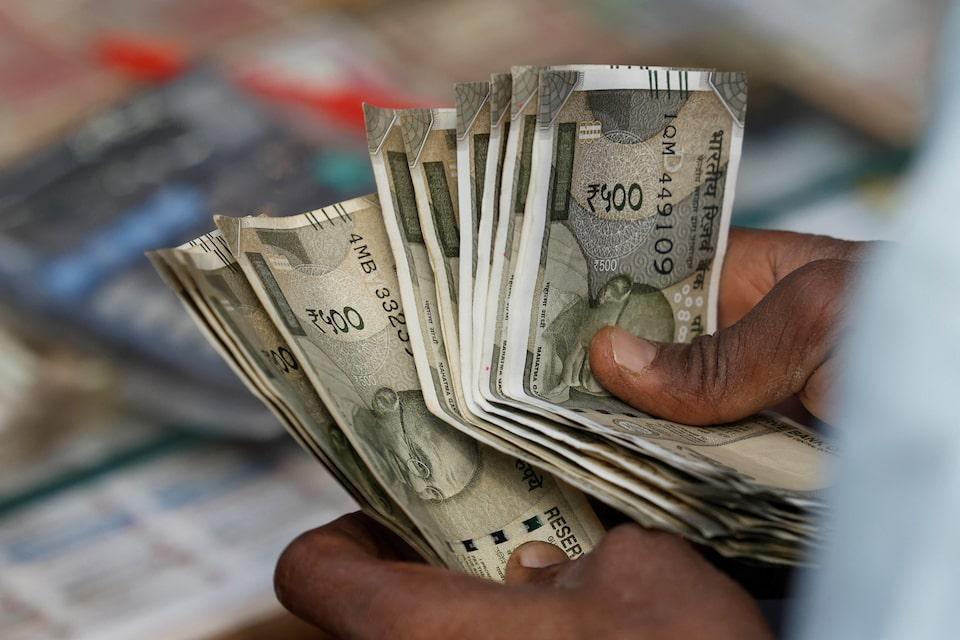
MUMBAI, July 31 (Reuters) - The Indian rupee is set to open weaker on Thursday after U.S. President Donald Trump threatened a 25% levy on Indian exports before adding that negotiations between the two countries are still ongoing. Traders reckon that the Reserve Bank of India may step in to limit the rupee's losses as the currency moves closer to its all-time low of 87.95 hit earlier this year. Sign up here. The 1-month non-deliverable forward indicated that the rupee will open in the 87.66-87.69 range versus the U.S. dollar, compared with 87.42 in the previous session. Trump's threatened 25% levy on Indian goods, in addition to an unspecified penalty for buying Russian oil and involvement in the BRICS group, may strain relationships between the world's largest economy and the most populous democracy. "We're talking to India now - we'll see what happens ... You'll know by the end of this week," Trump told reporters after announcing the tariff on a social media post. India's equity benchmarks were poised to open weaker on the day with analysts pointing out that all eyes will now be on how negotiations progress. "We expect more drama to unfold in coming days and the rupee, therefore, could see major gyrations," said Abhishek Goenka, chief executive at FX advisory firm IFA Global. "We may see the RBI step in to curb volatility and smoothen (INR) depreciation," he added. The rupee has declined 2% so far this year and is among the worst performing regional currencies, pressured by uncertainty on trade policies and persistent foreign outflows from local equities. Overseas investors have net sold about $2 billion of local stocks over July so far, and analysts reckon that negative cues on trade could keep up the pressure. Elsewhere, the U.S. Federal Reserve kept policy rates unchanged on Wednesday and gave little indication of when rates may be cut again. The dollar index rose nearly 1% and was last quoted at 99.7. Given the negative cues, the central bank would "most likely need to stay active," a Singapore-based trader at a bank said. The trader pointed out that price-action indicated that the RBI had likely stepped into the non-deliverable forwards market as well to support the rupee overnight. KEY INDICATORS: ** One-month non-deliverable rupee forward at 87.81; onshore one-month forward premium at 13.75 paise ** Dollar index at 99.74 ** Brent crude futures down 0.2% at $73.1 per barrel ** Ten-year U.S. note yield at 4.36% ** As per NSDL data, foreign investors sold a net $425.2mln worth of Indian shares on Jul. 29 ** NSDL data shows foreign investors sold a net $4.6mln worth of Indian bonds on Jul. 29 https://www.reuters.com/world/india/trumps-tariff-threat-puts-rupee-firing-line-traders-reckon-rbi-may-step-2025-07-31/
2025-07-31 02:03
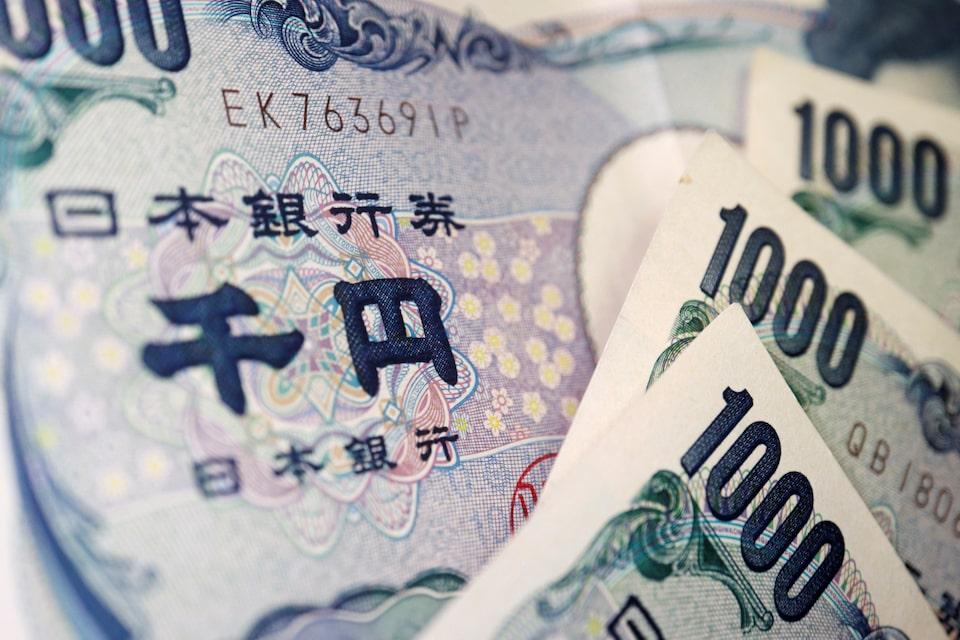
TOKYO, July 31 (Reuters) - Japan logged a record surplus of $36 billion from a special government account for foreign exchange reserves in the last fiscal year through March, thanks to solid returns on foreign assets which were amplified by a weaker yen. The surplus from the special account, which manages foreign exchange reserves for currency market interventions, totalled 5.4 trillion yen ($36.18 billion), up 38% from the previous year, the Finance Ministry said on Thursday. Sign up here. The robust returns reflected a wide gap in interest rates on cheap yen-denominated debt and high-yielding foreign securities holdings, most of which are believed to be U.S. Treasuries bought during bouts of dollar-buying intervention when the yen was strong. The yen's depreciation also boosted the value of foreign reserves in yen terms. The government is allocating 3.2 trillion of the surplus to the general budget account for the current fiscal year - a third of which would be spent on defence. The special account is used to partially fund state-owned Japan Bank for International Cooperation (JBIC), which will provide loans and equity for Japan's $550 billion investment package agreed in the U.S. tariff deal. ($1 = 149.2700 yen) https://www.reuters.com/markets/asia/japans-fx-reserve-account-reaps-record-surplus-fy2024-2025-07-31/
2025-07-31 01:55
Seoul, July 31 (Reuters) - Samsung Electronics (005930.KS) , opens new tab said on Thursday that the South Korea-U.S. trade deal would reduce uncertainty. The comments were made during its quarterly earnings conference call. Sign up here. https://www.reuters.com/world/asia-pacific/samsung-electronics-says-korea-us-trade-deal-reduces-uncertainty-2025-07-31/

2025-07-31 00:49
TOKYO, July 31 (Reuters) - Oil prices gained for a fourth straight day on Thursday, as investors worried about supply shortages amid U.S. President Donald Trump's push for a swift resolution to the war in Ukraine and threats of tariffs on countries buying Russian oil. Brent crude futures for September delivery , which are set to expire on Thursday, rose 27 cents, or 0.4%, to $73.51 a barrel by 0028 GMT, while U.S. West Texas Intermediate crude for September gained 37 cents, or 0.5%, to $70.37 a barrel. Sign up here. Both benchmarks settled 1% higher on Wednesday. The more active Brent October contract was up 29 cents, or 0.4%, at $72.76. "Concerns that secondary tariffs on countries importing Russian crude will tighten supplies continue to drive buying interest," said Toshitaka Tazawa, an analyst at Fujitomi Securities. On Tuesday, Trump said he would start imposing measures on Russia, including 100% secondary tariffs on its trading partners, if it did not make progress on ending the war within 10-12 days, moving up an earlier 50-day deadline. Trump said on Wednesday the United States is still negotiating with India on trade after announcing earlier in the day the U.S. will impose a 25% tariff on goods imported from the country starting on Friday. The U.S. has also warned China, the largest buyer of Russian oil, that it could face huge tariffs if it kept buying. On Wednesday, the U.S. Treasury Department announced fresh sanctions on over 115 Iran-linked individuals, entities and vessels, in a sign the Trump administration is doubling down on its "maximum pressure" campaign after bombing Tehran's key nuclear sites in June. China is the top buyer of Iran's oil. Meanwhile, U.S. crude oil inventories rose by 7.7 million barrels in the week ending July 25 to 426.7 million barrels, driven by lower exports, the Energy Information Administration said on Wednesday. Analysts had expected a 1.3 million-barrel draw. Gasoline stocks fell by 2.7 million barrels to 228.4 million barrels, far exceeding forecasts for a 600,000-barrel draw. "U.S. inventory data showed a larger-than-expected build in crude stocks, but a bigger-than-expected gasoline draw supported the view of strong driving season demand, resulting in a neutral impact on oil market," Fujitomi Securities' Tazawa said. https://www.reuters.com/business/energy/oil-prices-gain-fourth-day-supply-fears-trump-tariff-threats-2025-07-31/