2025-07-31 00:34
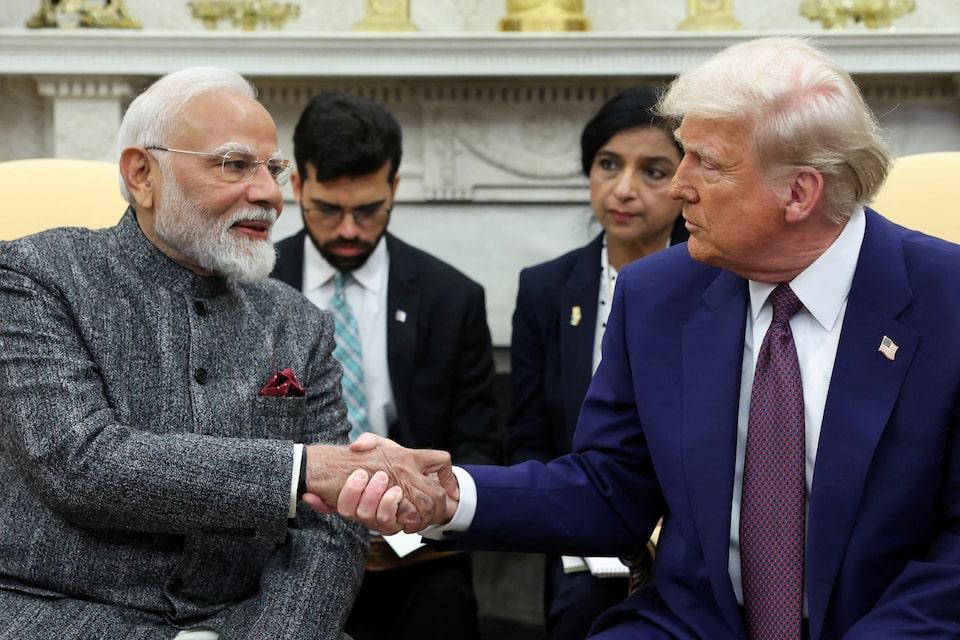
Trump to impose penalty on India over Russian dealings, BRICS New tariffs threaten trade talks, partnership against China India says it's committed to reaching fair trade deal with US WASHINGTON/NEW DELHI, July 30 (Reuters) - President Donald Trump said on Wednesday the United States is still negotiating with India on trade after announcing earlier in the day the U.S. would impose a 25% tariff on goods imported from the country starting on Friday. The 25% tariff, as well as an unspecified penalty announced by Trump in a morning social media post, would strain relations with the world's most populous democracy. Sign up here. Later at the White House, the Republican president indicated there was wiggle room. "They have one of the highest tariffs in the world now, they're willing to cut it very substantially," Trump told reporters. "We're talking to India now - we'll see what happens ... You'll know by the end of this week." The 25% figure would single out India more severely than other major trading partners, and threaten to unravel months of talks between the two countries, undermining a strategic partner of Washington's and a counterbalance to China. What the penalty would be was not clear. Trump indicated initially, in a post on the Truth Social website, that the penalty was a response to India buying Russian arms and oil and its "obnoxious non-monetary Trade Barriers." When asked about the penalty later at the White House, he said it was partly due to trade issues and partly because of India's involvement in the BRICS group of developing nations, which he described as hostile to the U.S. In July, Trump said the U.S. will impose an additional 10% tariff on imports from any countries aligning themselves with the "Anti-American policies" of the BRICS. The India announcement came as countries face a Friday deadline to reach deals on reciprocal tariffs or have a Trump-imposed tariff slapped on their exports. The White House launched a blizzard of other trade policy announcements on Wednesday. EARLY WARNING The White House had previously warned India about its high average applied tariffs - nearly 39% on agricultural products - with rates climbing to 45% on vegetable oils and around 50% on apples and corn. "While India is our friend, we have, over the years, done relatively little business with them because their Tariffs are far too high," Trump wrote in the Truth Social post. "They have always bought a vast majority of their military equipment from Russia, and are Russia’s largest buyer of ENERGY, along with China, at a time when everyone wants Russia to STOP THE KILLING IN UKRAINE — ALL THINGS NOT GOOD!" In response to his Truth Social post, the Indian government said it was studying the implications of Trump's announcements and remained dedicated to securing a fair trade deal. "India and the U.S. have been engaged in negotiations on concluding a fair, balanced and mutually beneficial bilateral trade agreement over the last few months. We remain committed to that objective," it said. Russia continued to be the top oil supplier to India during the first six months of 2025, making up 35% of overall supplies. The United States, the world's largest economy, currently has a $45.7 billion trade deficit with India, the fifth largest. White House economic adviser Kevin Hassett said Trump has been frustrated with the progress of trade talks with India and believed the 25% tariff announcement would help the situation. The new U.S. tax on imports from India would be higher than on many other countries that struck deals with the Trump administration recently. The tariff on Vietnamese exports is set at 20% and Indonesia's at 19%, while the levy for Japanese and European Union exports is 15%. "This is a major setback for Indian exporters, especially in sectors like textiles, footwear, and furniture, as the 25% tariff will render them uncompetitive against rivals from Vietnam and China," said S.C. Ralhan, president of the Federation of Indian Export Organisations. CONTENTIOUS ISSUES U.S. and Indian negotiators have held multiple rounds of discussions to resolve contentious issues, particularly over market access into India for U.S. agricultural and dairy products. In its latest statement, India said it attached the utmost importance to protecting and promoting the welfare of its farmers, entrepreneurs, and small businesses. "The government will take all steps necessary to secure our national interest, as has been the case with other trade agreements," it said. The setback comes despite earlier commitments by Prime Minister Narendra Modi and Trump to conclude the first phase of a trade deal by autumn and expand bilateral trade to $500 billion by 2030, from $191 billion in 2024. On Wednesday, Trump also said he had made a deal with India's arch South Asian rival Pakistan to develop that country's oil reserves. "Who knows, maybe they'll be selling Oil to India some day," Trump wrote on Truth Social. Since India's short but deadly conflict with Pakistan, New Delhi has been unhappy about Trump's closeness with Islamabad and has protested, which has cast a shadow over trade talks. "Politically, the relationship is in its toughest spot since the mid-1990s," said Ashok Malik, partner at advisory firm The Asia Group. "Trust has diminished. President Trump's messaging has damaged many years of careful, bipartisan nurturing of the U.S.-India partnership in both capitals." Besides farm products access, the U.S. had flagged concerns over India's increasingly burdensome import-quality requirements, among its many non-tariff barriers to foreign trade, in a report released in March. The new tariffs will impact Indian goods exports to the U.S., estimated at around $87 billion in 2024, including labor-intensive products, such as garments, pharmaceuticals, gems and jewelry, and petrochemicals. https://www.reuters.com/world/india/trump-says-us-india-still-negotiating-after-25-us-tariff-threat-2025-07-30/
2025-07-31 00:17
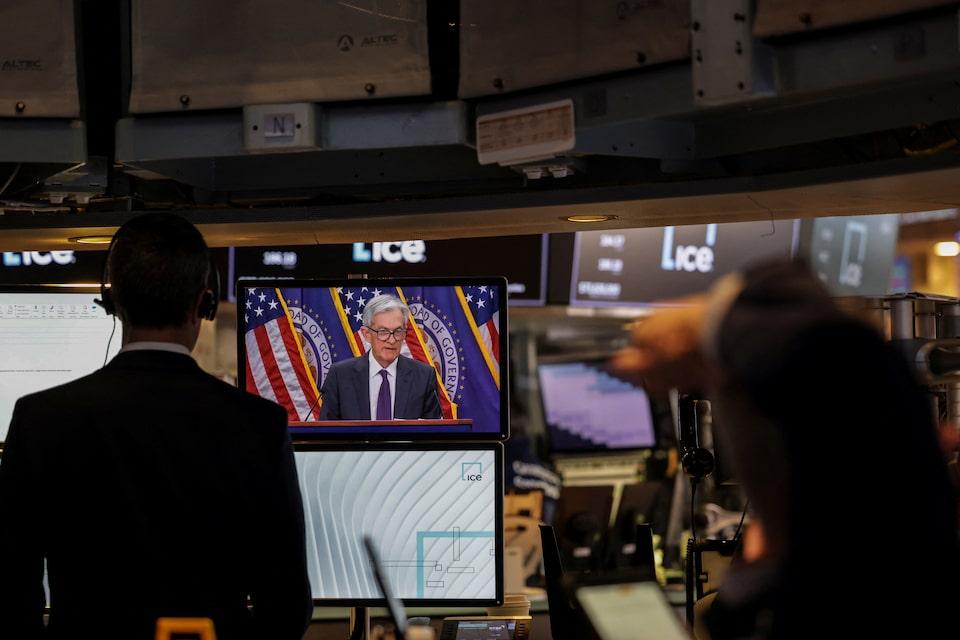
Traders back away from bets on interest rate cut in September Treasury yields and the dollar rise, while stocks retreat Positioning ahead of Fed decision may have amplified bond reaction Investors warn against reading too much into one-day market reaction NEW YORK, July 30 (Reuters) - The Federal Reserve's decision to avoid signaling imminent rate cuts despite relentless political pressure underscores its prevailing caution and has forced investors to dial back expectations for an easing at the next policy meeting. The Federal Open Market Committee held interest rates on Wednesday in a split decision that gave little indication of when borrowing costs might be lowered. It also drew dissent from two Fed governors, both appointees of President Donald Trump who agree with him that monetary policy is too tight. Sign up here. The overnight policy rate controlled by the Fed remains in a 4.25%-4.50% range. The last rate cut was in December and the Fed hiked rates from March 2022 to July 2023 to fight inflation. The lack of a clear signal that the Fed was warming to interest rate cuts as soon as the next meeting in September lifted Treasury yields and the dollar in late trade and turned stocks lower. "I think the Fed has pushed out the probability of a rate cut," Sonu Varghese, global macro strategist at Carson Group. "They're going to wait for more data, but more data means more time, and more time means rates are going to remain restrictive for a few more months," Varghese said. Fed funds futures traders are pricing in a 46% probability of a rate cut by September, down from about 65% a day ago, according to the CME Group's FedWatch Tool. They are no longer pricing in two full 25 basis point cuts by year-end as they were in recent days. Fed Chair Jerome Powell was careful to keep his options open on monetary policy. "We have made no decisions about September," he said in a press conference. He also noted there was still time to take in a wide range of data before the central bank next met in mid-September. "There was some possibility that (Powell) would softly signal that a September rate cut is the base case, and (that it) would only not happen if the data didn't play out in a way that's consistent with that," said David Seif, chief economist for Developed Markets at Nomura in New York. "I'd say he did not do that at all." Bond yields climbed on Wednesday as Powell reiterated the economy was showing resilience despite interest rates remaining "modestly restrictive". Benchmark Treasury 10-year yields and two-year yields both rose by about two basis points after those remarks. Investor positioning may have amplified the bond market reaction, said Jamie Patton, co-head of global rates at TCW. "I think the market had gotten a bit ahead of itself thinking we already had enough data to justify a cut in September," said Patton, who remains bullish on short-term bonds due to expectations of imminent interest rate cuts. Powell has come under intense pressure from the White House to lower interest rates, with President Trump regularly berating him for being too slow to lower borrowing costs. Powell's reticence in guiding when the Fed may start cutting rates will leave investors to parse two more months' worth of inflation and employment data for the timing of policy easing, and put some pressure on small-cap stocks in the near term, investors said. The Russell 2000 small-cap index (.RUT) , opens new tab, which had been outperforming the S&P 500 index on the day before Powell took the stage, finished the session down 0.47% against a 0.12% loss for the large-cap benchmark. For the dollar, which has come under intense selling pressure this year, the Fed's relatively hawkish message gave some support, lifting the currency to a two-month high against a basket of peers. The dollar index ended up 1%, leaving it down about 8% for the year. "We still envision medium-term weakness for the USD, but in the near-term the risk profile is more two-way," BofA Global Research strategists said in a note. Higher rates in the U.S. help boost the allure of the dollar relative to other developed market currencies. "This patience from the Fed and strength of the U.S. economy coming through is putting a little bit of a pause to that dollar depreciation," Vishal Khanduja, head of broad markets fixed income at Morgan Stanley Investment Management, said. Khanduja, however, warned against reading too much into the market's reaction to the Fed meeting. "Overall, I thought they did not change their stance at all," he said. Khanduja expects three to five cuts by the end of next year, though he sees the next two inflation releases as important. "They're still going to be wait-and-see, still very convinced that inflation is going to be slightly higher in the next two prints," he said. "But they are still very convinced it's going to be a one-time bump." https://www.reuters.com/business/feds-reticence-rate-cuts-forces-market-rethink-outlook-2025-07-31/
2025-07-30 23:45
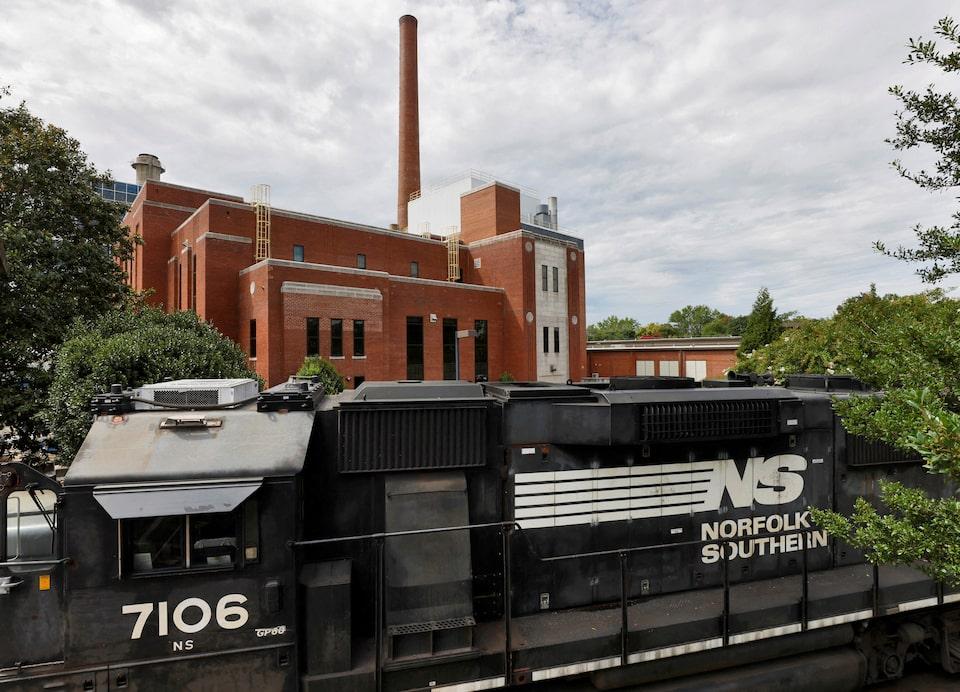
WASHINGTON, July 30 (Reuters) - The Surface Transportation Board said on Wednesday that Union Pacific (UNP.N) , opens new tab and Norfolk Southern (NSC.N) , opens new tab have formally filed a notice of intent to combine, triggering the U.S. regulatory review process for a proposed $85 billion merger between the two major railroads. The STB said the railroads intend to file their application by January 29. Once filed, the STB will consider the application and set a schedule for the merger review that could take a total of 12 to 18 months. Sign up here. https://www.reuters.com/sustainability/boards-policy-regulation/union-pacific-norfolk-southern-aim-file-merger-application-by-jan-29-2025-07-30/
2025-07-30 23:31
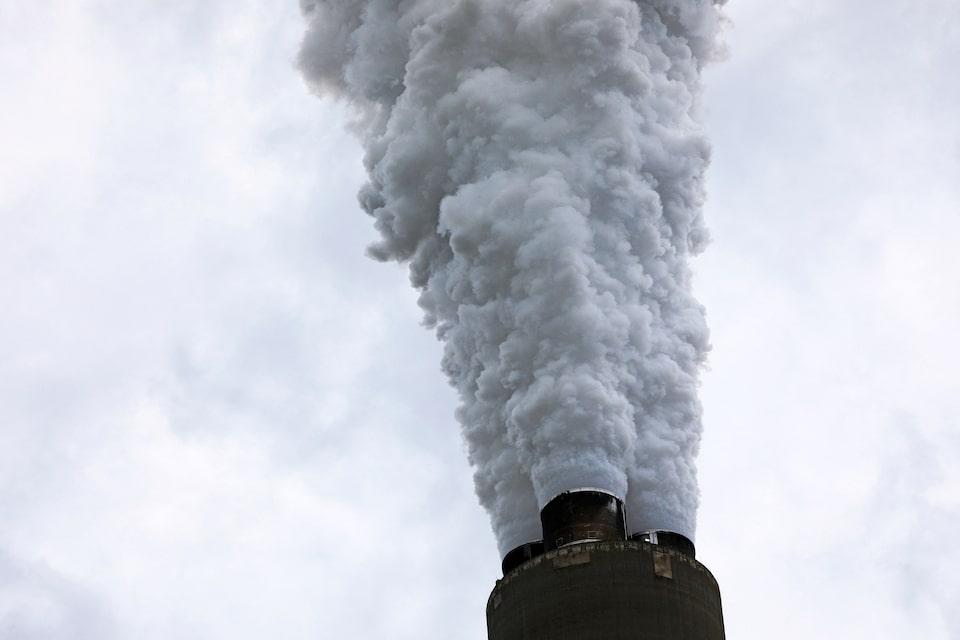
WASHINGTON, July 30 (Reuters) - The Trump administration has billed its plan to undo U.S. climate regulation as a way to cut costs for industry, but it may backfire by forcing automakers, utilities, and manufacturers into a future of regulatory uncertainty and litigation risk, according to lawyers and trade groups. Republican President Donald Trump's administration announced on Tuesday a plan to rescind the long-standing finding that greenhouse gas emissions endanger human health, removing the legal foundation for U.S. greenhouse gas regulations. Sign up here. Environmental Protection Agency Administrator Lee Zeldin said the move, which would end limits on greenhouse gas pollution from vehicle tailpipes, power plants, smokestacks and other sources, would save companies $52 billion in environmental compliance costs. But companies that have already invested heavily in reducing emissions to meet government limits, a move also demanded by many shareholders, are worried the proposal will lead into the regulatory and judicial unknown, lawyers said. "Industries that have GHG standards set by EPA have long been complying with them and don’t want them to be stripped away," said Meghan Greenfield, partner with law firm Jenner & Block and former EPA counsel, who represents auto sector clients. "The stability of the regulatory regime is extremely important for industry as a baseline." Repealing the endangerment finding could mean that companies would need to comply with a patchwork of different state laws on climate change rather than one federal standard, said Zach Pilchen, senior counsel at Holland & Knight. "I think what the administration has missed is that most of industry has already retrofitted for regulations," said Camille Pannu, associate law professor at Columbia University. "Industry did want deregulation, but maybe not through this vehicle." One former Trump administration source said during Trump's first term, the EPA had declined to take on the endangerment finding because of strong resistance from industry and the legal risk associated with undermining federal authority on the matter. Three sources in the automaker industry told Reuters privately that the EPA’s proposed repeal of vehicle efficiency standards is much broader than anticipated. In addition to tailpipe standards, the proposal would eliminate air conditioning efficiency testing and remove requirements for battery monitoring and battery durability. Albert Gore, executive director of the Zero Emission Transportation Association, said the EPA action to reverse long-settled law comes as "clean" car sales are growing steadily and powering a U.S. battery and vehicle manufacturing boom. Over the last decade, manufacturers announced $197.6 billion in investments in U.S. EV and battery manufacturing facilities, according to the Environmental Defense Fund. "Taking backward steps and adding new regulatory uncertainty harms consumers, unsettles markets, and will complicate ongoing business decisions for auto manufacturers," Gore said. LUKEWARM REACTION Industry groups have been guarded in their reactions to the EPA announcement, mostly saying they will review the proposal and offer comments in coming weeks. Edison Electric Institute, the electric utility industry's main lobby group, said it supported the EPA establishing clear and consistent regulatory policies to drive infrastructure and investment. "It is essential that EPA use its authority to craft flexible regulations that account for impacts to reliability and customer bills," said EEI spokesman Jeremy Ortiz. The power industry is responsible for around a quarter of U.S. greenhouse gas emissions and has steadily reduced its carbon output over more than a decade by replacing older coal-fired generators with natural gas, solar and wind. EEI had sided with the EPA, then part of former President Joe Biden's administration, in a 2022 Supreme Court case in which West Virginia challenged the agency's authority to regulate power plants. "Voiding that authority could upend that predictability and uniformity and potentially subject individual GHG emitters to the idiosyncratic whims of individual district court judges," it said in its brief at the time. Auto industry group, the Alliance for Automotive Innovation, welcomed the tailpipe deregulation and said it was digesting the broader proposal to repeal the endangerment finding. The American Petroleum Institute and the American Trucking Associations both cheered the planned repeal of vehicle tailpipe rules. The U.S. Chamber of Commerce had also previously opposed the repeal because of its destabilizing effect on members. "While we did not call for this proposal, we are reviewing it and will consult with members so we can provide constructive feedback to the agency," Marty Durbin, president of the Chamber's energy institute, said on Tuesday. https://www.reuters.com/legal/government/us-reversal-key-climate-finding-spells-uncertainty-business-2025-07-30/
2025-07-30 23:31
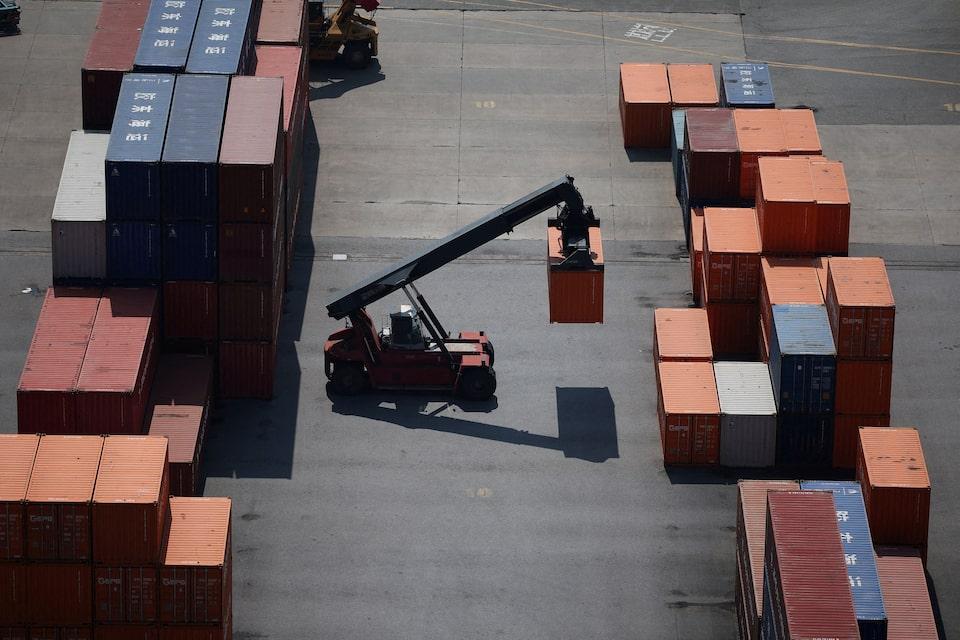
South Korea agrees to invest $350 billion in US projects South says projects to include shipbuilding, chips, batteries South Korea to purchase $100 billion in US energy products US sets tariffs on South Korean autos at 15%, officials said WASHINGTON/SEOUL, July 30 (Reuters) - President Donald Trump said on Wednesday the U.S. will charge a 15% tariff on imports from South Korea, down from a threatened 25%, as part of a deal that eases tensions with a top-10 trading partner and key Asian ally. The arrangement, announced shortly after Trump met with Korean officials at the White House, came during a blizzard of trade policy announcements ahead of a self-imposed August 1 deadline. Sign up here. That is when Trump has promised higher tariffs will kick in on U.S. imports from a range of countries. Imports from South Korea, a powerhouse exporter of computer chips, cars and steel, faced a 25% rate prior to Wednesday's last-minute deal. "I am pleased to announce that the United States of America has agreed to a Full and Complete Trade Deal with the Republic of Korea," Trump wrote on Truth Social. The negotiations were an early test for South Korean President Lee Jae Myung, who took office in June after a snap election. He said the deal had eliminated uncertainty in the export environment and set U.S. tariffs lower than or at the same level as major competitors. "We have crossed a big hurdle," Lee said in a post on Facebook. Trump said Lee would visit the White House "within the next two weeks" for his first meeting with the U.S. president. South Korea agreed to invest $350 billion in the United States in projects selected by Trump and to purchase $100 billion in energy products, the U.S. president said. He also said South Korea would accept American products, including autos and agriculture into its markets and impose no import duties on them. South Korea's top officials said the country's rice and beef markets would not be further open, and that discussions over U.S. demands on food regulations continue. "We avoided the worst and chose the next best," said Cheong In-kyo, a former South Korean trade minister. Much will depend on how the investments to the U.S. are structured, he added. "Depending how and where $350 billion will be spent, this fund will be looked at differently." DEVIL IN THE DETAILS It was not immediately clear how the investment deals would be structured, where the financing would come from, over what time frame they would be implemented and to what extent their terms would be binding. Trump said additional South Korean investments would be announced later. Of the $350 billion fund, $150 billion was aimed at a shipbuilding partnership while $200 billion would include chips, nuclear power, batteries, and biotechnology, Kim Yong-beom, policy chief from the South Korean presidential office, told a briefing. Existing investment plans by South Korean companies would be part of the fund, according to Kim. He said that "ambiguity is good", but noted that they had ensured there would be safeguards over how the funds were used. U.S. Commerce Secretary Howard Lutnick declared in a post on X that 90% of the profits from the $350 billion fund were "going to the American people." Kim said that South Korea understands it to mean that profits would be reinvested. The energy purchases would include LNG, LPG, crude oil, and a small amount of coal, Kim said. "This is within our usual import volume," he said, adding that it might lead to a "slight shift" in the country's mix of imports from the Middle East to more American sources. Lutnick said the energy purchases would happen "over the next 3.5 years." The U.S. tariff rate on South Korean autos would be set at 15% and the country's semiconductor and pharmaceutical exports would not be treated more harshly than those from other countries, Lutnick said. Steel, aluminum, and copper were not covered by the new deal. SCRAMBLE IN SOUTH KOREA The negotiations took place in a turbulent political environment in South Korea with former President Yoon Suk Yeol removed in April after he was impeached for an attempt to impose martial law. South Korea has been a particular target of Trump for its trade surplus as well as the cost to maintain some 28,500 U.S. troops in the country to defend against North Korea. Last year South Korea posted a record $55.7 billion trade surplus with the United States, up 25.4% from a year earlier. It is among only three Asia-Pacific countries that already had a comprehensive free trade agreement with the United States, but that did not spare it from new tariffs. Pressure had been mounting on South Korea since Japan clinched a deal to cut Trump's threatened tariffs to 15% earlier this month. Amid the last-minute push by government officials to reach a tariff deal, South Korea's Samsung Electronics (005930.KS) , opens new tab inked a $16.5 billion chip deal with Tesla (TSLA.O) , opens new tab. South Korean battery maker LG Energy Solution (373220.KS) , opens new tab also signed a $4.3 billion deal to supply Tesla with energy storage system batteries, a person familiar with the matter told Reuters. https://www.reuters.com/world/asia-pacific/trump-says-us-will-set-15-tariff-south-korean-imports-under-new-deal-2025-07-31/
2025-07-30 23:30
Facility to be built in Visakhapatnam, Andhra Pradesh state Google to invest $2 billion for renewable energy for centre Andhra Pradesh targets 6 GW data centre capacity in five years SINGAPORE, July 30 (Reuters) - Google will invest $6 billion to develop a 1-gigawatt data centre and its power infrastructure in the southern Indian state of Andhra Pradesh in the Alphabet (GOOGL.O) , opens new tab unit's first such investment in India, government sources said on Wednesday. Due to be built in the port city of Visakhapatnam, the data centre investment includes $2 billion in renewable energy capacity that will be used to power the facility, two Andhra Pradesh government sources with direct knowledge of the matter told Reuters. Sign up here. The search giant's data centre will be the largest in capacity and investment size in Asia and is part a multi-billion-dollar expansion of its data centre portfolio across the region in countries including Singapore, Malaysia and Thailand. In April, Alphabet said it was still committed to spending some $75 billion this year to build data centre capacity despite the economic uncertainty resulting from U.S. President Donald Trump's global tariff offensive. Alphabet did not immediately respond to Reuters' request for comment. Andhra Pradesh's information technology minister Nara Lokesh, who is in Singapore to discuss investments with thegovernment and business leaders there, did not comment on the Google investment. "We've made certain announcements like Sify, which are public," he said, referring to a 550-MW data centre Sify Technologies (SIFY.O) , opens new tab plans to build in the state. "There are certain announcements which are not yet public. In October, we will make those announcements." STATE'S POST-SPLIT INVESTMENT DRIVE Andhra Pradesh, a state run by a leading ally of India's Prime Minister Narendra Modi, was split into two in 2014, losing its former capital Hyderabad and a major revenue source to the newly created Telangana state. Andhra Pradesh has since been looking to attract investments to ease the financial strains of high debt and social spending. Lokesh said Andhra Pradesh has already been able to finalise investments in data centres with total capacity of 1.6 GW, adding that it aims to build 6 GW of data centres over the next five years from nearly zero currently. He expects the initial 1.6 GW of already agreed data centres to be operational in the next 24 months. That would be more than the 1.4 GW currently in operation in the entire country, according to real estate consultancy Anarock. "We're also working on getting three cable landing stations in Visakhapatnam. We want to create enough of cable network, which will be two times what Mumbai has today," Lokesh said. Cable landing stations - typically located close to data centres requiring fast and reliable connections to global networks - are used to store equipment which receives and relays data from undersea cables. Lokesh also said the state was looking to build up energy infrastructure to meet sustainability requirements of data centres. He said he anticipated power generation capacity requirements of as much as 10 GW from the electricity-intensive industry over the next five years. "Majority will end up being actually green energy, and that's the unique value proposition that we bring to the table," he said. Some of the additional capacity will be coal-fired, however, as data centres require reliable, high volume power throughout the day, he added. https://www.reuters.com/sustainability/boards-policy-regulation/google-invest-6-billion-southern-india-data-centre-sources-say-2025-07-30/