2025-07-30 23:12
US says latest Iran sanctions are toughest since 2018 Moves are meant to make Iran oil sales more difficult Targeted network is run by son of adviser to Iran Supreme Leader WASHINGTON, July 30 (Reuters) - The U.S. Treasury Department announced fresh sanctions on Wednesday on over 115 Iran-linked individuals, entities and vessels, in a sign the Trump administration is doubling down on its "maximum pressure" campaign after bombing Tehran's key nuclear sites in June. The sanctions broadly target the shipping interests of Mohammad Hossein Shamkhani, the son of Ali Shamkhani, who is himself an adviser to Supreme Leader Ayatollah Ali Khamenei. The U.S. Treasury said it was the most significant Iran-related sanctions action since 2018, during President Donald Trump's first administration. Sign up here. According to Treasury, Shamkhani controls a vast network of container ships and tankers through a complex web of intermediaries that sell Iranian and Russian oil and other goods throughout the world. Treasury accused Shamkhani of using personal connections and corruption in Tehran to generate tens of billions of dollars in profits, much of which is used to prop up the Iranian regime. Overall, the new sanctions target 15 shipping firms, 52 vessels, 12 individuals and 53 entities involved in sanctions evasion in 17 countries, ranging from Panama to Italy to Hong Kong. A U.S. official said the new sanctions would make it "much more difficult" for Iran to sell its oil, but added that the administration did not anticipate any sustained disruption to global oil markets . The official said that Iran's oil exports had already declined to around 1.2 million barrels per day, from 1.8 million barrels per day at the start of the year, after the Trump administration imposed several smaller rounds of sanctions targeting Iran's oil business. "We're still engaging further action to bring that number down even more," the official said, noting that sanctions pressure during Trump's first term had cut Iran oil flows to a few hundred thousand barrels per day. An Iranian foreign ministry spokesperson called the sanctions "a clear example of America's hostility towards the Iranian nation," according to the country's Student News Network. The spokesperson, Esmaeil Baghaei, also said the oil sanctions represented "an evil act aimed at harming Iran's economic development and the welfare of its people." China is the top buyer of Iran's oil. The European Union sanctioned Shamkhani earlier in July, citing his role in the Russian oil trade. A U.S. official said that Wednesday's action would impact both Russia and Iran, but the action was focused on Iran. "From our perspective, given where this individual fits, given his connection to the Supreme Leader and his father's previous sanctions activities, given the Iran-related authorities, it's critically important to emphasize that this is an Iran action that is meaningful and very impactful," the official said. Ali Shamkhani, Mohammad Hossein Shamkhani's father, was sanctioned by the United States in 2020. The latest sanctions announcement came as prospects for renewed U.S.-Iran diplomacy remained dim in the aftermath of the U.S. bombing of Iranian nuclear sites last month. Trump warned on Monday that he would order fresh U.S. attacks should Tehran try to restart the nuclear sites the U.S. had already struck. He also told reporters Iran has been sending out "nasty signals" and that any effort to restart its nuclear program would be immediately quashed. The United States held five rounds of talks with Iran prior to its airstrikes in June, which Trump said had "obliterated" a program that Washington and its ally Israel say is aimed at developing a nuclear bomb. Some experts have questioned the extent of the damage. Iran denies seeking a nuclear weapon. A senior White House official said last week that Washington was open to talking directly to Iran. But European and Iranian diplomats have said there is little prospect of Iran re-engaging with the U.S. at the negotiating table for now. https://www.reuters.com/world/americas/us-hits-iranian-shipping-network-with-major-new-sanctions-2025-07-30/
2025-07-30 23:01
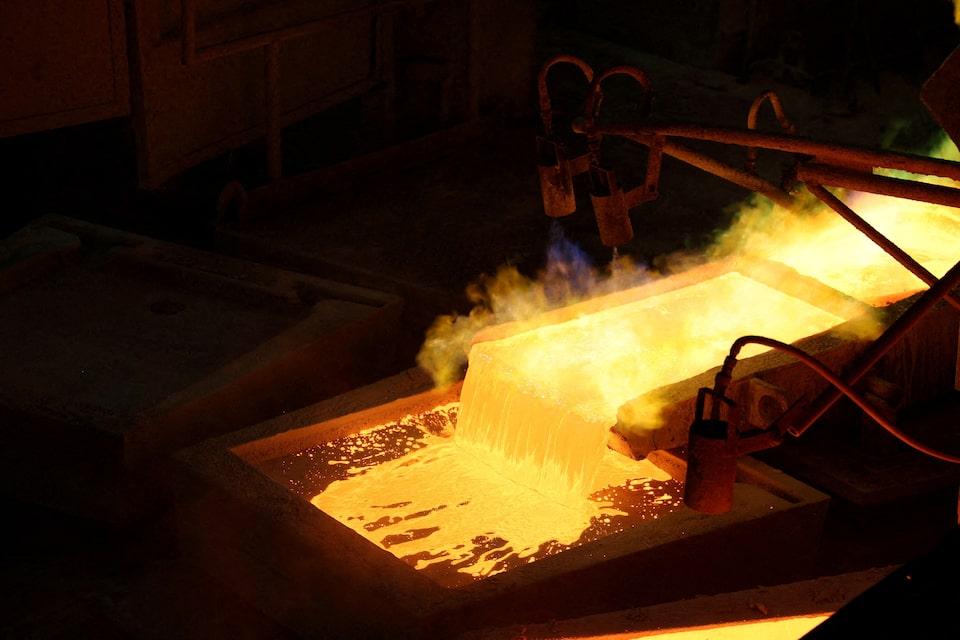
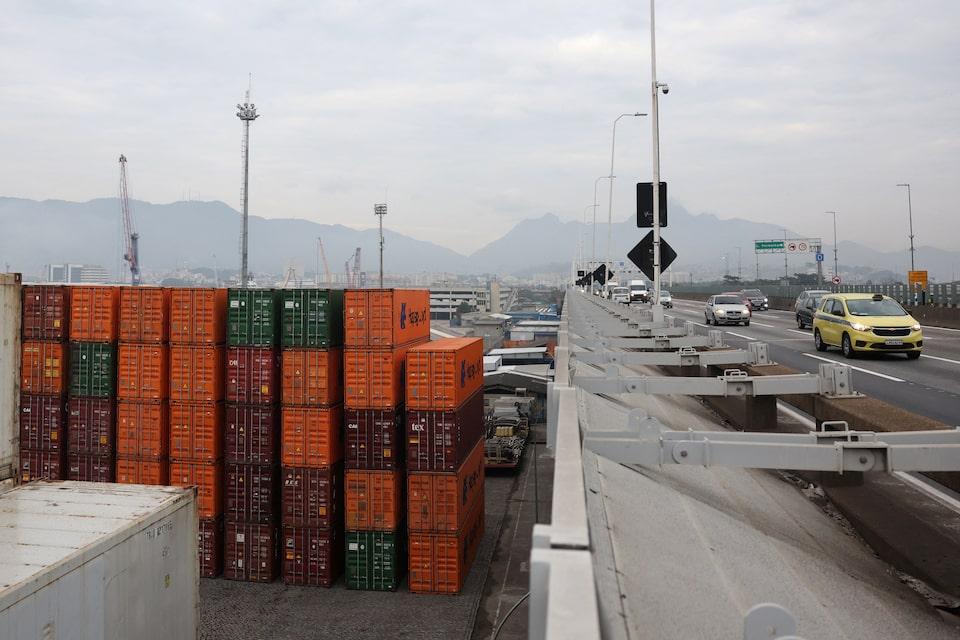
Trump announces tariffs on copper, Brazil, and small-value shipments Copper prices drop 17% after tariff announcement Trump says South Korea's U.S.-bound exports face 15% tariff Brazil levies tied to prosecution of Bolsonaro August 1 deadline looms WASHINGTON, July 30 (Reuters) - U.S. President Donald Trump on Wednesday issued a blitz of tariff announcements ranging from changes to previously threatened levies on imports of copper and on goods from Brazil to ending an exemption from tariffs for small-value shipments from overseas. The wave of announcements came as the clock ticked down toward an August 1 deadline for higher tariff rates to kick in on goods imported from most of the world as Trump presses on with his bid to reshape global trade. The president also touted what he said was a deal with South Korea that would include a 15% U.S. tariff on imports from the country. Sign up here. Capping a day that began with Trump announcing a 25% tariff rate on goods from India after months of negotiations between Washington and New Delhi failed to produce a trade deal, Trump said a 50% tariff on copper pipes and wiring would kick in on Friday. Details of the levy, though, fell short of the sweeping restrictions expected and left out copper input materials such as ores, concentrates and cathodes. The surprise move dragged down U.S. copper prices more than 17% on the Comex exchange and unwound a premium over the London global benchmark that had grown in recent weeks, with shipments diverted there in anticipation of higher domestic prices. "Markets are now busily repricing refined copper much lower after Trump's epic backflip on his own import tariff policy," said Tom Price, an analyst at the London brokerage Panmure Liberum. "Someone must have finally got through to (Trump) that the U.S. economy simply can't afford this new trade-hit." Trump first teased the copper tariff in early July, implying that it would apply to all types of the red metal, ranging from cathodes produced by mines and smelters to wiring and other finished products. Yet the proclamation released by the White House said the tariff will apply only to pipes, tubes and other semi-finished copper products, as well as products that copper is heavily used to manufacture, including cable and electrical components. The move aids manufacturers, but does little to boost the constrained U.S. copper mining industry, which for years has asked Washington for permitting reform or other steps that could fuel growth. The move is essentially a boost for Chile and Peru, two of the world's largest copper miners and major suppliers to the United States. The measure came after a U.S. investigation under Section 232 that Trump ordered in February, findings from which were delivered by Commerce Secretary Howard Lutnick on June 30. BRAZIL Trump on Wednesday slapped a 50% tariff on most Brazilian goods to fight what he has called a "witch hunt" against former President Jair Bolsonaro, but softened the blow by excluding sectors such as aircraft, energy and orange juice from the heavier levies. That came as a relief for many in Brasilia, who since Trump announced the tariffs had been urging protections for major exporters caught in the crossfire. Shares of planemaker Embraer (EMBR3.SA) , opens new tab and pulpmaker Suzano (SUZB3.SA) , opens new tab rose. "We're not facing the worst-case scenario," Brazilian Treasury Secretary Rogerio Ceron told reporters. "It's a more benign outcome than it could have been." The new tariffs will go into effect on August 6, not August 1 as Trump announced originally. 'DE MINIMIS' The White House also said the United States is suspending a "de minimis" exemption that allowed low-value commercial shipments to be shipped to the United States without facing tariffs. Under Trump's order, packages valued at or under $800 sent to the U.S. outside of the international postal network will now face "all applicable duties" starting on August 29, the White House said. Trump earlier targeted packages from China and Hong Kong. The tax-and-spending bill recently signed by Trump repealed the legal basis for the de minimis exemption worldwide starting on July 1, 2027. "Trump is acting more quickly to suspend the de minimis exemption than the OBBBA requires, to deal with national emergencies and save American lives and businesses now," the White House said, referring to the bill known as the One Big Beautiful Bill Act. Goods shipped through the postal system will face one of two tariffs: either an "ad valorem duty" equal to the effective tariff rate of the package's country of origin or, for six months, a specific tariff of $80 to $200 depending on the country of origin's tariff rate. SOUTH KOREA Trump said late on Wednesday that he had settled on a 15% U.S. tariff on imports from South Korea as part of an agreement with the Asian trading partner that avoids even higher levies. As part of the arrangement, South Korea would invest $350 billion in the United States in projects selected by Trump and purchase $100 billion of liquefied natural gas and other energy products, the U.S. president said. The South Korean government could not immediately be reached for comment. Reuters has not verified the terms of a deal, and it was not immediately clear how the investment deals would be structured or over what timeframe. https://www.reuters.com/business/trump-issues-blitz-tariff-announcements-copper-brazil-small-value-imports-2025-07-30/
2025-07-30 22:55
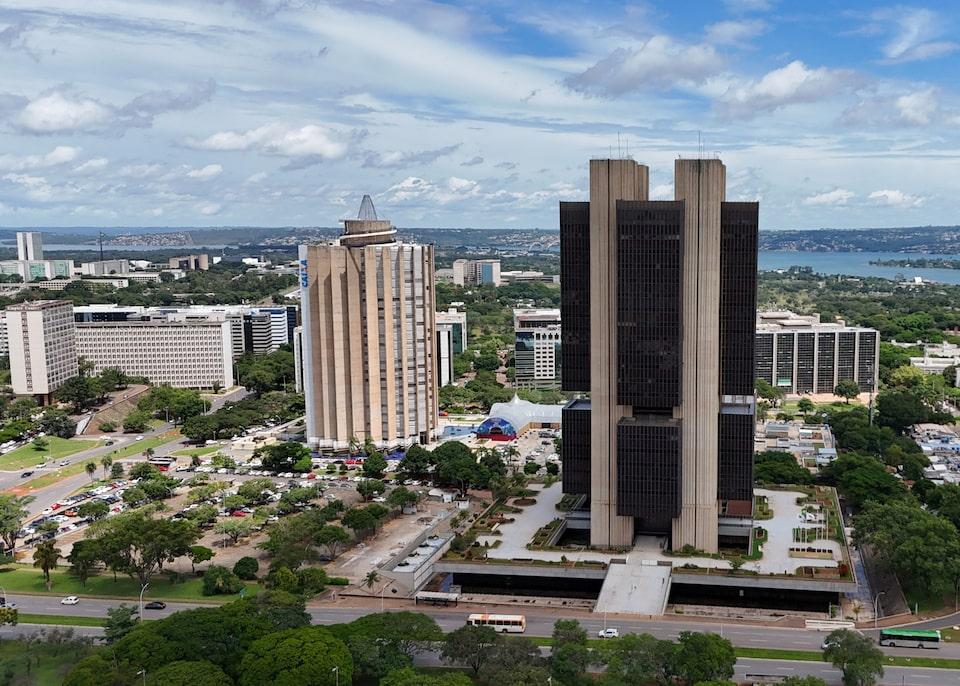
Benchmark Selic rate held at 15%, nearly two-decade high Central bank to evaluate cumulative impact of recent hikes Policymakers see rates unchanged for "very prolonged period" BRASILIA, July 30 (Reuters) - Brazil's central bank held its benchmark interest rate steady on Wednesday, pausing an aggressive tightening cycle after seven consecutive hikes as widely expected, with U.S. tariffs adding to policymakers' heightened caution. The bank's monetary policy committee, known as Copom, kept its benchmark Selic rate at 15.00%, the highest level since July 2006. All 35 economists surveyed by Reuters from July 21-25 had forecast the decision. Sign up here. With stable rates largely priced in, market attention turned to the central bank's statement for any hints on when rate cuts could begin in Latin America's largest economy. But the central bank remained cautious and sought to steer clear of that debate in its policy statement, released the same day that the U.S. Federal Reserve also held rates steady despite political pressure to start cutting borrowing costs. Copom paused its rate-hiking cycle "to examine its yet-to-be-seen cumulative impacts, and then evaluate whether the current interest rate level, assuming it is stable for a very prolonged period, will be enough to ensure the convergence of inflation to the target," policymakers said in their statement. With Brazil bracing for a 50% U.S. tariff - a move that makes it among the trade partners hardest hit by President Donald Trump's policies, despite the exclusion of several key Brazilian exports - the central bank said the global outlook has become more adverse and uncertain. "The committee has been closely monitoring the announcements on tariffs by the U.S. to Brazil, which reinforces its cautious stance in a scenario of heightened uncertainty," it said. Rodolfo Margato, an economist at XP, said the central bank's statement may be read as slightly hawkish by markets, as the central bank kept its inflation forecasts unchanged, while markets had expected a slight downward revision. Still, Margato said there were no elements that would change the course of monetary policy in the short term, and he forecast a first rate cut only in January. Policymakers projected on Wednesday that 12-month inflation will reach 3.4% in the relevant horizon for the bank's current monetary policy decisions, which is now the first quarter of 2027. The figure matches the central bank's June estimate for that period, even after factoring in a tighter interest rate path based on the bank's latest weekly survey of economists. For this year and the next, the central bank kept its inflation forecasts unchanged at 4.9% and 3.6%, respectively. The central bank again warned in its statement that it would not hesitate to resume hikes if deemed necessary. Inflation-adjusted borrowing costs in Brazil are deep in restrictive territory, surpassing even those in Russia and Turkey, helping to attract capital inflows and strengthen the country's currency by about 10% this year and easing some pressure on consumer prices. Even so, Brazil has seen inflation running well above its official 3% target for several months, fueled by an overheated economy, government stimulus measures, and a tight labor market. Market expectations for inflation also remain unanchored from the target in coming years, despite some recent improvement for this year and next, after recent indicators began to show the impact of steep interest rates on credit and cooling economic activity. https://www.reuters.com/world/americas/brazil-pauses-rate-hikes-signals-prolonged-hold-eyeing-us-tariffs-2025-07-30/
2025-07-30 21:59
New license to allow Chevron to make decisions, contribute to procurement and payments No money from oil proceeds can be transferred to Maduro's gvmt Chevron had reduced operations, ordered tanker fleet to sail away HOUSTON, July 30 (Reuters) - Chevron (CVX.N) , opens new tab has been granted a restricted U.S. license to operate in sanctioned Venezuela, three sources close to the decision said on Wednesday, adding that no money from oil proceeds can be transferred in any way to the administration of Venezuelan President Nicolas Maduro. Last week, Reuters reported that the U.S. was preparing to grant new authorizations to key partners of Venezuela's state-run PDVSA, starting with Chevron, to allow them to operate with limitations in the OPEC nation and swap oil. Sign up here. The authorization, issued privately to the U.S. oil producer, opens a new window for its oil business in Venezuela only two months after a deadline previously set by Washington for joint-venture partners of state company PDVSA to wind down transactions, including oil exports. Chevron and a handful of European oil companies, including Spain's Repsol (REP.MC) , opens new tab and France's Maurel & Prom (MAUP.PA) , opens new tab, had been granted authorizations by the administration of former President Joe Biden, which allowed them to expand operations in Venezuela and export oil to the U.S. and Europe. Amid criticism of migration and democracy in Venezuela, U.S. President Donald Trump in February said the licenses would be revoked and gave the companies until late May to complete transactions. As a consequence, Chevron reduced operations in Venezuela and instructed a dedicated fleet of tankers to sail away, delegating operations to PDVSA. Washington allowed Chevron to preserve its assets in the OPEC country, including its joint-venture stakes. The new license would now allow the U.S. company to make decisions at its joint ventures and contribute to procurement and contract payments, two of the sources said. However, since no payments can be made to Venezuela, including mandatory royalties and taxes, it was not immediately clear if PDVSA would assign Chevron any crude cargoes bound to the U.S. Chevron declined to comment on the license and said it conducts business globally in compliance with laws and regulations, as well as the U.S. sanctions framework. PDVSA did not reply to a request for comment. A spokesperson for Maurel & Prom said the company has not received any authorization yet. Repsol, Italy's Eni (ENI.MI) , opens new tab and India's Reliance (RELI.NS) , opens new tab, which had authorizations until earlier this year, did not reply to requests for comment. A senior U.S. official declined to refer to any specific licenses, but said the U.S. would not allow Maduro's government to profit from the sale of oil. In April, when the previous licenses were still current, PDVSA canceled cargoes allocated to Chevron over problems receiving mandatory payments. Chevron has not exported Venezuelan oil since. Though Venezuela and the U.S. conducted a prisoner swap this month, relations between the two countries remain tense. The Trump administration, which has supported Venezuelan opposition leaders who say their candidate won last year's election, not Maduro, has been facing pressure over the U.S. loss of Venezuelan barrels and the flow is now going to China. https://www.reuters.com/business/energy/chevron-granted-restricted-us-license-operate-venezuela-sources-say-2025-07-30/
2025-07-30 21:45
July 30 (Reuters) - U.S. President Donald Trump signed an executive order on Wednesday imposing a 40% tariff on Brazilian exports, bringing the country's total tariff amount to 50%. Some of Brazil's major exports, however, were exempted from the tax. Notable exemptions include products already covered by other specific tariffs, like passenger vehicles, iron and steel products, and a large number of parts and components used in civil aircraft. Sign up here. Below is a list of the products exempted from the tariff hike: PRODUCTS ALREADY SUBJECT TO PREVIOUSLY ANNOUNCED SECTORAL TARIFFS * Iron and steel (raw and derivatives) * Aluminum products (raw and derivatives) * Passenger vehicles (sedans, SUVs, minivans, etc.) and light trucks * Parts for passenger vehicles and light trucks * Semi-finished and intensive copper derivative products AGRICULTURAL AND FOOD PRODUCTS * Brazil nuts * Orange juice (frozen and not frozen) and orange pulp CIVIL AIRCRAFT, PARTS, AND COMPONENTS * Civil aircraft, including airplanes, helicopters, unmanned aircraft (drones), balloons, and gliders * Aircraft engines (piston, turbojets, turbopropellers) and their parts * New, retreaded, and used pneumatic tires for aircraft * Undercarriages and other aircraft parts * Aircraft seats * Navigational instruments, radios, and radar apparatus for aeronautical use * A wide range of other components specified for civil aircraft use ENERGY AND MINERAL PRODUCTS * Crude petroleum, various petroleum oils, and fuel products * Natural gas (liquefied and gaseous) * Coal and related products (lignite, peat, coke, tars) * Electrical energy * Iron ore and tin ores * Silicon metal and metallurgical grade alumina (aluminum oxide) * Crude mica and worked building stone METALS AND METAL PRODUCTS (GENERAL EXEMPTION) * Nonalloy and alloy pig iron * Ferroalloys, including ferronickel and ferroniobium * Tin waste, scrap, oxides, and chlorides PRECIOUS METALS * Silver bullion and dore * Gold bullion and dore WOOD AND PAPER PRODUCTS * Various types of chemical and semi-chemical wood pulp * Sawn or chipped tropical wood * Paper and paper pulp products CHEMICALS AND FERTILIZERS * Various mineral or chemical fertilizers * A specific list of industrial chemicals, including potassium hydroxide and certain chlorinated hydrocarbons OTHER GENERAL EXEMPTIONS * Donations intended to relieve human suffering (e.g., food, clothing, medicine) * Informational materials (e.g., publications, films, music, artworks) * Binder or baler twine made of sisal or agave fibers https://www.reuters.com/business/energy/some-key-brazilian-exports-spared-trumps-new-40-tariff-2025-07-30/
2025-07-30 21:32
July 30 (Reuters) - Carl Icahn-backed CVR Energy (CVI.N) , opens new tab on Wednesday named Mark Pytosh as chief executive officer and appointed Brett Icahn to its board. Pytosh will assume the top role effective January 1, 2026, succeeding Dave Lamp, who announced plans to retire from the position effective December 31. Sign up here. Icahn's activist investment firm Icahn Enterprises (IEP.O) , opens new tab currently holds a 68.5% stake in the U.S. refiner and is working to further boost its ownership to 84%. Brett Icahn is the son of billionaire Carl Icahn. He will join the refiner's board, effective August 1. The activist investor believes CVR's shares are undervalued in the market and represent an attractive investment opportunity at a time when U.S. refining margins have slumped from the highs reached in 2022. The company also reported a net loss of $114 million for the second quarter, compared with a year-ago profit of $21 million. Its shares fell 4.5% after the bell. https://www.reuters.com/sustainability/boards-policy-regulation/cvr-energy-names-mark-pytosh-ceo-adds-brett-icahn-board-2025-07-30/