2025-07-30 21:27
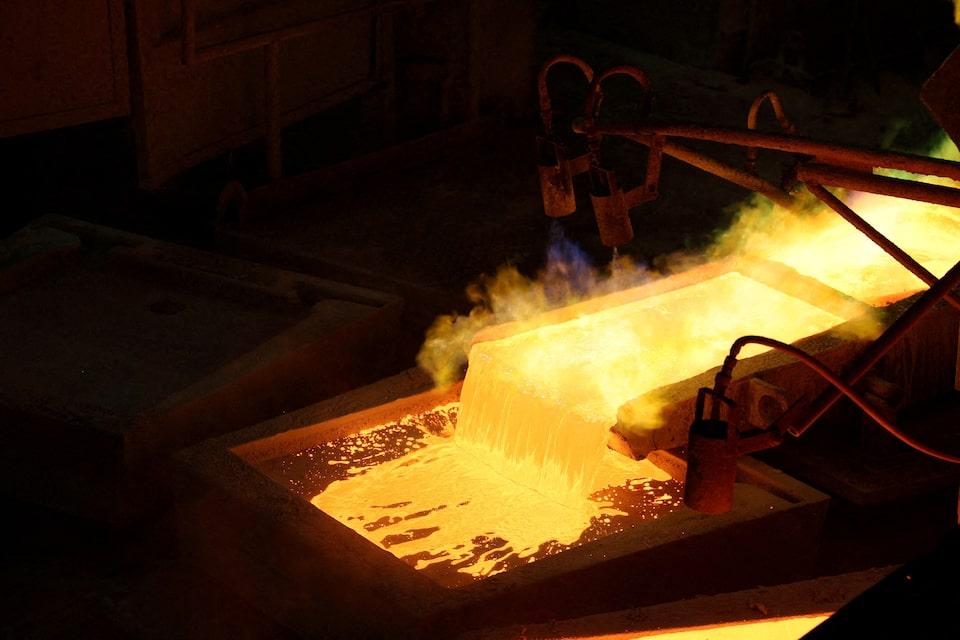
July 30 (Reuters) - The National Restaurant Association said it was “extremely concerned” about the possibility of new tariffs in a letter sent to U.S. Trade Representative Jamieson Greer on Tuesday. Trump earlier in July threatened to impose 30% tariffs on imports from Mexico and the European Union starting on August 1. Sign up here. The letter said that a 30% tariff on food and beverage products from Mexico and Canada would cost U.S. restaurants $15.16 billion after one year. It urged existing exemptions to continue for USMCA-compliant goods, and said disruptions to restaurants’ “razor-thin margins” would ultimately lead to consumers facing higher menu prices. The letter also said tariffs on Brazil or the European Union would pose “significant challenges” to the restaurant supply chain for goods like coffee, beef, and European food, wine and spirits. Executives at several large U.S. restaurant chains have said in earnings calls that they do not expect significant impacts from tariffs. Yum Brands (YUM.N) , opens new tab , the parent company of KFC and Taco Bell, has “minimal” risk from tariffs, its Chief Financial Officer Christopher Turner said in an earnings call at the end of April. Restaurant Brands International (QSR.TO) , opens new tab , the parent company of Burger King, sources the “vast majority” of its goods within local countries, according to Chief Financial Officer Sami Sidiqqui. The National Restaurant Association, which represents more than 500,000 U.S. restaurants, earlier this year lobbied on trade policies to U.S. congressional representatives, senators, the U.S. Trade Representative, and the U.S. Department of Commerce, according to lobbying reports filed last week. The letter sent Tuesday echoed one the organization sent in February to U.S. President Donald Trump that called for an exemption from tariffs on food and beverage products. https://www.reuters.com/business/national-restaurant-association-lobbies-against-us-tariffs-2025-07-30/

2025-07-30 21:16
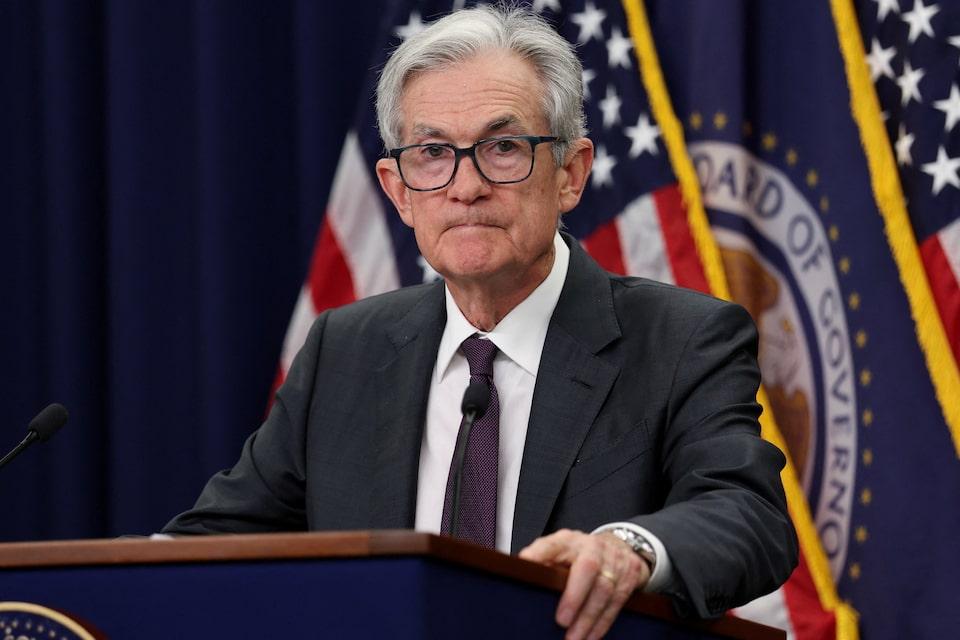
ORLANDO, Florida, July 30 (Reuters) - The dollar and U.S. bond yields rose while Wall Street mostly fell in an eventful session on Wednesday, as investors digested U.S. and euro zone GDP figures, new tariffs from the White House, and Fed Chair Jerome Powell's press conference after the central bank left interest rates on hold. More on all that below. In my column today I look at why Brazil may be holding the world's worst hand in the game of trade negotiation poker with the Trump administration. And it's due to politics, not economics. Sign up here. If you have more time to read, here are a few articles I recommend to help you make sense of what happened in markets today. Today's Key Market Moves Powell in no rush to cut Surprisingly strong U.S. growth figures and Federal Reserve Chair Jerome Powell's press conference were the chunkiest plenty else to feast on for investors on Wednesday, but they had plenty other morsels to chew on too. Investors had upbeat euro zone growth figures, a rate decision from Canada, and new U.S. tariffs on India, Brazil and copper imports on their plate, and if that wasn't enough, after-the-bell earnings from Meta and Microsoft for dessert. The overarching message that investors took from Powell's press conference after the Fed left its Fed Funds target range at 4.25-4.50% was this: The central bank is in no rush to cut rates, despite the rare dissent from two policymakers to do so. Powell said the labor market is strong and effectively at full employment, so that side of the Fed's dual mandate is being met. But inflation is above target and the outlook remains cloudy due to the impact from tariffs, so the inflation side of the dual mandate is not being met. Taken together, policy is rightfully "modestly" restrictive. Markets reacted accordingly - rates traders slashed their expectations of a rate cut in September, and are now only fully pricing in a cut by December. The dollar and yields extended their gains, and Wall Street erased its gains. The most dramatic market reaction was in FX. The Dollar Index leaped 1% to a two-month high and is on track for its best week in three years. On the flip side, the euro is down more than 2% since Monday and on track for its biggest fall in three years. On the economy, Powell said the first estimate of Q2 GDP was broadly as policymakers had anticipated. The U.S. economy expanded at a 3.0% annualized rate in the second quarter, faster than the consensus forecast of 2.4%. On the face of it, this looks nothing but bullish. But that was skewed by a record rebound in net trade, which followed a record negative contribution from net exports in the first quarter. Private domestic final purchases, a gauge of underlying demand, rose at its slowest pace since 2022. In effect, headline growth is masking weaker underlying data. Most economists agree that the highest tariff rates since the 1930s will likely hurt the U.S. economy to some degree at some point. But right now, the pain appears just about manageable. Trump spat leaves Brazil holding world's worst tariff hand U.S. President Donald Trump has tempered his most belligerent trade threats and begun striking deals with major partners, meaning most countries won't face the punishing tariffs announced on 'Liberation Day'. Not so with Brazil. In fact, Brazil's trajectory has gone in the opposite direction. On April 2, Brazil faced the minimum 10% tariff rate, but if a deal is not reached by the end of this week, South America's largest economy is staring at a whopping 50% levy. That's significantly higher than the 15% rates negotiated in both the U.S.-Japan and U.S.-European Union deals. Setting aside China, the 50% charge would match the highest levy applied to any country in the Liberation Day tariff program. And, importantly, the impasse is rooted in politics, not economics. Brazil is one of the few major economies with which the United States runs a trade surplus. Indeed, it has done so every year since 2007, with last year's goods surplus clocking in at $6.8 billion on a total trade volume of $91.5 billion, U.S. Census Bureau figures show. Trump has tied the 50% tariffs to judicial moves in Brazil against former right-wing president and ideological ally Jair Bolsonaro, who has been accused of plotting a coup following the storming of government buildings by his supporters after the election victory of leftist President Luiz Inacio Lula da Silva. "LEAVE BOLSONARO ALONE!" Trump wrote on social media earlier this month. Diplomatic relations are frosty right now, and between Trump and Lula they are downright icy. The prospect of them thawing by the end of this week is negligible. "Trade deals are a result of negotiations, but there is no dialogue if the U.S. doesn't respond to our letters. I'm worried," said one Brazilian government official. THE TARIFF TOLL Brazilian industry lobby, the CNI, estimates that the imposition of 50% U.S. import tariffs could result in the loss of over 100,000 jobs and knock off 0.2 percentage points from Brazil's annual economic growth. Brazil's agribusiness lobby, CNA, warns exports to the U.S. – the country's second-largest trading partner - could fall by half. And this is an especially delicate juncture for Brazil. Foreign exchange flows have turned negative in June and July, and this year's rally of Brazil's currency, the real, has stalled. On top of this, foreign direct investment has slowed in recent months. That is a dangerous development because Brazil's current account deficit of 3.4% of GDP in the 12 months through June was more than double the deficit a year earlier. At current rates, FDI inflows will no longer cover that gap. REAL RATES Given this backdrop, Brazil's central bank now finds itself in a bind. Inflation has risen over the last year to eclipse 5%, putting it above the central bank's upper-band limit of 4.5% for six consecutive months. In response, the central bank has hiked the benchmark Selic interest rate to a two-decade high of 15%. The central bank is expected to leave the Selic at 15% on Wednesday, and is unlikely to have the wiggle room to cut for several months. High interest rates are needed to get inflation back in its box, attract deficit-plugging inflows from abroad, and support the real. But the domestic economic price is high. Inflation-adjusted interest rates in Brazil are now around 10%, the highest in the G20 – topping even those of Russia and Turkey – and among the most restrictive real policy rates in the world. High borrowing costs are, unsurprisingly, slowing credit growth in Brazil, and in June a broad measure of default rates on consumer and business loans rose to its highest level since February 2018. What's more, sizeable interest payments are the primary factor behind the ballooning public debt, because nearly half the country's debt is linked to the Selic rate. Federal public debt expanded by 567 billion reais ($101.53 billion) in the first half of this year, of which 393 billion reais was interest payments. Brazil's primary budget, excluding interest payments, is close to balance. But the government's interest bill is fast approaching 1 trillion reais a year, some 7% to 8% of GDP. This is set to help drive the country's gross debt-to-GDP ratio above 82% next year from 76% currently. For policymakers in Brasilia, detente with Washington can't come quickly enough. What could move markets tomorrow? Want to receive Trading Day in your inbox every weekday morning? Sign up for my newsletter here. Opinions expressed are those of the author. They do not reflect the views of Reuters News, which, under the Trust Principles , opens new tab, is committed to integrity, independence, and freedom from bias. https://www.reuters.com/world/china/global-markets-trading-day-2025-07-30/
2025-07-30 21:10
July 30 (Reuters) - Global freight forwarder C.H. Robinson (CHRW.O) , opens new tab reported second-quarter profit above Wall Street estimates on Wednesday, as cost-cutting measures, including job reductions, helped cushion the impact of falling revenue in its truckload and ocean shipping businesses. The Minnesota-based company reported adjusted income of $1.29 per share for the quarter ended June 30, compared with analysts' average estimate of $1.16, according to data compiled by LSEG. Sign up here. Total direct expenses fell 9.2% in the quarter, driven by cost-saving initiatives and the divestiture of its European surface transport business. The company's workforce shrank by 1,616 positions, or 11.2% year-on-year, to 12,858 employees. Revenue declined 7.7% to $4.14 billion, missing expectations of $4.17 billion largely due to lower pricing in ocean services and reduced fuel surcharges in truckload operations. C.H. Robinson’s ocean segment focuses on managing freight costs and optimizing shipping routes, while its North American surface transportation division — one of the largest freight brokerage operations in the U.S. — connects shippers with carriers across the continent. Shares of the company rose more than 2% in after-hours trading. They have fallen close to 6% since the start of the year. https://www.reuters.com/markets/commodities/ch-robinson-beats-q2-profit-estimates-cost-cuts-offset-weak-revenue-2025-07-30/

2025-07-30 21:03
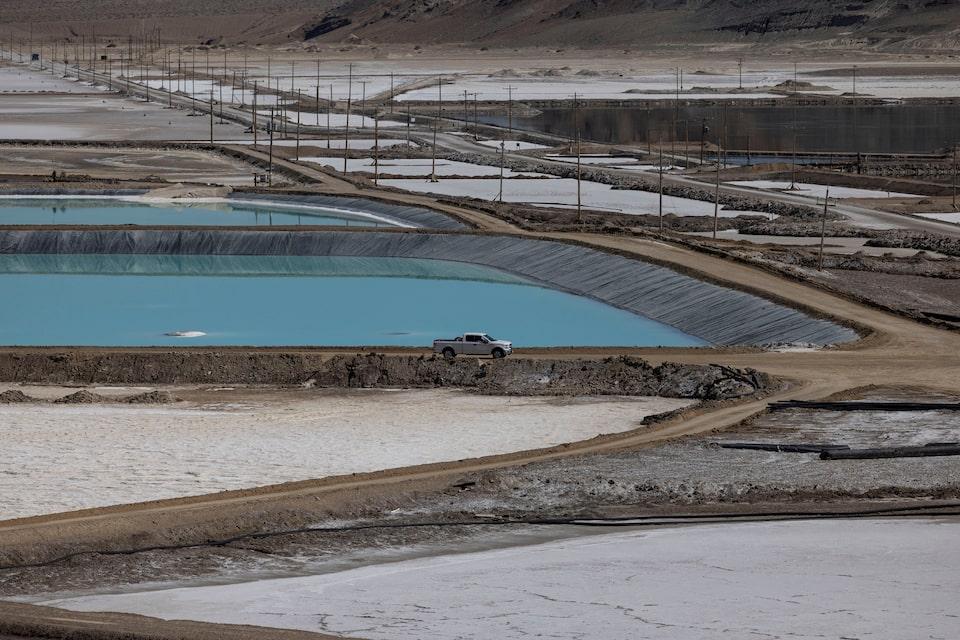
Albemarle beats Q2 revenue expectations, helped by volume growth Lowers 2025 capital expenditure plan Expects to generate positive free cash flow in 2025 July 30 (Reuters) - Albemarle (ALB.N) , opens new tab, the world's largest producer of lithium for rechargeable batteries, posted a surprise second-quarter profit on Wednesday, helped by sustained demand for the metal, sending its shares up over 6% after the bell. Lithium's use in electric vehicles, large-scale battery storage and other electronic applications has grown rapidly, with demand up 24% last year and likely to grow 12% annually for the next decade, according to data from consultancy Fastmarkets. Sign up here. Albemarle said its net sales came in at $1.33 billion during the quarter, 7% lower than last year but still above analysts' expectations of $1.22 billion, according to data compiled by LSEG. Its revenue fell year-over-year as a result of lower pricing, which was offset by volume growth in its energy storage and specialties business segments. Lithium prices have fallen more than 90% in the past two years due in part to oversupply in China, fueling layoffs, corporate buyouts and project delays across the globe. To weather the pricing glut, Albemarle has taken measures such as job cuts and cancelling expansion projects - including a key U.S. lithium refinery. Earlier this year, Albemarle launched a "comprehensive review of its cost and operating structure," which is expected to be completed by October. The company on Wednesday lowered its annual capital expenditure plan to be in the range of $650 million to $750 million, compared with its prior view of $700 million to $800 million. Albemarle's cash from operations rose to $538 million during the first half of the year and it now expects to generate positive free cash flow (FCF) in 2025. Scotiabank analyst Ben Isaacson said that while the market would respond favorably to the FCF outlook, there could be downward revisions to the 2026 forecast as Albemarle's long-term agreements begin to expire. The Charlotte, North Carolina-based company reported quarterly adjusted profit of 11 cents per share, compared with expectations of a loss of 82 cents per share. https://www.reuters.com/business/energy/albemarle-posts-surprise-second-quarter-profit-lithium-demand-shares-surge-2025-07-30/
2025-07-30 20:55
Copper markets had expected tariffs to be wider-ranging U.S. copper prices drop over 17% on Comex Tariff benefits Chile, Peru as major copper suppliers Copper markets had expected tariffs to be wider-ranging July 30 (Reuters) - The United States will impose a 50% tariff on copper pipes and wiring, President Donald Trump said on Wednesday, but details of the levy fell short of the sweeping restrictions expected and left out copper input materials such as ores, concentrates and cathodes. The surprise move dragged down U.S. copper prices more than 17% on the Comex exchange and unwound a premium over the London global benchmark that had grown in recent weeks, with shipments diverted there in anticipation of higher domestic prices. Sign up here. "Markets are now busily repricing refined copper much lower after Trump's epic backflip on his own import tariff policy," said Tom Price, an analyst at the London brokerage Panmure Liberum. "Someone must have finally got through to (Trump) that the U.S. economy simply can't afford this new trade-hit." Freeport-McMoRan(FCX.N) , opens new tab is likely to be among the most harmed by the trimmed tariff, according to RBC Capital Markets, with Hudbay Minerals (HBM.TO) , opens new tab, Arizona Sonoran (ASCU.TO) , opens new tab and others developing mines in the country also affected. Trump first teased the tariff in early July, implying that it would apply to all types of the red metal, ranging from cathodes produced by mines and smelters to wiring and other finished products. Yet in a proclamation released by the White House, the administration said the tariff will apply starting this Friday only to pipes, tubes and other semi-finished copper products, as well as products that copper is heavily used to manufacture, including cable and electrical components. The move aids manufacturers, but does little to boost the constrained U.S. copper mining industry, which for years has asked Washington for permitting reform or other steps that could fuel growth. "Copper is being imported into the United States in such quantities and under such circumstances as to threaten to impair the national security of the United States," Trump said in his proclamation. The tariffs will exclude copper scrap and copper concentrates, mattes, cathodes and anodes, some of the main products of copper mines and smelters. The move is essentially a boost for Chile and Peru, two of the world's largest copper miners and major suppliers to the United States. The tariff details sparked a "massive market surprise," said Natalie Scott-Gray, senior metals analyst at the consultancy group StoneX, adding that she expects U.S. copper prices to fall further. Anant Jatia, founder and chief investment officer at Greenland Investment Management, a hedge fund specializing in commodity arbitrage trading, told Reuters he expects London copper prices to surpass U.S. prices in the short term as American inventories build. MORE POSSIBLE The measure came after a U.S. investigation under Section 232, which Trump ordered in February. The report was delivered to the White House on June 30 by Commerce Secretary Howard Lutnick, according to the proclamation. Trump said he may still impose further tariffs, and has asked Lutnick to provide an update on the domestic copper market by June 2026. At that point, Trump will evaluate whether to impose a phased universal import duty on refined copper of 15% starting in 2027, and of 30% starting in 2028, he said. Along with tariffs, the order calls for steps to support the domestic copper industry, including requiring 25% of high-quality scrap produced in the U.S. to also be sold within the country. Freeport, the largest U.S. copper producer, said it would comment after it reviewed Trump's order in detail. Chile's Codelco, the world's biggest copper producer, praised the exclusion of cathodes as a positive for the company and for Chile, which is the top supplier of refined copper to the U.S. BHP (BHP.AX) , opens new tab, which operates the world's largest copper mine in Chile, and Antofagasta (ANTO.L) , opens new tab, which ships copper from Chile to the U.S. and wants to build a U.S. copper mine, did not immediately reply to requests for comment. https://www.reuters.com/business/trump-shocks-markets-with-scaled-back-copper-tariff-us-prices-plunge-2025-07-30/
2025-07-30 20:55
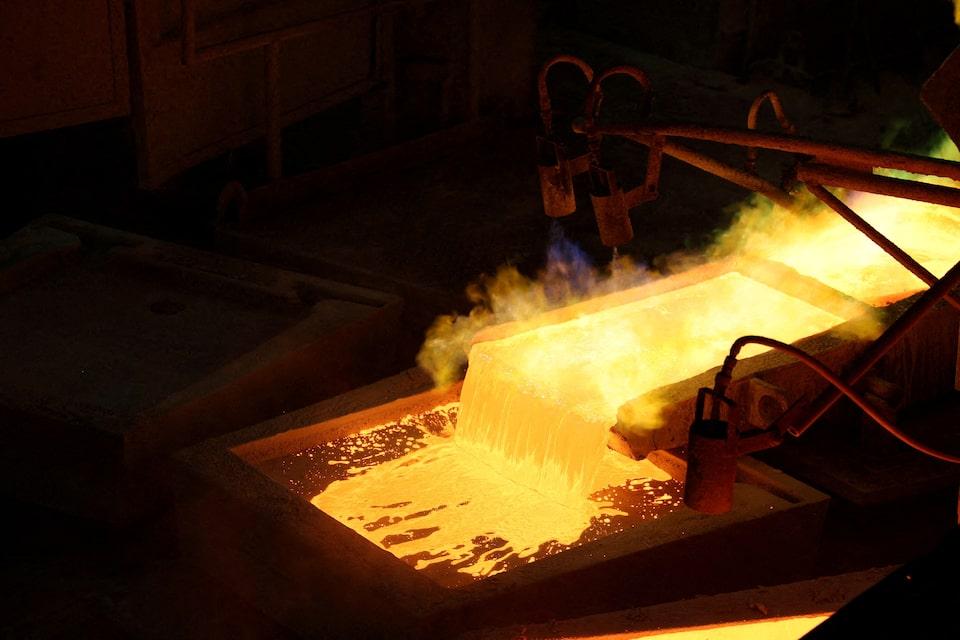
July 30 (Reuters) - The United States will impose a 50% tariff on copper pipes and wiring, President Donald Trump said on Wednesday, but details of the levy fell short of the sweeping restrictions expected and left out copper input materials such as ores, concentrates and cathodes. U.S. Comex copper futures plunged 19.5% after the announcement, quickly unwinding a premium over the London global benchmark that had grown in recent weeks as traders had assumed U.S. copper mines would see a financial benefit from the tariff. Sign up here. Trump first teased the tariff in early July, implying that it would apply to all types of the red metal, ranging from cathodes produced by mines and smelters to wiring and other finished products. Yet in a proclamation released by the White House, the administration said the tariff will apply only to semi-finished copper products and other products that copper is heavily used to manufacture, starting on Friday. "Copper is being imported into the United States in such quantities and under such circumstances as to threaten to impair the national security of the United States," Trump said in his proclamation. The tariffs will exclude copper scrap and copper concentrates, mattes, cathodes and anodes, some of the main products of copper mines and smelters. The move is essentially a boost to Chile and Peru, two of the world's largest copper miners. "The newly announced copper tariffs are far from universal tariffs that markets were concerned about," said Gracelin Baskaran, director of the critical minerals security program at the Center for Strategic and International Studies. "It's less punitive than markets initially expected." The measure came after a U.S. investigation under Section 232, which Trump ordered in February. The report was delivered to the White House on June 30 by Commerce Secretary Howard Lutnick, according to the proclamation. Trump said he may still impose further tariffs, and has asked Lutnick to provide an update on the domestic copper market by June 2026. At that point, Trump will evaluate whether to impose a phased universal import duty on refined copper of 15% starting in 2027, and of 30% starting in 2028, he said. Along with tariffs, the order calls for steps to support the domestic copper industry, including requiring 25% of high-quality scrap produced in the U.S. to also be sold within the country. Freeport-McMoRan (FCX.N) , opens new tab, the largest U.S. copper producer, said it would comment after it reviewed Trump's order in detail. Chile's Codelco, the world's biggest copper producer, praised the exclusion of cathodes as a positive for the company and for Chile, which is the top supplier of refined copper to the U.S. BHP (BHP.AX) , opens new tab, which operates the world's largest copper mine in Chile, and Antofagasta (ANTO.L) , opens new tab, which ships copper from Chile to the U.S. and wants to build a U.S. copper mine, did not immediately reply to requests for comment. https://www.reuters.com/business/trump-imposes-scaled-back-copper-tariff-us-prices-plunge-2025-07-30/