2025-07-30 10:33
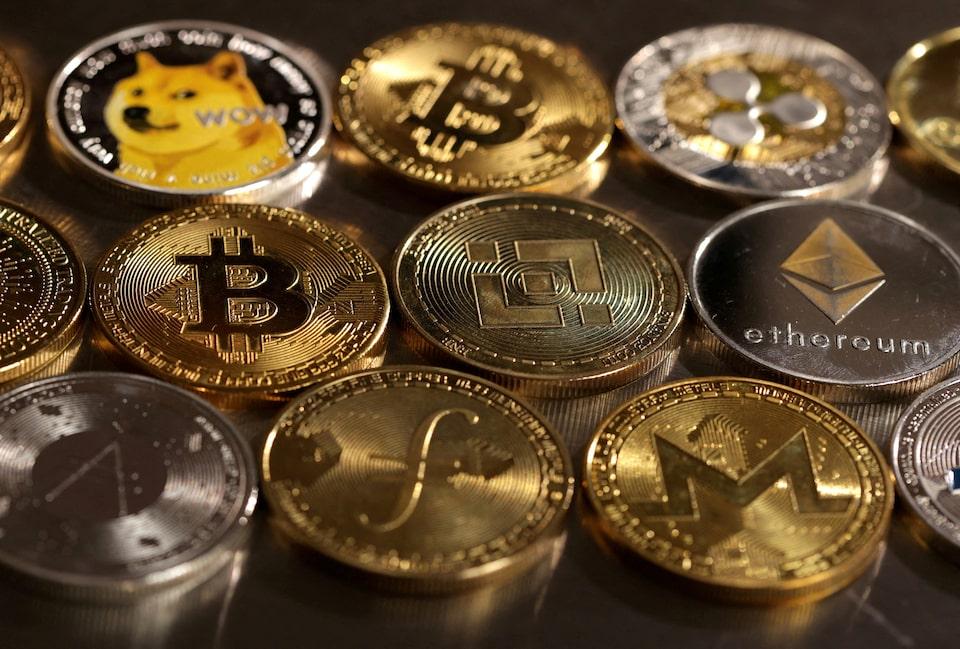
Crypto report to outline administration's views on tokenization Report will lay out regulatory, legislative proposals Trump courted cash from crypto industry on the campaign trail July 30 (Reuters) - A cryptocurrency working group formed by President Donald Trump is set to release a report on Wednesday that is expected to outline the administration's stances on tokenization and market-defining crypto legislation, among other issues critically important to the digital asset industry. Shortly after taking office in January, Trump ordered the creation of a crypto working group tasked with proposing new regulations, making good on his campaign promise to overhaul U.S. crypto policy. Sign up here. Wednesday's report is a culmination of the task force's work so far and its first public findings. In line with Trump's January executive order, it will lay out what rules and laws should be enacted to advance the policy goals of the pro-crypto White House. Those include making sure that the Securities and Exchange Commission has a framework in place for firms to offer blockchain-based stocks and bonds, according to one person familiar with the discussions. The report is also expected to discuss the administration's wish list for legislation Congress is currently debating to create broad regulatory guidelines for cryptocurrency, according to a second person familiar with the report. The working group led by Trump official Bo Hines is composed of several administration officials including Treasury Secretary Scott Bessent, SEC Chair Paul Atkins and Director of the Office of Management and Budget Russell Vought. The White House, Treasury Department and the SEC did not immediately respond to requests for comment on the report. "While there have been regulatory regimes in place that have maybe been piecemeal or have allowed the industry to grow in certain ways, the recommendations that we expect to see in the report will be a good roadmap for how to build out crypto as a continued important part of the economy going forward," said Rebecca Rettig, chief legal officer at crypto firm Jito Labs. On the campaign trail, Trump courted crypto cash by pledging to be a "crypto president" and promote the adoption of digital assets. That is in stark contrast to former President Joe Biden's regulators which, in a bid to protect Americans from fraud and money laundering, cracked down on the industry. The Biden administration sued exchanges Coinbase COIN.O, Binance and dozens more, alleging they were flouting U.S. laws. Trump's SEC has since dropped those cases. TOKENIZATION, STABLECOINS, MARKET STRUCTURE Industry participants will be looking closely at what the report says about tokenization, the process of turning financial assets - such as bank deposits, stocks, bonds, funds and even real estate - into crypto assets. Crypto firms and others have been increasingly discussing the prospect of tokenizing securities as a new way to facilitate trading. Coinbase recently told Reuters it was seeking a U.S. green light from the SEC to offer blockchain-based stocks. The SEC has yet to weigh in publicly on that request. Wednesday's report is expected to recognize the need for the SEC to develop a framework for tokenization, according to a source familiar with the discussions, but the details of the language were not immediately clear. The report will also lay out what the White House would like to see from market structure legislation working its way through Congress, according to a separate person with knowledge of the report. The House of Representatives passed a bill called the Clarity Act earlier this month that would create a formal regulatory regime for crypto, and the U.S. Senate is considering its own version of the measure. Earlier this month, Trump signed into law a bill to create federal rules for stablecoins, a type of cryptocurrency pegged to the U.S. dollar. That move was hailed as a major win for the digital asset industry, and the White House has said it wants Congress to pass market structure legislation next, which would have far wider repercussions for the industry. The crypto sector has for years argued that existing U.S. regulations are inappropriate for cryptocurrencies and has called for Congress and regulators to write new ones that clarify when a crypto token is a security, commodity or falls into another category, like stablecoins. The president's support for the crypto industry has sparked conflict-of-interest concerns, which at times have threatened to derail congressional crypto legislation. Trump's family has launched cryptocurrency meme coins, and the president also holds a stake in World Liberty Financial, a crypto platform. The White House has denied that any conflicts of interest are present. https://www.reuters.com/legal/government/white-house-set-unveil-closely-watched-crypto-policy-report-2025-07-30/
2025-07-30 10:18
MUMBAI, July 30 (Reuters) - The Indian rupee posted its steepest one-day drop since May and hit a five-month low on Wednesday, hurt by worries over steep U.S. tariffs on Indian exports alongside dollar demand from foreign banks and importers. The rupee hit a low of 87.5125 against the U.S. dollar before closing at 87.42, down 0.7% on the day. Sign up here. Traders said that while the Reserve Bank of India likely stepped in to support the local currency, the intervention was not very aggressive. A 20%-25% tariff may be imposed on India's exports in the absence of a trade deal and as the Asian country holds off on offering fresh concessions ahead of Friday's deadline, Reuters reported on Tuesday. U.S. President Donald Trump said on Tuesday that a trade deal with India had not been finalised and higher tariffs were possible. Trump's tariff threats, the psychological impact of the rupee breaching the 87 mark, and urgency among importers to hedge before the August 1 deadline has weighed on the rupee, said Dilip Parmar, a foreign exchange analyst at HDFC Securities. If conditions remain the same, the rupee could fall below 88 in the coming weeks, Parmar said. The local unit had hit an all-time low of 87.95 in February. In addition to trade uncertainty, persistent foreign portfolio outflows have also been a pain point for the rupee. Overseas investors have net sold over $1.5 billion of local stocks in July. Caution among importers and the absence of inflows have kept the currency under pressure and that may persist in the near-term, a trader at a foreign bank said. Meanwhile, Asian currencies were trading mixed and the dollar index was little changed at 98.8 as investors await the Federal Reserve's policy decision later in the day. The Fed is widely expected to keep rates unchanged, with the focus on commentary from Chair Jerome Powell and whether the decision is unanimous. https://www.reuters.com/world/india/tariff-worries-trigger-rupees-steepest-fall-nearly-three-months-2025-07-30/

2025-07-30 10:01
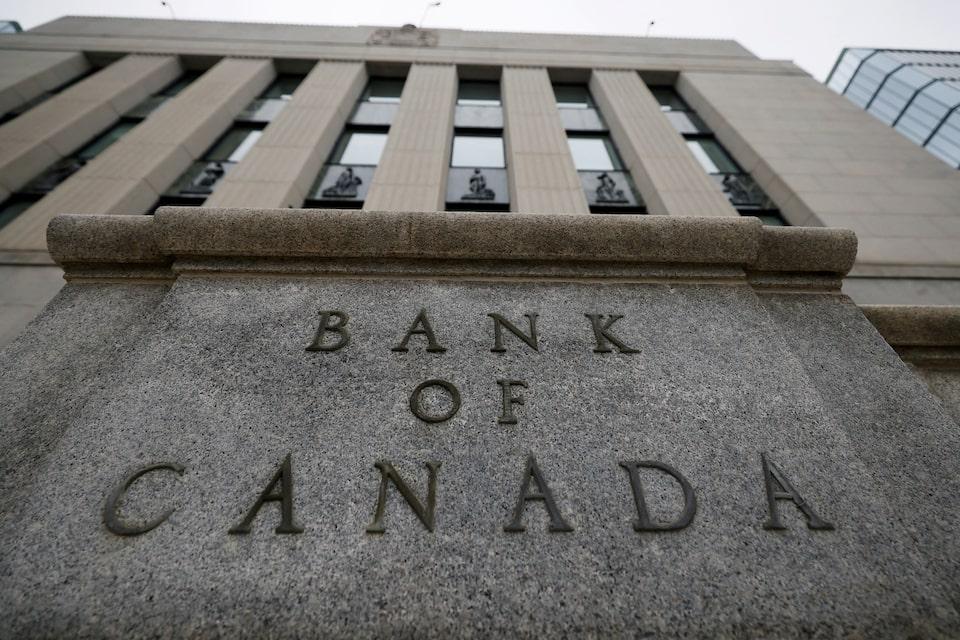
BoC likely to hold rates at 2.75% amid trade war impact Economists warn rate cuts could increase inflationary pressures BoC awaits US-Canada trade deal outcome before policy change OTTAWA, July 30 (Reuters) - The Bank of Canada will most likely keep rates on hold at 2.75% on Wednesday for the third time, reflecting a softer-than-expected impact of the trade war with the U.S. on the Canadian economy, which has kept the need for monetary stimulus at bay. Signs of inflationary pressures, especially of the measures that are closely tracked by the central bank, have also stirred concerns that further cuts could stoke price pressures, economists said. Sign up here. The BoC would also want to see the result of trade negotiations between Canada and the U.S. before changing its monetary policy stance, said Pedro Antunes, chief economist at Conference Board of Canada, an independent economic think tank. The United States has set an August 1 deadline to reach a trade deal with its northern neighbor. "The Bank of Canada doesn't want to necessarily push too hard on the accelerator," he said. The central bank needs some gunpowder after the trade deal, he added. The BoC started to ease interest rates aggressively in June 2024, cutting rates by 225 basis points to 2.75% in March. That is the so-called middle of its neutral rate range, when the monetary policy is not stimulating or restricting economic growth. Data in the last one month has shown that core inflationary pressures remain above 3%, the top end of its 1% to 3% inflation target range. The economy added 83,100 new jobs in June, signaling that tariffs imposed by the United States this year might not have had much of an impact so far. Money markets are betting the odds for a rate cut at barely 7% on Wednesday and a less than 100% chance of another cut through the year. A Reuters poll of 28 economists showed that the lack of clarity around tariffs, combined with recent data on inflation and jobs, will keep the BoC on the sidelines this week. The poll was conducted from July 21 to July 25. BoC Governor Tiff Macklem will announce the governing council's decision at 9:45 a.m. ET (1345 GMT) on Wednesday. The bank will also release its quarterly monetary policy report (MPR), which usually contains its forecasts for the economy and inflation. Doug Porter, chief economist at BMO Capital Markets, said that since the last monetary policy report, the economy has gradually moved closer to the first scenario projected by the bank, which presented an optimistic outlook for tariffs and the economy. The second, worse-case scenario assumed high tariffs and a global recession as a result. "The range of possibilities has narrowed. So I'm anticipating that the bank will have a single forecast," he said. https://www.reuters.com/world/americas/bank-canada-seen-holding-rates-steady-third-time-row-2025-07-30/
2025-07-30 09:27
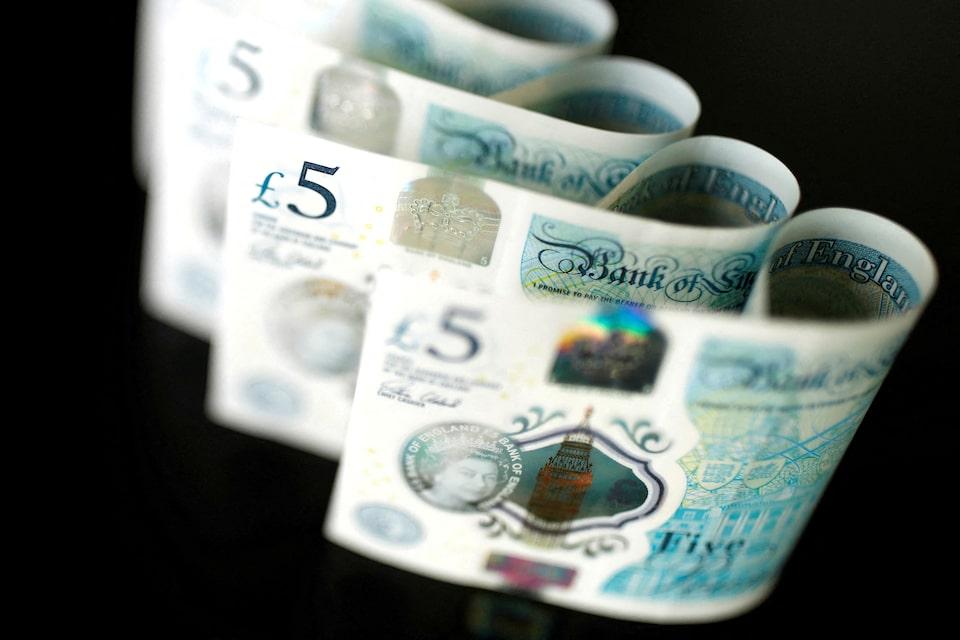
July 30 (Reuters) - Sterling was marginally higher on Wednesday as investors awaited the outcome of the Federal Reserve's policy meeting, after digesting news this week of a trade deal between the United States and the European Union. The greenback edged lower as investors shifted their focus to the Federal Open Market Committee meeting later in the session and upcoming economic data. Sign up here. The pound was up 0.15% to $1.3374 , after hitting $1.33079 on Tuesday, its lowest level since May 19. The euro was down 0.12% at 86.38 pence per pound , its lowest since July 11. On Monday, it hit 87.69 pence - its highest level in over two years - before falling 0.78% in its largest one-day drop since April. Investors are divided on sterling, partly due to disagreement on whether the Bank of England will step up the pace of its rate cuts later this year. Inflation in Britain has proven sticky, meaning policymakers could be unwilling to ease monetary policy, but soft economic data has not yet definitively answered that question. “The rapid deterioration in the economy puts the Bank of England in a quandary, and begs the question as to whether the Monetary Policy Committee will prioritise propping up growth and the jobs market, or maintaining price stability,” said Enrique Diaz-Alvarez, chief economist at Ebury. “Sterling may instead be driven by expectations for next week’s Bank of England meeting,” he added, noting that this week offers limited macroeconomic news aside from some second-tier housing data due on Friday. Last week’s economic figures showed the British economy was struggling to grow, while retail sales grew less than expected. Britain's economy will keep the BoE on course to cut rates in August and November despite inflation remaining above target, according to most economists polled by Reuters. Money markets priced in nearly two 25-basis-point rate cuts by year-end, and a cumulative 80 basis points by December 2026. https://www.reuters.com/world/uk/sterling-edges-up-ahead-fed-investors-uncertain-about-boe-policy-path-2025-07-30/
2025-07-30 08:41
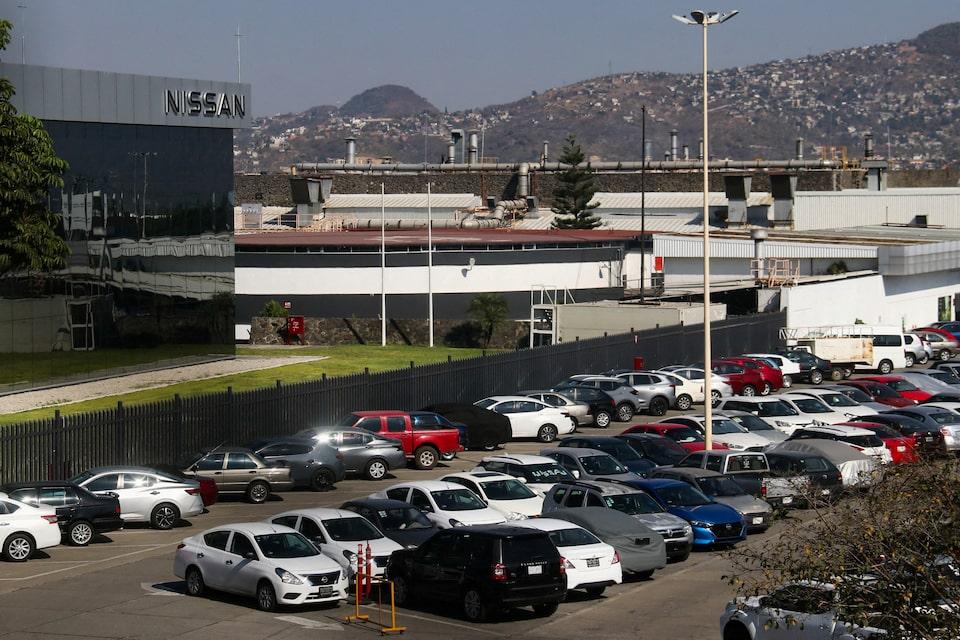
YOKOHAMA, Japan, July 30 (Reuters) - Embattled automaker Nissan (7201.T) , opens new tab reported a $535-million quarterly loss on Wednesday, hit by U.S. tariffs, restructuring and lower sales volumes and said it would stop production at a plant in Mexico. Japan's third-largest automaker is in the midst of a sweeping turnaround plan and has pledged to close some seven plants globally and lay off 15% of its workforce. Sign up here. Nissan reported an operating loss of 79.1 billion yen ($535 million) for the quarter from April to June, narrower than an average estimate for a loss of 123.9 billion yen in an LSEG survey of five analysts. The result compared to a company forecast for a loss of 200 billion yen when it reported results for the previous financial year in May. "We're still in the early stages of our recovery," CEO Ivan Espinosa told a press conference after the results release, adding that the automaker was making progress in cutting costs. In a statement, Nissan said it would stop output at its Civac plant in Mexico by March 2026 in its global restructuring plan, integrating vehicle production from that plant to its Aguascalientes complex during the current financial year. The news comes after Nissan said this month it would stop producing cars at two domestic sites, namely its Oppama plant, by March 2028, and Nissan Shatai's (7222.T) , opens new tab Shonan factory, by March 2027. The automaker first started operations at the Civac plant in 1966 in its initial expansion outside Japan. It has turned out more than 6.5 million vehicles so far, Nissan said. The automaker's drastic restructuring effort aims to slash costs and restore profitability and performance in key markets such as the United States and China. The plan includes slashing global production capacity to 2.5 million vehicles from 3.5 million and manufacturing sites to 10 from 17. https://www.reuters.com/business/autos-transportation/nissan-takes-535-million-quarterly-hit-tariffs-bite-2025-07-30/
2025-07-30 07:51
8.8 magnitude quake hits near city of Petropavlovsk-Kamchatsky Tsunami of 3-5 metres recorded in Kamchatka Peninsula Warnings for Japan, Hawaii, US West Coast and other Pacific nations Largest quake in region since 1952, Russian science academy says July 30 (Reuters) - A powerful magnitude 8.8 earthquake off Russia's Far Eastern Kamchatka Peninsula triggered tsunami waves of up to 5 metres (16 feet) and sparked evacuation orders in Hawaii and across the Pacific on Wednesday. The shallow earthquake damaged buildings and injured several people in the remote Russian region, while much of Japan's eastern seaboard - devastated by a 9.0 magnitude earthquake and tsunami in 2011 - was ordered to evacuate. Sign up here. A resident in the city of Petropavlovsk-Kamchatsky said the shaking rumbled for several minutes. "I decided to leave the building," said Yaroslav, 25. "It felt like the walls could collapse any moment. The shaking lasted continuously for at least 3 minutes.” Tsunami waves struck parts of Kamchatka, partially flooding the port and a fish processing plant in the town of Severo-Kurilsk and sweeping vessels from their moorings, regional officials and Russia's emergency ministry said. "Today's earthquake was serious and the strongest in decades of tremors," Kamchatka Governor Vladimir Solodov said in a video posted on the Telegram messaging app. Russian scientists said it was the most powerful quake to hit the region since 1952. In Hawaii, coastal residents were told to get to high ground or the fourth floor or above of buildings, and the U.S. Coast Guard ordered ships out of harbours as the tsunami approached. "Take Action! Destructive tsunami waves expected," the Honolulu Department of Emergency Management said on X. Shortly after 0730 GMT, the Pacific Tsunami Warning Center said waves of up to 1.7 metres (5.5 feet) were impacting the Hawaiian islands. State Governor Josh Green had earlier said no waves of consequence had hit Hawaii but all flights in and out of Maui had been cancelled. WARNINGS ACROSS THE PACIFIC The U.S. Geological Survey said the earthquake was shallow at a depth of 19.3 km (12 miles), and centred 119 km (74 miles) east-southeast of Petropavlovsk-Kamchatsky, a city of 165,000. It revised the magnitude up from 8.0 earlier, and reported a series of strong aftershocks up to a magnitude of 6.9. Tsunami alarms sounded in coastal towns across Japan's Pacific coast and evacuation orders were issued for tens of thousands of people. Workers evacuated the stricken Fukushima nuclear plant, where a meltdown following the 2011 tsunami caused a radioactive disaster, operator TEPCO said. Footage on public broadcaster NHK showed scores of people on the northern island of Hokkaido on the roof of a building, sheltering under tents from the beating sun, as fishing boats left harbours to avoid potential damage from the incoming waves. Broadcaster Asahi TV reported a 58-year-old woman died when her car fell off a cliff while she was evacuating in central Japan's Mie prefecture. Automaker Nissan Motor (7201.T) , opens new tab suspended operations at certain domestic factories in Japan to ensure employee safety, Kyodo news agency reported. Three tsunami waves had been recorded in Japan, the largest of 1.3 metres (4.3 feet), officials said. Japan's Chief Cabinet Secretary Yoshimasa Hayashi said there were no injuries or damage reported so far, and no irregularities at any nuclear plants. Tsunami waves of between 1-3 metres (3-9 feet) can be fatal for people who are swept away, said NHK. They can also cause flooding and damage wooden buildings, with people at risk of being killed by large drifting objects, according to the Japan Lifesaving Association. The U.S. Tsunami Warning System also warned of "hazardous tsunami waves" spreading across the Pacific. Waves reaching more than 3 metres were possible along some coasts of Russia, the northern Hawaiian islands and Ecuador, while waves of 1-3 metres were possible in countries including Japan, Hawaii, Chile and the Solomon Islands, it said. "Due to a massive earthquake that occurred in the Pacific Ocean, a Tsunami Warning is in effect for those living in Hawaii," U.S. President Donald Trump said in a social media post. 'RING OF FIRE' Russia's Ministry for Emergency Services said on Telegram that a kindergarten was damaged but most buildings withstood the quake. No serious injuries or fatalities have been reported. Several people in Kamchatka sought medical assistance following the quake, Oleg Melnikov, regional health minister, told Russia’s TASS state news agency. In Severo-Kurilsk in the northern Kuril islands, south of Kamchatka, tsunami waves exceeded 3 metres, with the largest up to 5 metres, Russia's RIA news agency reported. Alexander Ovsyannikov, the town's mayor, said four tsunami waves had passed. He urged residents to assess damage to their homes and not to use gas stove heating until inspections had been carried out, in order to avoid a risk of carbon monoxide poisoning. Power to the Sakhalin region had been cut off due to damage to the electricity grid, RIA said, citing the regional governor. Kamchatka and Russia's Far East sit on the Pacific Ring of Fire, a geologically active region that is prone to earthquakes and volcanic eruptions. "However, due to certain characteristics of the epicentre, the shaking intensity was not as high ... as one might expect from such a magnitude," said Danila Chebrov, director of the Kamchatka Branch of the Geophysical Service, on Telegram. "Aftershocks are currently ongoing ... Their intensity will remain fairly high. However, stronger tremors are not expected in the near future. The situation is under control." https://www.reuters.com/business/environment/tsunami-waves-reach-hawaii-after-huge-quake-rattles-russias-far-east-2025-07-30/