2025-12-02 11:25
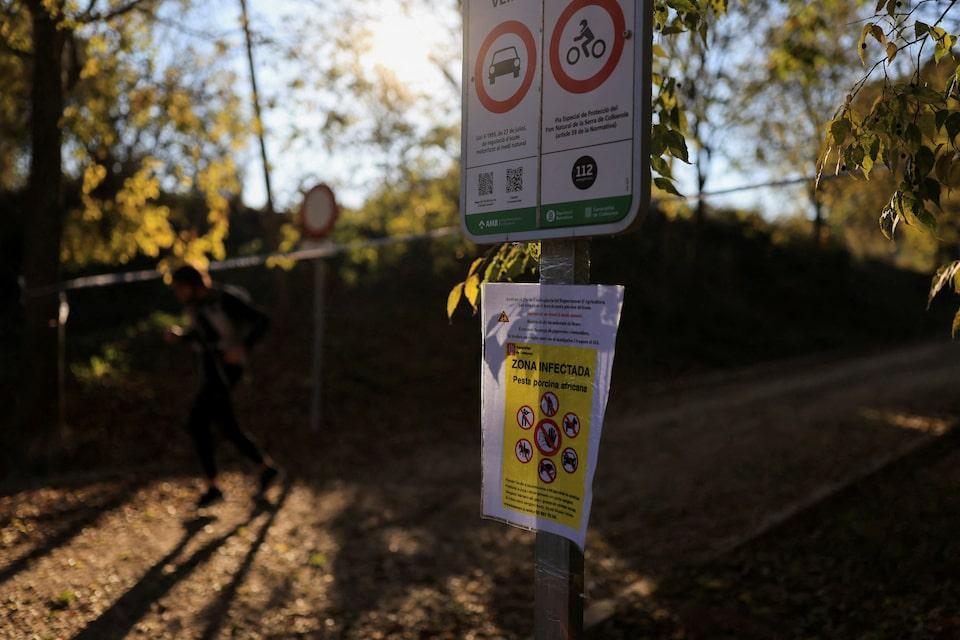
EU vets to survey, advise on Barcelona swine fever outbreak Spain resumes pork exports to China, urges others to follow ASF outbreak may boost US exports, says Steiner Consulting MADRID, Dec 2 (Reuters) - A taskforce of EU vets specialising in epidemics began work in Barcelona on Tuesday as Spain seeks to contain an African swine fever outbreak that has forced it to halt some pork exports. The experts in virology and risk management will visit a 6-km exclusion zone around the affected area in Bellaterra to survey the situation, provide advice and prepare a follow-report with recommendations, a European Commission spokesperson said. Sign up here. Spain is the EU's leading pork producer, accounting for a quarter of the bloc's output, ahead of Germany, with annual exports worth about 3.5 billion euros ($4.05 billion). It resumed shipments on Monday from other regions to China, which accounts for almost 42% of Spanish pork exports outside the EU, after Beijing confirmed it would only limit imports from the Barcelona area, in line with a recently-signed regionalisation agreement. But other countries including Britain, Mexico and Canada have suspended a wide range of pork and by-product shipments from across Spain. Prime Minister Pedro Sanchez urged them to continue buying from regions outside the containment zone. "It is very important to keep markets beyond Europe open for pork exports," Sanchez said in an interview on TVE. OUTBREAKS AROUND EUROPE The EU taskforce was most recently deployed in September to help monitor a swine fever outbreak in Estonia. Croatia is also trying to contain an outbreak, while Italy and Germany have recorded cases in recent years that have prompted the culling of pigs. "Biosecurity measures must be reinforced even more with three countries (Spain, Italy and Germany) around us now affected," said Anne Richard, director of French pork industry association Inaporc. Officials suspect the virus may have spread after a wild boar ate contaminated food, possibly a sandwich brought from outside Spain. The virus is harmless to humans, but spreads rapidly among pigs and wild boar, for whom it can be fatal. It was detected in two wild boar in a wooded, hilly area outside Barcelona and a further eight are being tested. The outbreak could allow U.S. farmers to export more. "With more EU countries finding ASF within their borders, U.S. producers have an opportunity to meet global demand," U.S. consultancy Steiner Consulting Group said. U.S. pork exports are expected to fall by 0.3% to 6.96 billion pounds in 2026, according to the U.S. Department of Agriculture. "If the recent outbreak in Spain is not contained, we would expect U.S. pork exports to once again surpass 7 billion pounds," Steiner Consulting said. https://www.reuters.com/sustainability/climate-energy/eu-epidemic-vets-begin-work-swine-fever-outbreak-barcelona-2025-12-02/
2025-12-02 11:23
LONDON, Dec 2 (Reuters) - Billionaire investor Cliff Asness's AQR Capital Management started the final month of the year with positive returns in several funds, a person familiar with the matter said on Tuesday. The $179 billion hedge fund finished November 0.4% largely flat in its multi-strategy fund, Apex Strategy. It had generated a 16.2% return from the start of the year to November 30, the source said. Sign up here. The fund posted a 3.1% return for the month in its AQR Delphi Long-Short Equity Strategy, bringing the overall performance to a positive 16.4% for the year. AQR's Managed Futures Full Volatility Strategy lost 0.4% for the month of November but is still up 19.2% year-to-date. The hedge fund's Helix Strategy, which follows trends in a diverse set of harder-to-access markets, returned 0.7% in November and is up 13.7% for the year to date. These annual returns surpass a wider collection of systematic hedge funds, whose algorithms ride market trends until they peter out. An index that tracks these kinds of trend funds is largely flat, up 0.31% for the year to November 28, according to Societe Generale's (SOGN.PA) , opens new tab indices. All returns listed were net of fees. https://www.reuters.com/business/finance/hedge-fund-aqr-heads-towards-year-end-with-double-digit-returns-source-says-2025-12-02/

2025-12-02 11:22
Audit reveals irregularities, leading to significant recovery New code to increase annual revenue by 586 billion CFA francs Barrick resolves dispute, migrates to new code BAMAKO, Dec 2 - Mali has recovered 761 billion CFA francs ($1.2 billion) in arrears from mining companies following a sweeping audit, its finance minister said, marking one of the country’s biggest clawbacks from its extractive sector. The military-led government launched an audit of Mali’s mining sector in early 2023 that uncovered massive shortfalls for the state and paved the way for a new mining code , opens new tab. Sign up here. That new mining law raised royalties, boosted state stakes in mining companies and scrapped stability clauses. A recovery commission was set up after an audit by firms Inventus and Mozar flagged financial irregularities and shortfalls for the state estimated at 300 to 600 billion CFA francs. The overhaul of the industry triggered a two-year dispute with Canadian miner Barrick Mining (ABX.TO) , opens new tab, Mali’s top gold producer, before a deal was struck in November. Economy and Finance Minister Alousséni Sanou, speaking on state television late on Monday, did not say if the recovered sum included Barrick’s recent 244 billion CFA francs deal. Other operators, including B2Gold (BTO.TO) , opens new tab, Allied Gold (AAUC.TO) , opens new tab, Resolute Mining (RSG.AX) , opens new tab, Endeavour Mining (EDV.L) , opens new tab, and lithium players like Ganfeng (002460.SZ) , opens new tab and Kodal (KOD.L) , opens new tab settled their arrears and migrated to the new regime earlier. “I am delighted with these results, among which we can mention the recovery of 761 billion CFA out of a target of 400 billion,” Sanou said during a ceremony presenting the audit report to President Assimi Goita. Sanou added that all mining companies will now operate under the 2023 code, which is expected to lift annual revenues by 586 billion CFA francs on audited firms alone, bringing their total contribution to about 1,022 billion CFA francs each year. Audit and legal costs amounted to 2.87 billion CFA francs, he said. Mamou Touré, a member of the renegotiation committee, said the goal was not only to recover funds but also to give the state a sizable stake in mining contracts. Mali, one of Africa’s top gold producers, relies heavily on mining for export earnings and fiscal revenues. The scrutiny to tighten oversight has squeezed growth, with industrial gold output falling 32% year-on-year to 26.2 metric tons by end-August. https://www.reuters.com/world/africa/mali-recovers-12-billion-arrears-miners-eyes-annual-windfall-under-new-code-2025-12-02/

2025-12-02 11:03
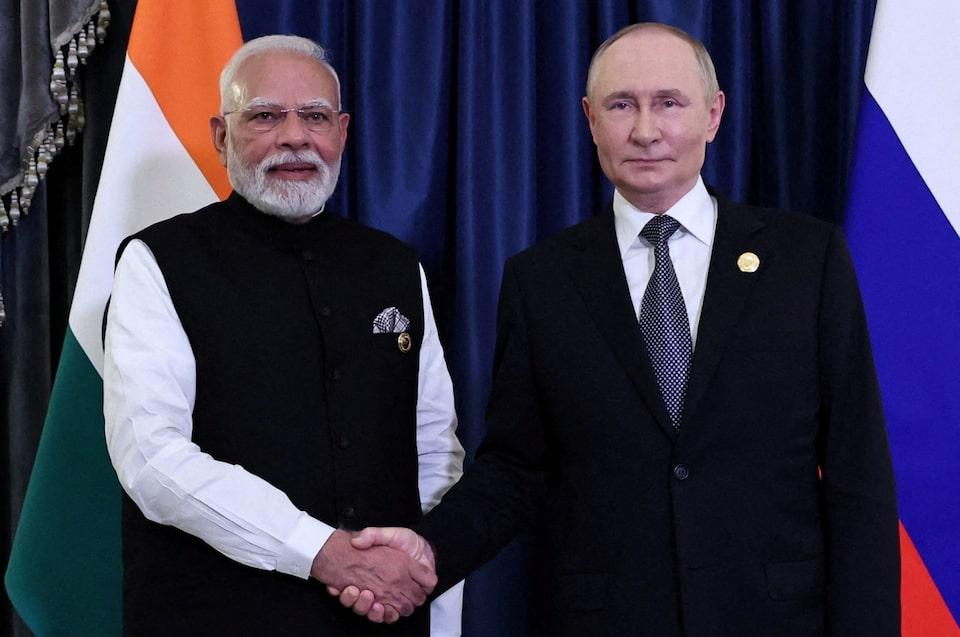
NEW DELHI, Dec 2 (Reuters) - Russian President Vladimir Putin will visit India this week for a summit with Prime Minister Narendra Modi aimed at boosting energy, defence and economic ties, as Moscow seeks to secure oil sales amid tightening Western sanctions. Moscow's energy exports are a key revenue source but international sanctions imposed after its 2022 invasion of Ukraine have begun to weigh on its oil sales. Sign up here. Here is some issues India and Russia likely to figure in talks: OIL PURCHASES Moscow wants India, its top client for seaborne oil, to maintain higher purchases after some Indian refiners stopped imports under sanctions pressure. Russia is the top oil supplier to India, the world's third biggest oil importer and consumer. However, India's crude imports are set to hit at least a three-year low this month as Washington tightened sanctions targeting Russia's top two oil producers, Rosneft (ROSN.MM) , opens new tab and Lukoil . Among state refiners, Indian Oil Corp (IOC.NS) , opens new tab is buying Russian oil from non-sanctioned entities, while Bharat Petroleum Corp is in advanced negotiations for orders. Russia-backed Indian refiner Nayara Energy, partly owned by Rosneft, is running exclusively on Russian oil after other suppliers pulled back. Russia wants India's support to boost Nayara's local fuel sales and capacity use. Russia's top Indian oil client, Reliance Industries Ltd (RELI.NS) , opens new tab, has said it will process Russian oil arriving after November 22 at its domestic-focused plant. UPSTREAM ASSETS India's Oil and Natural Gas Corp (ONGC.NS) , opens new tab seeks to retain its 20% stake in Russia's Sakhalin-1 oil and gas project in its far east. Indian companies - Oil India Ltd (OILI.NS) , opens new tab, Indian Oil Corp (IOC.NS) , opens new tab and Bharat PetroResources (BPCL.NS) , opens new tab, hold a 23.9% interest in JSC Vankorneft and a 29.9% stake in Tass Yuryakh Neftegazodobycha. ONGC Videsh, the overseas investment arm of ONGC, holds a 26% stake in JSC Vankorneft. Millions of dollars in dividends owed to Indian companies from these assets remain stuck in Russian banks. Oil India also holds a 50% stake in a block License 61 of Russia. NUCLEAR ASSETS India and Russia have a civil nuclear partnership to build six reactors, each of capacity 1,000 megawatts at Kudankulam in the southern state of Tamil Nadu. Two units of the project are operational, while four are being built. Russia will also supply fuel for the project. both countries have been discussing new sites to set up more Russian large reactors, as well as small modular reactors. DEFENCE TALKS Russian Sukhoi-30 jets make up the majority of India's 29 fighter squadrons and Moscow has also offered its most advanced fighter, the Su-57, which is likely to figure in this week's talks, two Indian officials familiar with the matter said. India is also likely to discuss buying more units of the Russian S-400 air defence system, Defence Secretary Rajesh Kumar Singh said last week. It now has three units, with delivery of two more pending under a 2018 deal. TRADE AND ECONOMIC LINKS India and Russia aim to boost two-way trade to $100-billion by 2030, after it rose more than five-fold from about $13 billion in 2021 to over $68 billion in 2024–25, driven by India's energy imports. It fell to to $28.25 billion in the period from April to August, because of lower oil prices, commerce ministry data showed. Both are working on an India–Eurasian Economic Union Free Trade Agreement to cut tariffs, ease non-tariff barriers and expand market access. RUPEE-ROUBLE TRADE & PAYMENT MECHANISMS India and Russia have expanded rupee-rouble settlements to shield trade from sanctions and cut reliance on third-party currencies. The Indian government and the Reserve Bank of India have eased these payments, and allowed investment of surplus rupee balances in assets including government securities. DIVERSIFICATION BEYOND TRADITIONAL SECTORS An industrial cooperation pact signed this year broadens India-Russia ties into areas such as aluminum, fertilisers, railways, mining technologies and rare earths. Both are working to boost connectivity through projects such as the International North–South Transport Corridor and the proposed Chennai–Vladivostok Sea route to speed trade with Central Asia and Europe. https://www.reuters.com/business/energy/india-russia-oil-defence-ties-2025-12-02/
2025-12-02 11:00
LONDON, Dec 2 (Reuters) - Changes OPEC+ is making to its oil production quota system will likely spark a wave of upstream investments among members, particularly in low-cost Gulf producers, diminishing concerns of long-term supply shortages. The Organization of the Petroleum Exporting Countries and other major producing nations, including Russia and Kazakhstan, collectively known as OPEC+, approved on Sunday a new mechanism to assess members' maximum production capacity, which will be used to set output baselines from 2027. Sign up here. This may seem a highly technical matter. But it could, in theory, mark a welcome change from recent years' turmoil that saw some members flagrantly exceed production quotas as OPEC de facto leader Saudi Arabia struggled to impose discipline, confounding the oil market. Saudi Energy Minister Prince Abdulaziz bin Salman said on Monday the new mechanism will help to stabilise markets and reward those who invest in production. OPEC+ accounts for nearly half of the world's oil supply of 106 million barrels per day in 2025, according to the International Energy Agency. First, it is important to understand the new Maximum Sustainable Capacity (MSC) mechanism. The capacity assessment will be done between January and September using a reputable U.S. auditor for 19 out of the 22 group members. It will involve a review of each country's oilfields and infrastructure to assess how much oil it can bring on stream within 90 days and maintain for one year. Among the three countries facing U.S. sanctions, Russia and Venezuela will use a non-U.S. auditor while Iran opted to set its baseline using an average production over the three months to October. Members' capacities will be approved in a November meeting, where OPEC+ will also agree on its 2027 output quotas, which will represent an equal percentage of capacity for each member. The MSC will be reviewed on an annual basis going forward. A WAVE OF GULF INVESTMENTS The system appears primed to spark a wave of investments among members wanting to increase their own production and revenue. It nevertheless favours wealthy members that have low development and production costs such as Saudi Arabia, the United Arab Emirates and Kuwait. Indeed, Gulf producers are already looking beyond near-term oversupply concerns and downplaying questions about future oil demand as the world shifts away from fossil fuels. The UAE targets growing its production capacity to 5 million bpd by 2027 from 4.85 million bpd today, though there is speculation it could increase its capacity to as much as 6 million bpd. Its investments suggest that may well be the case. Abu Dhabi's national oil company ADNOC said on November 24 it plans to invest $150 billion over the next five years to expand operations. It also increased the UAE’s conventional oil reserve base by 6% to 120 billion barrels following new discoveries. ADNOC further seeks to unlock so-called unconventional shale reserves, which it estimates contain 22 billion barrels of oil. Saudi Arabia, the world's top oil exporter, has a production capacity of 12 million bpd and by far the group’s largest spare capacity, which reached 2.2 million bpd in October, 60% of total OPEC+ spare capacity, according to the IEA. The country's national oil company Aramco (2222.SE) , opens new tab extracts oil at $2 per barrel, its CEO Amin Nasser recently said, among the lowest in the world. Aramco, whose capital expenditure is set to reach $52 billion to $55 billion this year, will bring two new fields on stream by year-end, adding 550,000 bpd of production capacity, it said in its third-quarter results. Kuwait and Iraq could also now seek to accelerate investment plans. Kuwait aims to increase capacity to 4 million bpd by 2035 from 2.9 million bpd today, based on IEA figures. Iraq is trying to attract foreign investors, including BP (BP.L) , opens new tab and Exxon Mobil (XOM.N) , opens new tab, to boost its production capacity by around 1 million bpd to 6 million bpd by 2028. SOME OPEC+ MEMBERS TO STRUGGLE The new system, however, puts members whose production is concentrated in more expensive geological structures or offshore, such as Nigeria and Kazakhstan, at a disadvantage as they will require more time and money in order to grow capacity. Russia, Venezuela and Iran may also struggle to increase investments and production capacity due to international sanctions that severely restrict supplies of vital drilling equipment and access to Western technologies. The new investments will nevertheless serve OPEC's intrinsic goal of growing its market share, in particular after losing ground in recent years as production in the U.S., Brazil, Canada and elsewhere soared. The spending will also ease growing concerns that the oil industry could face a supply crunch towards the end of the decade and beyond due to lower global spending and the slowdown in production in U.S. shale basins and elsewhere. THE SYSTEM STILL HAS WEAKNESSES The new capacity measurement system appears more equitable and transparent, offering members and external market participants a better understanding of OPEC+ policies. Yet it still has weak spots. For one thing, members will likely still be able to produce and export more than their stated quota, as some, including Kazakhstan and the UAE, appear to have done in recent years. Furthermore, some members will struggle to grow capacity and production due to sanctions and conflict, creating tensions with other countries that will be able to gain market share. But overall, OPEC+’s drive will encourage further investments in the oil market that could lead to increased supplies and keep prices relatively low. Want to receive my column in your inbox every Monday and Thursday, along with additional energy insights and links to trending stories? Sign up for my Power Up newsletter here. Enjoying this column? Check out Reuters Open Interest (ROI), , opens new tabyour essential new source for global financial commentary. ROI delivers thought-provoking, data-driven analysis. Markets are moving faster than ever. ROI , opens new tab can help you keep up. Follow ROI on LinkedIn , opens new tab and X. , opens new tab https://www.reuters.com/markets/commodities/energy/opec-spark-spending-race-with-new-oil-quota-system-2025-12-02/
2025-12-02 10:54
Amsterdam-based firm expects to launch in second half of 2026 BNP Paribas joins consortium with nine other banks Former NatWest chair Howard Davies to be chair PARIS/MADRID, Dec 2 (Reuters) - A group of 10 European banks, including ING (INGA.AS) , opens new tab, UniCredit (CRDI.MI) , opens new tab and BNP Paribas (BNPP.PA) , opens new tab, have formed a company to launch a euro-pegged stablecoin in the second half of 2026, in a move they hope will counter U.S. dominance in digital payments. The CEO of the Amsterdam-based company, named Qivalis, will be Jan-Oliver Sell, who was previously the CEO of crypto exchange Coinbase's German business, and has also worked for Binance. Former NatWest chair Howard Davies will be chair, the group said at a press conference in Amsterdam on Tuesday. Sign up here. The new company, which will have headquarters in Amsterdam, plans to hire 45 to 50 people in the next 18 to 24 months, Sell said, adding that they have a third of this number already. Banks are grappling with the fast-growing stablecoin industry and the wider growth of cryptocurrencies, which are seen by some lenders as potential direct competitors. That growth has put traditional lenders under pressure to find uses for blockchain technology within their own businesses. A host of top U.S. financial firms have been preparing to launch their own dollar-backed stablecoins after U.S. President Donald Trump signed a law establishing rules for stablecoins. DOLLAR-PEGGED STABLECOINS HAVE SURGED Stablecoins – a type of cryptocurrency designed to maintain a constant value and backed by traditional currencies - have grown sharply in recent years, driven by El Salvador-based company Tether, which has around $185 billion worth of its dollar-based token in circulation. There are few signs of demand for euro-pegged stablecoins. Societe Generale's crypto arm, SG-FORGE - which is not part of Qivalis - launched a euro-pegged stablecoin in 2023, but it has just 64 million euros ($74.27 million) worth of tokens in circulation. Qivalis said in a statement that the token will provide "near-instant, low-cost payments and settlements", although Davies said that the initial use-case will be in crypto trading. Sell said the name was chosen to convey trust, quality, and values, which were essential in finance and that it was easy to pronounce across languages. The company expects to launch its stablecoin at the beginning of the second half of 2026, with the licencing process taking six to nine months, Sell said. It is applying for an Electronic Money Institution (EMI) licence from the Dutch central bank. REGULATORY WORRIES Regulators worry that stablecoins could suck money flows out of the regulated banking system. ECB President Christine Lagarde has told European policymakers that privately issued stablecoins posed risks for monetary policy and financial stability. The ECB is also working on a digital euro of its own as a strategic alternative to private, U.S.-dominated means of payment such as credit cards and stablecoins. Floris Lugt, ING’s digital assets lead, who will become Qivalis’s CFO, said the group was in touch with the ECB, which was “very supportive” of the plan. “Our impression from them is that they are very supportive and that’s because one important policy objective is to achieve strategic autonomy in European payments and they are quite concerned about stablecoins, in particular U.S. dollar fintech-issued stablecoins and they prefer to have – is our impression – the European champions that they can support.” The banks involved in the project, first announced in September, were originally ING, UniCredit, Banca Sella (BSEL.HT) , opens new tab, KBC (KBC.BR) , opens new tab, DekaBank, Danske Bank (DANSKE.CO) , opens new tab, SEB (SEBa.ST) , opens new tab, Caixabank (CABK.MC) , opens new tab and Raiffeisen Bank International (RBIV.VI) , opens new tab. BNP Paribas has since joined the group, Lugt said on Tuesday. A separate group of ten banks, including Bank of America (BAC.N) , opens new tab, Deutsche Bank (DBKGn.DE) , opens new tab, Goldman Sachs (GS.N) , opens new tab and UBS (UBSG.S) , opens new tab, have also said that they are jointly exploring issuing a stablecoin. BNP Paribas is part of both groups. ($1 = 0.8617 euros) https://www.reuters.com/business/finance/group-european-banks-announce-euro-stablecoin-plans-2025-12-02/