2025-07-30 07:01
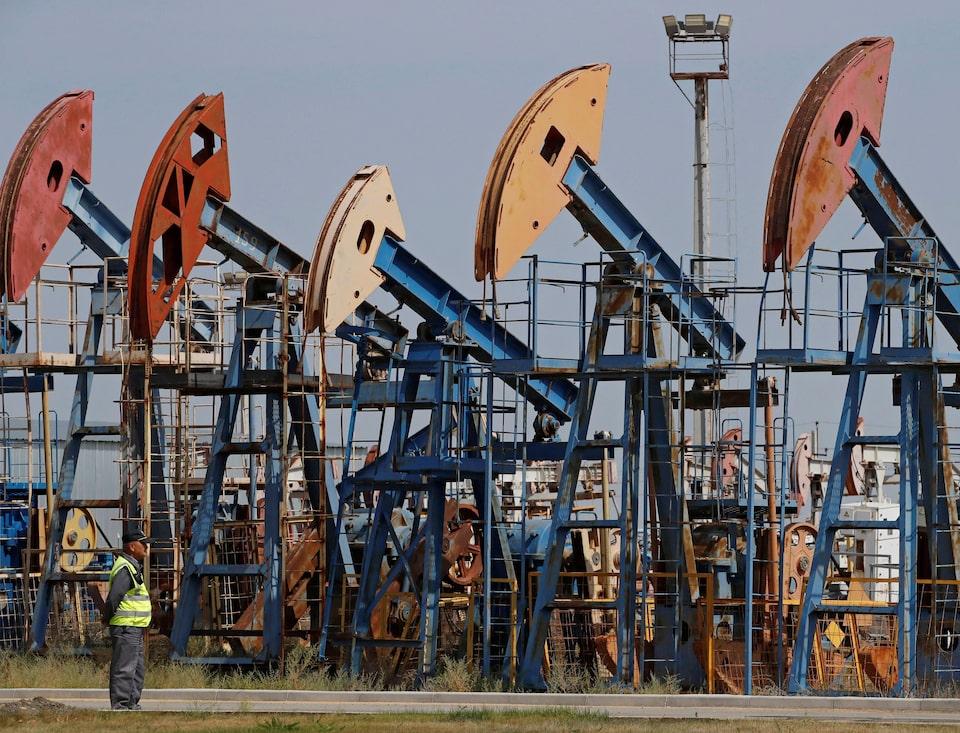
MOSCOW/ASTANA, July 30 (Reuters) - Talks between Kazakhstan's President Kassym-Jomart Tokayev and Turkish leader Tayyip Erdogan on Tuesday included a possible increase in Kazakh oil exports via the Baku-Tbilisi-Ceyhan (BTC) oil pipeline, the press service of the head of Kazakhstan reported. "The delegations discussed issues of cooperation in the energy sector, including prospects for increasing exports via the Baku-Tbilisi-Ceyhan oil pipeline," the statement said, without providing additional details. Sign up here. The agenda of Tokayev's visit to Turkey for a meeting of the two countries' high-level strategic cooperation council also included cooperation in power generation, agriculture and mining. Kazakhstan increased oil exports via BTC in the first half of 2025 by 12% compared to the same period last year to 785,000 tons (34,000 barrels per day), according to the state statistics. Oil is delivered to Baku by tankers via the Caspian Sea from the port of Aktau, which would need upgrading to increase export levels. Also, oil exports via BTC are limited by the quality requirements for Kazakh crude to join the pipeline. Kazakhstan in its development plan until 2029 considered the possibility of building a trans-Caspian oil pipeline and marine terminals on the Kazakh and Azerbaijani coasts of the Caspian Sea. Kazakhstan, whose main income comes from oil exports, is the world's biggest landlocked country, and the two main routes for exporting its oil to international markets pass through the Russia to its Black Sea and Baltic ports. Exports of Kazakh oil circumventing Russian ports made up just 5.9% of the total exported volume of 32.6 million tonnes in the first 6 months of 2025 and this share remained unchanged from 2024, according to state statistics. In 2022, President Tokayev called for an increase of oil exports bypassing Russia. Following this, Kazmunaigaz and Azerbaijan’s state oil company SOCAR concluded an agreement, envisaging the transport of 1.5 million tonnes of oil per year from the Tengiz oil field to the BTC. https://www.reuters.com/business/energy/kazakhstan-turkey-discussed-an-increase-oil-exports-via-btc-2025-07-30/
2025-07-30 07:00
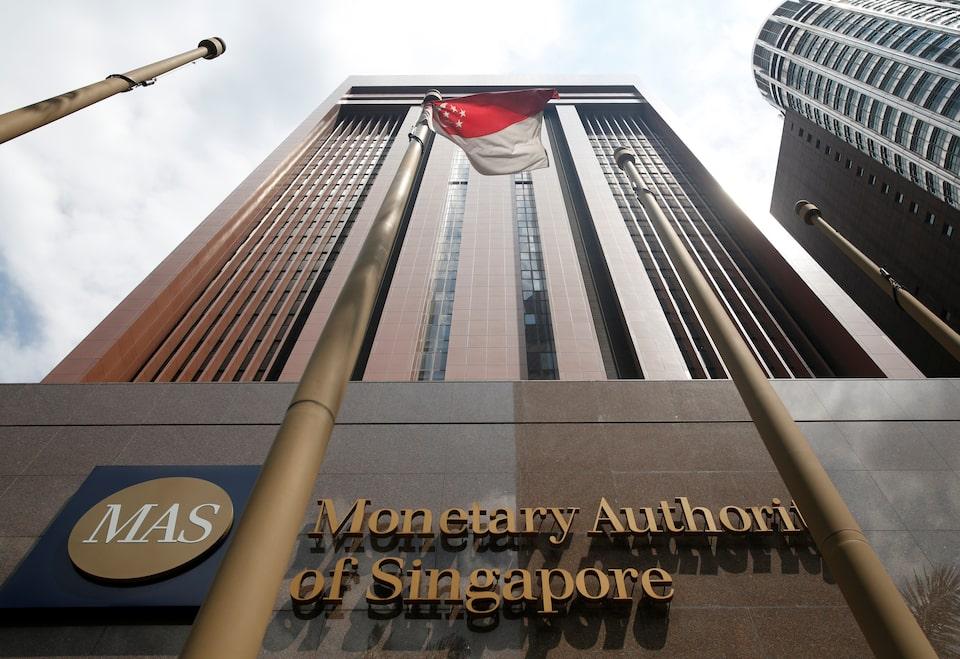
Policy unchanged after two easings this year Central bank says it is able to respond to risks MAS keeping ammunition dry, economist says Economic prospects subject to significant uncertainty SINGAPORE, July 30 (Reuters) - Singapore's central bank kept its monetary settings unchanged on Wednesday, dashing some expectations for a loosening of policy, after second quarter economic growth surprised to the upside and global trade tensions eased somewhat. The Monetary Authority of Singapore said it will maintain the prevailing rate of appreciation of its exchange rate-based policy band. The width and the level at which the band is centred were unchanged. Sign up here. Half of the 12 analysts polled by Reuters ahead of the review expected the MAS to keep policy settings unchanged while the other half forecast a policy easing. "The risk of a sharp step-down in global growth in the near-term has receded along with the general de-escalation in trade tensions as well as more benign financial conditions since April," the MAS said in a statement. It added it was in an appropriate position to respond to risks after two previous easings. The U.S. has in recent weeks cut trade deals with partners, including with Europe and Japan. Instead of using interest rates, Singapore manages monetary policy by letting the local dollar rise or fall against the currencies of its main trading partners within an undisclosed trading band, known as the Singapore dollar nominal effective exchange rate, or S$NEER. It adjusts policy via three levers: the slope, mid-point and width of the policy band. OCBC economist Selena Ling said the MAS was keeping its ammunition dry and waiting to see the outcome of tariff negotiations given the two-way risks for inflation. "Tariff impact on Chinese exports to rest of the world may be disinflationary, but geopolitics and supply chain recalibrations may be inflationary, so the net impact still has to be assessed," said Ling. Analysts from Bank of America, Goldman Sachs and DBS expect MAS to ease monetary policy for a third time this year at its next meeting in October. The MAS eased monetary policy in January and April this year on growth concerns due to U.S. tariffs after holding settings since a tightening in October 2022. The economy, however, is posting better-than-expected results as exporters rushed out goods to beat the imposition of U.S. tariffs. Singapore avoided a technical recession after the economy grew 1.4% quarter-on-quarter in the second quarter, according to preliminary government data. Authorities in Singapore have warned that growth is likely to slow in the second half of 2025 as the export and production frontloading tapers off. "Prospects for the Singapore economy remain subject to significant uncertainty, especially in 2026," the MAS said on Wednesday. In a separate report, MAS said the effective U.S. tariff rate on Singapore's exports is currently at 7.8%, up from 6.8% in April. In April, the government reduced its GDP forecast to 0.0% to 2.0% from 1.0% to 3.0%. Core inflation in the city-state fell to 0.6% year-on-year in June from a peak of 5.5% in early 2023. Maybank economist Chua Hak Bin expects 2025 GDP to come in above the government's forecast. "We are forecasting GDP growth at 3.2% and expect the trade ministry to upgrade their forecast in August when final second quarter GDP is released," Chua said. https://www.reuters.com/world/asia-pacific/singapore-keeps-monetary-policy-unchanged-trade-tensions-ease-2025-07-30/
2025-07-30 06:53
1H25 underlying profit down 16%, misses estimates 1H25 earnings weakest since 2020 Interim dividend 148 cents per share July 30 (Reuters) - Rio Tinto (RIO.AX) , opens new tab, (RIO.L) , opens new tab logged its smallest first-half underlying profit in five years on Wednesday, pressured by weak iron ore prices amid oversupply concerns and slowing China demand, and flagged rising costs at its Pilbara operations. Iron ore prices eased in the first half of the year as steel production in top consumer China declined and more supply from Australia, Brazil, and South Africa came to the global market, denting Rio Tinto's earnings from the steel-making raw material. Sign up here. Expectations that China will curb overcapacity in the steel sector and likely restocking before 2025-end could underpin a pickup in prices , opens new tab to $100 per metric ton towards the year-end, according to a note by Morgan Stanley. Rio Tinto, the world's largest iron ore producer, reported underlying earnings of $4.81 billion for the six months ended June 30, down 16% from a year earlier and missing a Visible Alpha consensus of $5.05 billion. This was the company's weakest first-half performance since 2020. The miner, which is increasingly shifting its focus to copper, declared an interim dividend of $1.48 per share for the first half of the year, lower than the $1.77 apiece it gave out last year. For the six months ended June 30, Rio Tinto's unit costs at its flagship Pilbara iron ore operations in Western Australia rose to $24.3 per wet metric ton (wmt) from $23.2 per wmt last year, due to lower shipments and impact from cyclones. For the full-year 2025, Rio Tinto had earlier forecast a range of $23 and $24.5 per wmt. It maintained its full-year Pilbara shipment guidance at the lower end of its 323 million tons (Mt) and 338 Mt forecast range. https://www.reuters.com/world/americas/rio-tinto-posts-smallest-first-half-profit-five-years-weak-iron-ore-prices-2025-07-30/
2025-07-30 06:44
Trump cuts deadline, vows sanctions if Russia makes no progress Supply risks rise over U.S. warning to China over Russian oil China unlikely to comply with U.S. sanctions, analysts say NEW DELHI, July 30 (Reuters) - Oil prices took a breather in Asian trade on Wednesday after the previous session's spike of more than 3%, as investors awaited developments from U.S. President Donald Trump's tighter deadline for Russia to end the war in Ukraine. Most-active Brent crude futures rose 1 cent, or 0.01%, to $71.69 a barrel by 0633 GMT, while U.S. West Texas Intermediate crude fell 2 cents, or 0.03%, to $69.19 a barrel. Sign up here. The Brent crude September contract expiring on Wednesday was up 5 cents at $72.56 per barrel. Both contracts had settled on Tuesday at their highest since June 20. On Tuesday, Trump said he would start imposing measures on Russia, such as secondary tariffs of 100% on trading partners, if it did not make progress on ending the war within 10 to 12 days, moving up from an earlier 50-day deadline. "The $4 to $5 per barrel of supply-risk premium injected in recent days can be expected to be sustained, unless Putin makes a conciliatory move," said Vandana Hari, founder of oil market analysis provider Vanda Insights. The United States had warned China, the largest buyer of Russian oil, it could face huge tariffs if it kept buying, Treasury Secretary Scott Bessent told a news conference in Stockholm, where the U.S. was holding trade talks with the EU. JP Morgan analysts said in a note that while China was not likely to comply with U.S. sanctions, India has signalled it would do so, putting at risk 2.3 million barrels per day of Russian oil exports. The United States and the European Union averted a trade war with a deal for 15% U.S. tariffs on European imports, easing concerns about the impact of trade tensions on economic growth and offering support to oil prices. In Venezuela, foreign partners of state oil company PDVSA are still waiting for U.S. authorisation to operate in the sanctioned country after talks last week, which could return some supply to the market, so easing pressure for prices to rise. "The oil market is keeping an eye on the U.S. trade deals and talks, and on the Fed, but those are marginal influences on sentiment," Hari added. Despite President Donald Trump’s objections, the U.S. Federal Reserve is expected to hold interest rates steady at its policy meeting later on Wednesday. On Tuesday, the International Monetary Fund raised global growth forecasts slightly for 2025 and 2026, but warned the world economy faced major risks, such as a rebound in tariff rates, geopolitical tension and larger fiscal deficits. https://www.reuters.com/business/energy/oil-rally-pauses-markets-weigh-trumps-ultimatum-russia-2025-07-30/
2025-07-30 06:43
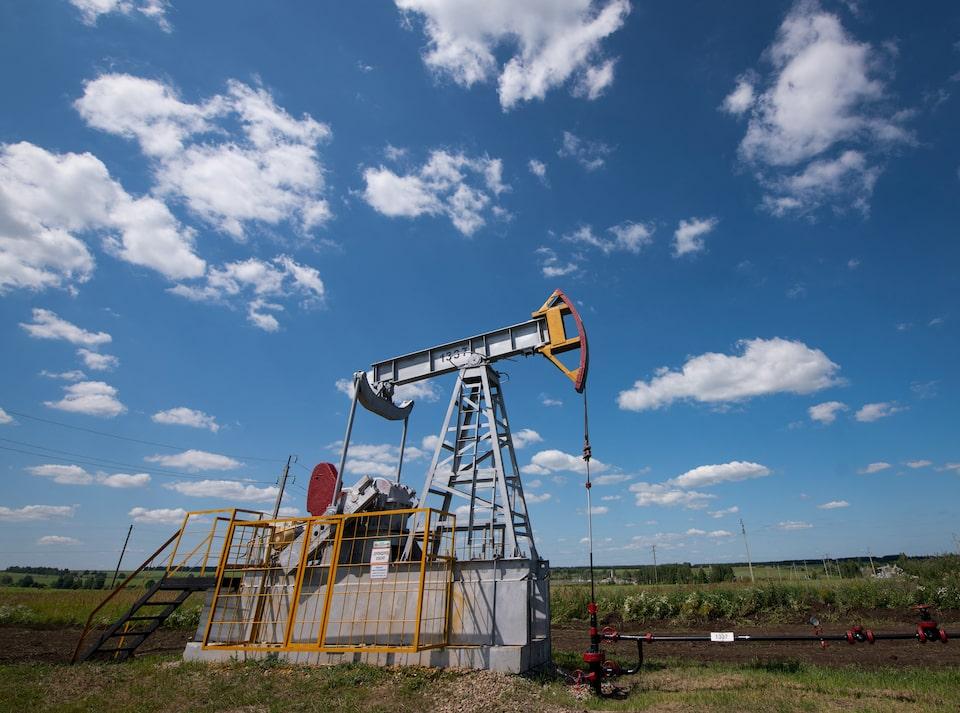
July 30 (Reuters) - Dutch tank storage company Vopak (VOPA.AS) , opens new tab raised its 2025 core profit forecast on Wednesday, citing strong first-half results and the resilience of its terminal network. The firm now expects core profit (proportional EBITDA) for the year to be between 1.17 billion euros ($1.35 billion) and 1.20 billion euros, slightly up from its earlier guidance range of 1.15 billion-1.20 billion euros. Sign up here. Vopak, which provides storage and handling services to the energy and manufacturing end markets, posted first-half EBITDA of 615.3 million euros, marking a 3% year-on-year rise and beating ING's estimate of 599 million euros. The Rotterdam-based firm's net profit surged 58% to 318.6 million euros in the first half, while its earning per share came rose to 2.74 euros from 1.73 euros a year ago. "So overall, good occupancy levels in the business, around 92% of our capacity, are occupied by customers. And based on this, we are able to also grow our portfolio," Chief Financial Officer Michiel said. Asked about the EU-U.S. trade deal, Gilsing told Reuters that an increase in LNG imports to Europe could overall be positive for the company, even if the details of the supply "need to be still digested." Last month, Vopak listed its Indian joint venture, Aegis Vopak (AVTL) (AEGI.NS) , opens new tab, on the Indian bourses, generating an exceptional gain of 111 million euros. "It gives us an opportunity to grow in India faster than otherwise, because basically the market will partly fund the growth, while otherwise we had to do it from the holding effectively," Gilsing said about the India listing. ($1 = 0.8657 euros) https://www.reuters.com/markets/europe/vopak-raises-2025-core-profit-outlook-after-solid-first-half-2025-07-30/
2025-07-30 06:42
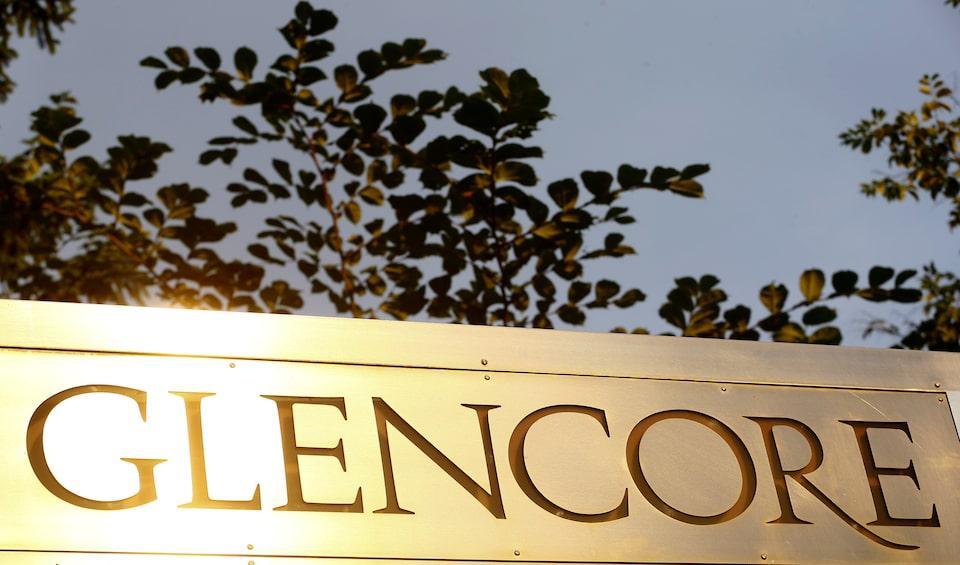
LONDON, July 30 (Reuters) - Glencore (GLEN.L) , opens new tab on Wednesday reported lower copper production in the first half and said it aims to save $1 billion in costs by the end of 2026, as part of a review of its industrial assets. "A comprehensive review of our industrial asset portfolio...recognised opportunities to streamline our industrial operating structure, to optimise departmental management and reporting, and to support enhanced technical excellence and operational focus," CEO Gary Nagle said in a statement. Sign up here. He added that he will provide more details at the company's half-year results on August 6. Glencore's shares were down around 0.6% by 0716 GMT. The company reported a 26% drop in first-half copper production to 343,900 metric tons, mostly due to declining grades, but reiterated its full-year forecast for 2025 at 850,000 to 910,000 tons, expecting higher output in coming months. Last year, the miner and trader produced around 952,000 tons of the metal used in building wiring, electric vehicle batteries, renewable energy plants and data centres. It said it will close its last two copper mines in Australia's Mount Isa, and has agreed to sell its struggling copper refinery in the Philippines, having kept it on care and maintenance for months. "Glencore has put a strong case forward for talking up forward earnings (significant second half recovery in production with guidance tightened and raising long term marketing guidance) but the first half was light with production," said RBC Capital Markets analyst Ben Davis. "Copper in particular has a sharp 50% recovery into the second half that expects to be delivered," he added. Glencore also revised its long-term full-year marketing earnings before interest and taxes (EBIT) to $2.3 billion to $3.5 billion this year, from $2.2 billion to $3.2 billion previously, after the completion of the sale of its agribusiness Viterra in July, which contributed around $200 million to it. In the first half, profit at its trading division reached $1.35 billion. Glencore is the world's second-largest cobalt-producing company, mining 18,900 tons of the battery metal in the first half, up 19% from the same period last year. Glencore's first-half thermal coal production stood at 48.3 million tons from 47.2 million tons a year. The company is one of the largest producers and exporters of thermal coal, mining 99.6 million tons in 2024. https://www.reuters.com/markets/europe/glencore-sees-1-billion-savings-by-2026-after-review-assets-2025-07-30/