2025-07-30 06:41
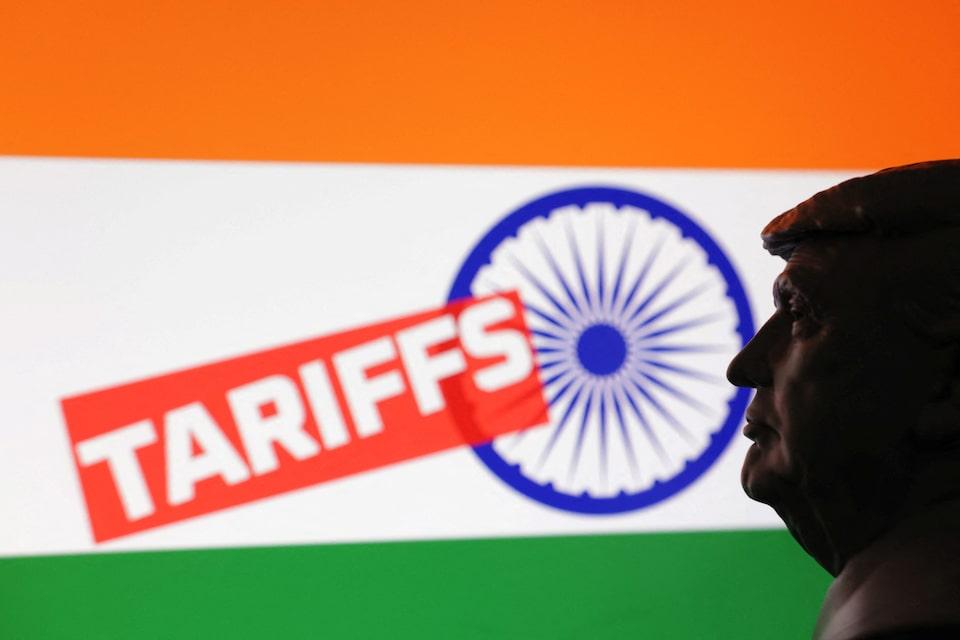
Trump says India deal not finalised, warns of higher tariffs India risks U.S. tariff of 20-25% as deadline looms, sources say No fresh offers from India, targets wider trade deal Agriculture, dairy off limits; analysts warn of export hit NEW DELHI, July 29 (Reuters) - U.S. President Donald Trump said a trade deal with India has yet to be finalised and warned of possible higher tariffs ahead of an August 1 deadline to seal an agreement. His comments followed a Reuters report that India was preparing to accept higher tariffs of 20%-25% on its exports to the U.S. in the absence of a trade deal, as it holds off on offering fresh concessions ahead of Friday's deadline. Sign up here. "India has been a good friend, but India has charged basically more tariffs, almost more than any other country," Trump told reporters aboard Air Force One on Tuesday, adding that would come to an end. Asked about the Reuters report, Trump said a trade deal had not been finalised and India could face steeper tariffs. India plans to resume broader trade talks with the U.S. in mid-August when a U.S. delegation is due to visit, hoping to seal a comprehensive bilateral trade agreement by October, Indian officials said. "Talks are progressing well," an official said, adding Trump could issue a tariff order in a "worst-case scenario". The official declined to be identified without authorisation to speak to the media. "But, we assume it would be temporary measure, considering the five rounds of trade talks that have taken place. A deal will soon be worked out,” the official said. Trump also reiterated his claim that he helped broker a ceasefire to a conflict between India and Pakistan earlier this year, saying both sides accepted his request. "That was great," he said describing his friendship with Prime Minister Narendra Modi. India disputes Trump's claims that he brokered the ceasefire. Analysts say Trump's remarks on the India-Pakistan conflict have cast a shadow on trade negotiations. On Monday, Trump said most partners that do not negotiate separate trade deals would soon face tariffs of 15% to 20% on their exports to the United States, well above the broad 10% tariff he imposed in April. His administration will notify some 200 countries soon of their new "world tariff" rate. U.S. Trade Representative Jamieson Greer told CNBC the India talks require more time, noting Trump wants good deals, not fast ones. India has shown "strong interest in opening portions of its market" though its trade policy had long focused on protecting domestic interests, Greer said. Piyush Goyal, India's trade minister, told Reuters last week India was making "fantastic" progress in U.S. trade talks. Indian officials said New Delhi had offered tariff cuts on a wide range of goods and was working to ease non-tariff barriers. However, agriculture and dairy remain “no-go” areas, with India unwilling to allow U.S. imports of genetically modified soybean or corn, or to open its dairy sector. Total bilateral goods trade reached about $129 billion in 2024, with India posting a surplus of nearly $46 billion. Officials said India was calibrating its strategy amid broader U.S. tariff threats targeting BRICS nations, including India, over issues such as de-dollarisation and Russian oil purchases. "We remain hopeful of securing a deal that gives Indian exporters preferential access compared to our peers," a second Indian government official said, speaking on condition of anonymity. https://www.reuters.com/world/india/trump-says-india-deal-not-finalised-higher-tariffs-possible-2025-07-29/
2025-07-30 06:28
TOKYO, July 30 (Reuters) - Japan recorded its highest-ever temperature of 41.2 degrees Celsius (106.2 degrees Fahrenheit) in Tamba City of Hyogo Prefecture in western Japan on Wednesday, the country's Meteorological Agency said. The reading surpassed the previous record of 41.1 C in Kumagaya City, Saitama Prefecture, in 2018 and in Hamamatsu City in 2020. Sign up here. https://www.reuters.com/business/environment/japan-hits-highest-ever-temperature-412-degrees-celsius-2025-07-30/

2025-07-30 06:25
LISBON, July 30 (Reuters) - EDP Renovaveis (EDPR.LS) , opens new tab, the world's fourth-largest wind energy producer, said on Wednesday its first-half profit fell 56% due to much less capital gains than a year ago, despite rising sales on the back of solid growth in power production. EDP's (EDP.LS) , opens new tab renewables arm said net profit dropped to 93 million euros ($107.4 million), sligthly below the 118 million euro average forecast by analysts polled by LSEG. Sign up here. EDPR said it booked only 12 million euros in capital gains from the sale of wind and solar parks – part of a strategy of disposing stakes in mature plants to finance new ones – in the first half, compared to 171 million euros a year ago. It said in a statement that, excluding capital gains, underlying recurring net profit rose by 80 million euros, reflecting a "significant improvement in the profitability of the operating asset portfolio, driven by increased electricity production levels and improved operational efficiency". Revenues grew 18% to 1.4 billion euros, supported by a 12% increase in power production to 21.2 terawatt-hours, with North America representing 60% of total generation output and Europe 27%, the Portuguese company said. Consolidated earnings before interest, taxes, depreciation and amortisation (EBITDA) fell year-on-year by 1% to 948 million euros, in line with forecasts. Excluding capital gains, recurring EBITDA grew 20%. ($1 = 0.8660 euros) https://www.reuters.com/sustainability/climate-energy/wind-energy-firm-edprs-profit-falls-56-lower-capital-gains-2025-07-30/

2025-07-30 06:18
Tariffs increase import costs for U.S. chocolate makers Canada, Mexico can export chocolate to the U.S. tariff free U.S.-based Taza Chocolate considered moving production to Canada Data shows Canada chocolate exports to U.S. rose 10% this year LONDON/NEW YORK, July 30 (Reuters) - U.S. President Donald Trump's trade tariffs are meant to boost domestic manufacturing. But in the chocolate industry, they're doing the opposite: ramping up the cost of importing already-pricey cocoa and hurting the competitiveness of local factories versus Canadian and Mexican outfits that supply the U.S., according to conversations with 11 industry executives, representatives, experts and traders. Sign up here. Under the United States-Mexico-Canada free trade pact (USMCA), which the Trump administration has confirmed remains in place, Canada and Mexico can export chocolate to the U.S. tariff-free no matter where they sourced their inputs of cocoa - a tropical crop that does not grow in the United States. Canada also has zero tariffs on imports of raw and semi-processed cocoa like butter and powder, while Mexico grows its own beans, meaning factories both north and south of the U.S. border can produce more cheaply than those domestically who now have to pay tariffs of between 10-25% on cocoa inputs. The rates could rise to 35% on August 1. A government official said that the White House continues to monitor trends in trade and commerce and listen to industry feedback to deliver on Trump's economic agenda. Top U.S. chocolate maker Hershey, which mainly makes chocolate in the U.S. but has plants in Canada and Mexico, has estimated it would face $100 million in tariff costs in its third and fourth quarters if the levies remain in place. Smaller firms like Somerville, Massachusetts-based Taza Chocolate, which produces chocolate from scratch using imported cocoa, have no alternatives to U.S. manufacturing. Taza in May had to pay $24,124 in duties on a container of cocoa from Haiti, subject to the blanket 10% tariff imposed by Trump, a Customs and Border Protection invoice showed. Taza faces a customs cheque of more than $30,000 to release its next container of cocoa from the Dominican Republic, founder and CEO Alex Whitmore said. "For a company our size, that's our profit margin gone so the immediate thought is OK, the rules have changed, we just need to create the most cost-effective solution for the consumer," said Whitmore. He initially explored offshoring part of Taza's manufacturing to Canada to benefit from USMCA terms, but decided against it given the significant investment of both money and time that would require, in a volatile business environment. "Right now, the environment is so uncertain that we're just hunkering down and hoping this will pass," Whitmore said. "A lot of us business owners are kind of frozen." Customs data compiled for Reuters by Trade Data Monitor (TDM) shows Canada's chocolate exports to the U.S. grew by 10% in volume terms in the five months to end-May, indicating some Canadian manufacturers are taking advantage of the opportunity created by tariffs. Companies benefiting are mostly Canadian and Mexican contract chocolate makers, or multinational contractors like Barry Callebaut (BARN.S) , opens new tab that have a significant footprint in Canada and Mexico, industry sources said. Barry Callebaut, which has just under half its North America chocolate factories in Canada and Mexico, declined to comment. Its CEO Peter Feld said at its July post-results conference call: "On tariffs ... we have operations in the U.S., we have operations in Canada, we have operations in Mexico. So we can actually navigate this environment in the right way." Contract chocolate firms produce raw chocolate that U.S. factories add ingredients to and sell as American chocolate. Tariffs - a pillar of Trump's "America First" economic agenda - come at a delicate time for U.S. chocolate makers as consumers are already buying less after absorbing double-digit inflation over the past several years. In chocolate specifically, prices have risen sharply as cocoa , tripled in value to hit record highs in the first four months of last year, and remains well above historical averages because of adverse weather and disease in top growers Ivory Coast and Ghana. Under pressure from rising input costs, Hershey (HSY.N) , opens new tab earlier this month rolled out double-digit price hikes across its confectionary products like Reese's cups to retailers like Walmart (WMT.N) , opens new tab and Kroger (KR.N) , opens new tab. Cocoa accounts for about 30-50% of the cost of a bar of chocolate. Hershey said its recent price hikes were not related to tariffs. Taza has raised its wholesale prices by 10% since a year ago, and the price of its chocolate bars on its website rose in June to $6.99 from $5.99 previously, but Whitmore also said tariffs would cause further price hikes. Because cocoa can't be sourced domestically, Hershey said in May it is "engaging with the U.S. government to seek an exemption" for cocoa. It declined to comment on whether it was counting on imports from its Canada and Mexico plants to help mitigate tariff costs. M&Ms maker Mars, which said Tuesday it is investing $2 billion in its U.S. manufacturing, including chocolate, has not changed its sourcing structure and continues to make 94% of its U.S. products locally. A Lindt (LISN.S) , opens new tab spokesperson said the Lindor truffle maker will decide on possible changes to its sourcing after August 1. Paolo Quadrini, director general of Mexican chocolate and candy association Aschoco Confimex, said U.S. tariffs are "creating new opportunities for Mexican companies." "The sentiment among companies and entrepreneurs, as well as requests from U.S. chocolate companies to manufacture in Mexico, is real and has been increasing," he said. The chocolate market in the U.S., the world's top chocolate consumer, is worth $25-30 billion, according to investment bank TD Cowen, and imports from top supplier Canada account for about 10% of that total, while those from No. 2 supplier Mexico account for some 2.5%. Tareq Hadhad, CEO of mid-sized Nova Scotia-based chocolate maker Peace by Chocolate said tariffs had largely prompted Canadian and American firms to opt for locally produced goods but that contract chocolate makers in Canada had benefited from the new trade dynamic. "It's an advantage for them," he said. https://www.reuters.com/world/americas/trumps-tariffs-give-chocolate-makers-canada-mexico-an-edge-over-us-firms-2025-07-30/

2025-07-30 06:17
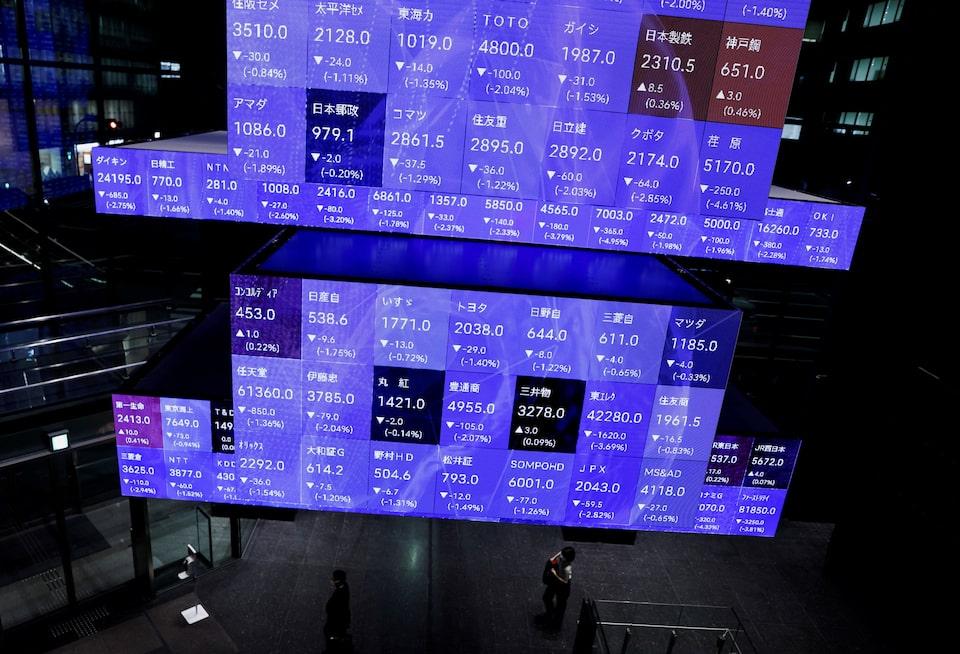
Asian stocks nudge higher ahead of Fed policy announcement U.S.-China trade talks end without major breakthroughs Investors await central bank decisions and corporate earnings SINGAPORE, July 30 (Reuters) - Asian stocks struggled for clear direction on Wednesday, with investors cautious after trade talks between the U.S. and China ended without any substantive agreement and ahead of the Federal Reserve's policy announcement. Early gains for MSCI's broadest index of Asia-Pacific shares outside Japan (.MIAPJ0000PUS) , opens new tab petered out, leaving the index trading flat in the afternoon as traders digested corporate earnings results. Sign up here. In early European trade, pan-region futures were up 0.15%, German DAX futures rose 0.31% and FTSE futures were flat. Australian shares (.AXJO) , opens new tab closed up 0.7%, while Japan's Nikkei stock index (.N225) , opens new tab dipped 0.1% and Hong Kong's Hang Seng Index (.HSI) , opens new tab skidded 1.3%. The euro edged up from a one-month low, rising 0.1% to $1.1555, as markets weighed the EU's trade deal with the Trump administration. Traders are preparing for several central bank decisions, key economic reports and corporate earnings during the next few days, culminating in U.S. President Donald Trump's August 1 tariff deadline. The Federal Reserve is expected to leave interest rates unchanged at its policy meeting later on Wednesday, though it could see rare dissent by some central bank officials in favour of lower borrowing costs. "With labour market conditions near full employment, most Fed officials want to wait and see how tariffs impact inflation," said Tom Kenny, senior international economist at ANZ in Sydney. Some officials are concerned that tariffs could drive higher inflation expectations, leading to more persistent price pressures rather than a one-off hit, he said on a podcast. "Our expectation is that the Fed should be in a position to cut rates at the September meeting." U.S. Treasury bonds advanced ahead of the Fed's meeting, pushing yields to the lowest in almost four weeks following a strong auction of seven-year notes that quelled concerns about diminishing demand for government debt. The yield on benchmark 10-year Treasury notes was last 4.328%, the lowest level since July 3. The two-year yield , which rises with traders' expectations of higher Fed fund rates, was little changed at 3.873%. TARIFFS, CORPORATE EARNINGS The Bank of Japan is expected to keep policy unchanged on Thursday and the focus will be on its comments to gauge when the next rate increase will come after a trade deal between Japan and the U.S. cleared the way for the bank to resume rate hikes. Ahead of Trump's deadline to reach a deal to avert "Liberation Day" tariffs, some countries' talks with the U.S. looked set to go down to the wire. U.S. and Chinese officials agreed to seek an extension of their 90-day tariff truce on Tuesday, though no major breakthroughs were announced. U.S. officials said it was up to Trump to decide whether to extend a trade truce that expires on August 12 or potentially let tariffs shoot back up to triple-digits. India is also bracing for higher U.S. tariffs — likely between 20% and 25% — on some exports as it holds off on fresh trade concessions ahead of the August 1 deadline, two Indian government sources said. Meanwhile, three South Korean cabinet-level officials met with U.S. Commerce Secretary Howard Lutnick in a last-ditch push for a deal. Oil prices rose as potential supply shortages came into focus after Trump gave Moscow an abbreviated deadline toward ending the war in Ukraine. Brent crude futures rose 14 cents, or 0.2%, to $72.40 a barrel. Earnings were a mixed bag on Wednesday. UBS Group (UBSG.S) , opens new tab reported profits , opens new tab that exceeded analysts' expectations, while HSBC profits missed estimates as its losses from China mounted, while German sportswear maker Adidas (ADSGn.DE) , opens new tab warned of the impact to its earnings from U.S. tariffs. U.S. tech megacaps Microsoft (MSFT.O) , opens new tab and Meta (META.O) , opens new tab are due to report earnings on Wednesday that will set the tone for the rest of the week and the earnings season. "It's been a solid U.S. reporting season so far, but these megacap names need to run it hot and blow the lights out, given the bar to please has been sufficiently raised," said Chris Weston, head of research at Pepperstone. https://www.reuters.com/world/china/global-markets-wrapup-2-2025-07-30/
2025-07-30 05:42
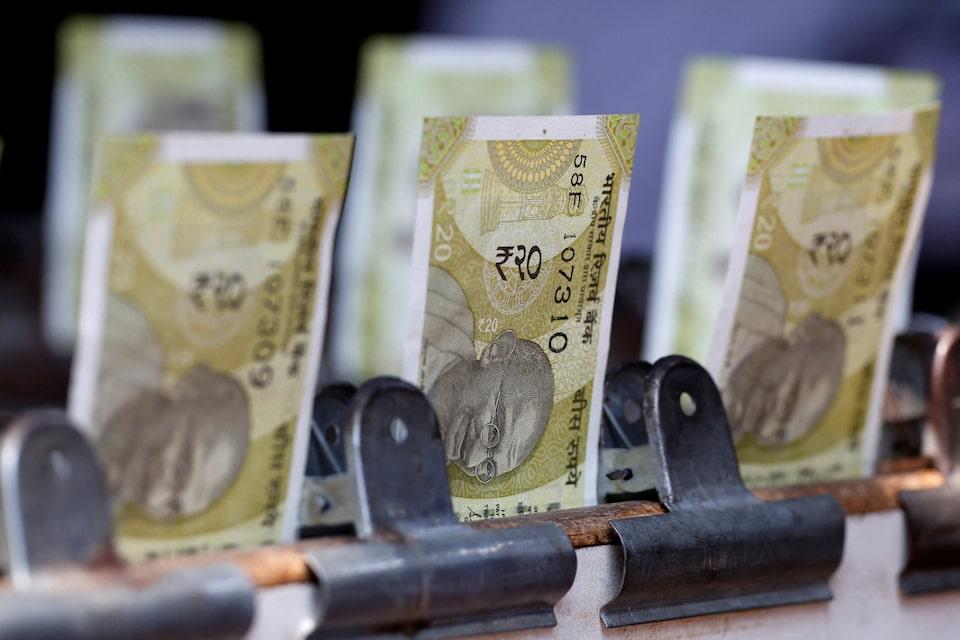
MUMBAI, July 30 (Reuters) - The Indian rupee fell to its weakest level since mid-March on Wednesday, hurt by worries over the U.S. potentially imposing a steep tariff rate on Indian exports, though likely intervention by the Reserve Bank of India helped limit the currency's losses. The rupee was down nearly 0.5% on the day to 86.23 against the U.S. dollar as of 10:10 a.m. IST. Sign up here. U.S. President Donald Trump said Indian exports to the U.S. would likely see 20%-25% tariffs while speaking to reporters on Tuesday, compounding pressure on the currency from sustained portfolio outflows. India is holding off on fresh trade concessions ahead of the August 1 deadline and instead aims to wrap up a comprehensive bilateral deal by September or October, a government official told Reuters. The developments come as other nations including Indonesia and Japan have finalised trade deals with the U.S. over the last few weeks. While the rupee seemed poised for steeper losses on Wednesday, the central bank's likely intervention helped it avert those, an FX salesperson at a large foreign bank said. In the near-term, "expect RBI to continue smoothening volatility while chances of firm intervention to lift the currency are low due to the uncertain environment," the salesperson added. On the day, Asian currencies were mostly rangebound while the dollar index eased slightly to 98.8. As long as the dollar-rupee pair "stays above 86.62, the trend looks positive and buying on dips is favorable," said Ritesh Bhansali, deputy chief executive at FX advisory firm Mecklai Financial. In addition to uncertainty on trade, foreign portfolio outflows have been a persistent drag for the rupee. Overseas investors have net sold over $1.5 billion worth of local stocks over July. https://www.reuters.com/world/india/rupees-fall-past-87usd-tariff-worries-prompts-likely-intervention-2025-07-30/