2025-07-29 21:01
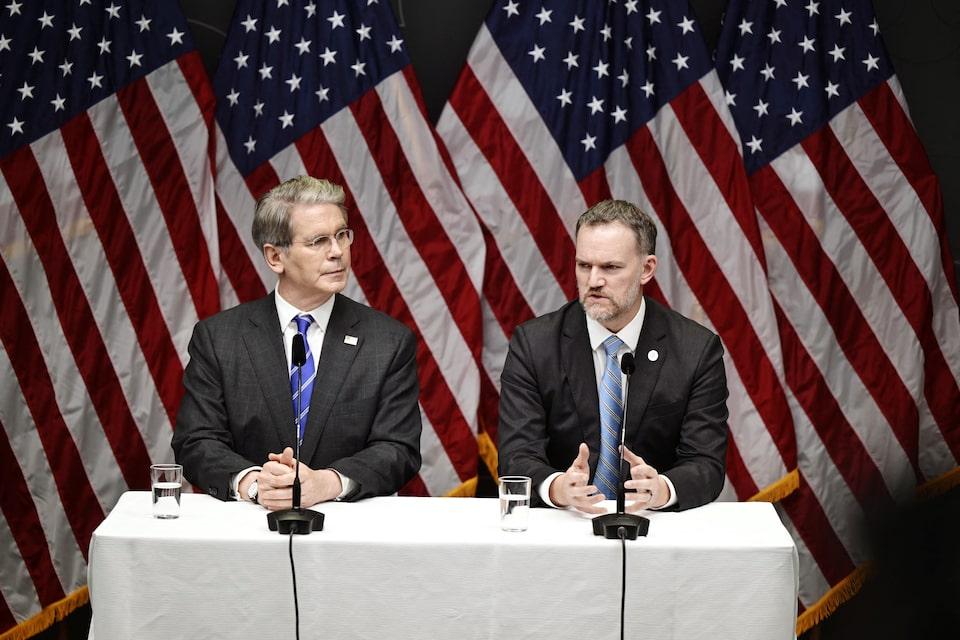
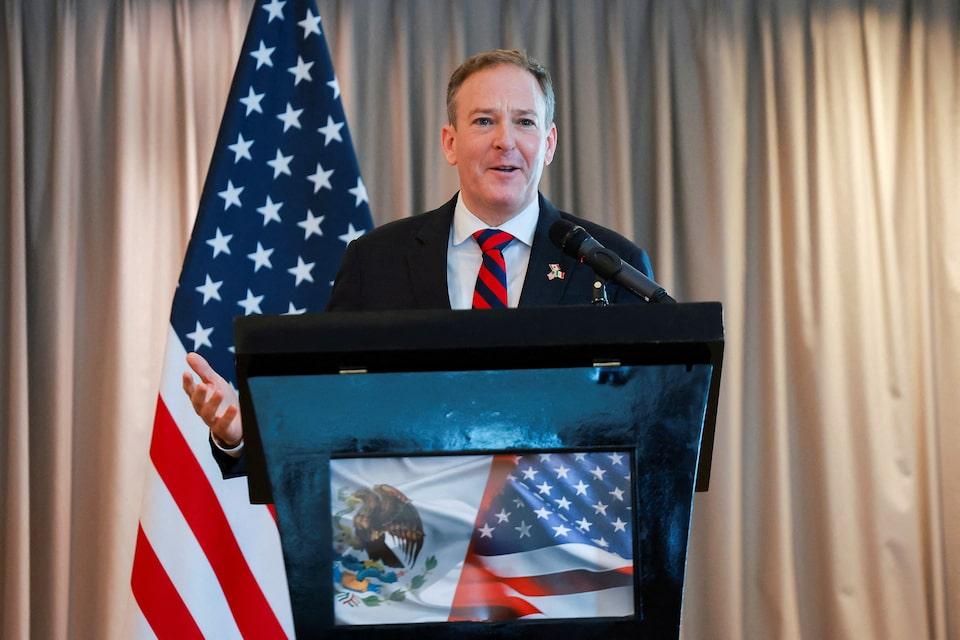
Repeal to end limits on vehicle and power plant emissions, hinder future US climate efforts EPA's action marks largest deregulatory move in US history Proposal could save $54 bln annually by repealing standards -Zeldin Environmental groups predict legal challenges to the proposal Finding upheld in several legal challenges since 2009 WASHINGTON, July 29 (Reuters) - The Trump administration said on Tuesday it will rescind the long-standing finding that greenhouse gas emissions endanger human health, removing the legal foundation for all U.S. greenhouse gas regulations. If finalized, the repeal would end current limits on greenhouse gas pollution from vehicle tailpipes, power plants, smokestacks and other sources, and hamper future U.S. efforts to combat global warming. Sign up here. Environmental Protection Agency Administrator Lee Zeldin announced the agency's plan to rescind the "endangerment finding" at an event at a car dealership in Indiana, alongside Energy Secretary Chris Wright, and called it the largest deregulatory action in U.S. history. The proposal, which needs to undergo a public comment period, would cut $54 billion in costs annually through the repeal of all greenhouse gas standards, including the vehicle tailpipe standard, he said. Environmental groups blasted the move, saying it spells the end of the road for U.S. action against climate change, even as the impacts of global warming become more severe. "With today’s announcement, the EPA is telling us in no uncertain terms that U.S. efforts to address climate change are over. For the industries that contribute most to climate change, the message is 'pollute more.' For everyone feeling the pain of climate disasters, the message is 'you’re on our own,'" said Abigail Dillen, president of Earthjustice. The move is expected to trigger legal challenges, according to several environmental groups, states and lawyers. Zeldin said that a 2024 Supreme Court decision that reduced the power of federal agencies to interpret the laws they administer, known as the Chevron deference, means that the EPA does not have the ability to regulate greenhouse gases. "We do not have that power on our own to decide as an agency that we are going to combat global climate change because we give ourselves that power," Zeldin said. He added that if Congress decides it wants to amend the federal Clean Air Act to explicitly state the U.S. should regulate carbon dioxide, methane and other planet-warming gases, the EPA would follow its lead. SHAKING THE FOUNDATION The endangerment finding's roots date back to 2009, when the EPA under former Democratic President Barack Obama issued a finding that emissions from new motor vehicles contribute to pollution and endanger public health and welfare. That assessment followed a 2007 U.S. Supreme Court decision in its landmark Massachusetts v. EPA case that said the EPA has the authority under the Clean Air Act to regulate greenhouse gas emissions and required the agency to make a scientific finding on whether those emissions endanger public health. The endangerment finding was upheld in several legal challenges and underpinned subsequent greenhouse gas regulations, ranging from tailpipe standards for vehicles, carbon dioxide standards for aircraft, and methane standards for oil and gas operations. Zeldin and Wright challenged the global scientific consensus on climate change that global warming and its impacts have since been unfolding faster than expected and that policymakers need to step up action to curb global greenhouse gas emissions. They also contradict the advisory opinion issued last week by the International Court of Justice, which said failure by governments to reduce emissions could be an internationally wrongful act and, found that treaties such as the 2015 Paris Agreement on climate change should be considered legally binding. The administration has already dismissed all authors of the U.S. National Climate Assessment, which detailed climate change impacts across the country. "Now the public is open to engage in a thoughtful dialogue about what is climate change? It is a real physical phenomenon. It's worthy of study. It's worthy of even some action, but what we have done instead is nothing related to the actual science of climate change or pragmatic ways to make progress," Wright said. Zeldin said on a podcast earlier Tuesday that the endangerment finding never acknowledged "any benefit or need for carbon dioxide." Industry reaction was limited on Tuesday, with some trade groups weighing in and some companies remaining quiet. American Trucking Associations welcomed the announcement, saying that Biden-era vehicle emissions standards "put the trucking industry on a path to economic ruin and would have crippled our supply chain," said its president, Chris Spear. Ford (F.N) , opens new tab said in a statement that Biden-created tailpipe standards did "not align with the market," and America needs "a single, stable standard to foster business planning." "The standard should align with science and customer choice, reduce carbon emissions by getting more stringent over time, and grow American manufacturing," Ford said. Other automakers Toyota (7203.T) , opens new tab, GM (GM.N) , opens new tab, Stellantis (STLAM.MI) , opens new tab did not respond to requests for comment. Marty Durbin, president of the Global Energy Institute at the U.S. Chamber of Commerce, said it welcomed the administration's focus on affordable energy but said it is still weighing the proposal. "While we did not call for this proposal, we are reviewing it and will consult with members so we can provide constructive feedback to the agency,” he said. https://www.reuters.com/legal/litigation/trumps-epa-targets-foundation-all-us-greenhouse-gas-rules-2025-07-29/
2025-07-29 20:46
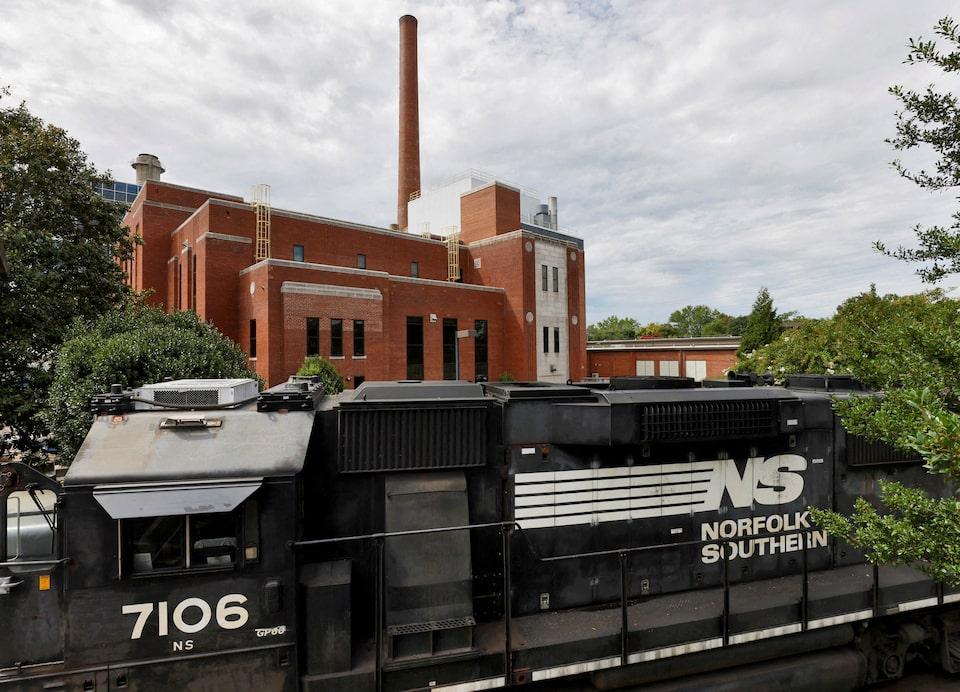
Deal would create US transcontinental freight giant STB's regulatory review expected to take 16 months after filing Trump admin's antitrust shift enables deals seen before as no-go Unions plan to oppose merger citing safety and service concerns Deal raises merger questions around rivals BNSF and CSX July 29 (Reuters) - Union Pacific (UNP.N) , opens new tab said on Tuesday it would buy smaller rival Norfolk Southern (NSC.N) , opens new tab in an $85 billion deal to create the first U.S. coast-to-coast freight rail operator and reshape the movement of goods from grains to autos across the country. If approved, the deal would be the largest ever buyout in the sector and combine Union Pacific's stronghold in the western two-thirds of the U.S. with Norfolk's 19,500-mile (31,400-km) network that primarily spans 22 eastern states. Sign up here. The two railroads are expected to have a combined enterprise value of $250 billion and would unlock about $2.75 billion in annualized synergies, the companies said. Railroad operators since the robber baron days of the late 1800s Gilded Age have dreamed of linking the U.S. Atlantic and Pacific Coasts by rail, and President Donald Trump's administration may be conducive to such a mega deal. "What I infer from the timing on this is they believe that the current political climate is going to be more favorable than it has been in recent history," said Mike Steenhoek, executive director of the Soy Transportation Coalition, which represents the U.S. soybean industry. The $320-per-share price implies a premium of 18.6% for Norfolk from its close on July 17, when reports of the merger first emerged. The companies said last Thursday that they were in advanced discussions for a possible merger. Talks between the two began in earnest in May, according to a source familiar with the matter. The deal will face lengthy regulatory scrutiny amid union concerns over potential rate increases, service disruptions and job losses. The 1996 merger of Union Pacific and Southern Pacific had temporarily led to severe congestion and delays across the Southwest. Norfolk said that Union Pacific would pay a termination fee of $2.5 billion in cash if the deal was terminated under specific circumstances. The deal reflects a shift in antitrust enforcement under U.S. President Donald Trump's administration. Executive orders aimed at removing barriers to consolidation have opened the door to mergers that were previously considered unlikely. Surface Transportation Board (STB) Chairman Patrick Fuchs, appointed by Trump in January to head the agency that oversees competition and other areas of economic importance in the rail industry, has advocated for faster preliminary reviews and a more flexible approach to merger conditions. The STB review process takes 16 months, per its statute, and the companies have said they are targeting a filing with the STB within six months, people familiar with the matter said. The companies said in the statement they expect the deal to close in early 2027. Major railroad unions have long opposed consolidation, arguing that such mergers threaten jobs and risk disrupting rail service. The transportation division of SMART, the International Association of Sheet Metal, Air, Rail and Transportation Workers, said it plans to oppose the merger when it comes before the STB for review. "We approach this development with measured skepticism rooted in the real-world impact such consolidation could have on rail workers, safety, service quality, and the long-term health of the freight rail industry," the largest U.S. union said in a statement on Tuesday. The SMART-TD union's transport division is North America's largest railroad operating union with more than 1,800 railroad yardmasters. The North American rail industry has been grappling with volatile freight volumes, rising labor and fuel costs and growing pressure from shippers over service reliability, factors that could further complicate the merger. Union Pacific and Norfolk's shares were down about 3% each. CONSOLIDATION The proposed deal had also prompted competitors BNSF, owned by Berkshire Hathaway (BRKa.N) , opens new tab, and CSX (CSX.O) , opens new tab, to explore merger options, people familiar with the matter said. While Berkshire's enormous cash reserves could allow BNSF to challenge Union Pacific for Norfolk Southern, this was unlikely, investment bankers said, citing both its Chairman Warren Buffett's distaste for hostile acquisitions and a cash bid would not allow Norfolk Southern shareholders to benefit from future value creation. Union Pacific is paying around 70% of the Norfolk Southern purchase price in stock, the statement said. The Union Pacific merger would give the company a 43% market share, dominating most categories of commodities, according to Jason Miller, interim chair of the department of supply chain management at Michigan State University's business college. "I can't help but think this would create pressure for BNSF Railway and CSX to explore a merger possibility." Agents at the STB are already conducting preparatory work, anticipating they could soon receive not just one, but two mega-merger proposals, a person close to the discussions told Reuters on Thursday. If both mergers are approved, the number of Class I railroads in North America would shrink to four from six, consolidating major freight routes and boosting pricing power for the industry. The Brotherhood of Railroad Signalmen raised concerns over safety, transparency, and employee treatment after the deal announcement, saying it would push for safeguards as regulators review the deal. The last major deal in the industry was the $31 billion merger of Canadian Pacific (CP.TO) , opens new tab and Kansas City Southern that created the first and only single-line rail network connecting Canada, the U.S. and Mexico. That deal, finalized in 2023, faced heavy regulatory resistance over fears it would curb competition, cut jobs and disrupt service, but was ultimately approved. Morgan Stanley (MS.N) , opens new tab and Wells Fargo (WFC.N) , opens new tab advised Union Pacific, and Bank of America (BAC.N) , opens new tab served as exclusive financial advisor to Norfolk Southern. https://www.reuters.com/legal/litigation/union-pacific-reshape-us-freight-rail-with-85-billion-deal-norfolk-2025-07-29/
2025-07-29 20:44
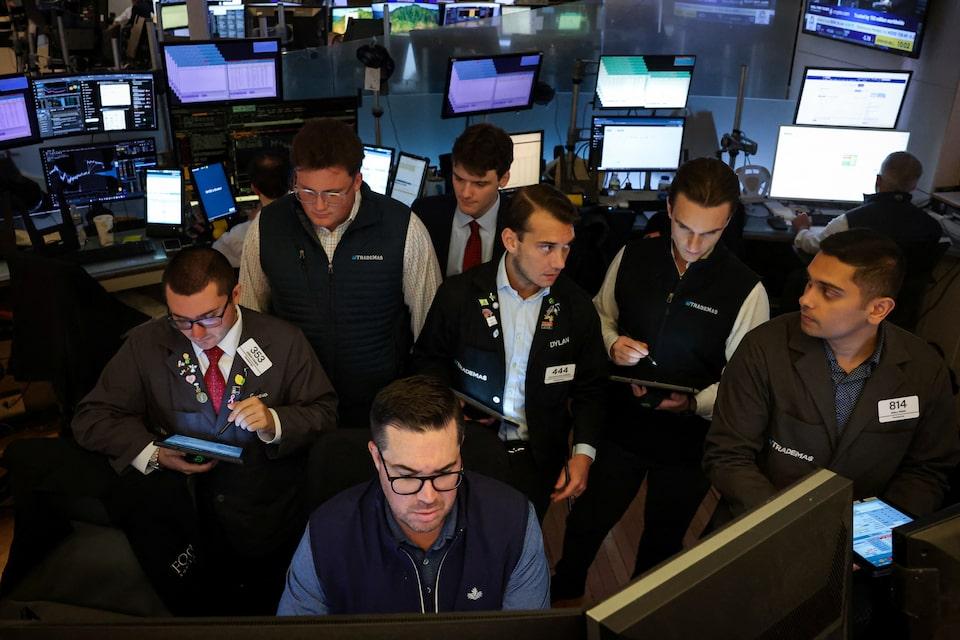
Euro extends decline after Monday's retreat Wall St indexes edge lower up before Fed, mega cap earnings Analysts warn tariffs are drag on EU and US economies Oil rises after Trump shortens Russia deadline NEW YORK/LONDON, July 29 (Reuters) - Global equities declined on Tuesday as U.S. investors awaited earnings reports due this week from megacap companies along with the Federal Reserve's next policy decision, while oil prices jumped as the U.S. threatened China with higher tariffs if it keeps buying Russian oil. Oil prices soared by more than $2 after U.S. Treasury Secretary Scott Bessent said China could see high tariffs if it continues to buy oil from Russia. He made the threat after saying that two days of U.S.-China trade talks in Stockholm had been very constructive. Sign up here. Bessent's comments followed a threat from U.S. President Donald Trump that the U.S. would start imposing tariffs and other measures on Russia "ten days from today" if Moscow did not make progress toward ending the war in Ukraine. The dollar advanced against the euro, which hit its lowest point since June 23 and was on track for its fourth straight day of losses as investors sobered up to the fact that the new U.S.-EU trade favoured the United States and did little for the 27-nation bloc's economic outlook. While monitoring trade updates, investors were also preparing for inflation and payroll reports as well as quarterly results from large companies such as Microsoft (MSFT.O) , opens new tab, Meta Platforms (META.O) , opens new tab, Apple (AAPL.O) , opens new tab and Amazon (AMZN.O) , opens new tab. And as if this wasn't enough to worry about they are also waiting for the Fed's policy statement and commentary, due on Wednesday afternoon following the U.S. central bank's two-day meeting. The Fed is widely expected to keep interest rates steady, pending more clarity on the impact of tariffs on inflation, even with constant demands from Trump for rate cuts. "Trading is biased to the upside. But given that we have a barrage of information coming in over the next couple days, traders and investors are going to be a little bit hesitant," said Anthony Saglimbene, chief market strategist at Ameriprise. The S&P 500 registered record closing highs in the last six sessions. On Tuesday, the index breached 6,400 for the first time before pulling back due to "a little bit of psychological hesitancy" about moving past the big round number, Saglimbene said. The strategist also pointed to signs of pressure from tariffs in quarterly results. United Parcel Service reported quarterly profit marginally below estimates and did not issue annual revenue and margin forecasts. Procter & Gamble on Tuesday forecast annual results largely below estimates and said it would raise prices on some products in the U.S. to steer it through tariff uncertainty. While traders have been betting the Fed will make its next rate cut in September, they will carefully monitor the week's data for signs of inflation or job market weakness. Canada's central bank also convenes Wednesday and is widely expected to also hold rates steady. On Wall Street the S&P 500 (.SPX) , opens new tab snapped six sessions of gains, falling 18.91 points, or 0.30%, to 6,370.86 while the Nasdaq Composite (.IXIC) , opens new tab saw its first daily loss in five trading days, falling 80.29 points, or 0.38%, to 21,098.29. Dow Jones Industrial Average (.DJI) , opens new tab fell 204.57 points, or 0.46%, to 44,632.99. MSCI's gauge of stocks across the globe (.MIWD00000PUS) , opens new tab fell 3.19 points, or 0.34%, to 936.18 for its third straight day of losses. Earlier, the pan-European STOXX 600 (.STOXX) , opens new tab index closed up 0.33% after falling on Monday. TARIFF ECHOES A U.S.-EU trade deal, announced on Sunday, included 15% tariffs on EU imports to the U.S. and bolstered expectations that more such agreements will follow ahead of Trump's August 1 deadline for trade deals. Trump also flagged a "world tariff" rate of 15%-20% on all trading partners that were not negotiating a deal - among the highest rates since the Great Depression of the 1930s. In currencies, the dollar index , which measures the greenback against a basket of currencies including the yen and the euro, rose 0.27% to 98.88. The euro was down 0.31% at $1.1552. But against the Japanese yen , the dollar weakened 0.04% to 148.47. In U.S. Treasuries, yields slid across the board, reversing the previous session's gains, after a less-than-stellar report on job openings for June and ahead of Wednesday's Fed decision and a government announcement of financing plans for this quarter. The yield on benchmark U.S. 10-year notes fell 9.8 basis points to 4.322%, from 4.42% late on Monday while the 30-year bond yield fell 10.7 basis points to 4.8583% from 4.965%. The 2-year note yield, which typically moves in step with interest rate expectations for the Federal Reserve, fell 4.9 basis points to 3.873%, from 3.922% late on Monday. In energy markets, oil prices, already extending Monday's rally due to supply concerns related to Trump's threats against Russia, jumped another leg higher after Bessent's comments. U.S. crude settled up 3.75%, or $2.50 at $69.21 a barrel, while Brent settled at $72.51 per barrel, up 3.53%, or $2.47, on the day. Gold prices rose as markets turned their focus to trade talks and the Fed's policy decision. Spot gold rose 0.35% to $3,325.62 an ounce. https://www.reuters.com/world/china/global-markets-wrapup-7-graphics-2025-07-29/
2025-07-29 20:37
STOCKHOLM, July 29 (Reuters) - U.S. Treasury Secretary Scott Bessent on Tuesday said he warned Chinese officials that continued purchases of sanctioned Russian oil would lead to big tariffs due to legislation in Congress, but was told that Beijing would protect its energy sovereignty. Wrapping up two days of U.S.-China trade talks in Stockholm, Bessent said he also expressed U.S. displeasure at China's continued purchases of sanctioned Iranian oil, and its sales of over $15 billion worth of dual-use technology goods to Russia that have bolstered Moscow's war against Ukraine. Sign up here. Bessent said legislation in the U.S. Congress authorizing Trump to levy tariffs up to 500% on countries that purchase sanctioned Russian oil would draw U.S. allies into taking similar steps to cut off Russia's energy revenues. Trump on Monday shortened a deadline for Moscow to make progress toward a Ukraine war peace deal or see its oil customers slapped with secondary tariffs of 100% in 10 to 12 days, reflecting his growing frustration with Russia's actions. "So I think anyone who buys sanctioned Russian oil should be ready for this," Bessent told a news conference. Chinese officials responded by saying China was a sovereign nation with energy needs, and oil purchases would be based on the country's internal policies, Bessent said. "The Chinese take their sovereignty very seriously. We don't want to impede on their sovereignty, so they'd like to pay a 100% tariff," Bessent said. China remains the largest buyer of Russian oil, at about 2 million barrels per day, followed by India and Turkey. Bessent said he also has warned his counterpart, Vice Premier He Lifeng, that China's continued sales of goods to Russia that wind up in weapons will hurt its efforts to boost trade ties with Europe. "I pointed out to them that it is very much hurting their public perception in Europe that they are contributing to the war on the European border," Bessent said. https://www.reuters.com/business/energy/bessent-warns-china-russian-oil-purchases-that-could-bring-100-tariffs-2025-07-29/
2025-07-29 20:27
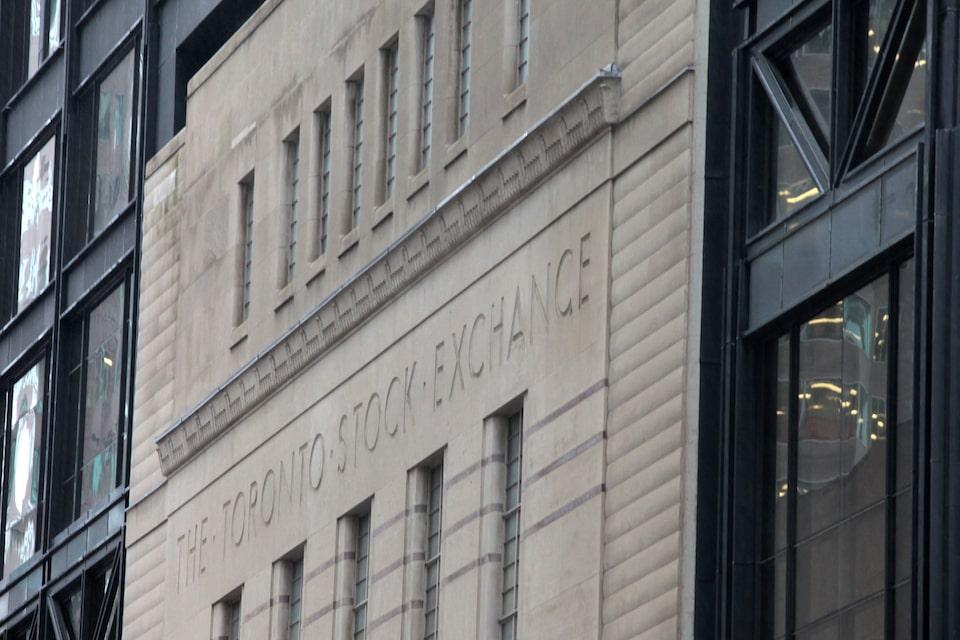
TSX ends up 0.5% at 27,539.88 Eclipses Friday's record closing high Celestica climbs 16.9% on Q2 results Metal mining and energy shares climb July 29 (Reuters) - Canada's main stock index rose to a new record high on Tuesday, led by gains for resource and technology shares as investor exuberance continued to underpin the market ahead of a Bank of Canada policy decision and other key events this week. The S&P/TSX composite index (.GSPTSE) , opens new tab ended up 134.46 points, or 0.5%, at 27,539.88, eclipsing Friday's record closing high. Sign up here. "Optimism still seems to be pervading the market but we're entering the most interesting part of the week," said Michael Sprung, president at Sprung Investment Management. The Federal Reserve and the Bank of Canada are due to make policy decisions on Wednesday, while a deadline for Canada to reach a trade deal with the U.S., or face a 35% tariff on its goods, is set for Friday. The BoC is likely to keep its benchmark rate unchanged at 2.75% for the third straight meeting, economists and market analysts predict, as firm core inflation and robust job growth offset trade uncertainty. U.S. ambassador to Canada Pete Hoekstra said he hoped a trade deal between Canada and the U.S. would be reached "very soon." "I think the market has risen on euphoria and I don't know what it will take to break that euphoria, but I think at some point people are going to have to look hard at valuations and decide what intrinsic value really is and that could cause some setback going forward," Sprung said. Technology (.SPTTTK) , opens new tab rose 2.2%, with shares of Celestica (CLS.TO) , opens new tab climbing 16.9% after the electronics firm reported stronger-than-expected second-quarter results. Real estate (.GSPTTRE) , opens new tab was up 1.7% as bond yields fell. The Canadian 10-year yield eased 4.5 basis points to 3.484%. The materials group (.GSPTTMT) , opens new tab, which includes metal mining shares, added 1.2% as the price of gold rose. Energy (.SPTTEN) , opens new tab also ended higher, rising 1%, as the price of oil settled up 3.8% at $69.21 a barrel. [O/R] Air Canada (AC.TO) , opens new tab was a drag, with its shares tumbling 12.3% after the company reported lower second-quarter profit. https://www.reuters.com/markets/europe/tsx-hits-record-high-celestica-jumps-commodity-prices-rise-2025-07-29/
2025-07-29 19:58
Two days of 'constructive' trade talks end in Stockholm Trump to decide whether to extend truce, US officials say China seeks reduction of US tariffs and tech export controls China aware of strong negotiating hand, analyst says Trump says he thinks he and Xi will meet by year-end STOCKHOLM, July 29 (Reuters) - U.S. and Chinese officials agreed to seek an extension of their 90-day tariff truce on Tuesday, following two days of what both sides described as constructive talks in Stockholm aimed at defusing an escalating trade war between the world's two biggest economies that threatens global growth. No major breakthroughs were announced, and U.S. officials said it was up to President Donald Trump to decide whether to extend a trade truce that expires on August 12 or potentially let tariffs shoot back up to triple-digit figures. But U.S. Treasury Secretary Scott Bessent tamped down any expectation of Trump rejecting the extension. Sign up here. "The meetings were very constructive," Bessent told reporters after the meetings wrapped up. "It's just that we haven't given the signoff." As Trump returned to Washington after visiting Scotland, where he inked a trade deal with the European Union, he said Bessent had just briefed him on the China talks. "He felt very good about the meeting, better than he felt yesterday," Trump told reporters aboard Air Force One. After months of threatening high tariffs on trading partners, Trump has secured trade pacts with the EU, Japan, Indonesia and others, but China's powerhouse economy and grip on global rare earth flows make these talks particularly complex. Both sides in May walked back from imposing triple-digit tariffs on each other in what would have amounted to a bilateral trade embargo. But global supply chains and financial markets could face renewed turmoil without an agreement. Bessent told reporters he expects to meet with Trump on Wednesday after both have returned to Washington, and the president would have the final say on any extension. Another 90-day extension is one option, U.S. Trade Representative Jamieson Greer added. "We had constructive meetings for sure, to go back with the positive report. But the extension of the pause, he'll decide," Greer said after talks at Rosenbad, the Swedish prime minister's office in central Stockholm. TRUMP SEES MEETING WITH XI BY YEAR-END Bessent said there would likely be another meeting between U.S. and Chinese officials in about 90 days, and the agreements on the flow of Chinese rare earths were becoming more refined after previous talks in Geneva and London. "There was good personal interaction being built up, good, mutual respect. I think we understand their agenda much better," he said. Underlining the stakes, the International Monetary Fund on Tuesday raised its global growth forecast but flagged a potential rebound in tariff rates as a major risk. China's top trade negotiator Li Chenggang said both sides fully recognized the importance of maintaining a stable and sound economic and trade relationship. "The Chinese and U.S. economic and trade teams will maintain active communication, exchange views on economic and trade issues in a timely manner, and continue to promote the stable and healthy development of bilateral economic and trade relations," said Li. The talks could pave the way for a meeting between Trump and Chinese President Xi Jinping later in the year, though Trump denied going out of his way to seek one and U.S. officials said the topic was not discussed. Aboard Air Force One, Trump said he thinks he will meet with Xi before the end of the year, though he did not elaborate. The Stockholm meetings also included a lengthy discussion on the U.S. and Chinese economies, with Greer and Bessent emphasizing the need for China to shift away from a state-led, export-driven manufacturing economy to one powered by increased consumer demand, which would help U.S. exports. "Cooperation between China and the United States will benefit both sides, while if they fight both will be hurt," according to a readout of the meetings from China's state news agency Xinhua. "Stable, healthy and sustainable economic and trade relations between China and the United States are not only conducive to achieving their respective development goals, but also conducive to promoting the development and stability of the world economy." CHINA VS. EU TALKS The Stockholm talks follow Trump's biggest trade deal yet with the European Union on Sunday for a 15% tariff on most EU goods exports to the United States, and a deal with Japan. That agreement has brought a measure of relief to the EU but also frustration and anger, with France denouncing the deal as a "submission" and Germany, Europe's largest economy, warning of "significant" damage. China can exercise leverage with its grip on the global market for rare earths and magnets, used in everything from military hardware to car windshield wiper motors, analysts say. Unlike the EU, it does not rely on the United States for security ties and can let trade talks play out for several more months, Cyrus de la Rubia, chief economist at Hamburg Commercial Bank, told Reuters. "China is well aware of its strong negotiating position, as could clearly be seen in the temporary escalation observed in April," he said. "But over Europe always hangs the Damocles sword of the U.S. withdrawing its security guarantee, and that is why the EU did not escalate the situation like China did." Previous U.S.-China trade talks in Geneva and London in May and June focused on bringing U.S. and Chinese retaliatory tariffs down from triple-digit levels and restoring the flow of rare earth minerals halted by China; and Nvidia's (NVDA.O) , opens new tab H20 AI chips and other goods halted by the United States. Among broader economic issues, Washington complains that China's state-led, export-driven model is flooding world markets with cheap goods, while Beijing says U.S. national security export controls on tech goods seek to stunt Chinese growth. Separately, China's industry minister on Tuesday met with a delegation of U.S. businesses, including Apple (AAPL.O) , opens new tab, in Beijing, and pledged to uphold fair and open market competition and provide support and services for foreign enterprises. https://www.reuters.com/world/china/us-china-tariff-truce-holds-now-us-says-trump-has-final-say-2025-07-29/