2025-07-29 14:19
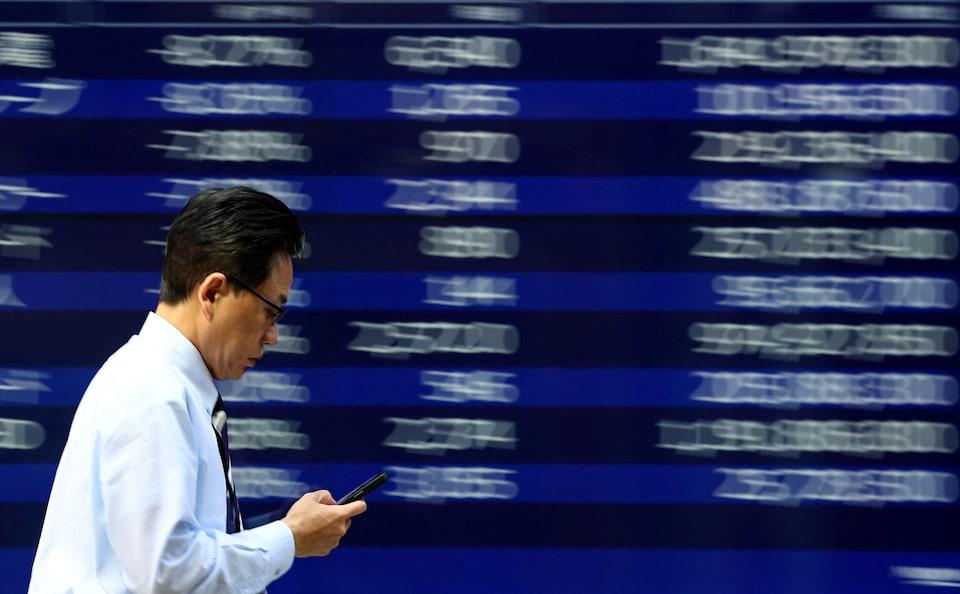
July 29 (Reuters) - The International Monetary Fund (IMF) on Tuesday slightly upgraded its 2025 and 2026 economic growth forecasts for India, citing a more favourable global economic situation. The IMF revised its growth forecast for the South Asian country to 6.4% for both 2025 and 2026, up from the 6.2% it had projected in April. Sign up here. India's growth outlook reflects "a more benign external environment than assumed in the April reference forecast", the IMF said in its World Economic Outlook report. The organisation also raised its outlook for economic growth across emerging market and developing economies this year to 4.1% from 3.7%, driven by a more upbeat view on China. The upgrade for emerging markets reflects a more optimistic outlook globally by the Fund, which nudged its global GDP growth forecast up to 3.0% for 2025 and to 3.1% for 2026. https://www.reuters.com/world/india/imf-slightly-raises-indias-growth-forecast-64-2025-07-29/

2025-07-29 12:40
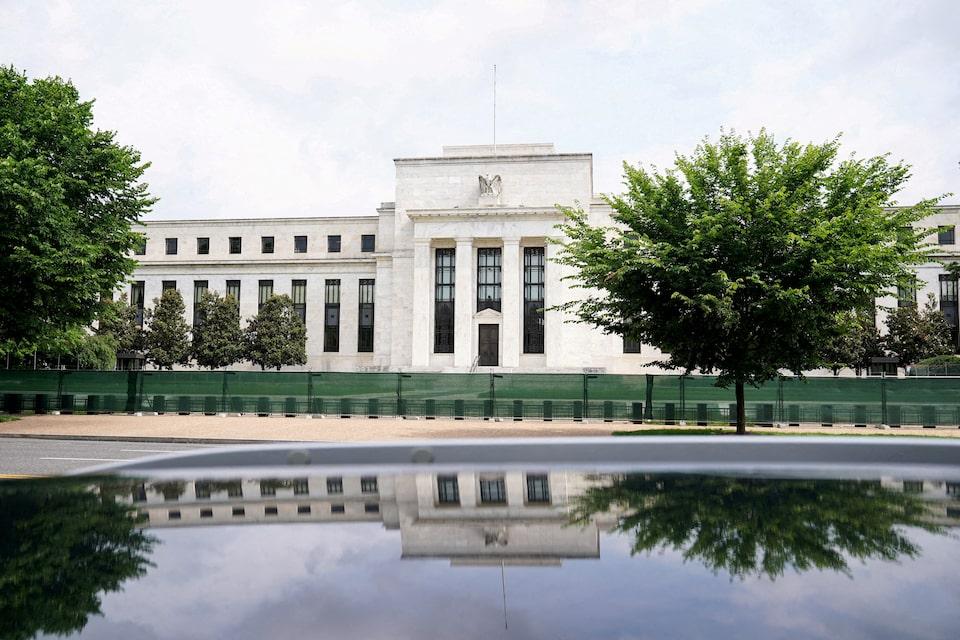
Fed likely to keep rates steady amid resilient economy Credit spreads narrow amid strong investor confidence in US Fed's wait-and-see approach encourages bond risk-taking Bond volatility remains low, suggesting stable economic outlook NEW YORK, July 29 (Reuters) - Bond investors are adding portfolio risk after a long period of caution, seeing the U.S. economy in a "Goldilocks" moment, not too hot nor too cold, as they bet the Federal Reserve will leave rates unchanged for a fifth straight policy meeting. Investors are buying more corporate bonds and adding a little bit more duration to their portfolios, suggesting they're more comfortable going further out the curve. Sign up here. The U.S. central bank's policy-setting Federal Open Market Committee is broadly expected to keep its benchmark overnight interest rate in the 4.25%-4.50% range when its two-day meeting ends Wednesday. Standing pat has been its default stance since December, given a surprisingly resilient economy that has seen a fairly stable labor market and generally subdued inflation. "Our systems are saying that economic growth seems to be fairly firm, although we could argue that it's fraying at the edges," said Jeff Young, head of investment strategy, at PGIM Quantitative Solutions in New Jersey. "We've seen some prices ticking up, but that's not necessarily overall generalized inflation. It's a one-off price increase on certain goods and that has allowed the Fed to maintain this wait-and-see posture." Futures tracking the Fed's policy rate show a roughly 65% chance that the central bank will deliver a rate cut in September, with another possible at the October or December meetings. All told, rates futures on Monday implied about 44 basis points (bps) of easing in 2025, or just under two rate declines of 25 bps each. The Fed reduced rates three times in 2024 before pausing its easing cycle early this year. The U.S. central bank's current wait-and-see approach is a signal for bond investors to tiptoe back into risk-taking, analysts said. "We are overweight credit risk within our portfolios, getting risk back that we sold or removed in March and the beginning part of April given the uncertainty and tight valuations at that point in the economy," said Vishal Khanduja, head of broad markets fixed income at Morgan Stanley Investment Management in Boston. "Growth is slowing, but not slowing into recession levels. So this almost makes it a very 'Goldilocks' type of environment for fixed income, especially credit where you don't see recession fears and balance sheets are very strong, both consumer and corporate." FADING WORRIES Signs of easing anxiety have been in place in the bond market the last few weeks. J.P. Morgan said in its latest Treasury survey as of a week ago that the percentage of all clients that are long duration relative to their benchmarks has increased to 30% from 26% in the previous week. Adding duration can reflect optimism that interest rates will fall. Expressed in number of years, duration relates to how far a bond's value will fall or rise when interest rates move. In general, when rates fall, higher-duration bonds experience a greater increase in value compared to those with lower duration. In the credit market, spreads to Treasuries have also narrowed since blowing out the week after President Donald Trump's April 2 "Liberation Day" tariff announcements that panicked markets with the prospect of trade wars that could exacerbate inflationary pressures. The investment-grade bond spread stood at 78 basis points (bps) last Friday, the tightest since mid-November last year, and 1 bp shy of the lowest point of 77 bps hit in 1998, according to ICE BAML data. It had touched 121 bps, or the highest since November 2023, in the days after Liberation Day. The high-yield spread also showed a similar recovery, showing 284 bps last Friday, down from 461 bps a week after Liberation day. A narrower spread indicates that bond investors are demanding less additional yield to hold riskier corporate bonds over safer U.S. Treasuries and reflects confidence about the U.S. economy and corporate health. Bond volatility has also been low, suggesting a stable economic environment for fixed income investors. As of last Friday, the ICE BofA MOVE index was 82.09 (.MOVE) , opens new tab, a two-week low. "We are running our portfolio at lower levels of risk than our long-run averages," said Dan Siluk, head of global short duration and liquidity at Janus Henderson Investors, but he clarified that caution remains because the firm has kept duration shorter. "We've got more triple Bs (corporate bonds with a Triple B-rating), we've got high yield in the portfolio, but rather than owning a three-year, I'm going to own the one-year, he added. "And that means I'm turning the portfolio over more, but I'm looking for good opportunities. Other bond investors are similarly cautious, but on the lookout for relative value. "The quality of the portfolio is the highest it has ever been given all the uncertainty. So we have been more defensive. But we're still deploying cash and we are looking for relative value opportunities," said David Norris, a partner at TwentyFour Asset Management. "We think markets are very frothy given the action in spreads." https://www.reuters.com/business/bond-investors-warm-risk-with-fed-staying-put-goldilocks-economy-2025-07-29/
2025-07-29 12:33
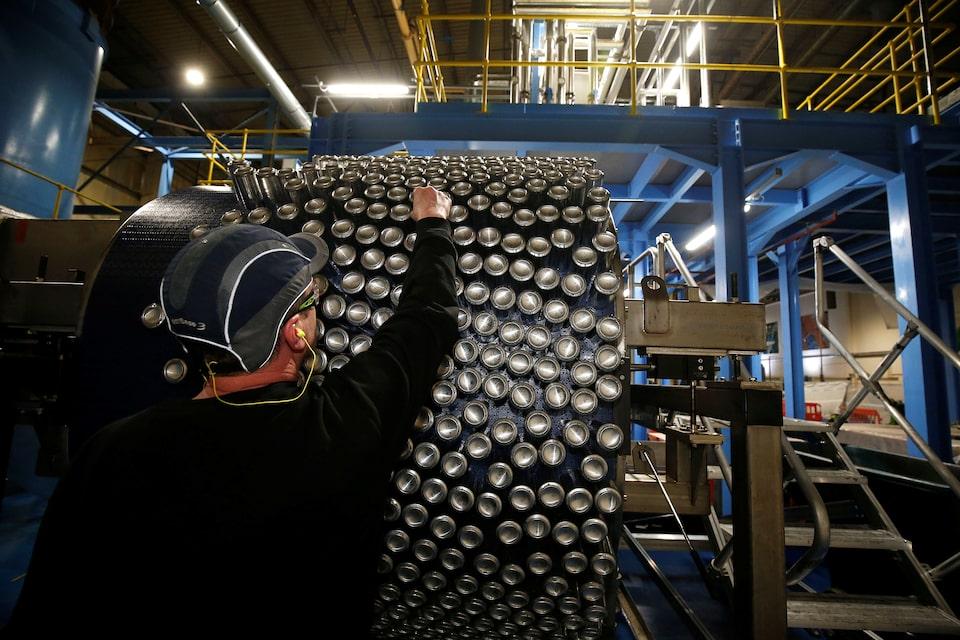
LONDON, July 29 (Reuters) - Canadian aluminium smelters have started diverting primary metal away from the United States in response to the ratcheting up of import tariffs, first to 25% in March and then to 50% in June. Alcoa Corp (AA.N) , opens new tab, which operates smelters on both sides of the border, has since March sold more than 100,000 metric tons of Canadian metal to consumers outside of the U.S., the company told analysts , opens new tab on its quarterly earnings call. Sign up here. U.S. imports of primary aluminium dropped sharply in April and May even before U.S. President Donald Trump sprang his second tariff surprise in June. Some of the import gap is being filled by surging shipments of recyclable aluminium, which as a raw material is subject only to Trump's lower reciprocal tariffs. Physical market dynamics are likely to remain highly fluid, dependent both on the U.S. premium and on Trump's willingness to grant exemptions. PRIMARY IMPORTS DOWN, SCRAP UP U.S. imports of primary aluminium spiked to a near two-year high of 442,000 tons in March as suppliers rushed to beat the first tariff deadline. However, no-one saw the second hike coming and implementation was almost immediate, meaning there was no opportunity to front-run the new 50% rate. Indeed, May imports of 268,000 tons were the lowest monthly tally since December 2022. Lower shipments from Canada have accounted for most of the volume decline. The largest supplier to the U.S. market is redirecting metal that is not committed on annual contracts, which in the case of Alcoa is around 30% of its Canadian production. Aluminium is being re-routed to Europe, with WBMS trade data showing Canada exported 11,800 tons to the Netherlands in April and 25,500 tons to Italy in May. Imports of aluminium scrap, on the other hand, are accelerating thanks to the differential between reciprocal and aluminium tariffs. Arrivals totalled 227,000 tons in March-May, up 40% on the same period of 2024. There has been a noticeable step-up in imports from Europe, albeit from a low base, which has led to the European Commission activating , opens new tab its trade surveillance system prior to possible export restrictions. It has promised a decision by the end of September. MARKET WATCH The U.S. Midwest premium has surged from 24 cents per lb ($520 per ton) in January to 68 cents in reaction to the double tariff hike. That, however, is still not enough to cover the tariff costs for Canadian metal, according to William Oplinger, Alcoa president and CEO. Accounting for both the tariff and the base costs of transport to U.S. consumers, the Midwest premium needs to be somewhere between 70 and 75 cents per lb, he said. Buyers are drawing down inventory rather than committing to new spot purchases as they wait to see whether there will be exemptions to what are currently blanket tariffs. POLITICS WATCH They are right to do so. There are signs that the Trump administration may lower or even eliminate aluminium tariffs for those countries signing up to broader trade deals. That with the United Kingdom, for example, included a reduced 25% import tariff for both aluminium and steel products. The freshly-minted deal with the European Union also comes with a potential carve-out for steel, aluminium and copper, according to , opens new tab European Trade Commissioner Maros Sefcovic. European and U.S. trade negotiators have found common cause in the form of Chinese over-capacity, he said. The higher tariff rate will stand for now, but the two sides are working on a "metals alliance" that would see tariffs replaced with a quota system. It would be strange for Canada not to be included in such an alliance, given the country's importance to U.S. aluminium supply. HIGH SMELTER RESTART COSTS While the tariff landscape continues to shift, one thing is for sure. It's going to be a long time before the U.S. has enough smelter capacity to reduce its import dependency. Although there are two new smelter projects, they are competing with Big Tech for low-cost power. Even if they can lock in energy supply, they would take many years to construct. The U.S. also has around 670,000 tons of idled smelting capacity, according to the United States Geological Survey. But much of it is old and needs significant investment. Alcoa has one 50,000-ton-per-year line idled at its Warrick smelter in Indiana, but it would take around $100 million to refurbish and a year to ramp back up to full production. "We would need to ensure that the tariffs will stick around for quite a while" to justify a restart decision, Alcoa's Oplinger told analysts. Tariffs in one shape or another seem likely to stay, but how many trade partners can duck the full 50% tariff rate is an increasingly open question. Until the picture becomes clearer, there are not going to be many U.S. smelter restarts. But there is going to be a lot more volatility in the physical supply chain. The opinions expressed here are those of the author, a columnist for Reuters. https://www.reuters.com/markets/commodities/aluminium-flows-shift-after-trump-doubles-down-tariffs-2025-07-29/
2025-07-29 12:28
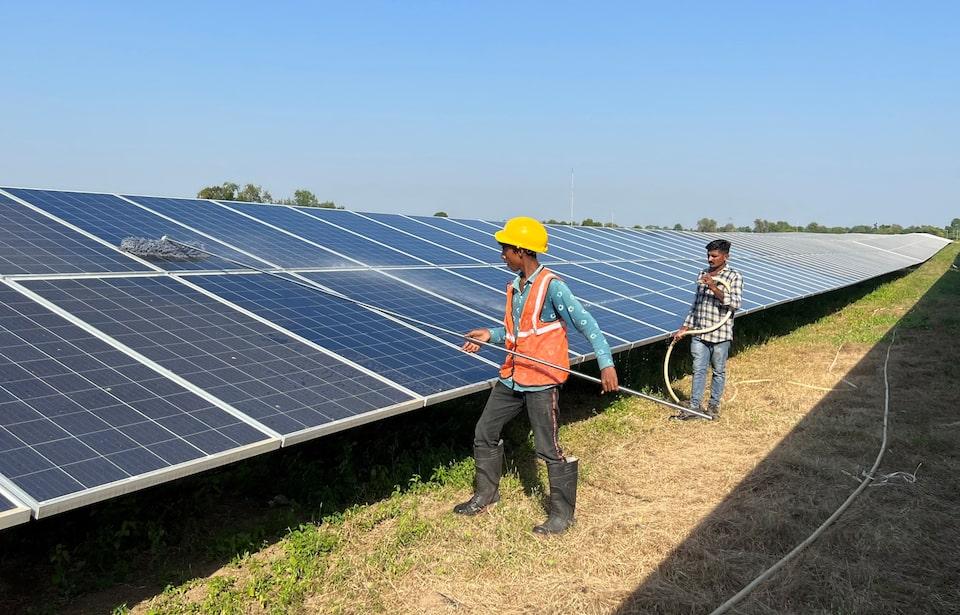
July 29 (Reuters) - Indian solar panel maker Waaree Energies (WAAN.NS) , opens new tab said on Tuesday that it is "confident" about its exports to the United States and is prepared to address any potential anti-dumping investigation, after a coalition of solar manufacturers accused it of undercutting prices. The U.S. Commerce Department is reviewing a petition filed on July 17 by a group of domestic U.S. solar companies seeking tariffs on imports from India, Indonesia and Laos. Sign up here. The petition names Waaree among firms allegedly engaged in dumping low-cost panels to the detriment of U.S. manufacturers. In its first statement since the petition, Waaree denied the allegations and said its pricing practices are transparent and compliant with regulations. "We do not follow any predatory price practices, and therefore, as these investigations go through, we stand in a position of strength,” CEO Amit Paithankar told Reuters in an interview. The company said it received 2.23 gigawatts of orders from the U.S. in the last quarter and is expanding its manufacturing footprint in the country to mitigate any impact from potential tariffs. "If you are local to the U.S. from a manufacturing perspective, anti-dumping duties do not impact you as much," Paithankar said, adding that Waaree is doubling its U.S. manufacturing capacity to 3.2 GW by the end of the year. Despite growing regulatory scrutiny and policy shifts in the U.S. clean energy sector, Waaree said it sees no slowdown in solar exports due to power demand from data centers, manufacturing "reshoring", and transportation electrification in the U.S. "We also see a 100 GW order pipeline, with a significant portion from the U.S," Paithankar said. The company is exploring new markets aligned with India’s trade agreements and is open to both organic and inorganic growth, including acquisitions in adjacent sectors like battery storage and hydrogen, the CEO said. https://www.reuters.com/sustainability/climate-energy/indias-waaree-energies-says-us-anti-dumping-probe-wont-derail-solar-ambitions-2025-07-29/
2025-07-29 12:26
UPS did not provide full-year forecast Q2 revenue beats estimates, profit marginally misses International strength offsets weak U.S. domestic performance Shares fall nearly 4% before the bell July 29 (Reuters) - United Parcel Service (UPS.N) , opens new tab posted quarterly profit marginally below estimates on Tuesday and did not provide a full-year revenue forecast again, deepening concerns around the impact of changing U.S. trade policies on the delivery giant. Its shares fell nearly 4% premarket on Tuesday, even as the company's second-quarter revenue surpassed expectations. Sign up here. "A combination of lower-than-expected overall and U.S. Domestic margins as well as fully rescinded guidance is likely to be viewed unfavorably," Evercore ISI analyst Jonathan Chappell said. UPS reported an adjusted consolidated operating margin of 8.8% for the quarter, while U.S. domestic adjusted operating margin was 7%. The company did not provide an annual revenue or operating profit outlook for a second straight quarter, citing ongoing macroeconomic uncertainty. In its last forecast, issued in January, UPS projected 2025 revenue of $89 billion. In a hit to demand, the White House in May began collecting tariffs on shipments under $800 from China that were previously duty-free, though the "de minimis" levies were later reduced to 54% from 120% as part of a trade truce. Experts warn the exemption removal may hit volumes harder than expected for UPS, as consumers are likely to cut discretionary purchases from low-cost sellers such as Temu (PDD.O) , opens new tab and Shein, reducing shipments on the company's key China-U.S. routes. UPS and rival FedEx (FDX.N) , opens new tab are seen as bellwethers for the health of the global economy as they serve clients across industries and geographies. Atlanta-based UPS reported consolidated revenues of $21.2 billion, above Wall Street estimates of $20.86 billion, helped by strength in its international segment, as importers likely rushed to front-load finished goods to reduce the impact of the tariff changes. However, revenue in its U.S. domestic segment declined to $14.08 billion from $14.20 billion, pressured by a sluggish recovery in retail sales and industrial activity. The company reported adjusted net income of $1.55 per share for the quarter ended June 30, below estimates of $1.56 per share, according to data compiled by LSEG. UPS has been shuttering hundreds of facilities and slashing thousands of jobs as part of a sweeping overhaul, its largest ever, aimed at generating $3.5 billion in cost savings in 2025. In April, the company announced plans to cut 20,000 jobs due to the shedding of half its shipping volume from Amazon.com (AMZN.O) , opens new tab, its largest customer. UPS in July said it was offering voluntary buyouts to its unionized full-time drivers for the first time. https://www.reuters.com/business/ups-profit-misses-estimates-shifting-us-trade-policy-2025-07-29/

2025-07-29 12:24
Euro resumes decline after Monday's retreat Wall St futures edge up before Fed, mega cap earnings Analysts warn tariffs are drag on EU and US economies Oil flat after Trump shortens Russia deadline LONDON, July 29 (Reuters) - Wall Street futures pointed to a buoyant open on Tuesday ahead of earnings reports from a number of companies and the Federal Reserve's policy meeting that starts later in the day. S&P 500 futures ticked up 0.3%, while Nasdaq futures added 0.5%, riding on hopes for upbeat results from mega caps this week that include Apple (AAPL.O) , opens new tab, Meta Platforms (META.O) , opens new tab, Microsoft (MSFT.O) , opens new tab and Amazon (AMZN.O) , opens new tab. Sign up here. The dollar index climbed 0.4% to 98.951 after the rush out of short dollar positions lifted it 1% overnight, while it eased a one-week high on the yen to stand at 148.69 . Yields on 10-year Treasuries inched up 3 basis points to 4.392%, having crept higher on Monday as markets braced for another steady decision on interest rates from the Federal Reserve. Futures imply a 97% chance the Fed would keep rates at 4.25%-4.5% at its meeting on Wednesday and reiterate concerns that tariffs will push inflation higher in the short term. Analysts also assume one, or maybe two, Fed officials will dissent in favour of a cut and supporting wagers for a move in September. The odds could change depending on a slew of U.S. data this week including gross domestic product for the second quarter, where growth is expected to rebound to an annualised 2.4%, after a 0.5% contraction in the first quarter. Figures on job openings are due later on Tuesday that will help refine forecasts for the crucial payrolls report on Friday. "The equity rally has narrowed, valuations are stretched and market internals are flashing caution, and consumer data -particularly around housing and retail - show signs of fatigue," said Bruno Schneller, managing director at Erlen Capital Management, Zurich. "This is the start of a 'show-me' phase - for both policymakers and corporates. Markets will demand confirmation: from earnings, from macro, and from the Fed," Erlen added. Canada's central bank also convenes on Wednesday and again is widely expected to hold rates at 2.75%. TARIFF ECHOES U.S. equity moves follow record closing highs for the S&P and the Nasdaq on Monday in volatile trading after the U.S. struck a trade agreement with the European Union, while the Dow remained just about 200 points short of an all-time high. The U.S.-EU trade deal, announced on Sunday, halved threatened 30% U.S. tariffs on EU imports to 15% and bolstered expectations that more such agreements will follow ahead of President Donald Trump's looming August 1 deadline. Trump also flagged a "world tariff" rate of 15%-20% on all trading partners that were not negotiating a deal, among the highest rates since the Great Depression of the 1930s. "While the worst-case scenario was averted, the implied EU tariff increase from 1% in January is a significant tax increase on EU exports," wrote economists from JPMorgan in a note. "This is a very big shock that unwinds a century of U.S. leadership in global free trade," they said. "While we no longer see a U.S. recession as our baseline from this shock, the risk is still elevated at 40%." The euro fell 0.4% to $1.1543 , after retreating 1.3% overnight in its largest drop since mid-May. European shares recovered after Monday's sell-off. Europe's broad STOXX 600 (.STOXX) , opens new tab was up 0.6%, helped by some positive reactions to quarterly earnings. French (.FCHI) , opens new tab and German (.GDAXI) , opens new tab stock indexes rose over 1%. Novo Nordisk, one of Europe's biggest companies by market cap, named Maziar Mike Doustdar as its new chief executive after the abrupt removal of its previous CEO in May. Shares in the company were down as much as 29.8% by 1149 GMT, wiping off over 80 billion euros in market cap at one point. An air of caution saw MSCI's broadest index of world shares (.MIWD00000PUS) , opens new tab tick down about 0.2% after China stocks ended higher on Tuesday as a new round of Sino-U.S. trade talks continued, while Japan's Nikkei lost 0.8% (.N225) , opens new tab. A further risk to world growth came from a sudden spike in oil prices after Trump threatened a new deadline of 10 or 12 days for Russia to make progress toward ending the war in Ukraine or face tougher sanctions on oil exports. In commodity markets, prices for copper and iron ore were under pressure while gold was roughly flat at $3,316 an ounce . Brent was about 20 cents higher at $70.22 a barrel, while U.S. crude up 17 cents to $66.90. https://www.reuters.com/world/china/global-markets-wrapup-4-pix-2025-07-29/