2025-07-29 07:15
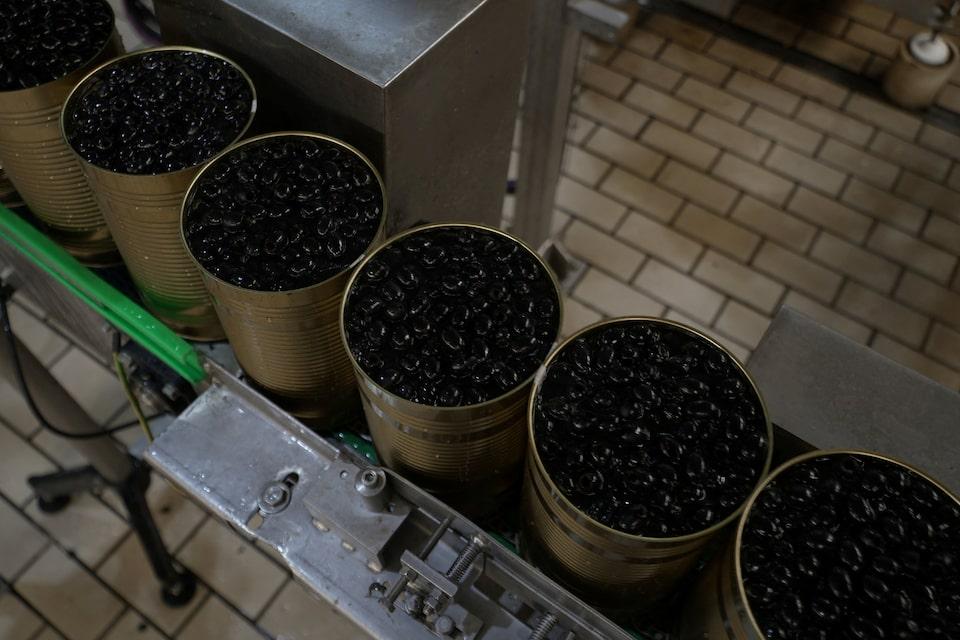
EU-US trade deal may impose 15% tariffs on Spanish black olives Spanish black olive market share in US fell from 49% in 2017 to 19% Spanish exporters diversify markets, innovate to counter tariffs LA RODA DE ANDALUCIA, Spain, July 29 (Reuters) - Spain's black olive exporters, subject to harsh tariffs since U.S. President Donald Trump's first term, are warning it will be difficult to survive an extra 15% they now face under the European Union's latest trade deal with the United States. EU goods now face import tariffs of 15% - half of Trump's threatened rate, but much more than Europeans had hoped for - after striking a trade deal with Trump on Sunday. Sign up here. Spain, the world's top table olive exporter, has seen its share of the U.S. black olive market plummet from 49% in 2017 to 19% in 2024 after Trump imposed tariffs of more than 30% at the request of Californian olive growers. The measures only affected black olives and don't apply to green olives, olive oil or semi-processed olives. Spanish farmers have taken steps to increase green olive sales and to diversify their markets since the tariffs were first imposed, but warn the additional increase will be hard to swallow. "It would be unviable (for black table olives)," said Eduardo Martin, secretary of Asaja, a Spanish local farmers' association in southern Seville province, a region that produces the most olives. The initial trade measures coincided with a severe drought that forced Spanish producers to cut around 400,000 work shifts for pickers out of a total of 2.5 million, according to industry estimates. Sales of Spanish black olives to the U.S. dropped by 70% in the first year. "The worst was the first year," said Gabriel Cabello, president of Andalusia's Federation of Agricultural Cooperatives in Seville province. "In the second year, we learned that this was here to stay and that we had to do things differently." To mitigate losses, Spanish exporters shifted focus to Europe and the Middle East, regions with a tradition of consuming table olives. They also ventured into Asian markets, while switching to shipping more green olives to the U.S. because they are subject to lower tariffs. Tariffs also spurred innovation, with some Spanish exporters selling black olives stuffed with salmon or cheese for the first time, which helped boost sales in Europe and Asia, Cabello said. Still, the Spanish Ministry of Agriculture estimates it has lost 239.6 million euros ($278.51 million) in black olive sales since the tariffs were introduced, nearly a third of the 707 million-euro total export value from the last harvest. WEATHERED THE STORM Among the 25 Spanish exporters active before the tariffs, only four major players remain, according to Asemesa, Spain’s Association of Table Olive Exporters. Agro Sevilla, one of the larger players with the financial resources to lobby the U.S. for lower rates, expanded green olive exports and managed to reduce black olive tariffs to 10% from 31%. The company successfully demonstrated that they received fewer European subsidies than the U.S. had estimated. Its U.S. sales have been gradually growing since 2023. "We cannot give up on the world's largest consumer market for black olives," said Agro Sevilla CEO Julio Roda. In a twist, Aceitunas Guadalquivir, another major Spanish olive producer, acquired Bell-Carter Foods, one of the two leading U.S. companies that had advocated for the tariffs, according to a statement issued in 2022. The company is among several Californian companies that have imported raw olives from Spain, which are exempt from the tariffs, according to Asemesa. Aceitunas Guadalquivir did not reply to a Reuters request for comment about such exports. "When California has low production, they import raw olives to finish processing them in the United States, mostly from Spain," said Asemesa’s Secretary General Antonio de Mora. Spain exported 6,300 tonnes of semi-processed olives in 2024 alongside 36,000 tonnes of green olives and 9,800 tonnes of black olives. The U.S. measures failed to bolster domestic growers. Imports of table olives surged by 40% in the first eight months of 2024 compared to the same period in 2017, trade data shows, with Egypt, Portugal, and Turkey increasing exports the most. Spanish exports of green olives to the U.S. grew by 18% during the same period, partially offsetting a decline in black olive exports. However, Spanish producers remain concerned about the new tariffs. "It's like adding rain to wet ground," Asaja's Martin said. ($1 = 0.8603 euros) https://www.reuters.com/business/spains-black-olive-exporters-struggle-under-fresh-us-tariffs-2025-07-29/
2025-07-29 07:12
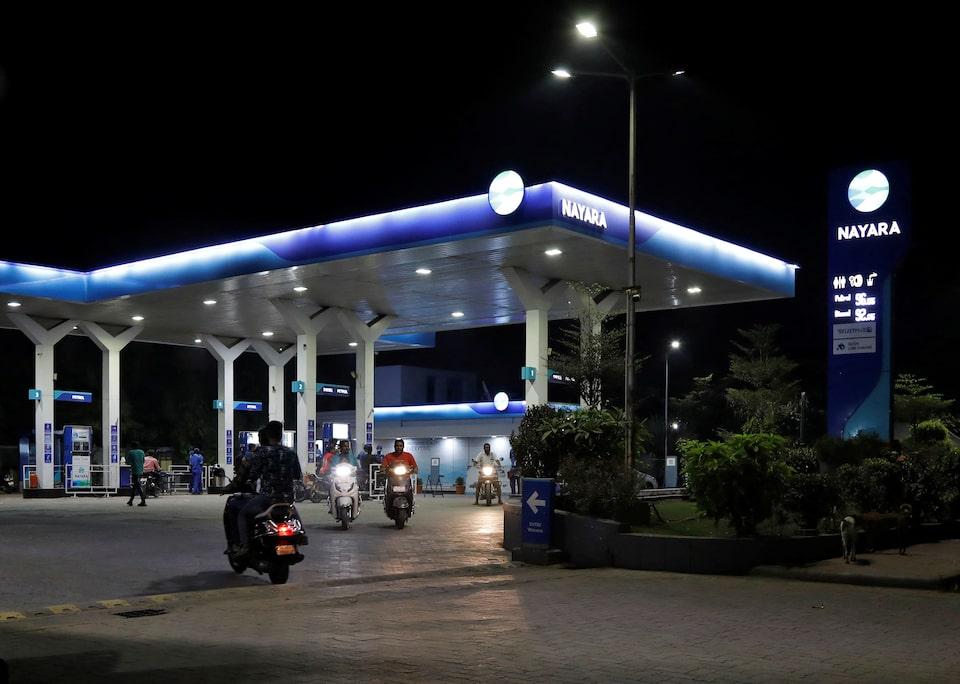
NEW DELHI, July 29 (Reuters) - Russia-backed Indian refiner Nayara Energy has reduced operations at its 400,000-barrel-per-day refinery in the aftermath of new European Union sanctions that targeted the firm, five sources familiar with the matter said. Privately-held Nayara, which runs India's third-biggest refinery at the port of Vadinar in the western state of Gujarat, controls nearly 8% of the country's total refining capacity of about 5.2 million bpd. Sign up here. The sanctions package unveiled on July 18 against Russia and its energy sector has made it tougher for Nayara to export its refined products, resulting in storage constraints, two of the sources said. Since the EU curbs on Nayara, traders have grown cautious in dealing with its fuel, trade and industry sources say. Last week, Reuters reported that at least two tankers skipped planned loadings at Vadinar while a tanker carrying a cargo of Russian crude was diverted away from the refiner. One source said Nayara was operating the refinery at 70% of capacity, while another put the figure at 80%. Nayara ran at more than 100% of its nameplate capacity in each of the three months through June, the most recent government data shows. All the sources sought anonymity because they were not authorised to speak to the media. Nayara did not immediately respond to a request for comment. Nayara typically exports at least four million barrels of refined products each month, including diesel, jet fuel, gasoline and naphtha, through traders. India has become the biggest buyer of seaborne Russian crude in the aftermath of Moscow's Ukraine invasion. Nayara, majority-owned by Russian entities including Rosneft (ROSN.MM) , opens new tab, is a key buyer of Russian oil. Nayara's chief executive resigned after the sanctions and was replaced by Sergey Denisov, who had been its chief development officer, Reuters reported on Friday. On Monday, Nayara said it filed legal proceedings against U.S. software giant Microsoft following its suspension of services to the refiner. Nayara, based in the commercial capital of Mumbai, operates more than 6,000 fuel stations. https://www.reuters.com/business/energy/indian-refiner-nayara-trims-crude-runs-wake-eu-sanctions-sources-say-2025-07-29/
2025-07-29 06:53
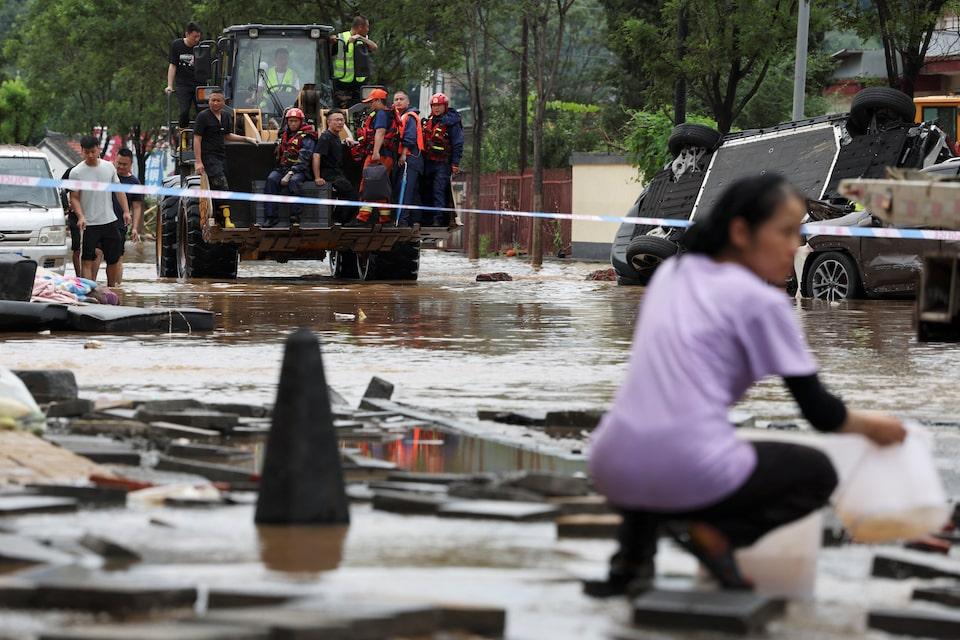
Thirty people dead as 'extreme' rain hits Beijing More than 80,000 Beijing residents relocated Beijing issued highest-level rain, flood alerts Authorities allocate funds, urge relief efforts At least four dead, villages flooded on Monday in neighbouring regions BEIJING, July 29 (Reuters) - Extreme weather killed at least 30 people in Beijing after a year's worth of rain fell in a matter of days, stretching the Chinese capital's disaster management capabilities and prompting some experts to call the city a rain trap. Much of the rain inundated Beijing's mountainous north near the Great Wall, with 28 deaths reported in the district of Miyun and two in Yanqing, the official Xinhua news agency said on Tuesday. It did not say when or how the deaths occurred. Sign up here. Heavy rain started last Wednesday and intensified around Beijing and surrounding provinces on Monday, with the capital experiencing rainfall of up to 543.4 mm (21.4 inches) in its northern districts, Xinhua said. The average annual rainfall in Beijing is around 600 mm. "The cumulative amount of precipitation has been extremely high - reaching 80–90% of the annual total in just a few days in some areas," said Xuebin Zhang of the University of Victoria in Canada and CEO of the Pacific Climate Impacts Consortium (PCIC). "Very few systems are designed to handle such an intense volume of rainfall over such a short period," Zhang said. The local topography - mountains to the west and north - "trapped" the moist air and forced it to rise, enhancing the extraordinary amount of precipitation, he said. China's usually arid north has seen record precipitation in recent years, with some scientists linking the rainfall to global warming. In the summer of 2023, heavy rain and flooding killed at least 33 people in Beijing. Rainfall in the city of Xingtai in neighbouring Hebei province exceeded 1,000 mm in two days - double the yearly average. Late on Monday, President Xi Jinping said there had been "heavy casualties and property losses" in Beijing and the provinces of Hebei, Jilin and Shandong, and ordered "all-out" search and rescue efforts. More than 80,000 Beijing residents had been relocated, Xinhua reported, with roads and communication infrastructure damaged and power to 136 villages cut off overnight. The most intense rain occurred on Saturday in Beijing's hilly Huairou, which saw 95.3 mm of rain in one hour. In Miyun on Monday, some people were trapped at an elderly care centre as water levels rose close to the roof. Emergency rescue services swam into the building and used ropes to pull out 48 people. On Tuesday, parks, libraries and museums including the Palace Museum at the Forbidden City were closed. Train and bus services in the suburbs and along waterways were suspended. Hundreds of flights were cancelled or delayed at Beijing's two airports, state media reported. 'FLOOD STILL COMING' Heavy rain also pounded the province of Hebei and the city of Tianjin neighbouring Beijing, which are all part of the vast Hai river basin. Four people were killed in a landslide in Hebei on Monday, with eight still missing, as six months' worth of rain fell over the weekend. In two villages in Tianjin on Monday, major roads were flooded, bridges damaged, with only the roofs of single-storey houses visible, China Central Television (CCTV) reported. Heavy rain is expected to persist in parts of Beijing, Hebei and Tianjin on Tuesday, the emergency management ministry said Monday night, adding that "the disaster relief situation is complex and severe." Some residents in the region posted on social media platform Weibo calling on authorities to expedite rescue efforts. "The flood is still coming, and there is still no power or signal, and I still can't get in touch with my family!" a post on Tuesday morning said. https://www.reuters.com/sustainability/climate-energy/extreme-weather-turns-beijing-into-rain-trap-kills-least-30-2025-07-28/
2025-07-29 06:45
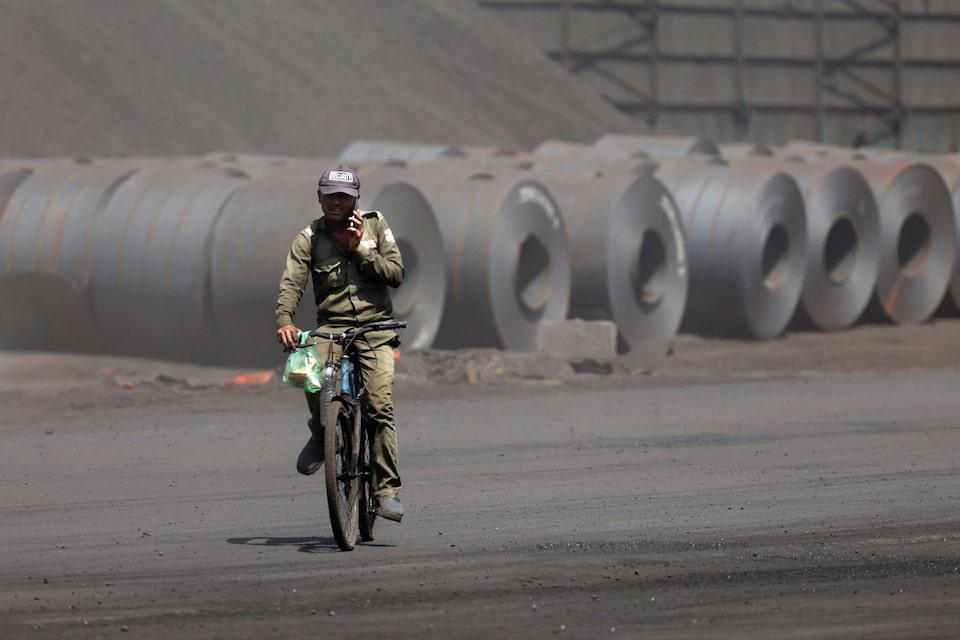
NEW DELHI, July 29 (Reuters) - India's finished steel imports dropped nearly 30% in the first three months of the financial year that started in April, due to a persistent fall in shipments from China and Japan, according to provisional government data reviewed by Reuters on Tuesday. The world's second-biggest crude steel producer imported 1.4 million metric tons of finished steel during April-June, down 28.8% from a year earlier, the data showed. Sign up here. Shipments from China fell 45.8%, while those from Japan declined 65.2%. China shipped 0.3 million tons of finished steel into India during the period, while Japan exported 0.2 million tons, the data showed. In April, India imposed a 12% temporary tariff on some steel imports, locally known as a safeguard duty, to curb a surge in cheap shipments primarily from China. South Korea was the biggest exporter to India, with shipments reaching 0.5 million tons, down 6.5%. India remained a net importer during the period, with exports easing 5.1%. Belgium was the top destination for finished steel exports from India, with shipments rising 40.8%. Shipments to the United States, Spain and Nepal climbed, while exports to Italy dropped. Volume-wise, galvanised plain or corrugated sheets or coils were India's biggest exports. Domestically, crude steel production was at 40.6 million tons, up 11.2%. Finished steel consumption was at 38.3 million tons, up 7.9%. Indian domestic rebar prices edged lower as underlying market sentiment remained weak amid sluggish demand and the onset of monsoon, the government said in its report. https://www.reuters.com/world/china/indias-april-june-finished-steel-imports-fall-nearly-30-china-japan-shipments-2025-07-29/
2025-07-29 06:35
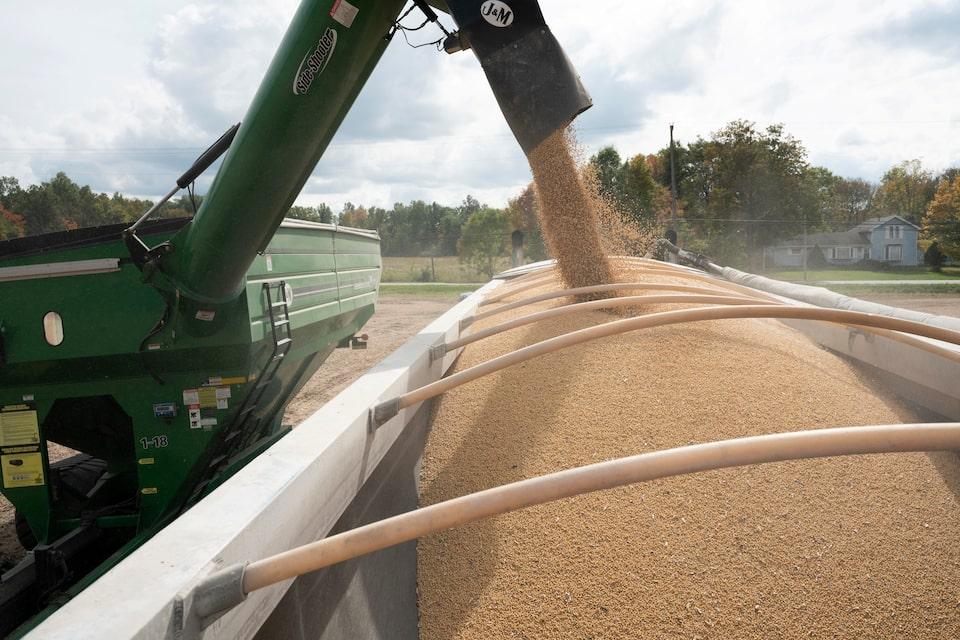
Inventory buildup triggers fears of crushing plant shutdowns Surplus may weaken China's soybean demand in Q4 U.S. peak season Recent Argentine soymeal buys likely to add to supply glut BEIJING/SINGAPORE, July 29 (Reuters) - China's appetite for soybeans is likely to weaken during the peak U.S. marketing season later this year, as record imports earlier in 2025 and tepid demand from animal feed producers have pushed up soymeal inventories at home, trade sources said. The world's biggest soybean importer has yet to book U.S. cargoes for the fourth quarter, with traders closely monitoring talks in Stockholm aimed at resolving longstanding economic disputes at the centre of the U.S.-China trade war. Sign up here. A slowdown in Chinese demand could pressure Chicago soybean futures , which are already down for a second consecutive week on expectations of a bumper U.S. harvest. China's soymeal futures fell for a fourth straight session on Tuesday amid ample supplies. In the physical market, spot soymeal in north China was quoted at 2,925 yuan ($408) per metric ton, down 6.5% from 3,130 yuan a year ago, said Wang Wenshen, an analyst at Shandong province-based consultancy Sublime China Information. "If third-quarter prices stay weak and crushers face losses, fourth-quarter soybean purchases may fall short of expectations," Wang said. The last quarter of the year is typically the main U.S. soybean marketing season. China's overall soybean imports hit a record high in May and their second-highest level in June, boosting oilseed processing and leading to a buildup in soymeal inventories, traders said. CRUSHER SHUTDOWNS The surplus is straining China's crushing plants, with some already shutting down due to storage constraints. "Small-scale shutdowns have already begun at crushing plants in regions like south China primarily because soybean meal has accumulated with no room for more stock," said a Shanghai-based trader, adding that a broader suspension was "highly likely". Crush margins in Rizhao , China's main processing hub, have been negative since mid-May. The glut has been worsened by weak demand from animal feed producers amid sluggish meat consumption in the world's top pork market. Crushers will face "huge soymeal stock pressure" over the next one to two months, said Cheang Kang Wei, vice president at StoneX in Singapore. Authorities have pledged to cut breeding sow numbers, curb new capacity, and reduce soymeal use in feed to stabilise meat prices after steep declines this year, measures analysts say will further limit soymeal consumption. China's purchases of Argentine soymeal, amid high tariffs of U.S. beans, in the last few weeks are likely to add to the glut. "Even with such big supply of soymeal in the local market, it is profitable to import meal from Argentina," said a Singapore-based trader at an international trading company. "This will only add to the stocks of soymeal." A trade deal with Washington could shift buying patterns. "If a trade deal is reached, Chinese buyers could resume U.S. purchases for the fourth quarter, as prices are favourable without tariffs," said Johnny Xiang, founder of Beijing-based AgRadar Consulting. ($1 = 7.1767 Chinese yuan) https://www.reuters.com/world/china/chinas-soymeal-glut-raises-demand-doubts-ahead-us-soybean-export-season-2025-07-29/
2025-07-29 06:31
Company lowers full-year sales guidance Currency fluctuations had big impact Company expects to grow faster than market Shares indicated lower in premarket ZURICH July 29 (Reuters) - Sika (SIKA.S) , opens new tab gave a more cautious full-year sales guidance on Tuesday after a weaker dollar weighed on the Swiss construction chemical maker's first-half sales and profit. The company, which makes products used to strengthen and waterproof walls and floors, became the latest firm to flag the dollar's impact on results, following Nordic industrial companies earlier this month. Sign up here. The dollar lost value during the first half of the year on concerns about U.S. debt and President Donald Trump's unpredictable trade policies, creating problems for companies such as Sika, which counts the United States as its biggest market. "The weaker U.S. dollar, which lost 10% against the Swiss franc in the second quarter, as well as ongoing uncertainties in global markets, had an impact on the results," Sika said. The company, whose additives were used in projects including the Gordie Howe International Bridge between the United States and Canada, now expects only a "modest" sales increase in local currencies. Previously, Sika had guided for an increase of 3-6%. During the first six months of 2025, Sika suffered a foreign currency effect of minus 4.3%, which turned local currency growth of 1.6% into a 2.7% decline when converted back into Swiss francs, the company's reporting currency. Total sales of 5.68 billion Swiss francs ($7.1 billion) in the six months to June 30 fell short of analyst forecasts of 5.72 billion francs, according to a consensus compiled by Vara. The company's core operating profit (EBITDA) fell to 1.07 billion Swiss francs, missing analysts' forecast of 1.09 billion francs. Its shares were indicated 3.4% lower in premarket activity in Zurich. Sika's results offer insight into the health of the broader construction industry, with its chemical additives being used in infrastructure projects such as the Daimer Basha dam in Pakistan. Its local currency growth of 1.6% was better than the 1.5% decline in the market overall, with Sika saying it expects to continue to grow faster than the market in 2025. "In a challenging market environment, we once again outpaced the industry trend and continued to gain market share," Chief Executive Thomas Hasler said. The company also kept its full-year profit guidance to increase core operating profit faster than local sales growth and achieve a profit margin of 19.5% to 19.8%. ($1 = 0.8026 Swiss francs) https://www.reuters.com/markets/europe/sika-first-half-results-hit-by-dollar-weakness-2025-07-29/