2025-07-29 06:28
Brent crude had hit highest level since July 18 on Monday US and China officials at Stockholm for trade talks Market looks to U.S. Fed Reserve interest rate decision -analyst Trump's shorter deadline for Russia on Ukraine war raises oil flow concerns SINGAPORE, July 29 (Reuters) - Oil prices were steady on Tuesday amid uncertainty about the global economic outlook following the U.S.-EU trade deal, and as investors awaited the U.S. Federal Reserve's interest rate decision. Brent crude futures were up 1 cent at $70.05 a barrel at 0610 GMT, while U.S. West Texas Intermediate crude was at $66.69, down 2 cents. Sign up here. Both contracts settled more than 2% higher in the previous session, and Brent touched its highest level since July 18 on Monday. The trade agreement between the United States and the European Union, while imposing a 15% import tariff on most EU goods, sidestepped a full-blown trade war between the two major allies that would have rippled across nearly a third of global trade and dimmed the outlook for fuel demand. The agreement also calls for $750 billion of EU purchases of U.S. energy in the coming years, which analysts say the EU has virtually no chance of meeting, while European companies are to invest $600 billion in the U.S. over the course of President Donald Trump's second term. While the U.S.-EU trade deal finalisation came as a relief for global markets amid heightened uncertainty, the timeline and milestones targeted for the investments are unclear, said ANZ analysts in a note. "We think the 15% rate will pose headwinds to the Euro area's growth outlook but is unlikely to push the economy into recession." Meanwhile, top economic officials from the U.S. and China met in Stockholm on Monday for more than five hours of talks to resolve longstanding economic disputes at the centre of a trade war between the world's top two economies. The discussions are expected to resume on Tuesday. Oil market participants are also awaiting the U.S. Federal Open Market Committee meeting on July 29-30, where the Fed is widely expected to hold rates but could signal a dovish tilt amid signs of cooling inflation, said Priyanka Sachdeva, senior market analyst at brokerage Phillip Nova. "Momentum favors the upside in the near term, but the market is vulnerable to volatility triggered by central bank surprises or a breakdown in trade negotiations," said Sachdeva. "The likelihood of an economic slowdown and the Federal Reserve's potential rate cuts remain uncertain, limiting the upside in oil." Meanwhile, Trump set a new deadline on Monday of "10 or 12 days" for Russia to make progress toward ending the war in Ukraine or face sanctions. Trump has threatened sanctions on both Russia and buyers of its exports unless progress is made. https://www.reuters.com/business/energy/oil-steady-amid-economic-concerns-us-rate-decision-awaited-2025-07-29/

2025-07-29 06:26
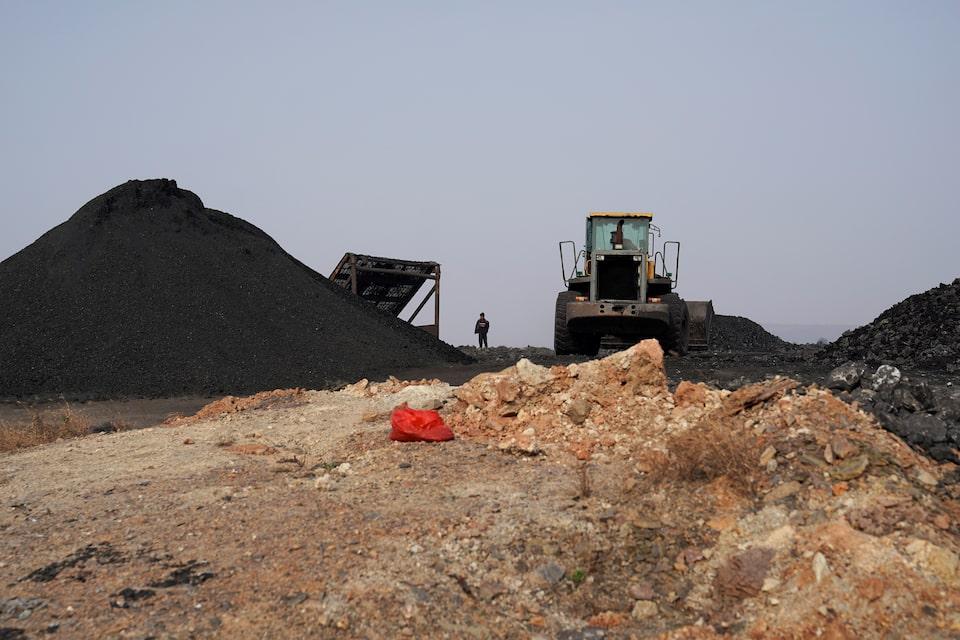
New 2024 coal mining capacity down 46% from 2023, says Global Energy Monitor report Capacity additions slowed in top producers China, India China, India, Australia, Russia make up almost 90% of proposed mine developments Global coal mine capacity 8.9 bln tons in 2024, output a record high of 8.77 bln, says report BEIJING, July 28 (Reuters) - New coal mining capacity fell to a 10-year low in 2024, but future projects especially in major producer China still risk oversupply, said a new report from U.S. think tank Global Energy Monitor on Tuesday. New mines opened globally in 2024 can dig up about 105 million tons of coal per year, down 46% from 2023 and the smallest increase in a decade, the report found. That is about 1% of the 8.9 billion tons of global capacity in 2024. Sign up here. Construction plans in top producers China and India slowed in 2024 from previous years, explaining why new capacity fell to a 10-year low, the report said. But the researchers said the slowdown might not continue. "The slowdown likely reflects delays in expansion approvals, the inherently lengthy nature of coal mine development phases, and a potential easing of supply-demand pressure following the pandemic-fuelled surge in capacity additions over the previous two years." In China, coal mine approvals surged in 2022 after a coal and power shortage raised energy security concerns, but then dipped again as shortages turned to oversupply. Despite the drop in 2024, the world is still planning new mines that could produce over 2 billion tons per year of coal. Of the 2.27 billion tons per year in capacity under development, 1.35 million tons are in China, more than the rest of the world combined. If these projects move forward, China could see another round of overcapacity similar to 2012-2025, the researchers said. In 2015, China had to undertake major supply side reforms to shutter excess steel and coal capacity - a period that has come into the spotlight as China's industrial sector again struggles with crushing oversupply. The GEM data spans 850 new mines, expansions and recommission projects, and China, India, Australia, and Russia make up almost 90% of the proposed developments. The 2024 slowdown in new capacity isn't enough to meet global climate targets, which call for significantly cutting instead of adding coal production, the researchers said. Limiting global warming to 1.5 degrees would require reducing coal production 75% by 2030 from 2020 levels, according to a UN estimate. One of China's proposed mines, the Changtan surface coal mine in Inner Mongolia, would be one of the world's top mines for emissions of methane, a particularly potent greenhouse gas, GEM said. https://www.reuters.com/sustainability/boards-policy-regulation/new-coal-mines-fell-10-year-low-2024-china-pipeline-risks-oversupply-report-says-2025-07-29/
2025-07-29 06:16
US, China hold new talks on tariff truce Federal Reserve's two-day policy meeting later in the day Fed likely to leave policy rate unchanged July 29 (Reuters) - Gold prices were little changed on Tuesday, hovering near a three-week low, as easing fears of a global tariff war and a stronger dollar dampened its safe-haven appeal. Spot gold held its ground at $3,318.71 per ounce, as of 0601 GMT. The precious metal hit its lowest since July 9 in the previous session. Sign up here. U.S. gold futures were up 0.2% at $3,317.50. "Gold trading at circa $3,300 or below is still getting the attention of buyers. While short-term market dynamics courtesy of trade deals and a stronger USD aren't helping gold, looking further ahead there is still upside potential," KCM Trade Chief Market Analyst Tim Waterer said. Top U.S. and Chinese economic officials met in Stockholm on Monday for more than five hours of talks aimed at resolving longstanding economic disputes at the centre of a trade war between the world's top two economies, seeking to extend a truce by three months. The U.S. struck a framework trade agreement with the European Union on Sunday, imposing a 15% import tariff on most EU goods - half the threatened rate - and averting a bigger trade war between the two allies that account for almost a third of global trade. The dollar index (.DXY) , opens new tab held near a two-week high, making gold costlier for buyers holding other currencies. Investors are awaiting a set of U.S. macroeconomic data this week, including inflation figures and the employment report, alongside the Federal Reserve's two-day policy meeting beginning later in the day, with expectations that rates will be held steady. If U.S. data is weak or if U.S. President Donald Trump's criticisms of the Fed inspire the central bank to adopt a more dovish tone this week, that could be positive for gold, Waterer said. Spot silver was steady at $38.18 per ounce, while platinum edged down 0.1% to $1,388.98 and palladium slipped 1.7% to $1,225.44. https://www.reuters.com/world/china/gold-hovers-near-3-week-low-trade-war-fears-ebb-dollar-firms-2025-07-29/

2025-07-29 06:10
MADRID, July 29 (Reuters) - Spanish power utility Endesa (ELE.MC) , opens new tab posted on Tuesday a 30% increase in first-half net profit and warned that the proposed remuneration framework for power grids investments in Spain doesn't offer the right incentives. The company, owned by Italian energy giant Enel (ENEI.MI) , opens new tab, booked a net profit of 1.04 billion euros ($1.20 billion)in the period. This compares with 800 million euros a year earlier, when results included a windfall tax on energy companies. Sign up here. The company criticised a proposal by Spain's competition and energy watchdog CNMC to update the remuneration framework for investments in grids in coming year, including raising the guaranteed return on investments in power grids to 6.46%. "This proposal seriously jeopardizes the level of investment Spain needs to achieve its decarbonisation, increase electricity demand and grid investment goals" included in the country's climate and energy plan, Chief Executive Jose Bogas said. ($1 = 0.8632 euros) https://www.reuters.com/sustainability/climate-energy/endesa-blasts-grid-remuneration-proposal-1h-profit-rises-30-2025-07-29/
2025-07-29 06:04
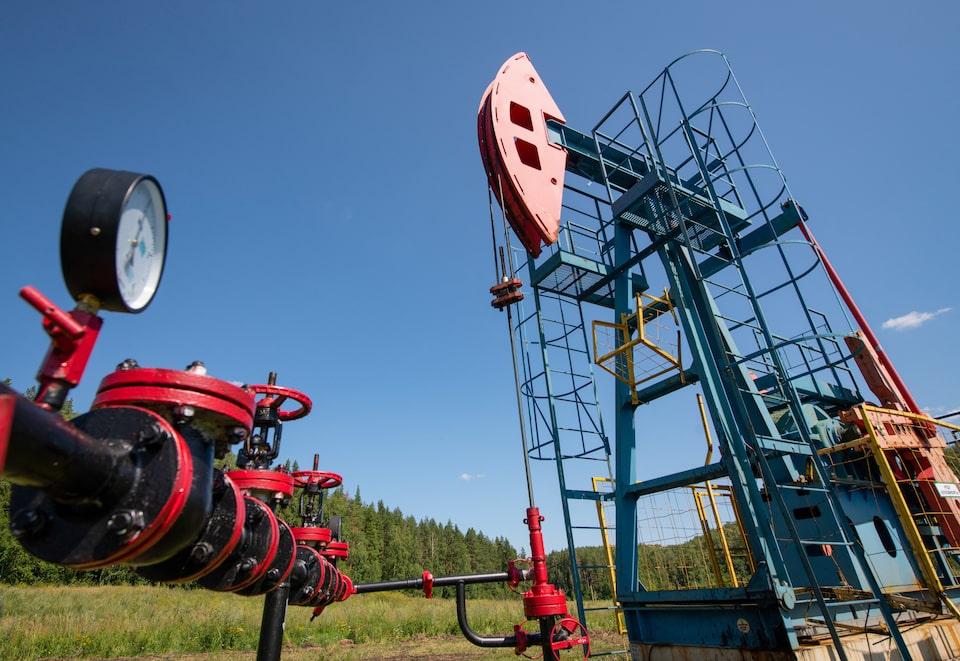
Trump shortens deadline for secondary tariffs on Russian oil exports to 10-12 days Potential sanctions could severely disrupt global oil supplies OPEC+ could increase output, but market uncertainty remains high LONDON, July 29 (Reuters) - U.S. President Donald Trump unexpectedly shortened his deadline for hitting Russia with the most severe sanctions on its oil exports to date. While the market has called the president’s bluff thus far, the sheer scale of the threat may force investors to start pricing in this meaningful tail risk. Speaking alongside British Prime Minister Keir Starmer in Scotland on Monday, Trump said he was giving Moscow only 10 to 12 days to reach a deal to end the war in Ukraine before he would impose so-called secondary sanctions on its oil exports, cutting short his previous 50-day timeframe set on July 14. Sign up here. The sanctions would slap 100% tariffs on buyers of Russian oil, with the biggest customers being India and China. This move has the potential to disrupt global oil supplies, given that Russia exported 4.68 million barrels per day of crude oil in June, around 4.5% of global demand, as well as 2.5 million bpd of refined products, according to the International Energy Agency. Will Trump actually follow through on his threat? That’s anyone’s guess. Going through with the secondary tariffs on Russia risks causing a severe spike in oil prices that could put upward pressure on U.S. inflation, an outcome that could stay Trump’s hand, even if he is “disappointed” in Russian President Vladimir Putin. And there have been several headline-grabbing moments in recent months where the Republican president has rowed back on his threats, including the "reciprocal tariffs" originally announced on April 2 that he quickly toned down in the face of market pressure. But Trump has also made good on some of his threats, most notably the bombing of Iran's nuclear facilities on June 22. Unlike his initial announcement on secondary tariffs, which investors appeared to shrug off, oil prices rose by nearly 3% on Monday. So his erratic Russia policy may make some investors wary of writing off the risk altogether. BLUNT TOOL The next question is, would secondary tariffs – a relatively untested, blunt financial weapon – be effective? The answer is probably yes. One of Russia’s key customers, India – the largest importer of seaborne Russian crude in June at 1.5 million bpd – is currently engaged in tense trade talks with the United States. New Delhi is therefore unlikely to want to exacerbate trade tensions with Washington and thus may be apt to ditch Moscow in favour of new, though undoubtedly more expensive, energy sources. On the other hand, China, which imported around 2 million bpd of Russian oil in June via pipeline and by sea, is less likely to change its buying patterns since it already faces several layers of U.S. tariffs and considers its ties with Moscow to be strategic. But the Kremlin’s finances would still be squeezed regardless if India were to cease purchasing Russian oil, as China would likely be able to buy it even more cheaply. TIT FOR TAT The scale of the potential new sanctions' impact on the global oil market is hard to gauge, given current supply and demand dynamics. World oil demand is expected to grow by 700,000 bpd in 2025, its lowest rate since 2009, while supplies are forecast to rise sharply by 2.1 million bpd to 105.1 million bpd this year, according to the International Energy Agency. The growth in supply has been driven in recent months mostly by output increases by the Saudi Arabia-led oil producing group collectively known as OPEC+. The group in April started unwinding 2.2 million bpd of production cuts and upped the United Arab Emirates’ production quota by 300,000 bpd. The OPEC+ production increases have led, naturally, to a decline in the group's spare production capacity, but Saudi still held, as of June, 2.3 million bpd of production it can bring on stream within 90 days, while the UAE and Kuwait held 900,000 bpd and 600,000 bpd of spare capacity, respectively. This means that the three Gulf producers could ramp up output relatively quickly in the event of a sudden supply disruption. But that knowledge is unlikely to be enough to calm markets should Trump impose his secondary sanctions, partly because of the uncertainty surrounding possible retaliatory measures by Moscow. Revenue from oil and gas export taxes accounted for between 30% and 50% , opens new tab of Russia's federal budget in recent years, making these funds the single most important source of cash for the Kremlin. Putin is therefore likely to respond quite forcefully to any western measures constraining his revenue. One such hint was given last week, when Moscow temporarily blocked foreign tankers from loading crude at Russia's main Black Sea ports following the imposition of new regulations. Loadings from the port of Novorossiisk, which account for more than 2% of global supplies, were resumed the following day, meaning Moscow was likely sending a warning that it can easily introduce similar measures. Trump's latest threat could be an empty one, but regardless, it has shortened the fuse of a timebomb that oil markets might struggle to ignore. Enjoying this column? Check out Reuters Open Interest (ROI), , opens new tabyour essential new source for global financial commentary. ROI delivers thought-provoking, data-driven analysis. Markets are moving faster than ever. ROI , opens new tab can help you keep up. Follow ROI on LinkedIn , opens new tab and X. , opens new tab https://www.reuters.com/markets/commodities/trumps-short-fuse-could-set-off-russian-oil-sanctions-timebomb-2025-07-29/
2025-07-29 05:47
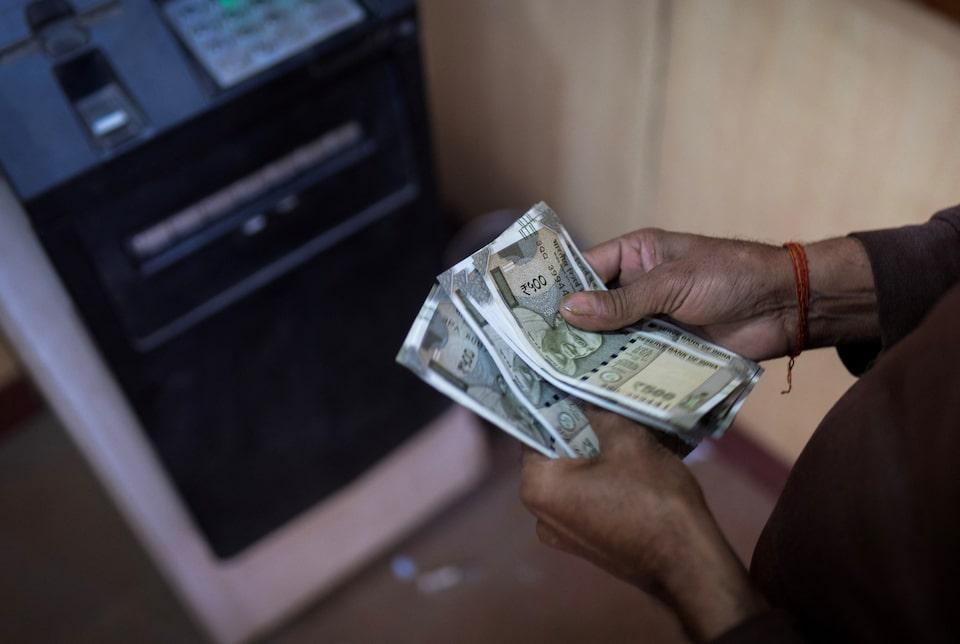
MUMBAI, July 29 (Reuters) - The Indian rupee declined to its weakest level since mid-March in early trade on Tuesday, as a slump in the euro sharply raised the dollar index, and demand for the greenback from state-run banks added to the pressure. The rupee hit a low of 86.9150 against the U.S. dollar before paring losses to 86.8725, down 0.2% on the day, as of 11:10 a.m. IST. Sign up here. In recent sessions, the Indian currency has also been troubled by persistent outflows from local equities, amid a tepid quarterly earnings season, alongside muted prospects of a U.S.-India trade deal ahead of the August 1 deadline. While India is still awaiting concrete developments in negotiations, sentiment surrounding a deal between the European Union and the U.S. turned sour with leaders in France and Germany lamenting the outcome. The euro was last quoted a tad lower at 1.1584 after falling more than 1% against the dollar on Monday. Asian currencies, meanwhile, were moderately weaker between 0.2% and 0.4%. "With net short dollar positions looking crowded and easing, the U.S. dollar could get some reprieve in the near term," MUFG said in a note. But the focus will also be on the Federal Reserve's policy decision due on Wednesday wherein a dovish tilt could lead to renewed U.S. dollar weakness, supporting the broader Asian FX outlook, the note added. On the day, traders also pointed to an uptick in very-near tenor dollar-rupee swap rates spurred by anticipation of IPO-related cash dollar inflows alongside maturity of the Reserve Bank of India's forward dollar positions at the end of the month. The spot-week USD/INR swap rate, for instance, was quoting at an implied rate of about 0.60 paisa per day, well above the prevailing overnight swap rate of about 0.30 paisa. https://www.reuters.com/world/india/rupee-falls-four-month-low-firmer-greenback-state-run-banks-dollar-bids-2025-07-29/