2025-07-28 22:57
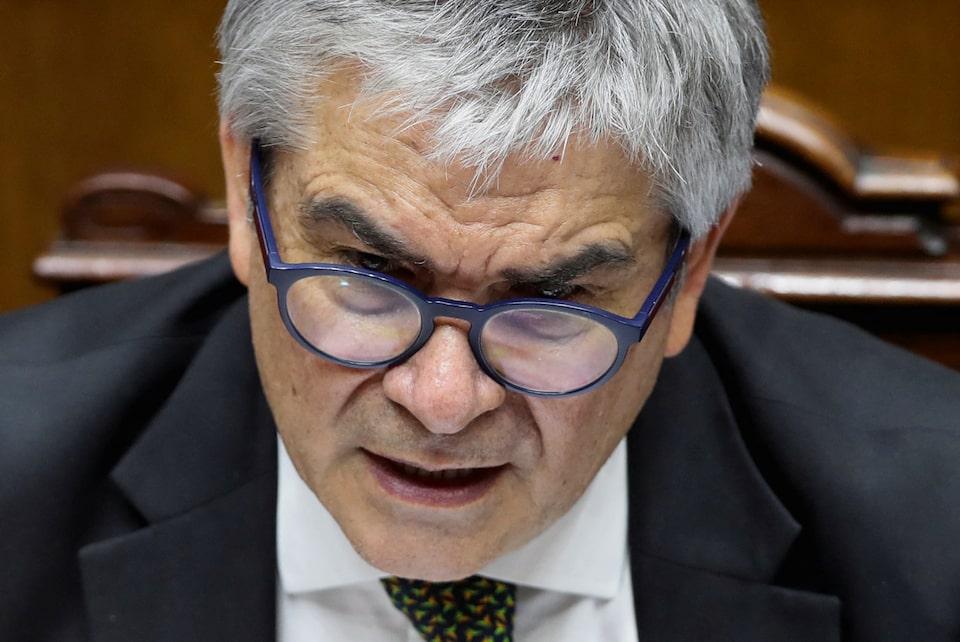
SANTIAGO, July 28 (Reuters) - Chile expects U.S. copper tariffs to be discussed within broader U.S. trade talks in Washington this week, Finance Minister Mario Marcel said on Monday in an interview with local radio program Duna. Marcel added that Chile would ask for any tariffs to be included within a broader trade agreement with the United States. President Trump's administration has said it will impose 50% tariffs on copper imports as of August 1. Sign up here. Chile is the world's top supplier of the red metal and is also the biggest provider of refined copper to the U.S., although it sends much higher volumes to China. Monday marks the start of a second round of talks between Chilean officials and the office of the U.S. Trade Representative. "What we hope is that these conversations we're starting today in Washington will also cover the issue of copper," Marcel said. "Because it wouldn't be very useful for us to have a trade agreement that excludes more than half of our exports to the U.S., such as copper and wood." When asked if Chile would seek an exemption to the U.S. copper tariffs imposed by Trump, the minister said they would seek for any tariffs to be included in a broader trade pact. "We want it to be part of the agreement, within the broader commercial discussions with Chile — not something handled separately — because it's a very central issue," the minister said. Marcel noted that other countries have included exemptions and carve-outs in their trade agreements. (This story has been corrected to say that Chile's talks with the USTR are in the second round, not the third, in paragraph 4) https://www.reuters.com/world/americas/chile-will-ask-us-include-copper-within-us-chile-trade-deal-2025-07-28/
2025-07-28 22:35
Trump administration is focused on rare earths, China competition Some Trump allies wary of intervening in conflict Myanmar mines heavy rare earths that are processed in China WASHINGTON/BANGKOK, July 28 (Reuters) - The Trump administration has heard competing proposals that would significantly alter longstanding U.S. policy toward Myanmar, with the aim of diverting its vast supplies of rare earth minerals away from strategic rival China, four people with direct knowledge of the discussions said. Nothing has been decided and experts say there are huge logistical obstacles, but if the ideas are ever acted upon, Washington may need to strike a deal with the ethnic rebels controlling most of Myanmar's rich deposits of heavy rare earths. Sign up here. Among the proposals are one advocating talks with Myanmar's ruling junta to get a peace deal with the Kachin Independence Army rebels and another calling for the U.S. to instead work directly with the KIA without engaging the junta. Washington has avoided direct talks with the country's military leaders following their overthrow of the country's democratically elected government in 2021. The ideas have been proposed to administration officials by a U.S. business lobbyist, a former adviser to Aung San Suu Kyi, in indirect talks with the KIA and some outside experts, the sources said. The conversations have not previously been reported. Rare earths are a group of 17 metals used to make magnets that turn power into motion. So-called heavy rare earths are used to build fighter jets and other high-performance weaponry. The U.S. produces very small amounts of heavy rare earths and is reliant on imports. Securing supplies of the minerals is a major focus of the Trump administration in its strategic competition with China, which is responsible for nearly 90% of global processing capacity, according to the International Energy Agency. Engaging the junta would be a sharp departure for the United States, given U.S. sanctions on the military leaders and the violence committed against the Rohingya minority that Washington calls genocide and crimes against humanity , opens new tab. Last week, the Trump administration lifted sanctions designations on several junta allies, but U.S. officials said this does not indicate any broader shift in U.S. policy toward Myanmar. The ideas pitched to the U.S. administration also include easing U.S. President Donald Trump's threatened 40% tariffs on the country, pulling back sanctions against the junta and its allies, working with India to process some heavy rare earths exported from Myanmar, and appointing a special envoy to execute these tasks, people familiar with the matter said. Some of these suggestions were discussed in a July 17 meeting in Vice President JD Vance's offices that included Adam Castillo, a former head of the American Chamber of Commerce in Myanmar who runs a security firm in the country, a person close to Vance's office said. Among those present were advisers to Vance on Asian affairs and trade. Vance himself did not attend, the source said. Castillo told Reuters he suggested to U.S. officials that the United States could play a peace-broker role in Myanmar and urged Washington to take a page out of China’s playbook by first brokering a bilateral self-governance deal between the Myanmar military and the KIA. Myanmar's ruling junta and the KIA did not respond to a request for comment. While Vance's office declined to comment on Castillo's visit to the White House, one person familiar with the situation said the Trump administration has been reviewing policy on Myanmar, also known as Burma, since Trump's January inauguration and had weighed direct discussions with the junta over trade and tariffs. The White House declined to comment. REVIEWING MYANMAR POLICY The White House discussions were described as exploratory and in early stages by people familiar with them, who added the talks may result in no shift in strategy at all by Trump, given the administration's wariness about intervening in foreign conflicts and in Myanmar's complex crisis. "The officials took this meeting as a courtesy to the American business community and to support President Trump’s efforts to balance the U.S. $579 (million) trade deficit with Burma," a senior administration official said when asked about the July 17 meeting. Castillo, who describes Myanmar's rare earth deposits as China's "golden goose," said he told U.S. officials that key ethnic armed groups - particularly the KIA - were tired of being exploited by China and wanted to work with the United States. Mines in Myanmar's Kachin region are major producers of heavy rare earths that are exported to China for processing. He said he had repeatedly urged officials in Washington to pursue a deal with the KIA that includes cooperation with U.S. partners in the Quad grouping - specifically India - for resource processing and eventual heavy rare earths supply to the United States. The so-called Quad grouping brings together the United States with India, as well as Australia and Japan. India's Ministry of Mines did not respond to an email seeking comment. An Indian government official, speaking on condition of anonymity, said he was unaware of whether the Trump administration had communicated any such plan to India but stressed that such a move would take several years to materialize because it would require infrastructure to be built for processing rare earths. Another pitch to the White House was more in line with the Myanmar policy Trump inherited from former President Joe Biden. Sean Turnell, an Australian economist and former adviser to Suu Kyi, whose government the junta toppled in 2021, said his rare earths proposal was to encourage the Trump administration to continue supporting Myanmar's democratic forces. In a visit to Washington earlier this year, Turnell said he met with officials from the State Department, the White House National Security Council and Congress, and urged continued support for the country's opposition. "One of the pitches was that the U.S. could access rare earths via KIA etc," he said, adding that the group wants to diversify away from China. There have also been multiple discussions between U.S. officials and the Kachin rebel group on rare earths through interlocutors in recent months, said a person with knowledge of the talks, which have not previously been reported. OBSTACLES In the years since the coup, Myanmar has been ravaged by civil war and the junta and its allies have been pushed out of much of the country's borderlands, including the rare earths mining belt currently under control of the KIA. A rare earths industry source said that U.S. officials had reached out around three months ago, following the Kachin takeover of the Chipwe-Pangwa mining belt, to ask for an overview of the Kachin rare earths mining industry. The person added that any new, major rare earths supply chain, which would require moving the minerals out of remote and mountainous Kachin State into India and onward, may not be feasible. Swedish author Bertil Lintner, a leading expert on Kachin State, said the idea of the United States obtaining rare earths from Myanmar from under the nose of China seemed "totally crazy" given the unforgiving mountainous terrain and primitive logistics. "If they want to transport the rare earths from these mines, which are all on the Chinese border, to India, there’s only one road," Lintner said. "And the Chinese would certainly step in and stop it." For its part, the junta appears eager to engage with Washington after years of isolation. When Trump threatened new tariffs on Myanmar's U.S.-bound exports this month as part of his global trade offensive, he did so in a signed letter addressed personally to the junta's chief, Min Aung Hlaing. Min Aung Hlaing responded by lavishing praise on Trump for his "strong leadership" while asking for lower rates and the lifting of sanctions. He said he was ready to send a negotiating team to Washington, if needed. Senior Trump administration officials said the decision to lift some sanctions was unrelated to the general's letter. https://www.reuters.com/world/china/trump-team-hears-pitches-access-myanmars-rare-earths-2025-07-28/

2025-07-28 21:07
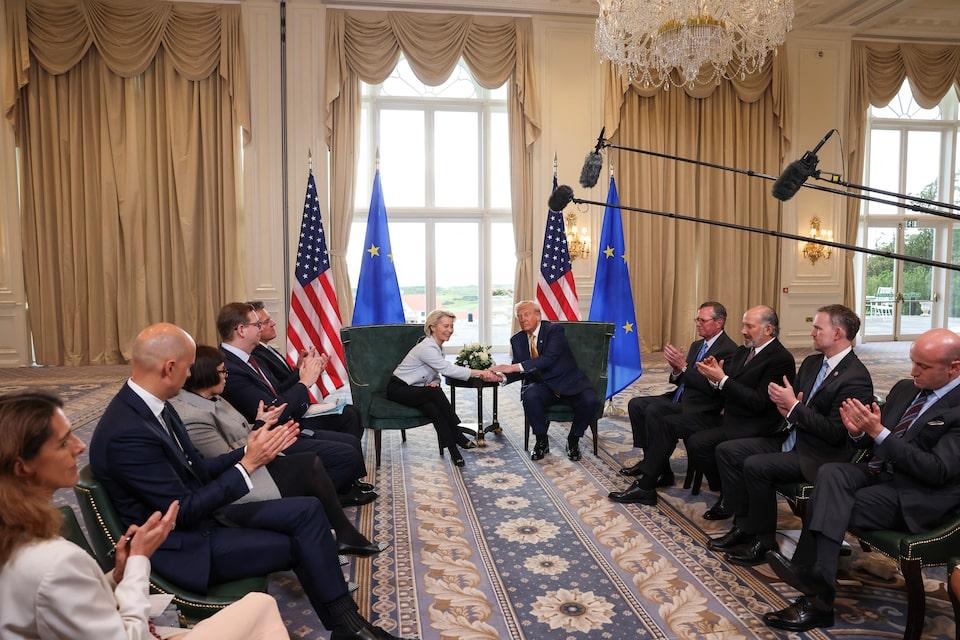
ORLANDO, Florida, July 28 (Reuters) - Investors' initial response to the U.S.-EU trade deal framework saw the euro and German stocks slammed lower on Monday, while the S&P 500 and Nasdaq notched fresh closing highs in choppy trade, also supported by optimism around U.S. tech earnings. More on that below. In my column today I look at whether the Q2 earnings season could be an inflection point for U.S. stocks - does the 'Mag 7' megacap concentration persist, or is the market finally beginning to broaden out? Sign up here. If you have more time to read, here are a few articles I recommend to help you make sense of what happened in markets today. Today's Key Market Moves Fading trade deal relief? The relief and feel-good factor for markets that Sunday's U.S.-European Union trade deal initially sparked waxed and waned on Monday, with European assets hit hard and Wall Street trading in negative territory for much of the session. The S&P 500 and Nasdaq did manage to set new closing highs. The trade deals with the UK, Japan and now the EU are seen as significant wins for Washington and President Donald Trump, as they secure higher tariffs on imports into the U.S. without retaliation and include commitments for additional investment. Many Europeans have criticized the EU for caving in. Oppenheimer Asset Management on Monday raised its year-end target for the S&P 500 index to 7,100, the highest among major Wall Street brokerages, betting on easing trade tensions and strong corporate earnings. But as commentator Matthew Klein noted on Monday, it is odd that the country unilaterally making things more expensive for its citizens is somehow deemed to be "winning". The longer-term impact on the U.S. economy and revenues remain to be seen, but most observers agree growth will slow, and inflation and unemployment will rise in the short-term. Joseph Wang, CIO at Monetary Macro, estimates that the "trade war is concluding with an effective tax hike worth about 1% of GDP." With the tariff on most imports from the EU now set at 15%, America's overall average effective tariff rate is now 18.2%, according to the Yale Budget Lab, the highest since 1934. Attention now turns to Stockholm, where U.S. Treasury Secretary Scott Bessent and China's Vice Premier He Lifeng are seeking to extend a tariff truce by three months. These talks, set to conclude on Tuesday, could also pave the way for a meeting between Trump and Chinese President Xi Jinping in late October or early November. On top of trade, there are plenty market-moving developments and events for investors to monitor this week, including top-tier corporate earnings, policy meetings in Japan and the U.S., and the latest U.S. inflation and employment reports. This week is the busiest of the second-quarter earnings season with over 150 companies in the S&P 500 scheduled to report, including four of the 'Magnificent Seven' tech giants later in the week. Tuesday's focus will likely center on Visa, Proctor & Gamble, and Boeing. Elsewhere, the U.S. Treasury on Monday said it expects to borrow $1.007 trillion in the third quarter, almost double the April estimate mainly due to the lower beginning-of-quarter cash balance and projected lower net cash flows. Is U.S. stock rally near 'Mag 7' turning point? As investors brace for the busiest week of the U.S. earnings season, with four of the 'Magnificent Seven' tech giants reporting, debate is picking up again about these megacap firms' influence over U.S. equity indexes and whether we could be seeing the beginnings of true market broadening. By some measures, this small clutch of tech titans' profits, market cap, and valuations as a share of the wider market has never been bigger. Broader indices are at record highs, but strip out these firms and the picture is much less rosy. Indeed, since the beginning of 2023, the S&P 500 composite - the benchmark 'market cap' index increasingly dominated by the 'Mag 7' - has gained 67%, more than double the 'equal-weight' index's 32%. Only two years ago, the S&P 500 composite/equal-weight ratio was 0.66, meaning the composite index was worth around two-thirds of the equal weight index. That ratio is now 0.84, the highest since 2003. There's good reason for that. According to Larry Adam, chief investment officer at Raymond James, 12-month forward earnings estimates for the S&P 500 have outpaced estimates for the equal-weight index by 14%. And Tajinder Dhillon, senior research analyst at LSEG, notes that the 'Mag 7' last year accounted for 52% of overall earnings growth. Many investors and analysts consider it unhealthy to have the fate of the entire market dependent on so few companies. It may be fine when they're flying high, but not so much if one or two of them take a dive. Plus, it makes stock picking more difficult. If the market basically goes where the 'Mag 7' or Nvidia go, why should an investor bother buying anything else? That's a recipe for market inefficiencies. YACHTS AND ALL BOATS? There have recently been nascent signs that the market may be broadening out beyond tech and AI-related names, largely thanks to positive news on the trade front. Last week, the equal-weight index eclipsed November's high to set a fresh record. Raymond James's CIO Adam notes that the equal-weight index outperformed the S&P 500 last week for the fourth week in the last 13. More of the same this week would mark its first monthly outperformance since March. Can it hit this mark? Around 160 of the S&P 500-listed firms report this week, including Meta and Microsoft on Wednesday and Amazon and Apple on Wednesday. It's not a stretch to say these four reports will move the market more than the rest combined. LSEG's Dhillon says the Mag 7's share of total earnings growth is expected to fall to 37% this year and 27% next year. The expected earnings growth spread between Mag 7 and the wider index in the second quarter - 16.4% vs. 7.7% - is the smallest since 2023, and will shrink more in Q3, he adds. Larry Adam at Raymond James, however, thinks the recent market broadening is a "short-term normalization" rather than a "material shift". He thinks the earnings strength of the tech-related sectors justifies the valuation premium on these stocks. Regardless, what we know for sure is that fears about the market's concentration and narrowness have been swirling for years and there has yet to be a reckoning. The equal-weight index's rise to new highs last week suggests the rising tide is lifting all boats, not just the billionaire's yachts. Essentially, the Mag 7 and large caps are outperforming, but if you peel back the onion, other sectors like financials and industrials are also doing well. And look around the world. Many indices outside the U.S. that aren't tech-heavy are approaching or printing new highs also, like Britain's FTSE 100 and Germany's DAX. "To see the largest names leading isn't a worrisome sign, especially as they are backing it up with very strong earnings," says Ryan Detrick, chief market strategist at Carson Group. "This isn't a weak breadth market, it is broad based and a very healthy rally." This week's earnings might go some way to determining whether this continues for a while yet. What could move markets tomorrow? Want to receive Trading Day in your inbox every weekday morning? Sign up for my newsletter here. Opinions expressed are those of the author. They do not reflect the views of Reuters News, which, under the Trust Principles , opens new tab, is committed to integrity, independence, and freedom from bias. https://www.reuters.com/world/china/global-markets-trading-day-2025-07-28/
2025-07-28 21:02
LIMA, July 28 (Reuters) - Peru is considering whether to give the green light to a wave of new mining projects worth a combined $6 billion in investments, President Dina Boluarte said on Monday, as her deeply unpopular government seeks to boost revenues from the industry. The government is evaluating the authorization of 134 exploration and exploitation projects, Boluarte said in a traditional Independence Day address to Congress. Sign up here. Officials in Peru, the world's third-biggest copper producer, are in talks with informal miners who launched protests in late June, blocking a transport corridor used by major miners including MMG (1208.HK) , opens new tab and Glencore (GLEN.L) , opens new tab. Miners have paused that protest and corridor blockade during negotiations over a potential new law for the sector. Among informal miners, tensions escalated after over 50,000 were removed from a formalization scheme, leaving just 31,000 that the government is seeking to bring in line with regulations by year end. Boluarte said the government was working on starting a private mining fund to give small formal miners access to better financing. As she spoke, police used tear gas to disperse hundreds of protesters marching toward Congress. Some carried cardboard coffins, a reference to the dozens killed during unrest early in her term. Recent polls put Boluarte's approval ratings at between 2% and 4%, among the lowest for any world leader. In the address, the president also announced a deal with Ecuador's state oil firm Petroecuador to connect Ecuadorean oil fields to a Peruvian pipeline, allowing transport to Peru's Talara refinery. POVERTY NEAR 30% While Peru's economy has rebounded from a recession triggered by anti-government unrest, poverty levels remain near 30%. Boluarte, whose term ends in 2026, took office in late 2022 after her predecessor, Pedro Castillo, was ousted and arrested for attempting to illegally dissolve Congress. She faces an investigation over the deaths during subsequent protests, for which she denies wrongdoing. Her cabinet sparked further outrage in July by doubling her salary. "The icing on the cake is raising their salaries and colluding with those with power to keep plundering the country’s natural resources," said protester Milagros Sanchez, a public school teacher. The Andean nation has been mired in political instability, with six presidents since 2018. The next general election is scheduled for April 2026. https://www.reuters.com/world/americas/peru-mulls-green-light-6-billion-mining-projects-2025-07-28/

2025-07-28 20:50
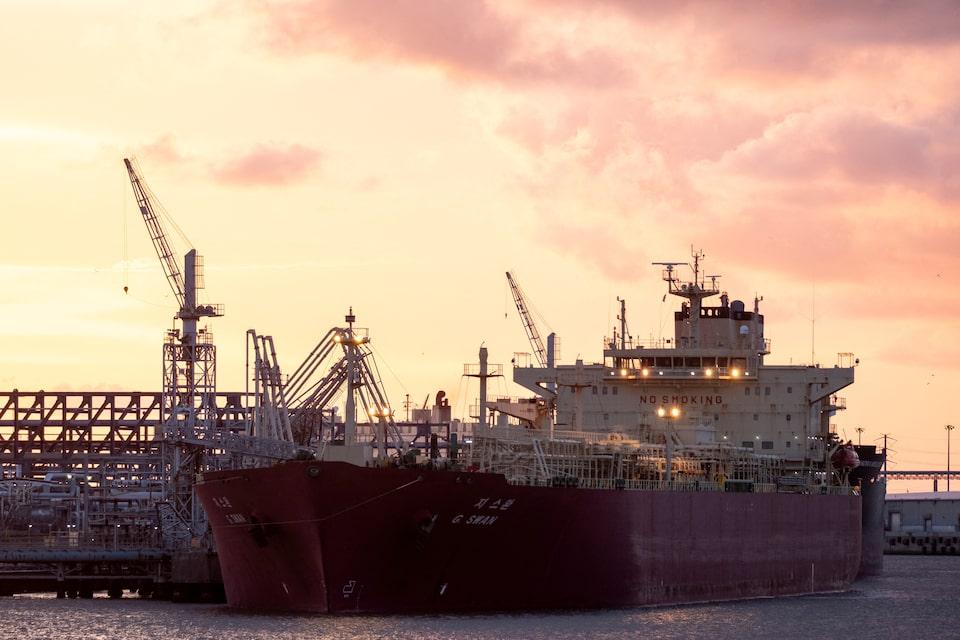
EU pledges $250 bln/yr spend on U.S energy for three years Would require huge redirection of U.S. energy exports Agreement not legally binding EU companies, not the Commission or EU entities, buy energy BRUSSELS/HOUSTON, July 28 (Reuters) - The European Union's pledge to buy $250 billion of U.S. energy supplies per year is unrealistic because it would require the redirection of most U.S. energy exports towards Europe and the EU has little control over the energy its companies import. The U.S. and EU struck a framework trade deal on Sunday, which will impose 15% U.S. tariffs on most EU goods. The deal included a pledge for the EU to spend $250 billion annually on U.S. energy - imports of oil, liquefied natural gas and nuclear technology - for the next three years. Sign up here. Total U.S. energy exports to all buyers worldwide in 2024 amounted to $318 billion, U.S. Energy Information Administration data showed. Of that, the EU imported a combined $76 billion of U.S. petroleum, LNG and solid fuels such as coal in 2024, according to Reuters' calculations based on Eurostat data. More than tripling those imports was unrealistic, analysts said. Arturo Regalado, senior LNG analyst at Kpler, said the scope of the energy trade envisioned in the deal "exceeds market realities." "U.S. oil flows would need to fully redirect towards the EU to reach the target, or the value of LNG imports from the US would need to increase sixfold," Regalado said. There is strong competition for U.S. energy exports as other countries need the supplies - and have themselves pledged to buy more in trade deals. Japan agreed to a "major expansion of U.S. energy exports" in its U.S. trade deal last week, the White House said in a statement. South Korea has also indicated interest in investing and purchasing fuel from an Alaskan LNG project as it seeks a trade deal. Competition for U.S. energy could drive up benchmark U.S. oil and gas prices and encourage U.S. producers to favour exports over domestic supply. That could make fuel and power costs more expensive, which would be a political and economic headache for U.S. and EU leaders. Neither side has detailed what was included in the energy deal - or whether it covered items such as energy services or parts for power grids and plants. The EU estimates its member countries' plans to expand nuclear energy would require hundreds of billions of euros in investments by 2050. Its nuclear reactor-related imports, however, totalled just 53.3 billion euros in 2024, trade data shows. The energy pledge reflected the EU's analysis of how much U.S. energy supply it could accommodate, a senior EU official said, but that would depend on investments in U.S. oil and LNG infrastructure, European import infrastructure, and shipping capacity. "These figures, again, are not taken out of thin air. So yes, they require investments," said the senior official, who declined to be named. "Yes, it will vary according to the energy sources. But these are figures which are reachable." There was no public commitment to the delivery, the official added, because the EU would not buy the energy - its companies would. Private companies import most of Europe's oil, while a mix of private and state-run companies import gas. The European Commission can aggregate demand for LNG to negotiate better terms, but cannot force companies to buy fuel. That is a commercial decision. "It's just unrealistic," ICIS analysts Andreas Schröder and Ajay Parmar said in written comments to Reuters. "Either Europe pays a super high non-market reflective price for U.S. LNG or it takes way too much LNG volumes, more than it can cope with." U.S. PRODUCTION The United States is already the EU's top supplier of LNG and oil, shipping 44% of EU LNG needs and 15.4% of its oil in 2024, according to EU data. Raising imports to the target would require a U.S. LNG expansion way beyond what is planned through 2030, said Jacob Mandel, research lead at Aurora Energy Research. "You can add on capacity," Mandel said. "But if you're talking about the scale that would be necessary to meet these targets, the $250 billion, then it's not really feasible." Europe could buy $50 billion more of U.S. LNG annually as supply increases, he said. REPLACING RUSSIA The EU has said it could import more U.S. energy as its plan advances to end Russian oil and gas imports by 2028. The EU imported around 94 million barrels of Russian oil last year - 3% of the bloc's crude purchases - and 52 billion cubic metres (bcm) of Russian LNG and gas, according to EU data. For comparison, the EU imported 45 bcm of U.S. LNG last year. Higher EU fuel purchases would, however, run counter to forecasts for EU demand to decline as it shifts to clean energy, analysts said. "There is no major need for the EU to import more oil from the U.S., in fact, its oil demand peaked a number of years ago," Schröder and Parmar said. ($1 = 0.8571 euro) https://www.reuters.com/sustainability/boards-policy-regulation/eus-250-billion-per-year-spending-us-energy-is-unrealistic-2025-07-28/
2025-07-28 20:37
Trump shortens previous 50-day deadline He threatens sanctions if Russia makes no progress Ukraine's Zelenskiy praises Trump's stance on Russia TURNBERRY, Scotland, July 28 (Reuters) - U.S. President Donald Trump set a new deadline on Monday of 10 or 12 days for Russia to make progress toward ending the war in Ukraine or face consequences, underscoring frustration with Russian President Vladimir Putin over the 3-1/2-year-old conflict. Trump has threatened sanctions on both Russia and buyers of its exports unless progress is made. The fresh deadline suggests the U.S. president is prepared to move forward on those threats after previous hesitation to do so. Sign up here. Speaking in Scotland, where he was holding meetings with European leaders and playing golf, Trump said he was disappointed in Putin and shortening a 50-day deadline he had set on the issue earlier this month. "I'm going to make a new deadline of about ... 10 or 12 days from today," Trump told reporters during a meeting with British Prime Minister Keir Starmer. "There's no reason in waiting... We just don't see any progress being made." There was no immediate comment from the Kremlin. In a post on X, former Russian President Dmitry Medvedev, a close ally of Putin, said Trump was playing "a game of ultimatums" that could lead to a war involving the U.S. Medvedev wrote: "Each new ultimatum is a threat and a step towards war. Not between Russia and Ukraine, but with (Trump's) own country." Ukrainian President Volodymyr Zelenskiy praised Trump's "particularly significant" statement as timely in trying to move forward to a peace settlement. "Clear stance and expressed determination by @POTUS – right on time, when a lot can change through strength for real peace," Zelenskiy wrote on X. "I thank President Trump for his focus on saving lives and stopping this horrible war," Zelenskiy said. Ukraine, he said later in his nightly video address, favoured tougher sanctions as a "key element" in ending the war. "Russia pays attention to sanctions, pays attention to such losses," he said Trump, who has expressed annoyance also with Zelenskiy, has not always followed tough talk about Putin with action, citing what he deems a good relationship that the two men have had previously. On Monday, Trump indicated he was not interested in more talks with Putin. He said sanctions and tariffs would be used as penalties for Moscow if it did not meet Trump's demands. "There's no reason to wait. If you know what the answer is going to be, why wait? And it would be sanctions and maybe tariffs, secondary tariffs," Trump said. "I don't want to do that to Russia. I love the Russian people." Ukraine had proposed a summit between Putin and Zelenskiy before the end of August, but the Kremlin has said that timeline was unlikely and that a meeting could only happen as a final step to clinch peace. Russia's foreign ministry said on Saturday that if the West wanted real peace with Ukraine, it would stop supplying Kyiv with weapons. Trump has repeatedly voiced exasperation with Putin for pursuing attacks on Ukraine despite U.S. efforts to end the war. Trump has played up successes in other parts of the world where the United States has helped to broker peace agreements and has been flattered by some leaders who suggest he should be given the Nobel Peace Prize. "I'm disappointed in President Putin," Trump said on Monday. "I'm going to reduce that 50 days that I gave him to a lesser number because I think I already know the answer what's going to happen." Trump, who is also struggling to achieve a peace deal in Gaza, has touted his role in ending conflicts between India and Pakistan as well as Rwanda and Congo. Before returning to the White House in January, Trump campaigned on a promise to end Russia's conflict with Ukraine in a day. "We thought we had that settled numerous times, and then President Putin goes out and starts launching rockets into some city like Kyiv and kills a lot of people in a nursing home or whatever," Trump said. "And I say that's not the way to do it." https://www.reuters.com/world/europe/trump-sets-new-deadline-10-or-12-days-russia-act-ukraine-2025-07-28/