2025-07-28 01:31
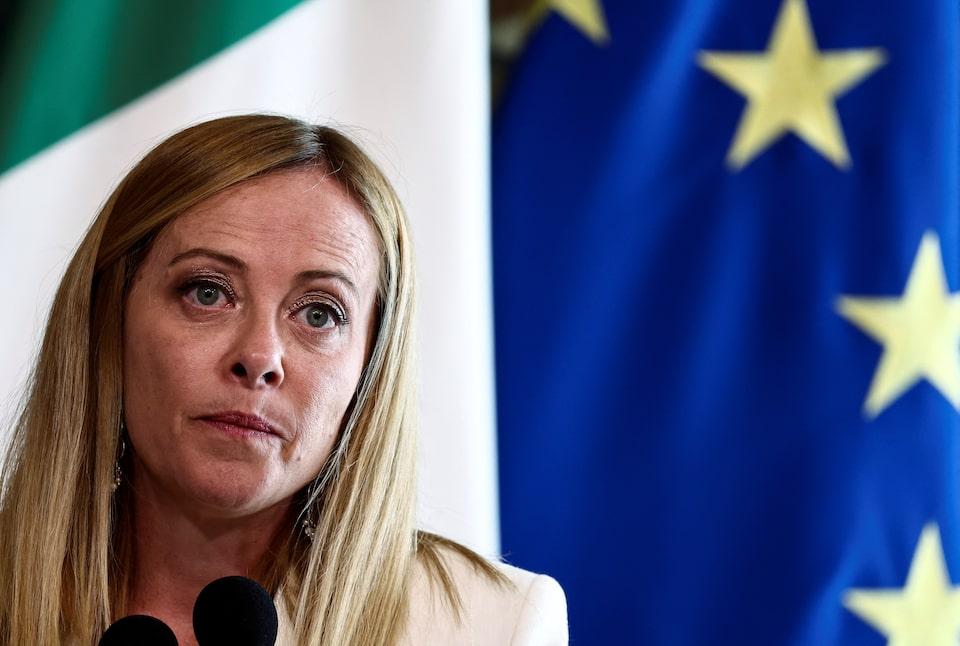
MUMBAI, July 28 (Reuters) - The Indian rupee and government bonds will react to a host of cues this week, including a U.S. Federal Reserve policy decision and the August 1 reciprocal tariff deadline, which is likely to keep traders cautious. The rupee closed at 86.5150 against the U.S. dollar on Friday, down 0.4% on the week, as foreign portfolio outflows and uncertainty over a U.S.-India trade agreement kept sentiment tepid. Sign up here. While the Fed is widely expected to keep rates unchanged on Wednesday, investors will pay close attention to commentary from Fed Chair Powell to gauge the outlook for U.S. policy rates. "As long as the jobs picture holds up, firmer inflation may well delay the restart of the Fed easing cycle and provide the dollar with a lift this summer," ING said in a note. Later in the week, data on the U.S. labour market will be in focus alongside an inflation print to gauge how tariffs are affecting the world's largest economy. Meanwhile, the deadline to strike trade deals with the U.S. elapses on August 1. Over the weekend, the United States and the European Union announced a deal, which will result in a 15% tariff on EU goods, half what Trump had threatened to impose from August 1. Japan and the European Union have reached agreements with U.S., alongside others such as Indonesia and Vietnam, even as India's negotiations have appeared to run into roadblocks over key sectors such as dairy and agriculture. Traders reckon that the rupee will continue to hold a slightly bearish bias and hover in a 86.30-87 range in the near term. Heightened risk of "news-led price action" should prompt speculators to keep positions small with tight stop-losses, a trader at a foreign bank said. Meanwhile, India's 10-year benchmark 6.33% 2035 bond yield , which settled last week at 6.3505%, is expected to move in a range of 6.31% to 6.38%. Apart from the Fed guidance, focus will also remain on expectations about any potential rate cut in the RBI's upcoming policy decision, due on August 6. A plunge in India's retail inflation to a more-than-six-year low in June, along with expectations that it will slip to a record low in July, has led to increased talks of a rate cut, with some even expecting action next week. The central bank slashed its key interest rate by a steeper-than-expected 50 bps last month and changed its policy stance to "neutral" from "accommodative", which had fueled speculation that the rate cut cycle may be over. Banks will also gauge the liquidity situation and movement in overnight rates after a volatile last week, which saw rates rising beyond the Marginal Standing Facility rate. Foreign investors have been on the buying side, with net purchases of over 100 billion rupees in the last five weeks, as bets of at least one more rate cut have risen. India's fundamental story remains intact. Inflation is under control and fiscal health is in check, and India is one of the large benchmark weights within the JPMorgan emerging market debt index, said Jean‑Charles Sambor, head of emerging markets debt at TT International Asset Management. "We think that fundamentals will remain very attractive for foreign investors." KEY EVENTS: India ** June fiscal deficit - July 28, Monday (3:30 p.m. IST) ** June industrial output - July 28, Monday (4:00 p.m. IST)(Reuters poll - 2.4%) ** July HSBC manufacturing PMI - August 1, Friday (10:30 a.m.) U.S. ** July consumer confidence - July 29, Tuesday (7:30 p.m. IST) ** April-June GDP advance - July 30, Wednesday (6:00 p.m. IST) ** Federal Reserve monetary policy decision - July 30, Wednesday (11:30 p.m. IST)(Reuters poll - rates unchanged) ** Initial weekly jobless claims for week to July 21 - July 31, Thursday (6:00 p.m. IST) ** June personal consumption expenditure index, core PCE index - July 31, Thursday (6:00 p.m. IST) ** July non-farm payrolls and unemployment rate - August 1, Friday (6:00 p.m. IST) ** July S&P Global manufacturing PMI final - August 1, Friday (7:15 p.m. IST) ** July ISM manufacturing PMI - August 1, Friday (7:30 p.m. IST) ** July U Mich sentiment final - August 1, Friday (7:30 p.m. IST) https://www.reuters.com/world/india/indian-rupee-bond-markets-cautious-week-dominated-by-fed-tariffs-2025-07-28/
2025-07-28 00:19
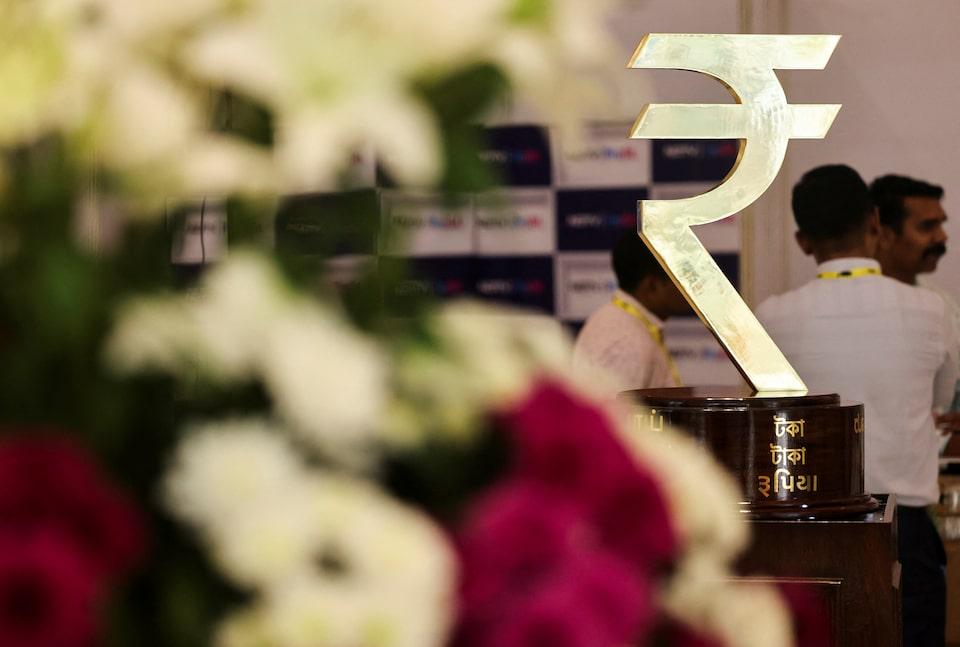
HONG KONG, July 28 (Reuters) - CK Hutchison (0001.HK) , opens new tab said on Monday it wants a major Chinese strategic investor to join the consortium bidding for its $22.8 billion ports business, after media reports that state-owned China COSCO Shipping Corp may join the group. In a statement, CK Hutchison said changes to the consortium's composition and the structure of the transaction will be necessary for the deal to secure regulatory approvals, and that it will allow as much time as needed to achieve those. Sign up here. The announcement comes as a 145-day exclusivity period for talks between CK Hutchison and the original bidding consortium - led by BlackRock (BLK.N) , opens new tab and Gianluigi Aponte's MSC - expired on Sunday. The deal, which includes two ports near the strategically crucial Panama Canal, has become highly politicised as tension escalates between China and the United States. Beijing views the potential sale as a threat to its interests, seeing the BlackRock-led consortium as a proxy for growing American influence in a region China considers economically and geopolitically significant. The outlook for the deal has grown increasingly uncertain in recent days, with sources telling Reuters that COSCO - a key player in China's global maritime ambitions - is exploring a role in the bid. https://www.reuters.com/markets/commodities/ck-hutchison-eyes-chinese-bidding-partner-228-billion-port-sale-2025-07-27/
2025-07-27 23:49
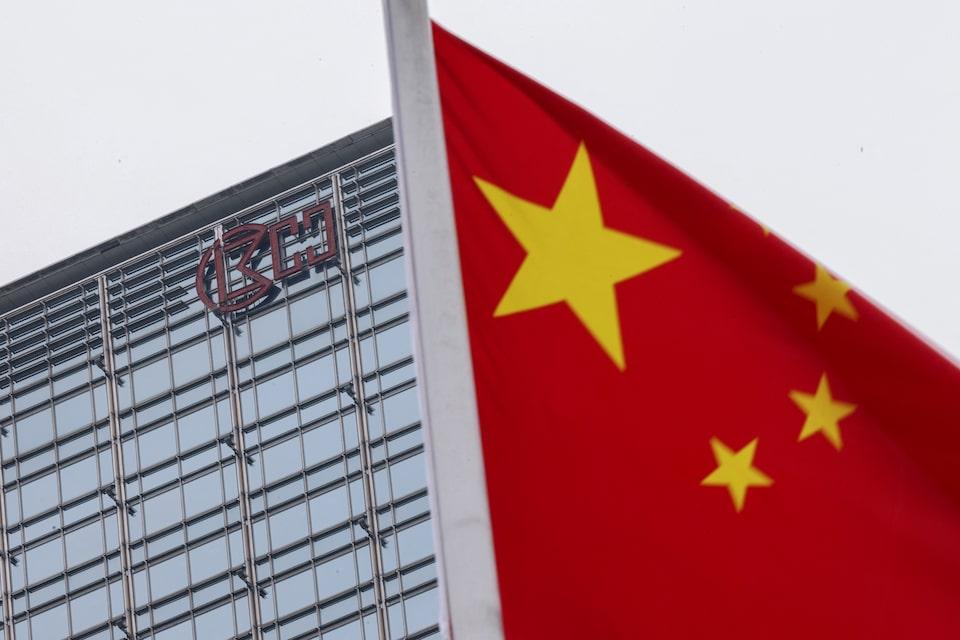
Euro rises against dollar, pound, yen after deal announcement S&P 500 e-minis up 0.3% Trade deal averts spiraling row between the two allies Deal includes 15% tariff on EU imports to US NEW YORK, July 27 (Reuters) - Investors appeared to embrace news of a trade deal between the U.S. and European Union on Sunday that is expected to bring clarity for companies and some certainty to markets ahead of U.S. President Donald Trump's Friday tariffs deadline. The euro rose against the U.S. dollar and was last up 0.15% at $1.176. The currency also was up about 0.1% against the pound and 0.2% against the Japanese yen . Sign up here. U.S. stock index futures rose after resuming trading late Sunday, with S&P 500 e-minis last up 0.3% and Nasdaq futures up 0.4%. Nikkei futures also traded higher. Trump and European Commission President Ursula von der Leyen on Sunday announced the deal, which imposes a 15% import tariff on most European Union goods, half the threatened rate. The EU-US deal is similar to parts of the framework agreement the U.S. clinched with Japan last week, but it also leaves open questions, including tariff rates on spirits. "It's really in line with the Japan deal, and I assume investors will view it positively as they viewed the Japan deal," said Rick Meckler, partner at Cherry Lane Investments in New Vernon, New Jersey. "The reality is there will be higher tariffs, which may lead to more inflation, depending on how much of it is absorbed by the manufacturers and how much of it is passed on to consumers." Michael Brown, senior research strategist at Pepperstone in London, said: "For the euro, it removes that risk of a huge tariff and potentially getting towards trade embargo levels with the U.S." Optimism over easing trade tensions broadly helped push U.S. stocks to record highs last week and lifted European shares to their highest since early June. "It is odd to think that a late July week in the middle of the summer could prove to be the most pivotal of the year. It has already started with a key trade deal with a major partner," Michael O'Rourke, chief market strategist at JonesTrading in Stamford, Connecticut, wrote in a note following the news. Investors have been bracing for increased volatility heading into August 1, which the U.S. has set as a deadline for raising levies on a broad swath of trading partners. Trump's April 2 "Liberation Day" announcement of sweeping global tariffs sent stocks plunging in the immediate aftermath, due to spiking fears about a recession that have since faded. Holger Schmieding, chief economist at Berenberg Bank in London, said of the EU-U.S. announcement: "The crippling uncertainty is largely over, the deal is bearable for the EU. Modestly good news for equity markets, that probably priced in most of it beforehand. "But of course, the outcome is still bad relative to the situation that prevailed before Trump started his trade wars." The announcement came after Von der Leyen traveled to Scotland for talks with Trump to push a hard-fought deal over the line. Von der Leyen said the 15% tariff applied "across the board," including automobiles, semiconductors and pharmaceuticals. Trump said the deal also calls for $750 billion of EU purchases of U.S. energy in coming years and "hundreds of billions of dollars" of arms purchases. "We will need to see how long the sides stick to the deal," Eric Winograd, chief economist at investment management firm AllianceBernstein, said. https://www.reuters.com/business/autos-transportation/euro-us-stock-index-futures-climb-after-us-eu-trade-deal-2025-07-25/
2025-07-27 23:45
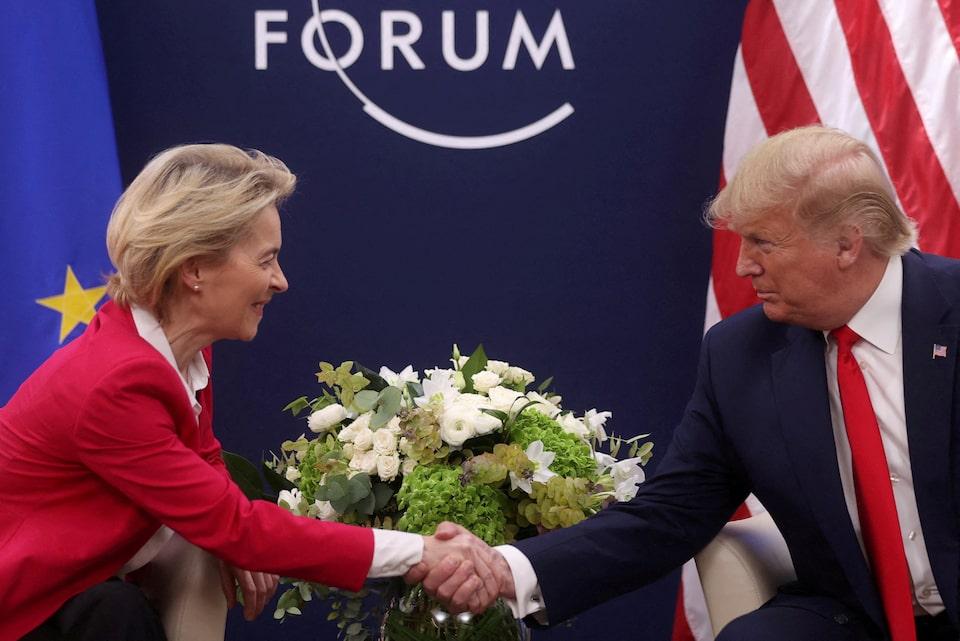
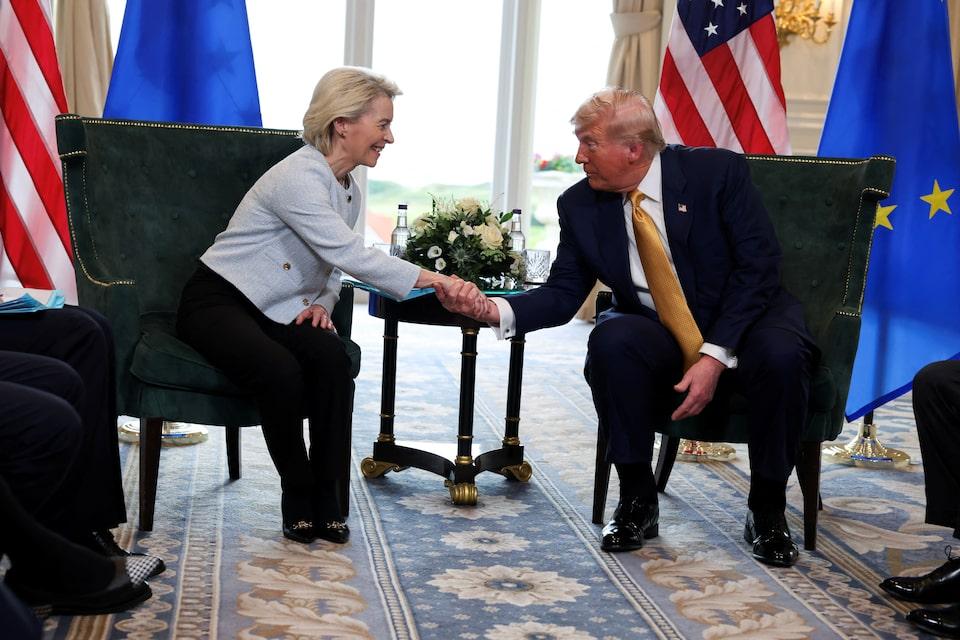
Deal includes $600 bln EU investments in US, more EU energy, defence purchases 15% tariff better than threatened 30%, in deal mirroring Japan's EU says rate extends to cars, pharmaceuticals, semiconductors US steel and aluminium tariffs stay at 50%, but could fall later TURNBERRY, Scotland, July 27 (Reuters) - The U.S. struck a framework trade agreement with the European Union on Sunday, imposing a 15% import tariff on most EU goods - half the threatened rate - and averting a bigger trade war between the two allies that account for almost a third of global trade. U.S. President Donald Trump and European Commission President Ursula von der Leyen announced the deal at Trump's luxury golf course in western Scotland after an hour-long meeting that pushed the hard-fought deal over the line, following months of negotiations. Sign up here. "I think this is the biggest deal ever made," Trump told reporters, lauding EU plans to invest some $600 billion in the United States and dramatically increase its purchases of U.S. energy and military equipment. Trump said the deal, which tops a $550 billion deal signed with Japan last week, would expand ties between the trans-Atlantic powers after years of what he called unfair treatment of U.S. exporters. Von der Leyen, describing Trump as a tough negotiator, said the 15% tariff applied "across the board", later telling reporters it was "the best we could get." "We have a trade deal between the two largest economies in the world, and it's a big deal. It's a huge deal. It will bring stability. It will bring predictability," she said. The agreement mirrors key parts of the framework accord reached by the U.S. with Japan, but like that deal, it leaves many questions open, including tariff rates on spirits, a highly charged topic for many on both sides of the Atlantic. The deal, which Trump said calls for $750 billion of EU purchases of U.S. energy in coming years and "hundreds of billions of dollars" of arms purchases, likely spells good news for a host of EU companies, including Airbus (AIR.PA) , opens new tab, Mercedes-Benz (MBGn.DE) , opens new tab and Novo Nordisk (NOVOb.CO) , opens new tab, if all the details hold. German Chancellor Friedrich Merz welcomed the deal, saying it averted a trade conflict that would have hit Germany's export-driven economy and its large auto sector hard. German carmakers, VW, Mercedes and BMW were some of the hardest hit by the 27.5% U.S. tariff on car and parts imports now in place. The baseline 15% tariff will still be seen by many in Europe as too high, compared with Europe's initial hopes to secure a zero-for-zero tariff deal. Bernd Lange, the German Social Democrat who heads the European Parliament's trade committee, said the tariffs were imbalanced and the hefty EU investment earmarked for the U.S. would likely come at the bloc's own expense. Trump retains the ability to increase the tariffs in the future if European countries do not live up to their investment commitments, a senior U.S. administration official told reporters on Sunday evening. The euro rose around 0.2% against the dollar, sterling and yen within an hour of the deal's being announced. MIRROR OF JAPAN DEAL Carsten Nickel, deputy director of research at Teneo, said Sunday's accord was "merely a high-level, political agreement" that could not replace a carefully hammered out trade deal: "This, in turn, creates the risk of different interpretations along the way, as seen immediately after the conclusion of the U.S.-Japan deal." While the tariff applies to most goods, including semiconductors and pharmaceuticals, there are exceptions. The U.S. will keep in place a 50% tariff on steel and aluminum. Von der Leyen suggested the tariff could be replaced with a quota system; a senior administration official said EU leaders had asked that the two sides continue to talk about the issue. Von der Leyen said there would be no tariffs from either side on aircraft and aircraft parts, certain chemicals, certain generic drugs, semiconductor equipment, some agricultural products, natural resources and critical raw materials. "We will keep working to add more products to this list," von der Leyen said, adding that spirits were still under discussion. A U.S. official said the tariff rate on commercial aircraft would remain at zero for now, and the parties would decide together what to do after a U.S. review is completed, adding there is a "reasonably good chance" they could agree to a lower tariff than 15%. No timing was given for when that probe would be completed. The deal will be sold as a triumph for Trump, who is seeking to reorder the global economy and reduce decades-old U.S. trade deficits, and has already reached similar framework accords with Britain, Japan, Indonesia and Vietnam, although his administration has not hit its goal of "90 deals in 90 days." U.S. officials said the EU had agreed to lower non-tariff barriers for automobiles and some agricultural products, though EU officials suggested the details of those standards were still under discussion. "Remember, their economy is $20 trillion ... they are five times bigger than Japan," a senior U.S. official told reporters during a briefing. "So the opportunity of opening their market is enormous for our farmers, our fishermen, our ranchers, all our industrial products, all our businesses." Trump has periodically railed against the EU, saying it was "formed to screw the United States" on trade. He has fumed for years about the U.S. merchandise trade deficit with the EU, which in 2024 reached $235 billion, according to U.S. Census Bureau data. The EU points to the U.S. surplus in services, which it says partially redresses the balance. Trump has argued that his tariffs are bringing in "hundreds of billions of dollars" in revenues for the U.S. while dismissing warnings from economists about the risk of inflation. On July 12, Trump threatened to apply a 30% tariff on imports from the EU starting on August 1, after weeks of negotiations failed to reach a comprehensive trade deal. The EU had prepared countertariffs on 93 billion euros ($109 billion) of U.S. goods in the event a deal to avoid the tariffs could not be struck. https://www.reuters.com/business/us-eu-avert-trade-war-with-15-tariff-deal-2025-07-28/
2025-07-27 21:48
July 27 (Reuters) - Yemen's Houthis said on Sunday they would target any ships belonging to companies that do business with Israeli ports, regardless of their nationalities, as part of what they called the fourth phase of their military operations against Israel. In a televised statement, the Houthis' military spokesperson warned that ships would be attacked if companies ignored their warnings, regardless of their destination. Sign up here. "The Yemeni Armed Forces call on all countries, if they want to avoid this escalation, to pressure the enemy to halt its aggression and lift the blockade on the Gaza Strip," he added. Since Israel's war in Gaza began in October 2023, the Iran-aligned Houthis have been attacking ships they deem as bound or linked to Israel in what they say are acts of solidarity with Palestinians. In May, the U.S. announced a surprise deal with the Houthis where it agreed to stop a bombing campaign against them in return for an end to shipping attacks, though the Houthis said the deal did not include sparing Israel. https://www.reuters.com/world/middle-east/yemens-houthis-threaten-target-ships-linked-firms-dealing-with-israeli-ports-2025-07-27/

2025-07-27 21:03
ROME, July 27 (Reuters) - Italy's Prime Minister Giorgia Meloni said on Sunday it is "positive" a trade deal has been reached between the European Union and the United States, adding, however, that she needs to see the details. Washington struck a framework trade deal with the EU imposing a 15% import tariff on most EU goods. Sign up here. "I consider it positive that there is an agreement, but if I don't see the details I am not able to judge it in the best way," Meloni told journalists on the sidelines of a meeting in Addis Ababa. Italy is one of the biggest European exporters to the U.S., with a trade surplus of more than 40 billion euros. The Italian government, led by a nationalist coalition, had urged its European partners to avoid a direct clash between the two sides of the Atlantic. In a statement, Meloni said that the agreement "ensures stability", adding that the 15% "is sustainable, especially if this percentage is not added to previous duties, as was originally planned." "We are ready to activate support measures at the national level, but we ask that they also be activated at the European level for sectors that will be particularly affected by US tariff measures," she added. The statement was also signed by the leaders of the other two coalition parties: Antonio Tajani of Forza Italia and Matteo Salvini of the League. https://www.reuters.com/world/china/italys-meloni-says-its-positive-trade-deal-was-reached-needs-see-details-2025-07-27/