2025-07-27 14:37
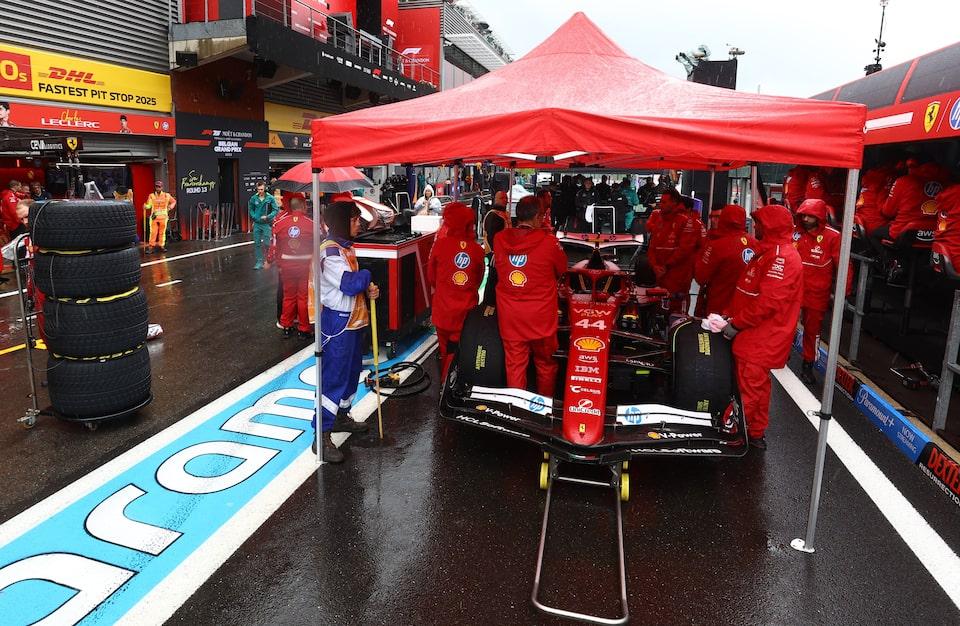
Race faces long delay Drivers wait for weather to improve SPA-FRANCORCHAMPS, Belgium, July 27 (Reuters) - The Belgian Formula One Grand Prix started after four laps behind the safety car on Sunday following a delay of nearly an hour and a half due to rain and poor visibility at the Spa-Francorchamps circuit. After an initial formation lap behind the safety car, the cars were brought into the pit lane and the starting procedure halted. Sign up here. "I can't see a lot behind the safety car so I can't imagine what it's like for everyone else," McLaren's pole-sitter Lando Norris, who is nine points behind championship-leading teammate Oscar Piastri, said over the team radio. After the long wait, the FIA cleared the race to start once standing water had been removed. The safety car then led the field around to assess visibility before a rolling start was decided. The rain-affected 2021 Belgian Grand Prix remains the shortest race in Formula One history with only three laps completed behind the safety car and half points awarded. "We should just run," said Red Bull's reigning champion Max Verstappen over the radio when the red flags were shown. "They’re way too cautious." Nico Rosberg, the retired 2016 world champion, told Sky Sports television that there was little drivers could do other than wait. "The conditions out there are horrendous and the race start will be extremely difficult," said the German. "You can't see anything. You have long straights but must stay flat, but you're blind, looking left or right at the wall to find a brake marker board." https://www.reuters.com/sports/formula1/belgian-grand-prix-starts-after-long-rain-delay-2025-07-27/
2025-07-27 11:55
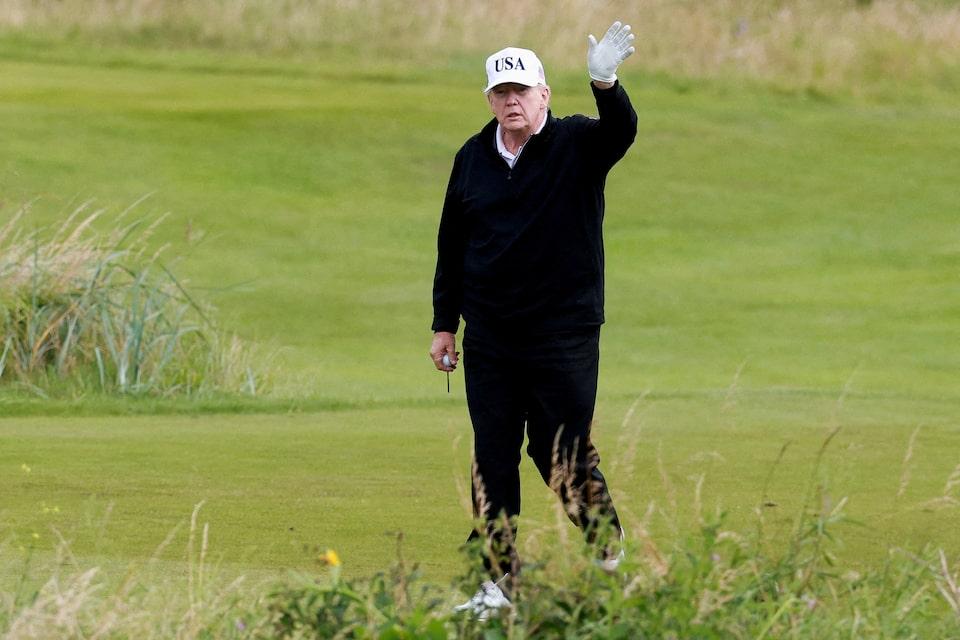
Two leaders to meet on Trump's Scottish golf course Trump sees 50-50 chance for EU trade deal EU faces tariffs on 70% of exports, including steel and cars Deal could impose 15% tariff, better than 30% threat GLASGOW, July 27 (Reuters) - European Commission President Ursula von der Leyen is set to meet U.S. President Donald Trump on Sunday to clinch a trade deal for Europe that would likely see a 15% baseline tariff on most EU goods, but end months of uncertainty for EU companies. Before the meeting, expected at 1530 GMT on Trump's golf course in Turnberry, western Scotland, U.S. and EU teams were in final talks on tariffs for crucial sectors like cars, steel, aluminium or pharmaceuticals. Sign up here. U.S. Trade Representative Jamieson Greer and Commerce Secretary Howard Lutnick flew to Scotland on Saturday and EU Trade Commissioner Maros Sefcovic arrived on Sunday morning. "We're cautiously optimistic that there will be a deal reached," said a Trump administration official, who spoke on condition of anonymity. "But it's not over till it's over." Ambassadors of EU governments, on a weekend trip to Greenland organised by the Danish presidency of the EU, held a teleconference with EU Commission officials on Sunday to agree on the amount of leeway von der Leyen would have in the talks. In case there is no deal and the U.S. imposes 30% tariffs from August 1, the EU has prepared counter-tariffs on 93 billion euros ($109 billion) of U.S. goods. EU diplomats have said a deal would likely include a broad 15% tariff on EU goods imported into the U.S., mirroring the U.S.-Japan trade deal, along with a 50% tariff on European steel and aluminium for which there could be export quotas. The EU deal would be a huge prize, given that the U.S. and EU are each other's largest trading partners by far and account for a third of global trade. EU officials are hopeful that a 15% baseline tariff would also apply to cars, replacing the current 27.5% auto tariff. POSSIBLE EXEMPTIONS Some expect the 27-nation bloc may be able to secure exemptions from the 15% baseline tariff for its aerospace industry and for spirits, though probably not for wine. The EU could also pledge to buy more liquefied natural gas from the U.S., a long-standing offer, and boost investment in the United States. Trump told reporters there was "not a lot" of wiggle room on the 50% tariffs that the U.S. has on steel and aluminium imports, adding, "because if I do it for one, I have to do it for all." The U.S. president, in Scotland for a few days of golfing and bilateral meetings, told reporters upon his arrival on Friday evening that von der Leyen was a highly respected leader and he was looking forward to meeting with her. He said there was a 50-50 chance that the two sides could reach a framework trade pact, adding that Brussels wanted to "make a deal very badly". The EU now faces U.S. tariffs on more than 70% of its exports, with 50% on steel and aluminium, an extra 25% on cars and car parts on top of the existing 2.5% and a 10% levy on most other EU goods. Trump has said that without a deal, he would hike the rate to 30% on August 1, a level EU officials said would wipe out whole chunks of transatlantic commerce. Further tariffs on copper and pharmaceuticals are looming. The uncertainty and higher tariffs have already hit profits of EU companies in several sectors. A 15% tariff on most EU goods would remove uncertainty but would be seen by many in Europe as a poor outcome compared to the initial European ambition of a zero-for-zero tariff deal on all industrial goods. Seeking to learn from Japan, which secured a 15% baseline tariff with the U.S. in a deal earlier this week, EU negotiators spoke to their Japanese counterparts in preparation for Sunday's meeting. For Trump, aiming to reorder the global economy and reduce decades-old U.S. trade deficits, a deal with the EU would be the biggest trade agreement, surpassing the $550 billion deal with Japan. So far, he has reeled in agreements with Britain, Japan, Indonesia and Vietnam, although his administration has failed to deliver on a promise of "90 deals in 90 days." https://www.reuters.com/business/trump-eus-von-der-leyen-meet-sunday-clinch-trade-deal-2025-07-27/
2025-07-27 11:03
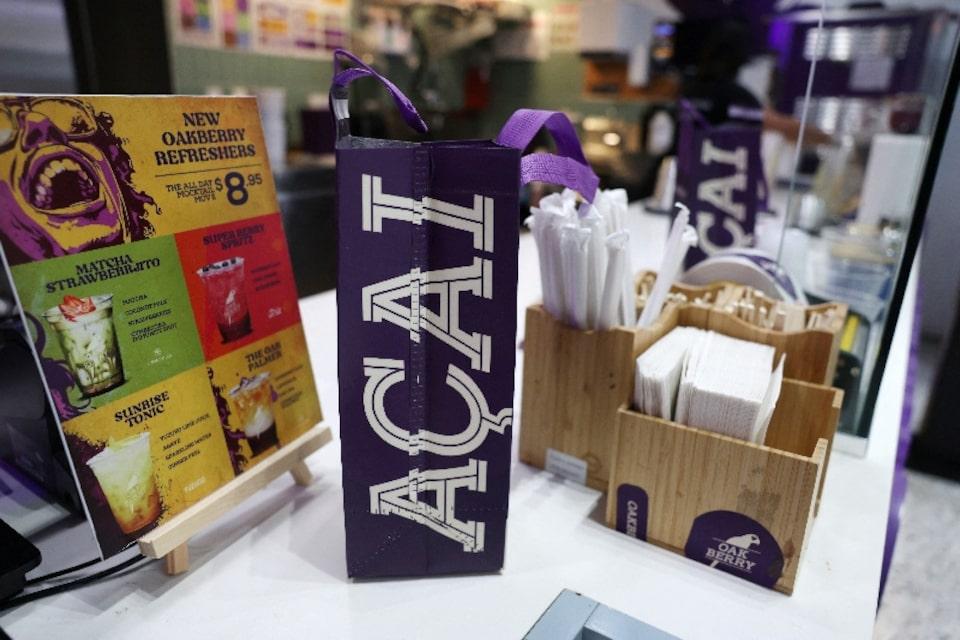
50% import tariff on Brazilian açaí starts August 1 Açaí bowls could become luxury items due to price hike Brazilian producers struggle to absorb tariff costs, may seek new markets NEW YORK, July 27 (Reuters) - Bowls and smoothies made of the Amazon berry açaí have become ubiquitous , opens new tab in many cities across the United States, but consumers may think twice about shelling out after August 1 when a 50% tariff on imports from Brazil kicks in. Nearly all of the açaí pulp sold in the U.S., as well as in Europe and Asia, where people have also developed a taste for the tangy fruit, comes from Brazil. If no trade deal is reached between the Trump administration and the Brazilian government, the bowls could cost significantly more at hundreds of shops from New York to Los Angeles. Sign up here. "People already complain a bit about the price. If it gets more expensive, I guess it will become more of a luxury thing," said Ashley Ibarra, who manages a Midtown Manhattan store owned by Playa Bowls LLC, a New Jersey-based company with around 300 shops in the U.S. With toppings like banana and granola, a bowl of açaí costs around $18 at Playa Bowls in New York. Competitor Oakberry Inc., the world's largest açaí chain with 700 stores in 35 countries, sells a smaller portion at a nearby Manhattan store for $13. Playa Bowls declined to comment on the tariffs, and Oakberry did not respond to a request for comment. Açaí companies tout the product as an energy booster, a powerful antioxidant and a source of Omega-3 and other nutrients. The Food and Drug Administration said more research is needed to evaluate its possible health benefits. "A friend introduced me to it one day, and I loved it, so I occasionally buy it," said Milan Shek, 50, who was having an açaí bowl mixed with cereals and fresh fruits one recent afternoon in New York. With a large markup, he said he would probably eat it less often. Brazil's production and exports of açaí have skyrocketed in recent years. The berry went from being a local delicacy in small towns in the state of Para where it is mostly grown, to a widely popular treat across Brazil. Soon, exports began to be sent to other countries. Production increased from around 150,000 metric tons ten years ago to nearly 2 million tons last year, according to data from Brazil's statistics agency IBGE and the governments of Para and Amazonas. The U.S. is the largest foreign buyer, followed by Europe and Japan. Nazareno Alves da Silva, head of the Amazon Açaí Producers Association in Para, said companies were calculating how to absorb such a large cost increase in order to continue exports to the U.S. He wasn't optimistic. "Right now, we still don't know how to do it. The numbers don't match," he said. The trade would get too expensive for many U.S. importers, while Brazilian producers would be unable to cut prices enough to accommodate the tariff, he said, adding that producers would likely have to find other markets. Even those without an açaí habit are likely to feel the pinch of the Trump administration's tariffs on Brazil. The South American country supplies about a third of the coffee consumed in the U.S., as well as orange juice and beef. https://www.reuters.com/world/us/us-lovers-amazon-berry-aa-feel-tariff-pinch-2025-07-27/
2025-07-27 06:23
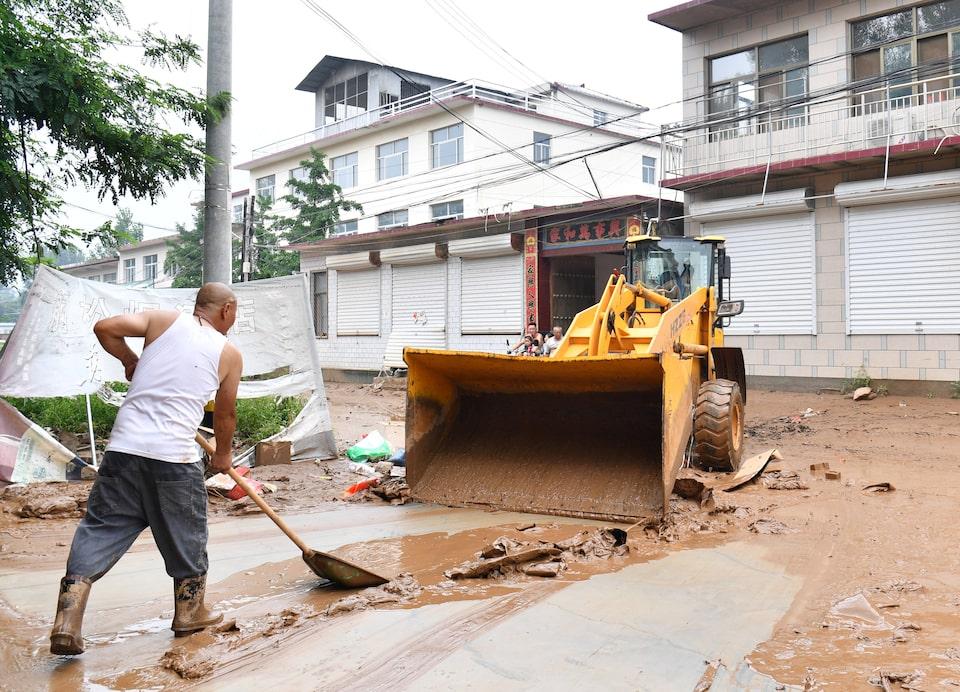
HONG KONG, July 27 (Reuters) - Heavy rain around Beijing and across north and northeast China has killed two and forced thousands to relocate as authorities warned of further widespread rain and risks of disasters including landslides and flooding. Two were dead and two missing in Hebei province, state broadcaster CCTV reported on Sunday morning. Overnight rain dumped a record 145 mm (5.7 inches) per hour on Fuping in the industrial city of Baoding. Sign up here. China’s Water Resources Ministry has issued targeted flood warnings to 11 provinces and regions, including Beijing and neighbouring Hebei, for floods from small and midsize rivers and mountain torrents. Floods and landslides affected many villages in the Miyun district of the capital, with the rural town of Fengjiayu the most severely impacted and electricity and communications cut in some villages, CCTV said. More than 3,000 people have been transferred out of the area, Beijing News Radio reported on Sunday. The flow into the Miyun Reservoir has increased, hitting a record peak of 6,550 cubic meters (231,000 cubic feet) per second, Beijing authorities said. Rain will intensify in most areas of the capital, with the expected cumulative rainfall in some areas nearby including Miyun reaching more than 100 mm over six hours, Beijing's Meteorological Observatory said. Low-lying areas are prone to waterlogging, it said. Beijing issued a warning on Saturday for geological disasters, including landslides and mudslides, after intense rainfall unleashed, for a second time, a year’s worth of rain on nearby Baoding. Northern China has experienced record precipitation in recent years, exposing densely populated cities, including Beijing, to flood risks. Some scientists link the increased rainfall in China’s usually arid north to global warming. The storms are part of the broader pattern of extreme weather across China due to the East Asian monsoon, which has caused disruptions in the world's second-largest economy. Baoding's Xizhuang station recorded 540 mm (21 inches) over an eight-hour period, exceeding Baoding's average annual rainfall of about 500 mm. The deluge affected more than 46,000 people, forcing 4,655 to evacuate, CCTV reported. Chinese authorities closely monitor extreme rainfall and severe flooding are, as they challenge the country's ageing flood defences, threaten to displace millions and wreak havoc on China's $2.8 trillion agricultural sector. https://www.reuters.com/sustainability/climate-energy/rain-northern-china-kills-2-forces-thousands-relocate-2025-07-27/
2025-07-27 02:56
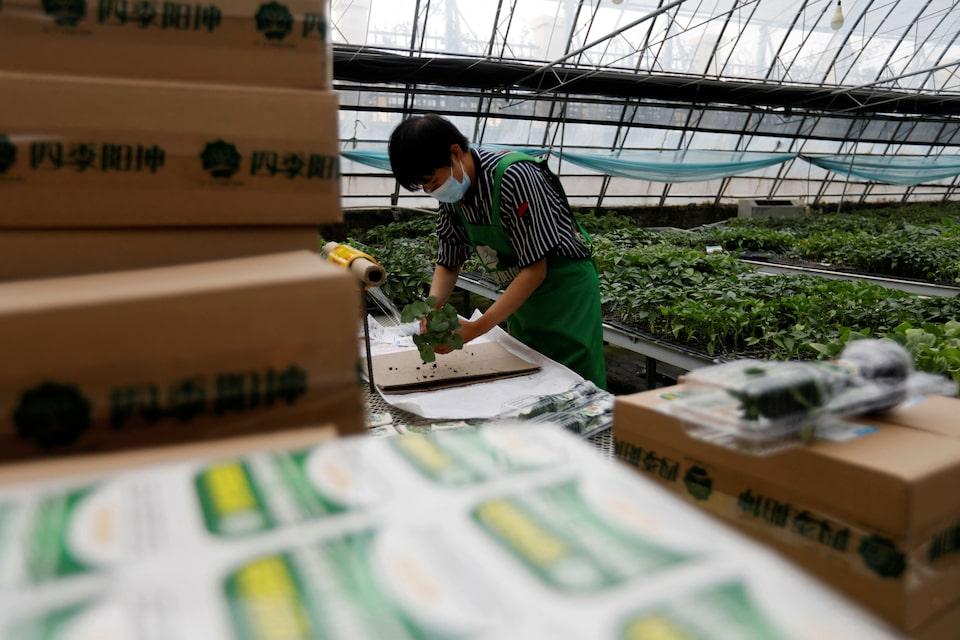
HONG KONG, July 27 (Reuters) - China on Sunday announced a plan to promote consumption of agricultural products and "optimise green and high-quality products to meet multi-level consumer needs", its Ministry of Agriculture and Rural Affairs said. Sign up here. https://www.reuters.com/markets/commodities/china-announces-plan-boost-consumption-agricultural-products-2025-07-27/
2025-07-27 01:40
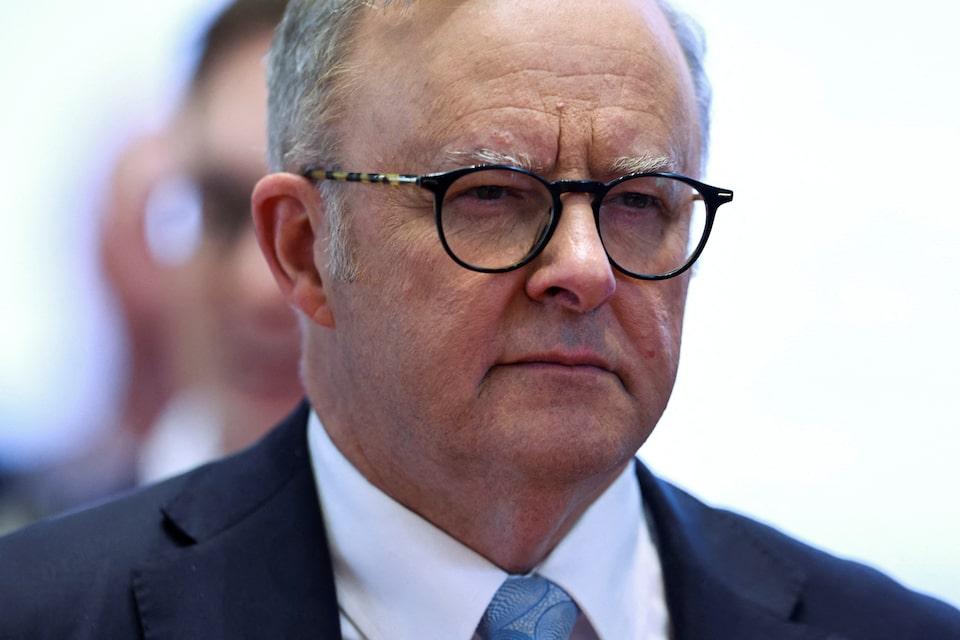
SYDNEY, July 27 (Reuters) - Australia's Prime Minister Anthony Albanese said on Sunday that a decision to ease rules on U.S. beef imports was not prompted by U.S. President Donald Trump. Trump this week said the U.S. would sell "so much" beef to Australia after Canberra announced the relaxation of restrictions, potentially smoothing trade talks with Washington. Sign up here. In place since 2003, the curbs were due to concerns about bovine spongiform encephalopathy, or mad cow disease, which can kill cattle as well as people who eat infected beef. When asked on Sunday if the easing had anything to do with Trump, Albanese said "No, this has been a process that has been there for 10 years, the review process". "This wasn't a political decision," Albanese said in remarks on Australian Broadcasting Corp television, adding that Trump had not raised the issue with him in a phone call. The comments come after U.S. Agriculture Secretary Brooke Rollins called the easing a win for Trump. In April, Trump singled out the beef trade disparity with Australia after Australia's beef exports to the U.S. surged last year, reaching A$4 billion amid a slump in U.S. beef production. By contrast, Australia's agriculture minister said the rules were relaxed after a "rigorous science and risk-based assessment" concluded that U.S. measures to monitor and control cattle movement were effectively managing biosecurity risks. News of Australia changing its policy was first reported by the Australian Financial Review. The report said Australia would use the easing of rules to argue its case for the U.S. to wind back 50% tariffs on steel and aluminium and Trump's threat to impose a 200% tariff on pharmaceuticals. The National Party, part of Australia's conservative opposition coalition, has said that "biosecurity should not be political" and called for an independent scientific panel to review the decision. A loosening of beef import rules is not expected to boost U.S. shipments significantly because Australia is a major beef producer and exporter whose prices are much lower, according to analysts. Last year, Australia shipped almost 400,000 metric tons of beef worth $2.9 billion to the United States, with just 269 tons of U.S. product moving the other way. https://www.reuters.com/world/asia-pacific/australias-pm-says-easing-curbs-us-beef-not-prompted-by-trump-2025-07-27/