2025-07-25 20:27
TSX ends up 0.5% at 27,494.35 Eclipses Wednesday's record closing high Tech sector rises 1.8% Industrials add 0.7% July 25 (Reuters) - Canada's main stock index rose to a record high on Friday, with technology shares leading gains as investors turned attention to key events next week, including a Bank of Canada policy decision. The S&P/TSX Composite Index (.GSPTSE) , opens new tab ended up 122.09 points, or 0.5%, at 27,494.35, eclipsing Wednesday's record closing high. For the week, the index was up 0.7%. Sign up here. The move has been supported by trade optimism "as negotiations have progressed on the U.S. side and also corporate profits that are coming in pretty strong," said Angelo Kourkafas, senior global investment strategist at Edward Jones. Policy decisions are due from both the BoC and the Federal Reserve on Wednesday, while an August 1 deadline looms for Canada to reach a trade deal with the United States. "That summer calm may be tested," Kourkafas said. "We are seeing some signs of complacency, which raise the risk of near-term volatility, but fundamentals remain supportive." The Canadian central bank will hold its overnight interest rate steady at 2.75% for the third consecutive meeting, thanks to a recent rise in inflation and a fall in unemployment, according to a Reuters poll of economists that still found many expect at least two more cuts this year. The technology sector (.SPTTTK) , opens new tab rose 1.8%, boosted by a 4.7% gain for the shares of Lightspeed Commerce (LSPD.TO) , opens new tab, which is due to release earnings next Thursday. Shares of e-commerce company Shopify (SHOP.TO) , opens new tab added 2.5%. Industrials were up 0.7% as railroad shares notched gains and heavily weighted financials ended 0.5% higher. Energy was a drag, dipping 0.5%, as the price of oil settled 1.3% lower at $65.16 a barrel. https://www.reuters.com/markets/europe/tsx-adds-weekly-gains-technology-shares-climb-2025-07-25/
2025-07-25 20:25
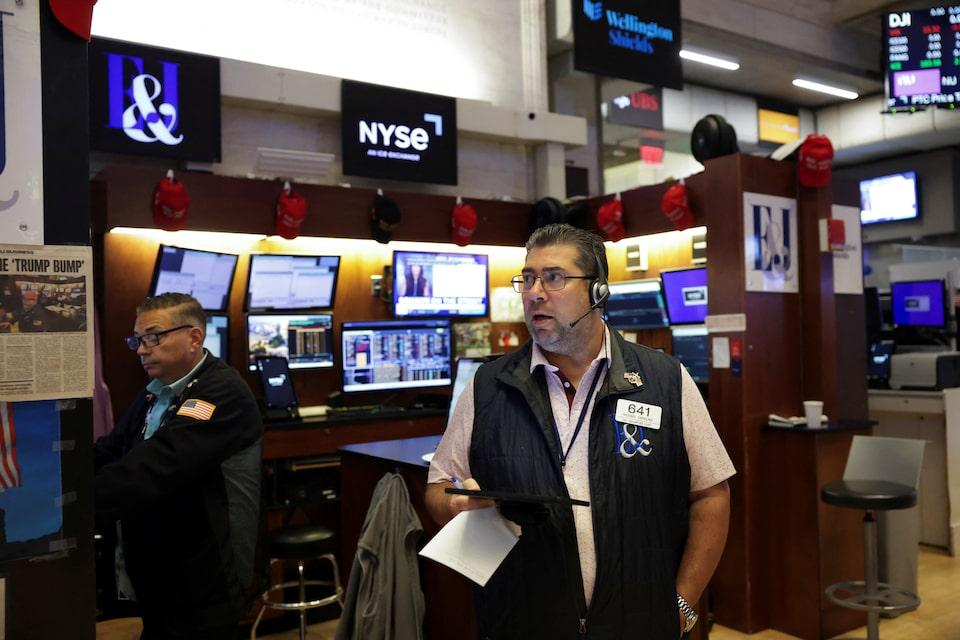
S&P 500 and the Nasdaq log fresh record closing highs Week ahead includes tariff deadline Fed meeting, payrolls data Amazon, Apple, Meta, Microsoft report next week U.S. Treasury yields rise ahead of data-heavy week Oil prices decline on demand outlook and Venezuela supply concerns NEW YORK, July 25 (Reuters) - U.S. stocks advanced and the dollar firmed on Friday as investors girded themselves for the week ahead, which includes a Federal Reserve policy meeting, crucial corporate results and U.S. President Donald Trump's August 1 deadline for negotiating trade deals. "There’s increasing confidence that the economy won't be derailed by tariffs," said Thomas Martin, Senior Portfolio Manager at GLOBALT in Atlanta. "In the meantime, companies are reporting good earnings, the economic numbers are coming in within the range and people want to own stocks. They don't want to miss out." Sign up here. All three indexes closed in positive territory and notched weekly gains. The S&P 500 and the Nasdaq logged fresh record closing highs and the blue-chip Dow ended 0.25% shy of its all-time closing level reached on December 24, 2024. Gold lost some shine, pressured by the dollar as healthy risk appetites lured investors away from the safe-haven metal. With Trump's negotiating deadline just a week away, the U.S. and its trading partners are scrambling to reach trade agreements, with European negotiators heartened by the deal with Japan announced on Tuesday. Intel's shares INTC.O , opens new tab dropped 8.5% after the chipmaker forecast steeper-than-expected quarterly losses and said it had halted or scrapped new factory projects in the U.S. and Europe. More than a third of the companies in the S&P 500 have posted results, 80% of which have beaten estimates, according to LSEG data. Analysts now expect year-on-year second-quarter earnings growth of 7.7%, compared with the 5.8% estimate as of July 1. Four members of the Magnificent 7 group of Artificial Intelligence-related megacap stocks - Amazon (AMZN.O) , opens new tab, Apple (AAPL.O) , opens new tab, Meta (META.O) , opens new tab and Microsoft (MSFT.O) , opens new tab are on next week's earnings docket, and market participants will scrutinize the companies' conference calls for signs that AI expenditures are beginning to pay off and whether tariff-related uncertainties continue to weigh on forward guidance. U.S. economic data released on Friday showed an unexpected decline in new orders for core capital goods, as companies hold back on big ticket purchases amid the fog of ongoing trade talks. The Fed is expected to convene next week for a two-day monetary policy meeting, which is expected to culminate in a decision to let its federal funds target rate stand in the 4.25% to 4.50% range. The meeting comes at a moment in which Fed Chair Jerome Powell is facing criticism from Trump for not cutting rates. "The Fed is going to do what it's going to do and Powell is going to stay in his job," Martin added. "The economy is doing great, so they really don't need to lower short-term interest rates." "Inflation is still a question, so they're better off not lowering rates if they don't have to," Martin said. The Dow Jones Industrial Average (.DJI) , opens new tab rose 208.01 points, or 0.47%, to 44,901.92, the S&P 500 (.SPX) , opens new tab rose 25.30 points, or 0.40%, to 6,388.65 and the Nasdaq Composite (.IXIC) , opens new tab rose 50.36 points, or 0.24%, to 21,108.32. European shares settled lower as market participants parsed mixed corporate earnings and awaited developments in the U.S.-EU trade negotiations. MSCI's gauge of stocks across the globe (.MIWD00000PUS) , opens new tab rose 0.47 points, or 0.05%, to 941.82. MSCI's gauge of stocks across the globe (.MIWD00000PUS) , opens new tab rose 0.01 points, or 0.00%, to 941.36. The pan-European STOXX 600 (.STOXX) , opens new tab index fell 0.29%, while Europe's broad FTSEurofirst 300 index (.FTEU3) , opens new tab fell 5.79 points, or 0.27% Emerging market stocks (.MSCIEF) , opens new tab fell 10.29 points, or 0.81%, to 1,257.00. MSCI's broadest index of Asia-Pacific shares outside Japan (.MIAPJ0000PUS) , opens new tab closed lower by 0.93%, to 661.17, while Japan's Nikkei (.N225) , opens new tab fell 370.11 points, or 0.88%, to 41,456.23. The yield on benchmark U.S. 10-year notes fell 2.4 basis points to 4.384%, from 4.408% late on Thursday. The U.S. dollar gained strength but remained on course for its biggest drop in a month as investors focused on economic data, tariff negotiations and central bank meetings on the calendar for next week. The dollar index , which measures the greenback against a basket of currencies including the yen and the euro, rose 0.23% to 97.68, with the euro down 0.11% at $1.1741. Against the Japanese yen , the dollar strengthened 0.44% to 147.65. In cryptocurrencies, bitcoin fell 1.66% to $116,805.28. Ethereum declined 2.52% to $3,645.63. U.S. crude fell 1.32% to $65.16 per barrel, while Brent fell to $68.44 per barrel, down 1.07% on the day. Gold prices dropped in opposition to the firming dollar, amid signs of progress in U.S.-EU trade talks. Spot gold fell 0.9% to $3,337.66 an ounce. U.S. gold futures fell 1.24% to $3,329.10 an ounce. https://www.reuters.com/world/china/global-markets-wrapup-6-graphics-2025-07-25/
2025-07-25 20:22
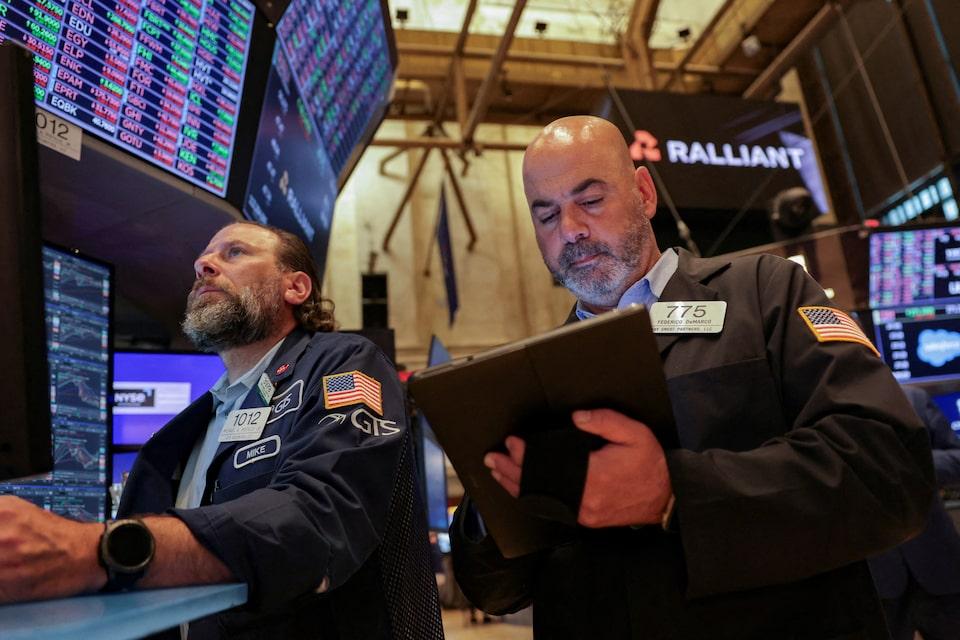
Intel slides on quarterly loss US clears $8.4-billion Paramount-Skydance merger EU, US could sign trade agreement this weekend S&P 500 +0.40%, Nasdaq +0.24%, Dow +0.47% July 25 (Reuters) - The S&P 500 and Nasdaq notched record high closes on Friday, lifted by optimism the U.S. could soon reach a trade deal with the European Union, while Deckers Outdoor surged following a strong quarter for the maker of UGG boots and Hoka sneakers. European Commission President Ursula von der Leyen will meet U.S. President Donald Trump on Sunday in Scotland after EU officials and diplomats said they expected to reach a framework trade deal this weekend. Trump said earlier that the odds of a U.S.-EU trade deal were "50-50". Sign up here. Deckers Outdoor (DECK.N) , opens new tab soared 11% after results beat quarterly estimates, with strong demand in international markets. Intel (INTC.O) , opens new tab tumbled 8.5% after the chipmaker forecast steeper quarterly losses than expected and announced plans to slash jobs. Wall Street has surged to record highs in recent weeks, thanks to upbeat quarterly earnings, trade deals with Japan and the Philippines, and expectations that the White House will cement more agreements to avoid elevated tariffs threatened by Trump. "The market has been anticipating that the deals are going to get done," said Thomas Martin, Senior Portfolio Manager at GLOBALT in Atlanta. "Personally, I have a bit more skepticism. You've got to be careful, because if they don't get done, there is more room for disappointment than there is upside." The S&P 500 climbed 0.40% to end the session at 6,388.64 points. The Nasdaq gained 0.24% to 21,108.32 points, while the Dow Jones Industrial Average rose 0.47% to 44,901.92 points. Nine of the 11 S&P 500 sector indexes rose, led by materials (.SPLRCM) , opens new tab, up 1.17%, followed by a 0.98% gain in industrials (.SPLRCI) , opens new tab. For the week, the S&P 500 climbed 1.5%, the Nasdaq added 1% and the Dow rose 1.3%. The S&P 500 set a closing record every day this week. The last time the index had a "perfect week" of closing highs, Monday through Friday, was in November 2021, according to Howard Silverblatt, senior index analyst at S&P Dow Jones Indices. Investors next week will focus on the U.S. Federal Reserve, with policymakers on Thursday expected to hold interest rates steady as the central bank weighs the impact of tariffs on inflation. Traders see about a 60% chance of a rate cut in September, according to CME's FedWatch tool. Trump said on Friday he believed that Fed Chair Jerome Powell might be ready to lower rates. Trump made a to the Fed on Thursday after calling earlier in the week for failing to slash rates. Charter Communications (CHTR.O) , opens new tab slumped 18% after the cable giant reported a deeper-than-expected broadband subscriber loss, hurt by competition from wireless carriers bundling high-speed internet services with 5G mobile plans. Paramount Global (PARA.O) , opens new tab dipped 1.6% after U.S. regulators approved its $8.4-billion merger with Skydance Media. Health insurer Centene (CNC.N) , opens new tab rose 6.1% after it said it expects to deliver improved profitability in its three government-backed healthcare insurance businesses in 2026. S&P 500 companies are expected on average to increase their second-quarter earnings by 7.7% year over year, according to LSEG I/B/E/S, with most of those gains coming from heavyweight tech-related companies. Companies reporting next week include Microsoft (MSFT.O) , opens new tab, Apple (AAPL.O) , opens new tab, Amazon (AMZN.O) , opens new tab and Meta Platforms (META.O) , opens new tab. Advancing issues outnumbered falling ones within the S&P 500 (.AD.SPX) , opens new tab by a two-to-one ratio. The S&P 500 posted 45 new highs and 6 new lows; the Nasdaq recorded 68 new highs and 54 new lows. Volume on U.S. exchanges was relatively light, with 17.7 billion shares traded, compared to an average of 18.1 billion shares over the previous 20 sessions. https://www.reuters.com/business/sp-500-nasdaq-close-records-deckers-soars-ugg-demand-2025-07-25/
2025-07-25 20:02
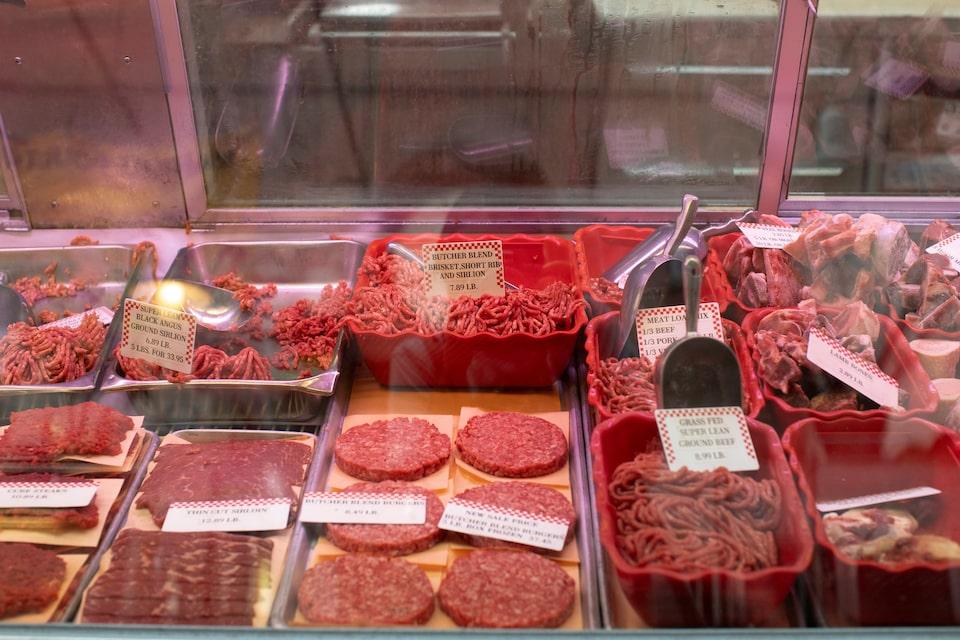
Australia relaxed curbs on US beef imports Canberra says decision not related to trade talks High prices make big US exports unlikely, analysts say US cattle herd fell to record low for July, USDA says Australian opposition concerned about biosecurity risk WASHINGTON/CANBERRA/CHICAGO, July 25 (Reuters) - President Donald Trump said the U.S. will sell "so much" beef to Australia after Canberra relaxed import restrictions on Thursday, but economists and traders said high prices and tight supplies make major American exports unlikely. Australia said it would loosen biosecurity rules for U.S. beef. The move will not significantly increase U.S. shipments, though, because Australia is a major beef producer and exporter whose prices are much lower, analysts said. Sign up here. U.S. companies export small quantities of beef to Australian buyers. They import much more in the form of lean beef used to make hamburgers, particularly as U.S. production has declined because of tight cattle supplies. U.S. beef prices set records this year after ranchers slashed their herds due to drought that burned up pasturelands used for grazing. The total herd size fell to 94.2 million head as of July 1, a record low for that date, according to U.S. Department of Agriculture data on Friday. A ban on cattle imports from Mexico because of New World screwworm, a devastating livestock pest, and steep tariffs on Brazilian beef that are set to take effect on Aug. 1 could further tighten meat supplies, and require additional imports of Australian beef. "We can't get enough beef in the U.S. right now, so we're bringing it in from Australia and Brazil," said Dan Norcini, an independent U.S. livestock trader. "We're not going to be selling anything significant to anyone." Last year, Australia shipped almost 400,000 metric tons of beef worth $2.9 billion to the United States, with just 269 tons of U.S. product moving the other way. "They have more cattle than people," said David Anderson, an agricultural economist at Texas A&M University. "That's why they export so much." DIFFERENT TASTE U.S. and Australian beef also taste different. Many Australians like the grass-fed beef raised there, not marbled beef from U.S.-raised cattle that are generally fed with grain, said Jerry Klassen, chief analyst for Resilient Capital in Winnipeg. He predicted the United States will not export substantial amounts of beef to Australia in the next five years. "We just aren't in a position to export much beef to anyone, and the reality is Australia doesn't really have much need for U.S. beef," said Karl Setzer, partner at Consus Ag. The barriers that remain to exporting significant volumes of U.S. beef to Australia appeared to be lost on Trump this week. "We are going to sell so much to Australia because this is undeniable and irrefutable Proof that U.S. Beef is the Safest and Best in the entire World," Trump said in a post on Truth Social. "The other Countries that refuse our magnificent Beef are ON NOTICE." Trump has attempted to renegotiate trade deals with numerous countries he says have taken advantage of the United States, a characterisation many economists dispute. "For decades, Australia imposed unjustified barriers on U.S. beef," U.S. Trade Representative Jamieson Greer said in a statement, calling Australia's decision a "major milestone in lowering trade barriers and securing market access for U.S. farmers and ranchers." Australian officials say the relaxation of restrictions was not part of any trade negotiations but the result of a years-long assessment of U.S. biosecurity practices. Canberra has restricted U.S. beef imports since 2003 due to concerns about bovine spongiform encephalopathy (BSE), or mad cow disease. Since 2019, it has allowed in meat from animals born, raised and slaughtered in the U.S. but few suppliers were able to prove that their cattle had not been in Canada and Mexico. The U.S. sources some of its feeder cattle from the two neighboring countries. On Wednesday, Australia's agriculture ministry said U.S. cattle traceability and control systems had improved enough that Australia could accept beef from cattle born in Canada or Mexico and slaughtered in the United States. The decision has caused some concern in Australia, where biosecurity is seen as essential to prevent diseases and pests from ravaging the farm sector. "We need to know if (the government) is sacrificing our high biosecurity standards just so Prime Minister Anthony Albanese can obtain a meeting with U.S. President Donald Trump," shadow agriculture minister David Littleproud said in a statement. Australia faces a 10% across-the-board U.S. tariff, as well 50% tariffs on steel and aluminium. Trump has also threatened to impose a 200% tariff on pharmaceuticals. Asked whether the change would help achieve a trade deal, Australian Trade Minister Don Farrell said: "I'm not too sure." "We haven't done this in order to entice the Americans into a trade agreement," he said. "We think that they should do that anyway." https://www.reuters.com/world/asia-pacific/economists-doubt-trump-outlook-that-us-will-sell-so-much-beef-australia-2025-07-25/
2025-07-25 19:58
Sentiment boosted by US-Japan trade deal Markets pause ahead of next week's Fed, BOJ policy meetings Focus on US-EU trade negotiations Markets shrug off Trump's Fed visit Pound weakens against euro and dollar after soft economic data NEW YORK, July 25 (Reuters) - The U.S. dollar advanced on Friday, bolstered by solid economic data that suggested the Federal Reserve could take its time in resuming interest rate cuts, while tariff negotiations showed more clarity that eased some uncertainty in the market. The U.S. currency showed little reaction to data showing new orders for key U.S.-manufactured capital goods unexpectedly fell in June while shipments of those products increased moderately. That suggested business spending on equipment slowed considerably in the second quarter. Sign up here. "The dollar regained some ground the past two days, after being on the defensive earlier in the week ... supported mostly by an encouraging set of U.S. economic data that argues for continued patience at the Fed," said Elias Haddad, senior markets strategist at Brown Brothers Harriman in London. The greenback was set for its biggest weekly drop in a month, ahead of more tariff dialogue and central bank meetings next week, while sterling dipped after softer-than-expected British retail sales data. Both the Fed and the Bank of Japan are expected to hold rates steady at next week's policy meetings, but traders are focusing on the subsequent comments to gauge the timing of the next moves. "We see some room for optimism at the (Fed) meeting," wrote BNP Paribas in a research note. "Economic uncertainty associated with trade policy, while not entirely resolved, has declined markedly." Politics is a factor for both central banks, most dramatically in the U.S., where President Donald Trump once again pressed for lower interest rates on Thursday as he locked horns with Fed Chair Jerome Powell. Brown Brothers' Haddad said the Fed's monetary policy is being "overshadowed by the political pressure to lower interest rates. That's one of the reasons why I think the dollar's upside is limited." The dollar managed to recover a touch against the euro late on Thursday, however, after Trump said he did not intend to fire Powell, as he has frequently suggested he could. "The market relief was based on the fact that Trump refrained from calling for Powell to go, although that was based on Trump's view that Powell would 'do the right thing'," said Derek Halpenny, head of EMEA research at MUFG. He added, however, that "the theme of Fed independence being undermined by the White House will unlikely go away and remains a downside risk for the dollar." BOJ MEETING Falls against the euro and yen leave the dollar index , which measures the dollar against six other currencies, at 97.45, on track for a drop of 0.8% this week, its weakest performance in a month, though it bounced back 0.2% to 97.663 on Friday. Meanwhile, in Japan, though the trade deal signed with the U.S. this week could make it easier for the BOJ to continue rate hikes, the bruising loss for Prime Minister Shigeru Ishiba's coalition in upper house elections on Sunday complicates life for the BOJ. The yen was softer, thanks in part to below-expectations Tokyo inflation data, with the dollar last up 0.4% at 147.59 yen, though on course for a weekly 0.9% fall , the lowest since June 23. The euro was flat at $1.1741 , but set for a weekly gain of nearly 1%, its best showing in a month. The common currency took some support Thursday from the European Central Bank meeting. Policymakers left the policy rate at 2%, as expected, but the bank's relatively upbeat assessment of the economic outlook and signs that an EU-U.S. trade deal is near caused investors to reassess previous assumptions of one more rate cut this year. In contrast, soft British data is supporting expectations of more Bank of England rate cuts, and causing euro zone bond yields to rise faster than British ones, supporting the euro against the pound. The euro rose to 87.43 pence versus sterling on Friday, its highest since April, building on a 0.44% gain the previous day. . It was last up 0.4% at 87.42 pence. Data on Friday showed British retail sales data for June came in slightly below analysts' expectations, albeit rebounding from a sharp drop in May. Figures on Thursday showed business activity grew only weakly in July and employers cut jobs at the fastest pace in five months. Against the dollar, the pound fell 0.6% to $1.3434 . https://www.reuters.com/world/middle-east/us-dollar-rises-track-weekly-drop-ahead-fed-boj-2025-07-25/
2025-07-25 19:13
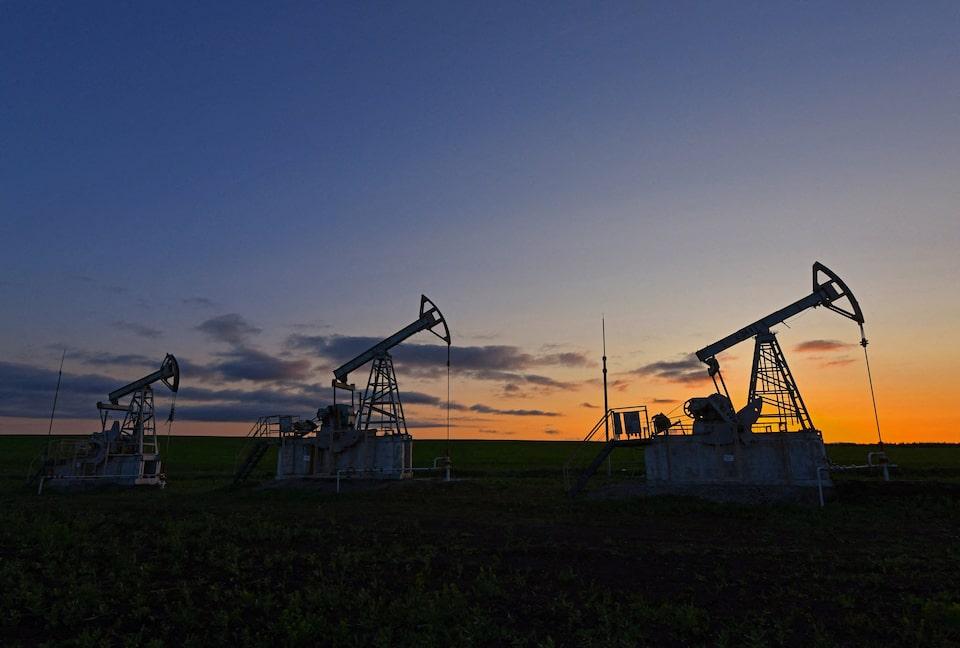
US and China economic concerns impact oil prices Venezuelan oil exports may rise as US eases rules US oil/gas rig count falls for 12th time in 13 weeks - Baker Hughes NEW YORK, July 25 (Reuters) - Oil prices eased on Friday and settled at a three-week low as traders worried about negative economic news from the U.S. and China and signs of growing supply. Losses were limited by optimism U.S. trade deals could boost global economic growth and oil demand in the future. Sign up here. Brent crude futures fell 74 cents, or 1.1%, to settle at $68.44, while U.S. West Texas Intermediate (WTI) crude fell 87 cents, or 1.3%, to settle at $65.16. Those were the lowest settlement levels for Brent since July 4 and WTI since June 30. For the week, Brent was down about 1% with WTI down about 3%. European Commission President Ursula von der Leyen will meet U.S. President Donald Trump on Sunday in Scotland. European Union officials and diplomats said they expected to reach a framework trade deal this weekend. The euro zone economy has remained resilient to the pervasive uncertainty caused by a global trade war, a slew of data showed on Friday, even as European Central Bank policymakers appeared to temper market bets on no more rate cuts. In the U.S., new orders for U.S.-manufactured capital goods unexpectedly fell in June while shipments of those products increased moderately, suggesting business spending on equipment slowed considerably in the second quarter. Trump said he had a good meeting with Federal Reserve Chair Jerome Powell and got the impression that the head of the U.S. central bank might be ready to lower interest rates. Lower interest rates reduce consumer borrowing costs and can boost economic growth and demand for oil. In China, the world's second-biggest economy, fiscal revenue dipped 0.3% in the first six months from a year earlier, the finance ministry said, maintaining the rate of decline seen between January and May. GROWING SUPPLIES? The U.S. is preparing to allow partners of Venezuela's state-run PDVSA (PDVSA.UL), starting with U.S. oil major Chevron (CVX.N) , opens new tab, to operate with limitations in the sanctioned nation, sources said on Thursday. That could boost Venezuelan oil exports by a little more than 200,000 barrels per day (bpd), news U.S. refiners would welcome, as it would ease tightness in the heavier crude market, ING analysts wrote. Iran said it would continue nuclear talks with European powers after "serious, frank, and detailed" conversations on Friday, the first such face-to-face meeting since Israel and the U.S. bombed Iran last month. Venezuela and Iran are members of the Organization of the Petroleum Exporting Countries (OPEC). Any deal that could increase the amount of oil either sanctioned country could export would boost the amount of crude available to global markets. OPEC said the joint ministerial monitoring committee (JMMC) scheduled to convene on Monday does not hold decision-making authority over production levels. Four OPEC+ delegates said an OPEC+ panel is to raise oil output when it meets, noting the producer group is keen to recover market share while summer demand is helping to absorb the extra barrels. OPEC+ includes OPEC and allies like Russia. In Russia, the world's No. 2 crude producer behind the U.S., daily oil exports from its western ports are set to be around 1.77 million bpd in August, down from 1.93 million bpd in July's plan, Reuters calculations based on data from two sources show. In the U.S., energy firms this week cut the number of oil and natural gas rigs operating for the 12th time in 13 weeks, energy services firm Baker Hughes said in its closely followed report on Friday. https://www.reuters.com/business/energy/oil-prices-dip-settle-3-week-low-us-china-economic-concerns-2025-07-25/