2025-07-25 14:58
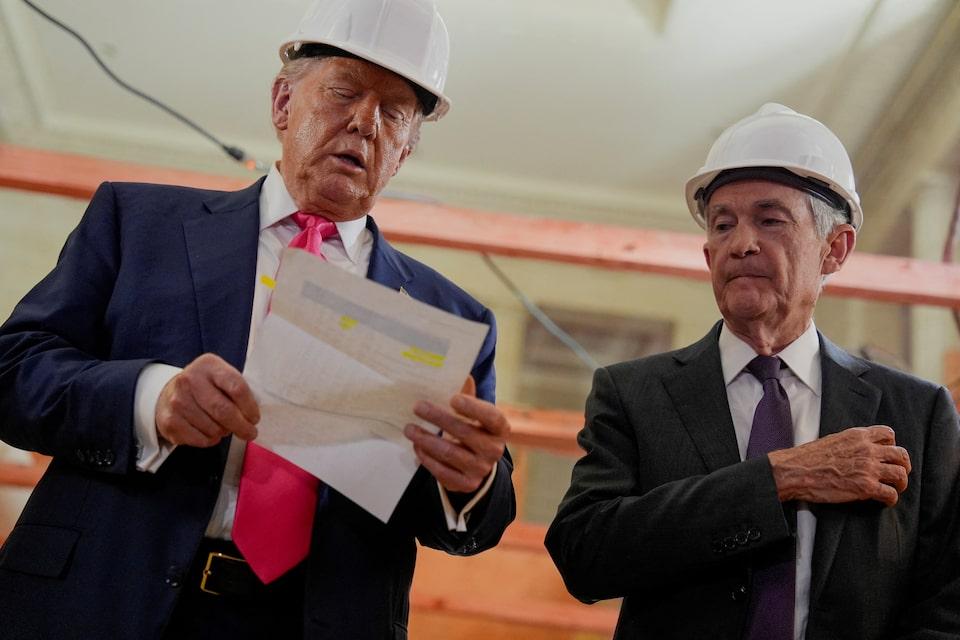
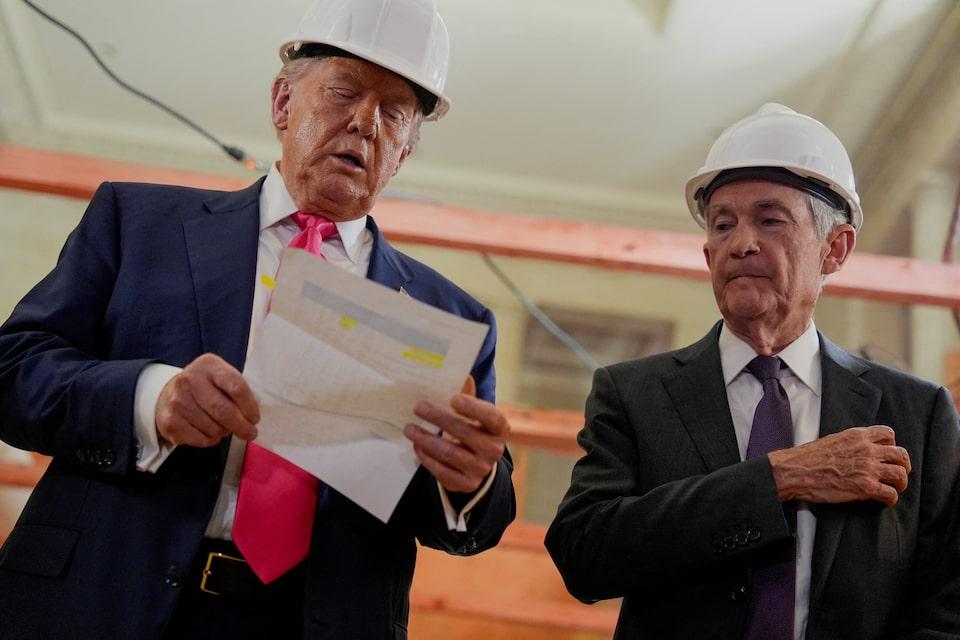
WASHINGTON, July 25 (Reuters) - President Donald Trump said on Friday he had a good meeting with Federal Reserve Chair Jerome Powell and got the impression that the head of the U.S. central bank might be ready to lower interest rates. The two men met on Thursday when Trump made a rare visit to the U.S. central bank to tour the ongoing renovation of two buildings at its headquarters in Washington. The White House has criticized the cost of the project, and the president and Powell sparred over the issue during the visit. Sign up here. Trump also took the opportunity to again publicly call on Powell to slash rates immediately. "We had a very good meeting ... I think we had a very good meeting on interest rates," the president told reporters on Friday. "He (Powell) said, 'Congratulations, the country is doing really well,' and I got that to mean that I think he's going to start recommending lower rates because of that conversation," Trump said. The Fed is widely expected to leave its benchmark interest rate in the 4.25%-4.50% range at the conclusion of a two-day policy meeting next week. Powell has said the Fed should wait for more data before adjusting rates. The visibly tense exchange between Trump and Powell at the Fed's massive construction site on Thursday marked an escalation of White House pressure on the central bank as well as Trump's efforts to get Powell to lower rates. The U.S. central bank said on Friday it was "grateful" for Trump's encouragement to complete the renovation of its buildings in Washington and that it "looked forward" to seeing the project through to completion. Trump, who called Powell a "numbskull" earlier this week for failing to heed the White House's demand for a large reduction in borrowing costs, also said on Thursday he did not intend to fire the Fed chief, as he has frequently suggested he would. https://www.reuters.com/world/us/trump-suggests-fed-may-be-ready-lower-interest-rates-2025-07-25/
2025-07-25 13:49
Inflation edges up to 5.3% in 12 months through mid-July Central bank has signaled a prolonged pause in rates SAO PAULO, July 25 (Reuters) - Brazil's inflation remained well above the central bank's target range in its mid-July reading, official data showed on Friday, as policymakers gather next week for a meeting at which they are widely expected to hold interest rates at a two-decade high. Inflation in Latin America's largest economy hit 5.30% in the 12 months through mid-July, statistics agency IBGE said, up from 5.27% a month earlier and slightly above the 5.26% expected by economists in a Reuters poll. Sign up here. Brazil's central bank targets inflation at 3%, plus or minus 1.5 percentage points, and policymakers have pledged to bring it back to that level. The bank delivered 450 basis points in interest rate hikes between September and June, taking the benchmark Selic rate to 15%, the highest since July 2006. It signaled last month a "very prolonged" pause to assess the effects of the hikes. "The mid-month inflation figures give policymakers no reason to consider raising rates again," said Capital Economics' emerging markets economist Kimberley Sperrfechter, who expects conditions to allow for rate cuts around the turn of the year. The central bank's rate-setting committee, known as Copom, is scheduled to meet on July 29 and 30. In the month to mid-July alone, consumer prices as measured by the IPCA-15 index rose 0.33%, up from 0.26% in the previous month. The index had been expected to rise 0.30%, according to the median forecast in a Reuters poll. The monthly increase was driven by higher housing costs as electricity prices climbed, IBGE said, as well as higher transport prices, with airfares jumping. Closely watched food and beverage prices, however, dropped for the second straight month. "Today's result will not influence Copom's decision," Inter senior economist Andre Valerio said. "It should keep interest rates unchanged, reaffirm its commitment to meeting the inflation target, and offer no indication of when it might begin a rate-cutting cycle." https://www.reuters.com/world/americas/brazil-inflation-hits-53-central-bank-set-hold-rates-next-week-2025-07-25/

2025-07-25 13:33
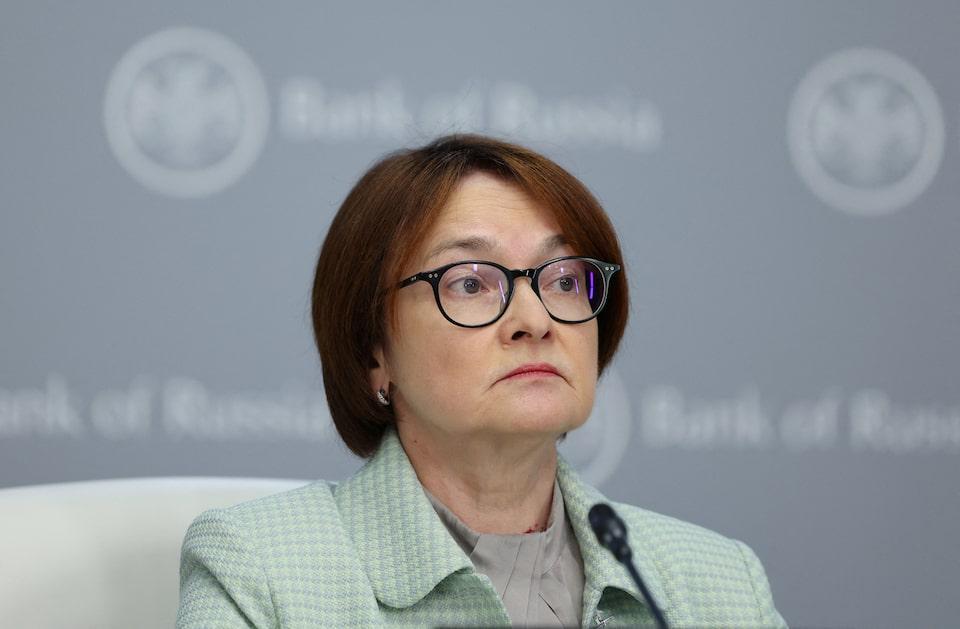
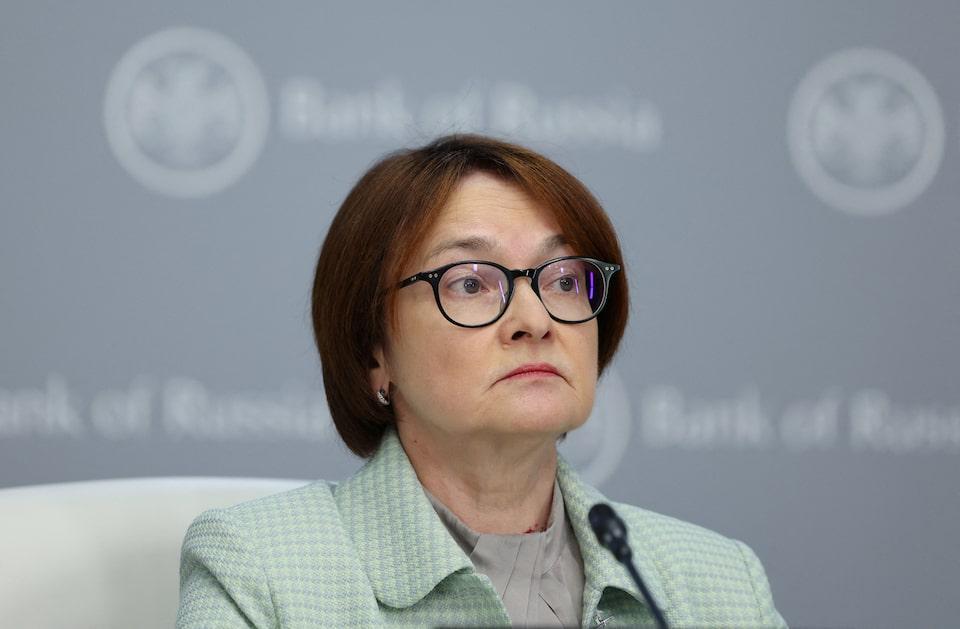
MOSCOW, July 25 (Reuters) - Russian Central Bank Governor Elvira Nabiullina and her deputy Alexei Zabotkin addressed a news conference on Friday after the central bank cut its key rate to 18% from 20%. They spoke in Russian and the quotes below were translated into English by Reuters. Sign up here. NABIULLINA ON KEY RATE DECISION: "During the discussion, options for reducing the rate were considered, the option of maintaining the rate was not considered. Options for reducing the rate by 100, 150 and 200 (basis points) were considered, but the options of 100 and 200 (basis points) were discussed in detail." NABIULLINA ON FUTURE RATE DECISIONS: "If you look at our forecast for the key rate, it suggests that by the end of the year, at individual meetings, reductions of 100, 150 and 200 basis points are possible, as well as pauses. Here everything will depend on the incoming data. But such a uniform trajectory of reduction may be possible with a more convincing picture of inflation stabilisation, inflation expectations at a low level and the absence of new inflation shocks. For now, we assume the possibility of various steps." "We are on the path to returning inflation to target, but this path has not yet been completed. There are already initial results. They allowed us to reduce the key rate again today, smoothly adapting the degree of monetary policy tightness to reduce inflationary pressure." "But returning to the target does not simply mean several months of current price growth near 4%. It implies a stable consolidation of inflation at a low level not only in actual data, but also in the perception of people and businesses." "Monetary policy has ensured a downward reversal of inflation, and it must remain tight for as long as it takes to sustainably return inflation to 4% in 2026 and consolidate it near this level." NABIULLINA ON BANK RECAPITALISATION AND BAD DEBTS: "We do not see any need for recapitalisation of large banks due to the potential overhang of bad debts. The banking sector is profitable." *NABIULLINA ON RUMOURS OF POSSIBLE BANKING CRISIS, SUPPORT MEASURES IN SUCH A SCENARIO "I will say again that these are rumours that are not based on anything ... I can also give figures, because you need to look at the figures and the financial indicators. The banks are stable, they earn money, they have capital reserves. All this allows them to feel quite confident." "We are keeping our finger on the pulse, but I do not see any reason to consider state support (for banks) in one form or another." NABIULLINA ON INFLATION RISKS: "In the aggregate, pro-inflationary risks continue to prevail. However, when making decisions, we also take into account disinflationary risks. The main one is a faster cooling of credit and demand than we expect in the baseline forecast." "We will reduce the rate in such a way that a spike of inflation does not occur. But, of course, we are concerned about increased inflation expectations." ZABOTKIN ON INFLATION RISKS: "The indications of caution in further decisions on the rate, which were voiced in the chairman's statement, are essentially a reference, among other things, to the fact that we, of course, will act with an eye on what is happening with inflation expectations. It cannot be otherwise" NABIULLINA ON BUDGET: "Budget policy remains an important input for our forecast. We assume that the budget rule will be followed this year and in the following years. If budget plans change, it may be necessary to adjust the key rate trajectory." NABIULLINA ON ECONOMIC CONDITIONS: "Compared to April, we have lowered our forecast for Russian oil prices to $55 per barrel this year and next. We have also slightly lowered our forecast for exports and the current account of the balance of payments for the next two years." "At the same time, the rouble exchange rate is affected by flows not only on the current account, but also on the financial account of the balance of payments. High interest rates support the attractiveness of rouble assets compared to foreign ones for Russian citizens and companies. This, combined with more moderate demand for imports, ensures the stability of the rouble exchange rate, despite a slight reduction in exports." NABIULLINA ON ROUBLE AND KEY RATE: "The strengthening of the rouble is explained precisely by the effects of a tight monetary policy. This is such a fundamental factor." "If, of course, there is some radical deterioration in external conditions, of such a scale that it will interfere ... with achieving 4% inflation in 2026, we will, of course, be ready to adjust the rate trajectory." NABIULLINA ON INFLUENCE OF ROUBLE RATE ON MONETARY POLICY "As for the influence of the exchange rate, the dynamics of the exchange rate ... we do not consider it, (though) it is still a factor that depends on our monetary policy. And a tight monetary policy, all other things being equal, affects the stabilisation of the exchange rate." NABIULLINA ON THE ROUBLE AND BUDGET "The sensitivity of the rouble to an increase in government spending in general, to the budget deficit, is limited, regardless of the methods of financing it." *"We do not expect any surprises in the autumn. In any case, we are not aware of any surprises. I know that many are now worried about a possible decline in commodity prices and, as a result, a shortfall in revenues, but for monetary policy, it is not just changes in revenues and expenditures that are important, but changes in the structural primary deficit." NABIULLINA ON POSSIBLE TIGHTENING OF SANCTIONS ON FINANCIAL SECTOR: "... We also have an alternative risk scenario, under which we are considering a possible tightening of sanctions. In general, the financial sector has already shown through practice and experience that it is quite resistant to sanctions and we are pursuing a policy so that this resistance does not decrease." *NABIULLINA ON PRESSURE ON THE CENTRAL BANK: "Of course, there are many voices, expert opinions in favor of lowering the rate. They are quite understandable, but ... we do not perceive them as pressure, and we make decisions on the rate, as required by law, independently based on our own analysis of the current situation." https://www.reuters.com/business/finance/russias-nabiullina-rates-economy-banking-sector-2025-07-25/
2025-07-25 13:32
WASHINGTON, July 25 (Reuters) - President Donald Trump said on Friday he had a good meeting with Federal Reserve Chair Jerome Powell and got the impression Powell might be ready to lower interest rates. "We had a very good meeting ... I think we had a very good meeting on interest rates," Trump told reporters. Sign up here. Trump clashed with Powell during a rare presidential visit to the U.S. central bank on Thursday, and criticized the cost of renovating two historic buildings at its headquarters. Trump, who called Powell a "numbskull" earlier this week for failing to heed the White House's demand for a large reduction in borrowing costs, said he did not intend to fire Powell, as he has frequently suggested he would. https://www.reuters.com/business/trump-suggests-fed-chair-may-cut-interest-rates-2025-07-25/
2025-07-25 12:40
MOSCOW, July 25 (Reuters) - Russian Central Bank Governor Elvira Nabiullina and her deputy Alexei Zabotkin addressed a news conference on Friday after the central bank cut its key rate to 18% from 20%. They spoke in Russian and the quotes below were translated into English by Reuters. Sign up here. NABIULLINA ON KEY RATE DECISION: "During the discussion, options for reducing the rate were considered, the option of maintaining the rate was not considered. Options for reducing the rate by 100, 150 and 200 (basis points) were considered, but the options of 100 and 200 (basis points) were discussed in detail." NABIULLINA ON FUTURE RATE DECISIONS: "If you look at our forecast for the key rate, it suggests that by the end of the year, at individual meetings, reductions of 100, 150 and 200 basis points are possible, as well as pauses. Here everything will depend on the incoming data. But such a uniform trajectory of reduction may be possible with a more convincing picture of inflation stabilisation, inflation expectations at a low level and the absence of new inflation shocks. For now, we assume the possibility of various steps." "We are on the path to returning inflation to target, but this path has not yet been completed. There are already initial results. They allowed us to reduce the key rate again today, smoothly adapting the degree of monetary policy tightness to reduce inflationary pressure." "But returning to the target does not simply mean several months of current price growth near 4%. It implies a stable consolidation of inflation at a low level not only in actual data, but also in the perception of people and businesses." "Monetary policy has ensured a downward reversal of inflation, and it must remain tight for as long as it takes to sustainably return inflation to 4% in 2026 and consolidate it near this level." NABIULLINA ON INFLATION RISKS: "In the aggregate, pro-inflationary risks continue to prevail. However, when making decisions, we also take into account disinflationary risks. The main one is a faster cooling of credit and demand than we expect in the baseline forecast." "We will reduce the rate in such a way that a spike of inflation does not occur. But, of course, we are concerned about increased inflation expectations." *ZABOTKIN ON INFLATION RISKS: "The indications of caution in further decisions on the rate, which were voiced in the chairman's statement, are essentially a reference, among other things, to the fact that we, of course, will act with an eye on what is happening with inflation expectations. It cannot be otherwise" NABIULLINA ON BUDGET: "Budget policy remains an important input for our forecast. We assume that the budget rule will be followed this year and in the following years. If budget plans change, it may be necessary to adjust the key rate trajectory." NABIULLINA ON ECONOMIC CONDITIONS: "Compared to April, we have lowered our forecast for Russian oil prices to $55 per barrel this year and next. We have also slightly lowered our forecast for exports and the current account of the balance of payments for the next two years." "At the same time, the rouble exchange rate is affected by flows not only on the current account, but also on the financial account of the balance of payments. High interest rates support the attractiveness of rouble assets compared to foreign ones for Russian citizens and companies. This, combined with more moderate demand for imports, ensures the stability of the rouble exchange rate, despite a slight reduction in exports." *NABIULLINA ON BANK RECAPITALISATION AND BAD DEBTS: "We do not see any need for recapitalisation of large banks due to the potential overhang of bad debts. The banking sector is profitable." https://www.reuters.com/business/finance/russias-central-bank-governor-rates-inflation-economy-2025-07-25/
2025-07-25 12:37
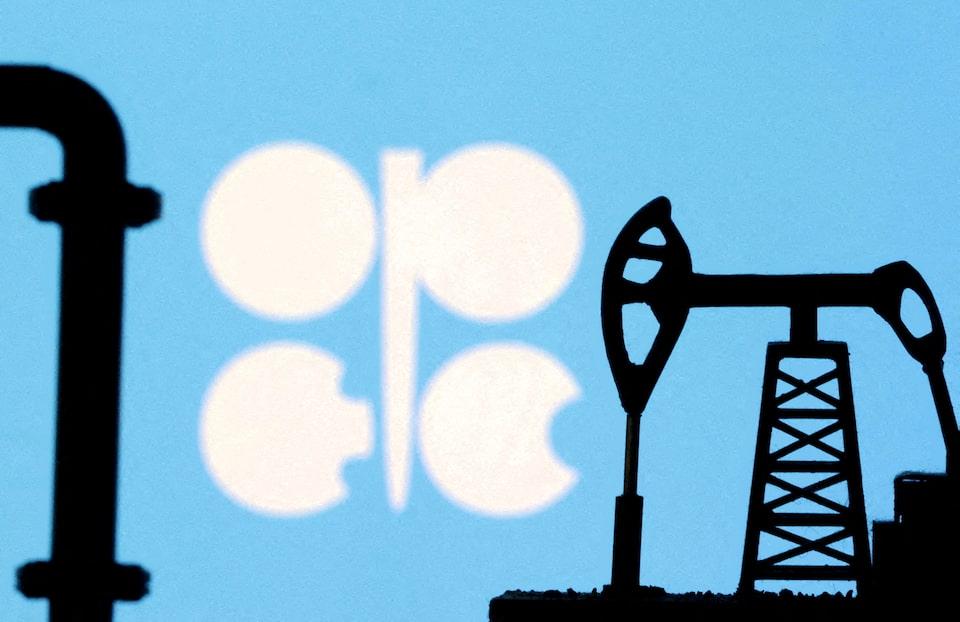
LONDON/MOSCOW, July 24 (Reuters) - An OPEC+ panel is unlikely to alter existing plans to raise oil output when it meets on Monday, four OPEC+ delegates said, noting the producer group is keen to recover market share while summer demand is helping to absorb the extra barrels. The meeting of the Joint Ministerial Monitoring Committee (JMMC), which includes top ministers from the Organization of the Petroleum Exporting Countries and allies led by Russia, is scheduled for 1200 GMT on Monday. Sign up here. Four OPEC+ sources told Reuters the meeting is unlikely to alter the group's existing policy, which calls for eight members to raise output by 548,000 barrels per day in August. Another source said it was too early to say. OPEC and the Saudi government communications office did not respond to a request for comment. OPEC+, which pumps about half of the world's oil, has been curtailing production for several years to support the market. But it reversed course this year to regain market share, and as U.S. President Donald Trump demanded OPEC pump more to help keep a lid on gasoline prices. The eight OPEC+ producers hold a separate meeting on August 3 and remain likely to agree to a further 548,000 bpd increase for September, three of the sources said, as reported by Reuters earlier this month. This would mean that, by September, OPEC+ will have unwound their most recent production cut of 2.2 million bpd, and the United Arab Emirates will have delivered a 300,000 bpd quota increase ahead of schedule. The JMMC meets every two months and can recommend changes to OPEC+ output policy. Oil prices have remained supported despite the OPEC+ increases thanks to summer demand and the fact that some members have not raised production as much as the headline quota hikes have called for. Brent crude was trading close to $70 a barrel on Friday. https://www.reuters.com/business/energy/opec-panel-likely-keep-oil-policy-steady-monday-sources-say-2025-07-25/