2025-07-25 12:40
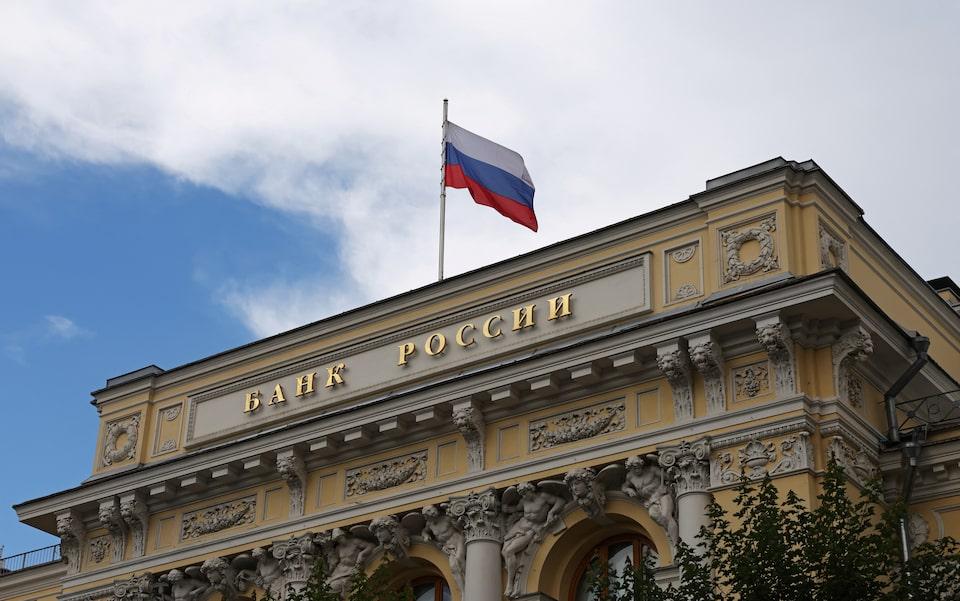
MOSCOW, July 25 (Reuters) - Russian Central Bank Governor Elvira Nabiullina and her deputy Alexei Zabotkin addressed a news conference on Friday after the central bank cut its key rate to 18% from 20%. They spoke in Russian and the quotes below were translated into English by Reuters. Sign up here. NABIULLINA ON KEY RATE DECISION: "During the discussion, options for reducing the rate were considered, the option of maintaining the rate was not considered. Options for reducing the rate by 100, 150 and 200 (basis points) were considered, but the options of 100 and 200 (basis points) were discussed in detail." NABIULLINA ON FUTURE RATE DECISIONS: "If you look at our forecast for the key rate, it suggests that by the end of the year, at individual meetings, reductions of 100, 150 and 200 basis points are possible, as well as pauses. Here everything will depend on the incoming data. But such a uniform trajectory of reduction may be possible with a more convincing picture of inflation stabilisation, inflation expectations at a low level and the absence of new inflation shocks. For now, we assume the possibility of various steps." "We are on the path to returning inflation to target, but this path has not yet been completed. There are already initial results. They allowed us to reduce the key rate again today, smoothly adapting the degree of monetary policy tightness to reduce inflationary pressure." "But returning to the target does not simply mean several months of current price growth near 4%. It implies a stable consolidation of inflation at a low level not only in actual data, but also in the perception of people and businesses." "Monetary policy has ensured a downward reversal of inflation, and it must remain tight for as long as it takes to sustainably return inflation to 4% in 2026 and consolidate it near this level." NABIULLINA ON INFLATION RISKS: "In the aggregate, pro-inflationary risks continue to prevail. However, when making decisions, we also take into account disinflationary risks. The main one is a faster cooling of credit and demand than we expect in the baseline forecast." "We will reduce the rate in such a way that a spike of inflation does not occur. But, of course, we are concerned about increased inflation expectations." *ZABOTKIN ON INFLATION RISKS: "The indications of caution in further decisions on the rate, which were voiced in the chairman's statement, are essentially a reference, among other things, to the fact that we, of course, will act with an eye on what is happening with inflation expectations. It cannot be otherwise" NABIULLINA ON BUDGET: "Budget policy remains an important input for our forecast. We assume that the budget rule will be followed this year and in the following years. If budget plans change, it may be necessary to adjust the key rate trajectory." NABIULLINA ON ECONOMIC CONDITIONS: "Compared to April, we have lowered our forecast for Russian oil prices to $55 per barrel this year and next. We have also slightly lowered our forecast for exports and the current account of the balance of payments for the next two years." "At the same time, the rouble exchange rate is affected by flows not only on the current account, but also on the financial account of the balance of payments. High interest rates support the attractiveness of rouble assets compared to foreign ones for Russian citizens and companies. This, combined with more moderate demand for imports, ensures the stability of the rouble exchange rate, despite a slight reduction in exports." *NABIULLINA ON BANK RECAPITALISATION AND BAD DEBTS: "We do not see any need for recapitalisation of large banks due to the potential overhang of bad debts. The banking sector is profitable." https://www.reuters.com/business/finance/russias-central-bank-governor-rates-inflation-economy-2025-07-25/
2025-07-25 12:37
LONDON/MOSCOW, July 24 (Reuters) - An OPEC+ panel is unlikely to alter existing plans to raise oil output when it meets on Monday, four OPEC+ delegates said, noting the producer group is keen to recover market share while summer demand is helping to absorb the extra barrels. The meeting of the Joint Ministerial Monitoring Committee (JMMC), which includes top ministers from the Organization of the Petroleum Exporting Countries and allies led by Russia, is scheduled for 1200 GMT on Monday. Sign up here. Four OPEC+ sources told Reuters the meeting is unlikely to alter the group's existing policy, which calls for eight members to raise output by 548,000 barrels per day in August. Another source said it was too early to say. OPEC and the Saudi government communications office did not respond to a request for comment. OPEC+, which pumps about half of the world's oil, has been curtailing production for several years to support the market. But it reversed course this year to regain market share, and as U.S. President Donald Trump demanded OPEC pump more to help keep a lid on gasoline prices. The eight OPEC+ producers hold a separate meeting on August 3 and remain likely to agree to a further 548,000 bpd increase for September, three of the sources said, as reported by Reuters earlier this month. This would mean that, by September, OPEC+ will have unwound their most recent production cut of 2.2 million bpd, and the United Arab Emirates will have delivered a 300,000 bpd quota increase ahead of schedule. The JMMC meets every two months and can recommend changes to OPEC+ output policy. Oil prices have remained supported despite the OPEC+ increases thanks to summer demand and the fact that some members have not raised production as much as the headline quota hikes have called for. Brent crude was trading close to $70 a barrel on Friday. https://www.reuters.com/business/energy/opec-panel-likely-keep-oil-policy-steady-monday-sources-say-2025-07-25/
2025-07-25 12:34
Tariff deadline looms along with Fed, BOJ and U.S. payrolls Global stocks ease off record highs Dollar heads for weekly loss despite risk-off mood Intel shares drop 5% pre-market; Amazon, Apple, Meta report next week LONDON/TOKYO July 25 (Reuters) - Investors cashed out of record-high global stocks on Friday and the dollar headed for its first weekly drop in four, as markets trembled ahead of next week's U.S. jobs data, Federal Reserve and Bank of Japan meetings and Donald Trump's tariff deadlines. MSCI's global equity index (.MIWD00000PUS) , opens new tab was 0.3% lower after hitting an all-time peak on Thursday, after Japan's Topix index (.TOPX) , opens new tab ended the day 0.9% lower, having also hit a record high a day earlier. Sign up here. Futures trading signalled Wall Street's Nasdaq Composite (.IXIC) , opens new tab would flatline later in the day, with sentiment still buoyed by Google parent Alphabet's (GOOGL.O) , opens new tab robust earnings that propelled the tech-heavy index to its latest peak on Thursday. Investors said they did not expect the markets' glass-half-full approach to trade war risks to last if jobs growth and earnings slow but the U.S. Federal Reserve also douses expectations that it will rush to the rescue by easing monetary policy. With the Fed's next rate decision on July 29 as Chair Jerome Powell comes under pressure from Trump to quit, August 1 brings the latest batch of monthly U.S. jobs data and the deadline for U.S. trade deals with Europe and other countries. "We've come to this sort of real, sort of pinch point of high risk, of things going in either direction, and markets have just breezed through it so far," Premier Miton CIO Neil Birrell said. "I'm genuinely struggling to work out why the bond markets seem relatively complacent and why equity markets have kept going up," he said, especially with disruption caused by trade uncertainty now showing up in companies' earnings. TECH, CENTRAL BANKS The dollar index , was heading for a 0.6% weekly drop, in the latest sign that U.S. policy and debt risk meant it was no longer viewed by investors as a haven asset when stock markets turn lower. "We know that the dollar tends to depreciate when there is a proper risk-on wave,” Amundi Investment Institute cross-asset strategist Federico Cesarini said. “But the other side of the correlation, risk-off (and) dollar up, is not with us anymore.” Tech titans Amazon, Apple, Meta and Microsoft may all issue tariff-related updates with next week's earnings reports, just as parts of the tech sector have shown signs of revenues turning hard to forecast because of stockpiling and trade anxiety. Chipmaker Intel's shares (INTC.O) , opens new tab dropped 5% in pre-market trade on Friday as it forecast steeper quarterly losses and said it had halted or scrapped new factory projects in the U.S. and Europe. Money markets are only pricing about 42 basis points (bps) of Fed easing this year, setting next week's monthly non-farm payrolls report up as a major risk event if hiring has slowed and rate cut expectations have not risen. Trump has kept up pressure on Powell to cut rates after a rare presidential visit to the central bank on Thursday, although he said he did not intend to fire the head of the central bank, as he has frequently suggested he would. U.S. 10-year Treasury yields were steady at 4.41% while two-year yields, which track monetary policy bets, were also flat at 3.925%. The Bank of Japan has its own policy announcement on Thursday, and Prime Minister Ishiba's Liberal Democratic Party holds a meeting on the same day. That's after the European Central Bank held rates steady on Thursday and was viewed by traders as likely to pause further cuts until the end of the year. The euro was steady against the dollar on Friday at $1.178 , although German government debt sold off, with the yield on benchmark 10-year Bunds up 4 basis points (bps) at 2.726%. Elsewhere in markets, gold eased 0.8% to around $3,339 an ounce. Brent crude futures gained 0.4% to $69.65 a barrel. https://www.reuters.com/world/china/global-markets-wrapup-3-2025-07-25/
2025-07-25 12:17
LONDON, July 24 (Reuters) - London's Kew Gardens will open a new garden focused on carbon that will showcase its importance in sustaining life, but also explore the role of carbon dioxide in the climate crisis and how plants can combat it. The Carbon Garden will feature 6,500 plants, 35 new trees as well as a central pavilion structure inspired by fungi and will be a permanent fixture at the botanical gardens, which were first opened in 1759 and today are a UNESCO World Heritage Site. Sign up here. "The garden aims to show how crucial carbon is, while warning of the damage being caused by increasing carbon dioxide emissions," said manager of garden design at Royal Botanic Gardens, Kew, Richard Wilford. The year 2024 was the hottest on record, with global carbon dioxide emissions from the energy sector hitting a record high. As well as signs explaining concepts such as photosynthesis, the process by which plants turn carbon dioxide into organic matter, the area will feature a so-called dry garden filled with hardy plants such as lavender that are able to cope in heat. The garden, which took Wilford and his team over four years to build, includes new trees selected for their resilience to future projected climate conditions and their ability to absorb carbon dioxide. Amanda Cooper, a doctoral researcher who consulted on the garden, said planting more such trees would be part of the solution to tackling climate change. "By reestablishing woodlands, by stopping our deforestation, we can hopefully make a dent in what is being emitted to the atmosphere," Cooper said. "It's not a complete dent because we're still emitting fossil fuel emissions from our cars and factories. But it's a start." https://www.reuters.com/sustainability/climate-energy/londons-kew-gardens-opens-carbon-garden-highlight-climate-crisis-2025-07-24/

2025-07-25 12:15
EU says trade deal with US within reach Trump presses Federal Reserve Chair Powell to cut rates July 25 (Reuters) - Gold prices fell on Friday, pressured by a recovery in the U.S. dollar and optimism over progress in trade talks between the United States and the European Union. Spot gold was down 0.7% at $3,343.0 per ounce by 1150 GMT. U.S. gold futures fell 0.9% to $3,344.50. Sign up here. The U.S. dollar index (.DXY) , opens new tab rebounded from its lowest in more than two weeks, making bullion more expensive for overseas buyers, while benchmark 10-year U.S. Treasury yields rose. A resurgence in risk appetite driven by optimism over potential tariff negotiations, and lower-than-expected U.S. jobless claims reinforcing the view that the Federal Reserve is unlikely to cut rates, are pressuring gold, said Ricardo Evangelista, senior analyst at brokerage firm ActivTrades. The European Commission said on Thursday that a negotiated trade solution with the U.S. is within reach - while EU members voted to approve counter-tariffs on 93 billion euros ($109 billion) of U.S. goods in case the talks collapse. Data showed the number of Americans filing new applications for jobless benefits fell to a three-month low last week, indicating stable labour market conditions. President Donald Trump pressed Fed Chair Jerome Powell to lower interest rates in a tense visit to the U.S. central bank on Thursday. Markets are pricing in a potential rate cut in September. Gold typically performs well in times of uncertainty and in low-interest-rate environments. "Central bank buying can continue to hold the floor for gold, but a reignition of ETF inflows is needed for prices to break out higher once again towards our bullish year-end target of $3,675/oz, which likely also requires Fed cuts exceeding market expectations," analysts at JP Morgan said in a note. Spot silver fell 0.9% to $38.74 per ounce, but was still on track for a weekly gain of about 1.6%. Platinum was 1.7% lower at $1,384.95, with palladium also down 1.8% at $1,201.75, its lowest in over a week. https://www.reuters.com/world/china/gold-falls-firmer-us-dollar-rising-trade-optimism-2025-07-25/
2025-07-25 12:13
Central bank lowers 2025 inflation forecast Says inflation is declining faster than forecast Bank maintains 2025 growth forecast at between 1% and 2% Nabiullina says attempts to pressure over rates harm economy Russian rouble weakens ahead of rate cut MOSCOW, July 25 (Reuters) - The Russian central bank cut its key interest rate by 200 basis points to 18% on Friday, hoping to revive lending and boost flagging economic growth after stubbornly high inflation showed signs of easing. The move is the biggest decrease since May 2022, when the central bank cut by 300 bps as the economy was recovering from the shock from Western sanctions imposed following the launch of Russia's military action in Ukraine. Sign up here. The latest reduction was in line with a Reuters poll of 27 economists, and comes after Russian business leaders and some government officials complained that high interest rates were strangling the economy. The central bank had raised rates substantially since July 2023 in order to deal with the effects of an overheating economy caused by a surge in military spending. Russia's economy minister said last month the country was on the brink of recession as a result. Alongside its sharp rate cut, the central bank lowered its 2025 inflation forecast to between 6% and 7% from between 7% and 8% and said inflationary pressures were declining faster than previously forecast. The bank said it would keep monetary conditions as tight as necessary to return inflation to the target of 4% in 2026. "We are on the path to returning inflation to target, but this path has not yet been completed," central bank governor Elvira Nabiullina said at a news conference following the rate decision. "Returning to the target... implies a stable consolidation of inflation at a low level not only in actual data, but also in the perception of people and businesses," she said. Analysts now expect the central bank to continue cutting rates later this year. "Everything points to a fairly significant optimism on the part of the central bank and allows us to expect a continuation of active monetary policy easing with the key rate not exceeding 16% by the end of the year," Raiffrisen Bank analysts said. WESTERN SANCTIONS Russia's consumer price index fell by 0.05% in the latest week, marking weekly deflation for the first time since September 2024, while annualized inflation slowed to 9.17% from its peak of 10.3% in March. The central bank maintained its 2025 gross domestic product growth forecast at between 1% and 2% and said it saw some softening in Russia's tight labour market. The economy grew by 4.3% last year. The central bank cut its forecast for the average oil price in 2025 to $55 per barrel from $60 per barrel, implying a fall in state budget revenues, but Nabiullina said she did not expect any surprises from the budget. The Russian economy will face another test in early September when a 50-day deadline set by U.S. President Donald Trump for Russia to show progress toward peace in Ukraine expires, with potential new U.S. sanctions against buyers of Russian oil to follow. Nabiullina said the bank will work to ensure the financial sector’s resilience to Western sanctions does not weaken. "We see that indeed the financial sector is one of the main targets for sanctions, and these sanctions are being tightened," Nabiullina said. The bank was under intense pressure from the business community to start easing after it hiked the key rate to the highest level since the early 2000s last year. Business leaders complained that at such a rate, investment no longer made sense. Nabiullina said that such pressure does the economy a disservice by creating the false impression that the central bank has been forced to cave in when cutting rates, which in turn fuels inflationary expectations "Such attempts to exert pressure would, in effect, result in higher interest rates," she warned. President Vladimir Putin has backed the policy of the central bank, but warned it not to cool the economy too much. High interest rates have hit Russia's construction and coal sectors and led to a rise in bad debt for Russian banks. Speaking just before the rate decision on Friday, Deputy Prime Minister Marat Khusnullin, who oversees the construction sector, said that a 400 bps cut was more desirable, indicating that many officials in Russia want the central bank to cut more. The rouble, which rallied by 45% against the U.S. dollar earlier this year in part due to the high key rate, began to weaken ahead of the expected rate cut and touched the 80 mark against the dollar on Friday, a near-six week low. The stronger rouble has aided the central bank in fighting inflation by making imported goods cheaper with some bankers alleging that supporting the rouble was a deliberate policy by the central bank. https://www.reuters.com/markets/europe/russian-central-bank-slashes-key-rate-by-200-bps-biggest-cut-since-may-2022-2025-07-25/